 Sinh Giang
Cross the suspension bridge at the bottom of Ta Van and the path forks: uphill to the terraced slopes where Black H'mong families have farmed for generations, or straight ahead along the Muong Hoa River into the older, flatter part of the village — ground-level timber houses with a drying platform at the front, fish traps left out to dry, rice laid on tarps by the road in October. That riverside core is Giay land, and it has been since long before Sapa had a single guesthouse. Most travelers walk through it without knowing it is a separate ethnic group at all, often assuming every house in the Muong Hoa Valley belongs to the same community they met that morning.
The Giay — written Giáy in Vietnamese, Zay in some English transliterations, and Nhang in parts of Laos — are one of Vietnam's smaller recognized ethnic groups and one of the least written about in English-language Sapa content, even though Ta Van, the single most-visited village on the valley floor, is historically theirs. This guide is about who they are: where the name comes from, what language they speak, how their houses, clothing, and beliefs differ from their H'mong and Dao neighbors, and what it is actually like to sit down to dinner with a Giay family at the end of a trekking day.
Who Are the Giay People?
The Giay are a distinct ethnic group recognized by the Vietnamese government, separate from — though linguistically related to — the Tay and Nung. According to Vietnam's 2019 Population and Housing Census, there were 67,858 Giay people nationwide, making them one of the country's smaller of the 53 recognized minority groups, well below the Black H'mong's roughly 1.4 million or the approximately 891,000 Dao nationally. Most Giay communities trace their migration into Vietnam from southern China roughly two centuries ago, settling across the northern mountain provinces of Lao Cai, Ha Giang, Lai Chau, and Cao Bang, where they tend to occupy valley floors and river terraces rather than the higher ridges favored by H'mong settlers.
In Lao Cai province specifically — the province that contains Sapa — the Giay are the fifth-largest ethnic minority group, numbering around 32,000 people and making up roughly 4.6% of the provincial population, according to the same 2019 census data reported through the province's ethnic minorities development planning documents. What surprises most visitors is where that population actually lives: not primarily around Sapa town, but concentrated further north in Bat Xat district (about 14,770 people), with smaller communities in Muong Khuong (roughly 2,994) and Van Ban district (about 2,659) further south and east. Ta Van, the village every Sapa visitor eventually walks through, is a comparatively small outpost of a much larger Giay presence spread across Lao Cai's river valleys — it is simply the one with a trekking industry built around it.
Population figures for Vietnam's ethnic minorities come from the decennial national census; the numbers above are from the 2019 round, the most recent published at the time of writing. A new census is expected around 2029 — if you're reading this after that date, treat these figures as historical rather than current.
Giay or Zay? Untangling the Name
The spelling confusion around this group is real and worth clearing up before anything else, because searching for them online turns up at least four different spellings. "Giáy" is the standard Vietnamese spelling, with the diacritic mark most browsers and search engines strip out, leaving "Giay." English-language sources — travel guides, anthropology papers, and the group's own diaspora communities — often render it "Zay," which is closer to how the name is actually pronounced (roughly "zai," not "jee-ay"). In parts of Laos, where a smaller population of the same ethnic group lives, they are sometimes called "Nhang." All four names point to the same people. This guide uses "Giay" as the primary spelling, matching the convention used by Vietnam's General Statistics Office, while noting "Zay" because that is frequently how English-speaking travelers search for them.
How Are the Giay Different From the Tay, Nung, Black H'mong, and Red Dao?
Four ethnic groups show up in nearly every Sapa guidebook and trekking brochure — Black H'mong, Red Dao, Tay, and Giay — and travelers conflate them constantly, usually by clothing alone. The quickest way to keep them straight is by language family and village location rather than appearance, since Giay clothing today is often plain enough that it doesn't photograph as distinctively as H'mong indigo or Dao red headdresses.
The practical upshot for a traveler is this: if your guide mentions you are walking into "Giay" or "Zay" territory, you have left Black H'mong and Red Dao ground and entered a Tai-Kadai-speaking community whose history, language, and farming calendar developed along a completely different branch of migration into Vietnam — even though all four groups have shared the same river valley, traded with each other, and in Ta Van's case, intermarried, for longer than anyone alive can remember.
Language: What Makes Giay a Tai-Kadai Language?
Giay belongs to the Tai-Kadai (also written Kra-Dai) language family — the same broad family as Thai, Lao, Tay, Nung, and Zhuang — and is classified by linguists as closely related to Bouyei, a language spoken across the border in Guangxi and Guizhou provinces, China. This puts real linguistic distance between Giay and the languages of their H'mong and Dao neighbors, which belong to the entirely separate Hmong-Mien family; a Giay speaker and a Black H'mong speaker cannot understand each other's native language at all; both typically communicate in Vietnamese if neither speaks the other's language.
Giay is tonal, as most languages in this family are, and traditionally had no widely used writing system of its own — stories, songs, and the chants used in ceremonies like Roong Pooc have historically been passed down orally rather than in text. Nearly every Giay person in Ta Van today is bilingual in Vietnamese, taught from primary school onward, and younger people working in the trekking and homestay trade increasingly pick up functional English as well, sometimes faster than their H'mong neighbors simply because Ta Van sees a dense flow of foreign trekkers passing directly through its center every day.
Ta Van Village: Where Sapa's Giay Community Lives
Ta Van is the place almost every Sapa itinerary eventually reaches, usually as the lunch stop or overnight homestay on a one-day or two-day trek through the Muong Hoa Valley — and it is the Giay community's historic anchor point in the Sapa area. The oldest part of the village sits close to the Muong Hoa River itself, on relatively flat ground, which fits the broader Giay settlement pattern across Lao Cai: this is a lowland, river-valley people, in contrast to Black H'mong communities who more typically settled the steeper terraced slopes above.
What makes Ta Van confusing for a first-time visitor is that the commune's administrative boundaries now include far more than its original Giay core. Walk uphill from the river and you reach hamlets that are predominantly Black H'mong; some of the slopes closer to Giang Ta Chai carry a Red Dao presence as well. A single "Ta Van village tour" sold by most Sapa operators — including the one-day treks through the Muong Hoa Valley that we run ourselves — typically threads through two or three ethnic communities inside what gets marketed as a single destination. None of this is hidden or unusual to local guides; it's just rarely explained, because most itineraries are built around trail logistics rather than ethnography.
If seeing Ta Van's practical side — how to get there, trail distances, which bridge to cross, entrance fees — is what you're after, our Ta Van village guide covers that ground in full. This article stays with the people: who the Giay in Ta Van are, and what their daily life and traditions look like close up.
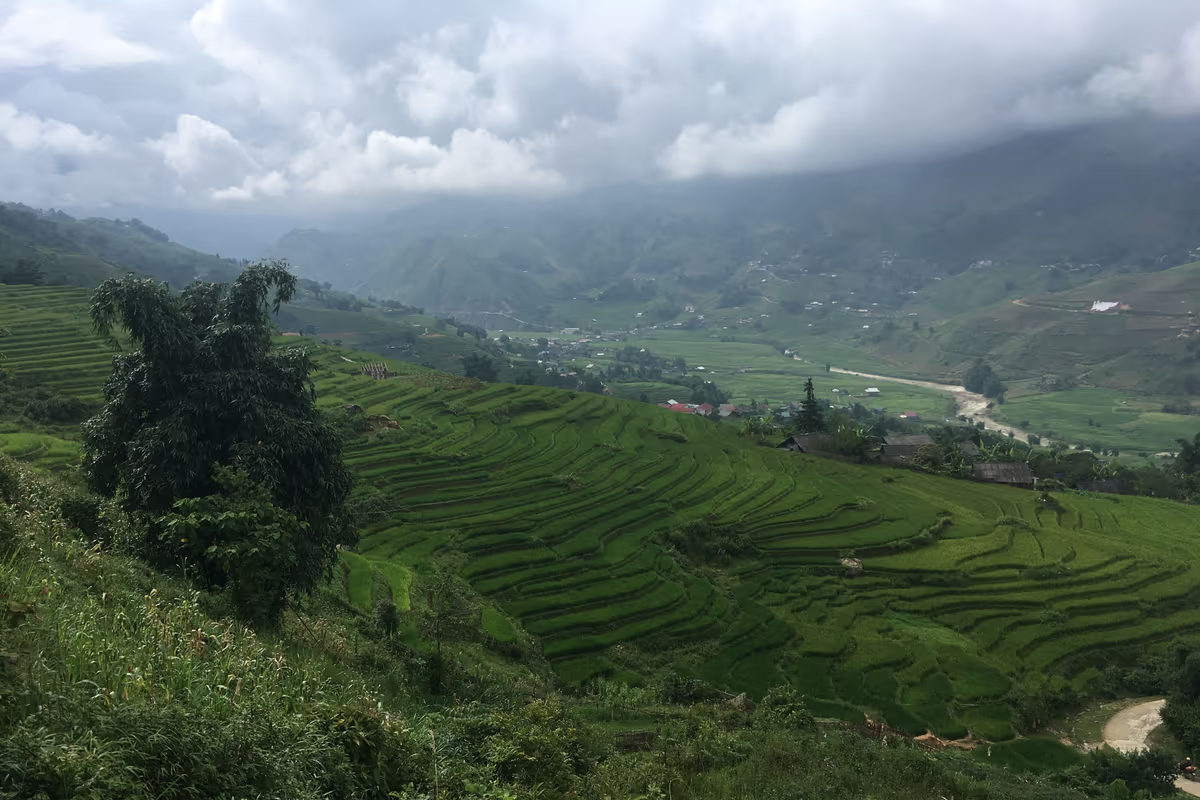
Giay Houses: Why They Build on the Ground, Not on Stilts
One of the clearest visual markers separating a Giay home from a Black H'mong or Tay one is the house itself. In much of northern Vietnam, Tai-Kadai-speaking groups — including Giay communities in Tuyen Quang province — build traditional stilt houses, raised well above ground level with livestock kept underneath. In Lao Cai and Lai Chau, however, including the Giay households around Ta Van, the pattern shifted at some point to ground-level houses built directly on packed earth or a low stone foundation, while keeping one feature of the stilt-house tradition: a wooden platform extending from the front of the house, traditionally used for drying rice, corn, and chili peppers in the sun.
Inside, a typical older Giay house in Ta Van is organized around a single large living space with a hearth, sleeping areas partitioned by cloth or simple wooden screens, and an ancestor altar occupying the most honored wall — a feature shared with Vietnamese Kinh households and reflecting the same Confucian-influenced ancestor veneration found across much of mainland Southeast Asia, blended with older animist practices specific to the Giay.
Beliefs and the Sacred Grove
Giay spiritual life combines ancestor worship with animist practices rooted in the natural landscape around each village. A distinctive feature recorded among Giay communities is the "đoong xía" — a patch of forest at the edge of the village kept untouched and treated as sacred, home to guardian spirits who are believed to protect the settlement. Twice a year, the community gathers at this grove to make offerings, asking for the village's safety and a good harvest; cutting wood or disturbing the grove outside of these ceremonies is traditionally forbidden. It's a quieter, less visually dramatic practice than the shamanic ceremonies associated with some H'mong and Dao spiritual traditions, which is part of why it rarely makes it into trekking marketing — but it's one of the clearest living threads connecting Giay communities in Sapa back to shared practices found in Giay villages across Lao Cai, Ha Giang, and Lai Chau.
The Roong Pooc Festival: Sapa's Giay New Year for the Fields
Roong Pooc — the name translates roughly as "going down to the field" — is the single most visible living Giay tradition a traveler can actually time a trip around. Held in Ta Van on the Snake day of the first lunar month (the exact Gregorian date shifts year to year, usually landing in late January or February), it is the Giay community's ceremony marking the beginning of the rice-growing season, and it has been recognized by Vietnam's Ministry of Culture as a National Intangible Cultural Heritage since 2013.
Opening ceremony
Village elders pray for good weather and a bountiful harvest at a shared field altar.
Ceremonial first furrow
A chosen farmer ploughs the season's first furrow into a paddy field, symbolically opening the planting year.
Con ball & tug-of-war
Villagers throw a cloth ball through a bamboo ring and compete in tug-of-war — games open to the whole valley.
Shared feast
Families share food and rice wine; neighboring H'mong and Dao households increasingly join in.
What started as a purely Giay community observance in Ta Van has, over recent decades, grown into something closer to a valley-wide event, with neighboring Black H'mong and Red Dao communities in the Muong Hoa Valley now taking part in the games and the feast — though the ceremonial core, the prayers and the first furrow, remains led by Giay elders. If your trip dates happen to land on the festival, ask your guide; it is not always publicized to tourists in advance and the exact date needs confirming against the lunar calendar each year, since it does not fall on a fixed Western date.
When to Visit for Giay Culture and Farming Life
Because Giay life in Ta Van is so closely tied to the rice cycle, the time of year you visit changes what you'll actually see, beyond the general Sapa weather pattern of a dry season and a wet one.
*Roong Pooc falls on the Snake day of the first lunar month, so its Gregorian date moves between late January and February each year — confirm the date with your guide or a Vietnamese lunar calendar before planning a trip around it.
September and October bring the golden rice harvest across the Muong Hoa Valley's terraces, which is also when Ta Van is at its busiest with day-trekkers — if you want quieter time with a Giay homestay family, April and May offer green, fully-planted terraces and noticeably fewer other travelers on the same trail. We'd be lying if we called any month the "quiet" season anymore; Ta Van has become one of the valley's most-visited stops. But a weekday arrival, rather than a weekend, still makes a real difference to how much of the village you get to yourself.
Tours That Pass Through Ta Van's Giay Community
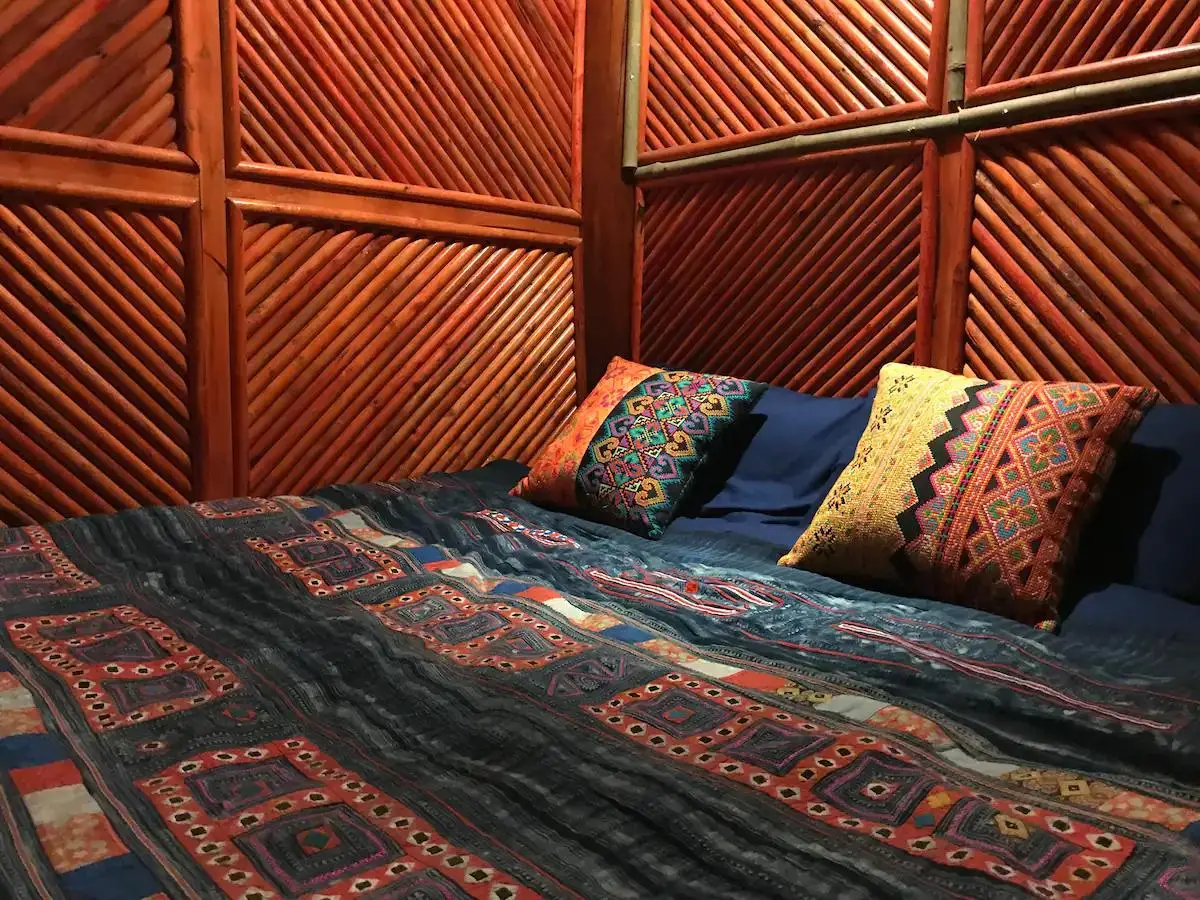 1-Day Trek
Trekking Through Rice Terraced Fields
A full-day walk through Lao Chai and into Ta Van, crossing from Black H'mong hillside hamlets into the Giay riverside village for lunch.
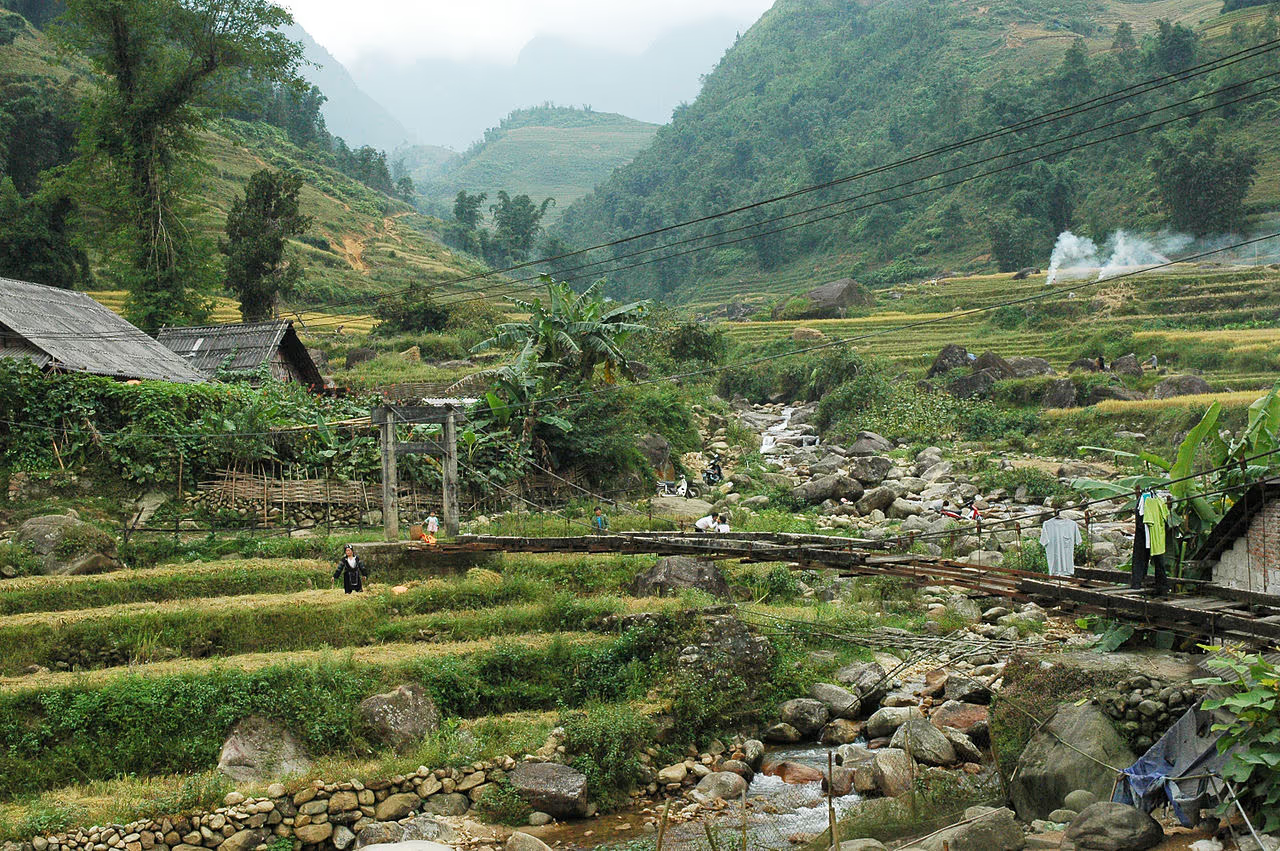 2D1N Homestay
Rice Terraced Fields & Homestay
Overnight with a local family in the Muong Hoa Valley. Ask your guide to arrange a Giay household in Ta Van if that's the experience you want.
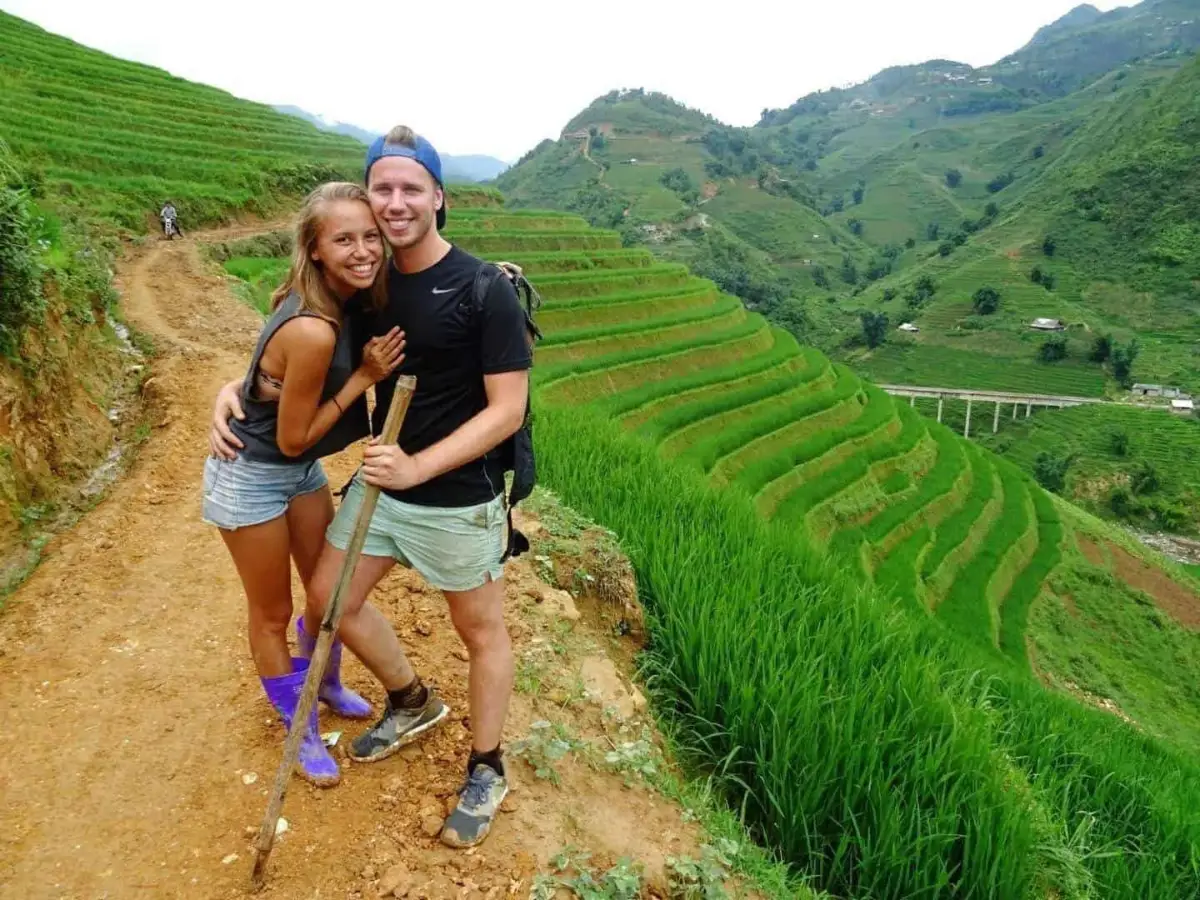 3D2N Trek
3D2N Experience the Real Sapa
Three days through Black H'mong, Giay, and Red Dao villages, including Ta Van and Ta Phin, with two homestay nights.
What a Homestay With a Giay Family Is Actually Like
A homestay night in a Giay household in Ta Van is less staged than most visitors expect, and simpler than photos of "ethnic homestay" tourism in other parts of Vietnam might suggest. The house itself is the ground-level timber type described earlier: one open living and sleeping area, mattresses and blankets rolled out on the floor at night (not a private room with a door, in most houses — set expectations accordingly), a wood-fired kitchen at the back, and the drying platform out front where you'll likely sit in the evening if the weather holds.
Dinner is cooked family-style and shared at a low table: steamed rice, a stir-fried seasonal vegetable, often tofu and either pork or chicken, and commonly a round of home-brewed rice wine offered as a welcoming gesture rather than something you're required to drink. Conversation usually happens through your guide, since most older Giay homestay hosts speak Giay and Vietnamese but limited English — this is exactly the moment a good local guide earns their fee, translating not just words but the context behind a question or a joke.
Not every "homestay" sold in Sapa is run by the ethnic family whose name is on the booking — some are managed guesthouses staffed by the family but built and operated with outside investment, and increasingly a few Ta Van homestays are run by Kinh (ethnic Vietnamese majority) owners rather than Giay families at all. If meeting an actual Giay household is the point of your trip, ask directly when booking rather than assuming from the village name alone — we're happy to confirm which specific house you'd be staying in.
The best part of a Giay homestay isn't dinner — it's the morning. Waking before most day-trekkers arrive, stepping onto the drying platform while the mist is still sitting low in the valley, hearing roosters rather than tour guides' whistles: that half hour is the actual reason to choose an overnight stay over a day trip, regardless of which village or ethnic group hosts you.
Rent at Our Office Before You Trek
 Gear Rental
Trekking Boots Rental
Waterproof ankle-support boots. Cleaned and checked before each rental. Available at 105 Thach Son Street.
 Gear Rental
Walking Poles Rental
Trekking poles available to rent at $2/day at our office, 105 Thach Son Street. Essential for descents.
Giay Food: What You'll Actually Be Served
Giay cooking in Ta Van draws on the same valley-floor ingredients as their Tay and Kinh neighbors — wet-rice farming means rice itself is the anchor of every meal, supplemented by what grows well on flatter, well-irrigated land: water spinach, pumpkin greens, bamboo shoots in season, and freshwater fish and crab caught from the Muong Hoa River and its irrigation channels, rather than the hillside corn and buckwheat more associated with H'mong cooking at higher elevation. Two dishes recorded among Giay communities more broadly are lạp sườn-style cured meats and a fermented dish called lò nùng; whether a specific Ta Van homestay serves either depends entirely on the household and the season, so treat these as regional specialties to ask about rather than a guaranteed menu.
Rice wine (rượu) brewed at home is common across almost every ethnic group in the valley, Giay included, and is typically offered to guests as a gesture of welcome at a homestay dinner — a small cup, often more than one round, rarely something you're pressured to finish if you'd rather not.
Clothing: Why Giay Dress Looks "Plain" Next to H'mong or Dao
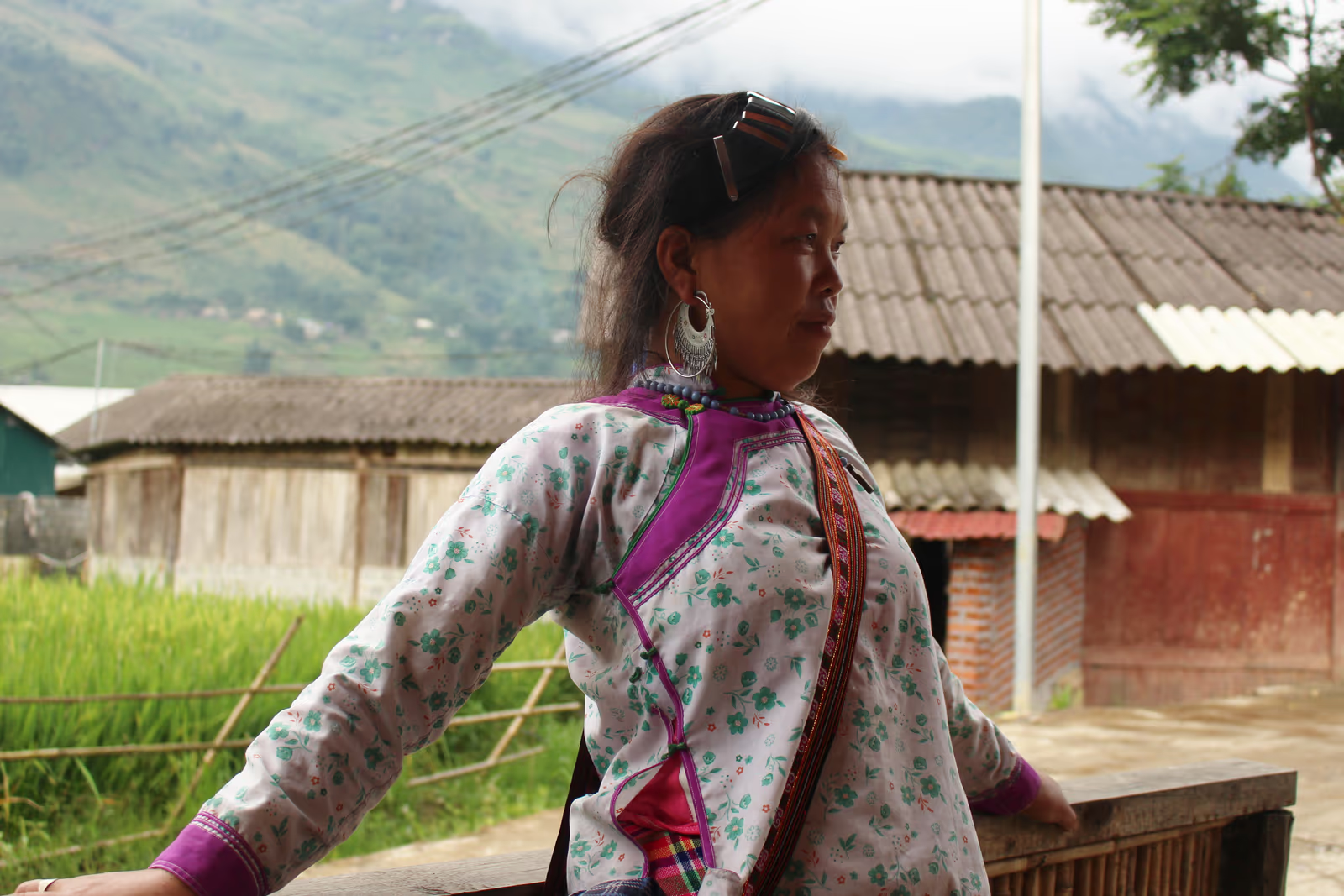
If you arrive expecting every ethnic community in Sapa to dress as distinctively as Black H'mong indigo or Red Dao red headdresses, Giay clothing can look almost disappointingly ordinary at first glance — and that's worth understanding rather than dismissing. Traditional Giay women's dress is a brightly colored, five-panel blouse that buttons under the right arm, often paired with a plaid or patterned headscarf and indigo trousers; men traditionally wore simple tunics and turbans in a similar palette. But because Giay communities in Lao Cai have had longer and closer day-to-day contact with Kinh Vietnamese market towns than more remote H'mong hamlets, everyday dress shifted toward standard Vietnamese clothing generations ago for most of the week, with traditional dress increasingly reserved for festivals like Roong Pooc, weddings, and formal occasions rather than daily wear.
This is a genuinely useful thing to understand before you go: the absence of visibly "traditional" dress on a Ta Van street on an ordinary Tuesday doesn't mean the culture has disappeared — it means you're looking at a community whose relationship with Vietnamese mainstream life runs a generation or two deeper than some of their neighbors, for reasons of geography and trade history rather than any lesser attachment to their own identity.
Visiting Respectfully: What Our Guides Tell Every Group
Ta Van receives more foot traffic from outside visitors than almost any other village in the Muong Hoa Valley, and that volume changes what "respectful" looks like in practice.
- Ask before photographing people, not just scenery. A smile and a gesture toward your camera is understood even without a shared language; if someone shakes their head, move on without pressing.
- Treat a homestay as someone's home, not a hotel. Offer to help clear dishes, keep noise down once the household settles for the night, and don't wander into rooms you haven't been shown.
- Buy handicrafts directly from the person who made them where you can tell — it's a more direct way for your money to reach a Giay or H'mong household than a souvenir shop in Sapa town.
- Don't assume everyone in "Ta Van" is Giay. As covered above, the commune includes Black H'mong and Red Dao hamlets too — if you're not sure who you're meeting, ask your guide.
Frequently Asked Questions
The Giay — also written Zay, Giáy, or Nhang — are a distinct ethnic group recognized separately by the Vietnamese government, numbering 67,858 people nationwide in the 2019 census. They are related to the Tay and Nung in that all three speak Tai-Kadai languages and share some lowland wet-rice farming traditions, but each is its own ethnic group with a different language, dress, and village history. In the Sapa area the Giay are most visible in Ta Van village, which is a Giay commune surrounded by Black H'mong hamlets — a useful landmark for telling the groups apart.
Ta Van commune itself was historically settled by Giay families and its old core — the houses closest to the Muong Hoa River and the suspension bridge — is Giay. But the commune's boundaries now take in several hamlets of Black H'mong and Red Dao households on the surrounding slopes, so a single trek through Ta Van today usually passes homes from more than one ethnic group. If you want a homestay specifically with a Giay family, say so when booking — our guides know which houses in Ta Van are Giay-run.
Giay belongs to the Tai-Kadai (Kra-Dai) language family, in the same broad branch as Tay, Nung, Lao, and Thai, and linguists classify it as closely related to the Bouyei language spoken across the border in Guangxi and Guizhou, China. It is tonal and uses its own vocabulary and grammar, not a dialect of Vietnamese. Nearly everyone in Ta Van today also speaks Vietnamese, learned at school, and younger guides and homestay hosts often speak functional English as well.
Roong Pooc, which translates roughly as "going down to the field," is the Giay community's spring festival marking the start of the rice-growing season, held on the Snake day of the first lunar month (so the date shifts year to year, usually falling in late January or February). It was recognized as a National Intangible Cultural Heritage in 2013. Centered on Ta Van, the festival includes a ceremony asking for good weather and a harvest, a ceremonial first furrow ploughed into a field, and games such as throwing a cloth ball (con) through a bamboo ring and tug-of-war. It has grown to involve neighboring Black H'mong and Red Dao communities in the Muong Hoa Valley as well, though the ceremony itself remains Giay-led.
A Giay homestay in Ta Van puts you in a ground-level timber house, usually one open living and sleeping area with mattresses laid out at night and a wood-fired kitchen at the back. Dinner is a shared family-style meal — usually rice, a stir-fried vegetable, tofu or pork, and often a glass of home-brewed rice wine offered as a welcome, not an obligation. Bathrooms are basic but functional (squat or Western toilet depending on the house, a hot-water shower in most now). What makes it worthwhile is the evening itself: sitting around the fire with the host family while a guide translates, watching the morning mist lift over the terraces from the front step before anyone else on the trail is awake.
Ta Van is the community most visitors encounter, but it is not the only one. Lao Cai province has roughly 32,000 Giay residents overall, and the largest concentration is actually in Bat Xat district to the north (around 14,770 people), with smaller communities in Muong Khuong and Van Ban districts. Those areas are farming districts without Sapa's trekking infrastructure, so in practice Ta Van remains the easiest place for a traveler to meet a Giay family and see Giay daily life firsthand.