
 Sinh Giang
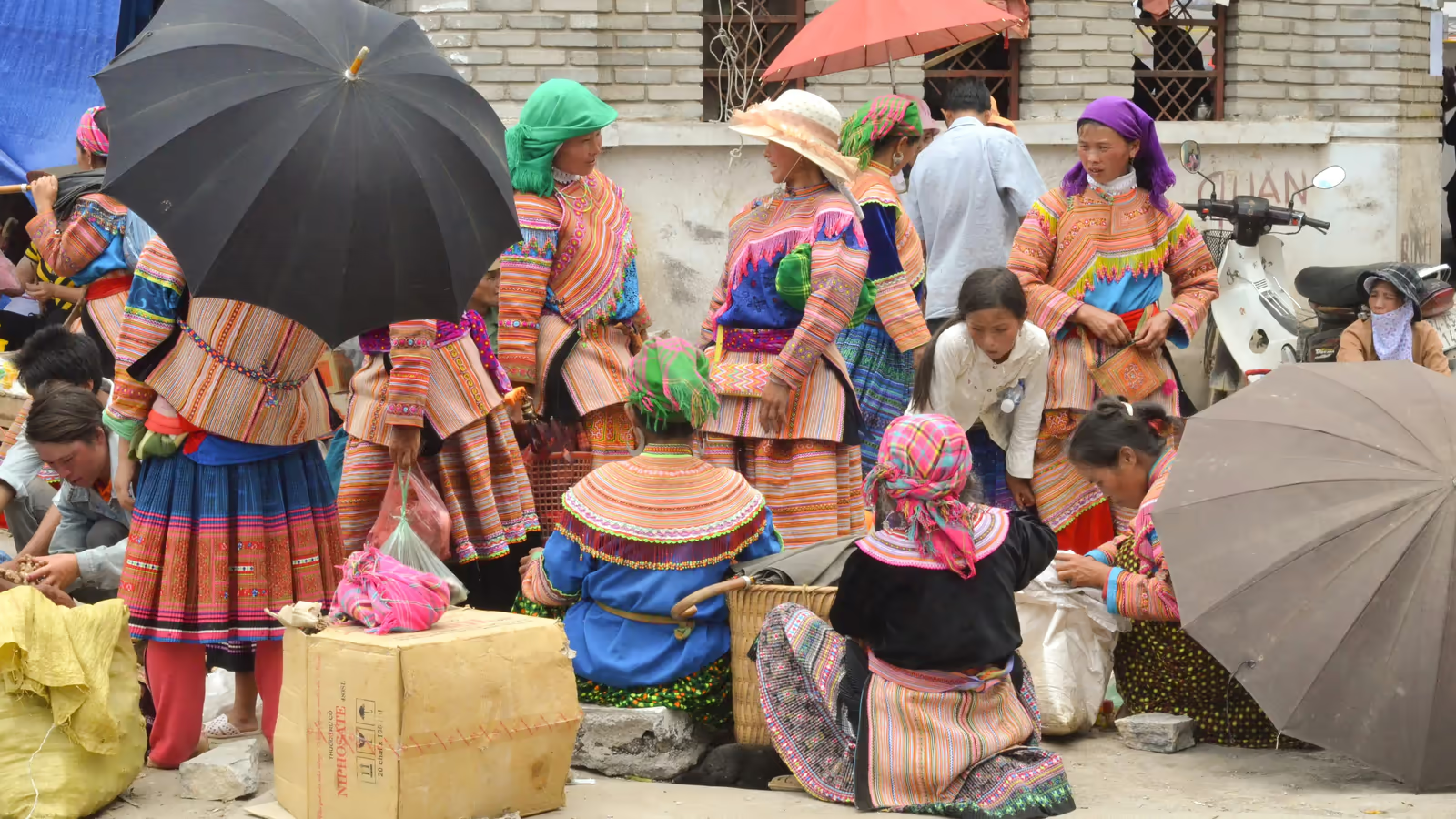
The Hmong are an ethnic people of the mountains of Southeast Asia and southern China who speak a language of the Hmong-Mien family, and Vietnam is home to 1,393,547 of them, according to the 1 April 2019 census survey reported by Nhan Dan. In Vietnam the name is written Mong, around Sapa you will often see it written H’mong, and in the United States, where more than 335,000 people counted themselves as Hmong in the 2020 census, it is simply Hmong. It is the same people under three spellings, and the words are not interchangeable with the Chinese name Miao, which covers more than the Hmong alone.
We are a Sapa trekking company, and our guides are Black H’mong from the villages around Sapa, so this guide is written from the trail side, not from a library. It explains who the Hmong are, how many there are and where, how to read the four main groups from their clothes, what the khen is, how the clan system and household spirits work, how Hmong New Year differs from Tet and from the Gau Tao festival, and how to meet Hmong people on a trek without turning them into scenery. Every figure carries its source and the date we checked it, 31 October 2026, and we say where a source is thin. For the Black H’mong around Sapa in depth, our Black H’mong people guide goes further; this page is the wider picture around it.
The Short Answer: Who the Hmong Are
The Hmong are one of the largest ethnic minorities in northern Vietnam, a people with their own language, their own clan system and a long tradition of farming steep mountainsides. In Vietnam they are one of six minority groups with more than one million people, alongside the Tay, Thai, Muong, Khmer and Nung. They live mostly above 1,000 metres, in the provinces that border China and Laos, and around Sapa most of the Hmong you meet are the Black Hmong.
Hmong is the English spelling used by most scholars and by the Hmong diaspora. Mong is the Vietnamese spelling (Mông, with a tone mark). H’mong, with an apostrophe, is the spelling many Sapa businesses and travel writers use, and we use it on the rest of this site. Vietnamese sources say the older outsider name Meo was replaced by Mong in official use from 1978; if you hear it, it is an old term.
How Many Hmong Are There, and Where
Nobody has a single trusted worldwide count, because China groups the Hmong inside the larger Miao category and several countries count them differently. An older estimate often repeated puts the total near five million; we could not find a recent count we trust, so treat that as a rough figure only. The table below keeps to national counts we could trace to a source.
| Country | People | Source and year |
|---|---|---|
| Vietnam | 1,393,547 | Ethnic Committee and General Statistics Office survey, 1 April 2019 |
| Laos | 595,028 | Census, 2015 (via Wikipedia) |
| United States | 335,919 | 2020 census; Pew Research puts self-identified Hmong at about 360,000 in 2023 |
| Thailand | 250,070 | 2015 (via Wikipedia, flagged there as needing a source) |
| China | Not counted separately | The census counts 11,067,929 Miao in 2020; the Hmong are one branch of that category |
Inside Vietnam, the Ethnic Committee survey lists Ha Giang, Son La, Dien Bien, Lao Cai, Lai Chau, Yen Bai, Thanh Hoa, Nghe An, Dak Lak and Dak Nong among the provinces with the largest communities, and smaller numbers in Cao Bang, Bac Kan and Lam Dong. Lao Cai is where Sapa sits. In the United States, the Pew Research fact sheet and the Hmong Studies Journal put the largest populations in California (107,458), Minnesota (95,094) and Wisconsin (62,331) in 2020, a pattern that comes from refugee resettlement after the Vietnam War, and it explains why so many English-language pages about the Hmong are about St Paul and Fresno, not about the Muong Hoa Valley.
That difference matters to a traveller. When someone in the US says “Hmong New Year” they mean a large autumn community festival, usually with ball-tossing, dance contests and a food hall. When someone in Sapa says it, they may mean the family festival of the twelfth lunar month, or they may mean a spring festival called Gau Tao. We untangle the three further down.
Where the Hmong Came From
Historians do not agree on a single origin story, and the honest version is that the early centuries are uncertain. A common account places the ancestors of the Hmong in the Yellow River basin and the middle Yangtze region of what is now China, followed by centuries of southward movement under pressure from wars and migrations. Another account, favoured in some Hmong communities, stresses an even older homeland and a flight from conflict. Neither is settled, so we will not pretend a date.
What is better documented is the later movement. Hmong families moved south from China into the highlands of northern Vietnam, Laos and Thailand over the 18th and 19th centuries, and again in the 20th, when war pushed many families from Laos to Thailand and then to the United States, France, Australia and Canada. In northern Vietnam, they settled the high ground nobody else wanted, which is why the Hmong villages around Sapa sit on slopes and ridges and why their farming is built around terraces, maize and upland rice.
We use the cautious wording on purpose. Pages that give exact centuries for the first migration often repeat each other. If you want to go deeper, the Hmong Studies Journal and university Hmong studies centres in the United States are the places to read, and Vietnamese ethnology texts give the view from inside Vietnam.
Language and Writing
Hmong is a tonal language of the Hmong-Mien family, which linguists treat as its own family, not as a branch of Chinese or Tibetan. Several Hmong dialects exist, and the two best known in the West, White Hmong and Green Hmong, are mutually understandable. In Vietnam the language spoken around Sapa is a different dialect from the ones in the United States, and a Hmong-American visitor and a Sapa grandmother may need a few minutes to find each other’s words.
Two Latin-letter writing systems matter today. The Romanised Popular Alphabet (RPA) was developed in Laos in the 1950s and became the standard in the diaspora; it marks tones with a final letter, so the word “Hmoob” is the Hmong writing of “Hmong”. Vietnam has its own Latin-based Mong script, which a Vietnamese journal abstract says was promulgated by Decree 206/CP of 27 November 1961. We could not open the full text of that article, so treat the decree number as a pointer, not a settled fact. The same research notes that a 2014 Ethnic Committee survey in five provinces found demand for the international script, which tells you that Hmong people in Vietnam are themselves choosing how to write their own language.
For visitors the practical points are simple. Most Hmong women and men in Sapa speak Hmong at home and many also speak Vietnamese. English is learned mostly through guiding, homestays and selling, and it is often excellent among people who work with visitors every day. A few Hmong words go a long way: nyob zoo is the common greeting in the diaspora, but Sapa’s dialect has its own forms, so ask your guide which one to use.
The Four Groups in Vietnam and How to Read Their Clothes
Vietnamese sources name four main Hmong groups by what the women wear: Black, Flower, White and Green. These are descriptions of dress and dialect, not of skin or status, and members of different groups marry, trade and share markets. The Ethnic Committee survey reported by Nhan Dan describes the dress this way, and a Vietnam tourism-board source adds where you are likely to see each.
Black Hmong
Sapa- Dress
- Indigo-dyed hemp or cotton, skirts patterned with beeswax resist, jackets with a V-shaped neck
- Where
- The largest group in Vietnam; around Sapa and in parts of Ha Giang, and at Muong Hum market on Sundays
Flower Hmong
Bac Ha, Ha Giang- Dress
- Brilliant embroidered or printed bands, pleated skirts and an embroidered coloured bodice
- Where
- Dong Van and Meo Vac in Ha Giang; most of the women at Bac Ha market are Flower Hmong
White Hmong
Flax and white- Dress
- Traditionally woven from flax, with a white skirt and a V-shaped collar
- Where
- Smaller communities across the north; we could not confirm exact districts, so we name none
Green Hmong
Tube skirts- Dress
- Tube-shaped skirts and hair set in a bun with a comb of bone or animal claw
- Where
- We could not confirm exact districts, so we name none
If you want a simple rule on the ground: dark indigo with bands of embroidery and little other colour means Black Hmong, which is what you will see in Lao Chai, Ta Van, Y Linh Ho and Sin Chai. Riotous colour in layered bands means Flower Hmong, which is what you see at Bac Ha. Vietnamese sources also give other local names for the groups, such as Mong Do for White and Mong Lenh for Flower, but they vary by region and we do not rely on them.
What the Clothes Are Made From
A Hmong outfit is an object made by hand over months. The usual sequence is growing hemp, stripping and spinning the fibre, weaving it into cloth, drawing patterns on the cloth with hot beeswax, dipping it in indigo so the wax-covered lines stay pale, boiling the wax out, and then embroidering and appliqueing the finished pieces. Nhan Dan describes the white Hmong women growing flax for their cloth, and a tourism-board source says indigo dips are repeated many times and that embroidery is done freehand, handed from mother to daughter. The number of dips quoted varies by source, from 10 to 30, so we say only that it is repeated.
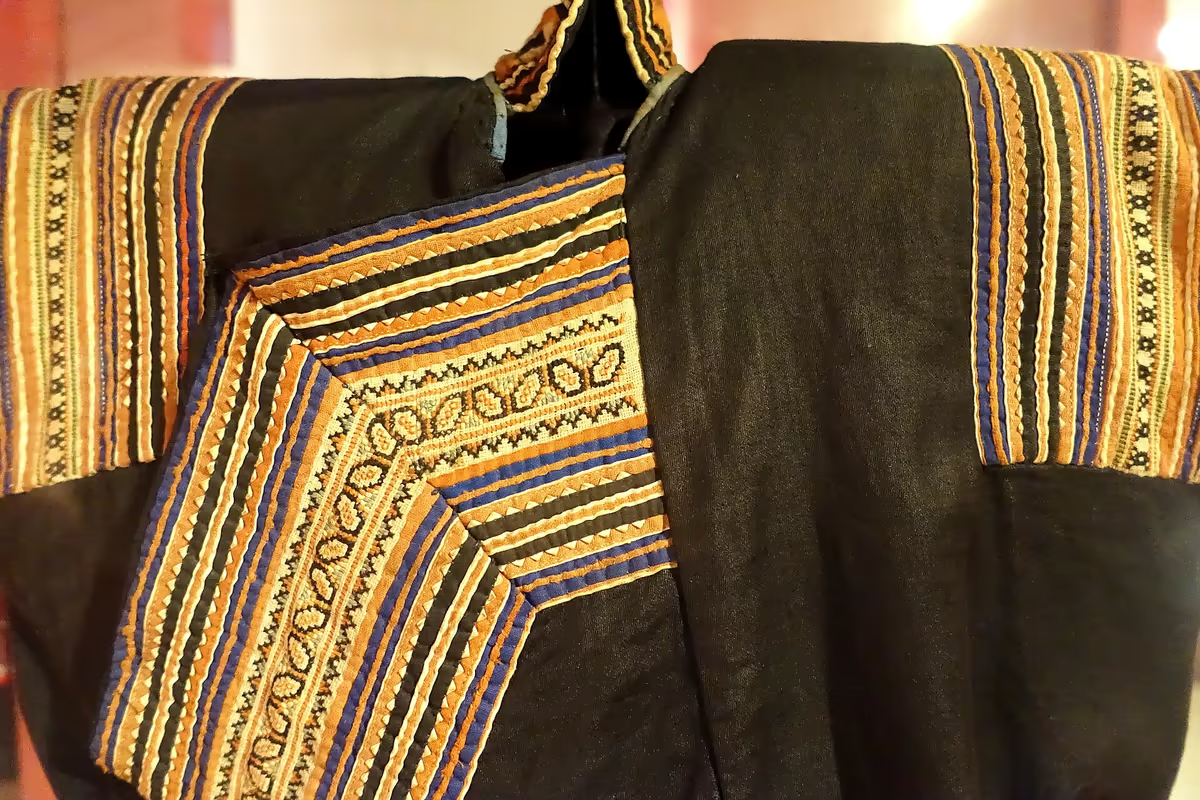
Silver matters too. Heavy silver necklaces, bracelets and hair ornaments are a family’s savings and a sign of a woman’s standing, and Sapa recognises Hmong silver carving as a national intangible heritage item. The Baolaocai news site lists Sapa’s 14 national intangible heritage items, and three of them are Hmong: the Gau Tao festival (2012), Hmong silver carving (2013) and the art of making Black Hmong costume (2023). Our Black H’mong culture guide covers indigo dyeing and the meaning of the patterns, and Sapa’s best workshops and craft centres lists where you can watch it done, and where your money reaches the maker.
Clans, Homes and Beliefs
Hmong society is built on clans, descent through the father’s line. A person belongs to their father’s clan, shares a clan name and may not marry anyone from the same clan; some clans are considered linked and do not intermarry either. In Vietnam, family names such as Vang, Sung and Thao appear in Vietnam Law Magazine’s description of Hmong custom. The number of clans depends on who is counting, and the “18 clans” you will read in US sources is a convention, not a census. We do not give a number.
The family home is the centre of religious life. Nhan Dan describes an altar for the ancestors in the middle room of the house, along with spirits of the hearth and the doorway, a spirit protecting the village and a spirit of the land. A ritual specialist, often called a shaman in English, acts as the go-between. Hmong belief draws on ancestor worship and has taken pieces of Confucian, Daoist and Buddhist ideas over the centuries, and part of the community has also become Protestant or Catholic. Practices differ by family, so a guide in one village may do things another family does not. Never touch an altar, and do not step over a doorway threshold carelessly; ask your guide first if you are unsure.
Black H'mong Villages on Foot, With Black H'mong Guides
 1-Day Trek
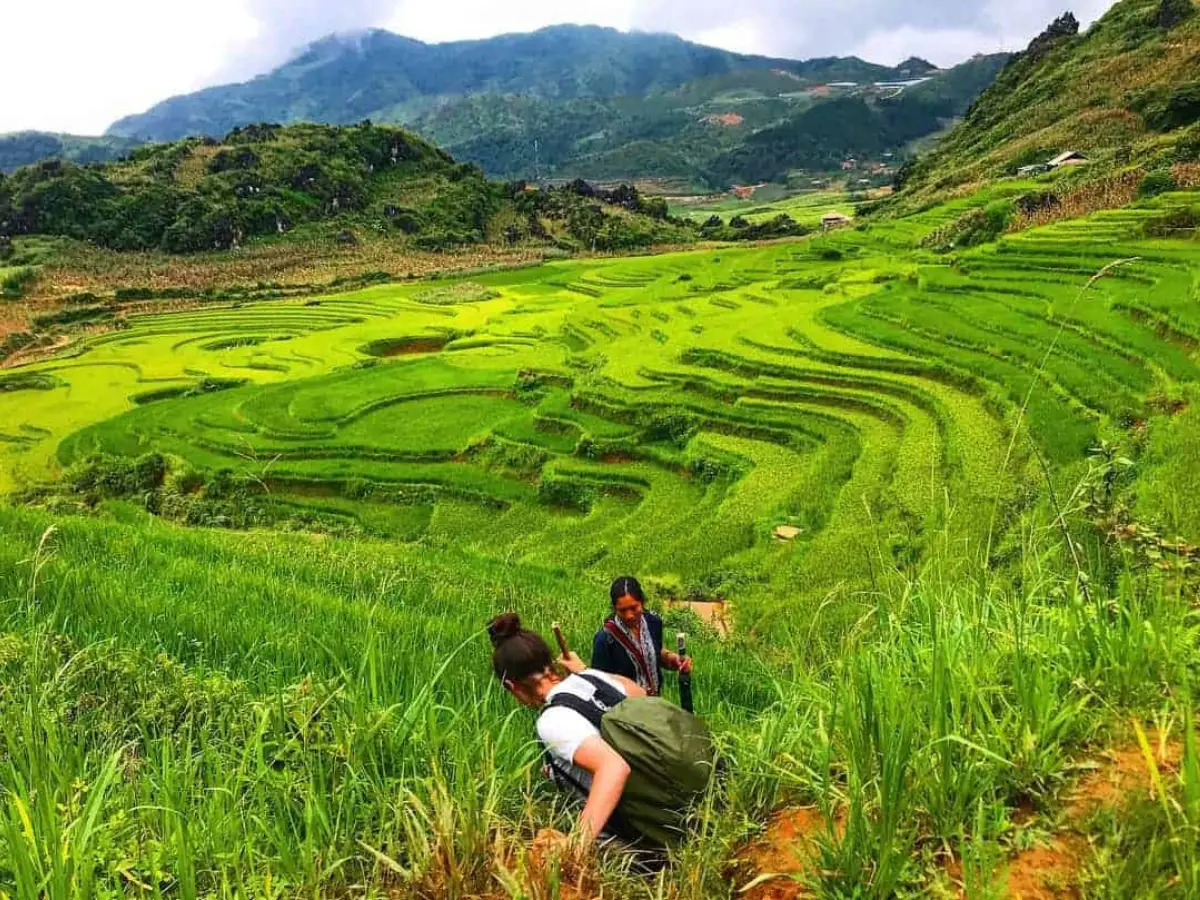
Trekking Through Rice Terraced Fields
The Lao Chai to Ta Van valley day, with a local guide and a finish in Sapa town.
 Culture
Rice Paddies and Cultures – Easy Hiking
Flat valley routes through working paddies, with stops at village homes.
 Homestay
Rice Terraced Fields & Homestay
A night with a local family in the valley.
The Khen: A Bamboo Instrument That Carries Meaning
The khen is the Hmong free-reed mouth organ, a set of long bamboo pipes fitted into a wooden wind chest and blown while the player dances. It is the instrument people most associate with Hmong culture, and it has uses that are serious as well as joyful. Baolaocai reports that two or four players take part in a funeral, each piece lasting 15 to 30 minutes and the playing sometimes continuing for two to four days, because the Hmong believe the sound helps the soul of the dead find its way to the ancestors. Young men also use the khen to court.
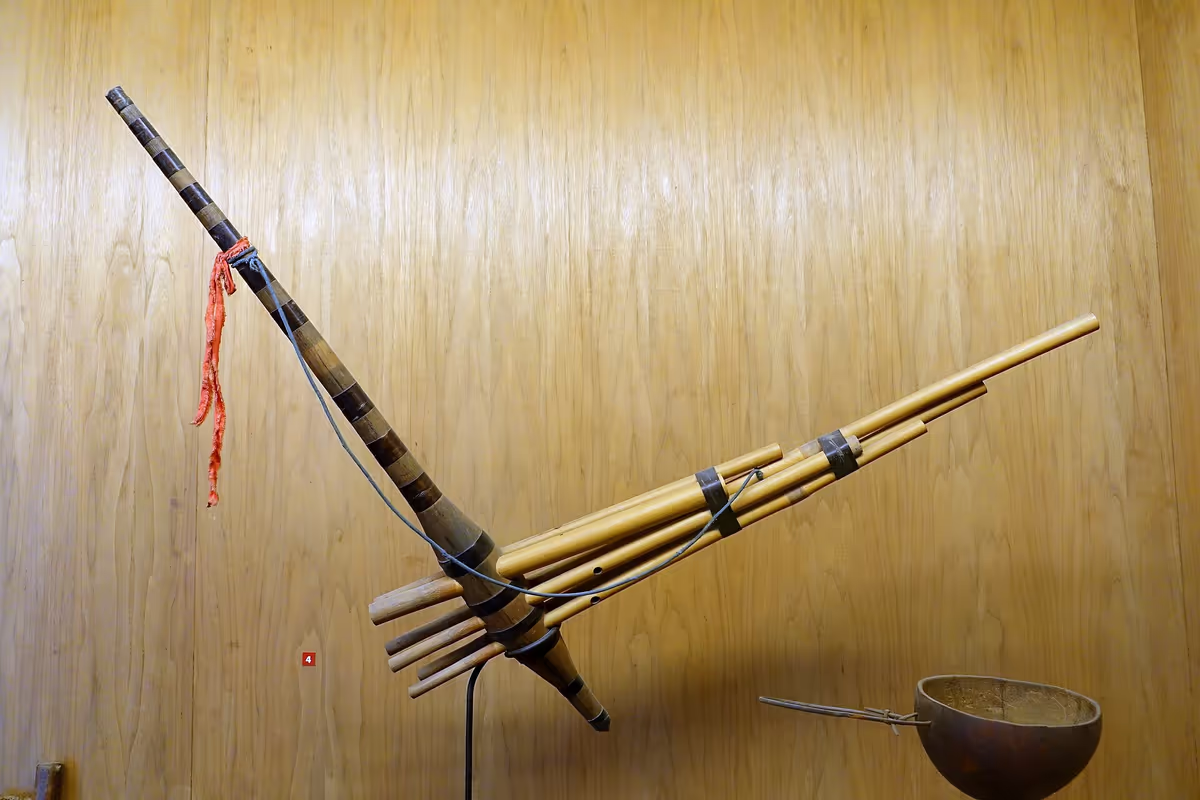
Vietnam has been formally recognising the instrument. Nhan Dan reports that the Hmong khen art of Mu Cang Chai, Tram Tau and Van Chan in Yen Bai received its national intangible heritage certificate on 23 December 2023 under Decision 1401/QD-BVHTTDL, and that Dien Bien’s khen was listed by Decision 65/QD-BVHTTDL of 12 January 2022. Because the khen is tied to funerals and courtship, ask before you photograph a player, and never pick up a khen that is not offered to you. In Sapa you can hear the khen on Saturday evenings at the Love Market; our Sapa Love Market guide explains what is performed and how to attend respectfully.
Hmong New Year, Tet and Gau Tao: Three Different Events
These three are often confused, even on tourism pages. Hmong New Year in Vietnam is a family festival held about a month before the Vietnamese Tet, with sticky rice cakes, men men maize flour, khen and flute music, and visits between families, according to Nhan Dan, which places it in the twelfth lunar month; our New Year guide, counting by the Hmong lunar calendar, calls it Nao Pe Chau and puts it on the 30th day of the 11th Hmong month, so the two agree on the season even where the month names differ. Hmong communities abroad celebrate their New Year in autumn, usually between October and December around the harvest, and Wikipedia notes that the diaspora events often fall near Thanksgiving. Gau Tao is another thing: a festival held in spring in the Hmong highlands, with prayers for children and good luck, which Sapa recognised as a national heritage item in 2012.
Hmong New Year in Vietnam
- A family festival about a month before Tet
- Rice cakes, maize, khen and flute music
- Mostly in villages; not a ticketed show
The diaspora New Year
- An autumn community festival, October to December
- Held in the United States and other host countries
- Large public events with performances and food
Dates move every year with the lunar calendar, and we do not give a date here that we cannot trace. For the Sapa festival dates in 2026, 2027 and 2028, see Hmong New Year and the Gau Tao festival in Sapa, and for how Tet changes crowds and prices, our Tet 2027 guide.
Marriage, Poverty and Schooling: Said Plainly
Hmong communities in the highlands are among the poorer groups in Vietnam. The Ethnic Committee’s 2019 survey, as reported by Nhan Dan, found a poverty rate of 52.6 per cent for Hmong households, a near-poor rate of 12.8 per cent, and a literacy rate of 54.3 per cent among people aged 15 and over. School attendance was 99.9 per cent at primary, 77.3 per cent at lower secondary and 29.5 per cent at upper secondary, which shows how many children leave school after the early grades. These are survey figures for 2019, not a description of any one village, and Sapa’s tourism income has made the Muong Hoa Valley better off than many Hmong districts.
Marriage customs deserve a careful sentence, because they are often misreported. Hmong young people choose their partners, and weddings are often in winter. The custom Vietnamese press calls keo vo, pulling a wife, is described by Dai Doan Ket as an arrangement in which a couple agree in advance and a simple ceremony follows. Bao Phap Luat writes that in some places it has been twisted into forced marriage, and says Vietnamese law forbids that: it cites Article 5 of the Law on Marriage and Family and Article 157 of the 2015 Penal Code on unlawful detention. We have not read the legal texts ourselves, so we repeat the press’s reading and no more. What a traveller should take from it is that the old custom and the crime are two different things, and that Hmong families themselves are the ones working to end abuses.
Poverty figures and marriage customs are real, and so are the university-educated Hmong guides, teachers, doctors and business owners of Sapa. A visit does not make you a judge of either. Listen more than you ask, and let people tell you what they wish to share.
Meeting Hmong People on a Trek: How to Do It Well
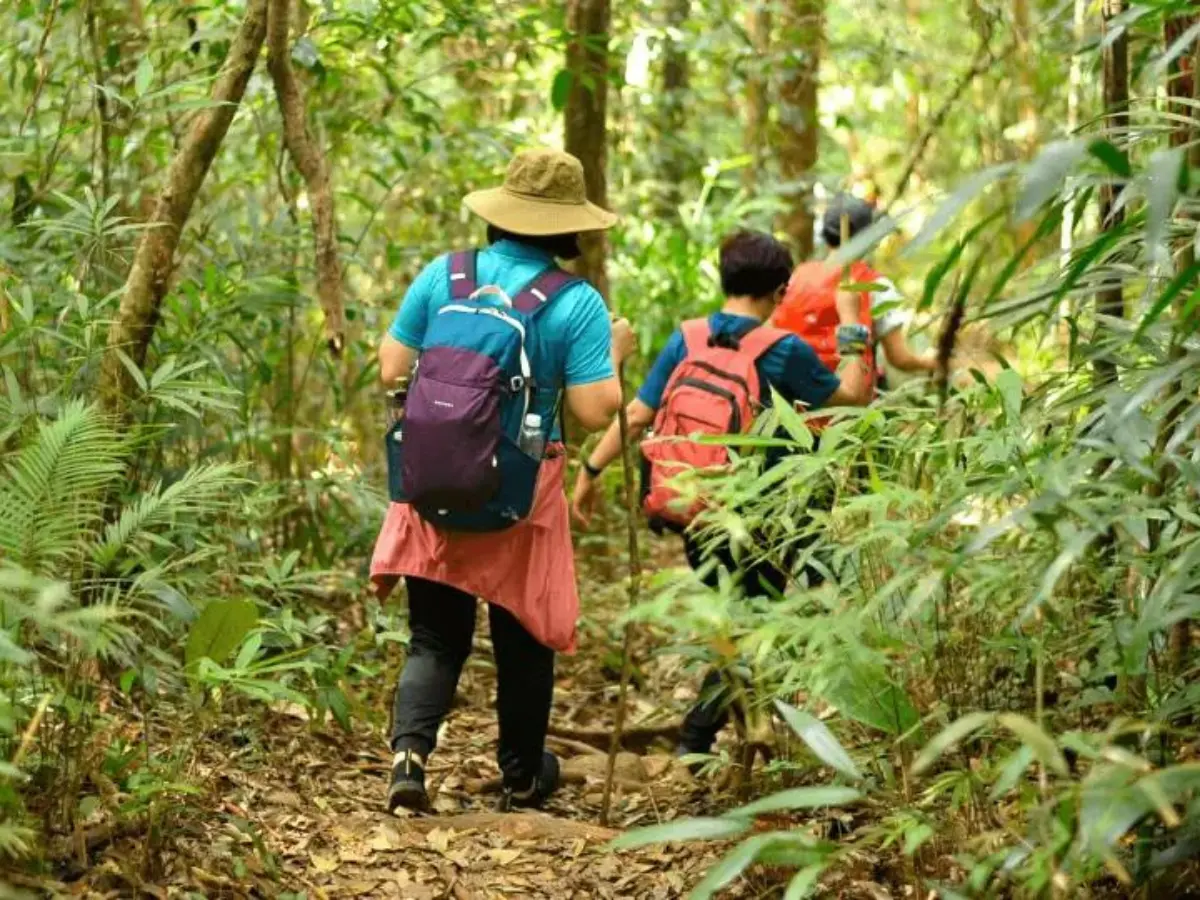
The best way to meet Hmong people is the slow way: walk with a guide who is from the area, stay one night in a home you booked in advance, eat what the family cooks and pay fairly. The Muong Hoa Valley trek is the classic route; our Lao Chai to Ta Van trek guide and the village guides for Y Linh Ho, Ta Van, Cat Cat and Ta Phin say what each stretch is like. The advice below follows a Vietnam tourism-board guide on Hmong culture and our own habits as a company with Hmong guides, and where it is ours we mark it.
Ask before you photograph a person
Smile, point at your camera and wait for a yes. A tourism-board source says the same, and adds that you should not ask anyone to put on traditional dress for a picture.
Every timeTake your shoes off if the family does
Look at the doorway. If there are shoes lined up outside, add yours. Do not step on or sit by the altar in the middle room.
At the doorDo not hand money or sweets to children
It teaches children to ask visitors for things. Our habit is to give nothing directly and to leave the family a fair payment for the night, or to buy from a stall and ask who made the item.
Our practiceBuy handicrafts from the maker, and bargain gently
The tourism-board guide suggests asking for about 10 to 20 per cent off, not more. A hand-embroidered piece takes weeks, so if the price looks high, it probably is the price of the work.
At a stallIf you are travelling with children, a flat valley route works better than a steep one, and Sapa with kids lists the options. The homestay route is covered in our Sapa trekking homestay guide, and what a family cooks for you is in what to eat in Sapa.
Who You Will Meet Around Sapa, and in the Wider North
Around Sapa, the Hmong are mostly Black Hmong, with the Red Dao in Ta Phin and Giay at Ta Van; they are three different peoples, and a guide will gently correct you if you mix them up. Our guides to the Red Dao, the Giay and the Tay of Ban Ho are the companions to this one. If you want to see Flower Hmong dress, the Sunday market at Bac Ha is the place most visitors go; the Ethnic Committee survey and tourism sources place the Flower Hmong in Ha Giang and around Bac Ha. Quieter Black Hmong hamlets are covered in the guides to Hau Thao, Sin Chai and Ma Tra.
If you are coming from Hanoi, our transport page lists the sleeper bus, limousine and night train to Sapa, and best villages near Sapa helps you choose which valley to walk first.
How We Checked This
We opened these pages on 31 October 2026: the Nhan Dan special report on the Hmong ethnic group (which reports the Ethnic Committee and General Statistics Office survey of 2019); the United Nations Vietnam summary of the 2019 census results; the Pew Research Hmong fact sheet; the Hmong Studies Journal and Wisconsin Asian Pacific Islander data on 2020 US counts; Wikipedia’s Hmong people, Miao people and Hmong New Year articles; the St Olaf College Hmong clan pages; Vietnam Law Magazine on Hmong customs; Baolaocai on the khen and on Sapa’s heritage items; Nhan Dan on the khen decisions; Dai Doan Ket and Bao Phap Luat on the keo vo custom; a Vietnam tourism-board guide to Hmong markets and etiquette; and a Vietnamese journal abstract on the Hmong script.
What we could not confirm: the exact count by province in 2019, the groups’ exact districts (so we name none for White and Green), the number of clans, the text of the 1961 script decree and of the marriage laws, and the exact date of any Hmong New Year in 2026. The Sapa guides write about Hmong culture from experience as Hmong people; if you spot an error, tell us and we will fix it.
Longer Routes Through Hmong, Dao and Giay Country
 3 Days
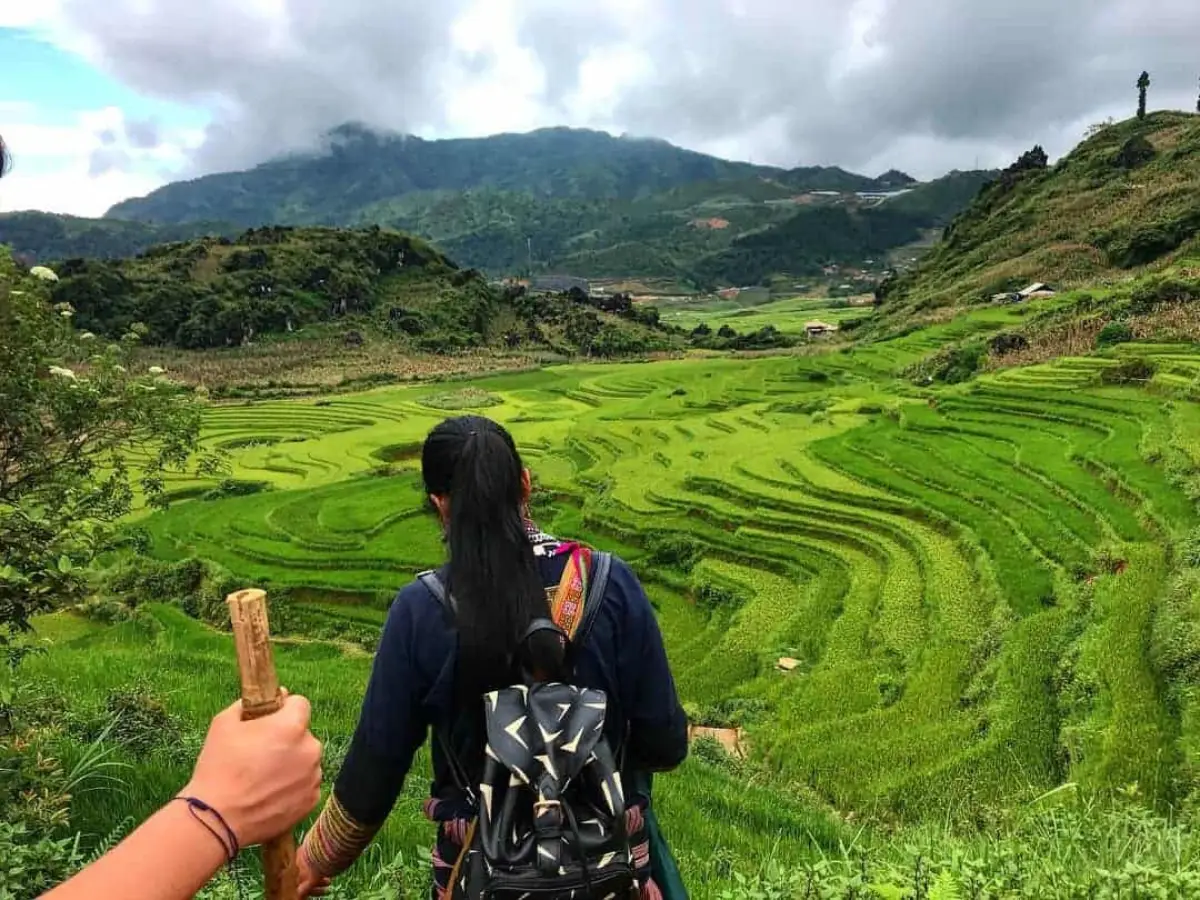
Experience The Real Sapa
Three days through quieter villages, with two nights hosted by local families.
 Local Favourite
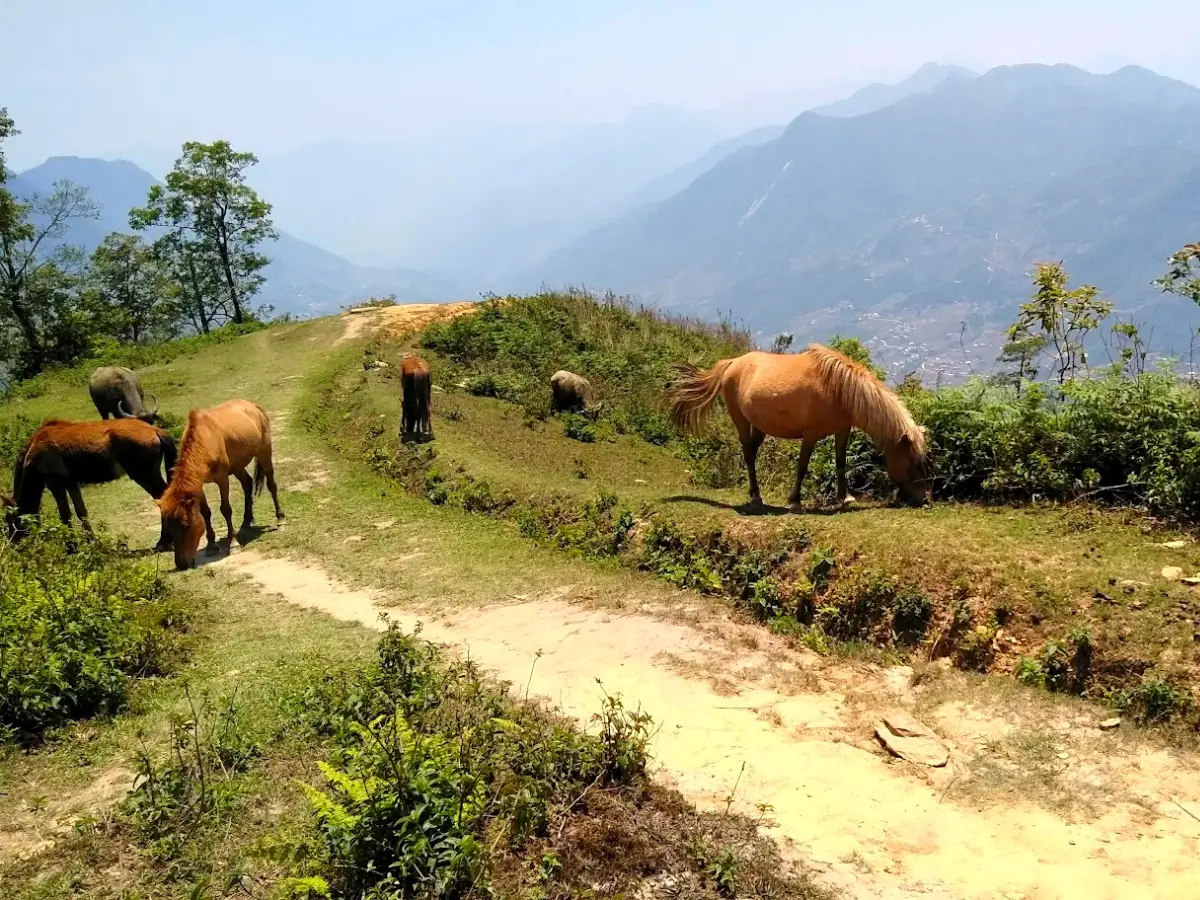
Mountain Views and Villages Trek
Quieter ridge and village trails above the valley.
 Cable Car
Fansipan Trek One Day Tour – Roof of Indochina
Cable car to Indochina's highest peak, above the clouds on a clear day.
Rent at Our Office Before You Trek
 Gear Rental
Trekking Boots Rental
Waterproof ankle-support boots. Cleaned and checked before each rental. Available at 105 Thach Son Street.
 Gear Rental
Walking Poles Rental
Trekking poles available to rent at $2/day at our office, 105 Thach Son Street. Essential for descents.
Frequently Asked Questions
The Hmong are an ethnic people of the mountains of Southeast Asia and southern China who speak a language of the Hmong-Mien family. The 2019 census survey counts 1,393,547 of them in Vietnam, and the 2020 US census counts 335,919 in the United States. Around Sapa most Hmong people are Black Hmong.
A survey by the Ethnic Committee and the General Statistics Office, reported by Nhan Dan, counted 1,393,547 Hmong in Vietnam on 1 April 2019. They are one of six minority groups with more than one million people, with the Tay, Thai, Muong, Khmer and Nung.
Not exactly. China counts the Hmong inside a larger official category called Miao, which was 11,067,929 people in the 2020 census. The Hmong are one branch of that category, so the two numbers cannot be compared.
Hmong is the English spelling used by most scholars and by the diaspora. Mong is the Vietnamese spelling, and H'mong is common on Sapa businesses and travel pages. They all mean the same people. The older outsider name Meo was replaced by Mong in official Vietnamese use from 1978, according to Vietnamese sources.
Vietnamese sources name four main groups by dress and dialect: Black, Flower, White and Green. Black Hmong, the largest group, live around Sapa. Flower Hmong are seen in Ha Giang and at Bac Ha market. Members of different groups share markets and marry.
It depends which one you mean. In Vietnam the Hmong New Year is a family festival held about a month before Tet, according to Nhan Dan. Diaspora communities celebrate between October and December. Gau Tao is a separate spring festival in the Sapa highlands, so check dates for the year you travel.
Hmong is a tonal language of the Hmong-Mien family, which linguists treat as its own family. Several dialects exist, and White Hmong and Green Hmong are mutually understandable. Most Hmong in Sapa also speak Vietnamese, and many guides speak English.
Yes, if you go respectfully. Ask before photographing a person, do not ask anyone to change into traditional dress, take your shoes off if the family does, give nothing directly to children, and buy handicrafts from the maker. A local guide from the area makes all of this easier.