 Sinh Giang
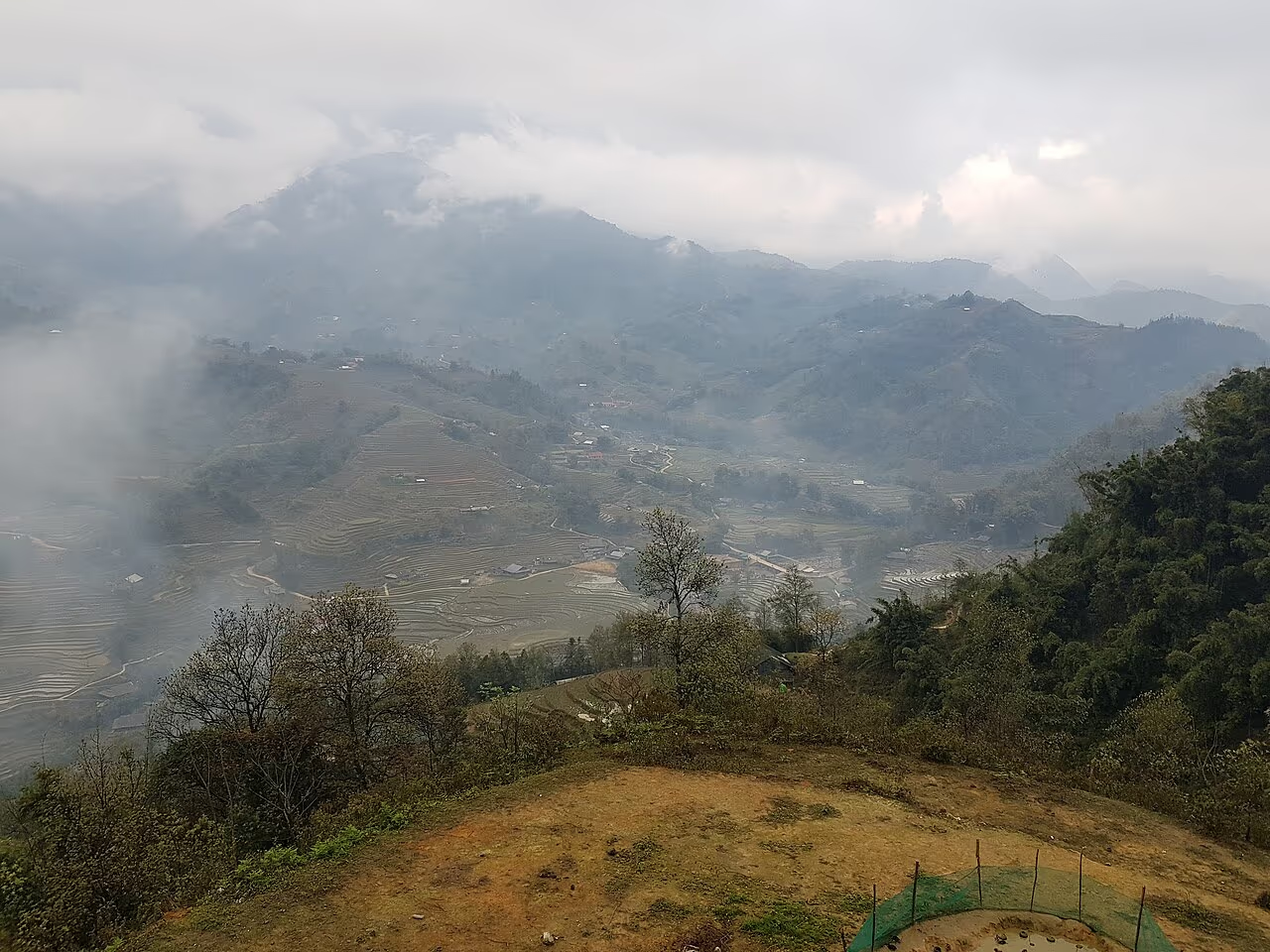
The Lao Chai Ta Van trek is the classic Sapa day hike — a roughly 10 to 14 km / 6 to 9 mile walk that drops out of Sapa town down into the Muong Hoa Valley and follows the stream through the villages of Y Linh Ho, Lao Chai and Ta Van, past some of the most photographed rice terraces in Vietnam. It is the route most first-time visitors picture when they imagine "trekking in Sapa," and for good reason: it packs terraces, two ethnic-minority villages, a river valley and a home-cooked lunch into a single moderate day on foot. This is the trek, start to finish — the route, the distance, how hard it really is, what you will see, and how to walk it well.
I am Sinh Giang, and our Black H'mong guides lead the Lao Chai to Ta Van route several times a week from our office at 105 Thach Son Street. This guide is about the walk itself — if you are after the deep history and homestays of the destination village, read our companion Ta Van village guide; here we stay on the trail.
The Lao Chai Ta Van Trek at a Glance
The Lao Chai Ta Van trek is a moderate half-to-full-day walk of about 10 to 14 km with a gentle net descent from Sapa town into the valley floor, suitable for anyone in reasonable health who can walk for a few hours. Here are the key numbers before we get into the route.
You can walk the Lao Chai Ta Van trek as a one-day tour or fold it into a two-day trip with a homestay in Ta Van — both are popular, and the route is the same either way. It is a moderate trek, not a wilderness expedition: the paths are well used, your guide knows every turn, and the biggest challenge is usually mud after rain rather than the distance itself.
The Route, Village by Village
The Lao Chai Ta Van trek runs from Sapa town down through Y Linh Ho, on to Lao Chai for lunch, and finishes in Ta Van by the Muong Hoa stream — a steady descent that follows the valley the whole way. Here is the shape of the walk you will actually do.
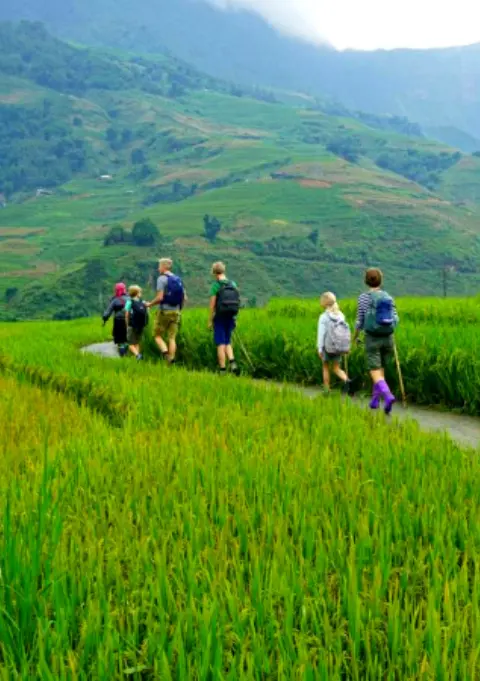
The day usually begins in Sapa town, where we pick you up before driving a short way to the trailhead above Y Linh Ho — a scattered Black H'mong hamlet of wooden houses clinging to the hillside. From here the trail drops on narrow dirt paths between the terraces down towards the valley floor. This first stretch is the steepest and, after rain, the muddiest, so it is where your walking poles earn their keep. You then follow the Muong Hoa stream downstream to Lao Chai, the largest Black H'mong village on the route, where terraces fan out across the whole hillside and we usually stop for a home-cooked lunch. The final, gentler section crosses the valley to Ta Van, home to the Giay people as well as H'mong families, where the trek ends beside the river — either at your transfer back to Sapa or at your homestay for the night. Total walking time is four to six hours depending on your pace, the weather, and how long you linger for photos and tea.
What You'll See on the Trail
Along the Lao Chai Ta Van trek you walk through three things in constant rotation: rice terraces, working villages, and the river valley that ties them together. Each is worth slowing down for.
The rice terraces
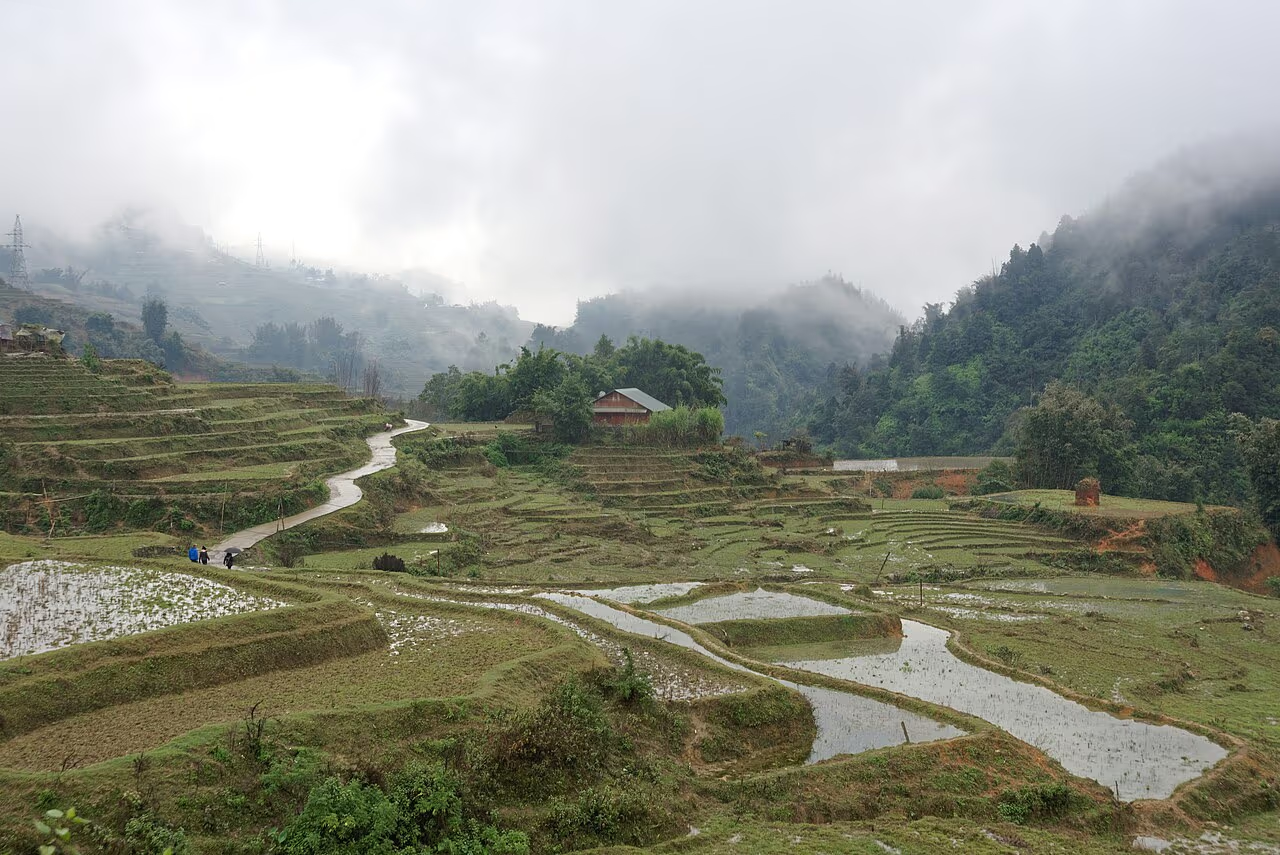
Hand-cut into the Muong Hoa hillsides over generations. Green from spring, mirror-flooded around June, and gold at the September–October harvest.
The villages & people
Black H'mong hamlets at Y Linh Ho and Lao Chai, and the Giay community at Ta Van — real working villages, not a set built for visitors.
The stream & bridges
The Muong Hoa stream runs the length of the valley, crossed by bamboo and suspension bridges — the cool, green heart of the walk.
How Hard Is the Lao Chai Ta Van Trek?
The Lao Chai Ta Van trek is moderate — comfortable for most reasonably fit adults and older teenagers, but not effortless, because the dirt paths can be steep and slippery, especially the descent from Y Linh Ho and any section wet from rain. It is the fitness required to walk for four to six hours with breaks, not the fitness of a mountain climb.
There is no serious altitude and no technical scrambling — the valley sits far below Fansipan, so breathing is easy the whole way. What makes it a "moderate" rather than "easy" trek is the surface: after rain the clay paths turn genuinely slick, and the ups and downs between terraces add up over the day. If you walk regularly at home you will find it very manageable; if you are less active, it is still doable at a slower pace, and we simply build in more rest stops. Good grip underfoot and a pair of walking poles make the single biggest difference — we provide poles at the office, and your guide sets the pace to the group. For a fuller breakdown of Sapa's trekking grades, see our guide to whether Sapa trekking is hard.
Tours That Trek Lao Chai to Ta Van
 Best Seller
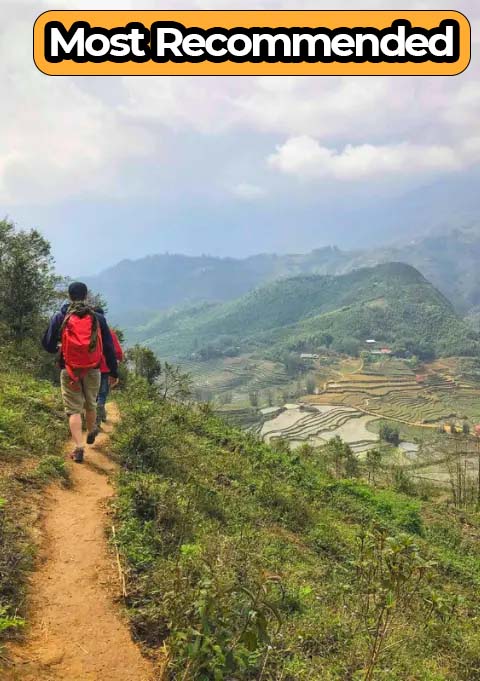
Trekking Through Rice Terraced Fields
Walk the Muong Hoa Valley floor through Lao Chai & Ta Van — our most-booked day trek.
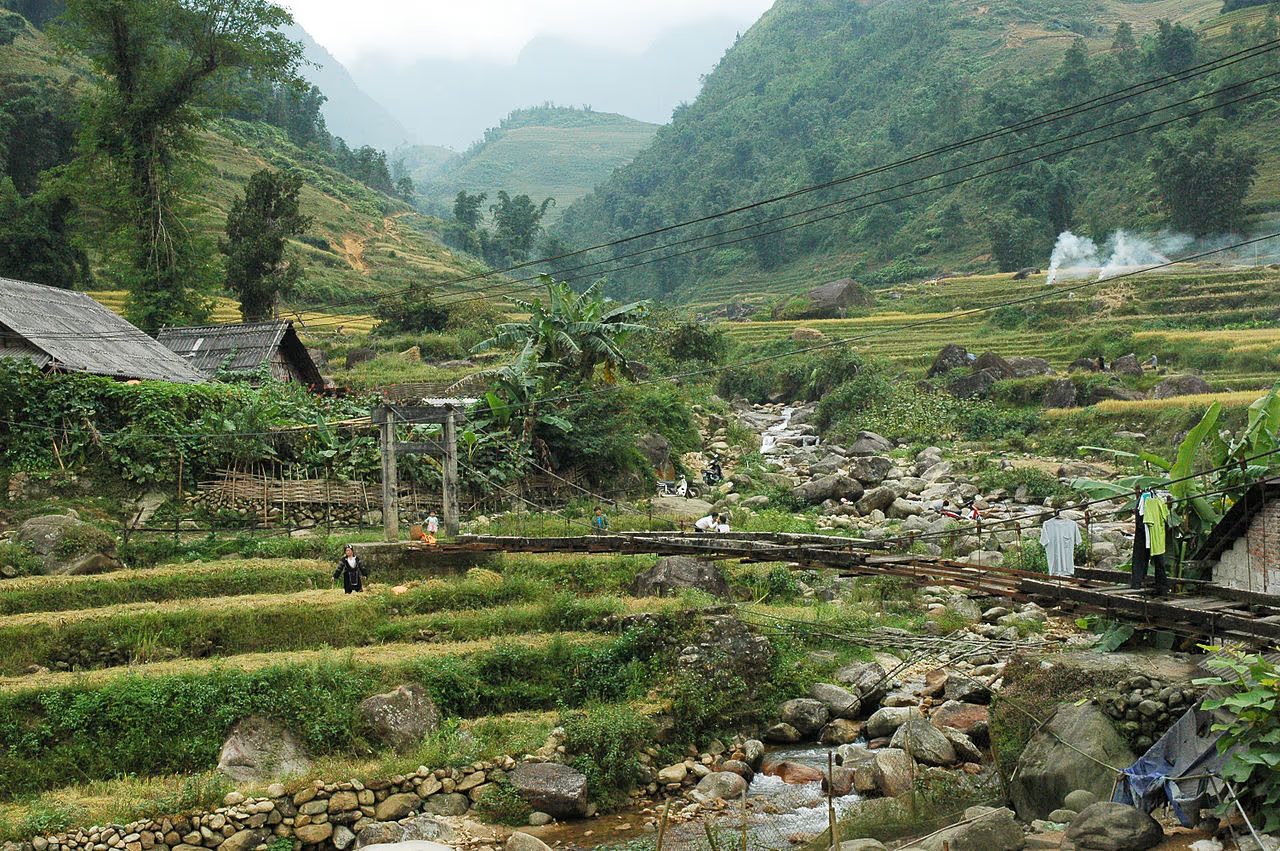
Rice Paddies and Cultures – Easy Hiking
Gentle paths, big terrace views and time in the villages — an easy, culture-rich day.
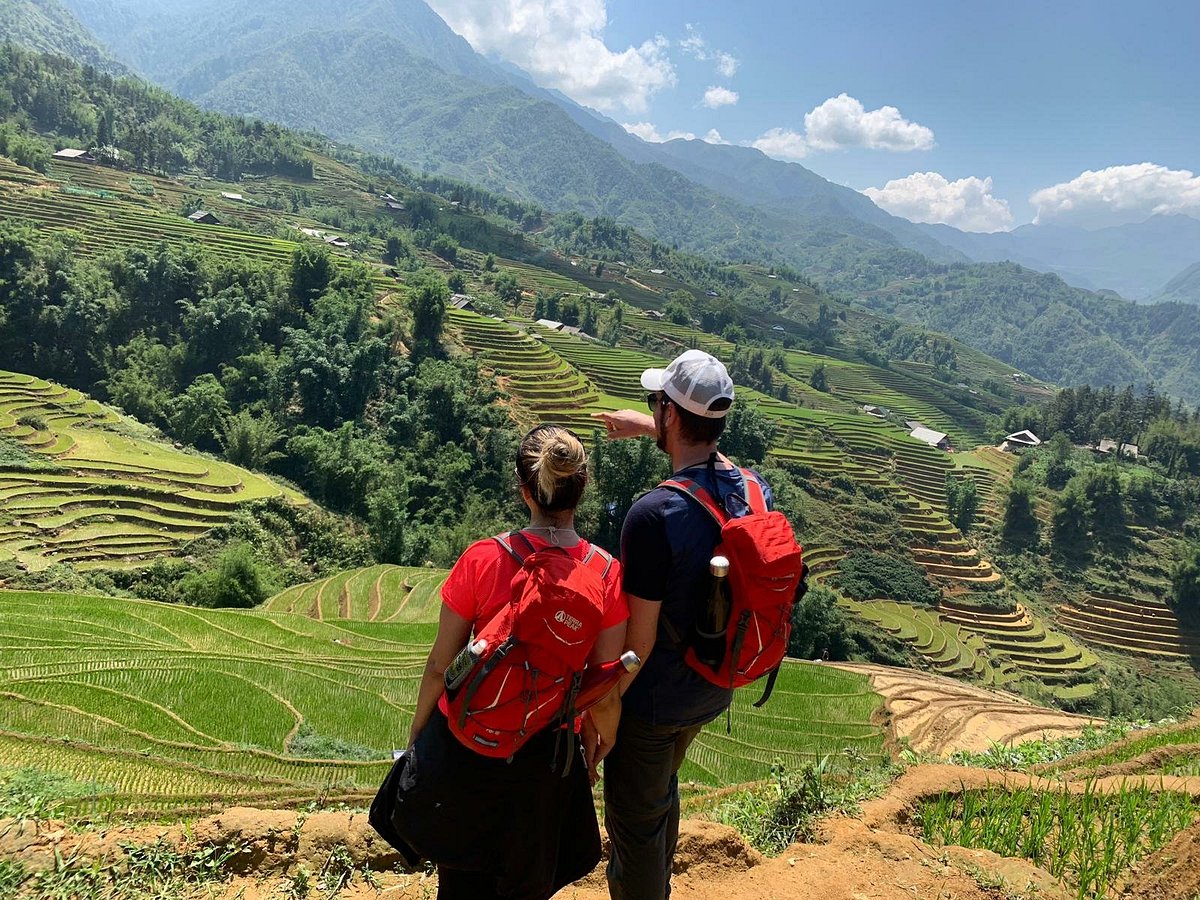
Rice Terraced Fields & Homestay
Overnight with a Black H'mong family in Ta Van — dinner, rice wine, terraces at dawn.
Lao Chai and Ta Van: the Two Villages
Lao Chai and Ta Van are the two anchor villages of the trek, and they belong to different communities: Lao Chai is a large Black H'mong village of terraced hillsides, while Ta Van, a little further down the valley, is home to the Giay people alongside H'mong families. Walking between them is part of what makes the route feel like a journey rather than a loop.
Lao Chai is where the valley opens up most dramatically — the terraces here are the ones you will have seen in photographs, staircasing down to the stream, with the village houses tucked among them. It is the natural halfway point and where most treks break for a home-cooked lunch with a local family. Ta Van, the endpoint, has a gentler, more settled feel: a cluster of wooden stilt houses and homestays beside the Muong Hoa stream, where the Giay and H'mong live side by side. If you are doing the two-day version of the trek, this is where you spend the night, sharing dinner with your host family and waking to mist rolling off the terraces. Because our guides come from these communities, the visits are genuine — you are welcomed into homes, not paraded past them.
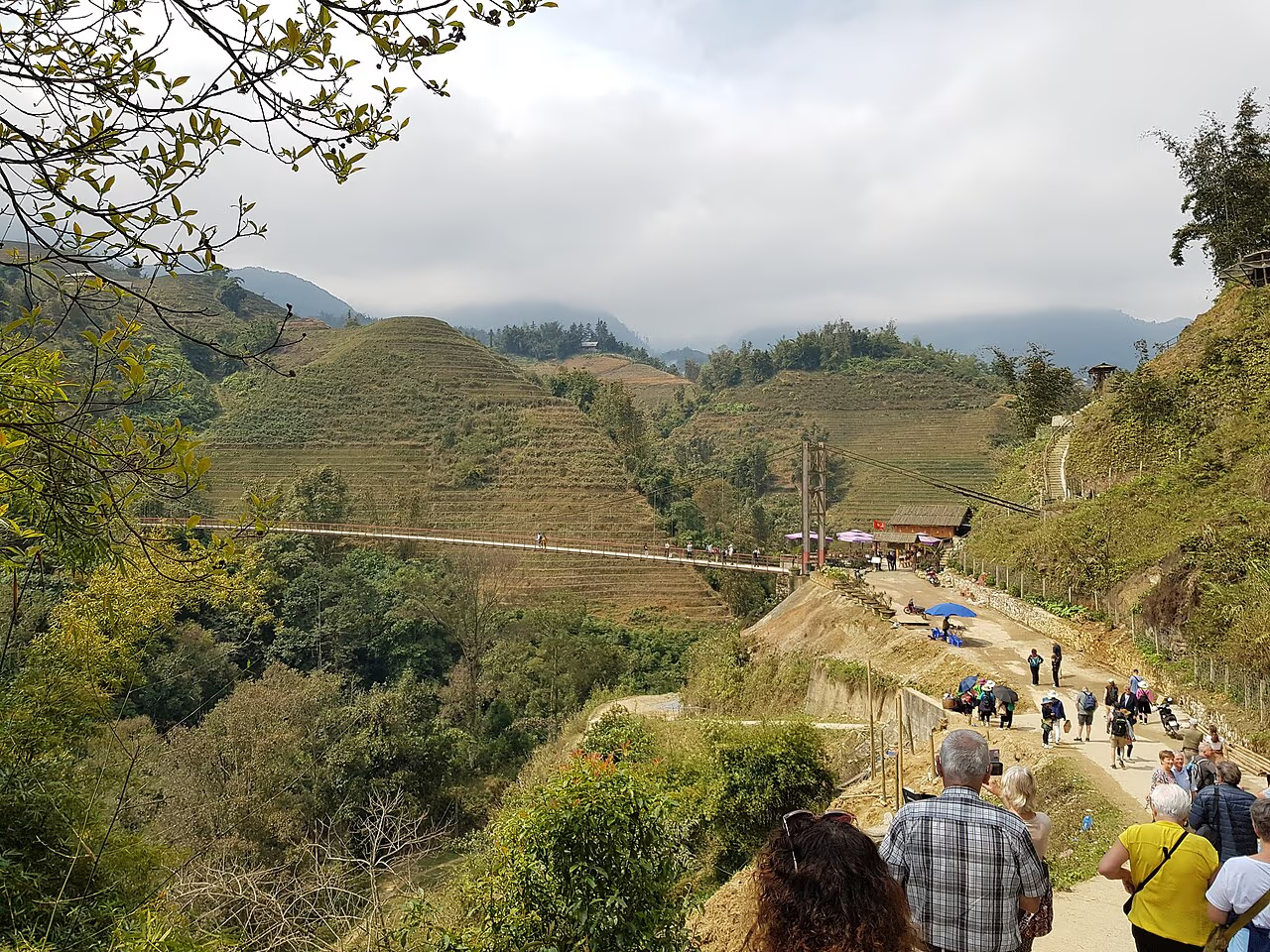
How to Reach the Trailhead
The Lao Chai Ta Van trek starts from Sapa town, so getting to the trek simply means getting to Sapa — about five to six hours from Hanoi by road or an overnight train plus a short transfer. Once you are in Sapa, the trailhead is only a short drive away, and on our tours that transfer is included.
On a guided trip we pick you up from your hotel anywhere in Sapa town, or you meet us at our office at 105 Thach Son Street, and we drive the few kilometres to the trail above Y Linh Ho to begin walking. There is no need to find the trailhead yourself. If you are still planning how to reach Sapa in the first place, our Hanoi to Sapa transport guide covers the sleeper bus, limousine van and overnight train in detail, and you can also book the whole trip — transfer up from Hanoi plus the trek — as one Sapa tour from Hanoi.
Best Time to Walk the Lao Chai Ta Van Trek
The best times to walk the Lao Chai Ta Van trek are March to May and September to November, when the weather is mildest, the paths are driest, and the terraces look their best. The route is walkable year-round, but the season changes both the scenery and how muddy the trail gets.
Spring (March–May) brings green terraces and comfortable walking temperatures. The famous golden harvest lands in September and October, when the paddies turn amber just before cutting — the most spectacular time and the busiest, so book ahead. Around late May and June the terraces are flooded and mirror the sky, which is beautiful in its own right. Summer (June–August) is the wettest, and the descent from Y Linh Ho can be slick and slippery, so grippy footwear and poles matter most then. Winter (December–February) is cold and often misty, with far fewer walkers and a quiet, atmospheric valley for those who do not mind wrapping up warm. Whenever you come, your guide adjusts the pace and, if needed, the exact path to the conditions on the day.
What to Bring for the Trek
For the Lao Chai Ta Van trek you want footwear with good grip, a way to stay dry, and enough water — the valley weather can change fast, and the paths reward being prepared. You do not need heavy mountaineering kit for this route.
Pack shoes or light hiking boots with a proper tread (the descents are where grip counts), a rain jacket or poncho whatever the forecast says, and a small daypack with 1.5–2 litres of water. Bring light layers, since Sapa mornings are cool even in summer, plus sunscreen, sunglasses and a hat for the open terraces. Walking poles make the slippery sections far easier — we provide these free at the office, so just ask when you book. A charged phone or camera is essential, because you will want it constantly, and a few small snacks are nice to have beyond the included lunch. Keep the pack light; you are carrying it up and down terraces all day.
Rent at Our Office Before You Trek
 Gear Rental
Trekking Boots Rental
Waterproof ankle-support boots. Cleaned and checked before each rental. Available at 105 Thach Son Street.
 Gear Rental
Walking Poles Rental
Trekking poles available to rent at $2/day at our office, 105 Thach Son Street. Essential for descents.
Day Trek or Two-Day Homestay?
You can walk the Lao Chai Ta Van route as a single day trek or stretch it into a two-day trip with a night in a Ta Van homestay — the walking is much the same, so the real question is how much time you want to spend in the valley. Both are excellent; they simply suit different trips.
The one-day trek is the efficient choice: you leave Sapa in the morning, walk down through the villages to Ta Van, and are back in town by mid-afternoon. It is perfect if you are short on time, based in Sapa for only a night or two, or want to keep one day free for other things. What you miss is the evening — the valley empties of day-trippers around 3pm, and that quiet is one of its best moments. The two-day, one-night version adds exactly that: after the first day's trek you stay with a Giay or H'mong family in Ta Van, share a home-cooked dinner, sleep to the sound of the stream, and wake to mist over the terraces before a second, shorter walk. For most travellers who have come all this way, the overnight is the version worth doing — the trekking gets you there, but the homestay is what stays with you. If your schedule only allows the day trek, though, you still see the whole classic route and the valley at its most photogenic. Tell us your dates and we will help you pick.
How to Book the Lao Chai Ta Van Trek
Booking the Lao Chai Ta Van trek takes one message: send us your dates and group size on WhatsApp, and we confirm the route, whether you want a day trek or an overnight homestay, and the full price, holding your place with a small deposit. We reply within 5–10 minutes with honest advice about the best option for your fitness and the season.
We run the trek as a small-group tour (maximum 12 people) or as a private trek for your group alone, and we recommend booking two to three days ahead — earlier for the September–October harvest — so we can arrange your guide and, if you are staying over, your homestay in Ta Van. Cancellation is free up to 7 days before departure, and a date change is free with 48 hours' notice. Once you are confirmed we send your pickup details and a short what-to-bring note, and all you have to do is turn up ready to walk. If you are weighing the Lao Chai Ta Van route against another Sapa trek, message us and we will tell you honestly which fits you best.
Frequently Asked Questions
The Lao Chai Ta Van trek is about 10 to 14 km (6 to 9 miles) depending on the exact route and how far the vehicle drops you, which works out to roughly four to six hours of walking with breaks. It runs from Sapa town down through Y Linh Ho and Lao Chai to Ta Van, following the Muong Hoa Valley the whole way. You can walk it as a day trip or as part of a two-day tour with a homestay in Ta Van.
It is a moderate trek — comfortable for most reasonably fit adults and older teenagers, but not effortless. There is no serious altitude or technical climbing, so breathing is easy, but the dirt paths can be steep and slippery, especially the descent from Y Linh Ho and any section wet from rain. Good grippy footwear and walking poles (which we provide) make it much easier, and your guide sets the pace to the group with rest stops as needed.
You can technically walk parts of the route independently, but a local guide is strongly recommended and adds most of the value. The paths branch confusingly between terraces, some cross private farmland, and after rain it is easy to take a wrong, slippery turn. A local Black H'mong guide keeps you on the right trail, gets you genuinely welcomed into homes for lunch, and can adjust the route to the day's conditions — all for a modest cost that also supports the valley community.
The classic route passes through three villages: Y Linh Ho, a scattered Black H'mong hamlet near the start; Lao Chai, the largest Black H'mong village and the usual lunch stop, surrounded by dramatic terraces; and Ta Van, the endpoint, home to the Giay people alongside H'mong families and a popular place to stay overnight in a homestay. Between them you follow the Muong Hoa stream past terraces and small bridges.
March to May and September to November are the best months, with mild weather, drier paths and terraces at their most beautiful. September and October bring the golden harvest — the most spectacular and busiest time, so book ahead. Late May and June offer mirror-like flooded terraces. Summer is lush but wet and muddy underfoot, and winter is cold and misty with quiet trails. The route is walkable year-round, and your guide adapts to the conditions.
The trek starts from Sapa town, which is about five to six hours from Hanoi by road or an overnight train plus a short transfer. On our tours we pick you up from your hotel in Sapa, or you meet us at our office at 105 Thach Son Street, and we drive the few kilometres to the trailhead above Y Linh Ho — you never have to find it yourself. If you are still planning how to reach Sapa, see our Hanoi to Sapa transport guide, or book the whole trip as one Sapa tour from Hanoi.