 Sinh Giang
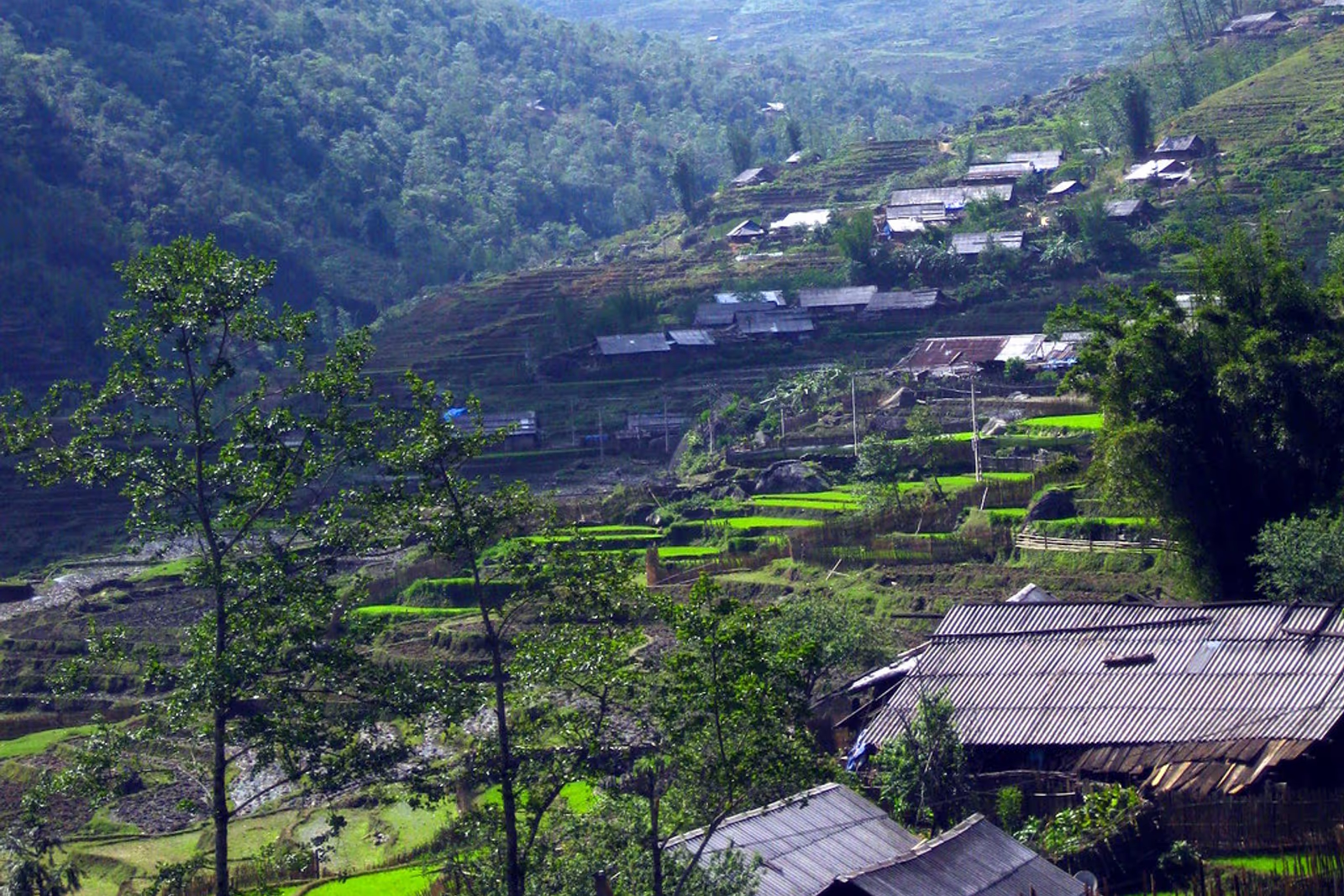
Stand at the edge of Sapa town on a clear morning and look toward Fansipan, and the cable car cabins are easy to spot gliding over a forested ridge just northwest of the summit road. Few visitors realize there's a village directly under that ridge. Sin Chai sits in the fold of the valley the cabins cross, close enough to town for a half-day walk and far enough from the main circuit that most day-trippers never hear its name.
It gets confused constantly with Cat Cat, its better-known neighbor on the same side of the valley — understandably, since both are Black H'mong villages a short distance from Sapa town. The similarity ends at the gate, or rather at the lack of one: Cat Cat has a ticket booth, a paved path and a waterfall viewing deck; Sin Chai has none of that. What it does have is a direct line to Fansipan itself — the hamlet is also the starting point for one of the mountain's three recognized climbing routes, a fact that surprises even some travelers who've already trekked the classic Tram Ton side.
This guide covers both halves of Sin Chai: the lower village, walkable in an afternoon, and its less obvious role as a mountaineering trailhead — along with where the name actually sits on a map today, since that's changed more than once in the last six years.
Sin Chai at a Glance
Sin Chai is a Black H'mong hamlet on the Fansipan side of the Sapa valley — here's the short version before the detail below.
Where Sin Chai Is, Exactly
Sin Chai sits roughly 4 km from Sapa town center as a direct walking line, on the lower slopes beneath the ridge the Fansipan Legend cable car crosses on its run from the Muong Hoa valley station up toward the summit. That puts it noticeably closer to town than most of the Muong Hoa Valley villages trekkers visit on the Lao Chai–Ta Van side, and on the opposite flank of the valley system entirely — Sin Chai belongs to the Fansipan and Cat Cat side of Sapa, not the Muong Hoa corridor.
Some older write-ups quote distances as far as 7 km, which is likely describing a longer vehicle or trail route rather than the direct line — there's no single paved road running straight into the hamlet, so the actual walking distance depends heavily on which path you take and where it starts. A straightforward walking or motorbike approach from town, following the road that threads past the edge of San Sa market and climbs toward the national park boundary, covers the distance in under an hour on foot and a fraction of that by motorbike.
Geographically, Sin Chai sits within the buffer zone of Hoang Lien National Park, Vietnam's highest-elevation protected area, which explains the denser forest cover above the village compared with the more open terrace country around Lao Chai or Ta Van. The lower part of the hamlet — houses, terraces, a stream crossing — is what most visitors mean by "Sin Chai." Higher up, the terrain stops being a village at all and becomes the lower section of a genuine mountain trail, which is covered separately further down this guide.
From San Sa Ho to Phuong Sa Pa: Sin Chai's Changing Administrative Map
Sin Chai has not had its own commune office or boundary in living memory — it has always existed as a hamlet inside a larger administrative unit, and that unit has changed twice in six years.
Before 2020, the area belonged to the old rural commune of San Sa Ho, a large district-era unit that also stretched toward Cat Cat and the lower Fansipan slopes. On 1 January 2020, under Resolution 767/NQ-UBTVQH14, Vietnam's National Assembly Standing Committee upgraded Sa Pa from a district to a township. San Sa Ho was carved up in the process: roughly 7.78 km² and 754 people went to the newly formed O Quy Ho ward — the slice of San Sa Ho that included the Sin Chai area — while smaller slivers went to Cau May ward (0.02 km², 165 people) and Phan Si Pang ward (0.88 km², 200 people).
O Quy Ho ward itself didn't last as a separate unit either. On 1 July 2025, Resolution 1673/NQ-UBTVQH15 merged six wards of Sa Pa township — Ham Rong, O Quy Ho, Sa Pa, Cau May, Phan Si Pang and Sa Pa's old central ward — into one significantly larger Phuong Sa Pa, covering about 54.6 km² with a 2025 population close to 23,000. That's the administrative unit Sin Chai sits inside as of this writing, the same one that now covers Sapa's town center, Cat Cat, and the lower Fansipan approach roads.
Because Sin Chai was never its own administrative unit, you won't find a "Sin Chai commune" on an official map in any era — and after the 2025 merger, even "O Quy Ho ward" has disappeared from current records. If you're booking independently, search for "Phuong Sa Pa" or simply "Sin Chai" as a place name rather than looking for a government boundary, and confirm with your guide or operator that their route actually reaches the hamlet rather than just the general San Sa area.
Who Lives in Sin Chai
Sin Chai is a Black H'mong village, part of the same ethnic community found across the Sapa valley at Lao Chai, Y Linh Ho, Hau Thao and Cat Cat, distinct from the Giay households at Ta Van and the Red Dao communities at Ta Phin and Giang Ta Chai. Like other Black H'mong groups in Lao Cai, families here trace their migration back to Yunnan province in southern China, moving south through the mountains over generations before settling these highlands more than 200 years ago.
Local travel operators and guide write-ups commonly put Sin Chai's population at around 1,600 residents. That figure shows up consistently enough across English and Vietnamese sources that it's probably a reasonable working estimate, but it isn't backed by a published government census at the village level — Sin Chai hasn't been counted as its own unit since well before 2020, so there's no official headcount to verify it against. Take it as a local approximation rather than a confirmed statistic, and if the precise number matters to you, ask a local guide for the latest figure they've heard rather than relying on any single web source, including this one.
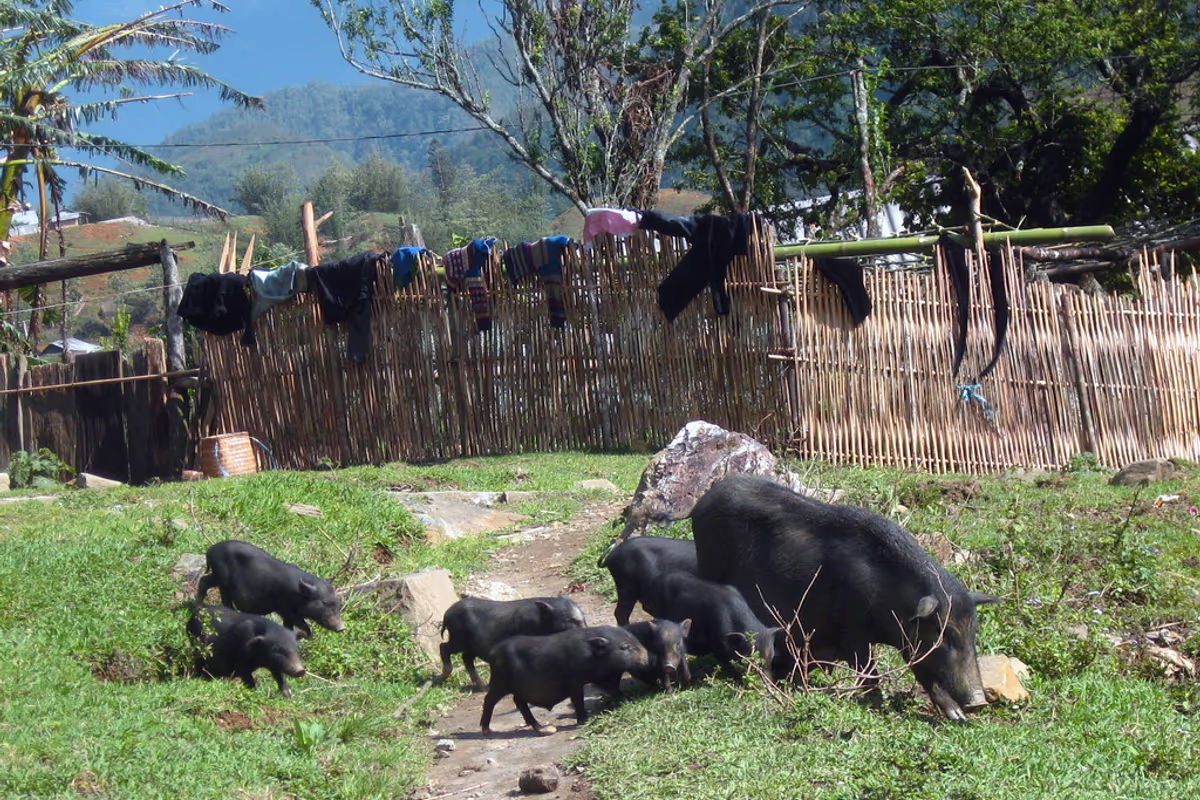
Rice terraces and corn plots on the steeper ground above them remain the backbone of the local economy, worked on the same spring-planting, autumn-harvest cycle as the rest of the Sapa valley. Livestock — pigs in particular, often left to range loosely around a household's bamboo fencing — supplements farming income, along with a modest and growing homestay trade tied to trekking groups passing through or stopping overnight before an early start up the mountain.
What You'll Actually See in the Village
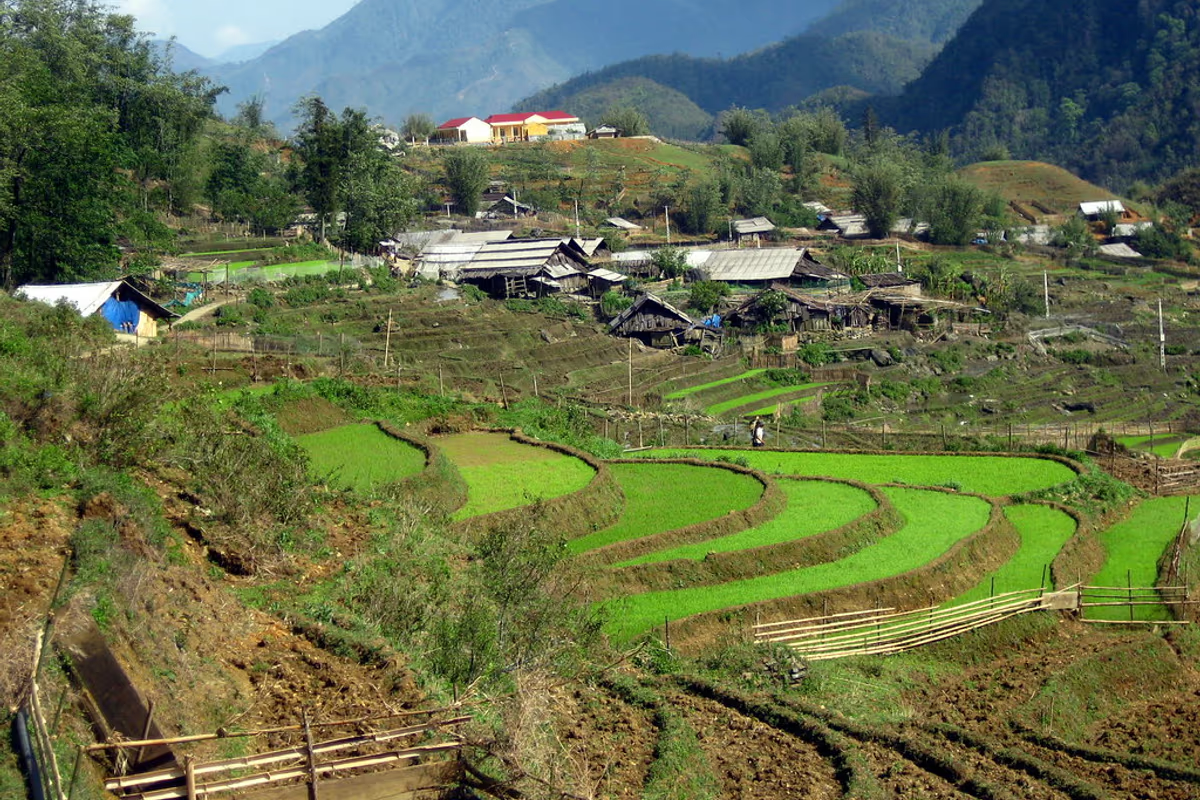
Sin Chai doesn't have a single built landmark the way Cat Cat has its waterfall — what defines a walk here is the texture of an ordinary working hamlet pressed up against the base of a very large mountain.
The Quiet Route Up Fansipan
Most travelers who climb Fansipan on foot start from Tram Ton Pass, the classic two-day route with the most infrastructure and the most company on the trail. Fewer know that Sin Chai is the trailhead for a second, much harder option, and fewer still have heard of the third, which climbs from the Cat Cat side.
The Sin Chai route is widely described by trekking operators as the shortest in distance of the three — around 9 km to the summit, against roughly 19–20 km for the Tram Ton route — but distance is misleading here. What it saves in kilometers it spends several times over in difficulty: steep, often-overgrown forest with stretches of trail that locals say get lost and re-cut from one season to the next, a trailhead elevation reported by operators at around 1,380 m climbing to Fansipan's 3,143 m summit, and a typical itinerary of three to four days rather than the classic route's two. It's consistently ranked by guides and trekking blogs as the wildest and most technical of Fansipan's three approaches, recommended only for fit, experienced mountain trekkers with a licensed guide, proper permits and full camping gear — this is not a route to attempt casually or without local support.
It's worth being clear that this is a genuinely separate undertaking from a walk through the lower village. Visiting Sin Chai's houses and terraces is a half-day outing within most travelers' reach; climbing Fansipan from Sin Chai is a multi-day mountaineering trip that happens to begin at the same cluster of houses. Tour operators are specific about which one they're selling, and you should be too when you ask — confusing the two is the single most common mix-up about this village.
Fansipan Treks & Off-the-Path Village Tours
 Hardest 1-Day
Fansipan Trek One Day Tour
Summit Indochina's highest peak in a single push via the classic Tram Ton route — 12+ hours, for fit, experienced hikers.
 Best Seller
Mount Fansipan 2 Days Trek
The classic two-day summit route via Tram Ton — camp at 2,800m, summit at dawn with an experienced guide team.
Sapa Adventure Tour — Off the Tourist Trail
For travelers who want the quiet hamlets near town rather than the busiest viewpoints, with a guide who knows the back paths.
Sin Chai Compared to Cat Cat
Because they sit on the same side of the valley and get mixed up so often, it's worth laying the two villages side by side rather than treating "which Black H'mong village near town" as a single question.
- Distance: Cat Cat is about 2 km from Sapa town; Sin Chai is roughly twice that, at around 4 km.
- Admission: Cat Cat charges an entrance fee of around 70,000 VND at a staffed gate; Sin Chai has no gate, no fixed ticket, and no formal visitor center.
- Infrastructure: Cat Cat has a paved walkway, viewing platforms and a restored French-era hydro station; Sin Chai has dirt paths through working terraces and no built attractions.
- Crowds: Cat Cat is one of the busiest half-day stops near Sapa town; Sin Chai sees a fraction of that traffic, mostly trekkers rather than day-trip tour groups.
- Beyond the village: Cat Cat's trail ends at its waterfall; Sin Chai's continues, for those equipped for it, onto the mountain itself.
If your priority is an easy, well-marked walk with a clear destination and minimal planning, Cat Cat remains the more practical choice for most travelers. If you'd rather spend an afternoon somewhere genuinely quieter, with no gate and no souvenir stalls, and don't mind a slightly longer approach with less signage, Sin Chai is the better match — just go in knowing it's a village visit, not a managed attraction.
Best Time to Visit Sin Chai
The best months to visit the lower village are September and October, when the terraces turn gold before harvest, and March to May, when the rice is freshly planted and the trails are at their driest.
The photographs of the lower village in this guide were taken on a clear afternoon in late April — rice just planted and a vivid, uniform green across the terraces, with the forested ridge above still holding a thin band of morning cloud. If you're considering the climbing route rather than the village walk, the calendar above doesn't really apply: the Sin Chai trail's technical sections and overgrown stretches are affected far more by recent rainfall and how recently a guide team has cleared the path than by calendar month, which is one more reason it's not a route to plan around a generic "best season" the way the village walk is.
Visiting Sin Chai Respectfully
Sin Chai is a working hamlet, not a staged cultural stop, and it's worth walking through it with that in mind. Ask before photographing people directly, especially elders and children, and accept a "no" without pressing. If a household invites you in for tea, treat it as a genuine visit rather than a quick photo opportunity.
There's no souvenir row here the way there is at Cat Cat or Ta Van, but if a family offers handwoven textiles or other handicrafts directly, buying from them puts the money straight into that household rather than a shop in town. Prices aren't fixed, so a friendly, fair negotiation is normal — aggressive haggling over small amounts isn't.
Keep your expectations realistic too: Sin Chai has no scheduled performance, no entrance fee and no gift shop, which is exactly what makes it different from Cat Cat. What you get instead is an ordinary day in someone else's home valley — some visitors find that quietly rewarding, others find it underwhelming because nothing has been arranged for them to see. Knowing which kind of traveler you are before you go will save you a wasted afternoon either way.
Whether you're after a half-day walk through Sin Chai's lower village or the multi-day technical climb to Fansipan's summit, our packages include a licensed local guide, the permits required for the national park and mountain routes, and all camping or homestay arrangements — nothing to book separately on your end.
Rent at Our Office Before You Trek
 Gear Rental
Trekking Boots Rental
Waterproof ankle-support boots. Cleaned and checked before each rental. Available at 105 Thach Son Street.
 Gear Rental
Walking Poles Rental
Trekking poles available to rent at $2/day at our office, 105 Thach Son Street. Useful on the steep, loose ground above Sin Chai.
Practical Tips for Visiting Sin Chai
A short list separates a smooth visit from a frustrating one — most of it comes down to knowing which version of Sin Chai you're actually planning for.
- Pick your trip: decide upfront whether you want the half-day village walk or the multi-day Fansipan climb — they share a name but almost nothing else.
- Guide: optional but useful for the village walk, essential and non-negotiable for the climbing route.
- Footwear: grippy trekking shoes for the village paths; proper mountain boots for the climb.
- Water and snacks: bring your own for either trip — there's no shop or café in the hamlet.
- Cash: small Vietnamese dong notes if you want to buy handicrafts directly from a household.
- Permits and camping gear: arranged through your operator if you're attempting the Fansipan route — don't try to source these yourself at short notice.
- Timing: a village visit works as a standalone half-day from Sapa town; the climbing route needs to be booked as its own multi-day itinerary well in advance.
Frequently Asked Questions
Sin Chai sits roughly 4 km from Sapa town center as a direct walking distance, below the ridge that carries the Fansipan cable car toward the summit station. Some older write-ups quote distances as high as 7 km, which likely refers to a longer road route rather than the direct trail — there's no single paved road into the village, so the practical walking distance depends on which path you take. Most visitors reach it on foot or by motorbike in well under an hour from town.
No, though they're often confused because both are close to Sapa town and both are Black H'mong villages on the Fansipan side of the valley. Cat Cat is about 2 km from town, has a paved walkway, a ticket gate (around 70,000 VND), a waterfall and an old French hydro station, and sees a steady flow of day-trip visitors. Sin Chai is roughly twice as far, has no gate, no fixed admission, and no built visitor infrastructure — it's reached as a trekking destination or a passing point on a Fansipan route, not a ticketed attraction.
Sin Chai is a Black H'mong village, part of the same ethnic community found at Lao Chai, Y Linh Ho, Hau Thao and Cat Cat elsewhere around Sapa. Local travel guides commonly cite a population of around 1,600 residents, but that figure comes from tourism write-ups rather than a published government census — Sin Chai hasn't been a stand-alone administrative unit for years, so there's no official village-level headcount to check it against. Treat it as a rough local estimate rather than a verified statistic.
Both, depending on how far you go. The lower part of Sin Chai — the houses and terraces described in this guide — can be visited on a half-day walk from Sapa town with no mountaineering involved. Separately, Sin Chai is also the trailhead for one of Fansipan's three classic climbing routes: a short-distance but very steep and technical path (around 9 km) through dense, often-overgrown forest, usually climbed over three to four days and considered the hardest of the three options. These are two different activities that happen to share a starting point, and tour operators are specific about which one they're selling.
Sin Chai sits within Phuong Sa Pa (Sa Pa ward), formed on 1 July 2025 when Resolution 1673/NQ-UBTVQH15 merged six former wards — Ham Rong, O Quy Ho, Sa Pa, Cau May, Phan Si Pang and the old Sa Pa ward itself — into one larger unit of about 54.6 km² and close to 23,000 people. Before that, from 1 January 2020, the Sin Chai area was carved out of the former rural San Sa Ho commune into O Quy Ho ward under Resolution 767/NQ-UBTVQH14, when Sa Pa was upgraded from a district to a township. The name Sin Chai has never referred to its own administrative unit in recent records — it's always been a hamlet inside a larger ward.
For the lower village walk, a guide isn't strictly required the way it is for the technical Fansipan route, but one is still worth having — paths through the terraces aren't signposted, and a local guide can introduce you to a household rather than you just walking past one. There's no restaurant row or fixed homestay strip the way Ta Van or Lao Chai have; any meal or overnight stay needs arranging in advance through a guide or operator. For the Sin Chai route up Fansipan itself, a licensed guide, permits and camping gear are not optional — the terrain and weather on that climb are genuinely dangerous to attempt alone.