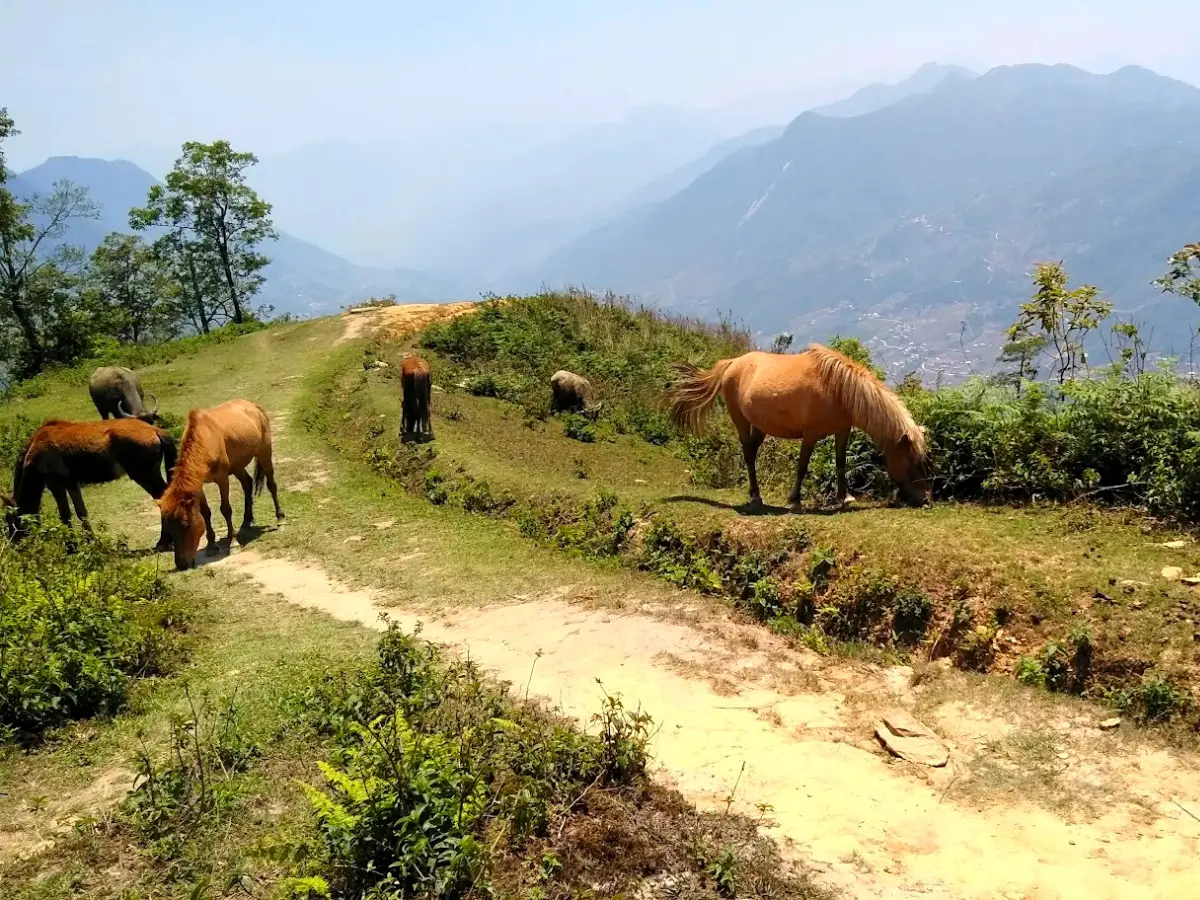
 Sinh Giang
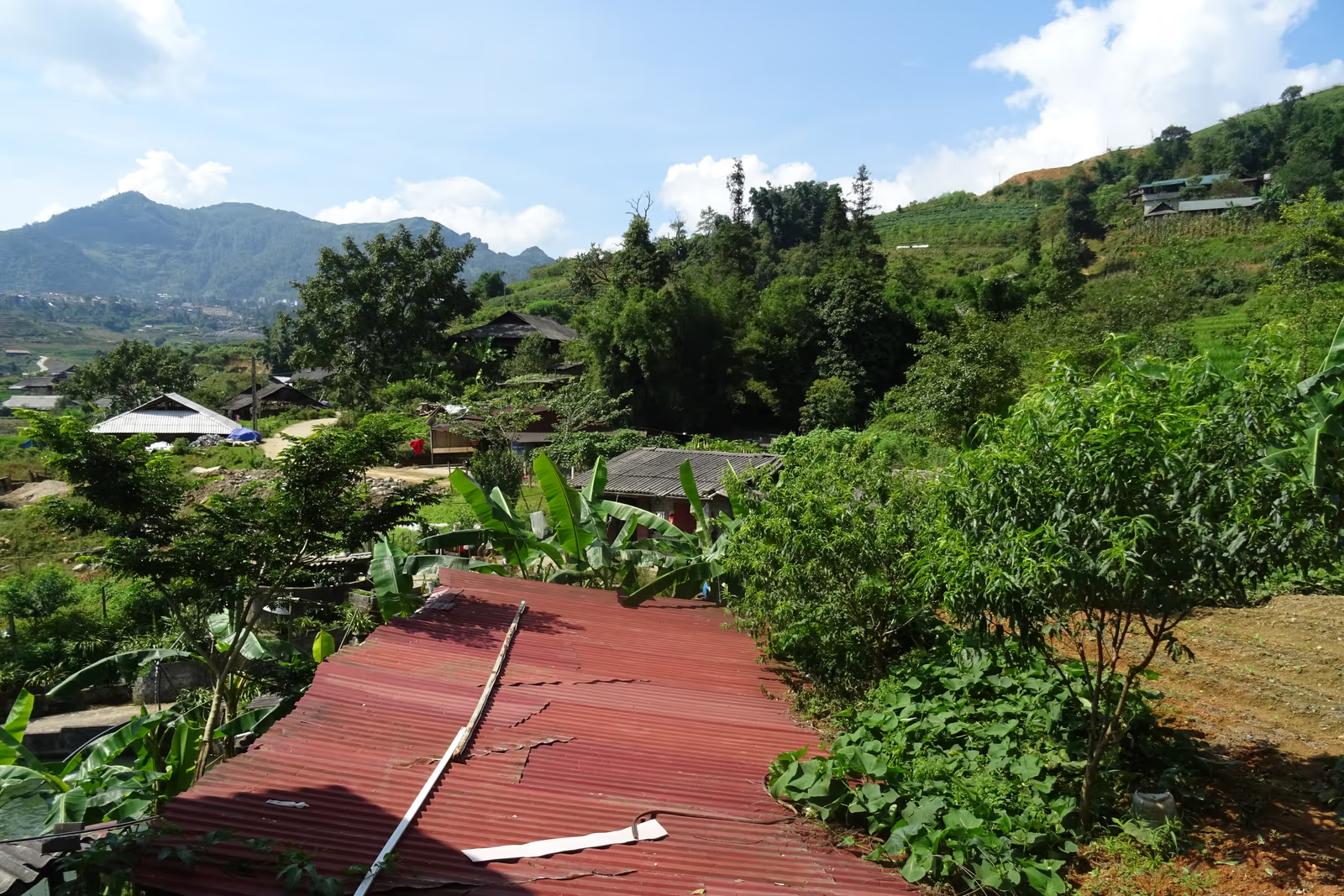
There's a small ticket point on the trail out of Sapa, about twenty minutes past the edge of town, where a sign nailed to a post collects a modest entrance fee for a place most of the travelers walking past it couldn't name. That place is Ma Tra — a Black H'mong hamlet spread across a terraced valley on the way to Ta Phin, close enough to town that it shows up on maps, far enough off the main tourist script that almost nobody treats it as a destination in its own right.
That's not a complaint about Ma Tra; it's more or less the point of it. Every write-up about this part of Sapa is really about Ta Phin — the Red Dao brocade, the herbal bath, the ruined French monastery — and Ma Tra gets a sentence, if that, as the village you pass through to get there. We think the walk itself deserves more than a sentence, so this guide treats Ma Tra as the subject rather than the preamble: where it actually sits, who lives there, what the trail through it looks like at different times of year, and where the honest gaps are in what's published about it.
A note before we start: Ma Tra doesn't have the documentation that Sapa's bigger-name villages do. Distances, fees and route details vary noticeably between the sources we checked while researching this piece, and we weren't able to confirm several commonly repeated numbers against any official source. Rather than smooth that over, we've flagged it plainly wherever it comes up — treat the figures here as a starting point for a conversation with your guide, not a fixed itinerary.
Ma Tra at a Glance
Ma Tra is a small Black H'mong hamlet in a terraced valley just northeast of Sapa town — here's what to know before you plan a route through it.
Where Ma Tra Is, and How the Trail Gets There
Ma Tra sits in a broad, shallow valley just off the Sapa–Lao Cai highway (QL4D), close enough to Sapa town that it's one of the first places a walking route reaches once the pavement is behind you. The standard approach follows the highway north out of town for roughly 2 km, then turns off onto a narrower village trail — unpaved in stretches — that drops into the valley and threads between terraces and houses before climbing back out toward Ta Phin on the far side.
How far that actually is depends on who you ask. Tour operators and travel guides we checked while researching this piece quote Ma Tra's distance from Sapa town as anywhere from about 4 km to 5 km, and one source describes a separate 15 km paved motor road reaching the wider valley by a longer, looping route rather than the direct trail. None of these numbers come from an official government or tourism-board source, and they don't fully agree with each other — which is itself useful information if you're planning a walk rather than just a drive: ask your guide for the day's actual route and distance rather than relying on a number from any single write-up, including this one.
The valley itself is bigger than Ma Tra alone. Local descriptions put it at roughly 12 km across, divided by low hills into sections that carry different village names as you move through it — Ma Tra nearest Sapa, then a stretch some guided itineraries call Suoi Ho, then on toward Ta Phin. We haven't been able to independently verify the Suoi Ho name or exact boundary against an official map, so we mention it here as it appears in operator route descriptions rather than as a confirmed place name — on the ground, what you'll notice is less a hard boundary and more a gradual shift from one cluster of Black H'mong houses to the next as the trail continues.
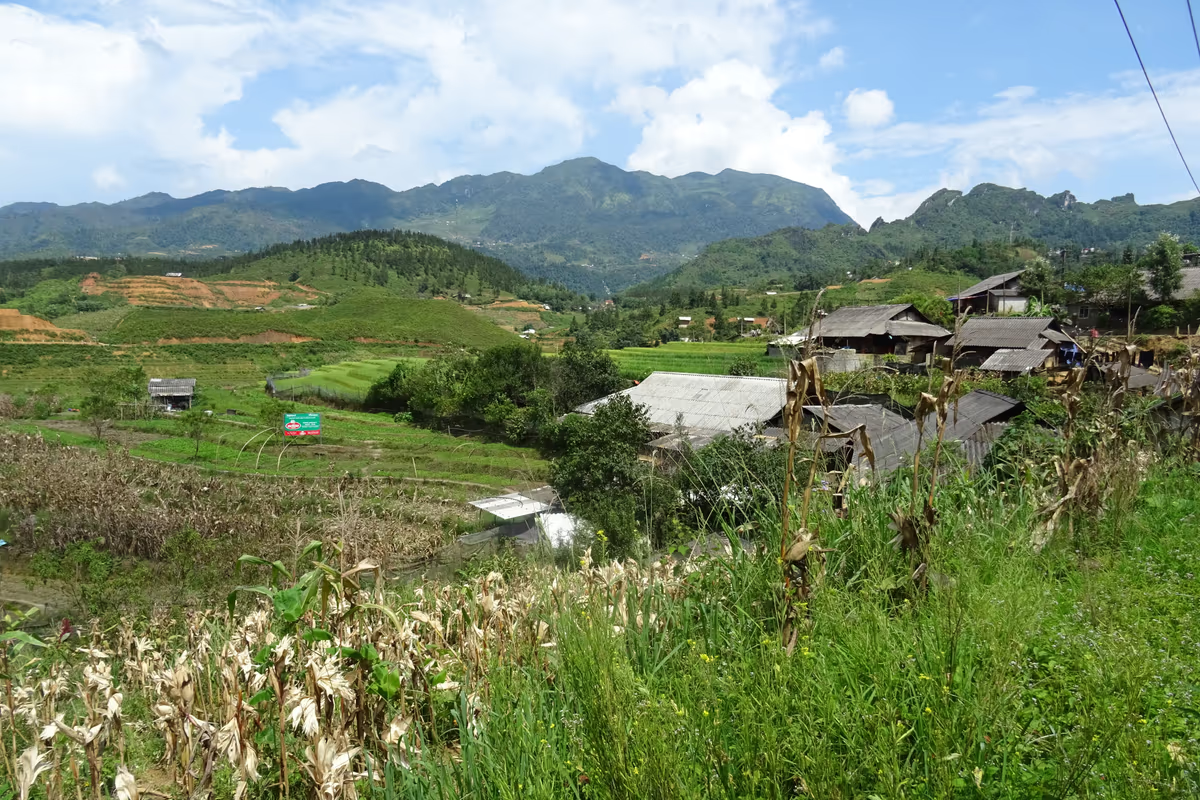
A roadside ticket point on this trail, recorded on OpenStreetMap, lists a 40,000 VND entrance fee for Ma Tra. We opened that map record during this update but could not find a matching figure on any official tourism or government source, so treat it as indicative rather than guaranteed — bring a little extra small cash and ask your guide what the current fee is before you set off.
Who Lives in Ma Tra
Ma Tra is home to Black H'mong families — around 50 households by most counts, which is consistent across the handful of sources that give a number at all. That makes it noticeably smaller than Cat Cat or the Lao Chai–Ta Van corridor further south in the Muong Hoa Valley, and it has none of the built-up visitor infrastructure those places have: no ticket gate with a paved path, no fixed row of souvenir stalls, no viewing platform.
Black H'mong communities across the Sapa region, Ma Tra included, trace their presence here back roughly 300 years, to a migration out of southern China that settled the high valleys of what's now Lao Cai province well before Sapa existed as a hill station. That history is still visible in daily dress — Black H'mong women in Ma Tra wear the same long indigo-dyed blouses over short trousers, with wrapped leg scarves and a dark turban, that you'll see from Cat Cat to Lao Chai, distinct at a glance from the silver-heavy, colorfully embroidered dress of the Red Dao women you'll meet later in Ta Phin.
What the village is known for locally is craft rather than sightseeing. Black H'mong households here weave cloth from hemp — grown, stripped, boiled and spun by hand before it ever reaches a loom — and dye it in deep indigo using fermented leaves from the indigo plant, a slow, smelly, multi-day process that's one of the clearest markers of Black H'mong material culture across the whole region. Some finished panels are decorated with wax-resist batik patterns, melted beeswax drawn on with a metal pen before dyeing so the waxed lines resist the indigo and stay pale against the dark cloth once it's boiled off. Alongside the textile work, Ma Tra households also forge simple farming tools — machetes, hoe blades, sickles — over charcoal forges, and a smaller number carve silver into the rings, bracelets and neck pieces worn as both decoration and a portable store of wealth. Traditionally all of this was made for the family's own use; as tourism in the valley has grown, some women now also prepare dyed and embroidered cloth to sell in Sapa town's markets, a small but real shift in how the craft is practiced. One of the few specific landmarks mentioned in local tourism material is a small elementary school serving H'mong children in the village — a detail that's easy to miss on a guided walk-through but worth knowing is there.
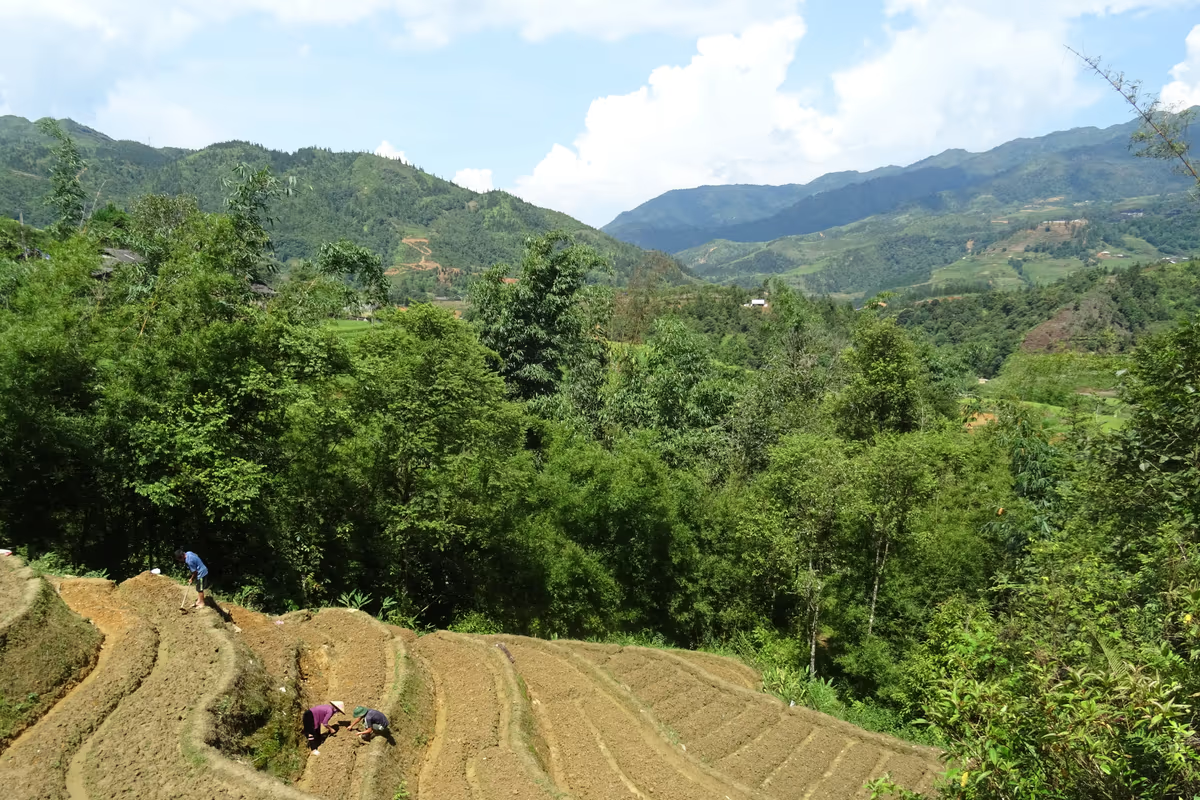
Rice is still the backbone of daily life, worked on the terraces that step down through the valley the same way they do across the rest of Sapa's highland communities. Depending on the season, you'll see fields being prepared, planted, weeded or harvested as you pass — the valley follows the same annual cycle as Lao Chai, Ta Van and Hau Thao further south, just on a smaller, quieter scale. Corn and vegetables fill the steeper, drier ground above the paddies where rice won't grow well, the same supplementary pattern you'd see in any of the Black H'mong hamlets further along the Muong Hoa Valley.
A Half-Day Walk From Sapa Through Ma Tra to Ta Phin
The most common way to see Ma Tra is on foot, as the first half of a loop that continues on to Ta Phin — here's roughly how a guided version of that walk unfolds across a morning.
Leave Sapa town
North on the QL4D highway toward Lao Cai
Trail turnoff
Leave the highway onto the village trail
Into Ma Tra
Terraces and scattered H'mong houses
Through the valley
Stream crossings, a second H'mong hamlet
Arrive Ta Phin
Red Dao village, lunch, optional herbal bath
Treat these as illustrative timings for a typical guided walk rather than a fixed schedule — your own pace, the season, and how long your guide lingers for photos or a chat with a household along the way will all shift the clock. Some operators extend the day with a longer loop through the wider valley before dropping down to Ta Phin; others keep it tighter and add a motorbike or car return leg. Ask what your specific route includes when you book, since "Ma Tra–Ta Phin trek" covers more than one actual itinerary depending on the operator.
Treks That Pass Through Ma Tra & Ta Phin


Ma Tra Compared to Ta Phin and Cat Cat
Of the three places most commonly grouped together on a short Sapa itinerary, Ma Tra is the one with no built attraction of its own — which is either a reason to skip it or the best reason to go, depending on what you want from the day.
- Cat Cat — the closest village to Sapa town, with a paved path, ticket gate, waterfall viewing deck and the heaviest day-trip crowds of the three.
- Ma Tra — a working Black H'mong hamlet with no staged sight, reached by trail rather than a built path, usually walked through rather than stopped at.
- Ta Phin — a Red Dao village (with some Black H'mong households) known for brocade, embroidery and the herbal bath, with a developed craft cooperative and the ruined French monastery nearby.
If your time is short and you want one specific thing — the bath at Ta Phin, the photo at Cat Cat — you can reach either by car without going near Ma Tra at all. If what you actually want is a few hours of quiet valley walking through working terraces, with a genuine ethnic-minority hamlet along the way rather than a destination built around your visit, Ma Tra is the stretch that delivers that, and it's the main reason to choose the walking route to Ta Phin over simply driving there.
The comparison also holds for the Muong Hoa Valley villages further south — Lao Chai, Ta Van, Y Linh Ho and, for longer treks, Hau Thao and Giang Ta Chai. Those routes run along the valley floor beside the Muong Hoa River and tend to be busier, with more homestay infrastructure built up over a longer tourism history; Ma Tra and the trail to Ta Phin run through a separate, smaller valley northeast of town and see noticeably less traffic, at the cost of having fewer facilities if you need a meal, a toilet or a place to shelter from rain along the way.
Combining Ma Tra With the Rest of Your Sapa Trip
Ma Tra works best as one half of a day, not a full day on its own — here's how it typically fits alongside Sapa's other highlights.
Most travelers pair the Ma Tra–Ta Phin walk with a morning or afternoon in Sapa town itself: the market near the old stone church, a coffee with a view over the valley, or a look at the Sapa Museum before or after the trek. Because the walk is half a day rather than a full one, it also leaves room on the same trip for the Fansipan cable car, a separate outing to Cat Cat (close enough to combine with a short Sapa town walk), or — if you have more time and fitness to spare — a multi-day trek further south through the Muong Hoa Valley via Lao Chai, Ta Van and, for those going further, Hau Thao. Travelers building a longer Sapa itinerary often slot Ma Tra and Ta Phin into day one or two as the "gentle culture day," saving the harder Fansipan or multi-day valley routes for when they're more acclimatized to the altitude and the walking.
If brocade and embroidery shopping is a priority, build in extra time at Ta Phin itself rather than rushing through on the way back — the craft cooperative there is a better stop for buying than Ma Tra, which has no equivalent fixed shopfront. If what you want most is the walk and the working valley scenery, the order can run either way: starting in Ma Tra and finishing at Ta Phin's herbal bath is the more common direction, since it rewards the morning's walking with a soak before the ride back to town.
Best Time to Visit Ma Tra
The best months to walk through Ma Tra are September and October, when the valley's terraces turn gold ahead of the rice harvest, and March to May, when the fields are freshly planted, green, and the trail is at its driest.
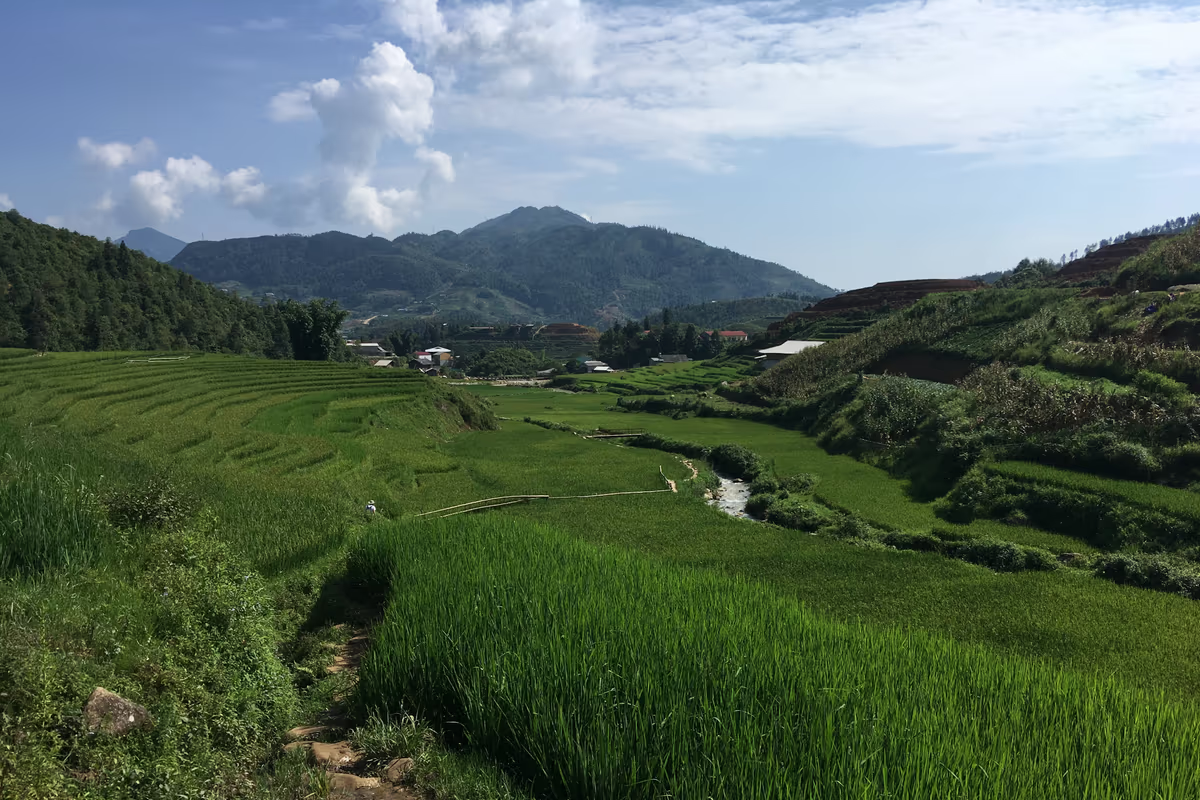
The photographs in this guide were taken in mid-August, during the wet season — the terraces are a deep, saturated green with the rice not yet headed out, and the sky clears to bright sun by mid-morning after an overcast start. It's a genuinely lush time to see the valley, but it's also when the unpaved village trail is at its most slippery underfoot, which is one more reason the walk favours a local guide over a solo attempt in these months.
Rent at Our Office Before You Trek
 Gear Rental
Trekking Boots Rental
Waterproof ankle-support boots. Cleaned and checked before each rental. Available at 105 Thach Son Street.
 Gear Rental
Walking Poles Rental
Trekking poles available to rent at $2/day at our office, 105 Thach Son Street. Useful on the unpaved Ma Tra trail.
Visiting Ma Tra Respectfully
Ma Tra is a working hamlet, not a staged cultural site, and the honest way to walk through it is with that plainly in mind. Ask before photographing people directly, especially older residents and children — most will say yes to a polite request, and a "no" deserves the same respect as a "yes." The craft on sale here — hemp cloth, indigo-dyed textiles, forged tools, carved silver — is made by the same households you're walking past, so if something catches your eye, buying it directly supports the family rather than a shop in town.
It's worth setting expectations honestly before you go. There's no scheduled performance, no entrance gate with a gift shop, and the "entrance fee" discussed earlier in this guide is a small roadside collection point rather than a formal ticketed attraction. What you get instead is an ordinary working morning in someone else's valley — which some travelers find quietly rewarding and others find underwhelming, depending on what they came expecting.
A licensed local guide, the day's actual route through Ma Tra and on to Ta Phin, walking poles if you need them, and transport back to Sapa town are all included whenever this walk is part of your itinerary — no separate bookings needed on your end.
Practical Tips for Walking to Ma Tra
A handful of details separate a smooth morning on this trail from a frustrating one — most of them are about preparation rather than fitness, since the walking itself is gentle.
- Guide: worth having even though the terrain is easy — the inner trail is unmarked and shifts slightly season to season.
- Footwear: grippy trekking shoes or boots; the clay trail gets slick fast after rain.
- Cash: small Vietnamese dong notes, both for the roadside fee mentioned above and for buying craft directly from households.
- Water and snacks: bring your own — there's no shop or café directly on the Ma Tra stretch of the trail.
- Timing: plan it as a half-day walk combined with Ta Phin, not a stand-alone outing — there's little reason to visit Ma Tra on its own without continuing on.
- Confirm the route: ask your guide or operator exactly which villages and distance their "Ma Tra–Ta Phin" tour covers, since published descriptions of this route vary.
Frequently Asked Questions
Ma Tra sits in a broad terraced valley northeast of Sapa town, just off the Sapa–Lao Cai highway (QL4D). Published distances range from about 4 to 5 km depending on the source and which route is being measured — the straight line, the paved highway, or the walking trail all give slightly different numbers, and there's no single official figure. Treat any distance you read, including the ones in this guide, as approximate until your guide confirms the day's route.
Ma Tra is home to Black H'mong families — around 50 households by most counts — who weave hemp cloth dyed deep indigo, forge farming tools and carve silver, traditionally for home use and increasingly for the small tourism trade. Ta Phin, a few kilometers further along the same valley, is primarily a Red Dao village (with some Black H'mong households too), known for embroidery and the herbal bath rather than weaving and forged tools. The two villages share a valley and a trail, not an ethnic identity.
A roadside ticket point on the trail (recorded on OpenStreetMap) lists a 40,000 VND entrance fee for Ma Tra. We could not confirm that figure on an official government or tourism-board source during this update, so treat it as indicative rather than guaranteed — ask your guide or check locally before you go, and budget a little extra in case it has changed.
All three work. On foot, it's the first hamlet on the classic half-day walk from Sapa town to Ta Phin, leaving the highway on a village trail about 2 km out of town. By motorbike or car, you'd follow the same highway and detour onto the trail for the village sections on foot, since the inner trail isn't fully paved. Almost nobody treats Ma Tra as a stand-alone destination — it's sold and visited as part of a Ma Tra–Ta Phin route, usually on a one-day tour with a local guide.
It depends on what you're after. Ma Tra has no staged attraction — no herbal bath, no brocade cooperative, no cave — so if you only want Ta Phin's specific sights, you can skip straight there by car in under 40 minutes. If you want the walk itself — working terraces, a quieter Black H'mong hamlet, and a stream valley with far fewer vehicles than the main road — Ma Tra is the reason to go on foot rather than drive, and most of our own guided routes treat it as the better half of the day, not a detour.
September and October, when the terraces turn gold before the rice harvest, and March to May, when the fields are freshly planted and the trail is at its driest, are the two best windows. June through August is lush and green but the clay trail gets slick and leech-prone after rain, and December through February is cold with low cloud that can hide the valley view entirely.