
 Sinh Giang
Tet falls on Saturday 6 February 2027, the first day of the Year of the Goat. The government has approved a seven-day break from Thursday 4 February to Wednesday 10 February for civil servants and public employees, who go back to work on Thursday 11 February, according to VnExpress on 3 October 2026. For a visitor that is one week in which Vietnam is at its warmest and its least convenient: banks and many small restaurants close, buses and trains sell out, prices rise, and the big cities empty as families travel home.
This guide answers what we are asked every year. When exactly is it, what shuts, what does it cost to move, should you come or wait, and what is Sapa like when the mountains fill with domestic holidaymakers? We checked the dates and the government decision between 29 and 31 October 2026. Where a number comes from a commercial travel guide written for Tet 2026 and not from an official source, we say so, because those guides disagree with each other more than you would expect.
When Is Tet 2027, Day by Day?
Tet Nguyen Dan, "the first morning of the new period", is the Lunar New Year, and in 2027 its first day is 6 February. The approved break covers the 28th day of the last lunar month through the fifth day of the new year, which is why it starts before Tet itself. The table is our calendar built from that VnExpress report: the weekdays and the Tet eve are our own arithmetic from the stated start and end dates, not quoted from the report.
| Date | Day | Lunar date | What it means for you |
|---|---|---|---|
| 4 Feb | Thursday | 28th, last month | Break begins. Offices shut, the exodus from Hanoi and Saigon peaks. |
| 5 Feb | Friday | Last day of the year | Tet eve. Families gather; flower markets close early; fireworks in some cities. |
| 6 Feb | Saturday | 1st day of the new year | Tet. Most shops shut; temples are full; families visit the closest relatives. |
| 7 Feb | Sunday | 2nd day | Traditionally the mother side of the family, and friends; some tourist restaurants reopen. |
| 8 Feb | Monday | 3rd day | Teachers and mentors are traditionally visited; domestic tourism builds. |
| 9 Feb | Tuesday | 4th day | More places reopen; roads fill as people travel again. |
| 10 Feb | Wednesday | 5th day | Last day of the break; the return trips begin. |
| 11 Feb | Thursday | 6th day | Civil servants are back at work; private businesses may already be open. |
Three details matter more than the table. First, the seven days are "the five statutory Tet days with two compensatory days that fall on a weekend", so nobody has to swap a working day. Second, private employers decide for themselves: VnExpress says they may choose 5 to 11 February, 4 to 10 February or 3 to 9 February, so a hotel owner, a shopkeeper or a driver may be away on slightly different days from a government office. Third, a longer option was rejected. A ten-day break from 5 to 14 February was considered, but it would have required swapping a working day, and the government picked the seven-day plan. An earlier Tuoi Tre report, on 8 August 2026, described the same dates as a proposal still open to public feedback, so use the October report as the final word.
What Tet Is, and What You Will Actually See
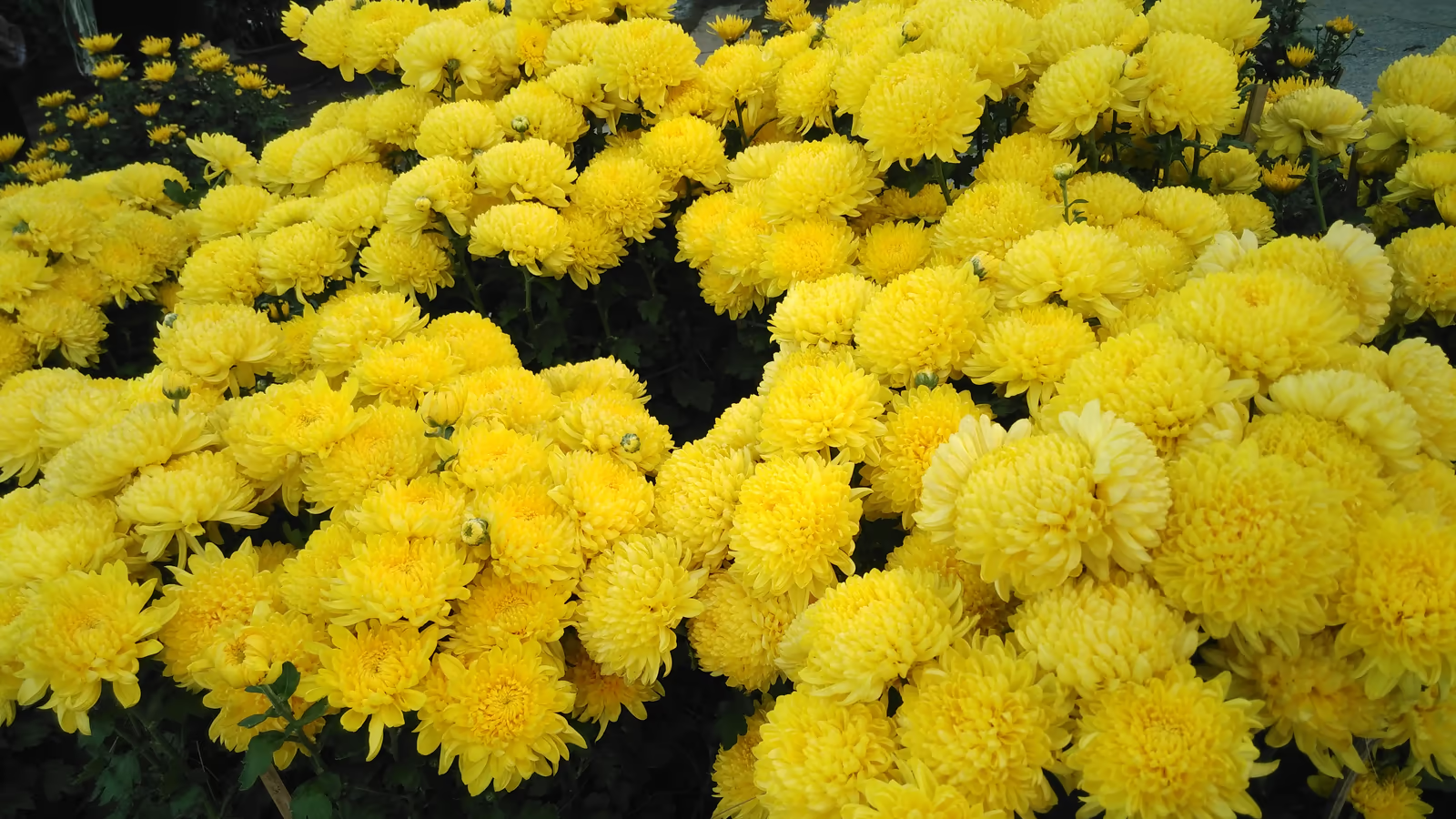
Tet is the family holiday of the Vietnamese year, closer to Christmas than to the Western New Year, and it pulls the whole country home. In the north, the colour is peach blossom: whole branches and small trees in pots stand in living rooms, shops and hotel lobbies, and the orchards at Nhat Tan in Hanoi sell them in the weeks before. In the south it is yellow apricot blossom, and across the country kumquat trees heavy with orange fruit and pots of yellow chrysanthemums mean wealth and a good start.
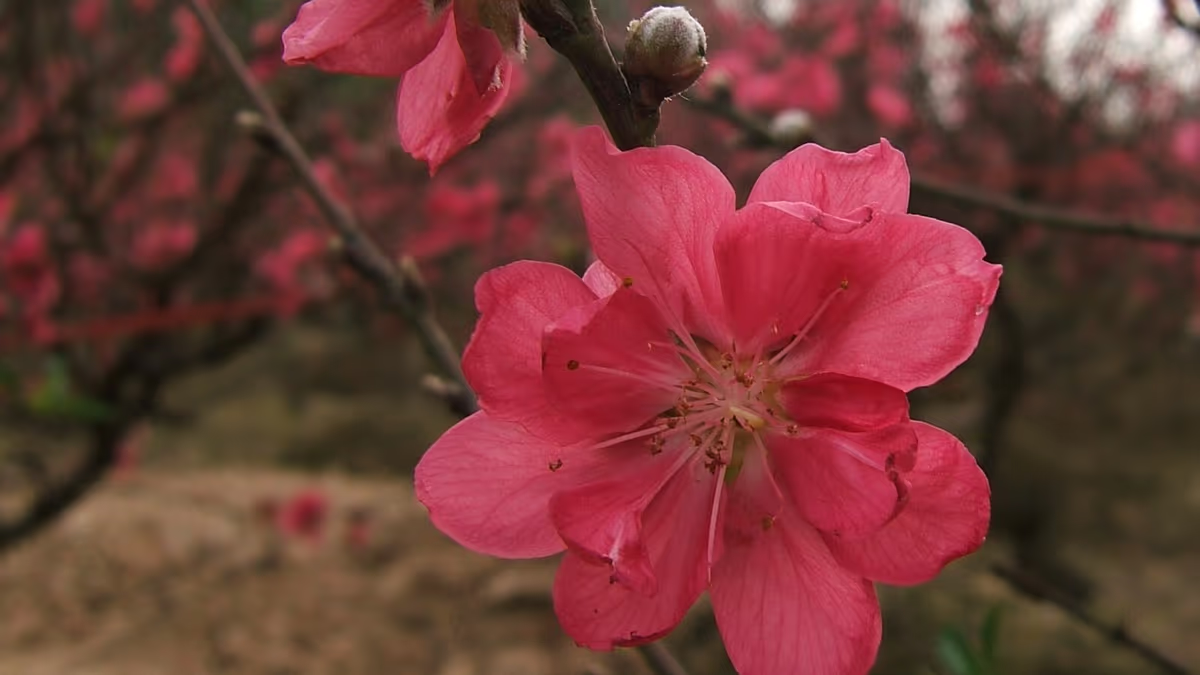
For a visitor, the days sort themselves into three phases. Before Tet, from about the 23rd of the last lunar month, you will see markets overflow with flowers, fruit, new clothes and sticky-rice cakes, and families clean houses and settle debts. On the first three days, streets are quiet, the cities feel suspended, and families visit ancestors, then relatives, then friends. After Tet, the temples and spring festivals run for weeks, and daily life reopens unevenly over the following days.
A few customs are worth knowing before you arrive. Children and sometimes staff receive lucky money, li xi, in red envelopes. The northern speciality is banh chung, a square parcel of glutinous rice, mung bean and pork wrapped in leaves and boiled for many hours; the southern version is the cylindrical banh tet. Many families avoid sweeping the floor on the first day, in the belief that it sweeps the luck out of the house, and one commercial guide adds that it is wise not to bargain hard in the first days. These are traditions, not rules for visitors, and families differ. If you are invited into a home, a gift of fruit, flowers or sweets is welcome, and so is simply saying "Chuc mung nam moi", happy new year.
What Closes, and What Stays Open
Expect closures for roughly a week, with the deepest quiet on the first three days. We found no official Vietnamese source that lists which businesses open during Tet, so this section rests on commercial travel guides written for Tet 2026, which broadly agree on the pattern and disagree on the days. One says banks, government offices and street food stalls close for 7 days or more, and small restaurants for 5 to 7 days. Another says most small family restaurants, stalls, local markets, museums, banks and post offices close for 3 to 7 days. Both say hotels, international fast-food chains and convenience stores generally stay open, and that temples are at their busiest.
| Type of place | During Tet | Our advice |
|---|---|---|
| Banks and ATMs | Banks closed 7+ days; ATMs may run out of cash | Withdraw before 4 February; carry small notes |
| Government offices, post offices | Closed for the holiday | Do paperwork, visa matters and parcels before 4 February |
| Small restaurants, street food | Closed 3 to 7 days; some reopen from day 3 or 4 | Book dinner at your hotel for Tet eve and day one |
| Local markets | Open until Tet eve afternoon, then closed for days | Buy fruit and snacks on 4 and 5 February |
| Museums and attractions | Often closed 3 to 5 days | Check before you travel; open-air sites are more reliable |
| Hotels, big chains, convenience stores | Generally open | Your fallback for food and water |
| Pagodas and temples | Open and very busy | Go early and dress modestly |
The practical consequence is simple. On Tet eve and the first day, eat where you sleep. Keep snacks, water and cash in your room. And do not plan a trip that depends on a particular small restaurant, ticket office or tailor being open. A Hanoi walk on the morning of the first day is quiet and lovely precisely because everything is shut; just do not expect a lunch to be waiting at the end of it.
Transport at Tet: Prices, Sell-Outs and When to Book
Transport is where Tet costs you the most, in money or in plans. Tens of millions of people travel home and back, and flights, trains and buses sell out. The commercial guides give very different price rises. One says transport prices can be two to three times higher; another says a Hanoi to Ho Chi Minh City flight that costs about 1.5 million VND on an ordinary day can reach 3 million VND or more, while a different page gives over 5 million VND. Trains and sleeper buses rise too. We cannot reconcile these numbers, and none comes from an operator, so read them as "much higher", not as a quote.
What the guides do agree on is timing. One advises booking domestic flights 8 to 12 weeks ahead, trains 6 to 8 weeks ahead and buses about 4 weeks ahead. Counting back from 6 February 2027, that is our arithmetic and not their schedule: flights by mid-November to mid-December 2026, trains by mid-to-late December, buses by early January. The same sources describe the busiest days as the days just before Tet and the two or three days after the break, when everyone returns, so a trip that must cross the country on 4 February or 10 and 11 February will be the hardest and dearest.
For our own transfers, the transport page on this site states that prices rise by about 10 percent during Vietnamese public holidays, including Tet, April 30 and September 2, and asks guests to book at least two weeks ahead in peak season. That is the one transport figure in this guide that comes from us, and we have not published a separate Tet 2027 timetable. If you want a car or bus to Sapa on 4 or 5 February, or back on 10 or 11 February, ask early.
Book the Hanoi to Sapa Leg Early
Sleeper buses, limousine vans, the Lao Cai night train and private cars all fill in the week of Tet. We can reserve the transfer with your tour, and our guide explains how each option compares.
Should You Come During Tet? An Honest Answer
It depends on what you want from the week. Tet is the best time to see Vietnamese family life, and the worst time to try to see lots of places quickly. If you enjoy atmosphere and can slow down, it is rewarding. If you are on a tight itinerary, it is frustrating. The comparison below is our judgement, based on what guests tell us and on the sources above.
Come during Tet if you
- want to see temples, flowers and family traditions at their fullest
- can stay in one or two places instead of moving daily
- book hotels and transport before mid-December
- are happy to eat at hotels and open tourist restaurants for a few days
- enjoy quiet cities and cool mountain weather
Choose another week if you
- need cheap flights, a rail pass or a loop that depends on schedules
- are on a short first trip with many sights to tick
- expect every restaurant, museum and tailor to be open
- cannot cope with a crowded bus or train on 4 and 10 or 11 February
- are travelling on a tight budget and need ordinary prices
If you cannot decide, the lunar calendar helps (our best month to visit Vietnam guide covers the other seasons). The most expensive and awkward days are 3 to 5 February and 9 to 11 February. The middle days, 7 and 8 February, are quiet in the cities and, in tourist areas, often more open than the first day. And the days after the break are not "normal" either: the guides we read say small businesses reopen over several days rather than all at once, so even then the country is still in holiday mode.
Three Ways to Plan the Week
Because Tet punishes constant movement, we suggest choosing a base and staying put. These are three plans we use when guests ask what to do. They are our suggestions, with no sourced timetable behind them.
Hanoi for the quiet
Arrive before 4 February and stay four to five nights in the Old Quarter or near West Lake. Walk the empty streets on the first morning, see the temples, and eat at your hotel on Tet eve and day one. Day trips by private car are easier to find than buses.
Sapa for the mountains
Take a transfer to Sapa before the rush, on 2 or 3 February, and stay three to four nights. Trek the valleys with a guide, see the village festivities, and return after the break. Book rooms and the transfer first; both sell out.
Arrive after Tet
Land on 11 February or later. Prices start to ease, places reopen, and the spring festivals still run. This is the easiest option for a first trip, and the one we suggest to anyone who wants a normal itinerary.
Hanoi During Tet
Hanoi in the days before Tet is busy and colourful. One guide names Quang Ba flower market as an overnight market in the capital, and says the markets close by Tet eve. The Hoan Kiem Lake area is decorated and, in recent years, big cities have held fireworks at midnight on Tet eve, with Hoan Kiem Lake and West Lake named in a guide for 2026. We found no announced programme for 6 February 2027, so do not plan around a particular show; ask your hotel in January.
On the first morning the Old Quarter is eerily quiet, with shutters down and the usual traffic gone. Pagodas and temples such as those around West Lake are full of families praying for the year. Most visitors find that this is the best time to photograph the city and the worst time to shop in it. If you are staying around Hoan Kiem, keep a note of the nearest open convenience store before the break begins.
Sapa During Tet
Sapa does not close for Tet. It fills. For a lowland family, a cool, misty mountain town is the obvious holiday, and Sapa has had big crowds on recent Tets. Dan Tri reported that Sapa received 30,699 travellers in the first three days of Tet 2023, including 8,000 foreigners, with hotel occupancy about 40 percent on day two and up to 95 percent between days three and five. In 2024 the same outlet reported traffic jams on Xuan Vien, Thach Son and Cau May streets on 12 February, a tailback of more than a kilometre, hotel room coverage reaching 97 percent for 12 to 15 February, and an expected 100,000 visitors.
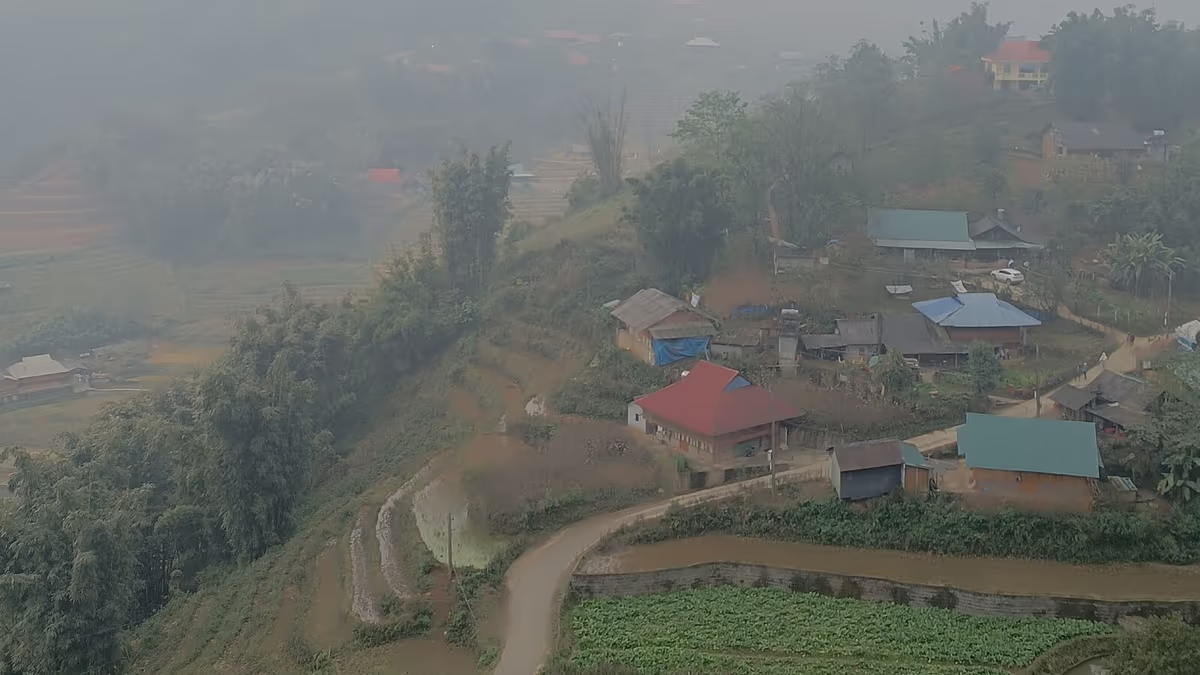
Our guide to the H'mong New Year and the Gau Tao festival has the 2026 numbers for the nine-day holiday: about 215,000 visitors, and hotels 95 to 100 percent full on days two to four. Read it for the festival itself, which is a separate event held after Tet; our arithmetic puts the Cat Cat Gau Tao around 16 to 17 February 2027, but that is not an announced date. Here we stay with the practical side: it will be crowded, cold and often foggy. Our monthly weather guide gives February daytime temperatures of 11 to 17°C, with mist and some drizzle, so pack layers and a waterproof.
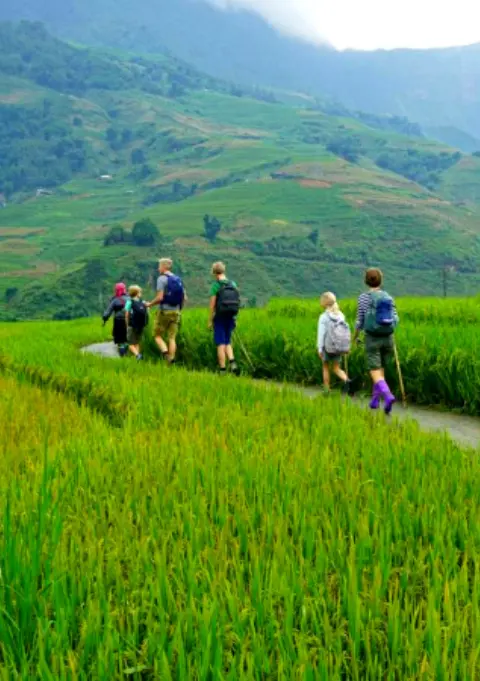
Trekking runs. The valley trails around Lao Chai and Ta Van are as walkable at Tet as in any month, but families are home with their own celebrations, so ask your host before you arrive what is open and what the family has planned. Small restaurants and independent tour desks in the town may close on the first days, a pattern our festival guide also records. Book your bed first, your transfer second, and your tour third.
Valley Treks That Run Through the Holiday
 1-Day Trek
Trekking Through Rice Terraced Fields
The Lao Chai to Ta Van valley day with a local guide, finishing in Sapa town.
 Very Easy
Sapa Easy Trekking For Seniors
Gentle, flat paths through Y Linh Ho and Ta Van at an easy pace.
 Homestay
Rice Terraced Fields & Homestay
A night with a local family in the valley, with dinner and breakfast.
Money and Lucky Money
Plan cash for the whole week. The guides we read agree that ATMs run low in the days before and during Tet and that many small businesses take cash only, which fits what we see in the hills. They recommend withdrawing enough for four to seven days before the break. We found no official notice about ATM refills, so take this as practical advice, not as a rule. Carry small notes, because taxi drivers and street sellers rarely have change for large ones, especially on the first days.
Lucky money, li xi, is the Tet tradition most visitors meet. Children get new red envelopes with crisp notes, and staff and elders may receive them too. One guide suggests 10,000 to 50,000 VND for children, which is a small amount in dollars. You are not expected to hand any out, but a small envelope for the child of a homestay family is a thoughtful gesture, and it is fine to ask your host what is appropriate. The same guides advise against wearing all black or all white on the first days and against arriving uninvited at a family home, both of which are customs, not laws.
What to Eat at Tet
Tet food is mostly home food, made in quantity so that the cook can rest. Banh chung, the square leaf-wrapped rice cake of the north, is boiled overnight in big pots, and the smell of the boiling is part of the season. Other staples are pickled onions, boiled chicken, sausages, spring rolls and sweet candied fruit and seeds on trays for guests. Because home kitchens carry the holiday, restaurants are thin, and many hotels put on a set menu for Tet eve or the first day.
If you are eating at a guesthouse in a village, you may be offered the family's holiday food, and refusing it entirely is awkward. Take a small piece and say it is delicious; you will be encouraged to take more. If you have an allergy or follow a vegetarian diet, tell your host in advance, because Tet dishes are often made with pork and are hard to separate once served.
A Practical Checklist for 6 February 2027
These steps put the sources and our own advice in order. The dates are our arithmetic from the approved break, and the lead times come from one commercial guide for Tet 2026, so treat them as sensible targets, not guarantees.
By mid-November 2026: book flights
If you must fly domestically on 3 to 5 or 9 to 11 February, buy now. Prices only rise.
By mid-December: book trains and rooms
Rooms in Sapa and Hanoi fill early for the holiday week, and rail seats go quickly.
By early January: book buses and transfers
Sleeper buses and our transfers to Sapa are best reserved weeks ahead.
Late January: check the weather and your cash plan
Pack layers for the north in February, and plan withdrawals for four to seven days.
3 February: arrive in your base
Be where you will stay before the break begins on 4 February, and buy snacks and water.
5 February: Tet eve
Eat at your hotel, watch the flowers and the families, and keep plans loose.
7 to 9 February: explore slowly
Visit temples and walk the villages; some restaurants reopen from the third day.
10 to 11 February: travel only if you must
Return journeys are the hardest of the week.
What We Checked, and What We Could Not
We read two news reports on the holiday dates, one from VnExpress dated 3 October 2026 and one from Tuoi Tre dated 8 August 2026, plus Dan Tri coverage of Sapa at Tet in 2023 and 2024, and three commercial guides to Tet travel written for Tet 2026. We did not read the government decision itself, because the government pages we tried returned no readable text, so the break dates rest on the press report. The Labour Code article on Tet leave and the decision number are not quoted here. We also could not verify closure days, price rises or ATM behaviour from any official source, and the commercial guides contradict each other on Tet eve dates for 2026 and on the days markets reopen.
That is why we have kept the advice general and labelled our own arithmetic. If a date matters to you, such as a flight, a visa deadline or a booking, confirm it with the operator or the issuing authority before you rely on this guide. We will update this page when the government publishes the final decision or the first operators announce Tet timetables.
Rent at Our Office Before You Trek
 Gear Rental
Trekking Boots Rental
Waterproof ankle-support boots. Cleaned and checked before each rental. Available at 105 Thach Son Street.
 Gear Rental
Walking Poles Rental
Trekking poles available to rent at $2/day at our office, 105 Thach Son Street. Essential for descents.
Frequently Asked Questions
Tet falls on Saturday, 6 February 2027, the first day of the Year of the Goat. The government approved a seven-day break for civil servants and public employees from Thursday 4 February to Wednesday 10 February, and they return to work on Thursday 11 February. Private employers may choose 5 to 11 February, 4 to 10 February or 3 to 9 February.
The approved break is seven days, made of the five statutory Tet days plus two compensatory days that fall on a weekend. A ten-day option running 5 to 14 February was considered and rejected because it needed a swapped working day. The 2026 break was nine days, so 2027 is two days shorter.
No, but much of it slows down. Banks and government offices close for the holiday, and many small restaurants, street food stalls and local markets close for several days. Hotels, international chains, convenience stores, pagodas and tourist-area restaurants mostly stay open. Plan for a week in which you cannot count on small businesses.
Visit if you want to see the festival and can accept closures, crowded transport and higher prices, and if you book early. Avoid it if you need a tight multi-city schedule or cheap flights. A relaxed stay in one place, such as Hanoi or Sapa, works better than a week of moving around.
Most long-distance services run, but they are very full and cost more. Our transport page adds roughly 10 percent to our own transfer prices on Vietnamese public holidays, including Tet. We found no official timetable for Tet 2027 yet, so check your operator and book as early as you can.
Yes. Sapa is one of the busiest destinations of the holiday, with hotels reported 95 to 100 percent full on days two to four of Tet 2026 and a reported 97 percent for 12 to 15 February in 2024. Trekking tours run, but some small restaurants and independent tour desks close for the first days. Book beds and transport early.
Lucky money, called li xi, is given in red envelopes, mostly to children and to staff or relatives. One travel guide suggests small amounts of 10,000 to 50,000 VND for children. Visitors are not expected to hand it out, but a small note in a red envelope for a host family's child is a kind gesture.
Cash. Several guides warn that ATMs run low in the days before and during Tet, and that many small places take cash only. Withdraw what you need for four to six days before 4 February 2027, and carry small notes. We found no official statement on ATM refills, so treat this as practical advice.