
 Sinh Giang
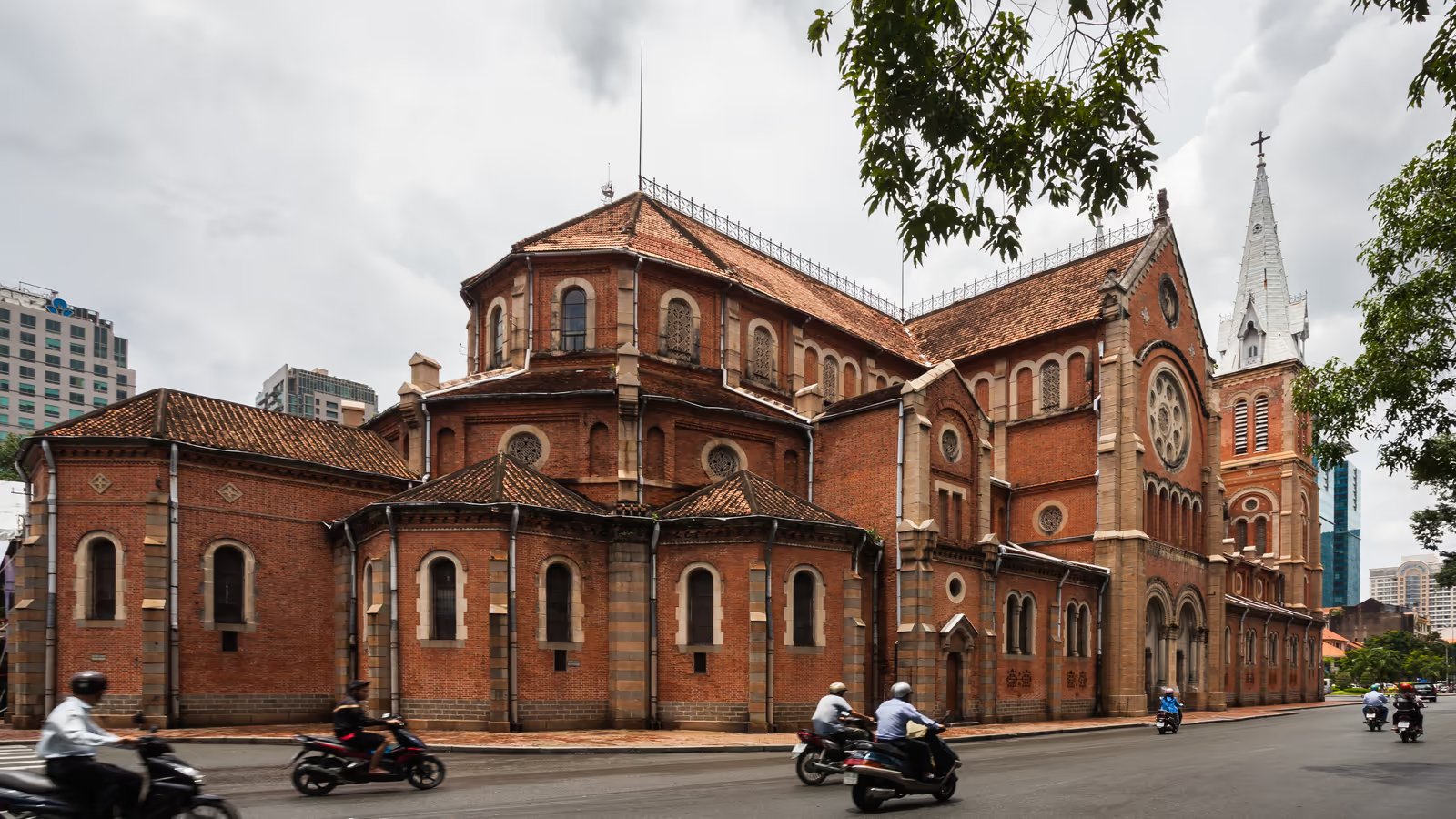
Ho Chi Minh City is hot all year, with two seasons that matter more than the months: a dry season from December to April and a rainy season from May to November. Wikipedia’s climate table gives every month a daytime high of 31.6 to 34.9°C, and about 1,970 mm of rain a year, almost all of it between May and November. The best weather is December to February, according to vietnamtourism.com (29 August 2026), though March and April are drier and hotter. Most rain falls in the afternoon in a storm that lasts 30 to 60 minutes, so you can plan around it.
We are a Sapa trekking company, not a weather service, so this guide is built from published sources that we read on 3 November 2026, with the source next to each figure. The Wikipedia monthly table came to us through a page summary and not word for word, and the sources disagree on the hottest and the wettest month, so we show their numbers side by side and say which we used. For the other end of the country, see our Hanoi weather guide, and for the whole country our Vietnam weather by month.
Key Takeaways
- Dry season December to April, rainy season May to November. All four pages we read agree on the two seasons.
- Every month is warm: mean daily highs run from 31.6°C in December to 34.9°C in May, and lows from 23.1 to 26.4°C (Wikipedia, via summary).
- Rain comes as short afternoon storms, usually a 30 to 60 minute downpour from about 3 or 4 pm (vietnamtourism.com, 29 August 2026).
- September and October are the wettest and the most likely to flood, especially in District 7 and parts of District 2. Typhoon hits on the city are rare.
- Tet (late January or February) closes shops for about a week and raises prices. December to February is peak season for hotels; May to October is cheaper.
Two Seasons, Not Four
Ho Chi Minh City has a dry season and a wet one. Wikipedia describes a tropical savanna climate in which the wet season usually lasts from May to November and the dry season from December to April, and the other three pages say the same. vietnamtourism.com (29 August 2026) puts the dry season at December to April and the rainy season at May to November; north-vietnam.com (June 2026) agrees; and localvietnam.com (15 February 2025) lists December to April as the dry season. So the question is not “is it hot” but “is it dry or wet hot”.
The practical effect is that the city has no winter. Vietnamtourism.com says night temperatures rarely drop below 25°C but also says December to February can fall to a comfortable 22 to 24°C at night, and the two statements sit uneasily on one page. The dry months also carry less humidity, around 60 to 70 per cent on that page, or 70 to 77 per cent in the Wikipedia table for December to April. For the wider picture of the south’s seasons, see our Vietnam rainy season guide.
The Month-by-Month Table
The table is the Wikipedia climate table for Tan Son Nhat airport, which credits the Vietnam Institute for Building Science and Technology and the World Meteorological Organization for rainfall. We read it in a summary of the page and not verbatim, so check it on the live page before you rely on a single number. The sums match the annual totals the page gives (1,970 mm, 121 rainy days, 2,490 sunshine hours).
| Month | High (°C) | Low (°C) | Rain (mm) | Rainy days | Humidity (%) | Sunshine (h) |
|---|---|---|---|---|---|---|
| January | 32.0 | 23.4 | 12 | 2 | 72 | 245 |
| February | 32.7 | 23.1 | 8 | 1 | 70 | 246 |
| March | 33.6 | 24.9 | 18 | 1 | 70 | 272 |
| April | 34.5 | 26.4 | 57 | 4 | 72 | 239 |
| May | 34.9 | 26.4 | 202 | 13 | 79 | 195 |
| June | 33.5 | 25.5 | 224 | 16 | 82 | 171 |
| July | 33.0 | 25.2 | 231 | 19 | 83 | 180 |
| August | 32.9 | 25.1 | 219 | 17 | 83 | 172 |
| September | 32.6 | 25.0 | 490 | 18 | 85 | 162 |
| October | 32.3 | 25.0 | 340 | 16 | 84 | 182 |
| November | 32.4 | 24.9 | 128 | 9 | 80 | 200 |
| December | 31.6 | 23.9 | 41 | 5 | 77 | 226 |
Read the rain column first. Every month from December to April has under 60 mm, and every month from May to November has at least 128 mm. February is the driest, with 8 mm and one rainy day, and September the wettest, with 490 mm. The page text also gives a record high of 40.0°C in April and a record low of 13.8°C in January.
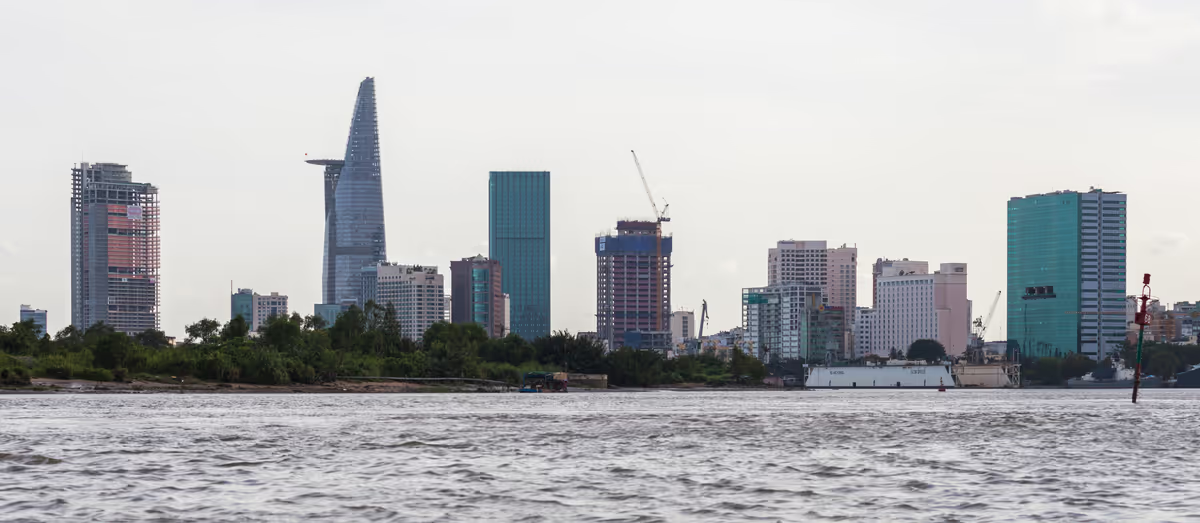
Twelve months in one line each
For a quick check, here is every month in a line. The temperature and rain come from the Wikipedia table above, and the crowds and hotel prices come from vietnamtourism.com (29 August 2026), with our own wording.
| Month | Weather | Crowds and prices |
|---|---|---|
| January | Dry, 32°C, 12 mm | Very high crowds, high prices |
| February | Driest month, 33°C, 8 mm | High crowds; Tet may close shops |
| March | Dry and hot, 34°C, 18 mm | Fewer crowds, medium prices |
| April | Hottest by two pages, 35°C, 57 mm | Medium prices |
| May | Hot, rain starts, 202 mm | Low prices |
| June | Wet, 224 mm on 16 days | Low prices |
| July | Wet, 231 mm on 19 days | Low prices |
| August | Wet, 219 mm on 17 days | Low prices |
| September | Wettest, 490 mm, flooding risk | Very low prices |
| October | Very wet, 340 mm, flooding risk | Very low prices |
| November | Rain tapers, 128 mm | Medium prices; a decent month |
| December | Dry, 32°C, 41 mm | High prices; Tet risk late month |
A note on where the numbers were measured
The Wikipedia table is for the weather station at Tan Son Nhat airport, which our airports guide places 6 to 8 km from District 1. The page does not name a station for the north-vietnam.com table. A weather record at an airport is a good guide to the city but not a measurement of your street, and in a big city with heavy tropical showers the rain can be heavier in one district than another. Use the totals to pick a season and a local forecast to pick a day.
What Each Season Feels Like
The numbers become a weather forecast if you group the months. Vietnamtourism.com’s own table of crowds and prices follows the same groups, and we have combined it with Wikipedia’s figures.
December to February: dry, sunny and busy
These are the cool months by Saigon’s standards, with highs of 31.6 to 32.7°C and lows of 23.1 to 23.9°C. Rain is almost absent, with at most 41 mm and five rainy days in December. The page calls December through February the best time to visit and suggests late November or early December as the sweet spot, before the peak. The price is crowds: it rates January crowds very high and February high, with hotels at high prices from December to February.
March to May: the heat peak
March and April are the hottest and the driest. Vietnamtourism.com says daytime highs regularly reach 35 to 38°C and calls April the hottest month, while the Wikipedia table has a mean high of 34.5°C in April and 34.9°C in May. In May the first real rain arrives, 202 mm and 13 rainy days. This is a good time for early starts and long lunches indoors, and a poor time for a midday walking tour. Hotel prices are medium in March and April and fall in May.
June to August: the wet middle
June, July and August bring 219 to 231 mm of rain on 16 to 19 days, so it rains on most days, but for a short time. Highs are 32.9 to 33.5°C. The page treats May to August as low season for hotels, with prices dropping 20 to 30 per cent in the rainy season, and a visitor who accepts a daily shower finds fewer people.
September to November: the heaviest rain
September (490 mm) and October (340 mm) are the wettest months in the Wikipedia table and bring the most flooding; in November, rain tapers off to 128 mm and nine rainy days. Vietnamtourism.com rates September and October as very low season and November as medium, and calls November a decent time because of the transition to the dry season.
How the Rain Falls and How to Plan Around It
Saigon rain is predictable. Vietnamtourism.com says that by 3 or 4 pm the sky opens up, that the storms are intense but short, and that a typical storm lasts 30 to 60 minutes; north-vietnam.com and localvietnam.com both describe frequent showers in the afternoon or evening. September and October add prolonged rain that can last for hours.
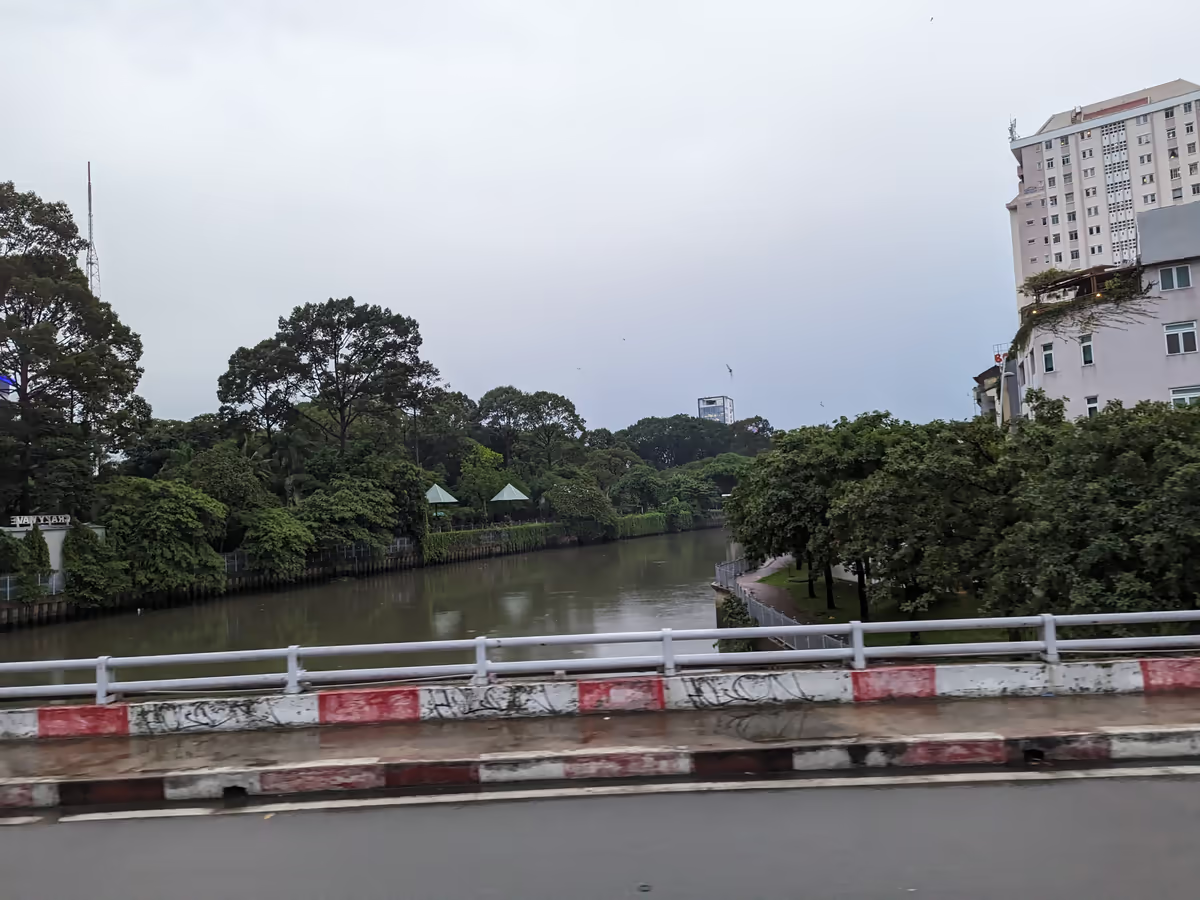
Do your walking and sightseeing in the morning, plan a museum, a long lunch or a coffee break from about 3 pm, and go out again when the storm stops. The photograph below was taken on a bus in July 2023 and shows how a grey wet evening looks. Our Vietnamese coffee guide has ideas for the break.
When the sources do not agree on the numbers
Two of the four pages print a monthly table, and the numbers differ, so it is worth seeing them side by side. North-vietnam.com’s table gives more rain in the wet months and more rainy days. Its text gives about 1,900 mm a year and its FAQ says 1,700 to 2,000 mm, while its monthly table sums to 2,099 mm, our addition. Wikipedia’s table gives 1,970 mm, and its text says about 1,800 mm.
| Month | Wikipedia | north-vietnam.com |
|---|---|---|
| April | 57 | 71 |
| June | 224 | 331 |
| July | 231 | 291 |
| September | 490 | 312 |
| October | 340 | 334 |
| November | 128 | 193 |
The disagreement matters in one place: Wikipedia puts the wettest month in September and north-vietnam.com in October, while its FAQ says most rain falls from June to September, which contradicts its own table. We therefore say only that September and October are the wettest and plan for either. The two agree on the dry months to within a few millimetres.
Flooding and Typhoons
Flooding is the practical risk, not typhoons. Vietnamtourism.com says some districts see significant flooding in September and October, particularly District 7 and parts of District 2, and its October row says flooding risk; north-vietnam.com says temporary flooding can occur after heavy rain in low-lying areas. Wikipedia’s separate flooding section says tide, rain, river flow and land subsidence flood parts of the city in the rainy season, and that a once-in-100-year flood would cover 23 per cent of the city. We found no page that gives tide-flood months, so check the tide table with your hotel.
Direct typhoon hits are rare: vietnamtourism.com says typhoons in the South China Sea can amplify the weather but direct hits on the city are rare, and north-vietnam.com says the city is rarely affected. That is the opposite of the central coast, where our Da Nang weather guide covers a real typhoon season. If you plan to move from Saigon to the centre in autumn, read that first.
How much sun to expect
The sunshine column of the Wikipedia table converts into a daily figure if you divide by the days in each month, which is our own arithmetic. March has the most sun, 272 hours or about 8.8 hours a day, and September the least, 162 hours or about 5.4 hours a day. December to April all give 7.3 to 8.8 hours a day, May to November 5.4 to 6.7. The difference between a dry-season day and a wet-season day is therefore about two to three hours of sun, which is the afternoon cloud and storm.
Heat and Humidity
The sources disagree on the single hottest month, which tells you that it does not matter much. Vietnamtourism.com and north-vietnam.com say April, and Wikipedia’s table has the highest mean daily maximum in May, 34.9°C against 34.5°C in April. North-vietnam.com’s own text says the maximum occurs in April and May at an average high of 34°C while its table gives 35°C in April. Humidity runs 70 to 85 per cent through the year, lowest in February and March and highest in September.
On heat, our insurance guide and health guide are the right companions, and the usual rules apply: drink water, wear a hat, and do your hard walking early. North-vietnam.com also notes that visibility is reduced by air pollution in the city, without an air-quality figure, so travellers with breathing problems should check a live reading.
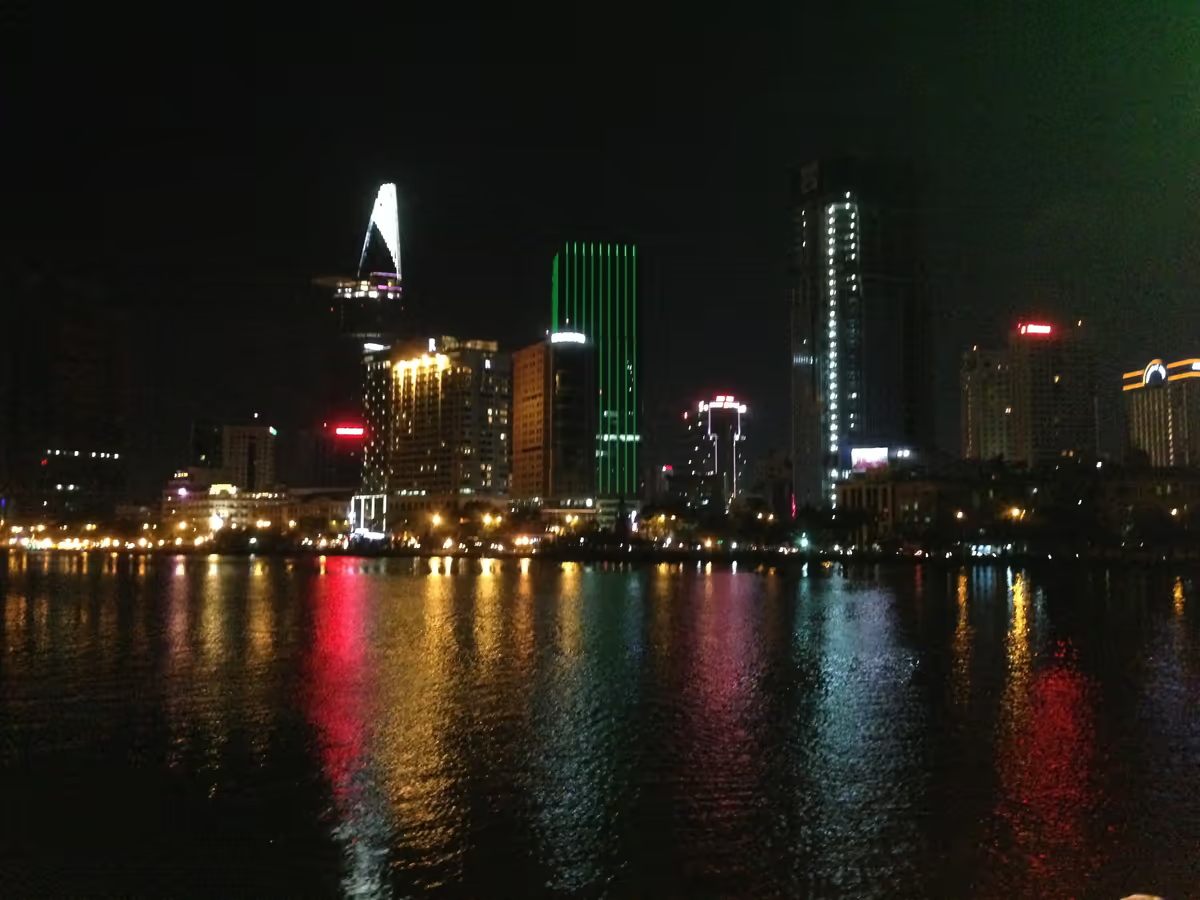
Three Sample Weeks, by Season
These are our own suggestions, built from the sources above and not a sourced itinerary, and they assume you are based in the city for the week.
A dry-season week (December to April)
- Mornings: walk, because the highs rise to 32 to 35°C and the dry air makes early hours comfortable.
- Midday: an indoor lunch and a rest between about 11 am and 2 pm in March and April, when highs reach 35 to 38°C according to vietnamtourism.com.
- Evenings: the cooler hours, with the river and the streets at their best, and book restaurants early in December to February.
A wet-season week (May to October)
- Mornings: the dry part of the day, for the long outdoor items.
- Afternoons from about 3 pm: a coffee, a museum or a cooking break while the storm passes, then out again.
- September and October: check the weather for the district you stay in, because flooding is reported in District 7 and parts of District 2.
A shoulder week (November)
- Weather: rain tapers to 128 mm and nine rainy days, with highs of 32.4°C.
- Prices: medium, between the very low rainy months and the high December to February peak.
- Plan: keep a rain jacket in the bag and book Tet-season rooms early if your trip runs into December.
Tet, Crowds and Hotel Prices
The festival calendar changes the city more than the weather. Vietnamtourism.com says Tet, in late January or February, causes widespread closures and higher prices, that many shops close for a week, and that restaurants, markets and even street stalls disappear; flower markets and fireworks add colour. Our Tet 2027 guide has the dates. The page also says December feels festive with Christmas decorations across the city.
| Months | Price level |
|---|---|
| December, January, February | High |
| March, April | Medium |
| May to August | Low |
| September, October | Very low |
| November | Medium |
The same page gives hotel prices of 150,000 to 250,000 VND (US$6 to 10) for budget rooms, 600,000 to 1,200,000 VND (US$25 to 50) for mid-range and about 2,500,000 VND (US$100) for luxury. Our travel costs guide puts these in a budget.
Eating around the weather
Weather decides what you want to eat. In the hot months a cold bowl is a pleasure: our Vietnamese desserts guide says cold che is typically eaten from April to September, and a cold Vietnamese coffee does the same job. In the wet months a hot noodle soup suits an afternoon storm; our guides to pho and noodles beyond pho cover the bowls, and the spring roll guide explains the fresh and fried rolls. Our street food by region guide describes Saigon’s southern style.
Which Month for Which Traveller
The table is our own reading of the sources, so treat it as a rule of thumb and not a ruling.
| You want | Months | Why |
|---|---|---|
| The most pleasant weather | December to February | Dry, lowest highs; book early because it is peak season |
| Dry weather and fewer crowds | March, April | Medium prices and dry, but 35 to 38°C at midday |
| The lowest prices and quiet streets | May to October | Daily afternoon storms; flooding in September and October |
| To avoid Tet closures | Any month outside late January or February | Many shops and restaurants close for about a week |
| A trip to the centre as well | December to April | Da Nang and Hoi An are wet in autumn; see our Da Nang guide |
What the sources do not tell us
Four gaps are worth stating. None of the pages we read gives the months of tide-related street flooding, which is the most practical flooding detail. None gives an air-quality number for any month. None gives the exact Tet dates for a given year; our Tet guide does. And localvietnam.com’s page was cut off before its sections on flooding, typhoons and events, so we did not use them. If one of these matters to your trip, ask your hotel what the streets near it do after heavy rain.
What to Pack
Pack light and bring rain gear in the wet season. Vietnamtourism.com recommends light clothing for all seasons, a light rain jacket or compact umbrella for the rainy season, sunscreen and insect repellent year round and comfortable shoes that can handle wet streets. North-vietnam.com agrees: light clothing, sunscreen, comfortable shoes and rain gear in the wet season. Our power plug guide covers the adapter and our SIM guide the phone.
Saigon and Sapa on One Trip
The south and the mountains run on opposite calendars, so the order of a trip matters. Saigon is at its best from December to February, when Sapa is cold and often misty, and Sapa is at its best in September and October and from March to May, when Saigon is wet or hot. The simple plan is Sapa in March to May for the green terraces and a warm clear sky, then a flight south for April or May heat, or Sapa in September and October and then Saigon in November as the rain tapers off. Our best time to visit Sapa guide and Sapa weather by month give the mountain side, and the airports guide shows how to fly between the two.
If you are heading on to the coast, see our beaches by month guide, and for a first look at the south, the 2-week itinerary. A day on foot in the Muong Hoa valley with a local guide is a good way to start the northern leg, and the tour cards below show the options.
Sapa Treks to Pair With a Trip to Saigon
 1-Day Trek
Trekking Through Rice Terraced Fields
Lao Chai to Ta Van with lunch at a family restaurant in Y Linh Ho.
 Homestay
Rice Terraced Fields & Homestay
Dinner and breakfast with a family in Ta Van, lunch on day one.
 Local Favourite
Mountain Views and Villages Trek
Lunch at a restaurant run by local people in Hang Da village.
Sources and the Dates We Checked Them
We read these pages on 3 November 2026. Where a page could not be read in full or two pages disagree, the text says so.
- vietnamtourism.com, Ho Chi Minh City: when to visit around heat and rain, updated 29 August 2026; commercial site.
- north-vietnam.com, weather in Saigon, June 2026; contains affiliate links. Its monthly table gives different rainfall from Wikipedia (2,099 mm a year when summed, our addition).
- localvietnam.com, best time to visit Ho Chi Minh City, 15 February 2025; cut off after the rainy-season section, so used only for the season dates.
- Wikipedia, Ho Chi Minh City; the climate table came from a page summary, not verbatim text, and the text gives about 1,800 mm and 150 rainy days a year against the table’s 1,970 mm and 121.
The Part We Do Sell
- Hanoi to Sapa transport — sleeper buses, limousines and the overnight train, bookable with your trek
- Hanoi to Sapa guide — what each option costs and how long it takes
- How to get to Sapa — the first leg, in detail
Rent at Our Office Before You Trek
 Gear Rental
Trekking Boots Rental
Waterproof ankle-support boots. Cleaned and checked before each rental. Available at 105 Thach Son Street.
 Gear Rental
Walking Poles Rental
Trekking poles available to rent at $2/day at our office, 105 Thach Son Street. Essential for descents.
Frequently Asked Questions
December to February is the most pleasant: dry, with highs of 31.6 to 32.7°C, though it is peak season for hotels. Vietnamtourism.com (29 August 2026) calls late November or early December the sweet spot. March and April are drier but 35 to 38°C at midday.
May to November. Every month from May to November has at least 128 mm of rain in the Wikipedia table, against under 60 mm from December to April. September is the wettest at 490 mm.
Hot all year. Mean daily highs run from 31.6°C in December to 34.9°C in May, and lows from 23.1 to 26.4°C (Wikipedia, read through a summary). Vietnamtourism.com says March and April highs regularly reach 35 to 38°C, and the record is 40.0°C in April.
Usually not. Vietnamtourism.com says storms open up by 3 or 4 pm and last 30 to 60 minutes. September and October can bring prolonged rain lasting hours.
Yes, in the rainy season, especially in September and October. Vietnamtourism.com names District 7 and parts of District 2, and Wikipedia says tide, rain, river flow and land subsidence flood parts of the city. We found no page that lists tide-flood months.
Direct hits are rare, according to vietnamtourism.com and north-vietnam.com. Typhoons in the South China Sea can add rain, but the real typhoon risk is on the central coast, from September to December.
Tet, in late January or February, closes many shops for about a week, shuts restaurants and markets and raises prices, while flower markets and fireworks add colour (vietnamtourism.com). Book hotels early for December to February.
Light clothing, sunscreen, insect repellent and comfortable shoes that cope with wet streets. In the rainy season add a light rain jacket or compact umbrella (vietnamtourism.com, 29 August 2026).