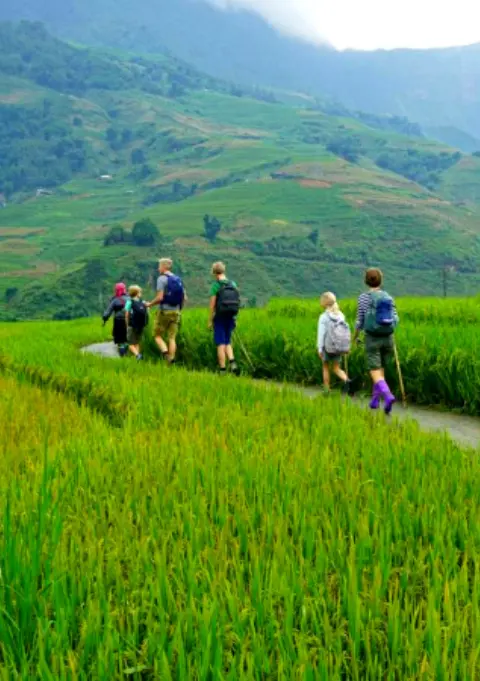
 Sinh Giang
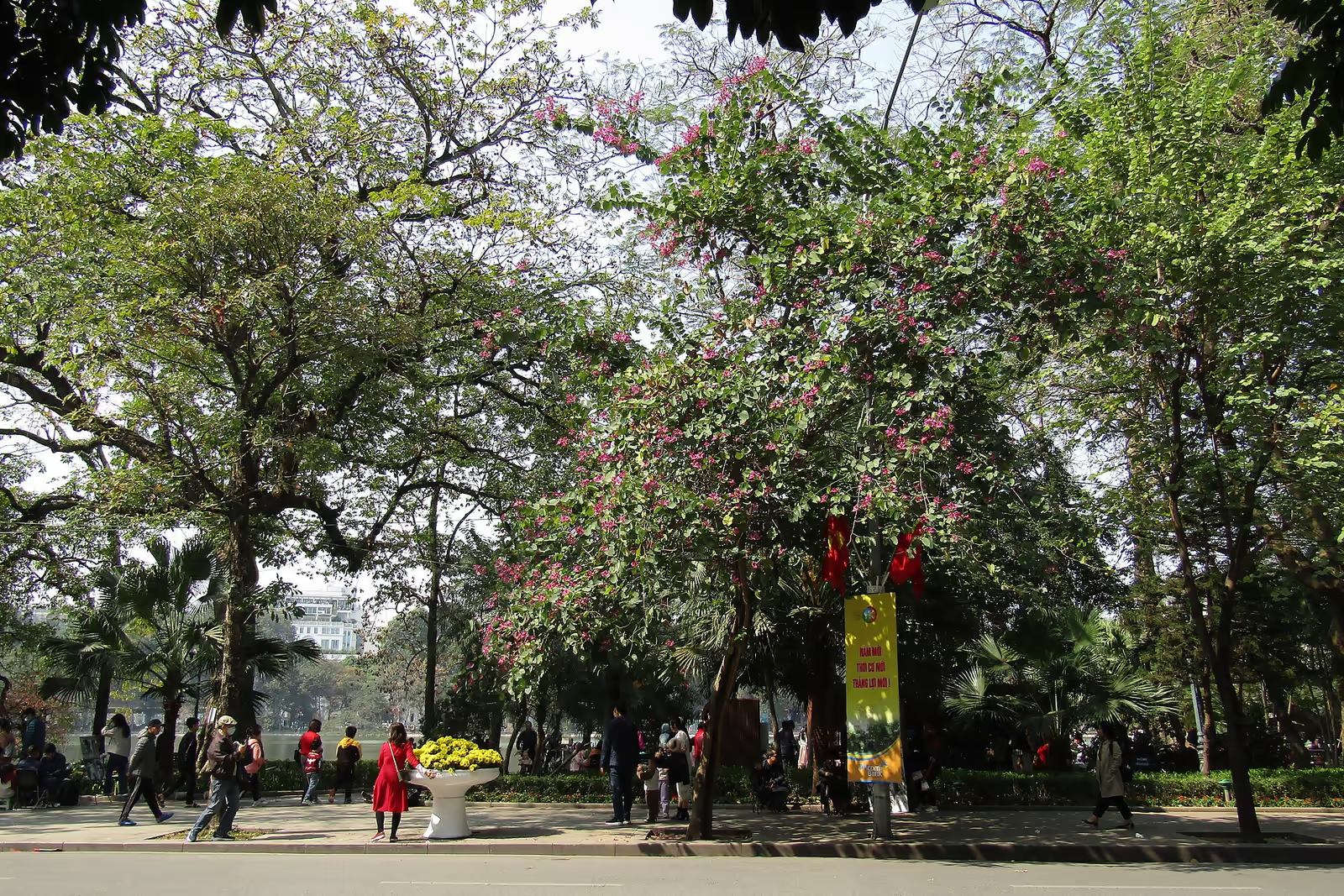
The best time to visit Hanoi is October to November, when average highs are 29.6°C and 26.3°C (85°F and 79°F) and the monthly rain has dropped from 335 mm in August to 126 mm and then 48 mm. March and April come second. December to February is cool and often grey, but it is dry enough for sightseeing if you pack a jacket, and May to September is hot and wet. Those figures are 1991–2020 averages from the World Meteorological Organization’s World Weather Information Service for Hanoi, and we checked them on 31 October 2026.
Hanoi surprises people who expect all of Vietnam to be tropical year-round. It has four real seasons, with a winter that needs a fleece and a summer that does not let go of the humidity. This guide goes month by month with the measured numbers, then adds what a climate table leaves out: how each month feels, what to wear, when storms and pollution arrive, what Tet 2027 does to your plans and how the weather changes if you carry on to Sapa.
Hanoi Weather at a Glance
Hanoi’s average daily high runs from 20.0°C in January to 33.8°C in June, a swing of 13.8 degrees, and about 77% of the year’s rain falls between May and September. The monthly rainfall in the table below adds up to roughly 1,630 mm a year over about 164 rain days, which makes Hanoi a wet city but not a constantly wet one, because many of those rain days are light.
| Month | High °C (°F) | Low °C (°F) | Rain days | Rain mm |
|---|---|---|---|---|
| January | 20.0 (68) | 14.6 (58) | 11 | 28 |
| February | 21.3 (70) | 16.2 (61) | 12 | 19 |
| March | 23.5 (74) | 18.7 (66) | 18 | 55 |
| April | 27.7 (82) | 21.9 (71) | 16 | 79 |
| May | 31.7 (89) | 24.5 (76) | 17 | 188 |
| June | 33.8 (93) | 26.3 (79) | 16 | 231 |
| July | 33.3 (92) | 26.5 (80) | 18 | 300 |
| August | 32.5 (91) | 25.8 (79) | 18 | 335 |
| September | 31.6 (89) | 24.7 (77) | 14 | 195 |
| October | 29.6 (85) | 22.4 (72) | 10 | 126 |
| November | 26.3 (79) | 19.2 (67) | 7 | 48 |
| December | 22.1 (72) | 15.4 (60) | 7 | 24 |
Read the table with one trick. Compare rain days with millimetres. February has 12 rain days and only 19 mm, and March has 18 rain days and 55 mm, so those are drizzle months, grey and damp but rarely a washout. August has 18 rain days and 335 mm, which is the other kind: short, violent downpours. That distinction is our own reading of the figures.
Humidity and sunshine figures below come from the Vietnam Institute for Building Science and Technology table as tabulated on Wikipedia (checked 31 October 2026). They are second-hand, so treat them as a guide.
The Four Seasons of Hanoi
The strip below is our grade for each month, a judgement that weighs temperature, rain and comfort for a normal sightseeing trip.
Winter, December to February. Average highs of 20.0 to 22.1°C and lows of 14.6 to 16.2°C, light drizzle, low sun. There is rarely heating indoors.
Spring, March and April. A fast warm-up from 23.5°C to 27.7°C average highs, with the grey drizzle of March giving way to real sunshine in April. It is also an early-season window for Sapa.
Summer, May to September. Five months of 31.6 to 33.8°C average highs, warm nights and 14 to 18 rain days a month. The rain comes in bursts and the storms are real.
Autumn, October and November. The reward season. Highs fall from 29.6°C to 26.3°C, rain days fall to 10 and then 7, and the evenings are cool enough to sit out. Book early: most visitors target it.
Hanoi Weather Month by Month
Each month gives the WMO average high and low, rain days and rainfall, then what it feels like to be there. These are 1991–2020 averages, so a single week can differ a lot.
January: Cold, Grey and Quiet
14.6–20.0°C · 11 rain days · 28 mm
January is Hanoi’s coldest month, and it feels colder than 20°C because most homes and small cafés have no heating. Tile floors and concrete stairwells hold the chill, so many locals keep their jackets on indoors. It is also one of the gloomiest months: the sunshine total in the Vietnam Institute for Building Science and Technology table, as tabulated on Wikipedia, is only 74 hours.
The upside is that the streets are calm and the walking is pleasant at midday, when the temperature is at its best. Pack a fleece, a windproof layer and a scarf, and read the air-quality section below before you plan long outdoor days.
February: Drizzle Season
16.2–21.3°C · 12 rain days · 19 mm
February is the driest month on paper, 19 mm, but it rains on 12 days. That mismatch is the signature of Hanoi’s late-winter drizzle: a fine, near-constant mist that rarely soaks you and never quite lets the washing dry. Relative humidity is 84% in the same table, and sunshine is 45 hours for the whole month, the lowest of the year.
Hanoians have a word, nồm, for the days when walls and tile floors seem to sweat, so do not be surprised if your hotel bathroom floor is slick. Tet falls in late January or February (6 February in 2027, see the Tet section), and the city fills with kumquat trees and blossom for the occasion. A light waterproof shell beats an umbrella here.
March: The Greyest Month
18.7–23.5°C · 18 rain days · 55 mm
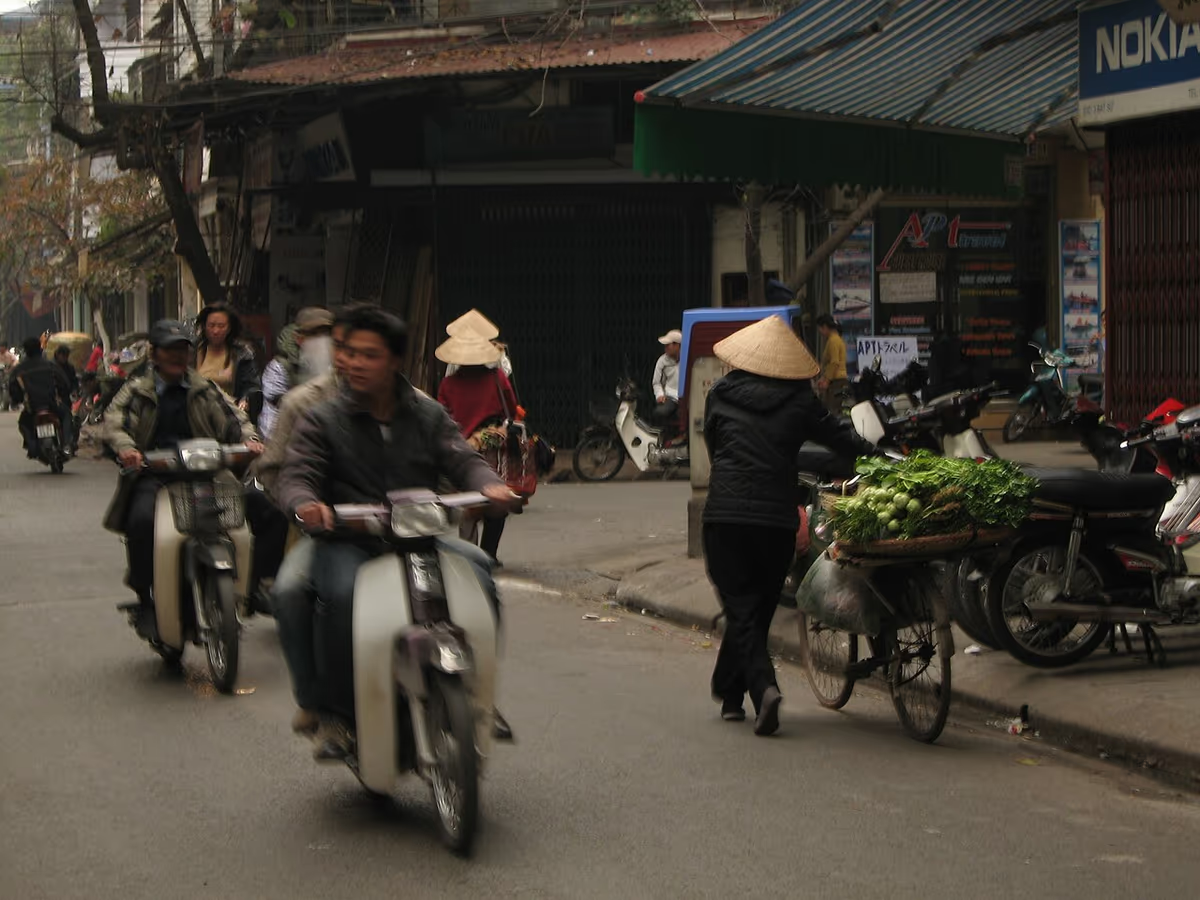
March has 18 rain days, the most of any month, and only 55 mm of rain, so almost all of it is drizzle. Humidity peaks at 88% and the sunshine total is 47 hours. If a friend tells you Hanoi is cold and grey in spring, they went in March.
It is warming, though: the average high is 23.5°C, a full 3.5 degrees above January, and the trees along the lakeside streets are in fresh leaf. Treat March as a month for museums, food tours and café afternoons, with one warm layer and a thin shell.
April: Spring Finally Arrives
21.9–27.7°C · 16 rain days · 79 mm
April is the first month when the weather behaves like a holiday. Sunshine nearly doubles from March to 90 hours and the average high reaches 27.7°C, although humidity is still 87%. Rain is still on 16 days, but at 79 mm it is showers, not storms.
It is the best month for walking Hoan Kiem Lake and the Old Quarter in a T-shirt, and a good month to head to Sapa, where our Sapa weather guide gives 17 to 23°C. The caveat is that April is the month before the heat: by the last week the afternoons can already feel like May. Start early and take the lake loop at 7:00, not noon.
May: The Heat Switches On
24.5–31.7°C · 17 rain days · 188 mm
May is when Hanoi tips into summer. The average high jumps four degrees to 31.7°C and monthly rain more than doubles, from 79 mm to 188 mm, as the first real thunderstorms arrive. Sunshine climbs to 183 hours.
Plan around the day’s shape: sightseeing from 7:00 to 11:00, a long indoor lunch, and a dry-cloth plan for the 4 p.m. storm. Wear a hat and sunscreen. For Sapa, May is when the terraces are flooded for planting, which is the mirror season for photographers, but expect rain there too.
June: The Hottest Month
26.3–33.8°C · 16 rain days · 231 mm
June has the highest average high of the year, 33.8°C, and the nights barely cool, with an average low of 26.3°C. With relative humidity around 79% in the same Vietnam Institute for Building Science and Technology table, you can stand still in the shade and still sweat. Do as Hanoians do and spend noon to 4 p.m. in an air-conditioned café.
Rain is heavier than May, 231 mm over 16 days, but it comes in afternoon bursts, so mornings are usually workable. It is a bad month for walking the whole Old Quarter on foot. Wear loose cotton and move outdoor plans to early morning or evening.
July: Warm Nights and Heavy Rain
26.5–33.3°C · 18 rain days · 300 mm
July is not much cooler than June, 33.3°C, but it has the warmest nights of the year at 26.5°C on average and 300 mm of rain on 18 days. The usual pattern is a hot, clear morning and a downpour by late afternoon.
Streets flood quickly in the Old Quarter, where the drains are old, so wear sandals that can get wet, not canvas shoes. Storm season is also under way. Build a buffer day into any itinerary. Our guide to Vietnam in June, July and August covers the national picture.
August: The Wettest Month
25.8–32.5°C · 18 rain days · 335 mm
August is the wettest month at 335 mm, and the one most likely to ruin an outdoor plan. The photograph further down this page was taken on Luong Ngoc Quyen Street on 3 August 2018, when an evening downpour turned a lane into a stream within minutes.
Highs are 32.5°C and sunshine drops to 159 hours, but the air stays heavy. Museums, the water puppet theatre and covered markets are the answer. If your dates are fixed, travel insurance that covers weather delays is worth it. Sapa is wet too; our guide to trekking Sapa in the rainy season covers what the wet months mean on the mountain.
September: Storm Risk, Then a Turn
24.7–31.6°C · 14 rain days · 195 mm
September is a month of two halves. Early in the month Hanoi is still exposed to typhoons, which is when Yagi hit in 2024. Rain falls from 335 mm in August to 195 mm, and rain days from 18 to 14, so the trend is clearly downward by the end of the month.
The heat also begins to break: the average high is 31.6°C, down about one degree. September suits a flexible schedule and is a risky month for a rigid one. In Sapa, rice turns gold from mid-month, so the mountains start to peak just as Hanoi’s weather turns.
October: The Sweet Spot
22.4–29.6°C · 10 rain days · 126 mm
October is the month we point most visitors to. Average highs of 29.6°C are warm without being oppressive, rain days fall to 10, and monthly rain is 126 mm, well under half of August’s. Evenings are cool enough to sit outside.
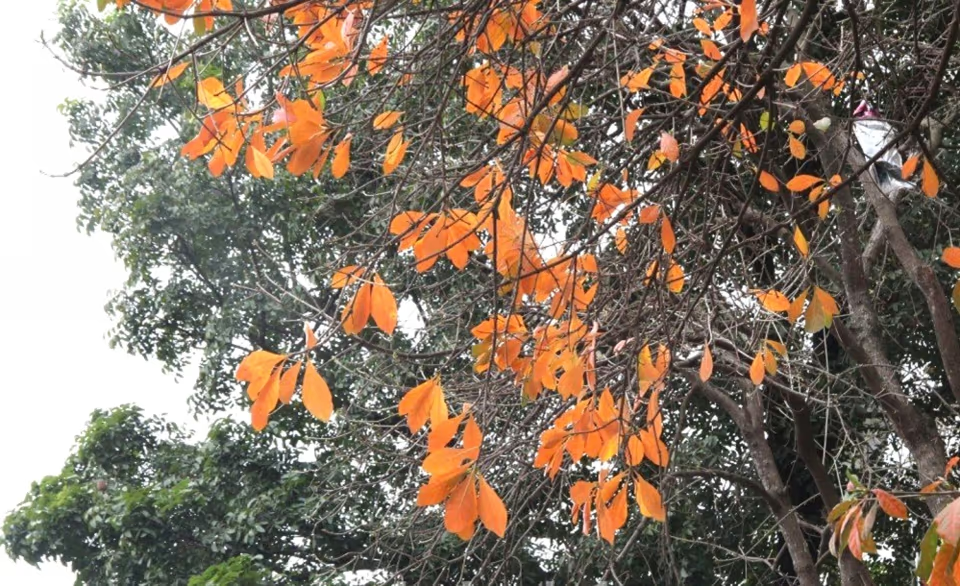
Leaves colour and fall, as in the photograph below. The catch is that the pollution season has begun: a Hanoi environment official said in 2020 that the air worsens from September. Hoan Kiem Lake at dawn and the Temple of Literature are at their best. For Sapa, October is the golden-harvest month, so book that part early.
November: Cool, Dry and Crisp
19.2–26.3°C · 7 rain days · 48 mm
November is, on the numbers, the most comfortable month in Hanoi. Rain days fall to 7, monthly rain to 48 mm, and the average high to 26.3°C. The Vietnam Institute for Building Science and Technology table gives relative humidity of 77%, one of the lowest of the year, which is why the air feels clean on a good day.
Mornings need a thin jacket, and late-month evenings a real layer. The same dry weather that makes November pleasant also lets pollution linger, so check the air quality before a long outdoor day. It suits the full northern loop of Hanoi, Ninh Binh and Sapa. Our Sapa November guide gives 13 to 20°C for the mountains.
December: Dry Winter Light
15.4–22.1°C · 7 rain days · 24 mm
December is dry, with 7 rain days and 24 mm, and the Vietnam Institute for Building Science and Technology table puts humidity at 75%, the lowest of the year. Highs of 22.1°C and lows of 15.4°C make mornings and evenings properly cold.
This is a good month for sightseeing if you are happy to wear layers: clear lake mornings, Christmas decorations around St Joseph’s Cathedral and low sun on the lake. Bring a proper jacket, closed shoes and a mask for pollution days. Sapa in December is colder still, at 10 to 17°C by our own table, with frost on the highest ridges, so it is a trip for people who like fog and woollens.
The Best Time to Visit Hanoi, by Goal
The right month depends on what you want to do, so here are our picks from the numbers above.
- The most comfortable weather: October and November. Highs of 26 to 30°C, 7 to 10 rain days and rain well below the summer peak.
- Walking and photography: late October to mid-November for crisp light, or April for green trees and the first real sunshine after the grey months.
- Avoiding rain: November to February. Rain is 19 to 48 mm a month, although January to March bring drizzle on 11 to 18 days.
- Avoiding the heat: December to March. Average highs stay between 20.0 and 23.5°C and nights are properly cool.
- Avoiding storms: November to May. The risk is concentrated in late summer and early autumn: Yagi came on 7 September 2024, and nationwide storm landfalls peak in September and October.
- Adding Sapa: April, October and November. They are the months when both Hanoi and the mountains are at their most comfortable, which matches the monthly ratings in our Sapa weather guide.
If you are choosing between Hanoi and the rest of the country, our guides to the best month to visit Vietnam and Vietnam weather by month cover the south and the centre, and Vietnam in June, July and August covers the summer.
Rain, Storms and Flooded Streets
Hanoi’s rain is a seasonal event: 188 mm in May, 231 mm in June, 300 mm in July and 335 mm in August, then 195 mm in September. Short, heavy downpours can flood the Old Quarter’s narrow streets in minutes.
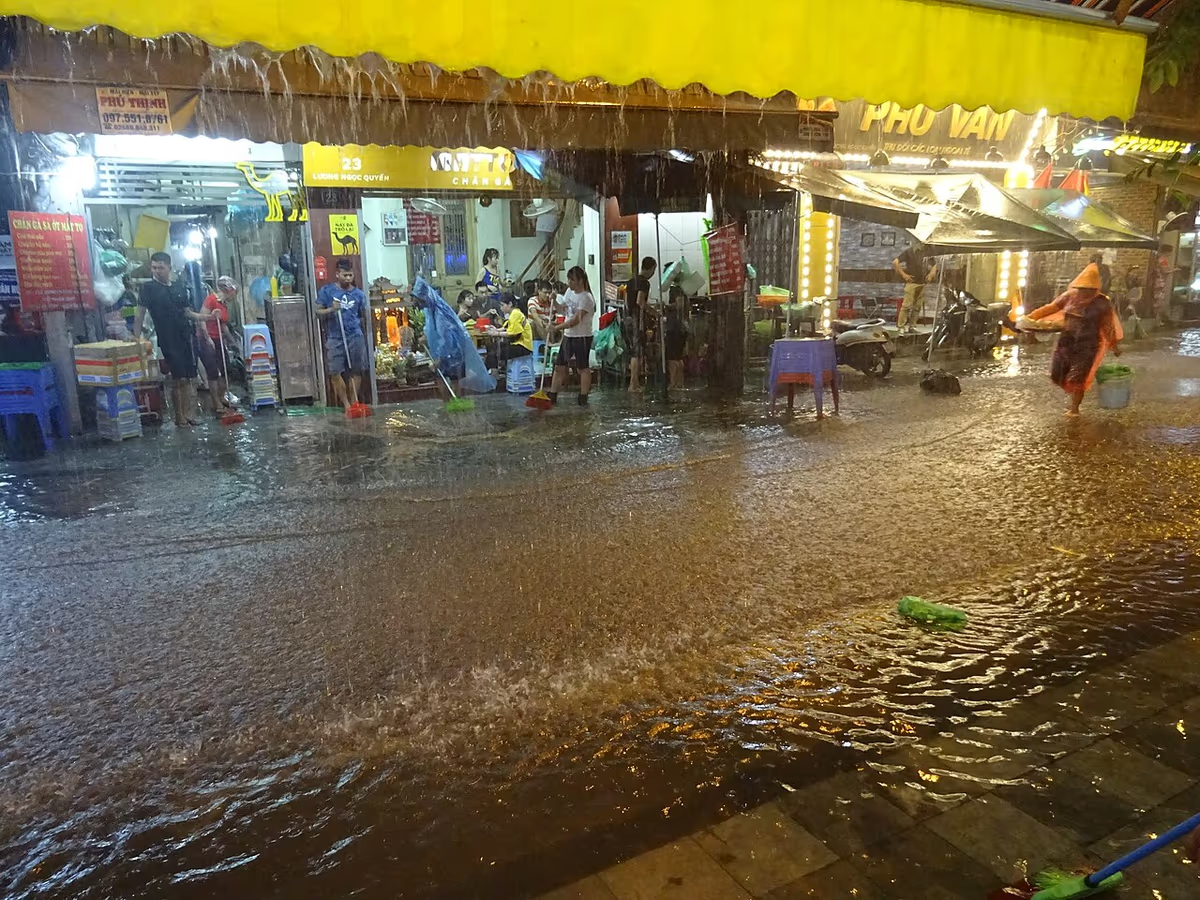
Typhoons are a bigger problem. Yagi made landfall in northern Vietnam on 7 September 2024, and a wire report published by The Star (Malaysia) on 11 September 2024 counted at least 152 dead nationwide, the Red River swollen over Hanoi’s streets and thousands evacuated from low-lying areas. One Hanoi resident quoted in it called it the worst flood in 30 years. Some schools told students to stay home, and factories in the export hubs east of the city were flooded, with some executives saying it could take weeks to resume full operations.
The Vietnam Maritime Search and Rescue Coordination Centre publishes storm statistics based on NOAA records since 1945, covering 459 landfalling storms. It names September and October as the two months with the most landfalls anywhere in Vietnam. That is a national figure, not a Hanoi one, but it is a reminder that the risk does not end in August.
Our advice for August and September: book flexible fares, keep a buffer day before any international flight and check the official bulletins, not a phone app’s icon.
Air Quality: the Forecast Nobody Prints
Hanoi’s worst air comes in the cool months, which surprises visitors who assume that dry, clear winter days are the best. Mai Trong Thai, head of the Environment Protection Division under Hanoi’s Department of Natural Resources and Environment, said in an interview published on 6 October 2020 that weather and pollution sources together worsen the city’s air from September to March, with winter northeast monsoons bringing low temperatures and frequent inversions that stop pollutants from dispersing.
The numbers back that up. IQAir’s newsroom said on 16 January 2026 that Hanoi’s air-quality index was above 170, in the unhealthy range, and ranked it tenth among the world’s most polluted major cities at that moment. It put the 2024 annual average PM2.5 at 45 µg/m³, eight times the WHO annual guideline of 5 µg/m³. Wind and rain clear the air for a few days at a time, but IQAir says the seasonal pattern keeps levels elevated through much of the winter.
No city-wide figure replaces a live reading. IQAir publishes Hanoi’s live air-quality index, and an app that shows it is worth more than a forecast on days that look clear but smell of smoke. Vietnam’s national weather service, the National Center for Hydro-Meteorological Forecasting, issues the official storm bulletins.
For a visitor this is manageable. Check the live AQI each morning, put your outdoor walking in the cleanest hours, wear a well-fitted N95 or KN95 mask on the bad days, and swap a long Old Quarter walk for museums, cafés and the water puppet theatre when the index is above about 150. If you have asthma or heart disease, talk to your doctor before choosing December to February. We found no official monthly air-quality table to quote, so we give the dated reports above, not a month-by-month score.
What to Wear, Season by Season
Winter (December to February). Layers: a base shirt, a fleece or light down jacket, long trousers, closed shoes and a scarf. A thin waterproof shell beats an umbrella in drizzle, and a mask helps on high-pollution days.
Spring (March and April). One warm layer for the morning, T-shirts for the afternoon and a thin shell. Quick-drying shoes.
Summer (May to September). Loose linen or cotton, a hat, sunscreen and sandals or shoes that can get soaked. A poncho beats an umbrella in a sudden downpour, and a dry bag protects your phone.
Autumn (October and November). T-shirt by day, a thin jacket by evening, comfortable walking shoes. By late November the nights call for a proper layer.
Planning the days themselves? Our Hanoi Old Quarter walking guide works in every season, and the cooler months suit the half-day route best.
If Sapa is part of the trip, you need a second kit. Our Sapa packing list covers boots, layers and rain gear, and you can rent boots and walking poles at our office on Thach Son Street instead of carrying them from Hanoi.
Tet 2027 and the Calendar
Tet, the Lunar New Year, falls on 6 February 2027, the start of the Year of the Goat, according to Tuoi Tre in an article published on 8 August 2026. The same article says the culture ministry backed a seven-day break from 4 to 10 February, while the Ministry of Home Affairs floated a ten-day break from 5 to 14 February, and it described both as proposals, not decisions. We could not confirm a final decision, so check the government’s announcement before you book.
What it means for you: many shops, restaurants and tours close for several days around Tet, transport fills up, and the weather in early February is cool and drizzly, as the February section above shows. Go for the blossom and festive streets, but avoid the week if you want an easy trip. The H’mong New Year in Sapa follows a different calendar.
Adding Sapa: How the Mountains Change the Forecast
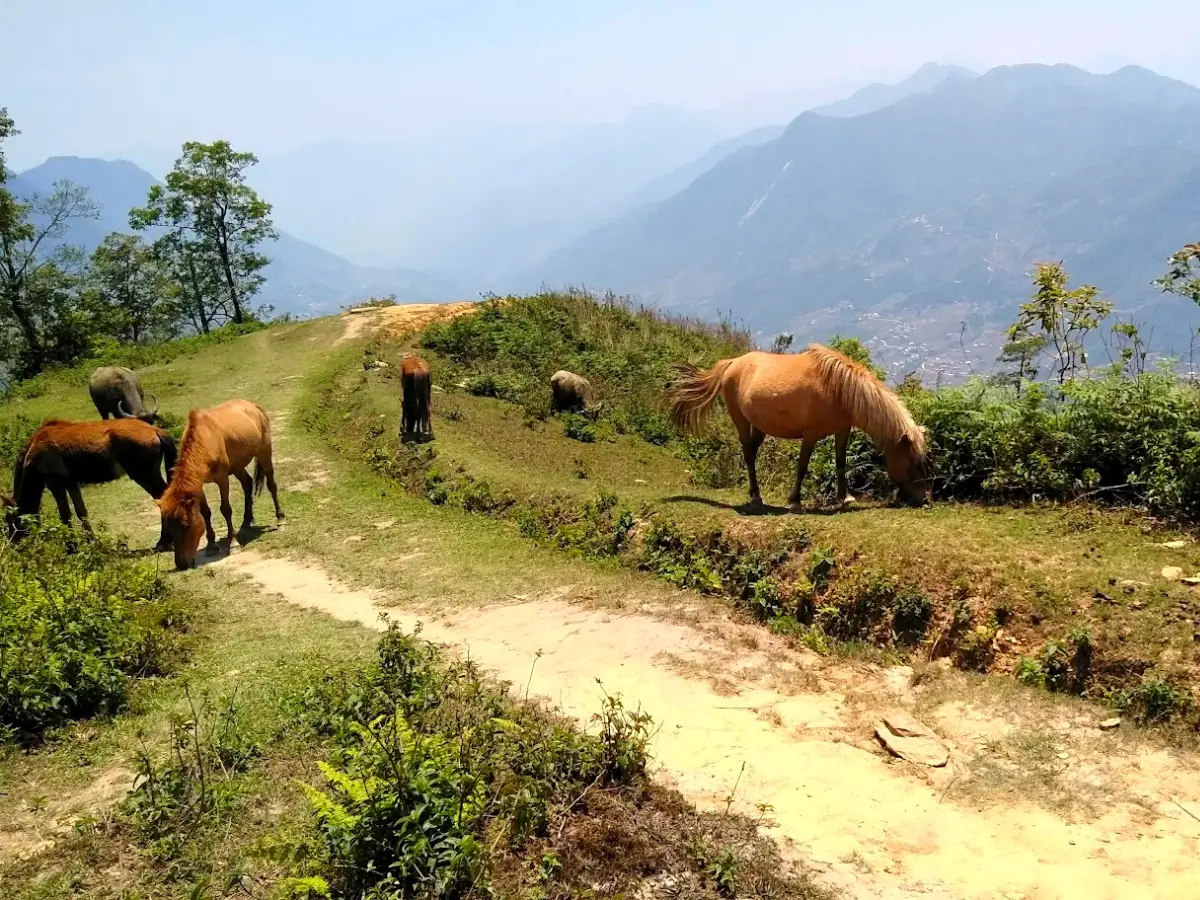
Sapa sits at about 1,500 m and is roughly 5 to 7°C cooler than Hanoi across the year, by our comparison of the WMO figures for Hanoi and the ranges in our own Sapa weather by month guide. In January Hanoi’s average high is 20.0°C while Sapa runs 9 to 15°C, with fog and frost on the ridges. In July Hanoi averages 33.3°C and Sapa 20 to 27°C. April is 27.7°C in Hanoi against 17 to 23°C in Sapa, and October is 29.6°C against 15 to 23°C.
The rain is different, too. In Hanoi, the drizzle is in February and March. In Sapa, the heavy rain is from June to August, and fog is the main issue in winter. The two cities are best together in October and November, which is also when the rice is being harvested; our rice harvest guide and best time to visit Sapa explain the details, and Fansipan weather by month covers the summit. If you are going in the wet months, read trekking Sapa in the rainy season before booking.
Add the Mountains to Your Hanoi Trip
 1-Day Trek
Trekking Through Rice Terraced Fields
The Lao Chai to Ta Van valley day, with a local guide and a finish in Sapa town.
 Local Favourite
Mountain Views and Villages Trek
Quieter ridge and village trails above the valley.
 Homestay
Rice Terraced Fields & Homestay
A night with a local family in the valley.
The Hanoi to Sapa timetable lists the sleeper bus, limousine van and train options, and how to get to Sapa from Hanoi compares them. The Chapa Express review and King Sapa train review cover the night train, and our transport page lets you book a seat. If you only have a couple of days in the capital first, 2 days in Hanoi and things to do in Hanoi fill them.
A sample plan for October or November: two nights in Hanoi, the night train or a morning van to Sapa, two days of trekking through the rice terraces with a local guide, then back. For the full route through the north, see our northern Vietnam itinerary. Our guides reply on WhatsApp within 5 to 10 minutes, so send your dates and we will tell you what the mountains will look like that week.
Rent at Our Office Before You Trek
 Gear Rental
Trekking Boots Rental
Waterproof ankle-support boots. Cleaned and checked before each rental. Available at 105 Thach Son Street.
 Gear Rental
Walking Poles Rental
Trekking poles available to rent at $2/day at our office, 105 Thach Son Street. Essential for descents.
Frequently Asked Questions
October and November are the best months. Average highs are 29.6°C and 26.3°C, and monthly rainfall has dropped from 335 mm in August to 126 mm in October and 48 mm in November. March and April are the second-best pair, though March has the most rain days of the year. December to February is cool and grey but dry enough for sightseeing if you carry a jacket. Figures are WMO 1991 to 2020 climate averages for Hanoi, checked on 31 October 2026.
June has the highest average daytime temperature, 33.8°C, and July has the warmest nights, with an average low of 26.5°C. January is the coldest month, with an average low of 14.6°C and an average high of 20.0°C. August is the wettest, with 335 mm of rain on 18 rain days. February is the driest at 19 mm, although it still has 12 rain days of light drizzle. Source: WMO World Weather Information Service, Hanoi, 1991 to 2020, checked 31 October 2026.
Yes. From December to February the average high is 20 to 22°C and the average low is 14.6 to 16.2°C, and cold spells push mornings lower than the averages. Many homes, cafes and small hotels have no heating, and the high humidity makes the air feel colder than the thermometer says. Pack a fleece or light down jacket, long trousers and a scarf for those months.
It is manageable but not comfortable. From May to September, rain arrives as short, heavy bursts on 14 to 18 days a month, and streets in the Old Quarter can flood within minutes. The bigger risk is a typhoon: Yagi made landfall in northern Vietnam on 7 September 2024 and the Red River flooded parts of Hanoi. Check the forecast, keep flights and tours flexible in August and September, and carry a poncho.
In the cool months. A Hanoi environment official said in October 2020 that the air worsens from September to March, because winter inversions stop pollution from dispersing. IQAir reported an AQI above 170 in Hanoi in its 16 January 2026 bulletin. Check a live air-quality app each morning, wear a well-fitted mask on bad days and move museum and cafe time to the worst hours.
Sapa is roughly 5 to 7°C cooler than Hanoi across the year, by our comparison of the WMO Hanoi figures with the Sapa ranges in our own Sapa weather guide. In January Hanoi’s average high is 20.0°C while Sapa runs 9 to 15°C, with fog and frost. In July Hanoi’s average high is 33.3°C and Sapa is 20 to 27°C. October and November are the best months for both, so you can do Hanoi first and Sapa after.