
 Sinh Giang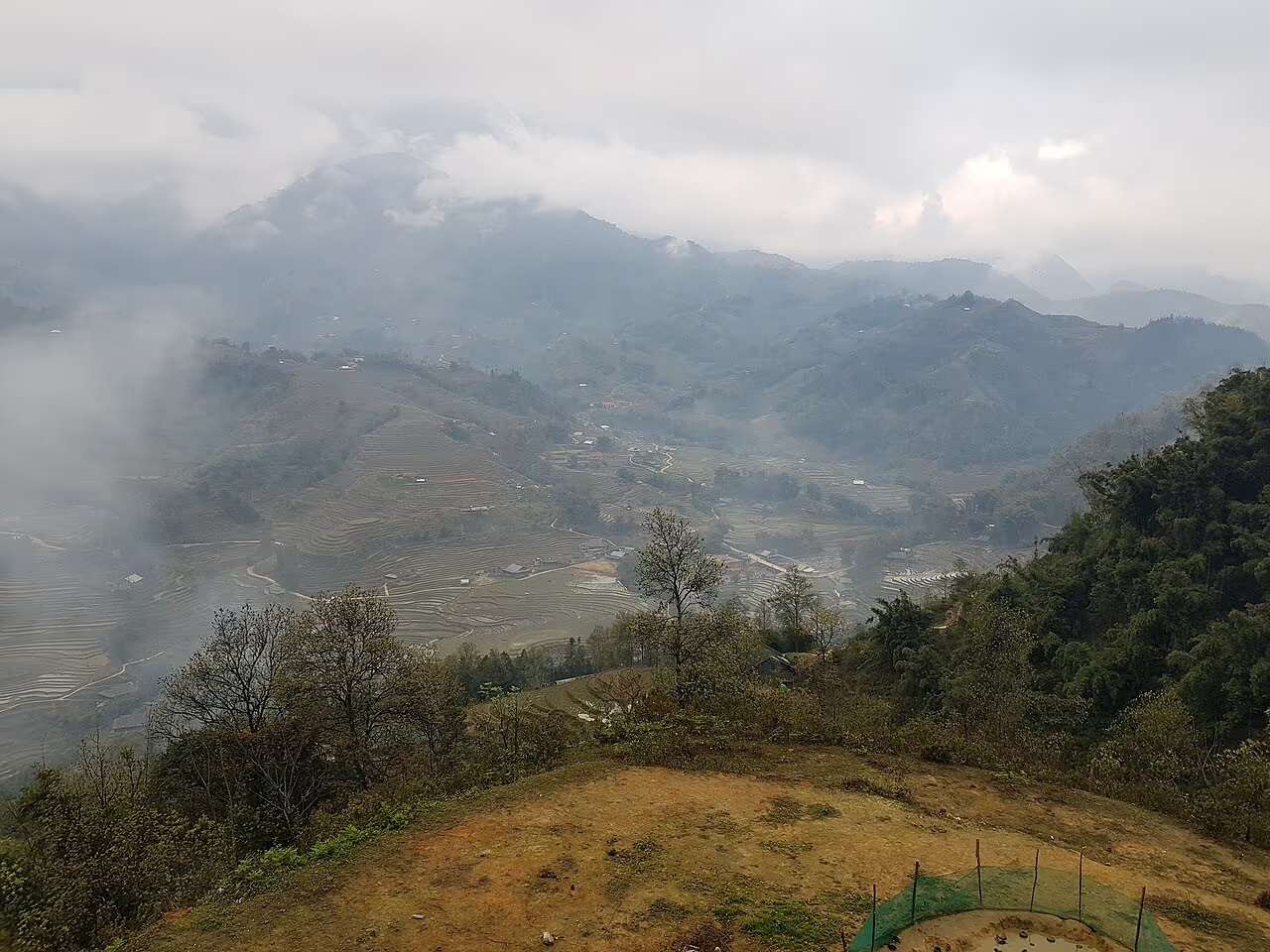
Trekking Sapa in the rainy season is not only possible — it is one of the most beautiful and best-value times to walk the valleys, as long as you come prepared. Every year travelers ask us whether they should cancel a May-to-September trek because the forecast shows rain, and almost every time the honest answer is no. Rain in Sapa rarely falls as a grey all-day drizzle; it usually arrives as a heavy afternoon burst that clears within an hour or two, which means morning treks through Muong Hoa Valley stay dry far more often than the weather app suggests. What you get in return is extraordinary: the rice terraces around Lao Chai, Ta Van and Y Linh Ho flooded like mirrors in May, glowing green through the summer, and turning gold by mid-September — with a fraction of the crowds and noticeably lower prices. The trade-off is real too: trails turn to slick clay, leeches appear on shaded forest paths, and there is a small chance of a landslide on the road up from Lao Cai. This guide walks you through exactly what to expect, month by month, so you can decide with clear eyes.
Rainy Season Trekking in Sapa — at a Glance
Here is the honest snapshot before we go deeper. The rainy season in Sapa runs from roughly May to September, it is warm rather than cold, and the walking is very doable — the biggest change from the dry months is the state of the ground under your feet and the timing of your day.
If that snapshot already sounds like your kind of trip, the rest of this guide fills in the detail: exactly when the wet months hit, why the terraces are worth the mud, the honest downsides, what the trails are really like underfoot, how to trek comfortably, what to pack, and how to reach Sapa when the road can be temperamental.
When Exactly Is the Rainy Season in Sapa?
Sapa's rainy season runs from May to September, but not every month is equally wet — and that difference matters a lot for a trekker. May and September are the gentle bookends, while July and August are the true peak of the monsoon. The calendar below shows the whole year at a glance so you can see where the wet months sit and how they compare to the drier trekking windows.
May is the month the whole valley wakes up. The families of Lao Chai and Ta Van open the sluices and flood the terraces to prepare for planting, and for a few weeks the paddies become sheets of still water that mirror the sky and the surrounding peaks. Rain is picking up but still moderate, and the crowds of the March–April high season have thinned. June is greener and wetter as the young rice takes hold. July and August are the heart of the monsoon — the wettest, most humid weeks of the year, with the highest chance of a road landslide between Lao Cai and Sapa town and the fastest-rising streams in the side valleys. September is, for many of us, the single best month of all: the rain is easing, the rice is turning gold across Muong Hoa Valley, and the harvest is about to begin. It sits right at the seam between the rainy season and the dry October peak.
This is worth stressing because a lot of travelers lump the whole of May-to-September together and write it off. In reality, trekking Sapa in the rainy season in late May feels very different from trekking it in mid-July, and September can be as glorious as any month in the calendar. If you want a deeper month-by-month breakdown of temperatures and rainfall, our Sapa weather by month guide covers the numbers; this article stays focused on the trekking decision itself.
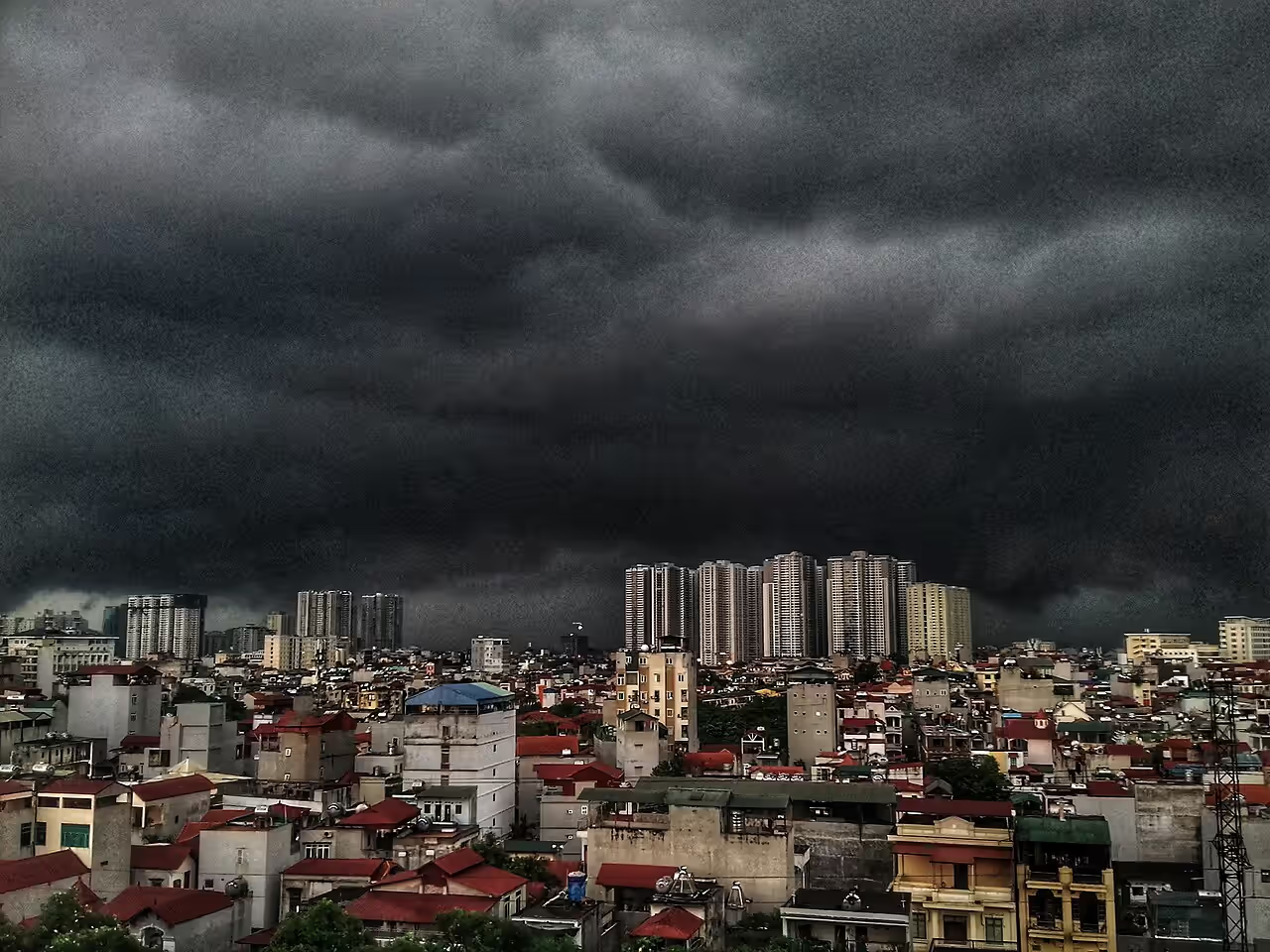
Should You Trek Sapa in the Rainy Season? The Honest Trade-Off
Whether you should trek Sapa in the rainy season comes down to what you value most. If green and gold terraces, dramatic mist, quiet trails and lower prices matter more to you than guaranteed dry footing and clear mountain views, the wet months are a genuine gift. Here is the balanced picture, laid out plainly.
Why the rainy season is worth it
- The Muong Hoa Valley terraces are at their most beautiful — mirror-flooded in May, deep green in summer, gold in September
- Far fewer trekkers on the trails than March–April or October
- Lower prices on rooms and quieter homestays in Ta Van and Giang Ta Chai
- Waterfalls and streams run full and dramatic
- Mist rolling through the valley makes for unforgettable photos
- Warm days — no need for heavy cold-weather gear
What you need to accept
- Trails turn to slick clay — descents to Lao Chai get properly muddy
- Afternoon downpours can shorten or reroute a walk
- Leeches appear on damp, shaded forest sections
- Fog can hide the higher views, including Fansipan
- Small but real chance of a landslide on the Lao Cai–Sapa road
- You must bring — or rent — proper waterproof gear
Notice that almost every item in the right-hand column is manageable with preparation and a good local guide, while the items on the left are things money simply cannot buy in the dry season. That asymmetry is the reason so many returning travelers, and most photographers, deliberately choose the wet months.
The Green Season: Why the Terraces Are at Their Most Beautiful
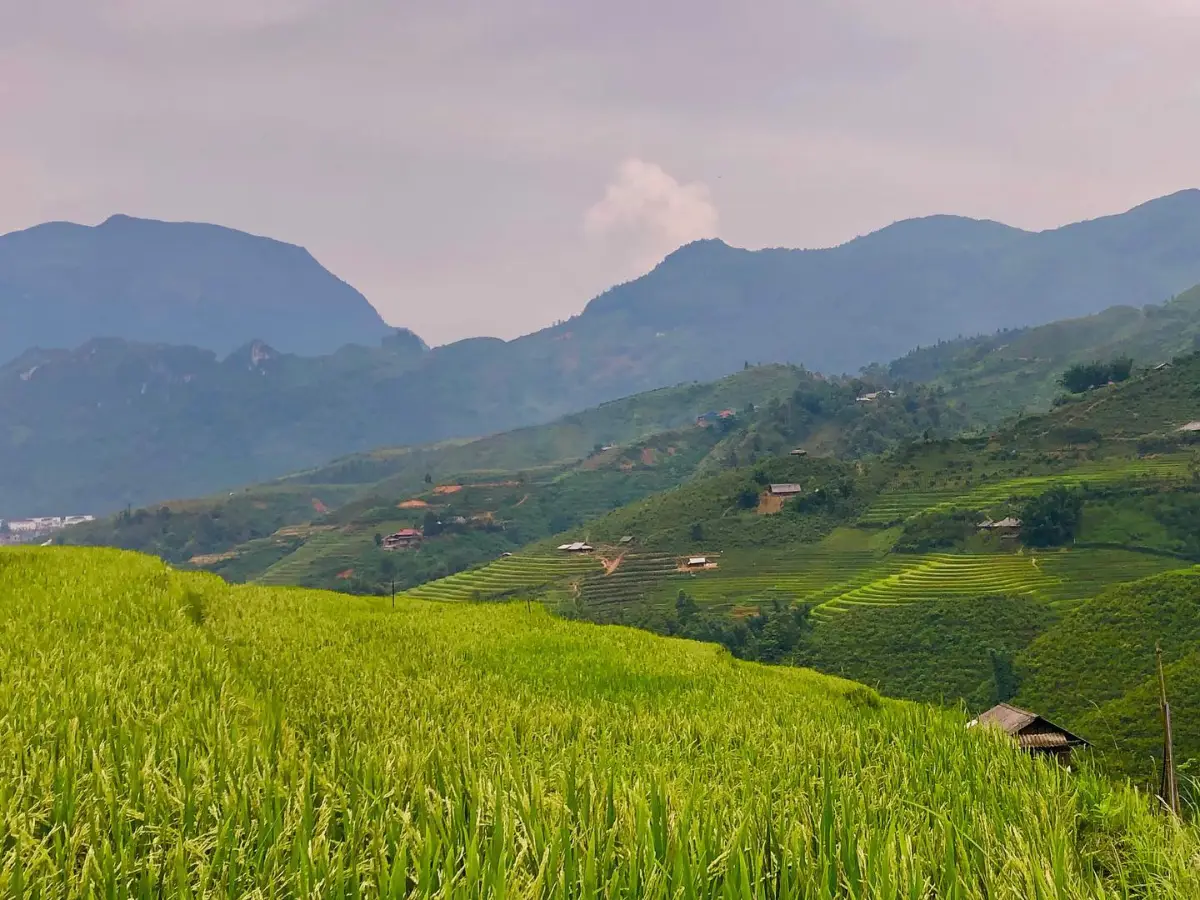
The single strongest argument for trekking Sapa in the rainy season is the rice itself. The terraced fields carved into the slopes of Muong Hoa Valley by generations of Black H'mong and Red Dao families are a working farm system, and they only look the way the postcards promise for part of the year — and that part falls squarely inside the wet season.
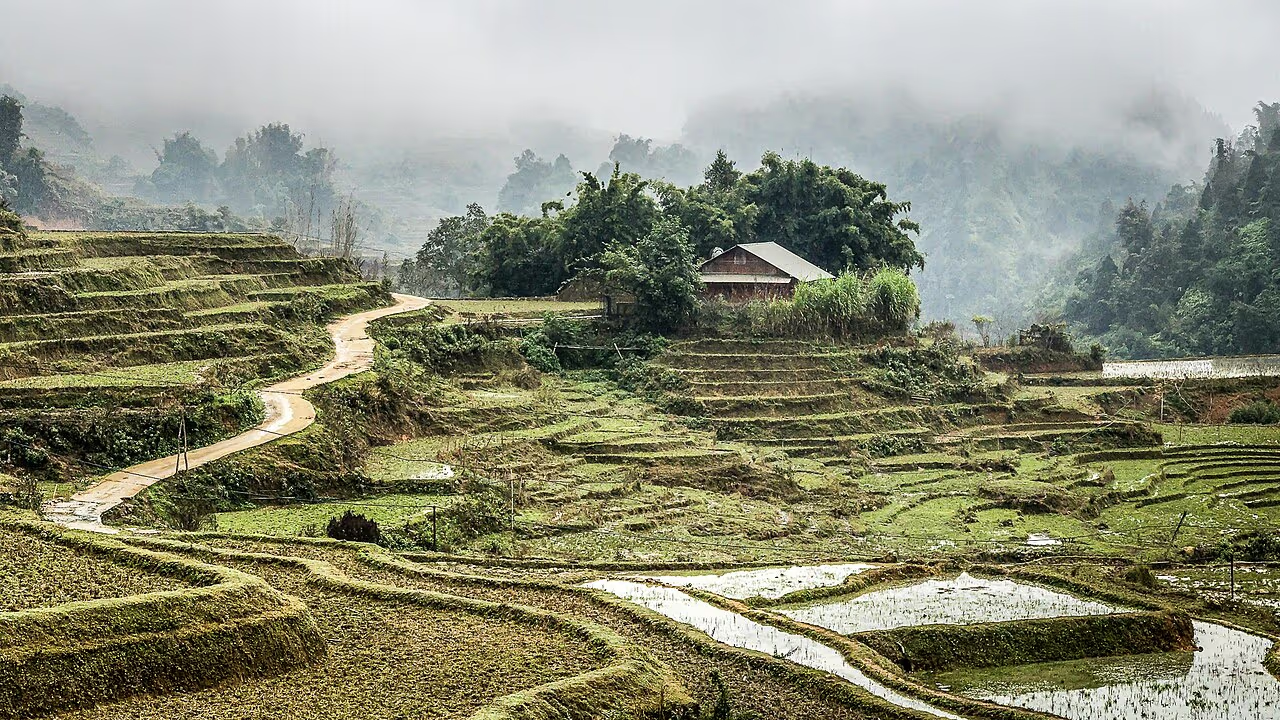
In May, the terraces around Lao Chai, Ta Van and Y Linh Ho are flooded for transplanting. Walk the trail from Sapa town down into the valley on a still morning and the water lies so flat it doubles the mountains and the drifting cloud — the most photographed moment of the whole Sapa year. Through June, July and August the young rice grows into a thick, saturated green that climbs the hillsides in ribbons, brightest just after rain when the light comes back. Then, from about mid-September, the green shifts to gold as the grain ripens and the harvest begins near Hau Thao and Su Pan. Families cut the rice by hand, and the valley fills with the sound of it. If you have only ever seen Sapa in photos, those photos were almost certainly taken during the season this guide is about.
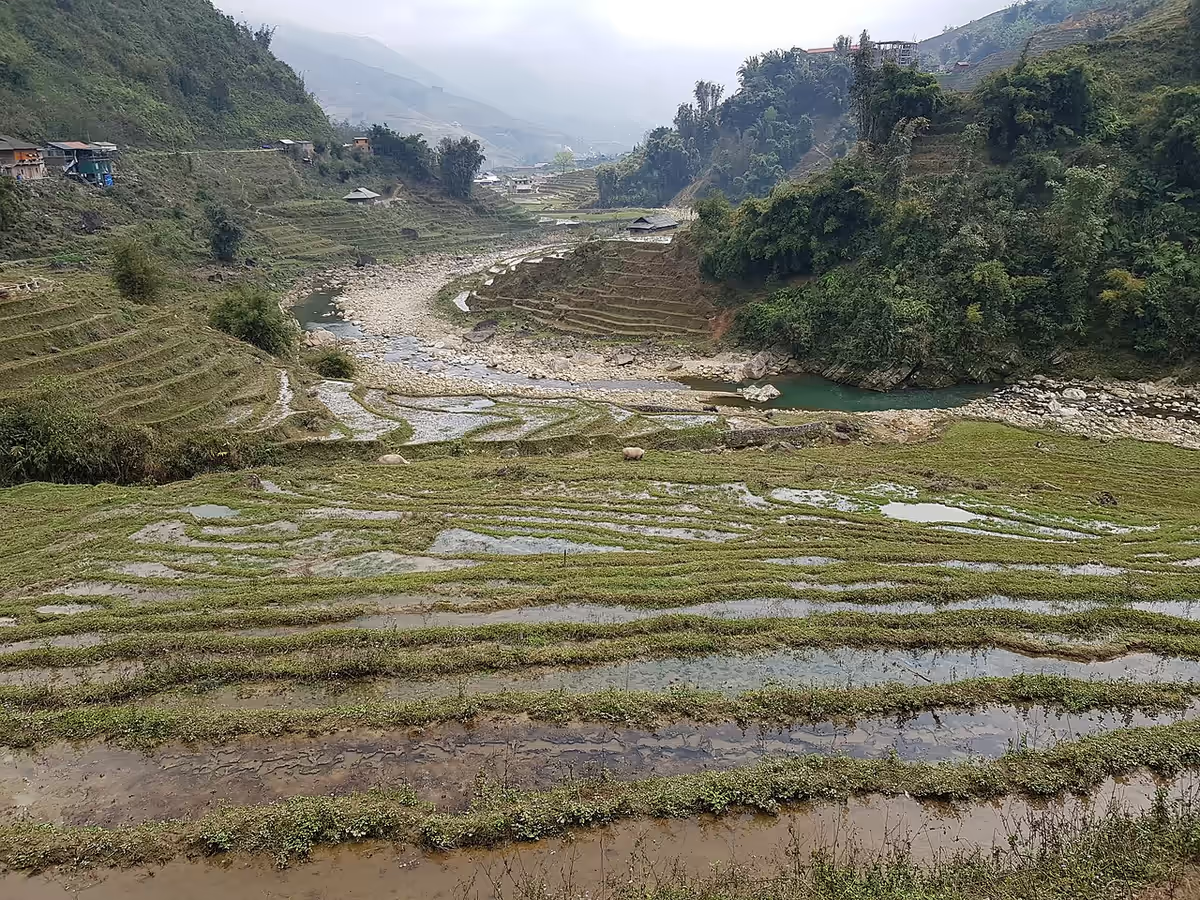
There is a quieter benefit too. Because the wet months are low season, the trails are far less busy. On a July morning you can walk the path through Giang Ta Chai and pass only a handful of other people, where in October the same stretch can feel like a procession. The homestays in Ta Van have space, the families have time to sit and talk, and the whole valley feels more like the place it was before mass tourism arrived. For travelers who came to Sapa for the culture and the landscape rather than for company on the trail, that solitude is worth a little mud.
The Real Downsides — Mud, Leeches and Landslides
Being honest about the wet season means being honest about its problems. None of them should stop a prepared trekker, but you should know what you are walking into.
Mud is the big one. The clay soil of Muong Hoa Valley becomes genuinely slippery after rain, especially on the steeper descents from Sapa town down toward Lao Chai and on the narrow paths between paddies. This is where a licensed local guide earns their place many times over: your guide chooses the firmer line, sets a sensible pace, and knows which fork stays walkable when another has turned to soup. Walking poles transform muddy descents, and proper boots with a deep tread are non-negotiable.
Leeches are the downside travelers dread most and, in reality, mind least once they arrive. They live only on damp, shaded, forested sections — parts of the trail toward Giang Ta Chai, or the bamboo stretch below Ta Van — and not on the open terrace paths where most of the walking happens. Sapa leeches are small, painless and carry no disease. Long socks, trousers tucked in, and a little repellent on your ankles keep almost all of them off; if one does attach, it is easily flicked away and the bite is harmless.
The genuine wet-season risk is not the trekking; it is the mountain road between Lao Cai and Sapa in July and August, when heavy rain can trigger a landslide and cause delays. It is uncommon, and crews clear the road quickly, but build a little flexibility into your travel dates and consider the train to Lao Cai as a more weather-proof way in. More on that below.
The last honest point is views. On a low-cloud day the mist that makes the valley so atmospheric will also hide the higher peaks, and you may not see the summit of Fansipan at all. If a clear, sweeping mountain panorama is the specific thing you have come for, the rainy season is a gamble. If you are happy with intimate, moody, close-up valley scenery — which is what most Sapa trekking actually delivers — the fog is a feature, not a fault.
Guided Treks That Shine in the Wet Months
 Best Seller
Trekking Through Rice Terraced Fields
1 Day Max 12
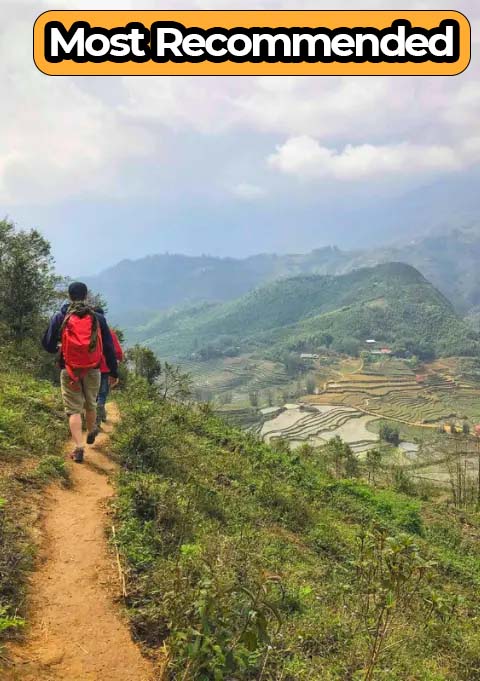
Mountain Views and Villages Trek
1 Day Max 12
Rice Paddies and Cultures – Easy Hiking
1 Day Max 12
What the Trails Are Actually Like After Rain
The trails after rain are muddy but walkable — this is the honest headline. The classic valley routes are not technical mountaineering; they are farm paths and village tracks that families use every day of the wet season, which is the best evidence that they stay passable. What changes is your footing and your timing.
The descent from Sapa town down into Muong Hoa Valley is where you feel the mud most, because it is both steep and well-used. Once you are down among the paddies around Lao Chai and Ta Van, much of the walking is along the tops of the terrace walls and gentle tracks that drain reasonably well. The forested link toward Giang Ta Chai is the slipperiest stretch and the one most likely to hold leeches. Your guide will read the day and pick the route accordingly — on a very wet morning they may keep you on higher, firmer paths and save the forest section for another time. This flexibility is the whole point of trekking with someone who lives in the valley rather than following a fixed printed itinerary.
Stream crossings deserve a specific mention. The small streams that thread the side valleys can rise quickly during a heavy storm, and a crossing that was ankle-deep in the morning can be knee-deep by mid-afternoon. This is a large part of why we start early and why we insist on guided walks in the wet season: a local guide knows which crossings to make, when, and when to simply turn back and take the long way round. It is rarely dramatic, but it is exactly the kind of judgement that keeps a rainy-season trek safe and pleasant.
How to Trek Sapa in the Rainy Season Comfortably
The difference between a miserable wet-season trek and a wonderful one is almost entirely down to timing and preparation. Get those right and the rain becomes part of the experience rather than the enemy of it.
Start early. This is the single most useful habit. Sapa's rain overwhelmingly favours the afternoon, so a trek that sets off between 8 and 9am usually gets its best hours dry, with the heavy stuff arriving — if it arrives at all — once you are already heading back or sitting down to lunch with a family in Ta Van. We build our wet-season departures around this rhythm.
Plan around the storm, not against it. An afternoon downpour is not a disaster; it is a cue to be somewhere comfortable. A well-planned rainy-season day puts you under the roof of a homestay kitchen or a terrace shelter when the sky opens, watching the valley turn silver rather than fighting through it. Some of the best moments of a wet-season trek happen while you wait out a storm with a cup of tea.
Skip the umbrella and wear a proper rain jacket or poncho over quick-dry clothing, with one light warm layer in your daypack. Cotton stays wet and cold for hours; synthetic or merino dries as you walk. Keep your phone and valuables in a dry bag or zip-lock, and pack a spare pair of dry socks — putting them on at lunch is one of the small luxuries of wet-season trekking.
Choose the right route for the conditions. Not every trek is equal in the rain. The gentler one-day valley walks around Lao Chai and Ta Van are far more forgiving than a hard push toward Fansipan or a long multi-day route through remote terrain. If you are trekking in July or August, lean toward the shorter, lower routes and keep the ambitious itineraries for the drier months. Tell us your dates when you book and we will match you to a route that suits the season.
What to Pack for Rainy Season Trekking in Sapa
Packing for the wet season is not complicated, but a few items make an enormous difference. Get the waterproofing and the footwear right and everything else is comfort.
- A proper rain jacket or poncho — the most important single item. A poncho that covers your daypack too is ideal.
- Waterproof trekking boots with deep tread — grip matters more than anything else on muddy clay.
- Quick-dry trousers and tops — synthetic or merino, never cotton.
- Walking poles — they turn a treacherous muddy descent into an easy one.
- Long socks — pulled up over trouser cuffs, they are your best defence against leeches.
- A dry bag or waterproof phone pouch — for your phone, camera, cash and passport.
- Insect repellent — a little on the ankles keeps leeches and mosquitoes at bay.
- A spare pair of dry socks — small item, big morale boost at lunch.
- One light warm layer — Sapa mornings stay cool even in July.
If you would rather not fly to Vietnam carrying heavy boots and poles you will use for only a few days, you do not have to. You can rent quality waterproof trekking boots and walking poles at our office at 105 Thach Son Street before you set off — cleaned, checked and ready for the mud.
Rent at Our Office Before You Trek
 Gear Rental
Trekking Boots Rental
Waterproof ankle-support boots. Cleaned and checked before each rental. Available at 105 Thach Son Street.
 Gear Rental
Walking Poles Rental
Trekking poles available to rent at $2/day at our office, 105 Thach Son Street. Essential for descents.
Getting to Sapa in the Rainy Season
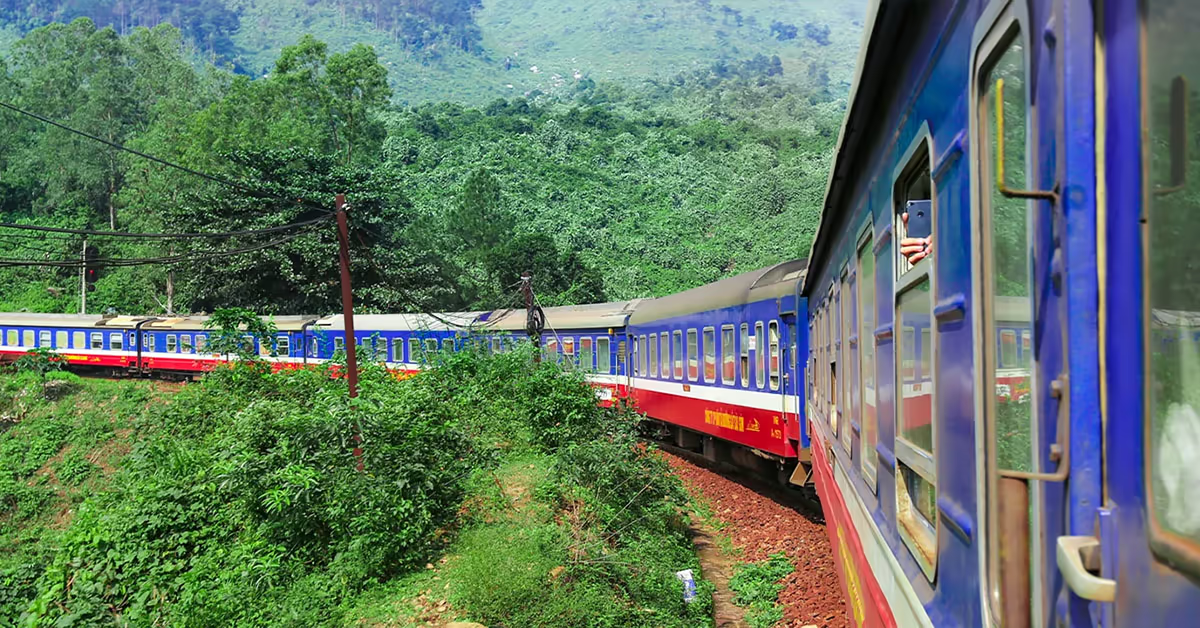
Reaching Sapa from Hanoi in the wet months is straightforward, with one caveat: the final mountain road from Lao Cai up to Sapa town is the part most affected by heavy rain. In July and August a downpour can occasionally trigger a landslide and hold traffic up while crews clear it. It is uncommon and rarely serious, but it is worth choosing your transport with the season in mind and leaving a little slack in your schedule.
You have three good options. The overnight sleeper bus is the cheapest and runs directly to Sapa town. A limousine van is faster and more comfortable, with fewer stops. And the overnight train to Lao Cai — followed by a short transfer up to Sapa — is the most weather-resilient choice in the peak wet months, because the railway is far less exposed to landslides than the road; if you are travelling in July or August and want the surest arrival, the train is the one we most often recommend.
Book Your Transport to Sapa


Who Should — and Who Shouldn't — Trek Sapa in the Rainy Season
Rainy-season trekking suits some travelers far better than others, so it helps to be honest about where you sit before you book. The wet months are ideal if you are a keen photographer chasing the flooded, mirror-like paddies of late May or the golden harvest light of September, if you want the trails around Lao Chai, Ta Van and Ta Phin largely to yourself, or if you are travelling on a budget and want the lower green-season prices that come with fewer crowds. They also suit anyone who is comfortable walking in proper waterproof boots and does not mind a muddy stretch or two — most of our happiest wet-season guests are the ones who arrived expecting the rain and packed for it.
The season is a harder sell for a few groups. If you have very limited mobility or are nervous on slippery descents, the steep drop from Sapa town into Muong Hoa Valley can be daunting after heavy rain, and a gentler route or a drier month is the kinder choice. Travelers whose entire trip hinges on summiting Fansipan should think twice, as the high ridge is far more exposed to storms and low cloud than the valley floor. And if the sight of a leech on the forested link toward Giang Ta Chai would genuinely ruin your day, you will be more relaxed trekking in October or the March–April window. For everyone in between — which is most people — the valley in the rain is a fair trade, and a good guide from our team closes most of the gap.
So, Is Rainy Season Trekking Worth It? The Bottom Line
Trekking Sapa in the rainy season is genuinely worth it for the traveler who wants the valley at its most beautiful and least crowded, and who is willing to trade guaranteed dry footing for green and gold terraces, dramatic mist, quieter trails and lower prices. Come in late May for the flooded, mirror-like paddies or in September for the golden harvest, start your treks early to stay ahead of the afternoon rain, wear proper waterproof boots, walk with a licensed local guide who reads the valley day by day, and the wet season rewards you with a version of Sapa that most visitors never see. If your heart is set on cloudless mountain panoramas and bone-dry trails, save your trip for October or the March–April window instead. But for most people who ask us whether they should cancel because it might rain, the honest answer stays the same: come anyway — just come prepared.
Frequently Asked Questions
Yes. We run treks through the whole rainy season, from May to September, and most days are perfectly walkable. Rain in Sapa usually comes as a heavy afternoon burst rather than all-day drizzle, so morning starts stay dry far more often than travelers expect. The trails through Muong Hoa Valley get muddy and slippery, and a licensed local guide with walking poles makes a real difference, but the trekking itself is very doable for anyone with reasonable footing and the right shoes.
July and August are the wettest months in Sapa, with the highest rainfall and the greatest chance of a road landslide between Lao Cai and Sapa. May and September sit at the gentler ends of the rainy season — May fills the terraces with water and turns everything green, while September brings the golden rice harvest with the rain already easing. If you want the wet-season scenery with the least rain, aim for late May or early-to-mid September.
Yes, but only on damp, shaded, forested sections — such as parts of the trail toward Giang Ta Chai or the bamboo forest below Ta Van — and not on the open rice-terrace paths where most of the walking happens. Sapa leeches are small, painless and carry no disease. Long socks, trousers tucked in, and repellent on your ankles keep almost all of them off, and if one attaches it is easily removed and the bite is harmless.
Both, depending on the month. In May the Muong Hoa Valley terraces are flooded and mirror-like as families plant; from June to August they are a vivid, growing green; and by mid-September the rice turns gold and the harvest begins. This is why many photographers deliberately choose the rainy season — the terraces around Lao Chai, Ta Van and Y Linh Ho are at their most dramatic exactly when the rain is falling.
The essentials are a proper rain jacket or poncho, waterproof trekking boots with good grip, quick-dry trousers, a dry bag or waterproof phone pouch, long socks against leeches, and walking poles for muddy descents. Bring one warm layer even in summer, because Sapa mornings stay cool. You can rent waterproof boots and walking poles at our office at 105 Thach Son Street if you would rather not carry them from home.
It is genuinely worth it if you value green or golden terraces, dramatic mist, fewer crowds and lower prices, and you accept muddy trails and the odd afternoon downpour. If your priority is guaranteed clear mountain views of Fansipan and dry, easy footing, then the drier shoulder months of October and March–April will suit you better. For most travelers who come prepared, the rainy season is one of the most beautiful and best-value times to trek in Sapa.