 Sinh Giang
Ask a guide in Sapa town what happens at the Stone Church on a Saturday night and you'll usually get a half-smile before the explanation starts, because the honest answer has two layers. One layer is the legend: young H'mong and Dao men and women, scattered across villages with no easy way to meet outside their own hamlet, walking for hours to gather in one place, play a reed pipe or a jaw harp, and sing to a stranger they might marry. The other layer is Saturday night in 2026: a square full of phone cameras, a handful of paid performers keeping the songs alive, and very few people actually looking for a spouse. Both layers are true, and neither one on its own explains what you're looking at if you wander past the church after dark.
This guide untangles both sides of that story: who used the Love Market historically, what instruments and songs it actually involved, why it looks the way it does today, and — because this trips up almost every traveler researching it online — why Sapa's Love Market is not the same event as the much more famous Khau Vai Love Market in Ha Giang province.
It's also a useful lens on Sapa town itself. Most travelers pass through the Stone Church square a dozen times without registering it as anything more than a landmark on the way to a restaurant or the lake — a place to take a photo of the French-era spire, not a place with its own weekly rhythm. Knowing what happens there on a Saturday night turns one more corner of town into something worth building an evening around, rather than just a waypoint between a trek and dinner.
What Is Sapa's Love Market?
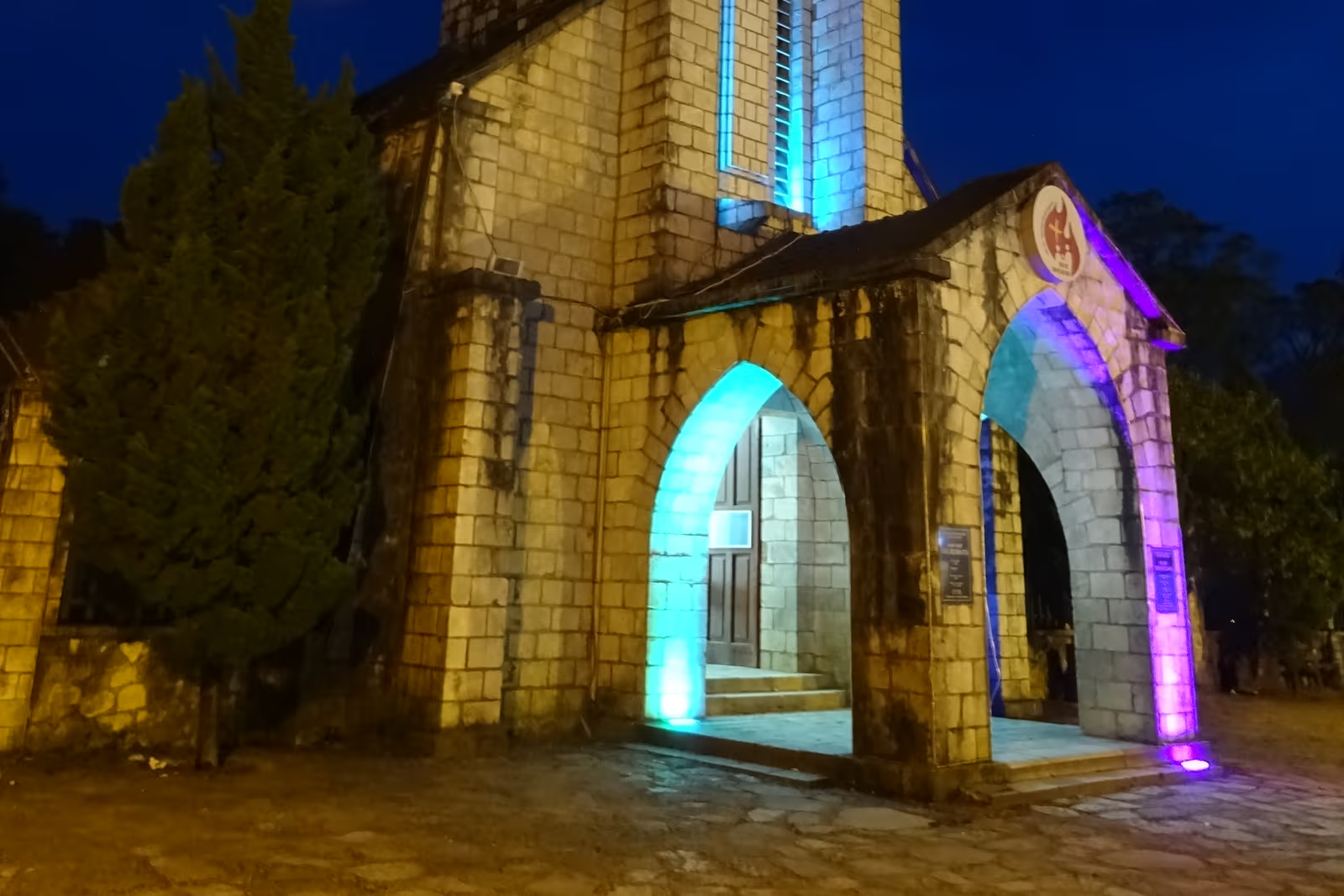
Sapa's Love Market — chợ tình in Vietnamese, literally "love market" — is a regular gathering centered on the square in front of the Sapa Stone Church, the French-built church that still anchors the center of Sapa town. On Saturday evenings, H'mong and Dao musicians and singers gather there to play courtship instruments and perform call-and-response love songs, a custom that historically served as one of the few chances young people from scattered mountain villages had to meet a partner outside their own community.
*The 1920s–1930s dating comes from French colonial-era travel writing rather than an official archive we could verify directly; treat it as the earliest commonly cited reference rather than a confirmed founding date.
The location is not an accident. Sapa town sits at roughly 1,500 meters above sea level on a saddle in the mountains, and under French colonial administration it grew into a hill station and a minor administrative crossroads — a rare flat, accessible point where paths from H'mong hamlets on the surrounding slopes and Dao settlements further down the valley could all converge without any single village having to host the others. The Stone Church, built by French missionaries in the early twentieth century, became the obvious landmark to gather at precisely because everyone already knew where it was, the same way a town clock tower or central square works as a meeting point anywhere else in the world.
Is Sapa's Love Market the Same as the Khau Vai Love Market?
No — and this is the single most common mix-up in English-language writing about northern Vietnam's "love markets." Sapa's Love Market and the Khau Vai Love Market are two separate events, in two separate provinces, built around two different customs, and the only thing they genuinely share is an English translation.
Khau Vai is the far more famous of the two: an annual festival held once a year, on the 27th day of the third lunar month (usually landing in April on the Western calendar), in Khau Vai village, Meo Vac district, Ha Giang province — roughly 200km east of Sapa by road. Its defining custom is specific and genuinely unusual: former partners, people who once loved each other but were kept apart by family objection, distance, or an existing marriage, are permitted to meet again for a single day each year without judgment from their communities. It draws H'mong, Dao, Tay, and Nung visitors from across the wider region, not just one ethnic group.
Sapa's Love Market, by contrast, is a weekly event rather than an annual one, tied to a fixed location — the Stone Church square — rather than a remote village, and historically built around first-time courtship between young, unmarried people rather than reunions between former partners. Our own guide to the best time to visit Sapa already covers Khau Vai correctly as a separate April event in Ha Giang; if that festival is what drew you here, it's worth reading on its own terms rather than assuming it happens in Sapa.
Sapa Love Market
Weekly- When
- Every Saturday evening, roughly 6–10pm
- Where
- Stone Church square, Sapa town, Lao Cai province
- Core custom
- First-time courtship singing between unmarried young people (historically)
- Today
- Mostly a staged cultural performance for residents and visitors
Khau Vai Love Market
Annual- When
- Once a year, 27th day of the 3rd lunar month (usually April)
- Where
- Khau Vai, Meo Vac district, Ha Giang province (~200km from Sapa)
- Core custom
- Former partners reuniting for one day without family judgment
- Today
- Still centers on the reunion custom, alongside a larger regional festival
Where Do the Courtship Customs Behind the Love Market Come From?
The clearest way to understand Sapa's Love Market is to separate it from "market" in the shopping sense entirely — no goods changed hands at the original gathering. What travelers in the 1920s and 1930s recorded, by most accounts, was a social custom that solved a real logistical problem: H'mong and Dao villages in the mountains around Sapa were (and in many cases still are) small, scattered across steep terrain, and often settled by extended families who discouraged marriage within the same clan or even the same hamlet. A weekly or periodic gathering in a central, accessible place — Sapa town's position at a crossroads made it a natural choice — gave young people from different villages a sanctioned reason to meet people they'd otherwise never encounter.
Two instruments carried most of the courting. The khèn is a bundled bamboo reed pipe, closely associated with H'mong men, who both blow into it and dance with it strapped across the chest — a skilled khèn player demonstrating stamina and coordination was, in effect, showing off in the most literal sense. The đàn môi (sometimes translated "leaf reed" or jaw harp) is smaller and quieter, held close to the lips and plucked, used by both H'mong and Dao performers to shape a tone closer to a human voice than a instrument. Paired with these was hát giao duyên, a call-and-response singing style: one side sings a teasing or flirtatious verse, the other answers with a verse of their own, and the exchange — sometimes genuinely spontaneous, sometimes drawing on memorized call-and-response formulas passed down through a village — becomes a kind of public flirtation that doubles as a test of wit.
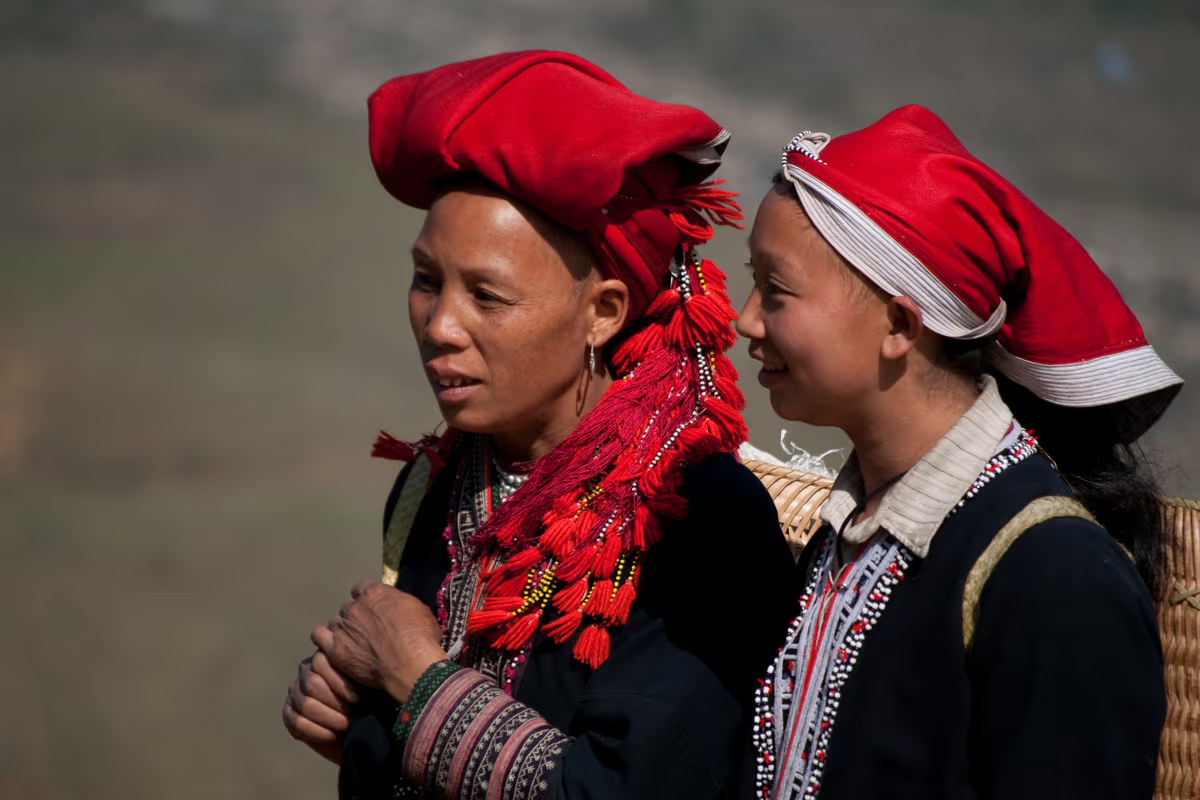
Clothing did real work in this system, too. A woman's embroidery, headdress style, and the specific way a garment was tied could signal her ethnic subgroup, her home village, and sometimes whether she was already married — information a stranger from three valleys away would otherwise have no way to know. None of this required literacy or a shared first language; it was a visual and musical code built for exactly the situation the market created.
How Far Villagers Walked to Reach the Market
It's easy to romanticize "walking for love" until you look at an actual map of the valley. H'mong hamlets on the slopes above what's now the Muong Hoa Valley trekking route — places our guides pass through on treks to Lao Chai and Ta Van — sit a genuine two- to three-hour walk from Sapa town on foot, longer in the wet season when the clay trails turn slick. Dao villages such as Ta Phin, north of town, involved a similar commitment in the other direction. For a teenager in the 1920s or 1950s, a Saturday evening at the market wasn't a casual stroll; it was the single structured excuse of the week to leave the hamlet, and very likely the only realistic chance to meet someone from a different clan at all. That effort is part of why the custom carried real social weight rather than being treated as idle entertainment.
Hát Giao Duyên: The Song Form Itself
The singing style at the heart of the market, hát giao duyên, works less like a rehearsed performance and more like a verbal sparring match set to melody. One singer opens with a short verse — sometimes a genuine compliment, sometimes a pointed tease about the other person's village or a mild dare — and the other side has to answer in kind, matching the rhythm and, ideally, topping the wit of the line before them. Older generations of H'mong and Dao singers learned stock verses and structures from parents and grandparents, the way a jazz musician learns standards, which let a quick-thinking young singer improvise within a familiar frame rather than starting from nothing. A singer who could hold their own in a long exchange, in front of a crowd of strangers from other villages, was showing off something that mattered far beyond the song itself: composure, memory, and humor under a kind of public pressure most cultures reserve for debate or stand-up comedy rather than courtship.
Vietnamese-language sources on this tradition don't fully agree on its timeline — some frame it as a long-standing but infrequent custom that only became a regular weekly fixture more recently, while the French colonial-era travel writing most often cited in English suggests a more continuous weekly pattern going back to the 1920s and 1930s. We're presenting the broad strokes both agree on — H'mong and Dao courtship singing centered on Sapa town, going back at least a century — rather than picking a single precise origin date neither source can fully back up.
What Happens at the Sapa Love Market Today?
A Saturday evening at the Stone Church square follows a loose but fairly consistent shape, assuming performers and musicians show up — which, by most travelers' accounts, happens most weeks but isn't formally guaranteed every single Saturday.
Gathering
Performers, a handful of local H'mong and Dao residents, and early visitors begin assembling on the church square as dusk settles over Sapa town.
Khèn & singing begins
Khèn players and đàn môi performers start, and hát giao duyên call-and-response singing picks up between small groups.
Peak crowd
The square is busiest here — visitors circulate between performers, photograph the embroidered clothing, and watch the dancing.
Wind-down
Performers and crowds thin out gradually; by 10pm the square has usually returned to an ordinary quiet Sapa evening.
A larger, more elaborate version is staged annually as part of Sapa's Autumn Festival — also promoted locally as the "Five-Season Festival" — organized by the Sa Pa Ward People's Committee as part of a broader push to grow Lao Cai's tourism numbers through the end of the decade. That version draws performers from a wider area and runs with more formal staging than the weekly gathering, closer to a festival program than a spontaneous square full of singers.
Tours That Bring You Back to Sapa Town by Evening
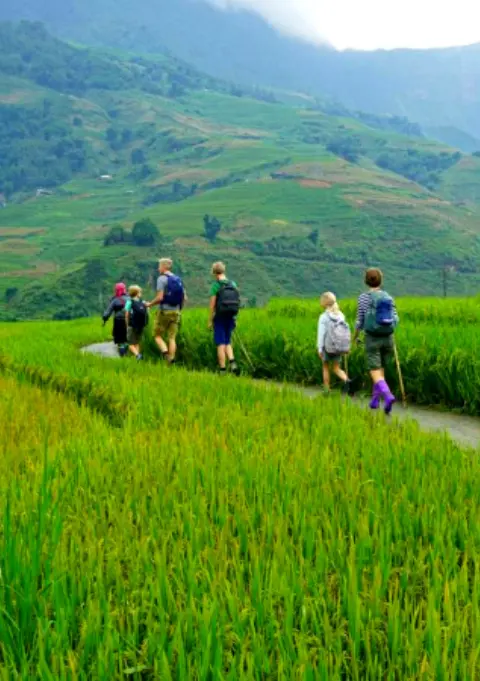 Very Easy
Sapa Easy Trekking For Seniors
A gentle daytime walk through Y Linh Ho and Ta Van that finishes back in Sapa town — easy to combine with dinner and a Saturday evening at the church square.
 1-Day Trek
Rice Paddies and Cultures – Easy Hiking
Flat valley walking through working rice paddies with stops at Red Dao homes — a good daytime complement to an evening at the Love Market.
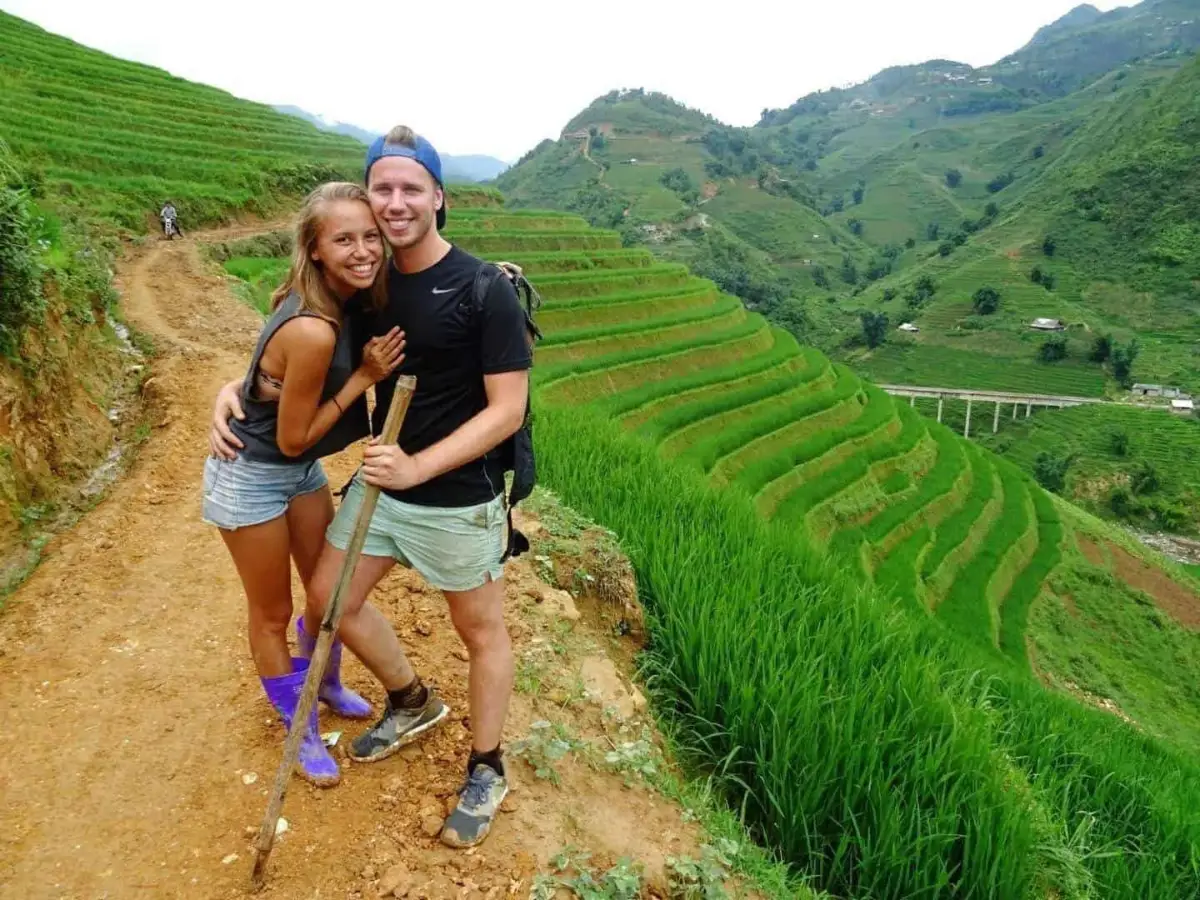 3D2N Trek
3D2N Experience the Real Sapa
Three days through Black H'mong, Giay, and Red Dao villages with two homestay nights, timed so your final evening is free back in Sapa town.
How the Love Market Fits Into Sapa's Wider Festival Calendar
The weekly Saturday gathering is the small, everyday version; Sapa also stages a larger, more formally organized version once a year as part of its Autumn Festival, sometimes promoted locally as the "Five-Season Festival." State media outlets including Nhan Dan and VietnamPlus have covered these annual festival programs as part of Lao Cai province's broader push to grow tourism through the rest of the decade, with the Love Market performance presented as one cultural highlight among folk games, a flower-themed program, and local produce markets rather than a stand-alone event.
The practical difference for a traveler is scale and formality. The annual festival version is organized in advance by the Sa Pa Ward People's Committee, draws performers from a wider catchment of villages, and runs with a published program and a stage setup closer to a festival than a spontaneous gathering. The weekly version has none of that structure — no program, no stage, no guaranteed lineup — which is also what makes it feel more like a living custom than a show, even though both versions ultimately involve paid or semi-formal performers rather than teenagers meeting for the first time.
Is the Love Market Still a Real Courtship Tradition Today?
Honestly, mostly not anymore — and we'd rather tell you that directly than let a travel brochure's framing oversell it. By most accounts, the market's original function — giving young H'mong and Dao people from isolated villages a structured way to meet partners outside their own community — had largely stopped serving that purpose by the 1990s and 2000s. Roads reaching deeper into the valleys, motorbikes, and eventually mobile phones and social media gave young people in the region far easier, faster ways to meet partners than a weekly walk into Sapa town. The custom didn't disappear so much as lose its original job.
What you'll see at the Stone Church square today is best understood as a living heritage performance, not an active matchmaking event. The khèn players, đàn môi performers, and singers are frequently local residents and trained performers keeping a real tradition visible and alive — which has genuine cultural value — rather than young villagers actually meeting a future spouse for the first time. If you go expecting documentary-style authenticity with no performance element at all, you may be disappointed; if you go expecting a sincere, still-living piece of H'mong and Dao heritage staged for an audience, it delivers.
None of this makes it not worth seeing. A tradition doesn't stop being real just because its original practical purpose faded — Roong Pooc, the Giay planting festival we cover in our guide to the Giay people of Ta Van, has similarly shifted from a strictly local observance toward a valley-wide event without losing its cultural weight. The honest framing for the Sapa Love Market is simply: come for the music, the singing, and a visible piece of H'mong and Dao courtship heritage — not for a real-time matchmaking scene.
How to Experience the Sapa Love Market
Seeing it well mostly comes down to timing and expectations rather than any special arrangement — there's no ticket, no booking, and no fixed stage. It's closer to stumbling onto a village gathering than attending a tourist show, and the people who enjoy it most tend to be the ones who show up without a rigid schedule and let the evening set its own pace.
- Arrive by around 7pm. The square fills gradually; getting there as the khèn playing and singing starts gives you the clearest view before the crowd thickens.
- Treat performers as people, not photo props. Ask before photographing someone closely, and never pull a dancer or singer into a pose without asking first — a nod or a raised camera with an inquiring look is usually understood.
- Don't expect it every single week without variation. Weather, the season, and which performers are available can thin out a given Saturday; a quiet night doesn't mean the tradition has ended, just that this particular evening was lighter.
- Pair it with Sapa town's night market stalls right nearby — dinner and a slow walk past the church square makes a natural, unhurried evening without needing to build a whole itinerary around it.
Rent at Our Office Before You Trek
 Gear Rental
Trekking Boots Rental
Waterproof ankle-support boots. Cleaned and checked before each rental. Available at 105 Thach Son Street.
 Gear Rental
Walking Poles Rental
Trekking poles available to rent at $2/day at our office, 105 Thach Son Street. Essential for descents.
Frequently Asked Questions
Sapa's Love Market — chợ tình in Vietnamese — is a weekly gathering held on Saturday evenings at the square in front of the Sapa Stone Church, where H'mong and Dao musicians and performers play courtship instruments such as the khèn (reed pipe) and đàn môi (jaw harp) and sing call-and-response love songs known as hát giao duyên. It grew out of a genuine courtship custom once used by young H'mong and Dao men and women to meet partners from other villages; today it survives mainly as a staged cultural performance for visitors, run alongside Sapa's wider Autumn Festival calendar.
No. They are two different events in two different provinces. Sapa's Love Market is a weekly Saturday-evening gathering at the Stone Church square in Sapa town, Lao Cai province. The Khau Vai Love Market is an annual festival held once a year, on the 27th day of the third lunar month (usually April), in Khau Vai, Meo Vac district, Ha Giang province — about 200km east of Sapa. Khau Vai is specifically known for allowing former partners, people who once loved each other but could not marry, to meet again for one day without judgment. The two are often confused in English-language travel content because both are translated as "Love Market," but they come from different places, different calendars, and different customs.
Honestly, mostly staged. By most accounts, the market's original role — helping young people from scattered H'mong and Dao villages meet partners outside their own community — faded over recent decades as roads, motorbikes, mobile phones, and social media gave young people far easier ways to meet each other than a weekly gathering in Sapa town. What continues today at the Stone Church square is closer to a cultural performance: trained singers and khèn players demonstrating the tradition for an audience of locals and travelers, rather than an active matchmaking event. It's still worth seeing, but go in expecting a living heritage show rather than real-time courtship.
The regular Love Market gathering happens at the square in front of the Sapa Stone Church, in the center of Sapa town, Lao Cai province. It runs on Saturday evenings, roughly from 6pm to 9 or 10pm depending on the week and the season — exact end times vary, so treat the window as approximate rather than fixed. A larger annual version is staged as part of Sapa's Autumn Festival (also called the Five-Season Festival), organized by the Sa Pa Ward People's Committee, typically in the second half of the year.
The two instruments most associated with the tradition are the khèn, a bundled bamboo reed pipe played by H'mong men that can be both blown and used rhythmically while dancing, and the đàn môi, a small jaw harp (also called a "leaf reed" in some translations) that both H'mong and Dao performers play held close to the lips to shape its tone. These accompany hát giao duyên, a call-and-response singing style in which one side sings a verse and the other answers, historically used to flirt, tease, and test a potential partner's quick thinking.
Yes. The Saturday-evening gathering at the Stone Church square is open and free to watch, and it's an easy stop to add to an evening walk around Sapa town — most travelers combine it with dinner and the town's night market stalls nearby. Arrive by around 7pm for the best chance of catching the singing and khèn playing before the crowd and performers thin out later in the evening. Photographing performers politely, and not treating the dancers as a photo prop to grab and pose with, goes a long way.