
 Sinh Giang
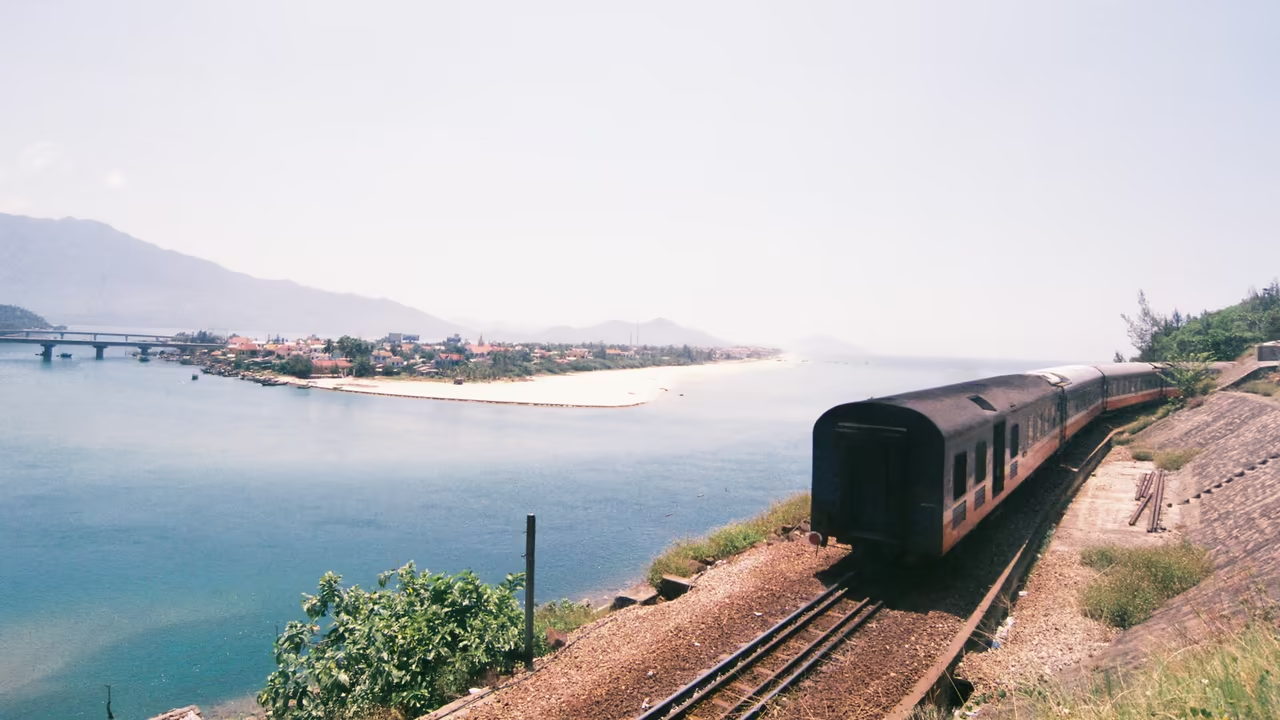
Yes, you can cross Vietnam by train, and for most visitors the line that matters is the north–south railway that Vietnamese Railways runs between Hanoi and Ho Chi Minh City. The long trains on it are called the Reunification Express, and every one of them is a numbered “SE” service. Hanoi to Saigon is 1,726 km (1,070 miles), and the printed timetable puts the quickest through trains at about 33 hours. Most travellers do not ride the whole line. They ride it in slices: Hanoi to Hue overnight, Hue to Da Nang by day for the coast, Nha Trang to Saigon in a sleeper.
We are a Sapa trekking company, so the Hanoi–Lao Cai night train is the line we know from the inside, and our own guests use it. The north–south line is different ground, so for this guide we read Vietnamese Railways’ own site, the Seat61 rail guide (last updated 10 June 2026), Vietnamese news and the conditions on resale sites on 31 October 2026. We say which figures come from where, and we mark our own arithmetic. Timetables and fares change, so treat every time and price below as a guide to check, not a promise.
Key Takeaways
- Odd train numbers (SE1, SE3, SE5) run south from Hanoi; even numbers (SE2, SE4, SE6) run north from Saigon. Seat61’s 2026 timetable has SE1 leaving Hanoi at 20:50 and reaching Saigon at 05:45 on day 3, about 33 hours by our arithmetic.
- The official shop is dsvn.vn. Since 20 August 2024 it has accepted Google Pay, Samsung Pay, Apple Pay and, through VNPAY, cards issued by foreign banks.
- Seat61 prints Hanoi–Saigon fares of 1,026,000 VND for a soft seat and 1,667,000 to 1,758,000 VND for a soft-sleeper berth, about US$41 and US$67 to $70 at its own rate of 25,000 dong to the dollar.
- Long-distance bookings open about 60 days ahead, sometimes over 90. Shorter hops, such as Hue to Da Nang, open a week or two before.
- Lookalike sites sell the same seats at inflated prices. Seat61 names three domains that are travel agents and not the railway. Check the address is exactly dsvn.vn.
The Short Answer: Is the Train Right for You?
The train is right for you if you want to cover distance without airports, sleep on the way, and see the country go by, and it is wrong if you have only a few days and a long list. A flight Hanoi to Saigon takes about two hours, and no train competes with that on time. What the train offers is something else: a bed that saves a hotel night, a window on the coast, and a way to meet Vietnamese families on the move.
| Trip | Train? | Why |
|---|---|---|
| Hanoi to Hue | Yes, overnight | About 12h45 on SE1 by our arithmetic from the printed times. You arrive in the morning and skip a hotel night. |
| Hue to Da Nang or Hoi An | Yes, by day | Around 2h30 along the coast, for 106,000 VND in a soft seat. The scenery is the reason to take it. |
| Hanoi to Saigon in one go | Only if the journey is the point | About 33 hours. Most people break it at Hue, Da Nang or Nha Trang. |
| Nha Trang to Saigon | Yes, overnight | Roughly 8 to 10 hours southbound on the printed times, and a bed in a sleeper. |
| Hanoi to Sapa | A different railway | Sapa is reached by the Lao Cai line and then a road transfer. See the Lao Cai section. |
What the Reunification Express Is
The Reunification Express is not one train but the family of daily long-distance services on the north–south line, numbered SE1 to SE10 plus a few others, and the name recalls the reunification of the country in 1976. Seat61 says these trains run every day and that extra trains may run at busy periods. Odd numbers go south from Hanoi to Saigon and even numbers go north, as vietnamesetrain.com, a booking seller, also explains.
The numbered trains and what each carries
Not every train has every kind of seat or bed. Seat61 lists which cars each service pulls, and the differences matter when you choose.
The main trains
Air-conditioned soft sleepers (4 berths), hard sleepers (6 berths) and soft seats. The best carriages are on SE1 to SE4, which Seat61 uses for its fare table.
Soft sleepers only
No hard sleepers and no seats. Seat61 says SE19 and SE20 also carry the private Lotus Train cars, at around twice the price of the railway’s own soft sleepers.
Saigon–Nha Trang
Soft sleepers and hard sleepers, new and old types, and soft seats. Seat61 quotes about US$38 for a bed in a four-berth sleeper on this route, bookable through Baolau or 12Go.
Seat61 also notes privately run tourist sleepers hooked onto the railway’s trains, including Livitrans and Violette cars, with only a handful of two-berth VIP compartments on SE1 and SE2. Its text is not consistent on how many of those there are (it gives both two and about four per train), so we would not plan around a specific VIP cabin until you see the booking page.
Seat61 notes that the ticket says “Sai Gon”, not Ho Chi Minh City, and the station Hanoi’s trains leave from is the main station on Le Duan Street. Search for Sai Gon, Da Nang and Hue when you book, and spell the station as the site does.
Timetables: Hanoi to Saigon and the Stops in Between
The printed 2026 timetable has five through trains each way. The departure times below are Seat61’s (page updated 10 June 2026) and the durations are our own arithmetic from its printed times, since the page does not state them. Day 1 is the day of departure. Other sites print different times for the same train number, for example 21:45 for SE1 instead of 20:50, so confirm your date on dsvn.vn.
| Train | Leaves Hanoi | Reaches Saigon | Journey |
|---|---|---|---|
| SE1 | 20:50, day 1 | 05:45, day 3 | 32h55 |
| SE3 | 19:20, day 1 | 05:15, day 3 | 33h55 |
| SE5 | 08:55, day 1 | 20:20, day 2 | 35h25 |
| SE7 | 06:00, day 1 | 17:35, day 2 | 35h35 |
| SE9 | 12:50, day 1 | 03:40, day 3 | 38h50 |
The two evening trains, SE1 and SE3, reach Saigon early on the third morning, so you sleep two nights on board. SE5 and SE7 leave in the morning and arrive in the evening of day 2, which means one night and daylight for the coast. Going north, SE2 leaves Saigon at 20:35 and reaches Hanoi at 05:45 on day 3, about 33 hours and 10 minutes.
The segments most people actually ride
| Segment | Train | Leaves | Arrives | Journey |
|---|---|---|---|---|
| Hanoi to Hue | SE3 | 19:20 | 07:59, day 2 | 12h39 |
| Hanoi to Hue | SE1 | 20:50 | 09:35, day 2 | 12h45 |
| Hanoi to Da Nang | SE1 | 20:50 | 12:12, day 2 | 15h22 |
| Hue to Da Nang | SE3 | 08:04 | 10:36 | 2h32 |
| Da Nang to Saigon | SE1 | 12:27 | 05:45, day 3 | 17h18 |
| Nha Trang to Saigon | SE1 | 21:44 | 05:45, day 3 | about 8h |
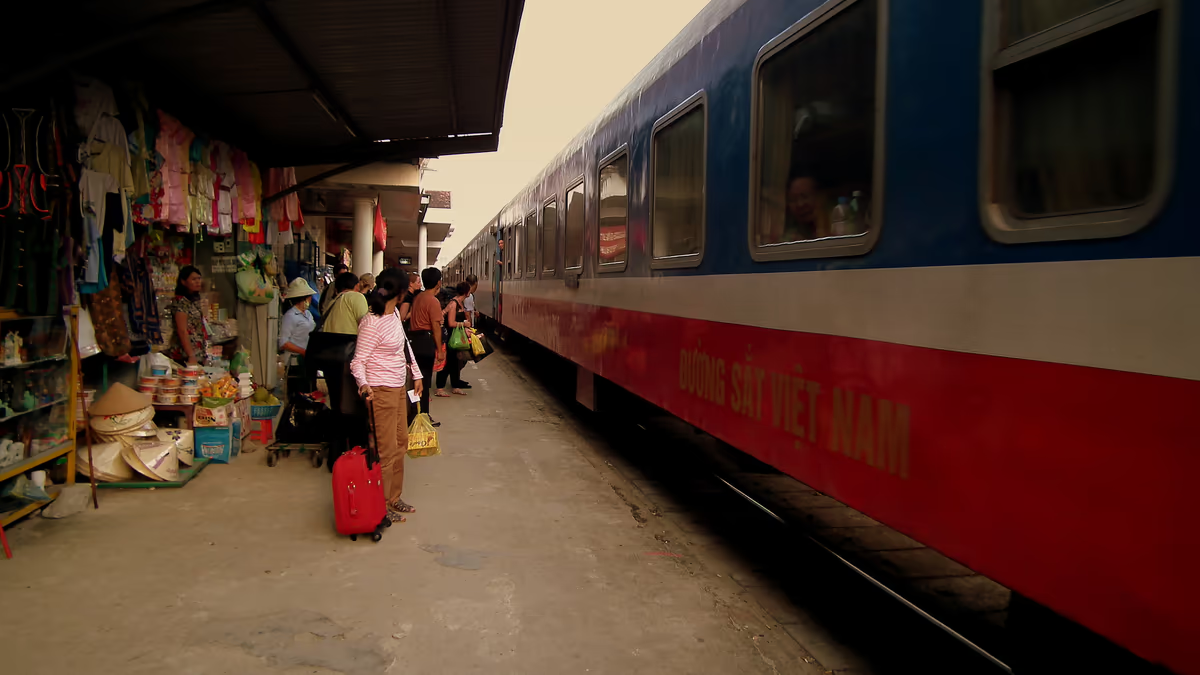
Seat61 prints a single time for Nha Trang, with no separate arrival and departure, so the last row is approximate. For the quickest Nha Trang to Saigon run it also lists the SNT1 service at 20:00, reaching Saigon at 04:50, about 8h50.
Seats, Berths and Fares
There are four classes of ordinary ticket and then the private cars: a soft seat, a hard sleeper with six berths, a soft sleeper with four, and the small VIP compartments. Vietnamesetrain.com describes the standard soft sleeper as four berths with two upper and two lower beds, and a hard sleeper as six berths on three levels on each side.
| Route | Soft seat | Hard sleeper | Soft sleeper |
|---|---|---|---|
| Hanoi to Hue | 569 | 1,070 / 962 / 832 | 1,218 / 1,139 |
| Hanoi to Da Nang | 651 | 1,137 / 1,022 / 883 | 1,294 / 1,211 |
| Hanoi to Nha Trang | 908 | 1,369 / 1,236 / 1,074 | 1,585 / 1,506 |
| Hanoi to Saigon | 1,026 | 1,637 / 1,471 / 1,273 | 1,758 / 1,667 |
| Hue to Da Nang | 106 | 219 / 219 / 219 | 265 / 227 |
| Da Nang to Saigon | 661 | 1,119 / 1,005 / 869 | 1,274 / 1,227 |
| Saigon to Nha Trang | 404 | 763 / 686 / 593 | 869 / 813 |
At Seat61’s own rate of 25,000 dong to the dollar, which is our basis for the conversions and not a live rate, a Hanoi–Saigon soft seat is about US$41, a lower soft-sleeper berth about US$70, and a Hanoi–Hue soft seat about US$23. The page does not date its individual fares, and it says fares vary by season, by train number (SE5, SE6, SE7, SE8, SE21 and SE22 are slightly cheaper) and by carriage type.
Children and the private cars
Seat61 says children aged 0 to 4 travel free, children 5 to 9 pay 25 percent less, and those 10 and over pay full fare. It also says the private sleeping cars cost around twice the railway’s own soft sleepers, and that one of the agents it links, seat61.transport-ticket.com, does not sell them. Several sellers say fares rise at Tet; we found no official percentage, so we do not quote one.
How to Book, Step by Step
Booking takes about ten minutes once you know the route and date. The one thing to settle first is whether you buy from the railway’s own site or from a reseller.
Pick your train and date
Choose a train from the table above and check it runs on your day. Booking opens about 60 days before departure for the whole line, and Seat61 says sometimes over 90 days for Hanoi–Saigon on SE1 or SE3. Shorter segments open later, with the shortest hops only a week or two ahead.
Open dsvn.vn and switch to English
Seat61 says to click the UK flag at the top right. Type the station names as the site spells them, such as Sai Gon, and pick the train and class.
Enter every passenger exactly as on the passport
Type the names as they appear on the passports. Seat61 says you need a separate ticket for each individual train you take. Keep the confirmation and your passport together; Vietnam Railways’ 2018 notice recommends bringing identification documents when you buy tickets.
Pay, and save the e-ticket
Viet Nam News reported that from 20 August 2024 Vietnamese Railways accepts Google Pay, Samsung Pay and Apple Pay, and opened a VNPAY gateway for cards from foreign banks. Seat61 adds that the site may reject a foreign phone number and that you may need a Vietnamese +84 number, so have a local SIM or eSIM ready; our SIM and eSIM guide covers that.
Arrive early and board by car number
Seat61 says you take your bags of whatever size onto the train. Check the car and berth on the e-ticket and ask the attendant at the carriage door if the station signs are only in Vietnamese.
Buying from an agent instead
Seat61 names three agents that sell the railway’s own tickets with a fee. It says Baolau charges the official price plus a small service fee and 2.7 percent for card payment, that 12Go.Asia charges a small fee plus around 4 percent, and that seat61.transport-ticket.com charges a minimal booking fee and accepts overseas cards. Seat61 earns referral money from some of these links, so we point you to its page rather than to the agents.
Buying at the station
Outside holidays, Seat61 says it is not usually difficult to buy at the station a few days ahead. At Hanoi the ticket office is on Le Duan Street, with a tourist window. At peak holidays such as Tet, Seat61 says to book the day booking opens. Our Tet 2027 guide explains when the travel rush falls.
Sapa Treks to Fit Around Your Rail Journey
 1-Day Trek
Trekking Through Rice Terraced Fields
Lao Chai to Ta Van with lunch at a family restaurant in Y Linh Ho.
 Homestay
Rice Terraced Fields & Homestay
Dinner and breakfast with a family in Ta Van, lunch on day one.
 Local Favourite
Mountain Views and Villages Trek
Lunch at a restaurant run by local people in Hang Da village.
Fake Websites and Resellers
The main trap is a site that looks like the railway and charges two or three times the price. Vietnam Railways warned in December 2018 about fake sites with domain names similar to its own, whose prices were two or three times the real fare, and said foreign passengers were often the ones caught. It recommends the real site, https://dsvn.vn.
Seat61 names three domains it says are not the railway but travel agencies pretending to be: vietnamrailways.net, vietnam-railway.com and vietnamrailway.com. Read the address in the browser bar, not the page’s logo. Our wider guide to scams in Hanoi and Sapa covers the other common tricks around stations.
If a site adds a service fee that dsvn.vn does not, you are on a reseller. That can be fine, as with the three agents above, but you should know it before you pay.
Changes, Refunds and Delays
Refund rules depend on the ticket and the time left, so read the terms on your own e-ticket before you pay. We could not open the railway’s own conditions of use (the PDF on dsvn.vn would not yield readable text to our tools), so the figures below come from a ticket reseller and may not match your ticket.
Vexere, a Vietnamese ticket platform, published a guide on 19 December 2025 that cites Vietnam Railways and dsvn.vn. It lists a 10 percent fee for returns more than 24 hours before departure (minimum 10,000 VND), 20 percent between 4 and 24 hours, and no refund inside 4 hours. For exchanges 24 hours or more ahead it lists 20,000 VND plus any fare difference, and says only one change is allowed. It adds that a refund at Tet may carry a 30 percent deduction and that a delay of 3 hours or more earns a full refund under a 2025 policy.
Other sellers print other tiers
A booking site, vietnamrailway.com.vn, lists a schedule in days instead of hours. Baolau says its refunds close 12 hours before departure and that promotion fares carry higher fees. Neither is the railway, and neither matches Vexere.
Treat the cut-off as 24 hours
If your plans might move, decide a full day ahead. That is the one threshold on which the sources we found broadly agree, and it keeps the fee at the lowest tier.
At Saigon station, Seat61 says the queue machine has buttons for buying and for refunding a ticket, and that the upstairs office is reportedly handling only booking changes and may be closed. Buy refundable plans only where the rules are clear to you.
On Board: Food, Bags and Sleep
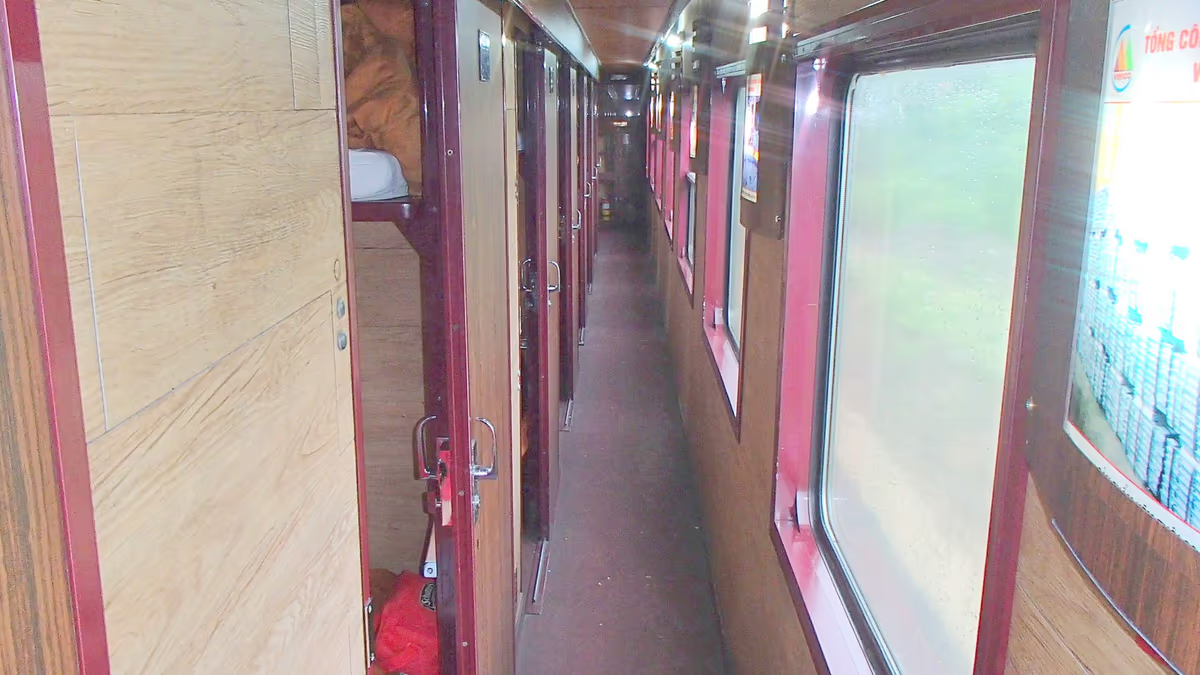
On a long run you will eat, sleep and move about on the train, so a little planning helps. Seat61 describes a trolley that serves snacks, coffee, soft drinks and beer, and says that at meal times a member of staff sells a meal ticket for around 35,000 dong, with a set meal and mineral water delivered to your compartment about half an hour later from the kitchen car. It also notes a free water dispenser at the end of the corridor with boiling and cold water.
Bags, bikes and what to carry
Seat61 says you take your bags onto the train with you, of whatever size, and that bicycles and even motorbikes can be sent for a fee, with a motorbike’s fuel tank drained and empty and a day or two to wait before collection. We found no published weight or size limit, so travel light enough to lift your own bag into the rack. A small padlock for your bag, a charged phone and a spare layer cover most of what you need.
Sleeping on a train
Sleep comes more easily with earplugs and an eye mask. Pick a lower berth if you dislike climbing, and an upper berth if you want to be left alone. In the fare table above the lower berth costs a little more than the upper in a soft-sleeper compartment. These are our own habits, not an official rule.
The Coast: Hue to Da Nang and the Hai Van Pass
The stretch most travellers ask about is the short run between Hue and Da Nang, which crosses the Hai Van Pass, and it takes around 2h30 on the printed times. Seat61 says the train then “heads through the lush green mountains via the Hai Van Pass to reach Danang”, and vietnamesetrain.com recommends choosing a service that crosses the section in daylight, allowing for the season and possible delays. It also says the coast is generally on the left when travelling south between Hue and Da Nang.
| Train | Leaves Hue | Reaches Da Nang | Journey |
|---|---|---|---|
| SE3 | 08:04 | 10:36 | 2h32 |
| SE1 | 09:40 | 12:12 | 2h32 |
| SE19 | 09:01 | 11:45 | 2h44 |
| SE7 | 19:58 | 22:43 | 2h45 |
Be careful with the last row: SE7 leaves Hue in the evening, so it crosses the pass after dark and you see the coast only as lights. The morning trains, SE3, SE19 and SE1, are the ones to book if the view matters. Our Hue guide and Da Nang guide cover what to do at each end, and the Sapa to Da Nang guide shows how the coast fits into a northern trip.
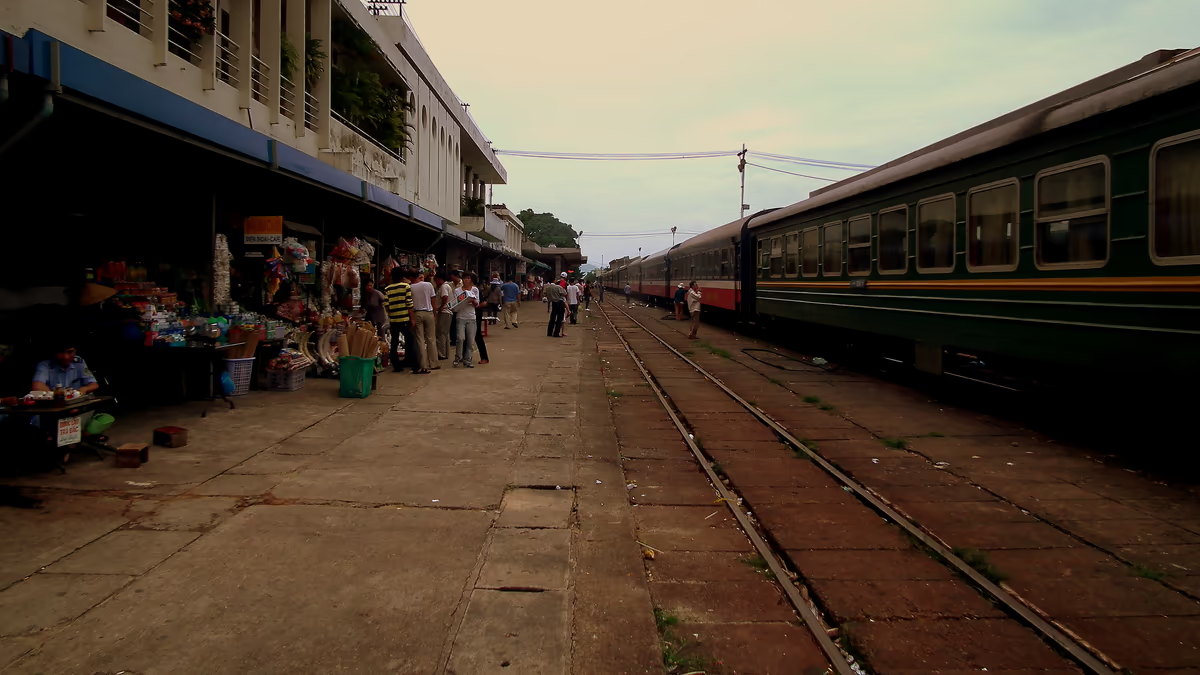
Three Ways to Slice the Line
You rarely need the whole line. These three plans cover most trips, and each can be combined with a stay in Sapa on either end. They are our suggestions, built from the timetable above, and not an official itinerary.
- Plan A: Hanoi to Hue, then Da NangTake SE3 or SE1 in the evening and wake in Hue, spend a day or two there, then take a morning train to Da Nang for Hoi An. This is the shortest way to see the middle of the country without flying, and it fits inside the ten-day itinerary.
- Plan B: Da Nang to Saigon with a stopBreak the 17-hour run at Nha Trang, where Seat61 shows the trains stopping, then take a short sleeper on to Saigon. You trade one long day for two shorter ones.
- Plan C: The whole line in two weeksHanoi, Hue, Da Nang, Nha Trang, Saigon, by train between each. It suits the two-week itinerary, and you can fly one leg if time runs short. Check weather by month before you fix dates.
If your plan starts in the north, spend your first nights in Hanoi, using our two-day Hanoi plan, then catch the first evening train south. A short hop to Ninh Binh is a good first stop if you want to see the limestone before the long ride.
The Other Railway: Hanoi to Lao Cai and Sapa
Sapa is not on the Reunification line. It is reached by a different line, a night train from Hanoi to Lao Cai and then about an hour by road up the mountain, so Hanoi to Sapa is a separate booking and a separate guide. Seat61 says trains to Lao Cai leave from platforms 5 to 10 of Hanoi’s main station and can be reached from the “B” building on Tran Quy Cap street.
Night train to the mountains
Two of the private services on it are covered in our Chapa Express review and King Sapa Train review, each with cabin photos and fares.
Train, bus or car
For the full comparison of the three, including the road from Lao Cai, read how to get to Sapa and our guide to Lao Cai as the gateway.
If you are planning both ends, a common pattern is Hanoi, Sapa for two or three days of trekking, back to Hanoi, and then south on the Reunification line. Our Sapa itinerary shows how many days to leave, and our trekking packages list what we run.
Sources and the Dates We Checked Them
We read these on 31 October 2026 unless noted. Where a source is a seller, we say so, and fares and times may have changed since.
- Seat61, Vietnam trains, page updated 10 June 2026. Timetables, fares, train types, booking window, onboard food and baggage. Some booking links on it carry referral codes.
- Viet Nam News, e-wallets and foreign cards, 20 August 2024.
- Viet Nam News, Vietnam Railways warns of fake ticket websites, 2 December 2018.
- vietnamesetrain.com, Reunification Express guide, checked by the seller on 11 October 2026; a commercial booking service.
- Vexere, Vietnam train refunds and exchanges, 19 December 2025; a ticket reseller citing Vietnam Railways.
- Vietnam Railways, dsvn.vn, the official booking site. We could not read its conditions-of-use PDF.
The Part We Do Sell
- Hanoi to Sapa transport — sleeper buses, limousines and the overnight train, bookable with your trek
- Hanoi to Sapa guide — what each option costs and how long it takes
- How to get to Sapa — the first leg, in detail
Rent at Our Office Before You Trek
 Gear Rental
Trekking Boots Rental
Waterproof ankle-support boots. Cleaned and checked before each rental. Available at 105 Thach Son Street.
 Gear Rental
Walking Poles Rental
Trekking poles available to rent at $2/day at our office, 105 Thach Son Street. Essential for descents.
Frequently Asked Questions
Yes. The official site is dsvn.vn, and Viet Nam News reported that from 20 August 2024 it accepts Google Pay, Samsung Pay and Apple Pay and, through a VNPAY gateway, cards issued by foreign banks. Seat61 adds that the site may reject a foreign phone number, so have a Vietnamese SIM or eSIM ready, or buy through an agent such as Baolau or 12Go for a fee.
About 33 hours on the quickest printed services. By our arithmetic from Seat61's 2026 timetable, SE1 takes 32h55 and SE3 33h55, while the slowest through train listed, SE9, takes 38h50. Times differ between sellers, so confirm your date on dsvn.vn.
Seat61 prints 1,026,000 VND for a soft seat, and 1,637,000 to 1,758,000 VND for a lower hard-sleeper or soft-sleeper berth on the best trains, SE1 to SE4. At its own rate of 25,000 dong to the dollar that is about US$41 for a seat and US$65 to $70 for a bed. Fares vary by season, train and carriage.
Seat61 says booking opens about 60 days before departure for end-to-end journeys such as Hanoi to Saigon, and sometimes over 90 days. Shorter segments open later, with the shortest hops only a week or two ahead. At peak holidays such as Tet, book the day sales open.
It depends on what you want. A flight between Hanoi and Saigon is about two hours in the air, while the quickest train takes around 33 hours. The train saves a hotel night on overnight segments and shows you the coast, so many travellers ride a slice, such as Hanoi to Hue, and fly the rest.
Take a morning train between Hue and Da Nang. On Seat61's 2026 timetable SE3 leaves Hue at 08:04, SE19 at 09:01 and SE1 at 09:40, each taking around 2h32 to 2h44. SE7 leaves at 19:58 and crosses the pass after dark. Vietnamesetrain.com says the coast is generally on the left going south.
Seat61 says bikes and even motorbikes can be transported on Vietnamese trains for a fee. For a motorbike the fuel tank must be drained and empty, and it may take a day or two before it can be collected. We found no published fee, so ask at the station luggage office.
No. Sapa is reached by a separate railway from Hanoi to Lao Cai, followed by about an hour by road. Seat61 says Lao Cai trains leave from platforms 5 to 10 of Hanoi's main station. Our how-to-get-to-Sapa guide compares the train, bus and car.