 Sinh Giang
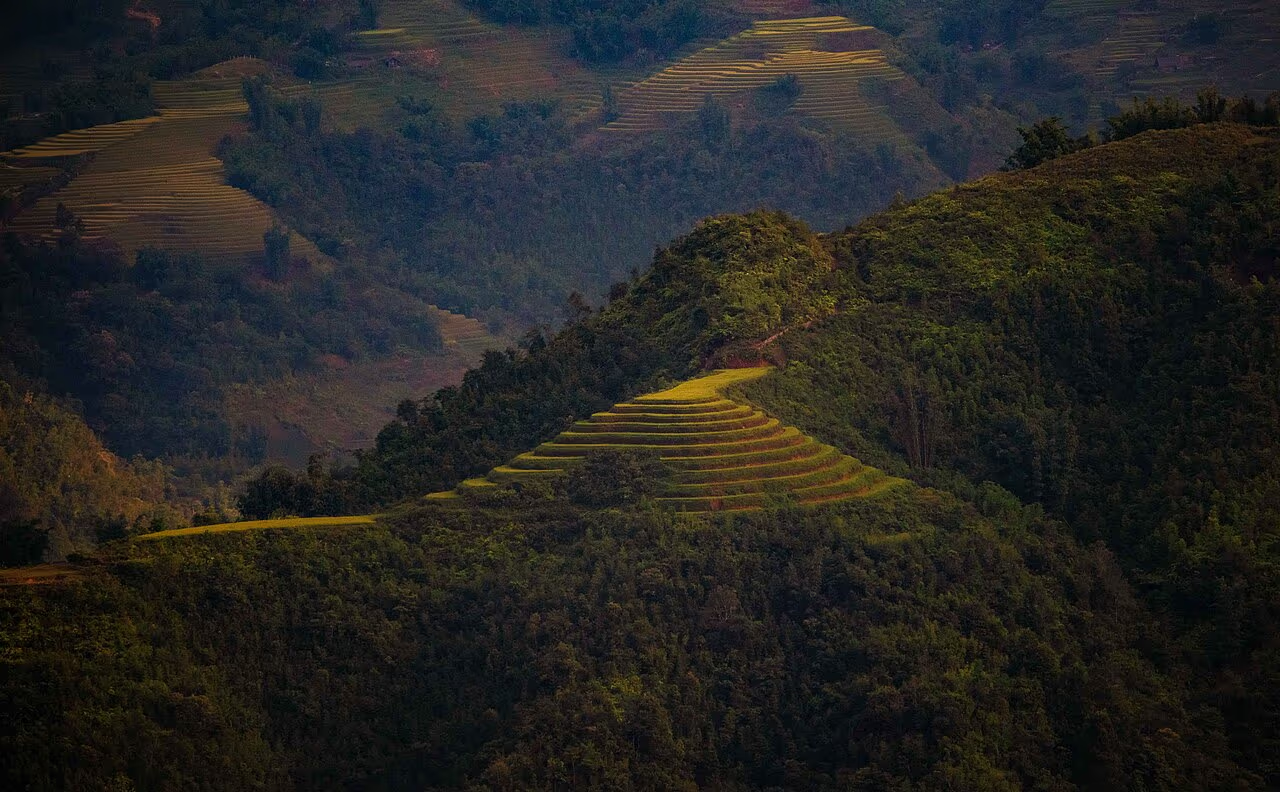
Two days in Sapa gets you one real trekking day and a fast turnaround; three days is what most first-time travelers actually book, because it's the shortest trip that still fits a homestay night in the Muong Hoa Valley; four days is the minimum if Fansipan matters to you as much as the villages. There's no single correct length — it depends on how much of Sapa you want to see and how much travel time you're willing to spend getting here and back from Hanoi.
This guide breaks down what each itinerary length actually covers day by day: which villages you'll reach, whether a homestay night fits, and where Fansipan realistically slots in. It's built from the itineraries our own guides run every week, not a generic packing-list version of a Sapa trip, so you can pick the length that matches what you actually came for and book with confidence.
Most people asking this question fall into one of two groups. The first is squeezing Sapa into a wider Vietnam route — Hanoi, Halong Bay, Sapa, then south to Hue or Hoi An — and needs to know the shortest trip that still feels worthwhile. The second has set aside real time for Sapa specifically and wants to know what an extra day actually buys them, rather than assuming more days automatically means a better trip. Both questions have straightforward answers once you break the itinerary down by what each day is spent doing, which is exactly what the three plans below do.
How Many Days Do You Actually Need?
The short answer: 2 days for one trek, 3 days for a trek plus a homestay, 4 days if Fansipan is on your list too. Here's the quick math behind that.
Most travelers arrive in Sapa either by overnight sleeper bus or train from Hanoi, which already eats into the edges of a short trip — a 2-day itinerary usually means one full day of daylight for trekking, bookended by two nights of transport. That's the main reason 3 days converts so much better than 2: it adds a genuine second day rather than just a longer layover.
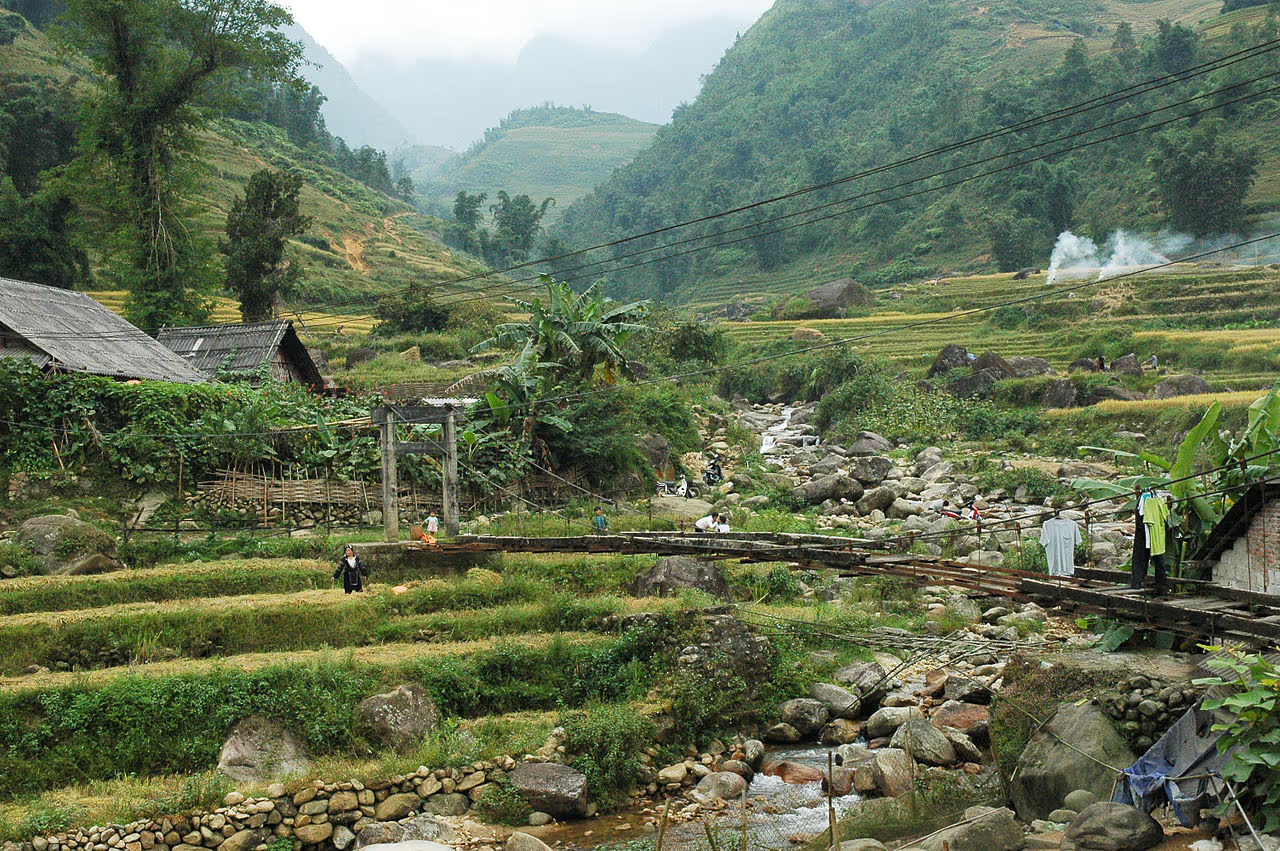
It also matters what "a day" means once you're actually on the trail. A trekking day in the Muong Hoa Valley isn't a bus tour with photo stops — you're walking for four to six hours across uneven terraced paths, river crossings on bamboo bridges, and the odd steep, muddy stretch after rain. That's a full day on its own, which is why cramming a second trekking day plus Fansipan into a 2-day trip almost never works. Three days gives that first trekking day room to breathe and adds a homestay night instead of a second forced march; four days is what actually buys you a second full activity day, whether that's Fansipan or a second, more remote valley trek.
The 2-Day Sapa Itinerary
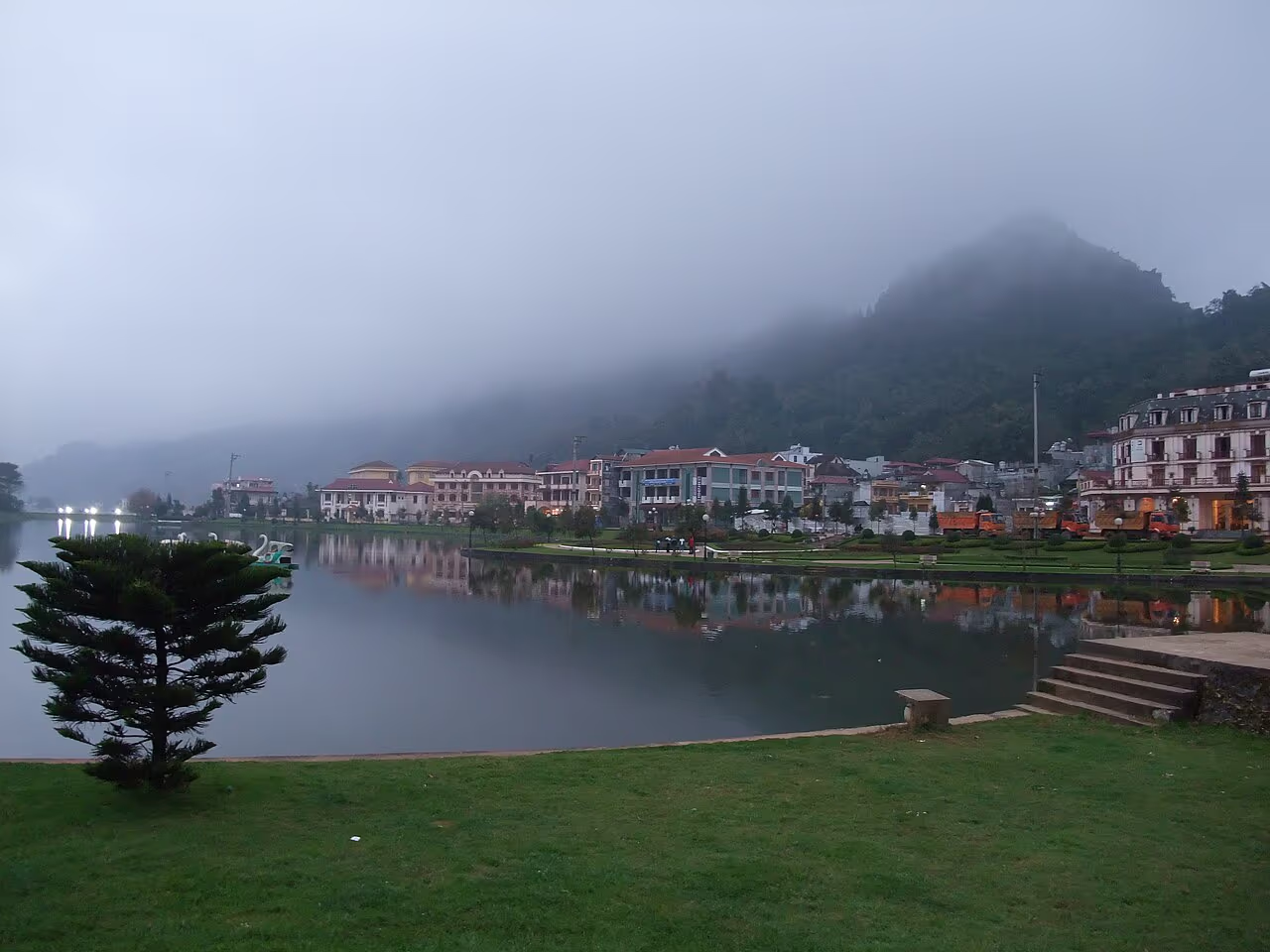
A 2-day Sapa itinerary fits one full trekking day into the Muong Hoa Valley plus a short orientation walk, making it the right call for travelers connecting Sapa to a bigger Vietnam route who can't spare a third day. It works best as a tight, well-planned trip rather than a relaxed one — expect one late arrival, one full day of walking, and a same-evening departure.
- Arrive in Sapa town in the morning after an overnight bus or train from Hanoi; check in and rest.
- Lunch in town, then an easy afternoon walk down to Cat Cat Village, about 2 km from the town center.
- Evening at leisure — Sapa Lake, the central market, or an early dinner ahead of tomorrow's early start.
- Early breakfast, then depart for a full-day trek through Lao Chai and Ta Van, following the rice terraces along the Muong Hoa Valley floor.
- Lunch with a local family partway through the route — usually in Lao Chai or on the approach to Ta Van.
- Return to Sapa town by late afternoon, shower and change, then board an evening bus or train back to Hanoi.
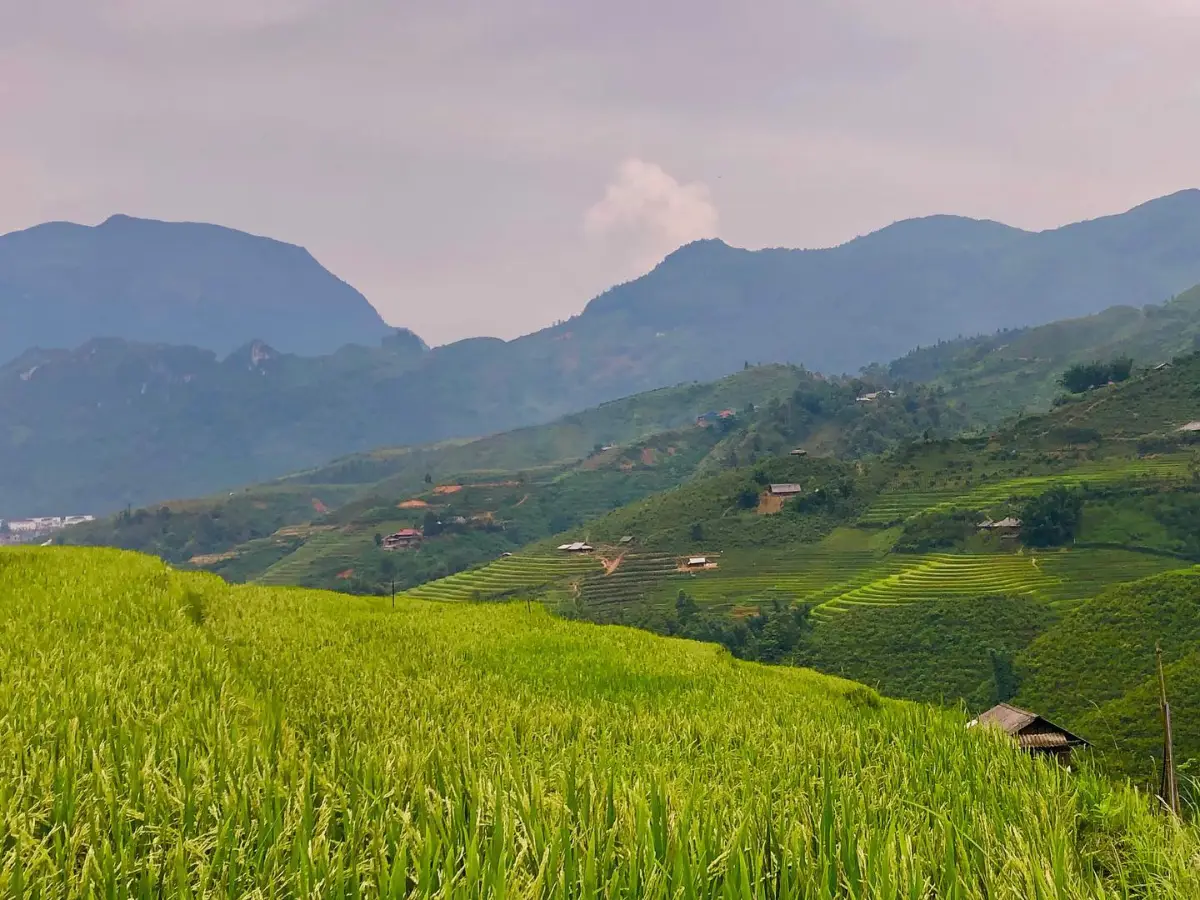
This is the trek most 2-day itineraries are built around, since it covers the valley's best terraced scenery without needing a homestay booking or a second full trekking day. It suits travelers who want one genuine day in the mountains, not a checklist of every village near Sapa.
Keep expectations realistic on a 2-day plan: you'll see Cat Cat Village and the Lao Chai–Ta Van stretch of the valley, but you won't reach the quieter villages further out — Ma Tra, Ta Phin, or Giang Ta Chai — and there's no time for a homestay night or a Fansipan add-on. If any of those matter more to you than a fast turnaround, the 3-day plan below is a better fit for roughly the same amount of walking.
Overnight Tours That Fit a Short Sapa Trip
 2D1N
2D1N
Rice Terraced Fields & Homestay
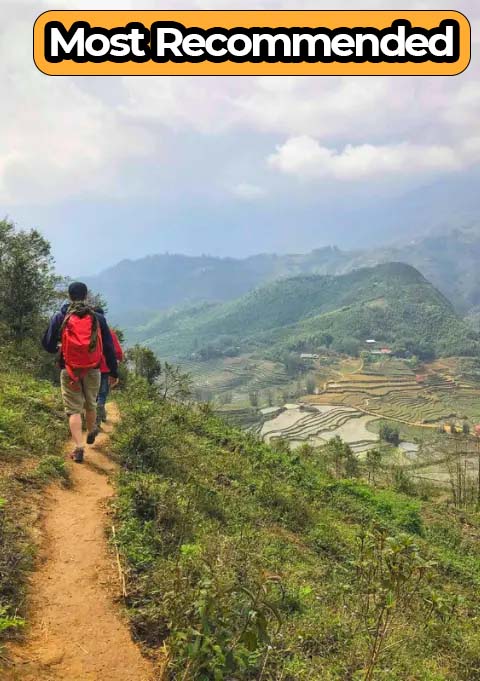
A short overnight version that still fits a tight schedule — one trekking day and one homestay night before heading back.
 2D1N
2D1N
Mountain Views & Muong Hoa Valley Trek
Covers more valley ground than a single day trek, with mountain viewpoints added into the same short overnight window.
2D1N
Explore Nature and Homestay
A gentler pace for travelers who want the homestay experience without the longest trekking distances.
The 3-Day Sapa Itinerary — The One Most Travelers Book
A 3-day Sapa itinerary adds a homestay night to the 2-day plan, which is exactly why it converts better: it's the shortest trip that still lets you fall asleep in a Black H'mong or Red Dao household instead of driving straight back to a hotel. This is the version we recommend by default when travelers ask us what a "normal" length looks like — it fits comfortably around most Hanoi bus and train schedules without wasting a day.
- Arrive in Sapa, check in, and take an easy afternoon walk — Cat Cat Village or a loop around Sapa Lake and the town center.
- Evening briefing on tomorrow's trekking route, gear check, and an early dinner before the longer day ahead.
- Depart Sapa after breakfast and trek through Lao Chai into Ta Van, continuing where useful toward Giang Ta Chai.
- Lunch with a local family along the route, then afternoon walking through the terraces as the light softens.
- Arrive at a homestay in Ta Van or nearby Ban Ho by late afternoon; dinner and evening with the host family.
- Breakfast at the homestay, then a shorter morning walk around the village or on to Ma Tra or Ta Phin.
- Return to Sapa town by early afternoon, with time to shower, pack and eat before your onward transport.
Here's roughly how Day 2 — the core trekking day — actually unfolds hour by hour, based on the pace our guides keep on this route.
Breakfast
At the hotel in Sapa town before departure.
Trek begins
Depart toward Lao Chai through the terraces.
Lunch stop
With a local family partway through Lao Chai.
Continue to Ta Van
Afternoon walking through the valley floor.
Arrive homestay
Rest, tea, and time to explore the village.
Dinner
Home-cooked meal with the host family.
Homestay nights in Ta Van and Ban Ho fill up fastest during September–October and March–May — the two seasons every itinerary in this guide leans on. If you're set on a 3-day trip in one of those windows, book your homestay 3–4 days ahead rather than on arrival in Sapa.
The homestay night itself is usually the part travelers remember longest — a wood-fire dinner cooked by the host family, rice wine offered around the table, and a quiet village evening with almost none of the noise of Sapa town. Rooms are simple: shared sleeping areas on a raised floor, a mosquito net, and a shared bathroom, not a private ensuite. If that's a dealbreaker, ask about upgraded homestay rooms when booking — a few families in Ta Van now offer them, though not every operator can guarantee one.
Homestay Treks Built Around This Exact Schedule
3D2N
Experience The Real Sapa
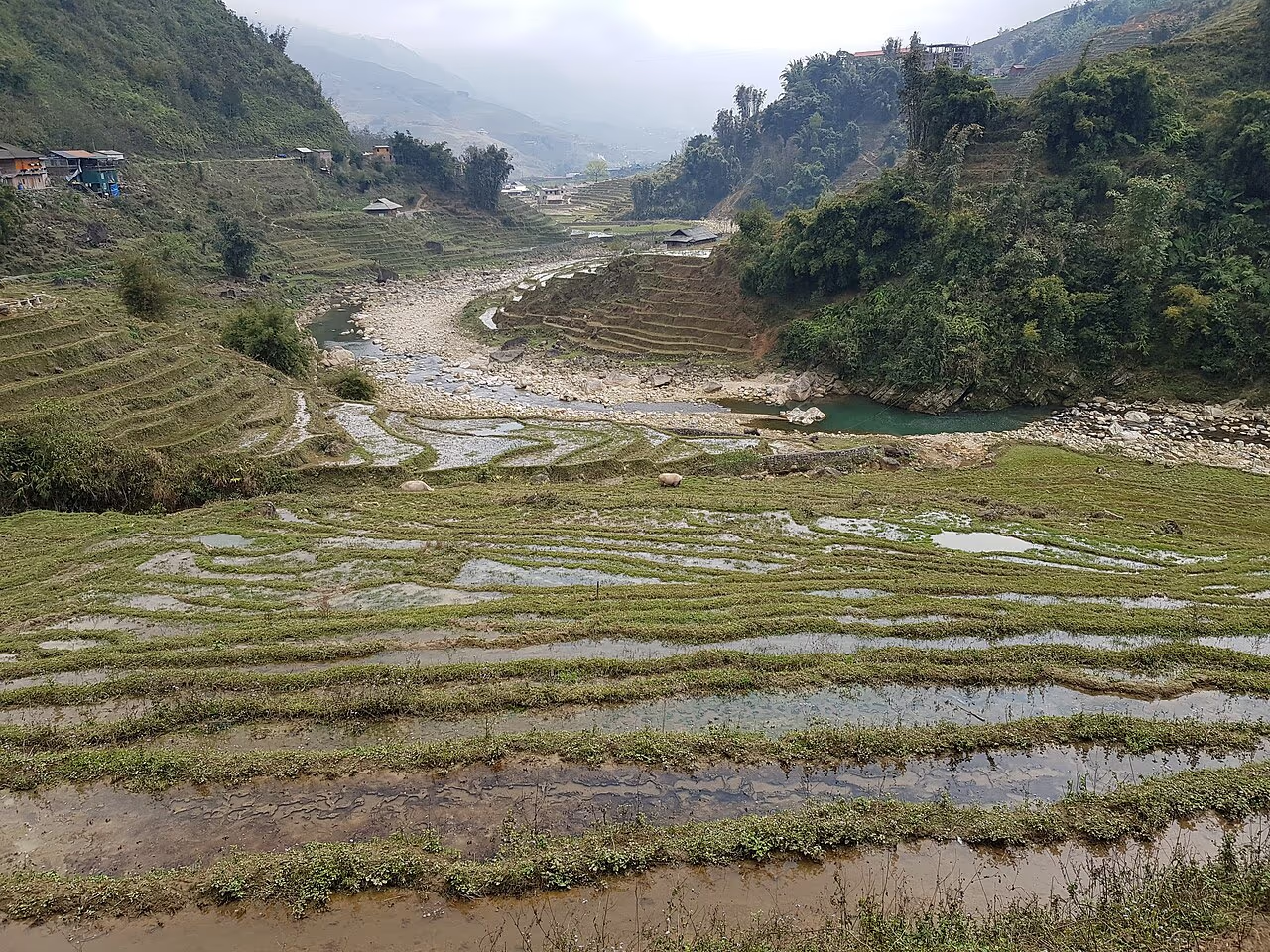
Two nights and a full trekking day through the valley, following close to the schedule above.
3D2N
Sapa Valley Trek and Homestay
A slightly longer daily distance for travelers who want more trekking and less standing around.
The 4-Day Sapa Itinerary — Room for Fansipan
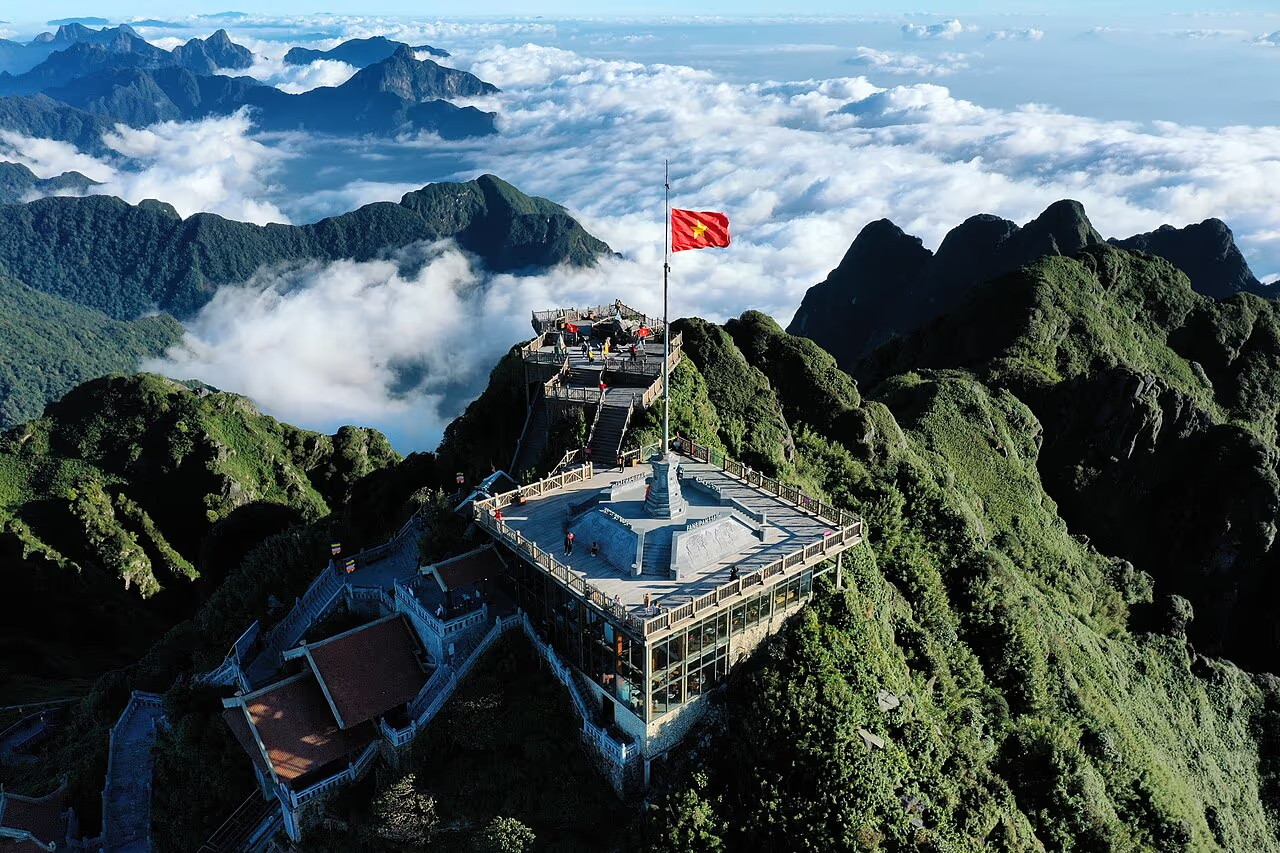
A 4-day Sapa itinerary is the shortest trip that comfortably fits both a full valley trek with a homestay night and a proper day at Fansipan, Vietnam's highest peak, without turning either one into a rushed add-on. It's the version we build for travelers who tell us Sapa is a main stop on their trip, not a two-night detour from Hanoi.
- Arrive in Sapa, settle in, and take an easy afternoon walk through town or down to Cat Cat Village.
- Full-day trek from Lao Chai through Ta Van toward Giang Ta Chai, with lunch along the route.
- Overnight homestay in Ta Van or Ban Ho, same as the 3-day plan above.
- Return to Sapa town in the morning, then head to the Fansipan cable car station for the ride up to the summit.
- Time at the temple complex and viewing platforms on top before the cable car back down; evening free in town.
- Morning visit to Ta Phin, a Red Dao village known for handwoven textiles and traditional herbal baths.
- Return to Sapa town by early afternoon for departure — bus or train back to Hanoi or onward travel.
Travelers with strong fitness sometimes trek up Fansipan itself rather than taking the cable car, which needs an overnight camp partway up and pushes this itinerary closer to 5 days — worth asking about directly if a full summit trek, not the cable car, is the goal.
Weather is the one variable worth planning around on Day 3. The cable car runs in light rain, but heavy storms occasionally pause service for safety, and the summit itself sits above the cloud line often enough that a clear view isn't guaranteed on any single day. Building Fansipan into the middle of a 4-day trip rather than the last day gives you a spare afternoon to shift the visit if the forecast looks better tomorrow than today.
Longer Tours That Combine the Valley and Fansipan
4D3N
Sapa Trekking & Homestay — Non-Touristic
Two homestay nights further off the usual route, for travelers who want more distance than the standard 3-day plan.
4D3N
The Unlimited — 4-Day Sapa Trekking
The full valley-plus-Fansipan format described above, paced for travelers with good general fitness.
Which Itinerary Fits You?
Length of trip is only half the decision — the other half is what kind of traveler you are. Here's how the three itineraries above tend to match different priorities. We ask travelers two questions when they message us on WhatsApp undecided: how many nights can you actually spare, and is there one specific thing — a homestay, Fansipan, a slower pace — that matters more than covering ground? The answers usually point straight to one of the four profiles below.
The First-Timer on a Tight Schedule
You're connecting Sapa to a bigger Vietnam route and want one solid trekking day through the terraces without committing a third day.
The Culture Seeker
You want to actually sleep in a Black H'mong or Red Dao household, not just pass through on a day trip — the homestay is the point of the trip.
The Peak Bagger
Fansipan is on your list alongside the villages, and you'd rather give each one a proper day than squeeze both into a single rushed itinerary.
Traveling With Family or Seniors
You want real countryside without the longest distances — a gentler-paced route matters more here than covering extra villages.
These four profiles aren't a strict formula — plenty of travelers overlap two of them, and that's fine. A family traveling with older parents might still want the homestay night of the Culture Seeker plan, just paced more gently; a Peak Bagger short on time sometimes drops the homestay to fit Fansipan into 3 days instead of 4. Use the profiles as a starting point for the conversation, not a box you have to fit into exactly.
2 vs 3 vs 4 Days: Side-by-Side Comparison
Here's the same information laid out directly against each other, so you can weigh trekking time, homestay nights and Fansipan access in one view.
| Itinerary | Trekking Days | Homestay Nights | Fansipan | Best For |
|---|---|---|---|---|
| 2 Days | 1 | 0 | Not included | Short stopovers, tight routes |
| 3 Days | 1 | 1 | Optional half-day add-on | Most first-time travelers |
| 4 Days | 1–2 | 1 | Full day, cable car or trek | Fansipan plus the valley, unhurried |
Notice the pattern: adding a third day mostly buys you a homestay night, while a fourth day is really about giving Fansipan its own dedicated slot rather than squeezing it into an already full schedule.
Whatever Length You Choose, Here's How Travelers Arrive From Hanoi
However many days you book, the journey from Hanoi is the same — roughly 5–6 hours each way, and it counts against whichever itinerary length you choose.
 Budget
Sleeper Bus
Overnight or day departures, flat reclining seats.
 Popular
Limousine Van
Door-to-door hotel pickup, 9-seat comfort van.
 Scenic
Overnight Train
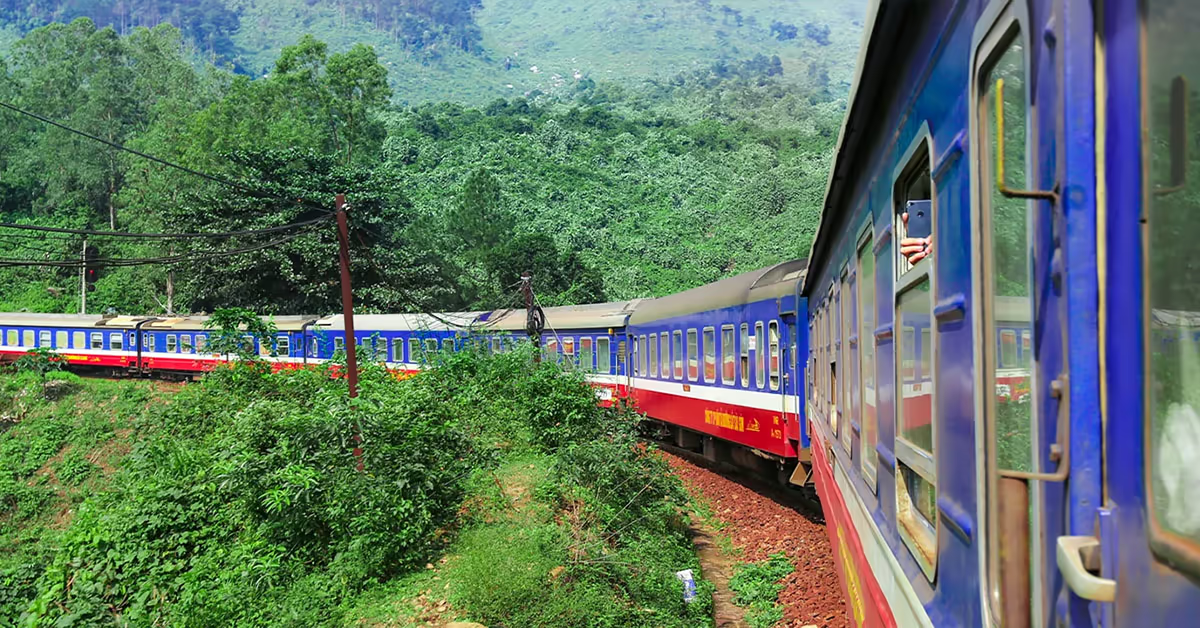
Hanoi to Lao Cai, then a 1-hour transfer to Sapa.
Best Time of Year to Plan Your Sapa Itinerary
The best time to plan any Sapa itinerary is September–October for the golden rice harvest or March–May for green terraces and milder weather — both outrank the wet, misty summer months for trekking conditions.
September and October are the busiest booking window of the year, since the terraces around Ta Van and Lao Chai turn gold right as the harvest begins — worth building your itinerary around if photos of the ripe paddies matter to you, but book homestays and small-group treks several days ahead. March through May offers a quieter alternative: fresh green terraces, comfortable daytime temperatures, and noticeably shorter lead times for booking. Winter (December–February) brings the thinnest crowds but also the coldest, mistiest conditions on higher trekking routes and around Fansipan. Summer (June–August) carries the heaviest rain, which can make the steepest sections of trail slippery and occasionally delays the Fansipan cable car in storms.
If your itinerary is built specifically around the golden rice terraces, late September into early-to-mid October is the narrow window locals watch for. It's also when homestays and 3-day and 4-day treks book out fastest — confirm your dates as early as you can once you've settled on a length.
What to Pack for a Multi-Day Sapa Itinerary
What you pack changes with itinerary length: a 2-day trip needs one day of trekking layers, while 3 and 4-day itineraries need a change of clothes for the homestay night and, in cooler months, a warmer layer for the evening. Whatever the length, a few items matter more in Sapa than in most of Vietnam.
- Walking poles — genuinely useful on the steeper, muddier stretches around Lao Chai and Ta Van; available to rent at our office if you'd rather not carry your own.
- Comfortable walking shoes or light hiking boots — trail conditions are uneven dirt and stone paths, not paved walkways.
- A rain jacket or poncho — Sapa's weather can shift within an hour, even in the dry season.
- A warm layer for the evening — homestay nights in Ta Van and Ban Ho get noticeably cooler after sunset, even in summer.
- A small daypack with 1.5–2 litres of water for trekking days.
- Cash in small denominations — homestays and family lunch stops along the trek rarely take cards.
Common Mistakes When Planning a Sapa Itinerary
Underestimating travel time to and from Hanoi is the most common mistake — an overnight bus or train eats into the first and last day of a short trip, which is exactly why a 2-day itinerary can feel rushed even though it looks fine on paper. Building in a buffer night in Hanoi before or after, rather than arriving in Sapa the same morning you plan to trek, makes a real difference.
The second mistake is trying to fit Fansipan into a 2 or 3-day trip alongside a full valley trek — it's possible on paper but usually means rushing one or the other. If Fansipan matters to you, plan for 4 days rather than hoping to squeeze it into a shorter itinerary. The third is booking a homestay or small-group trek at the last minute during September–October or March–May, when availability in Ta Van and Ban Ho genuinely runs out during peak weeks — the fix is simply booking 2–4 days ahead once your dates are set.
A fourth, quieter mistake is choosing an itinerary length based only on the tour price rather than what each length actually includes. A cheaper 2-day trek and a pricier 3-day homestay trip aren't really the same product being sold at two prices — they're different experiences, and comparing them on price alone tends to leave travelers disappointed by what a short itinerary doesn't have time for.
How Far in Advance to Book
For most of the year, booking 2–3 days ahead is enough for a group tour or a standard homestay. During September–October and March–May, or for groups larger than six people, aim for 4–7 days ahead instead, since small-group treks and the best homestay families fill first in those windows. Private tours for 4-day itineraries benefit from slightly more notice than group tours too, simply because coordinating a homestay family, a Fansipan cable car slot and a private guide across four days takes a little more lead time than a single group trekking day.
Frequently Asked Questions
Two days is the minimum for one real trekking day, three days is what most first-time travelers book because it fits a homestay night, and four days is the minimum if you want to properly include Fansipan alongside the valley villages. Beyond four days, most travelers move on to another region of Vietnam rather than adding more Sapa time, since the core valley and Fansipan are covered by then.
Two days is enough for one full trekking day through the Muong Hoa Valley plus a shorter walk to Cat Cat Village, but it doesn't leave time for a homestay night, and adding Fansipan on top makes the schedule rushed.
A typical 3-day itinerary covers an arrival and orientation afternoon, a full trekking day from Lao Chai through Ta Van with an overnight homestay, and a slower final morning before heading back to Sapa town or on to your next stop.
The Fansipan cable car can technically be done in half a day, but combining it with a full valley trek inside just two days leaves almost no rest time. Three to four days gives you both without rushing either one.
September and October bring the golden rice harvest and the busiest bookings, while March through May offers green terraces, milder weather and noticeably thinner crowds. Both are better than the wet, misty summer months for trekking conditions.
Book at least 2 to 4 days ahead in high season (September–October and March–May), since small-group treks and homestays fill first. Groups larger than six people or trips during Vietnamese holiday weeks should book a week or more ahead.
Rent at Our Office Before You Trek
 Gear Rental
Trekking Boots Rental
Waterproof ankle-support boots. Cleaned and checked before each rental. Available at 105 Thach Son Street.
 Gear Rental
Walking Poles Rental
Trekking poles available to rent at $2/day at our office, 105 Thach Son Street. Useful on any itinerary length.