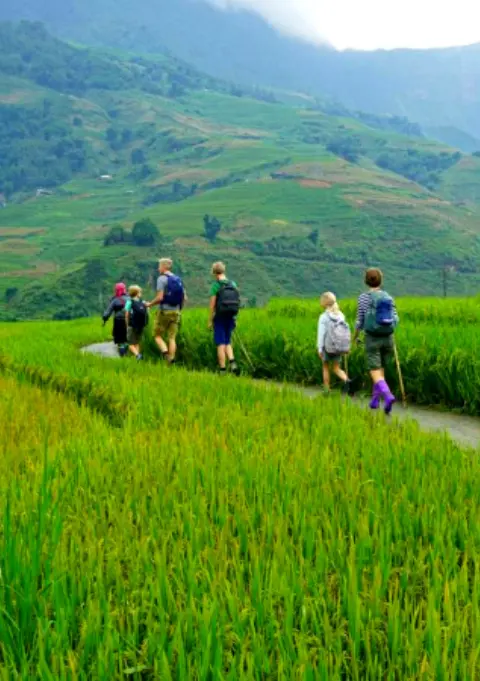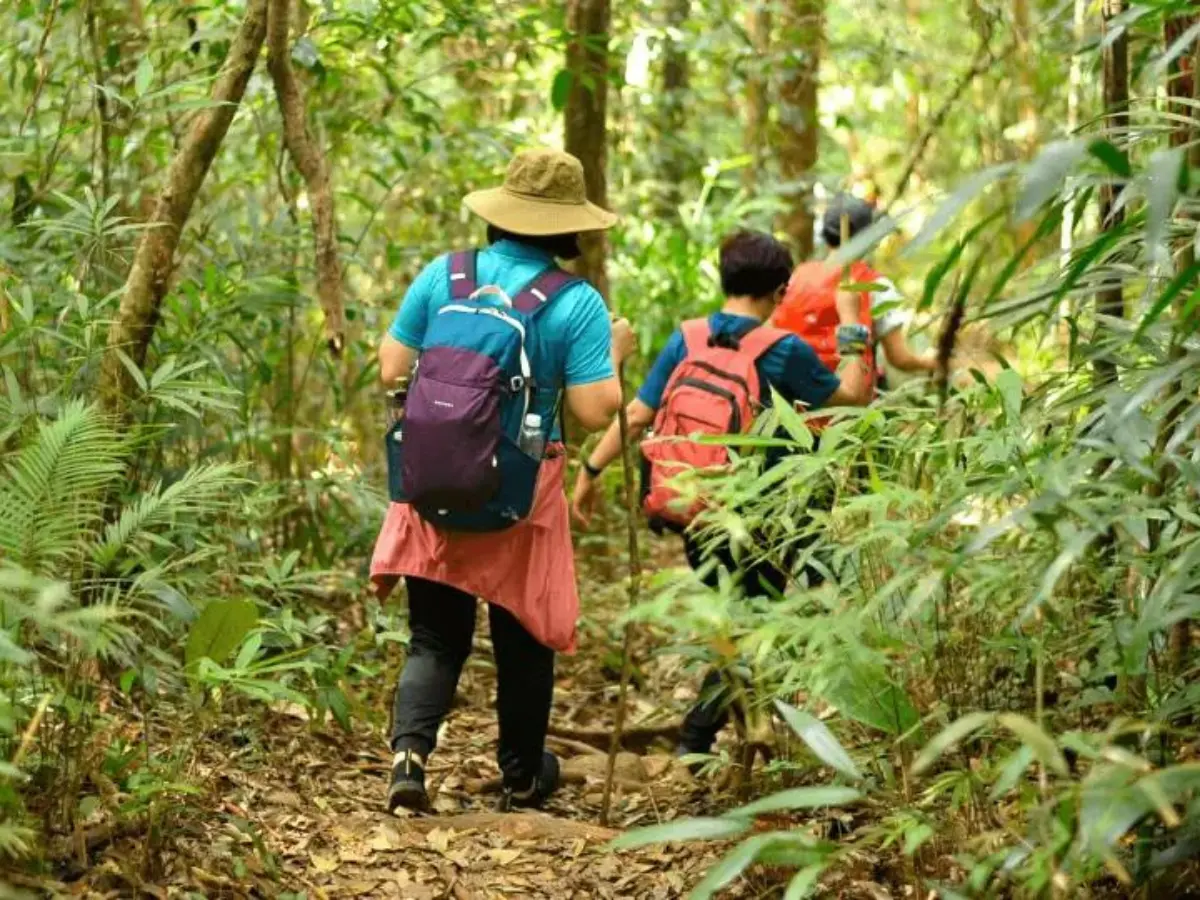
 Sinh Giang

Dien Bien Phu is the town in the far north-west of Vietnam where, from 13 March to 7 May 1954, a Viet Minh army defeated a French garrison and ended the First Indochina War. You go for the battlefield: a museum, a hill with trenches, a reconstructed command bunker and a bronze victory monument, all within a few kilometres of the town centre. Give it one full day if you fly in, two if you go overland, and expect a long road if you start from Sapa: roughly 280 km and 9 to 10 hours by bus (north-vietnam.com, October 2026).
We are a Sapa trekking company, not a Dien Bien operator, so this guide is built from published sources that we read on 3 November 2026, with the date next to every number that could change. Where two sources disagree, as they do on the museum ticket and on how the Sapa bus runs, we say so rather than pick one. To fit it into a longer trip, see our northern Vietnam tours of 3 to 14 days and the 5-day northern itinerary.
Key Takeaways
- The siege ran 13 March to 7 May 1954, with roughly 10,800 to 16,000 French troops against about 50,000 regular Viet Minh (Wikipedia).
- Four sights matter: the Victory Museum, Hill A1, the De Castries bunker and the Victory Monument. Together they take half a day (north-vietnam.com, July 2026).
- From Hanoi: about one hour by air, 1.2 to 2.5 million VND (US$48 to 100) one way, or 10 to 12 hours by sleeper bus at 300,000 to 500,000 VND (vietnamtourism.com, 14 October 2026).
- From Sapa: about 280 km, 9 to 10 hours by bus for US$15 to 20, with day and night departures. Check whether your ticket is direct, because some services change buses at Lai Chau.
- The museum ticket is 100,000 VND on two guides, but we could not confirm it from an official page.
- October to April is dry and cool. June to September brings landslide risk, and crowds peak around 7 May.
Is Dien Bien Phu Worth the Trip?
Yes if you care about the history or want a quiet corner of the north-west, and probably not if you have only a week in the north and want mountains and villages. Dien Bien Phu is a working provincial town set in the broad Muong Thanh valley, and the battlefield sights are the reason to come. Wikivoyage puts it bluntly: there are “few, if any, sights as such” beyond the battle (Wikivoyage, undated, sections updated 2018 to 2022). vietnamtourism.com, a commercial travel site, adds that the trip is worth it if you have two days and an interest in how the siege was run, and not if you have one.
Our own view, which is an opinion and not a sourced fact: a first-time visitor to the north should do Hanoi, Sapa and one of Ha Long Bay or Ninh Binh first, because Dien Bien Phu costs a full travel day each way unless you fly. The province welcomed more than one million tourists in 2023, a first, and more than one million again between January and 7 May 2024, only about 4,800 of them foreigners (Vietnam News, 10 May 2024), which tells you what the place means to Vietnamese visitors.
The Battle in Five Minutes, and Why the Numbers Disagree
The French Union forces built a fortified camp in the Muong Thanh valley in November 1953 to draw the Viet Minh into a set-piece battle, and the Viet Minh surrounded it, dragged artillery onto the surrounding hills and took it after a 56-day siege. Wikipedia dates the first operations to 20 November 1953 and the main battle to 13 March to 7 May 1954. It calls the outcome “a Viet Minh victory” and “the decisive battle of the First Indochina War”.
The French gave their strongpoints first names such as Eliane and Isabelle, and the sights you can visit today carry both names. Hill A1 is “Eliane 2”, the victory monument stands on Hill D1, known to the French as Dominique 2, and the museum labels are mostly in Vietnamese and French (vietnamtourism.com, 14 October 2026; Authentik Travel, 7 May 2025). vietnamtourism.com divides the siege into five phases. The last big blow came at A1, where a mine was detonated on 6 May, and the garrison surrendered on 7 May. The Geneva Conference opened the next day, 8 May, and the agreement that followed in July partitioned Vietnam (Wikipedia).
The numbers are where sources part company, so here they are side by side. We give each with its source, and we have not averaged them.
| Item | Figure | Source |
|---|---|---|
| French garrison, 13 March 1954 | About 10,800, nearly 16,000 with reinforcements | Wikipedia (battle article) |
| French garrison, summary | About 15,000 men | vietnamtourism.com, 14 October 2026 |
| Viet Minh regular troops | About 50,000, five divisions | Wikipedia |
| French killed in action | 1,142, plus 429 who died of wounds (up to 2,293 in other counts) | Wikipedia; vietnamtourism.com |
| French prisoners | 11,721 captured in the infobox; 10,863 in the body, of whom 3,290 were repatriated | Wikipedia, which contradicts itself |
| Viet Minh casualties | 13,930 (Vietnamese figure); 8,000 dead and 15,000 wounded (French estimate); 23,000 to 25,000 (Asian historians) | Wikipedia |
| Viet Minh dead, Vietnamese government | 4,020 dead, 9,118 wounded, 792 missing | Wikipedia |
Nobody can give you one clean casualty figure, and a guide who does is simplifying. The museum and the memorials tell the story from the Vietnamese side, which is the point of going. For wider context, our first-time Vietnam guide is a good companion.
Getting There From Hanoi
Fly if you can: it is about one hour against 10 to 12 hours on the road. Vietnam Airlines flies Hanoi to Dien Bien Phu airport (airport code DIN), and vietnamtourism.com lists both Vietnam Airlines and Vietjet with “seasonal frequency”, so check the current timetable instead of assuming a daily flight in your month. The fare ranges we found are wide and do not agree: 1.2 to 2.5 million VND, or US$48 to 100, one way (vietnamtourism.com), US$70 to 120 (north-vietnam.com), and US$50 to 100 on another page of the same site. Treat any figure as a ceiling check, and book early for the first week of May.
| How | Time | Price | Source |
|---|---|---|---|
| Flight | About 1 hour | 1.2 to 2.5 million VND (US$48 to 100) | vietnamtourism.com, 14 Oct 2026 |
| Sleeper bus | 10 to 12 hours (12 to 13 on another site) | 300,000 to 500,000 VND | vietnamtourism.com; north-vietnam.com |
| Private car | 9 to 11 hours | 3 to 5 million VND (US$120 to 200) | vietnamtourism.com |
| Motorbike | 2 to 3 days | Fuel and lodging | vietnamtourism.com |
Sleeper buses leave from Hanoi’s My Dinh station according to Wikivoyage, which gives about 12 hours and around 300,000 dong; a search summary of another travel site lists My Dinh, Yen Nghia and Giap Bat stations. The road runs along National Road 6 and then winding mountain roads. Our sleeper bus guide explains what to expect on board, how to choose a seat and what the real risks are. The road is about 450 km (north-vietnam.com, July 2026).
Getting There From Sapa
The road from Sapa to Dien Bien Phu is about 280 km and takes 9 to 10 hours by bus, and the most scenic approach is the western route through Lai Chau over the O Quy Ho Pass (north-vietnam.com, October 2026; vietnamtourism.com, 14 October 2026). It is a long day or a night bus, and it is a mountain road, so plan for the time, not the distance. Our how to get to Sapa and Hanoi to Sapa timetable cover the other end.
The bus schedule on north-vietnam.com in October 2026 lists these departures from Sapa, with the arrival time in Dien Bien Phu. The page does not say whether the two daytime buses are seats or sleepers, so ask when you book.
| Depart Sapa | Arrive Dien Bien Phu | Type |
|---|---|---|
| 08:00 | 16:20 | Daytime |
| 09:30 | 17:50 | Daytime |
| 18:25 to 19:30 | 03:15 to 04:40 (+1) | Night, several operators |
| 21:00 | 06:00 (+1) | Night |
Three warnings. First, the page calls the service “direct” in one place and says “some bus services require a transfer in Lai Chau” in another, so confirm that you have a single ticket. Second, the printed times in the table work out to about 8 hours 20 minutes for the day buses, against the stated 9 to 10 hours, so allow for delays. Third, an arrival around 03:00 to 05:00 is a poor time to look for a hotel, so book the first night and ask for early check-in.
A private car is quoted at 5 to 8 hours and US$100 to 220 per vehicle on north-vietnam.com, which looks fast for 280 km of mountain road, so ask the driver for the route. A motorbike takes 10 to 12 hours or more and is best split over two days. The wet season, June to September, is when landslides make the road least reliable (vietnamtourism.com), so leave a buffer day before any onward flight.
What to See: Museum, A1, the Bunker and the Monument
The four core sights are close together, and you can walk or ride between them in an afternoon: the Victory Museum, Hill A1, the De Castries bunker and the Victory Monument on Hill D1. North-vietnam.com says they can “easily be explored in half a day”. Here is what each is, and the fee figures we found, which are less firm than we would like.
| Sight | What it is | Fee and hours found |
|---|---|---|
| Victory Museum | Exhibitions in five areas, a diorama of the battle, French and Vietnamese weapons, photographs | 100,000 VND; 07:00 to 11:00 and 13:30 to 17:30 daily (Authentik Travel, 7 May 2025; Vinpearl) |
| Hill A1 (Eliane 2) | Trenches, a tunnel, a mine crater, a tank, a cemetery | Under 50,000 VND (vietnamtourism.com); hours not listed |
| De Castries bunker | Reconstructed command bunker and captured tanks and guns | Not listed on the pages we read |
| Victory Monument, Hill D1 | Bronze monument, 12.6 m high, 217 tons | Not listed on the pages we read |
The Victory Museum
The museum stands in the town on Vo Nguyen Giap Street. It was first built in 1984 for the 30th anniversary and, according to vietnamtourism.com, reopened in its current form in 2014 with a 2,000 square metre diorama of the battle. The labels are mostly in Vietnamese and French with limited English, and the site suggests 60 to 90 minutes if you read French; north-vietnam.com says one to two hours. Authentik Travel describes five exhibition areas, from the strategic location to Dien Bien Phu today.
On the ticket we have a conflict to report. Authentik Travel (7 May 2025) and Vinpearl both give 100,000 VND per adult, and Vinpearl says the same price applies to foreigners and Vietnamese. A visitor review we found elsewhere reported paying 20,000 dong, probably years ago. We could not open an official 2026 page, so treat 100,000 VND as the current best figure and carry cash. Free-entry days have been offered at Lunar New Year and on National Day in past years (Dan Tri, 2020; Vietnam Tourism, 2018).
Hill A1, called Eliane 2
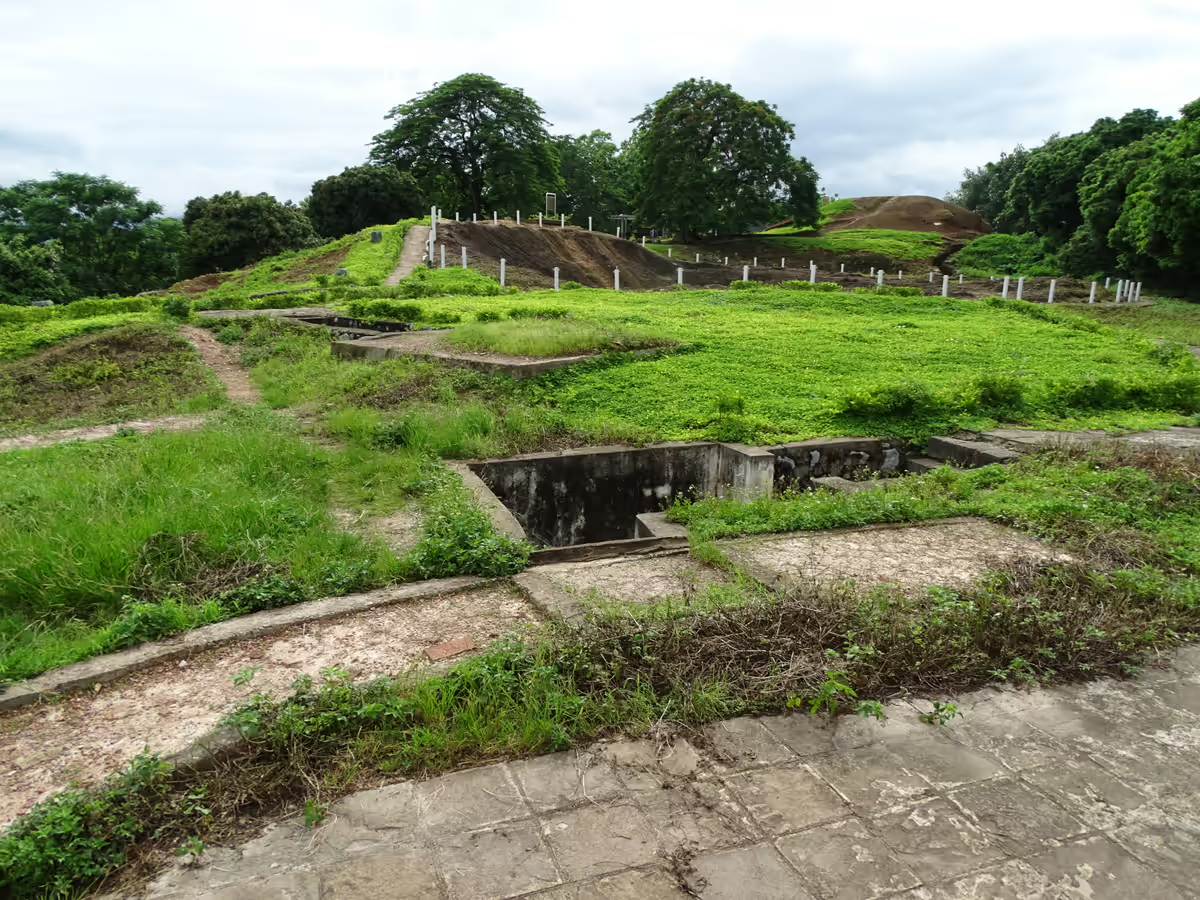
Hill A1 is where the siege was decided. It is a low hill of trenches and bunkers, preserved and partly reconstructed, with a 21 metre tunnel, the crater left by the mine detonated on 6 May, and a tank that vietnamtourism.com describes as one of the seven surviving M24 Chaffee tanks. Entry is usually under 50,000 VND according to that site. A1 also has a military cemetery, built in 1958 and restored in 1994, which Authentik Travel says holds 644 soldiers and officers. Authentik adds that visitors can hear battle stories and try cooking rice on the “Hoang Cam stove”, a detail we could not verify on any second page.
The De Castries bunker
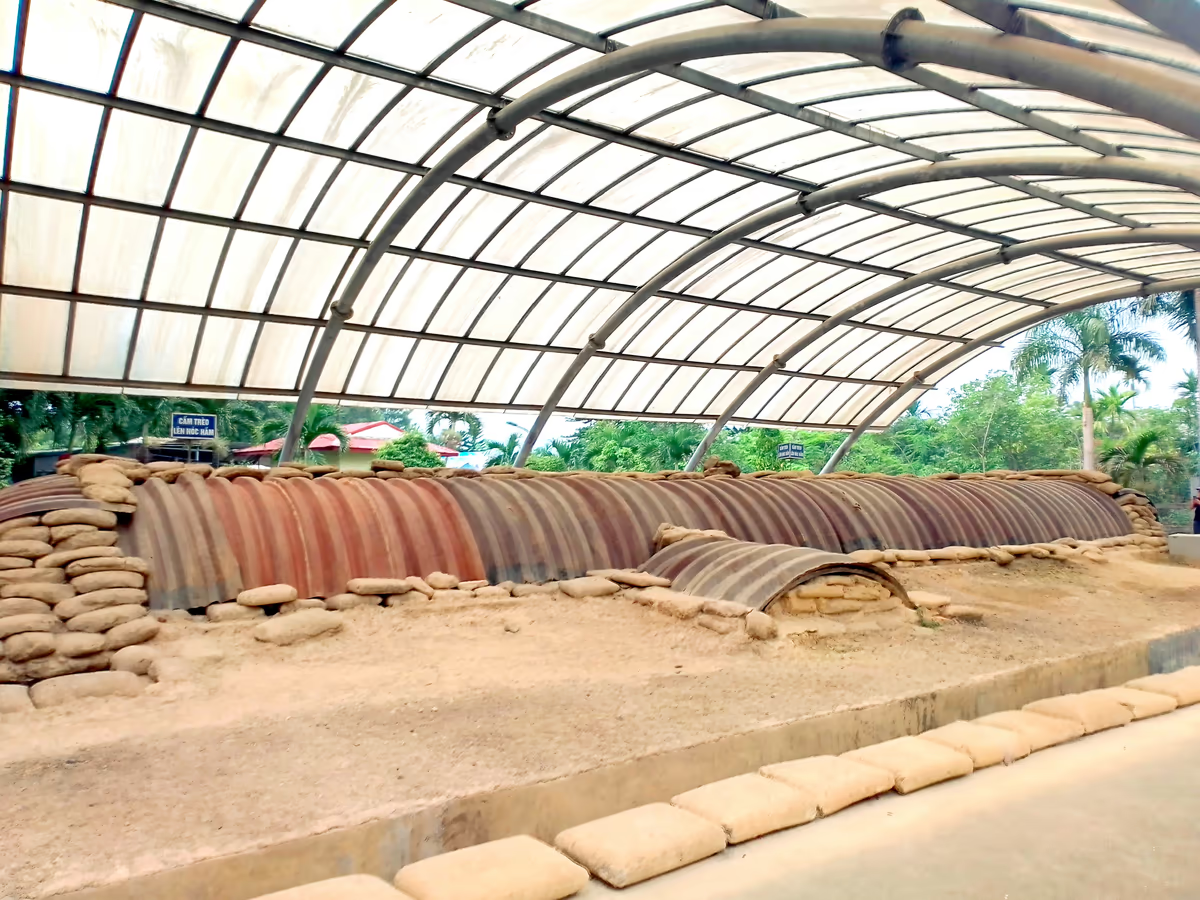
The command bunker of General Christian de Castries, the French commander, is a short ride from the museum, on the other side of the river from A1 (Wikivoyage). It is a long, low shelter of corrugated steel arches under sandbags, now covered by a canopy to protect it, with captured French tanks and artillery nearby. Authentik Travel gives the headquarters as 20 metres long and 8 metres wide and calls it “once known as the most fortified bunker in Indochina”. vietnamtourism.com says the structure is “preserved or reconstructed” without saying which parts, so treat it as a memorial built on the original site and ask a guide what is original.
The Victory Monument on Hill D1
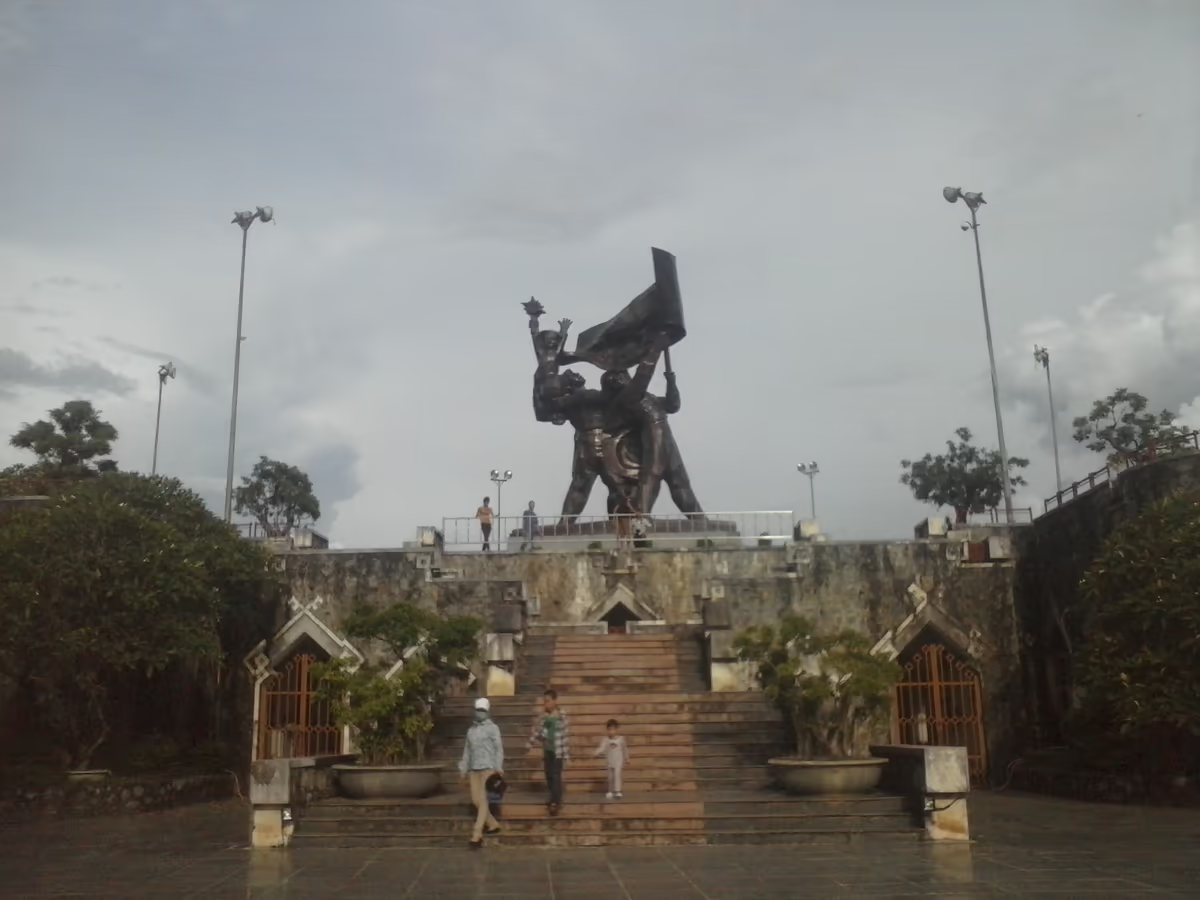
A bronze statue of three soldiers raising a flag stands on Hill D1, built for the 50th anniversary in 2004. Authentik Travel gives it as 12.6 metres tall, weighing 217 tons, on a 3.6 metre pedestal, and, going by the titles of photographs on Wikimedia Commons, the monument has friezes showing the French surrender in May 1954 and the women who carried supplies. A flight of steps leads up to the statue, as the photograph below shows, and the people on the steps give a sense of its scale.
Beyond the Battlefield: Muong Phang, Pa Khoang and the Valley
If you have a second day, there are three more places to see, and they widen the picture from one battle to a landscape. North-vietnam.com says that with two or three days you can also explore Muong Phang, Pa Khoang Lake and the nearby minority villages.
Muong Phang was the Viet Minh’s forward command area, a forest base in the hills east of town, with reconstructed command huts and a forest road. Sources give the distance as 27 km (vietnamtourism.com), 35 km (north-vietnam.com) and about 40 km (Authentik Travel), and the drive takes about an hour each way, so ask your host for the real distance. vietnamtourism.com says to allow a second day if you add it.
Pa Khoang Lake is about 20 km north-east of town and 30 to 40 minutes by car or motorbike, according to north-vietnam.com, with boat rides depending on the season and seasonal flowers on the shore. The Muong Thanh valley itself is a rice valley: north-vietnam.com calls it the largest in the north-west, and says the fields are lush green in May and June and turn gold before harvest in September and October. The same site says the province has more than 20 ethnic groups, the largest being Thai, H’mong, Dao, Kho Mu and Xa Phang, with traditional stilt houses in the villages. Our H’mong people guide explains the culture, and the rice terraces guide shows where else to see terraced fields.
When to Go
October to April is the best window: dry, cool and clear. vietnamtourism.com (14 October 2026) rates October to December as dry, cool and the best overall, January to March as cool with some mist, April as warming, May as hot and humid and June to September as wet with landslide risk. north-vietnam.com agrees on October to April, though its FAQ narrows that to November to April. Both give the rice calendar: green in May and June, harvest in September and October.
The date that matters most is 7 May, Victory Day. vietnamtourism.com rates crowds as very high around it, and the 2024 figures show why: the province recorded more than 370,000 visitors between 30 April and 7 May that year, the 70th anniversary, and local hotels were full, so officials encouraged more than 140 households to take in 2,000 guests (Vietnam News, 10 May 2024). Book rooms and flights early for that week, or choose another. For Vietnam as a whole, see the best month to visit Vietnam, weather by month and the rainy season guide.
Where to Stay and What to Eat
Stay in the town centre. vietnamtourism.com says guesthouses and mid-range hotels cost 300,000 to 1,200,000 VND a night (US$12 to 48), mostly around the centre, and that accommodation near the battlefield is limited. It gives a total daily budget of 800,000 to 1,500,000 VND (US$32 to 60) including lodging, food and entry fees. North-vietnam.com names several places with no prices: the Muong Thanh Grand Hotel, Thanh Nam Hotel, Duc Thang Guesthouse, A Thia Homestay, Frontier Hostel and Tours, and Him Lam Resort. We have not stayed at any of them. Wikivoyage says cheap rooms are found across from the bus station, handy after a night bus.
Local restaurants serve northern Vietnamese food and some Thai and H’mong dishes, according to vietnamtourism.com, and the same site advises an early dinner because the town is quiet at night, and cash is essential. North-vietnam.com suggests sticky rice, grilled fish and thang co, the horse-meat stew of the north-west. If you want to read more about northern Vietnamese food before you go, our street food by region guide and what to eat in Sapa give the context, and the Vietnam currency guide covers cash and ATMs.
A One-Day Plan and a Two-Day Plan
This plan is our own suggestion built from the opening hours above, not a sourced itinerary. It assumes you stay in the town centre and have a motorbike taxi, a Grab car or a hired car.
One day in the town
- 07:30 to 11:00: Victory Museum, which opens at 07:00 on the two guides we read. Give it 90 minutes.
- 11:00 to 13:30: lunch in town and a rest. Most sites close for lunch.
- 13:30 to 17:00: Hill A1, then the De Castries bunker, then the Victory Monument on Hill D1 for the late light.
- Evening: early dinner and an early night, or the night bus onward.
With a second day, add Pa Khoang Lake or the valley, and a third for Muong Phang, which vietnamtourism.com says needs a day of its own.
Crossing to Laos at Tay Trang
Dien Bien Phu is one of the few places in northern Vietnam where you can cross by land into Laos, at the Tay Trang border. Wikivoyage describes a daily bus from Dien Bien Phu to Muang Khua in Laos that leaves at 05:30 and costs 100,000 dong, with about two hours to the Vietnamese exit point, then 6 km to the Lao checkpoint, and about 3.5 hours in total including border formalities. From Muang Khua the same page lists onward roads and a boat on the Nam Ou river to Nong Khiaw and Luang Prabang.
That information is not current: we found no official page for border hours or fees and could not confirm that the bus still runs daily, so check with a local operator first. Check whether your nationality needs a Lao visa and whether the crossing issues it; our Vietnam visa 2026 guide covers the Vietnam side.
Pairing It With a Sapa Trek
The cleanest way to combine the two is Sapa first, then the long road to Dien Bien Phu, then south through Son La and Mai Chau toward Hanoi or Ninh Binh. The road from Dien Bien east towards Son La crosses the Pha Din Pass, a 32 km stretch of Highway 6 that ends about 84 km from Dien Bien city (Authentik Travel). The Sapa side of the loop is the O Quy Ho Pass, which north-vietnam.com names on the bus route. We have not driven this loop, so for the details of timing and comfort, ask the bus or car company.
Walk first, ride second: a day in the Muong Hoa valley with a guide before the bus is a good use of the last day. Our Sapa itinerary for 2, 3 or 4 days shows how to fit it in,. If you want a trek that ends in a village meal and a homestay, our local guides run village treks from Sapa, and you can start from the tour cards below.
Sapa Treks to Walk Before You Head to Dien Bien Phu
 1-Day Trek
Trekking Through Rice Terraced Fields
Lao Chai to Ta Van with lunch at a family restaurant in Y Linh Ho.
 Homestay
Rice Terraced Fields & Homestay
Dinner and breakfast with a family in Ta Van, lunch on day one.
 Local Favourite
Mountain Views and Villages Trek
Lunch at a restaurant run by local people in Hang Da village.
Visiting With Respect
Dien Bien Phu is a memorial. Most visitors are Vietnamese families and school groups, and many have a relative who fought or died there, so dress modestly, speak quietly at the cemeteries and do not climb on the preserved structures. Photograph the monuments and displays, but ask before you photograph people, especially veterans and elderly visitors. Our Vietnam etiquette guide covers the general rules, including temple dress and photography.
Sources and the Dates We Checked Them
We read these pages on 3 November 2026. Where a page could not be opened or two pages disagree, the text says so. Most travel pages here are commercial sites.
- Wikipedia, Battle of Dien Bien Phu; secondary source with figures that disagree inside the page.
- vietnamtourism.com, Dien Bien Phu and how to visit, updated 14 October 2026; commercial site.
- north-vietnam.com, Sapa to Dien Bien Phu, October 2026, and its Dien Bien Phu page, July 2026; commercial site.
- Authentik Travel, historical sites in Dien Bien, 7 May 2025; commercial site.
- Wikivoyage, Dien Bien Phu; sections updated 2018 to 2022.
- Vietnam News, relic sites flooded with tourists, 10 May 2024.
- Museum ticket: Vinpearl and localvietnam.com search summaries, not opened in full; free entry: Dan Tri (2020), Vietnam Tourism (2018).
The Part We Do Sell
- Hanoi to Sapa transport — sleeper buses, limousines and the overnight train, bookable with your trek
- Hanoi to Sapa guide — what each option costs and how long it takes
- How to get to Sapa — the first leg, in detail
Rent at Our Office Before You Trek
 Gear Rental
Trekking Boots Rental
Waterproof ankle-support boots. Cleaned and checked before each rental. Available at 105 Thach Son Street.
 Gear Rental
Walking Poles Rental
Trekking poles available to rent at $2/day at our office, 105 Thach Son Street. Essential for descents.
Frequently Asked Questions
By bus, about 280 km and 9 to 10 hours, for US$15 to 20 (north-vietnam.com, October 2026). Day buses leave Sapa around 08:00 and 09:30; night buses leave from about 18:25 and arrive before dawn. Confirm that your ticket is direct, because some services change buses at Lai Chau.
About one hour. Vietnam Airlines flies the route and vietnamtourism.com also lists Vietjet, with seasonal frequency. Quoted one-way fares run from 1.2 to 2.5 million VND (US$48 to 100), so check the current timetable before you book.
Two guides, Authentik Travel (7 May 2025) and Vinpearl, give 100,000 VND per adult with the same price for foreigners. We could not confirm the 2026 price from an official page, so carry cash. Opening hours given are 07:00 to 11:00 and 13:30 to 17:30 daily.
One day covers the museum, Hill A1, the De Castries bunker and the Victory Monument, which north-vietnam.com says can be seen in half a day. Add a second day for Pa Khoang Lake and the valley, and a third for Muong Phang.
October to April is dry and cool, and the rice fields are green in May and June and golden in September and October. Avoid June to September if you can, because of landslide risk, and expect crowds in the week around 7 May, Victory Day.
From 13 March to 7 May 1954 Viet Minh forces besieged and defeated a French garrison in the Muong Thanh valley. Wikipedia calls it the decisive battle of the First Indochina War. The Geneva Conference opened on 8 May, and a July agreement partitioned Vietnam. Casualty figures differ widely between sources.
It is worth it if you are interested in the history or want a quiet part of the north-west, and less so if you have only a week for northern Vietnam. About 4,800 of more than one million visitors up to 7 May 2024 were foreign, so it is a Vietnamese pilgrimage more than a tourist circuit.
Yes, at the Tay Trang border. Wikivoyage describes a daily bus to Muang Khua in Laos leaving at 05:30 for 100,000 dong, taking about 3.5 hours with border formalities, but that information is not recent. Check visa rules for your nationality and confirm the bus before you plan around it.