 Sinh Giang
Most advice on “Vietnam tours” starts with the brochure and works toward your dates. This guide goes the other way. It starts with the number of days you have, shows what a northern trip can hold at 3, 5, 7, 10 and 14 days, prices the Sapa part of each trip from our own tour pages, and gives you the questions that Vietnam’s Tourism Law lets you put to any operator. If you first want the general comparison of group, private and tailor-made trips, read our guide to choosing a Vietnam travel package; this page does not repeat it.
We should say what we are. Trekking Tour Sapa is a Sapa company, run with local H’Mong guides. We sell Sapa treks, homestays, motorbike and car days, and Hanoi–Sapa transfers. We do not sell Ha Long cruises, Ninh Binh day trips, or anything in central or southern Vietnam, so where those appear below we point to our own guides and tell you to buy them elsewhere. Every price and condition quoted for our tours was read from our own tour pages on 31 October 2026. The legal points come from an English translation of Vietnam’s 2017 Tourism Law, and we say where we could not check something.
Start With Your Days, Not the Brochure
Northern Vietnam is the one region where a short trip works without flying. Hanoi is the hub, and Sapa, Ha Long Bay and Ninh Binh are all reached by road or rail. Search results for “vietnam tours” on 31 October 2026 were mostly operator brochure pages and marketplaces listing many operators side by side, organised by operator or destination, not by the traveller’s number of days, which is the constraint that decides everything else. The table is our reading of what each length can hold, and the sections after it say what we would cut first.
| Days | Shape | Best way to buy it | Day-by-day guide |
|---|---|---|---|
| 3 | Hanoi, then a short Sapa | Your own route, one guided Sapa day | Sapa in 2, 3 or 4 days |
| 5 | Hanoi, Sapa, one more place | Your own route, guided days | 5 days in the north |
| 7 | Hanoi, Ha Long Bay, Sapa | Small-group cruise, then our Sapa walk | One week in Vietnam |
| 10 | The north plus central Vietnam | Private or tailor-made, Sapa booked direct | 10 days in Vietnam |
| 14 | North, centre and south, with flights | Package or tailor-made, with a named Sapa guide | Two weeks in Vietnam |
Three days: Hanoi and a short Sapa
Three days is the shortest trip that still reaches Sapa properly, and it only works if you accept that the road takes a large share of it. Sapa is about 320 km from Hanoi, and the van or bus takes roughly 5.5 to 6.5 hours according to the operator timetables behind our guide to reaching Sapa. The night train to Lao Cai takes about eight hours plus a transfer up the hill, so it suits people who want to sleep through the distance, not people short on time.
The honest shape is one night in Hanoi and two in Sapa, with a one-day trek or the 2-day 1-night rice terrace homestay, and nothing more ambitious. Do not add Ha Long Bay to three days: the bay’s management board puts it 165 km from Hanoi, about 1 hour 30 by expressway, so a day trip is mostly road. At this length a package would spend your time on coaches; buy the flights and the hotel yourself and pay for a guide only on the walking day.
Five days: the length where guided days work best
Five days gives you two nights in Hanoi, two to three in Sapa and room for one extra stop, usually Ninh Binh. Our Ninh Binh guide puts it about 95 km south of Hanoi, roughly two hours by road or 2.5 hours by train, which is why it fits as a day trip, while Ha Long Bay really needs a night on the water to repay the road. Our five-day northern itinerary sets out that choice.
This is the length where the guided-days format earns its keep, because every leg is a short, known hop from Hanoi and you only need a guide for the part that is hard to do alone. On the Sapa side, a two-day, one-night trek is the natural fit: you walk the Muong Hoa valley and sleep in a village family’s home. The rice terrace homestay is our most popular two-day walk, and the mountain-views valley trek is the harder option.
Seven days: Hanoi, one bay or one river, and Sapa
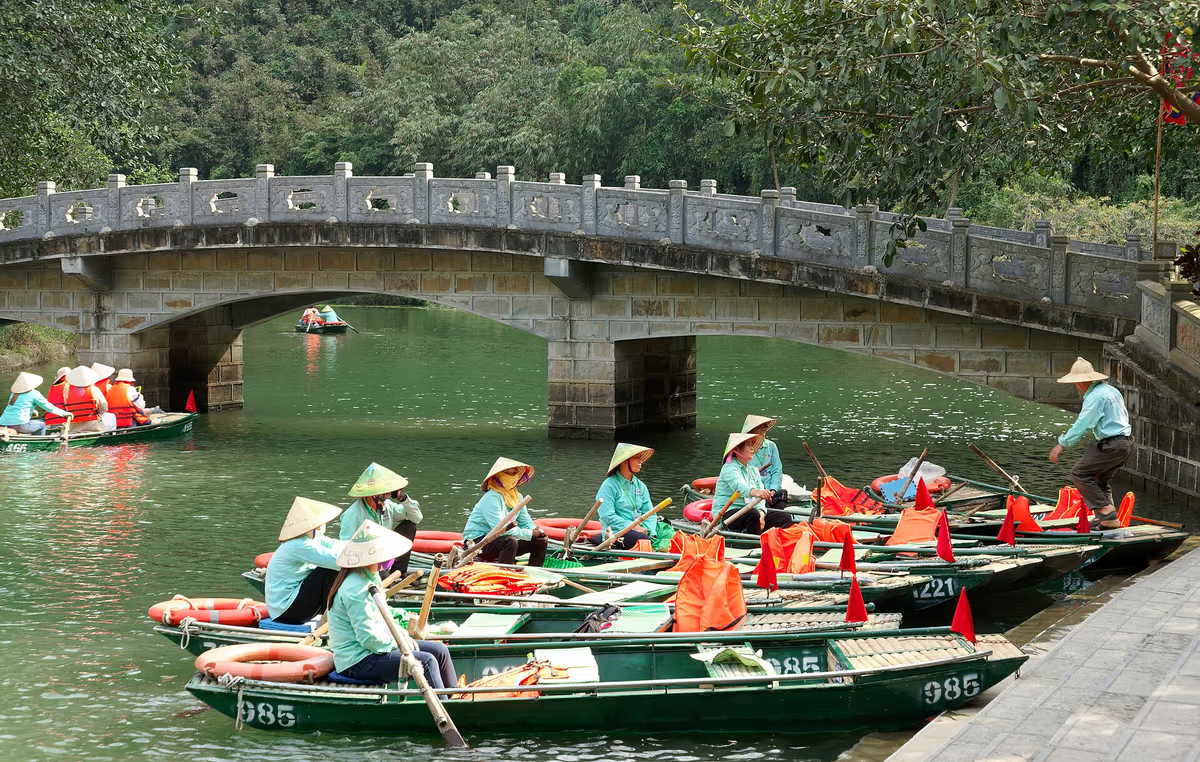
Seven days is the classic northern trip: Hanoi, an overnight on Ha Long Bay or a day on the water at Ninh Binh, and three days around Sapa. The two coastal and inland options are not interchangeable. A one-night cruise gives you the bay but costs most of a day in transfers, and Ninh Binh is a day trip from the capital, so choosing it frees a night for Sapa. Our Ha Long cruise guide records the Board’s fees and the rule that a one-night stay may last at most 24 hours, which is worth knowing before you compare cruise prices.
Here a small-group departure for the cruise is a sensible purchase, because the boat, the cabins and the meals are the product and a group lowers the price. For the Sapa days, a 3-day 2-night trek through remote villages, or the full length of the valley, is a good use of three days; each includes two homestay nights. If your party includes older walkers or children, the easy one-day walk for seniors and families can be paired with a night in town instead.
Ten days: the north and the centre
Ten days is where a flight appears. The north takes about six days, then you fly south to Hue or Da Nang for three or four days in the imperial city and Hoi An. Our own itinerary page puts the Da Nang flight at about 1.5 hours, and our Hue guide gives Hanoi to Hue as 1 hour 15 minutes by plane or 12.5 to 15 hours by train, so the flight, not the train, is the plan. Allow half a day for check-in, baggage and the transfer at each end.
A private or tailor-made trip is sensible here, because two regions mean two sets of hotels and transfers to coordinate. We would book the three Sapa days directly and let the agency handle everything else; asking an agency to subcontract Sapa puts a middleman between you and the guide. Our 10-day guide shows how the days split.
Fourteen days: three regions and the flights between them
Fourteen days covers the north, the centre and the south, and the trade-off is the one our two-week itinerary describes: you spend three to four days in the mountains and the rest moving. Two internal flights, each over an hour, are part of the plan. A fixed-route package suits this length if you dislike logistics, but check the nights each region gets, because some packages count arrival and departure days as tour days.
If mountains matter most, spend the extra days in Sapa instead of the south: a four-day trek is a very different trip from a two-day one. The 4-day unlimited route and the non-touristic village route both run through remote villages and homestays, and either fits a 14-day trip as the northern anchor. Check our visa guide at every length: the e-visa, valid for up to 90 days according to the Immigration Department, and the 45-day exemption for 12 countries decide whether you can enter at all.
Three Worked Trips and What the Sapa Part Costs
These are examples, not offers. In each, the Sapa figure is the group-tour rate per person from our tour pages, multiplied for two travellers; everything else (flights, hotels, transfers, the Ha Long or Ninh Binh day, food outside the tour) is booked and paid separately, and we give no figure for it because we do not sell it. A private tour, where a page offers one, is priced by party size on the same page, so check it if you do not want to share the guide.
Five days, two travellers
Guided days- Route
- Hanoi 2 nights, Sapa 2 nights, Ninh Binh as a day trip from Hanoi
- Sapa part
- Rice terraced fields and homestay, 2 days 1 night
- Group rate
- $60 a person, so $120 for two
- You book
- Flights, Hanoi hotel, the Hanoi to Sapa transfer, Ninh Binh
Seven days, two travellers
Cruise plus walk- Route
- Hanoi 2 nights, a one-night Ha Long cruise, Sapa 3 nights
- Sapa part
- Sapa valley trek and homestay, 3 days 2 nights
- Group rate
- $125 a person, so $250 for two
- You book
- Flights, hotels, the cruise, the transfers
Ten days, two travellers
North and centre- Route
- Hanoi, Sapa for 4 nights, a flight to Hue, Hoi An
- Sapa part
- The unlimited four-day trek, 4 days 3 nights
- Group rate
- $160 a person, so $320 for two
- You book
- Everything else, or an agency does it for you
The point of the exercise is the proportion. At five days the Sapa walk is a small part of the spend and a large part of what you remember, and at ten days it is still the part that depends most on who the guide is. That is why we say to book it from a named operator even when an agency books the rest. Hanoi to Sapa transport is not included in any of our walks, and personal travel insurance is not either; the transfer is sold separately on our transport page.
Match the Sapa Walk to the Trip
Every Sapa trek on our site follows the same logic: longer means deeper into villages, more homestay nights and fewer other tourists. The table gives the facts from each tour page as we read them on 31 October 2026. Prices are the group-tour rate per person shown on the page, and where a page offers a private tour it prices that by party size, so read the page before you rely on the figure. The maximum group on every one of these is 12.
| Tour | Length | Level | From | Fits a trip of |
|---|---|---|---|---|
| Easy trekking for seniors and families | 1 day | Very easy | $45 | 3 to 7 days |
| Rice terraced fields trek | 1 day | Easy to moderate | $35 | 3 to 7 days |
| Rice terraced fields and homestay | 2 days, 1 night | Easy to moderate | $60 | 5 to 10 days |
| Mountain views and Muong Hoa valley | 2 days, 1 night | Moderate | $70 | 5 to 10 days |
| Sapa valley trek and homestay | 3 days, 2 nights | Moderate | $125 | 7 to 14 days |
| Experience the real Sapa | 3 days, 2 nights | Moderate | $153 | 7 to 14 days |
| The unlimited four-day trek | 4 days, 3 nights | Moderate to difficult | $160 | 10 to 14 days |
| Mount Fansipan, two days | 2 days, 1 night | Difficult | $120 | Any, for fit walkers |
The last column is our advice, not a rule on the tour pages. The pattern behind it: the walk should be roughly a third to half of your days in the north.
Three Sapa Walks That Fit Most Northern Trips
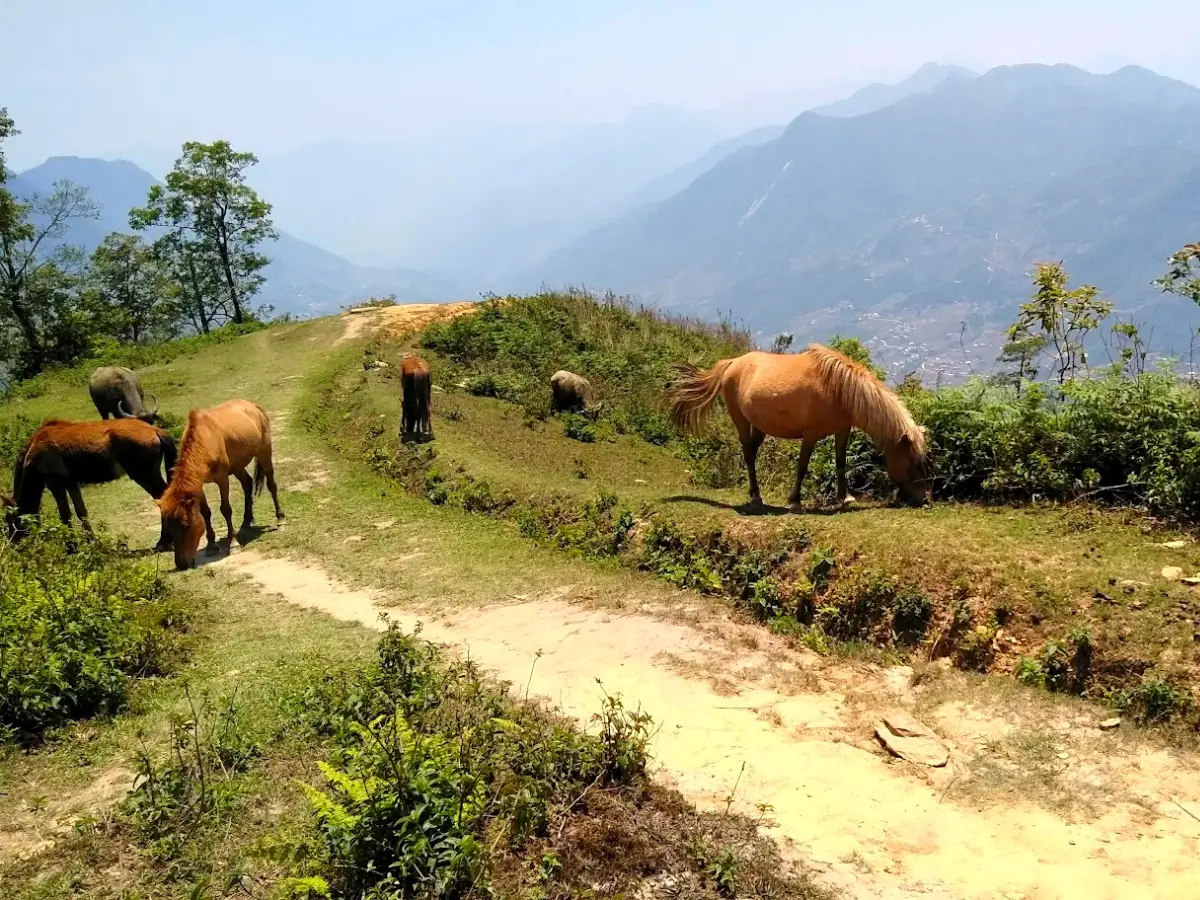 Local Favourite
Mountain Views and Villages Trek
Ridge and village trails with views across the valley, finishing in a village home.
 Most Popular
Rice Terraced Fields & Homestay
Two days through the Muong Hoa valley, with a night in a Black H’Mong home.
 Most Authentic
Experience The Real Sapa
Three days through remote villages, with two nights in local homes.
What a Local Guide Changes on a Walking Day
On a Sapa trek the question is not whether to have a guide but who the guide is. All of our tours are led by local guides, and several tour pages state that the guide is a licensed Black H’Mong guide. Under Article 58(3) of the Tourism Law, a person guiding tourists needs a tour guide card, and Article 65(2)(g) says guides must wear the card while working. A card tells you the person is registered; it does not tell you whether they grew up in the village you are walking through.
That second fact is what changes the day: a guide from the valley knows which family’s kitchen you will eat in and which path floods after rain. If a listing says only “local guide”, ask whether that person is employed by the operator or hired on the day. Our tipping guide covers what guides tell us about their pay.
Six Questions the Law Lets You Ask
Our package guide has five general questions to put to any operator. These six come from the Tourism Law (Law No. 09/2017/QH14) as we read it in English translation, and each one has an article behind it. Ask them in writing, by email or WhatsApp, and keep the replies.
Who exactly runs the tour?
Article 31 sets conditions for running international tours, and Article 33 puts the licence application with the national tourism authority. Ask for the company’s legal name, address and licence number rather than quoting the law at them.
Will I get a written contract?
Article 39(2) says travel contracts shall be made in writing. A confirmation email that lists dates, route, price and inclusions does the practical job; a verbal promise on a chat app does not.
Is insurance part of the tour?
Article 37(1)(dd) requires a travel business to buy insurance for tourists for the period of the tour programme, unless the tourist already holds a policy covering the whole tour. Ask what is covered and what is not, and keep your own travel insurance: our tour pages list personal travel insurance as not included.
Who is the guide, and do they hold a card?
See the section above. Ask for the guide’s first name and language, and whether they are employed by the company.
How many people, at most?
“Small group” has no legal meaning. Our tour pages state a maximum of 12 and say groups are usually 4 to 8 on most days; another operator may mean 8 or 25. Get the number.
What are the cancellation steps?
On our tour pages, a cancellation 7 or more days before the start gets a full refund, 2 to 6 days before gets 25 per cent back, and within 24 hours of the start there is no refund. Add the weather question: what happens if a typhoon or landslide cancels a day. Also ask for the exclusions; ours are personal travel insurance, extra drinks and snacks, tips and Hanoi–Sapa transport, and the Fansipan day lists the optional cable car return at 850,000 VND.
We read the Tourism Law in an English translation on a legal-information site and did not compare it with the Vietnamese original. We also saw reports that some licence procedures were changed by government resolutions in 2026, and could not confirm what changed. Treat the article numbers as pointers for your questions, not legal advice.
Where the Sapa Days Should Land in Your Trip
Season decides how the same walk looks. Our guides put the golden rice in September and October, the flooded, mirror-like terraces in May and June, and bare hillsides in winter; our Sapa timing guide and best-month guide cover the rest, and our Hanoi weather page gives the capital’s numbers. If your dates are fixed and the terraces matter, move Sapa to the part of the trip that suits the season and the rest of the route around it, not the other way round.
Two rules save most trips. Do not trek on the morning you arrive: after a night bus or the night train you are tired, so give Sapa a settling afternoon and book the walk for the next day. And do not end on the Sapa side of a tight connection: Sapa to Hanoi takes 5.5 to 6.5 hours by road, so an evening flight home needs a margin, and the last evening is best left free. Our scams guide lists 15 traps in Hanoi and Sapa that work best on tired travellers who have just arrived.
How to Book the Sapa Part With Us
If you build your own trip and want a guided Sapa section, the process is short. The steps are the same ones you should expect from any operator, so you can use them as a benchmark.
Pick the walk and the date
Use the table above or the tour list. Each page shows the itinerary, what is included and the price.
Message us your dates and group size
WhatsApp or email. We typically reply within 5 to 10 minutes on WhatsApp, according to our tour pages, and tell you what is open.
Confirm online
A booking is confirmed with a deposit paid online, by PayPal or OnePay, and you receive the details in writing. The refund steps above apply from that point.
Add the transfer if you want it
Our transport page sells the Hanoi–Sapa limousine van, sleeper bus and night train as a separate item, and the booking widget on each tour page can add it.
Meet your guide
We pick you up at your Sapa hotel, the church or our office at 105 Thach Son Street, at the time you chose.
Add a Guided Sapa Section to Any Northern Route
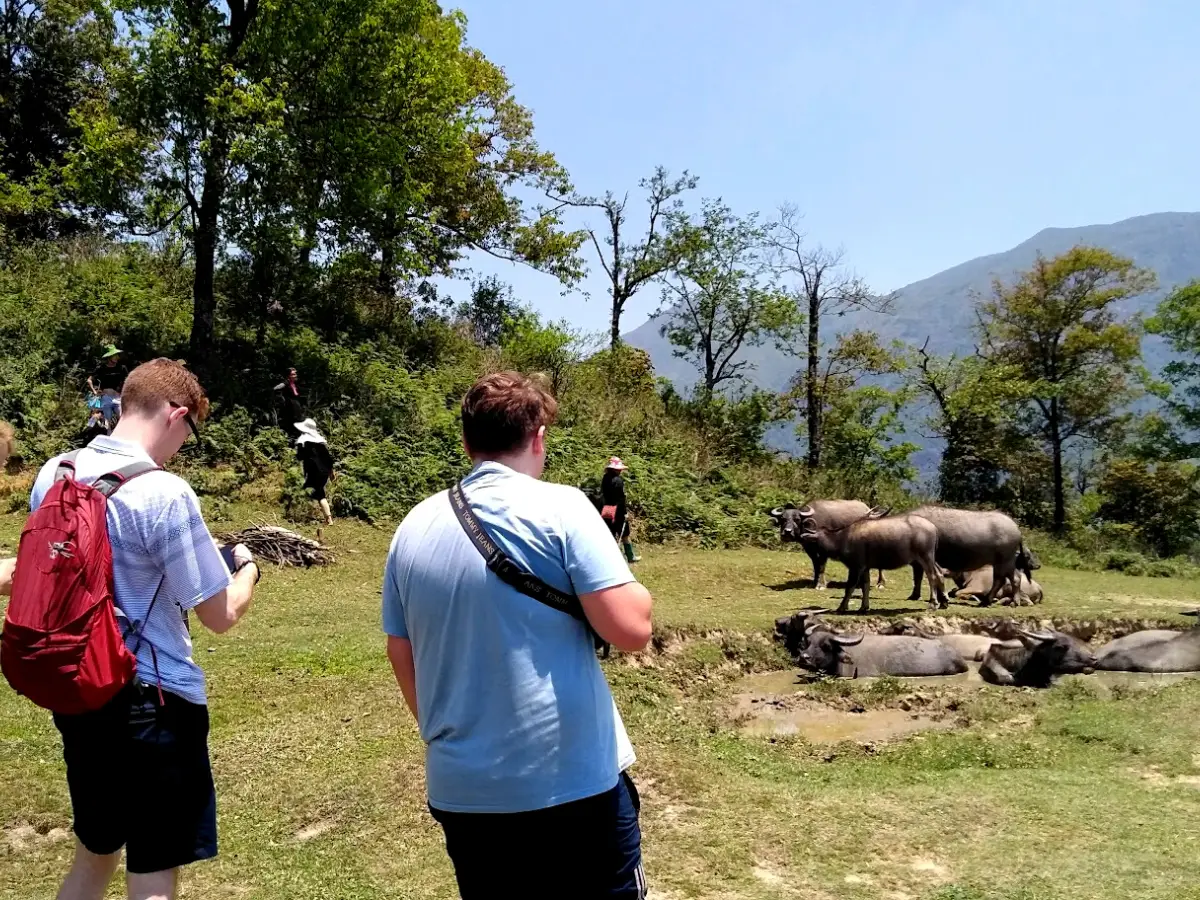 Best Seller
Trekking Through Rice Terraced Fields
The Muong Hoa valley floor with Black H’Mong and Red Dao villages, led by a local guide.
Most Popular
Rice Terraced Fields & Homestay
Two days through the Muong Hoa valley, with a night in a Black H’Mong home.

Mount Fansipan 2 Days Trek – Roof of Indochina
The classic two-day summit route: camp at 2,800 m and climb at dawn.
Rent at Our Office Before You Trek
 Gear Rental
Trekking Boots Rental
Waterproof ankle-support boots. Cleaned and checked before each rental. Available at 105 Thach Son Street.
 Gear Rental
Walking Poles Rental
Trekking poles available to rent at $2/day at our office, 105 Thach Son Street. Essential for descents.
Sources and How We Checked
Every figure above comes from a page we opened on 31 October 2026. Where we relied on a secondary source or could not check something, we say so.
- Search results for “vietnam tours”: a web-search tool on 31 October 2026, not a logged-in Google session. Results vary by country and by day.
- Tourism Law: Law No. 09/2017/QH14, English translation published by LuatVietnam. We read Articles 31, 33, 37, 39, 58 and 65 and did not compare them with the Vietnamese original. News and law-firm pages mention later changes to licence procedures in 2026 that we could not confirm.
- Our tour data: the product details on our own tour pages (duration, difficulty, maximum group of 12, included and not included, group-tour prices, cancellation steps), read on 31 October 2026. Prices and conditions can change, and the tour page governs. The worked-trip totals are our own arithmetic from those prices.
- Road, rail and flight times: our own Sapa transport guide, built from operator timetables (about 320 km, 5.5 to 6.5 hours by van or bus, about eight hours by night train plus an hour’s transfer); our Ninh Binh guide (95 km, about two hours); our Hue guide (1 hour 15 minutes by plane, 12.5 to 15 hours by train); and our 10-day itinerary (Da Nang flight about 1.5 hours). Operator and airline times vary with traffic and weather.
- Ha Long Bay figures: the Ha Long Bay Management Board’s distance (165 km) and one-night rule, as recorded in our Ha Long guide on 31 October 2026.
- Visa: the Immigration Department’s e-visa page and the exemption list, as summarised in our visa guide.
We could not verify what other operators charge or refund, whether every licence step in the 2017 law is unchanged today, or the group sizes in other operators’ listings. We have not tested any other operator, so this guide does not rank them.
Frequently Asked Questions
Start from your number of days. For 3 to 5 days, book your own route and buy guided days where a guide matters. For 7 days, a small-group cruise plus a guided Sapa walk works well. For 10 to 14 days across regions, a private or tailor-made plan is easier. Whatever you pick, get the price, dates and refund rule in writing.
Three days is the minimum to reach Sapa properly, five days adds Ninh Binh or Ha Long Bay, and seven days lets you do both a cruise and a three-day Sapa trek. Sapa is about 320 km from Hanoi, so allow 5.5 to 6.5 hours by road each way.
A group tour is cheaper and sociable, and our tour pages cap groups at 12. A private tour suits families, older walkers and anyone with a fixed pace or wish list. Read what each page says about price by party size before you decide.
On our tour pages the group-tour rate runs from $35 a person for a one-day walk to $160 for the four-day unlimited trek and $190 for the non-touristic four-day route, as read on 31 October 2026. Hanoi to Sapa transport is not included in any of them.
No. We sell Sapa treks, homestays, motorbike and car days and Hanoi to Sapa transfers only. For Ha Long Bay, Ninh Binh and the centre or south of Vietnam, buy from an operator that runs them, and use our guides to plan.
Under Article 39 of the 2017 Tourism Law, as we read it in English translation, travel contracts shall be made in writing, and Article 37 requires the operator to buy insurance for tourists for the tour period unless you already hold cover. Ask for the dates, route, price, inclusions, refund rule and group size in one email.
Most visitors do. You can skip it only if your passport is on an exemption list, such as the 45-day exemption for 12 countries. Everyone else needs an e-visa, valid for up to 90 days according to the Immigration Department, or another visa. Check dates against your flights.
Often, but it depends on guides and dates. Message us your dates and group size on WhatsApp and we typically reply within 5 to 10 minutes. Book earlier for the harvest weeks in September and October, and for the two-day and longer routes.