 Sinh Giang
In Sapa town the sun rises between 05:20 (around 7 June) and 06:47 (mid-January) and sets between 17:20 (around 28 November) and 18:53 (around 4 July). Clocks stay on Indochina Time, UTC+7, all year, because Vietnam has no daylight saving. A winter day gives you about 10 hours 46 minutes of sun, a midsummer day about 13 hours 30 minutes, and the earliest sunset of the year comes in late November, not at the winter solstice.
This guide is the clock and the light: a month-by-month table, where the numbers come from, what the mountains do to the real light, how the times fit the sea of clouds, and what they mean for a trek day. For where to stand, see our guide to the best spots for sunrise and sunset in Sapa. We checked what we could on 19 November 2026 and mark our own calculations.
Key Takeaways
- Sunrise runs from 05:20 in June to 06:47 in mid-January; sunset from 17:20 in late November to 18:53 in early July. Daylight swings from 10 h 46 min to 13 h 30 min.
- The earliest sunset (around 28 November) and the latest sunrise (around 15 January) both fall about three weeks away from the winter solstice, not on it.
- First light comes 22 to 25 minutes before sunrise, last light the same after sunset.
- Our own calculation says that from November to February the sun can drop behind the Fansipan range 50 to 60 minutes before the table’s sunset. It is geometry, not a measurement.
- A summit sunrise is not possible by cable car, which starts at 7:30 or 8:00 according to the operator page we found. Only the overnight trek, leaving camp at 04:30, gets you there.
Sapa Sunrise and Sunset Times by Month
Use the table for the 15th of each month and shift by about a minute a day towards the next row. Times are local (UTC+7) for Sa Pa town. “First light” and “last light” are civil twilight, explained below; they matter more than sunrise itself if you walk without a torch.
| Month | First light | Sunrise | Sunset | Last light | Daylight |
|---|---|---|---|---|---|
| January | 06:23 | 06:47 | 17:41 | 18:05 | 10 h 55 min |
| February | 06:13 | 06:36 | 18:01 | 18:24 | 11 h 25 min |
| March | 05:51 | 06:13 | 18:14 | 18:36 | 12 h 00 min |
| April | 05:22 | 05:45 | 18:25 | 18:47 | 12 h 40 min |
| May | 05:01 | 05:25 | 18:37 | 19:01 | 13 h 12 min |
| June | 04:55 | 05:20 | 18:50 | 19:15 | 13 h 30 min |
| July | 05:05 | 05:29 | 18:52 | 19:16 | 13 h 22 min |
| August | 05:19 | 05:42 | 18:37 | 19:00 | 12 h 55 min |
| September | 05:29 | 05:51 | 18:09 | 18:31 | 12 h 17 min |
| October | 05:38 | 06:01 | 17:40 | 18:03 | 11 h 39 min |
| November | 05:53 | 06:17 | 17:21 | 17:45 | 11 h 05 min |
| December | 06:12 | 06:36 | 17:23 | 17:47 | 10 h 47 min |
Three patterns stand out. Sunrise is within 15 minutes of 06:00 from mid-September to early November and again around the end of March, so a “six o’clock” plan works without arithmetic in those weeks. Sunset is before 17:45 from about 10 October to about 20 January, the stretch that surprises people who plan a long afternoon walk. And sunrise moves by only 87 minutes across the year, because Sapa sits at 22 degrees north, in the tropics.
Our places guide gives two rough ranges, 5:15 to 5:30 for June to August and 6:15 to 6:30 for October to December. The table agrees for summer; for autumn, 6:15 to 6:30 is really November, with early October near 06:00 and mid-December near 06:36.
Where the Times Come From, and How Far to Trust Them
We calculated every time ourselves with the standard NOAA solar equations for Sa Pa town (22.3364 N, 103.8438 E), then compared the results with public sunrise sites. They agree to within one to three minutes, which is the honest limit of the table: it is a calculation, not a record of what someone saw from the Muong Hoa Valley on a given morning.
We read these checks on 19 November 2026 through search results, because we could not open timeanddate.com. WhereAndWhen gives November averages of 06:17 and 17:22; our 15 November figures are 06:17 and 17:21. Alpenglow lists Lao Cai city for 15 December at 06:36 and 17:22, against our 06:36 and 17:23. Sunrise-sunset.org, for the village of Lao Chai below Sapa, gives the earliest sunrise of 2026 as 05:18 on 7 June, the earliest sunset as 17:20 on 27 November and the latest sunset as 18:54 on 4 July; we get 05:20, 17:20 on 28 November and 18:53. Sunrisesunset.io gives 05:21 and 17:21 for the first two. The sites differ by up to three minutes, the usual spread between rounding and refraction choices.
Why two sunrise sites differ by a minute or two
Sunrise is the moment the upper edge of the sun touches the horizon, with a standard correction (0.833 degrees, allowing for the sun’s radius and the bending of light by air). Sites round differently, and some include the height of the place. We used the common standard and found no page to cite for it, so it is our assumption.
Two assumptions sit inside every sunrise table, ours included. The horizon is flat and at sea level, which no valley in Sapa is. And the clock is UTC+7: Vietnam has one time zone and no daylight saving, as Wikipedia’s article on time in Vietnam states, though that page asks for more citations. The table cannot say when direct light reaches where you stand; the mountains section below tries.
How Much Daylight You Get in Each Month
Daylight ranges from 10 hours 46 minutes on 22 December to 13 hours 30 minutes on 21 June, a swing of 2 hours 44 minutes. The sunrise site for Lao Chai gives 13 h 32 min and 10 h 48 min for the same extremes. The bars use the 15th of each month.
From May to August you have at least 12 hours 55 minutes, room for a long trek. From November to January you have about 11 hours or less, and with the mountain effect described below the useful hours of direct sun can be closer to ten. That is a reason to be on the trail by nine in winter, not to avoid winter: the cable-car operator calls November to January the best months for the sea of clouds, as our sea of clouds guide notes. For temperature and rain see Sapa weather by month.
The Earliest and Latest Light of the Year
The earliest sunrise is around 7 June at 05:20, the latest around 15 January at 06:47; the earliest sunset is around 28 November at 17:20, the latest around 4 July at 18:53. None falls on a solstice, and the Lao Chai site agrees that the earliest sunset of 2026 is on 27 November.
The reason is the equation of time, the small gap between the real sun and an imaginary sun that moves evenly. The real sun runs ahead of the clock in early November and falls behind it in February, so in December sunsets already get later while sunrises keep getting later until mid-January. If you hate dark afternoons, the worst days are the last days of November; if you want the lightest mornings, choose mid-April to mid-August, when sunrise is before 05:45.
First Light and Last Light: What Twilight Adds
Civil twilight is the period when the centre of the sun is between the horizon and 6 degrees below it, bright enough to see a trail; in Sapa it adds 22 to 25 minutes before sunrise and the same after sunset, in every month. That is the definition in Wikipedia’s article on twilight.
Two cautions. It is a minimum for a clear sky: under thick cloud, or in a valley with a ridge to the west, useful light fades earlier. And it is not warm light: the best colour for photographs is usually the half hour after sunrise and before sunset, so the first-light column is about walking, not shooting (see our photography spots page).
As a rule for walkers, use a headlamp or a strong phone torch from the moment you leave until the first-light time, and again if you are still moving after the sunset time. In mid-November first light is 05:53, so a 05:15 departure is 38 minutes in the dark; in mid-June it is 04:55, so the same departure is already in the grey.
Does the Sun Really Set at 17:20? Mountains and the Real Light
No: from November to February the sun can drop behind the Hoang Lien Son range roughly 50 to 60 minutes before the table’s sunset time. This is our own geometry, not an observation. Wikipedia places Fansipan about 9 kilometres south-west of Sa Pa, at 3,143 metres, at 22.303 N, 103.775 E. From the town (22.336 N, 103.842 E) that is a bearing of about 242 degrees and 8 to 9 kilometres in a straight line. The town stands at about 1,500 to 1,600 metres, so the summit rises 1,550 to 1,650 metres above it, an angle of 10 to 12 degrees.

Now the sun. We computed its compass bearing at sunset on the 15th of each month: 250 degrees in November, 245 in December, 247 in January and 257 in February, all within 3 to 15 degrees of the Fansipan bearing of 242. In March it sets at 268, in September at 274 and in June at 296, more than 50 degrees away. So in winter the sun slides down the sky towards the highest ground in the range; in summer it goes down far to the north of it. In every month the sun is 10 degrees up about 47 to 53 minutes before sunset and 12 degrees up about 55 to 63 minutes before. If the skyline stands 10 to 12 degrees up, the town loses direct sun 50 to 60 minutes before the table time. On 15 November that is between 16:20 and 16:30, not 17:21.
How far should you trust that? It is a reason to plan, not a measured fact. The skyline can be lower than the summit where a nearer ridge or a saddle sits in the line of sight, and the range is a wall, not a point, so a bearing a few degrees off Fansipan still looks at high ground. For the summer months we make no claim. A viewpoint higher than the town, such as Ham Rong, should keep the sun longer, and the valley floor loses it sooner. For an evening plan between November and February, treat the table’s sunset as the end of the glow and 16:30 to 17:00 as the end of the direct sun.
The morning has its own version: the table assumes a flat eastern horizon, but on a valley floor a ridge to the east holds back the first direct sun. We cannot give a number for a particular terrace; look at the ridge line the day before.
A Sunrise Morning, Minute by Minute
Work backwards from sunrise: be in place 30 to 40 minutes before it, the rule in our places guide, then add walking time. The example is 15 November, sunrise 06:17, first light 05:53.
- 04:50 · Wake upDress in layers: our places guide puts pre-dawn temperatures at altitude as low as 12 °C even in summer. Headlamp on, poles if the path is steep, a hot drink.
- 05:15 · Leave the hotel38 minutes before first light, so you walk by torch. Allow for your viewpoint: the places guide says the Lao Chai ridge approach is an 8-kilometre walk from town, which is why it leaves at 04:30 in summer.
- 05:37 · In place40 minutes before sunrise: find your footing, check the cloud, set up the camera.
- 05:53 · First lightThe sky turns pale and you can see the path without the torch.
- 06:17 · SunriseThe sun clears a flat horizon. On the valley floor the first direct sun comes later, once it clears the ridge to the east.
- 06:20 to 07:00 · The soft hourLow sun on the terraces and the mist. The places guide notes that the mist burns off by about 7am.
- 07:30 · BreakfastWalk back down warm and hungry; the day is still ahead of you.
To move the plan to another month, shift every time by the difference in sunrise. In mid-June sunrise is 57 minutes earlier, so you leave at about 04:15; in mid-January it is 30 minutes later, so you can sleep until 05:20.
Overnight Treks for the Morning Light
 Homestay
Rice Terraced Fields & Homestay
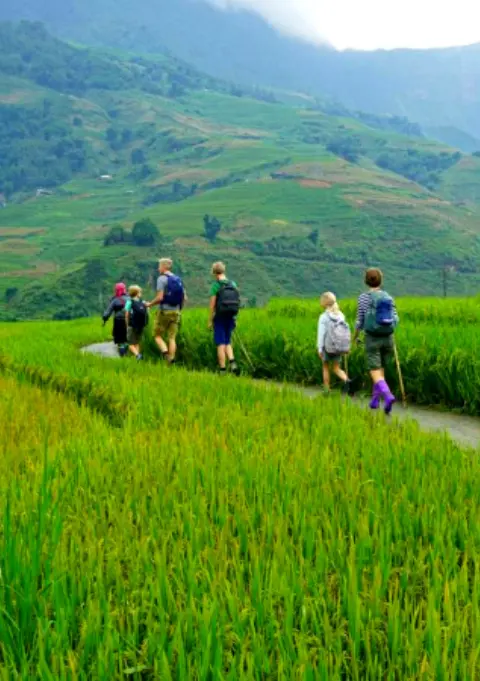
A night in Ta Van, so the first light of day two is on the terraces outside your door.
 2D1N Trek
Mountain Views & Muong Hoa Valley Trek
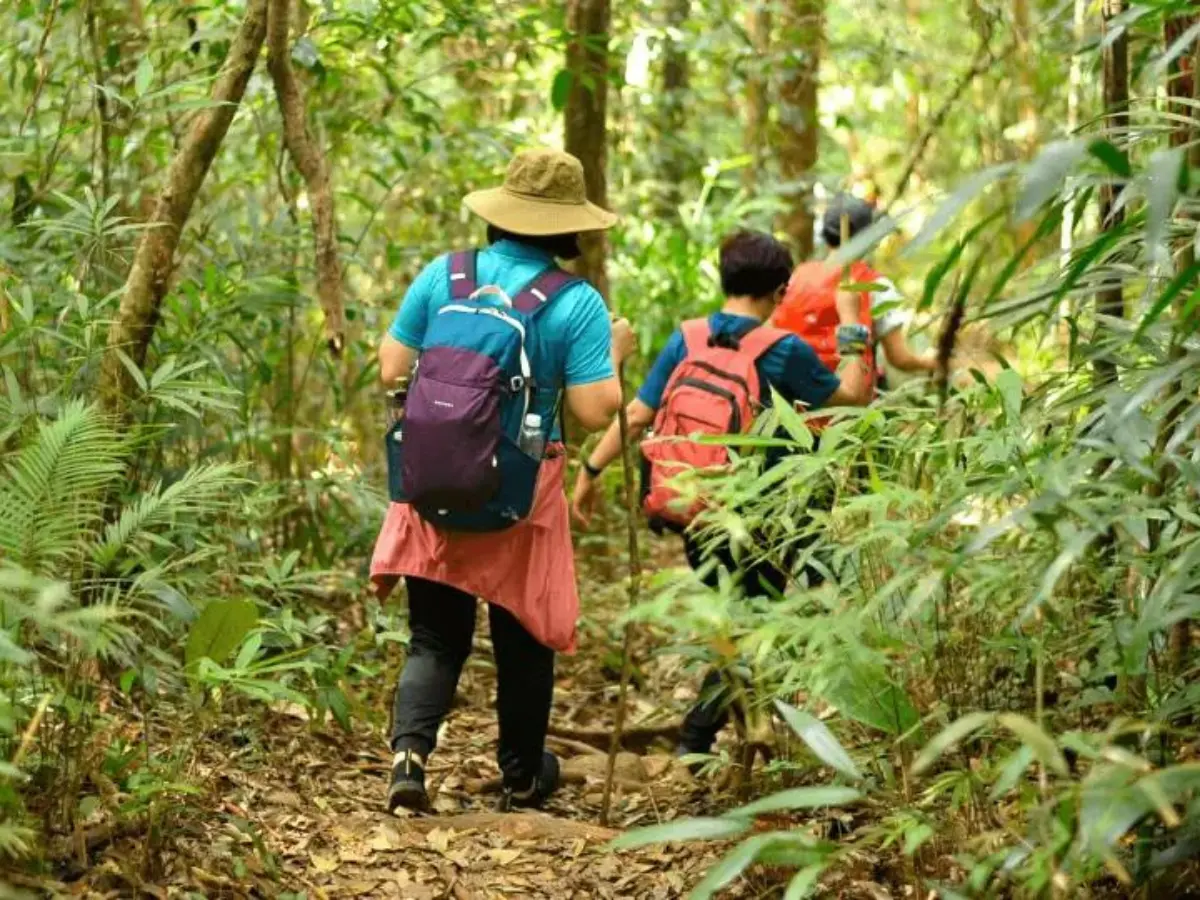
Mountain views on day one and a homestay night in Hau Thao, with the morning to follow.
 Summit at Dawn
Mount Fansipan 2 Days Trek – Roof of Indochina
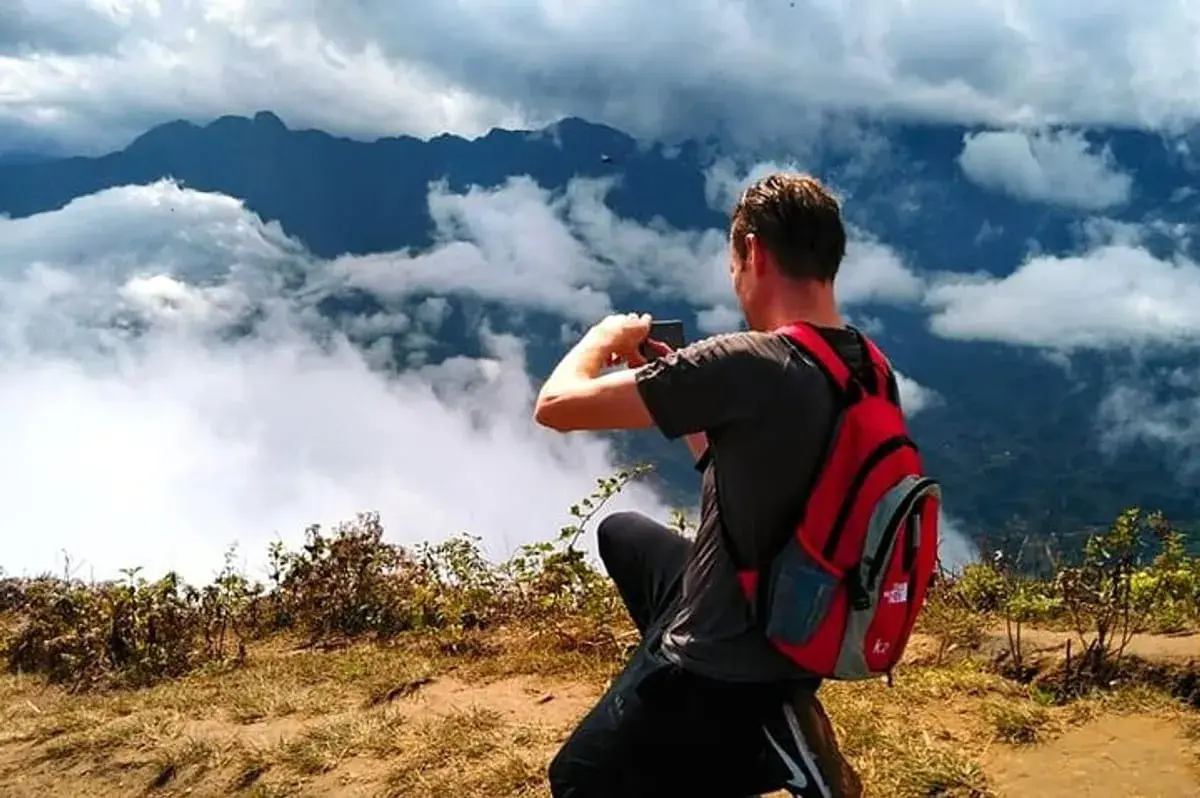
Camp at about 2,800 m and leave at 04:30 with headlamps to reach the summit around sunrise.
Sunrise and the Sea of Clouds: How the Clock Fits
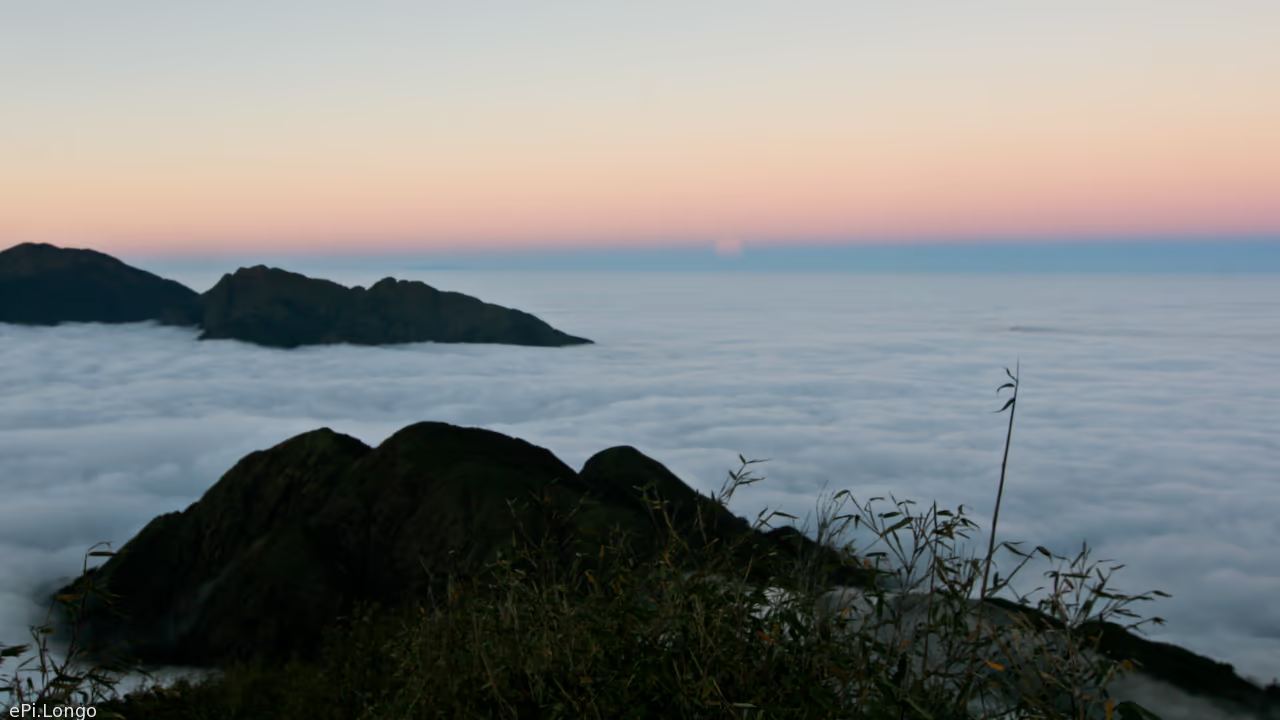
The sea of clouds is a dawn event, and the table shows when dawn is: first light at 06:12 to 06:23 in winter, 04:55 to 05:05 in summer. Radiation fog forms on clear, calm nights and usually thins soon after sunrise as the ground warms, as our sea of clouds guide explains. The Fansipan cable-car operator advises riding up between about 8:30 and 11:00, with 8:00 to 10:00 giving good light, and names November to January as the best months.
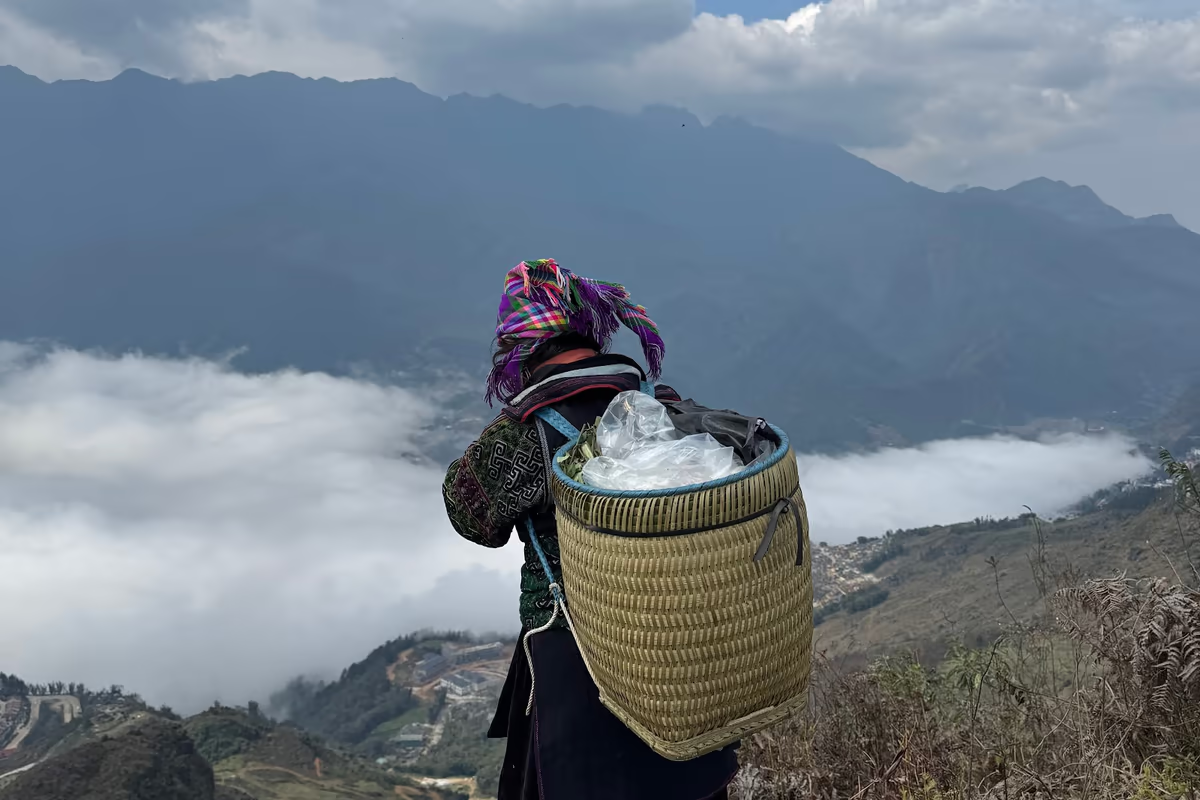
Set the two side by side. The first cable-car ride is at 7:30 on Saturday and Sunday and 8:00 from Monday to Friday, according to an operator page labelled 2025, so check current hours. On a weekday in mid-December, with sunrise at 06:36, the first ride is about 1 hour 25 minutes after sunrise; in mid-January the gap is 1 hour 13 minutes; in mid-June, with sunrise at 05:20, it is 2 hours 40 minutes. Winter leaves more of the cloud morning for the first ride: our reading of two sets of numbers, not an operator figure.
It also settles a common question: can you watch the sunrise from the summit by cable car? No, because the car does not start before the sun is up in any month. The only way is the overnight trek. Our 2-day Fansipan trek camps at about 2,800 metres, leaves camp at 04:30 with headlamps, and most groups reach the top between 06:00 and 07:00. In mid-November, with sunrise at 06:17, that fits. In mid-June, with sunrise at 05:20, a group arriving at 06:00 sees the sun already up, and the sunrise itself falls on the final climb. See also our Fansipan guide, the cable car page and the altitude guide.
What the Light Means for a Trek Day
The light sets your start and finish: in winter, be walking by 09:00 and off the trail by about 16:00; in summer you have until about 18:00 with room to spare. Our day treks follow that: the 12-kilometre Mountain Views and Villages Trek starts at 09:00 and reaches the 1,900-metre Sa Seng summit at about 10:15, and the 13-kilometre Trekking Through Rice Terraced Fields meets at 09:00 too. Both finish in the afternoon, well inside the November sunset of 17:21.
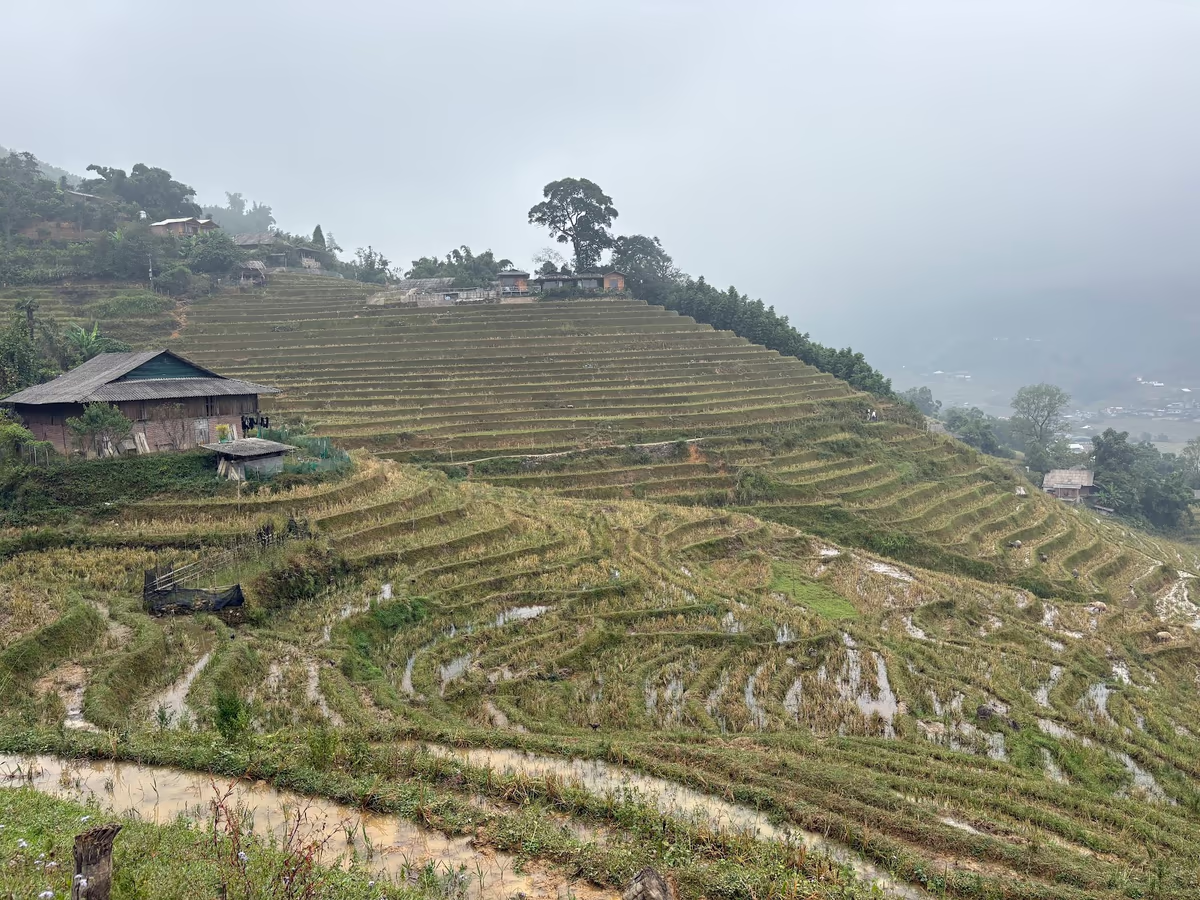
On the overnight trips, our Rice Terraced Fields and Homestay tour picks up at 8:00 and the Mountain Views and Muong Hoa Valley Trek at 9:00; both return at about 15:00 on day two, according to their tour pages. In November the sun is gone by 17:21, so dinner falls after dark and the best light of the stay is the next morning. The Fansipan trek is the one to read the table for: on day one the group reaches the high camp between 15:00 and 16:30, which in mid-November leaves 50 minutes to about two and a half hours before sunset, and the tour page says temperatures there drop sharply after sunset.
Rules we use for light and walking
From November to February, finish walking by 16:00, the table’s sunset minus 80 to 100 minutes, which allows for the mountain shadow. From March to October, aim to be done an hour before sunset. If you are still on the trail at last light, you are walking in the dark: carry a headlamp even on a day walk, because a phone torch is not enough on a steep, wet descent. Our packing list has the rest, and our safety guide covers what to do when the light is going.
Day Treks That Start at 9:00
Where to Watch: Pointers to the Viewpoints
Height and direction decide when the sun appears, so the viewpoint sets your real time. We give pointers and leave the detail to the places guide. Ham Rong is the town viewpoint. The Lao Chai ridge above the Muong Hoa Valley is the terrace sunrise and needs the early start described in the places guide. The O Quy Ho (Tram Ton) Pass is the road viewpoint, and our cloud guide says to leave before dark because cold fog thickens after sunset.
Two rules fit all of them. Arrive 30 to 40 minutes before sunrise, and for sunset about 30 minutes before the table time in summer and about an hour before it in winter. And check the sky the evening before: a clear, calm night sets up a coloured sunrise and a cloud sea. Our places guide has the rest, and the stargazing guide covers what comes after last light.
What we could not verify: we could not open timeanddate.com, the best independent check of the table; no source gives the skyline angle of the range from Sapa town, so the shadow estimate is ours; the 0.833-degree convention has no page we can cite; and we found no log of real winter sunsets on the town side. If you have timed one, tell us.
The Part We Do Sell
- Hanoi to Sapa transport — sleeper buses, limousines and the overnight train, bookable with your trek
- Hanoi to Sapa guide — what each option costs and how long it takes
- How to get to Sapa — the first leg, in detail
For the wider trip, see Sapa weather by month, the best time to visit Sapa, Sapa in November and the rice harvest season.
Rent at Our Office Before You Trek
 Gear Rental
Trekking Boots Rental
Waterproof ankle-support boots. Cleaned and checked before each rental. Available at 105 Thach Son Street.
 Gear Rental
Walking Poles Rental
Trekking poles available to rent at $2/day at our office, 105 Thach Son Street. Essential for descents.
Frequently Asked Questions
Sunrise in Sapa town is between 05:20 (around 7 June) and 06:47 (around 15 January), in Indochina Time, UTC+7. It is about 05:20 to 05:45 from mid-April to mid-August and 06:10 to 06:47 from November to February.
Sunset in Sapa town is between 17:20 (around 28 November) and 18:53 (around 4 July): 17:41 in mid-January, 18:14 in mid-March, 18:50 in mid-June and 17:21 in mid-November. In winter the sun can go behind the mountains 50 to 60 minutes earlier, by our calculation.
Around 28 November at 17:20 by our calculation; sunrise-sunset.org lists 27 November for nearby Lao Chai. It falls about three weeks before the winter solstice because the sun's timing drifts through the year.
No. Vietnam uses one time zone, Indochina Time (UTC+7), all year, so the clock in Sapa never changes.
About 10 hours 46 minutes at the winter solstice (22 December) and 13 hours 30 minutes at the summer solstice (21 June). First light comes 22 to 25 minutes before sunrise.
Be in place 30 to 40 minutes before sunrise and add your walking time: around 05:37 for a mid-November sunrise at 06:17, around 04:40 for a mid-June sunrise at 05:20. The Lao Chai ridge is an 8-kilometre walk from town, so in summer you leave at about 04:30.
No. The operator page we found lists the first ride at 7:30 on weekends and 8:00 on weekdays, after sunrise in every month, so check current hours. A summit sunrise needs the 2-day trek, which leaves camp at 04:30 and reaches the top between 06:00 and 07:00 for most groups.
Not quite. From November to January sunset is 17:21 to 17:41 and last light 17:45 to 18:05, but the mountains can take the direct sun 50 to 60 minutes earlier by our calculation. Finish walking by 16:00 and carry a headlamp.