 Sinh Giang
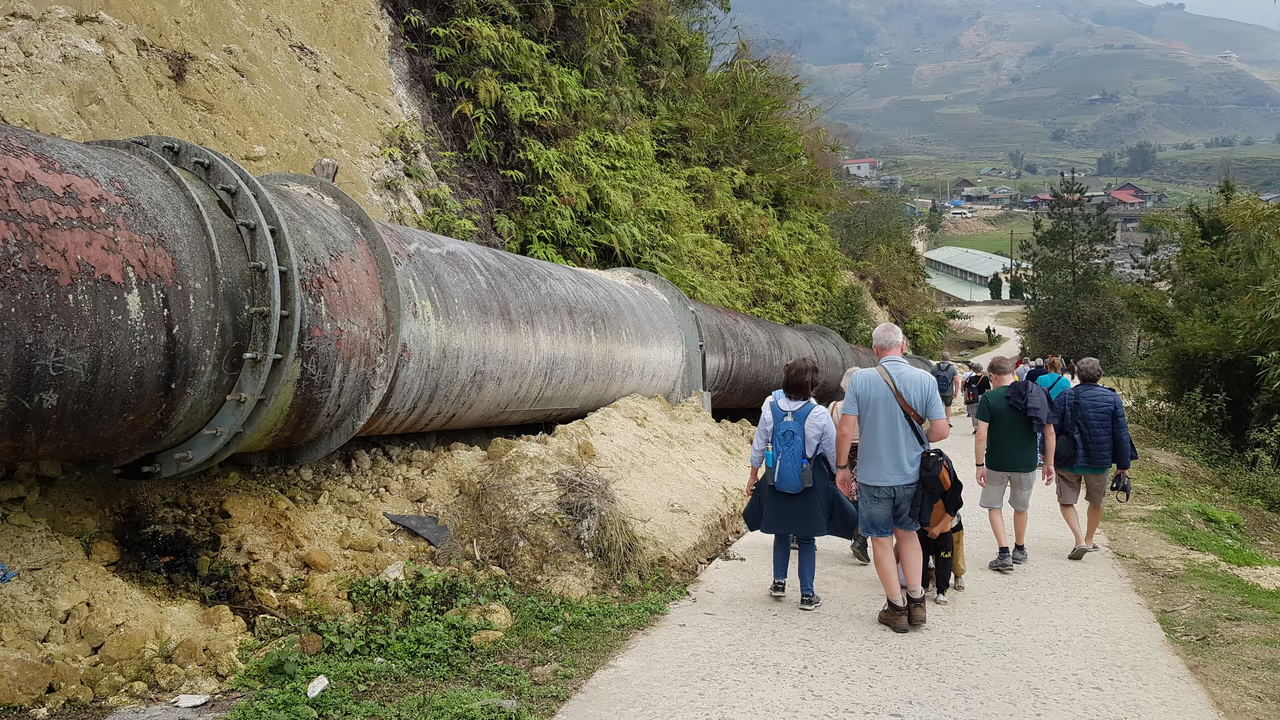
Sapa suits seniors who can walk on flat ground for a few hours with rests, and it asks less of the body than its trekking reputation suggests. The town sits at about 1,500 to 1,600 m, below the roughly 2,450 m at which the US CDC says altitude sickness becomes a real risk for people who sleep high. The hard parts are quieter: slopes and steps in town, wet clay on the paths, cold mornings and a six-hour road from Hanoi. Our gentlest tour is about 8 km (5 miles) with roughly 4 hours of walking and a long lunch, from $45 a person.
We are a Sapa trekking company, so we have a stake in what you book. The facts below come from pages we opened and dated, and our own judgement is labelled as such. This guide is for travellers over 60 and for the sons and daughters who plan for them. It is not medical advice: if you have a heart or lung condition, knee or hip trouble, balance problems or regular medication, ask your own doctor first. Facts checked 19 November 2026.
Key Takeaways
- Sapa town is about 1,500–1,600 m, below the level where the CDC says altitude sickness starts. Fansipan (3,143 m) is the exception.
- Our Easy tour is about 8 km and 4 hours of walking on a flat to gently rolling valley path, with lunch and a ride back; the group price is $45.
- For less walking, a private car tour visits seven villages with short walks, and the town itself makes a gentle day.
- The real hazards for older legs are wet clay, uneven steps and climbs back to town, not thin air.
- Care in Sapa is basic: one public district hospital, Lao Cai an hour away. Insurance with evacuation matters.
Is Sapa Good for Seniors?
Yes, if you choose the day for your legs and not for the postcard. The question is how long you can walk and how steady your footing is, not how old you are. A fit 75-year-old in good shoes can enjoy a day that is wrong for a 55-year-old with a bad knee, which is why our Easy tour page says the pace is set by the slowest person.
You can…
- Walk on flat or gently rolling ground for two hours, with a sit-down between
- Step down a stone stair or low earth step, holding a pole or a rail
- Cope with a cool, misty morning in a warm layer
- Sit in a van for five to six hours on the way up from Hanoi
- Tell the guide when you want to stop
Talk to your doctor or to us if…
- You have a heart or lung condition, or past altitude trouble
- You have had surgery or a hospital stay in recent months
- You get dizzy, lose balance or fall easily
- A knee or hip hurts on stairs or downhill
- You need a toilet at short notice
What Sapa Asks of Your Legs
Sapa asks for steady feet, not strong lungs. Four things decide how a day feels: the slope of the town, the steps, the state of the ground and the temperature.
Slopes and steps in town
Sapa town is small but built on a slope. Our getting-around guide says several streets around the market and the church are too steep or narrow for a car, and that Grab cars can be hard to find in rain. Metered taxis start at about 11,000 VND plus 13,000–15,000 VND per kilometre.
Two short outings show the difference between a walk and a climb. At Ham Rong the path is stone stairs from the market square behind the stone church up to a garden about 200 m above the rooftops; our Ham Rong guide warns the steps are uneven, handrails are limited and the stones get slick after rain. At Cat Cat the walk down is easy, but our Cat Cat guide measures the way back at roughly 150–200 m of climb over two kilometres, with taxis waiting at the lower gate all day. Take the taxi one way. It is the same logic as the car at the end of our Easy tour.
The valley is below the town
The villages on a valley walk lie in the Muong Hoa Valley, below the town. We have no surveyed elevation for Lao Chai, Ta Van or Y Linh Ho, so we cannot give you a gradient in metres. Any route to the valley floor goes down first and up later, so ask where the climb is and whether a vehicle collects you. The Easy tour page says transport brings you back, so the climb out is done by engine.
Wet clay and paddy edges
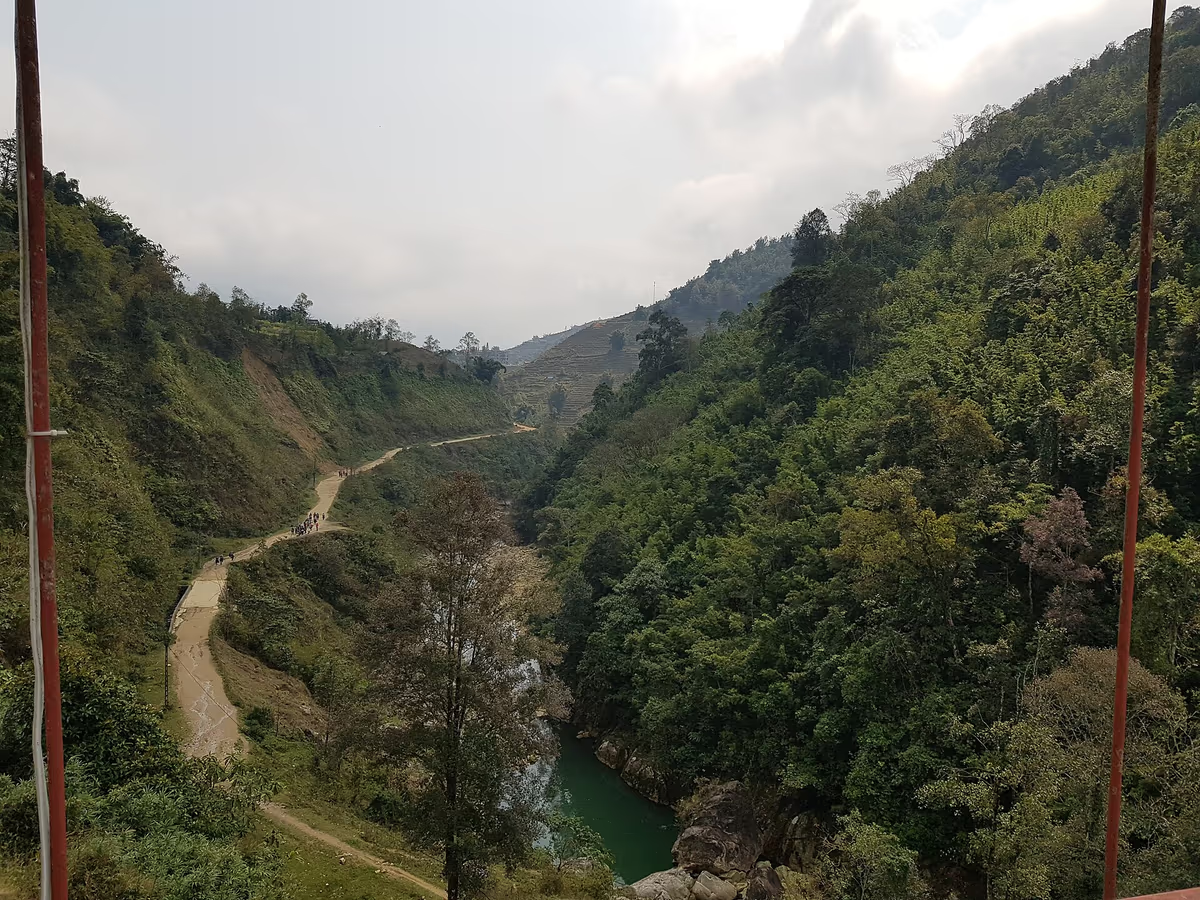
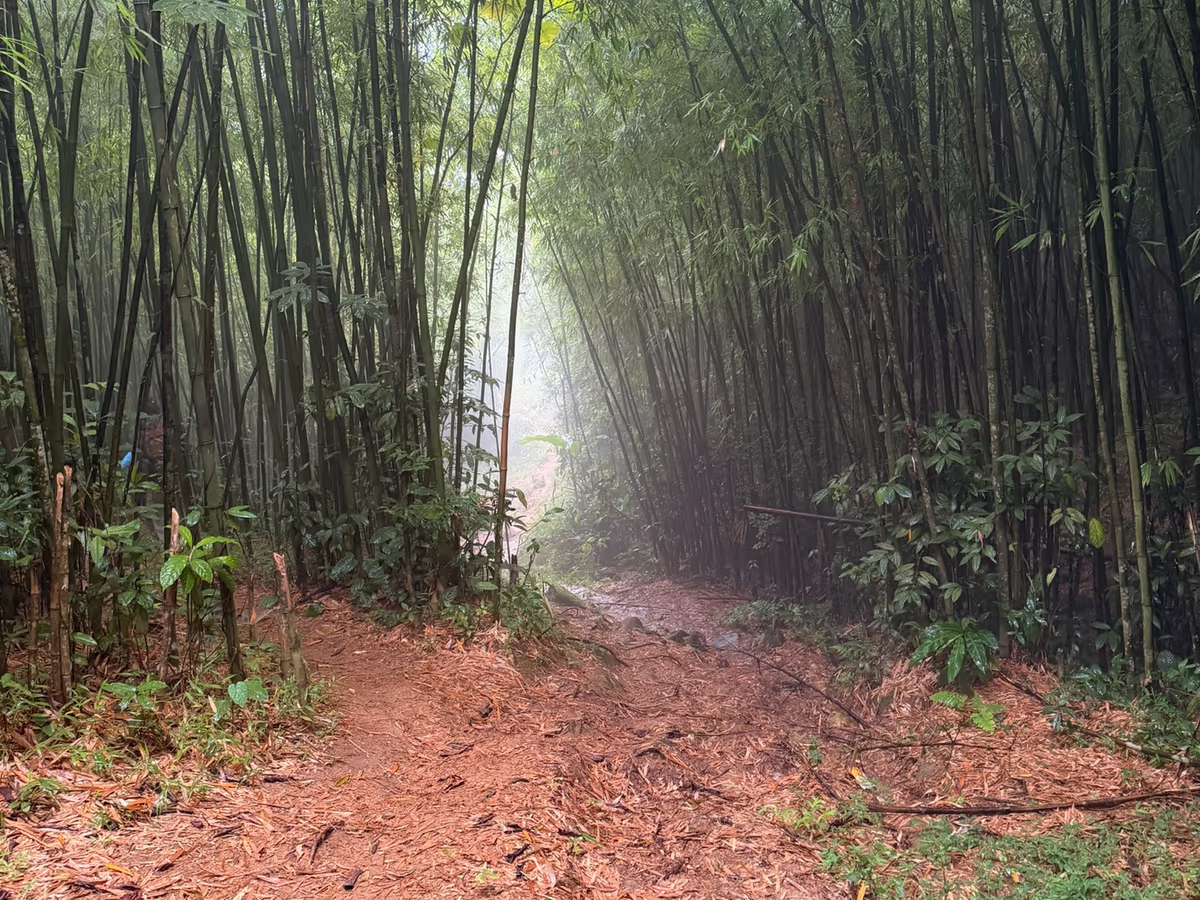
Our safety guide calls slippery mud the number one cause of trips and falls in Sapa. The clay of the Muong Hoa Valley turns slick after rain, and the bunds between terraces near Lao Chai and Ta Van are a few centimetres wide with a drop into the paddy. Falls are mostly low-consequence, but a twisted ankle can cost an older traveller more of the trip. The fixes are grippy shoes, poles and a guide who picks the drier line.
Cold, mist and the month
Our weather guide gives Sapa town 9–15°C in January and 20–27°C in June and July, the wettest stretch. For older walkers our own judgement, not a sourced rule, is September to November or March to May: autumn is dry and clear, spring mild. Winter is cold and misty, and the Easy tour page says to bring a winter layer from October to March.
The Easy Day, Hour by Hour
The Easy day is about 8 km and 4 hours of walking inside a day that runs from 9:30 AM to about 3:00–3:30 PM. This is the day as the tour page lays it out, with our notes on what each stop asks of you.
- 09:30 AM — PickupYour hotel in Sapa town or our office, 105 Thach Son Street. Mention a knee or a pole now.
- 10:00 AM — Y Linh HoThe rice-terrace viewpoint, along the valley path.
- 11:00 AM — The bridgeA steel bridge about 50 m high over the Muong Hoa stream. The page says you walk down and cross it, so expect a slope. Tell the guide beforehand if heights bother you.
- 12:00 PM — LunchA H’mong family restaurant in Lao Chai. Included, and the longest sit-down of the day.
- 01:00 PM — Lao ChaiA stroll through a Black H’mong village on a flat, well-kept trail.
- 02:00 PM — Ta VanThe Giay village, 30–40 minutes, then a rest before the transport arrives.
- 02:30–03:00 PM — BackTransport to your hotel or the office. No climb back on foot.
The walking comes in two blocks with a long sit between, the afternoon is a stroll, and a vehicle takes you home. What the page does not promise is a flat sheet of tarmac: it says “flat to gently rolling” and we have not measured the gradient. Message us on WhatsApp before you book and say what you can and cannot do.
Price, group size and a private day
The group price is a flat $45 per person for any size up to 12, usually 4–8 people, and a solo traveller pays the same. Our Easy tour page lists what is included.
With three or more people, do the sum. The page prices a private tour at $60 for one, $95 for two, $124 for three and $152 for four, against $45 each in a group: $15 more for one, $5 more for two, and $11 and $28 less in total for three and four. Grandchildren can come too: the minimum age is 6, travellers aged 12 and over join group departures, and children aged 6 to 11 come on a Private Tour at $20 each. Our family guide has the rules for every tour.
Two Tours Built for a Slower Day
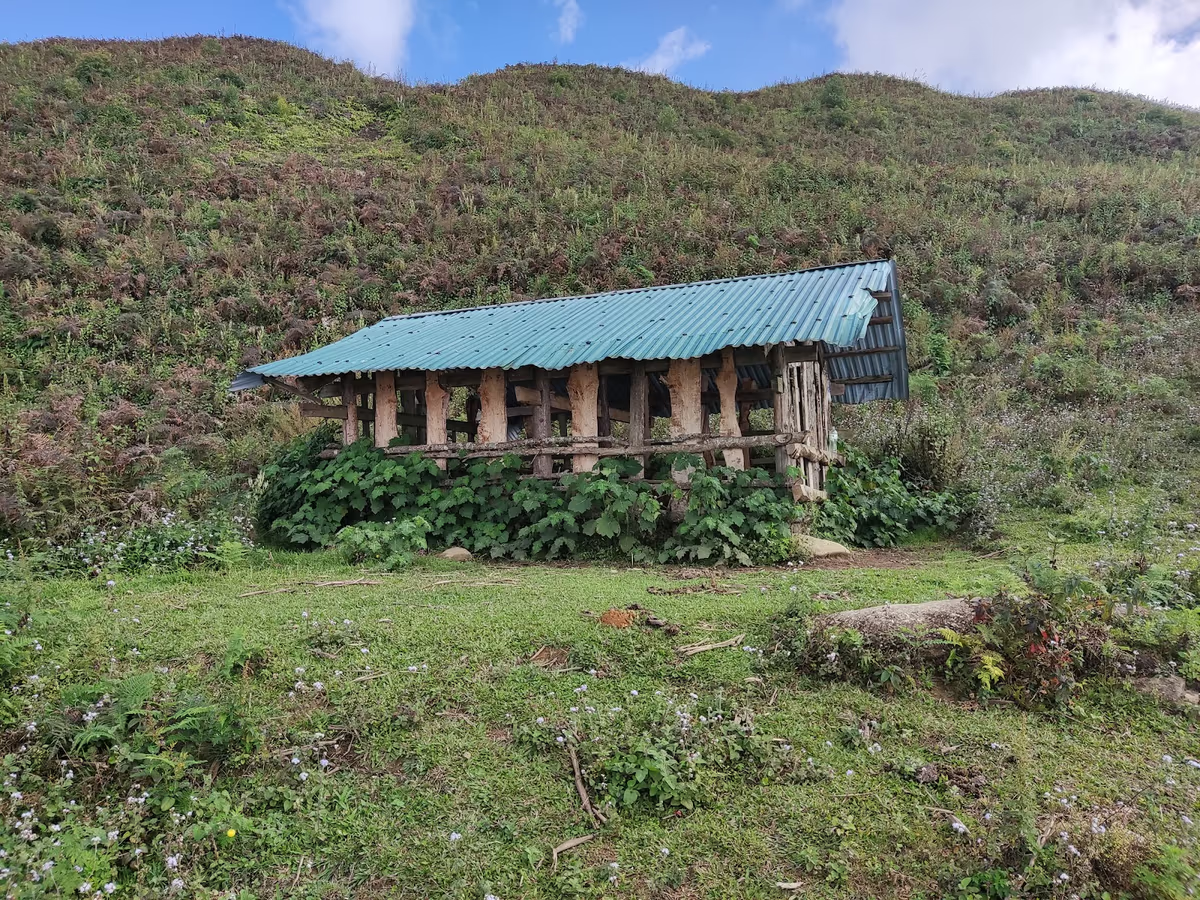
 1-Day Trek
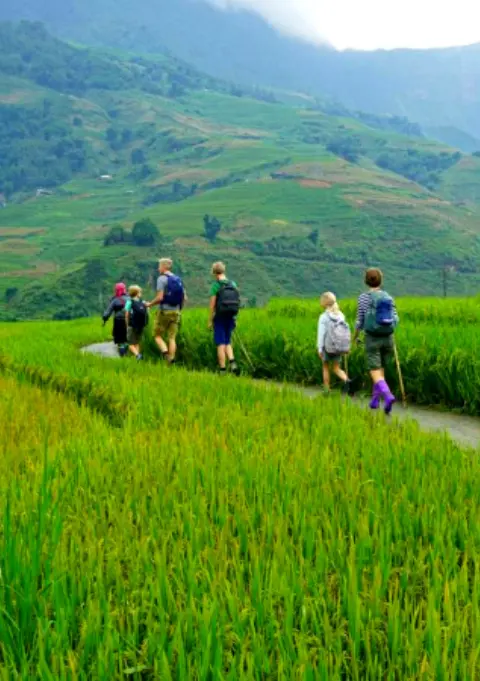
Sapa Easy Trekking For Seniors
About 8 km and 4 hours of walking: Y Linh Ho viewpoint, a steel bridge, lunch in Lao Chai and Ta Van. Pace set by the slowest person.
 By Car
Sapa Private Car Tour
Seven villages by private car with a local guide, short walks only. Lunch with a family in Su Pan.
Gentler Options and Longer Days
If the Easy tour sounds like too much, Sapa has gentler days; if too little, longer ones that are still not mountaineering. Prices are per person, checked 19 November 2026.
| Option | Walking | Price | Watch for |
|---|---|---|---|
| A day in Sapa town | As little as you like | Free; taxis from about 11,000 VND | Steep streets, uneven stairs at Ham Rong, the climb back from Cat Cat |
| Sapa Private Car Tour | Short village walks; the page says no long hikes, no steep paths | Group $78 each (2–12); private $95 for one | A long day in a car; no child seats |
| Sapa Easy Trekking For Seniors | About 8 km, 4 hours, flat to gently rolling | $45 each in a group; private from $60 | A walk down to the bridge; slick clay after rain |
| Waterfalls and Traditional Villages | About 10 km over 5 hours, with a car between stops | $45 each in a group; private from $75 | The forest trail to Love Waterfall can be slippery |
| Rice Paddies and Cultures — Easy Hiking | About 14 km, 6 hours, rated Easy–Moderate | $35 each in a group; private from $50 | A long day for older legs |
| Fansipan cable car | About 600 steps at the top, or a short funicular | About 800,000 VND (about $33) round trip | 3,143 m is a different altitude question |
Read it as a ladder: the car tour moves the effort from your legs to your seat, the Easy tour is the middle rung, and the waterfall and paddy tours suit older people who walk daily at home. Our difficulty guide rates every route.
The cable car deserves a warning. It lifts visitors who could never make the climb on foot to the complex below the summit, and our cable-car guide gives prices and options. But the summit is 3,143 m, above every threshold in the sources our altitude guide reads. A day visit rarely causes trouble; with a heart or lung condition, ask your doctor first.
When You Walk Every Day at Home
 1-Day Trek
Waterfalls and Traditional Villages
Love Waterfall, Silver Waterfall and the Black H'mong village of Sin Chai, with a private car between stops.
 1-Day Trek
Rice Paddies and Cultures — Easy Hiking
About 14 km through Ma Tra and Ta Phin on flat to gently rolling paddy paths, with lunch and a cave stop.
Poles, Shoes and Pace
Poles and shoes are the cheapest things you can change, and pace costs nothing. Decide on the poles before the first slope, not after it.
Harvard Health notes that going downhill puts compressive forces on the knees three or four times higher than level walking, and that hikers probably benefit from poles. It also says the studies are split on whether poles do much for the knee, and that several small studies of questionable quality found they raise the heart’s workload on a brisk walk. So we do not promise poles will spare your knees. We recommend them on Sapa’s clay for balance: a third and fourth point of contact helps when the path is wet. They can be rented at our office; one tour page lists $2 per pole per day, rented as a pair, and the Easy tour page says to add them when you book.
Our packing guide says flat, comfortable shoes are fine on gentle paths, and the Easy tour page lists a waterproof jacket, sunscreen, repellent, cash in dong and a light backpack. The clay is the reason to choose a patterned sole. Ankle-support boots can be rented at our office from $2 a day. The tour includes a small water bottle each; bring more if you drink a lot.
- Walk at the speed at which you can still talk. This is our own rule of thumb, not a sourced limit.
- Stop before you are tired.
- Say so early. A guide who knows at 10:00 that your left knee hurts downhill will choose a different line at 11:00.
Altitude, Medicines, Insurance and Hospitals
The medical questions for Sapa are ordinary ones: altitude, medicines, insurance and where help is.
Altitude. Our altitude guide finds Sapa town below every threshold in the medical sources it reads, with a small margin for unusually sensitive people. Fansipan is the exception. If you have a heart or lung condition or past altitude sickness, ask your doctor. The CDC Yellow Book’s chronic-illness chapter also tells travellers with heart conditions such as cardiac surgery or acute heart failure to get specific clearance from their cardiologist.
Medicines. The same chapter advises packing enough medicine for the whole journey and several days afterwards in case of delays, keeping it in your carry-on in its original containers, and carrying your medical information with it. We would add copies of your prescriptions.
Insurance. We do not sell or recommend a policy. The UK Foreign Office’s Vietnam health page says to have insurance for local treatment or unexpected medical evacuation that covers existing health conditions and an air ambulance, and that medical bills can be expensive. For a senior the key word is existing: check that a pre-existing condition is covered. Our insurance guide lists seven things to check, including the altitude limit.
Hospitals. Vietnam’s national tourism portal, on a page dated 29 October 2026, says Sapa has only a public district hospital with little English spoken, fine for first aid and minor injuries. For anything serious, the provincial hospitals in Lao Cai are about an hour away and the international hospitals of Hanoi five to six hours. The ambulance number is 115. It lists Sapa General Hospital on Dien Bien Phu street but could not confirm 24/7 emergency opening, so call to check.
Can I walk four hours on mixed ground with rests? Is 1,500 m a problem for my heart or lungs? Do my medicines change in cold weather? Am I at risk of falling, and would a pole help? Write the answers down and bring them to Sapa.
The Long Leg From Hanoi
Sapa has no airport. It is about 320 km north-west of Hanoi and 5–6 hours on the expressway, according to our how-to-get-to-sapa guide. For an older traveller the journey can be the hardest part, so plan it with care. The figures are typical 2026 ranges from that guide; live prices are on our transport page.
- Limousine van by day: 5.5–6.5 hours, from about $18, door to door in a van with wide reclining seats and a rest stop.
- Sleeper bus overnight: 6–7 hours, from about $17, lie-flat berths on a swaying mountain road. In our view it is the least gentle choice for stiff joints.
- Night train plus transfer: about 8 hours, from about $45, then about an hour by road up from Lao Cai. The guide calls it the gentlest ride for people who get carsick.
- Private car: 5–6 hours, about $230 a car, the most comfortable and best shared.
Our advice, which is judgement and not a source: take the daytime van or a private car if you can, and do not start the Easy tour the morning you arrive. The guide says to build a few hours of buffer into arrival day.
Book the Long Leg Before You Book the Walk
- Hanoi to Sapa transport — limousine vans, sleeper buses, the overnight train and private cars, bookable with your tour
- How to get to Sapa — every option compared by time, price and comfort
- Hanoi to Sapa timetable — departure times and the return journey
What to Ask Before You Book
The same questions work for any operator, ours included. A good answer is specific; a poor one is “no problem”. Our answers for the Easy tour come from its page, read 19 November 2026.
- How many people are in the group? Up to 12, usually 4–8, or a private day.
- Who sets the pace? The slowest person; the guide checks mobility and pace at the start.
- How far, and how long on foot? About 8 km and 4 hours, back around 3:00–3:30 PM.
- Where is the climb, and how do I get back? Ask for the slope. On the Easy tour, transport brings you back.
- Where are the toilets? Not on the page, so ask when you book.
- What if it rains? Ask how the route changes.
- Where do you collect and drop me? Your hotel in Sapa town or our office; drop-off at the hotel, the office or the stone church.
- What is in the price? Guide, lunch, small water bottle and return transport; insurance, extras, tips and the Hanoi leg are not.
- What is the refund policy? Read the cancellation policy on the tour page before you pay.
Then tell the operator the knee, the medicines and the walking you do at home. We would rather say “this day is not right for you” than take a deposit for a day that ends in the car.
Who Should Skip the Trek
A few situations call for a different day, or a doctor’s clearance first. This is our reading of the sources above, not a medical rule.
- An unstable heart or lung condition, or past altitude problems: ask your doctor, and skip the Fansipan cable car unless they agree.
- Recent surgery or hospital stay, unless your doctor clears a day on uneven ground.
- Dizziness, poor balance or frequent falls: choose the car tour or a town day.
- A walker or wheelchair: our tour pages do not claim accessibility, so message us first.
- A fear of heights: the Easy tour crosses a steel bridge about 50 m high.
Rent at Our Office Before You Trek
 Gear Rental
Trekking Boots Rental
Waterproof ankle-support boots. Cleaned and checked before each rental. Available at 105 Thach Son Street.
 Gear Rental
Walking Poles Rental
Trekking poles available to rent at $2/day at our office, 105 Thach Son Street. Essential for descents.
Frequently Asked Questions
Yes, if the day matches your legs. Sapa town is about 1,500 to 1,600 m, below the level at which the US CDC says altitude sickness becomes a risk. The hard parts are slopes, wet clay and the 5 to 6 hour road from Hanoi. Ask your doctor first if you have a heart or lung condition.
Our Sapa Easy Trekking For Seniors tour: about 8 km and 4 hours of walking on a flat to gently rolling valley path, with a viewpoint at Y Linh Ho, a steel bridge, lunch in Lao Chai and a stop in Ta Van. It runs from 9:30 AM to about 3:00 or 3:30 PM and costs $45 a person in a group.
Sapa town is about 1,500 to 1,600 m, below the roughly 2,450 m at which the US CDC says altitude sickness becomes a risk for people who sleep high. The Fansipan summit at 3,143 m is the exception. With heart or lung disease, or past altitude sickness, ask a doctor before going above the town.
Yes. The Sapa Private Car Tour visits seven villages by car with short walks, at $78 a person in a group of two or more or $95 for one traveller on a private tour. You can also spend a day in the town and take a taxi back up from Cat Cat, where the climb back is roughly 150 to 200 m.
The group price is a flat $45 per person for any group size up to 12. A private tour costs $60 for one person, $95 for two, $124 for three and $152 for four, so for three or more it is cheaper in total than the group. The guide, lunch, a water bottle and return transport are included.
Poles are not compulsory, but they help on slick clay. Harvard Health says the evidence that poles reduce knee load is mixed, so we recommend them for balance, not as a cure. They can be rented at our office; one tour page lists $2 per pole per day, rented as a pair.
Our own judgement, not a sourced rule, is September to November or March to May. Our weather guide calls autumn dry and clear and spring mild, while June and July are the wettest months. Wet months mean slick clay, the main hazard for older legs.
Yes, take insurance that covers local treatment, existing health conditions and medical evacuation; the UK Foreign Office says so for Vietnam. Sapa has one public district hospital with little English spoken. Lao Cai hospitals are about an hour away, Hanoi five to six hours. The ambulance number is 115.