 Sinh Giang
Yes, you can go from Sapa to Ha Giang without passing through Hanoi. Direct buses and vans leave from Sapa town and cover roughly 220 to 240 km in about 6 to 6.5 hours, according to the ticket platforms we read, at roughly 290,000 to 400,000 VND a seat. They run through Lao Cai, Bao Yen and Bac Quang, not through Bac Ha, and not on the new expressways. That one fact is the whole trip: it turns "Sapa then Ha Giang" from a two-day detour into a single long travel day.
We checked the figures below between 24 and 31 October 2026, mostly in Vietnamese sources, give the date of any older source, and say plainly where the sources disagree or where we found nothing. We run Sapa treks and Hanoi to Sapa transfers; we do not sell Ha Giang tours or this bus, so nothing here is a sales pitch for a seat. This guide covers getting between the two places and fitting both into one trip. For choosing between them, read Sapa vs Ha Giang; for the riding itself, the Ha Giang Loop guide.
Four Ways to Get From Sapa to Ha Giang
The direct bus is the sensible default, a private car is the same road with more comfort, going via Hanoi is the long way round, and the mountain road through Bac Ha and Hoang Su Phi is a journey of its own rather than a transfer. The cards compare them on the numbers we could verify.
Direct bus or limousine van
Default- Time
- 5 h 50 to 6 h 40 on most listings; operators say 7 to 8 h in rain or with stops
- Cost
- About 290,000 to 400,000 VND per seat
- Route
- Sapa, Lao Cai, Bao Yen, Bac Quang, Ha Giang
- Catch
- Timetables and prices differ between platforms; confirm with the operator
Private car with driver
Comfort- Time
- About 6 to 8 hours including breaks
- Cost
- Listings run from EUR 115 to USD 180 per vehicle, one way
- Route
- The same road as the bus; you choose the stops
- Catch
- Book in advance, and ask whether the price is per car or per person
Via Hanoi
Long way- Time
- Two six-hour legs plus a wait: a full day, usually more
- Cost
- Two tickets; sleeper buses and trains run at night
- Route
- Sapa to Hanoi, then Hanoi to Ha Giang
- Catch
- Only worth it if you are flying out of Hanoi anyway
Mountain road by motorbike
Adventure- Time
- 2 to 5 days for 355 km, on a 2018 guide
- Cost
- Bike hire, fuel and nights on the way
- Route
- Muong Khuong, Si Ma Cai, Bac Ha, Xin Man, Hoang Su Phi
- Catch
- Landslide-prone; we found no 2026 road report
The Direct Bus: Where It Leaves and Where It Drops You
The direct service leaves from offices in Sapa town, mostly on Dien Bien Phu street, and arrives at operator offices in Ha Giang city, not at the main bus station. We found it listed on four platforms (Vexere, GeckoRoutes, Bookaway and an operator reseller site), which name between six and eleven operators, among them Quang Giang, Quang Tuyen, Quang Nghi, Sapa Ethnic Travel and TBus. Rome2rio says there is no direct service from Lao Cai city itself, so assume you board in Sapa.
The road is the one the operators describe: out of Sapa to Lao Cai, then national roads 70, 279 and 2 through Bao Thang, Bao Yen and Bac Quang to Ha Giang. Calculators give 180 km from Lao Cai city to Ha Giang city and 217 km from Sapa; the bus-station-to-bus-station figures we saw were 196 and 232 km, and Vietnam Coracle's motorbike guide counts 235 km for its direct route. The platforms disagree more than that (one says 121 km, which cannot be right, and another 297), so we say "about 220 to 240 km" and leave it there.
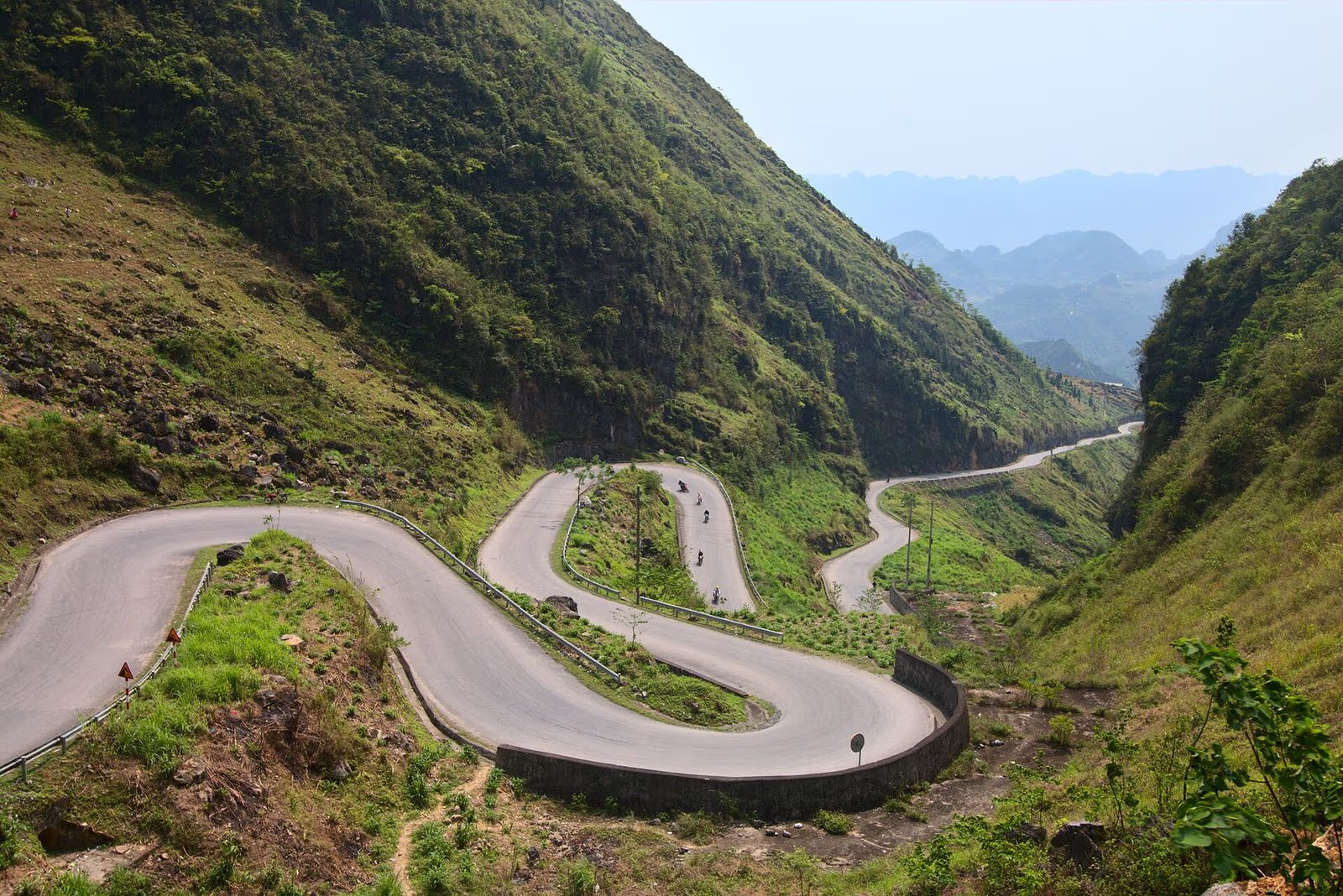
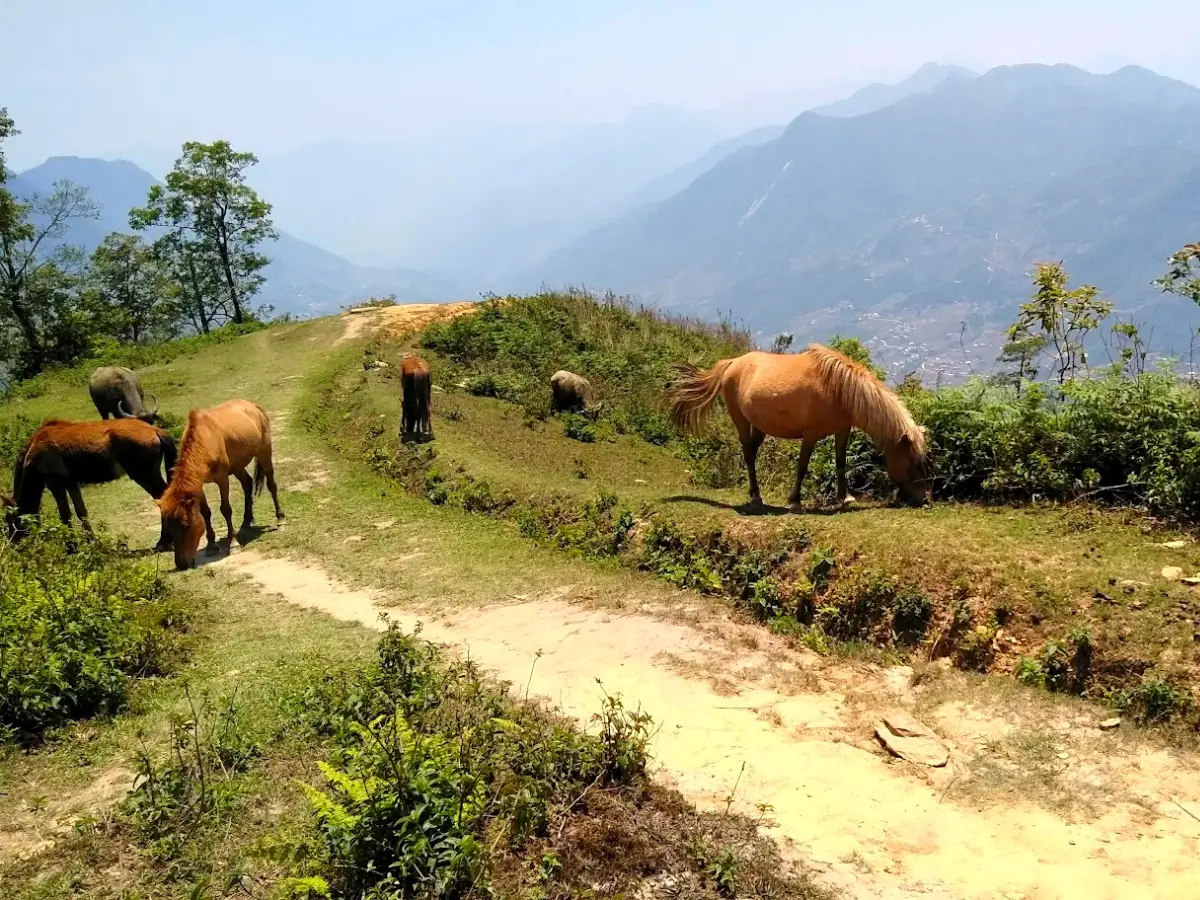
Expect mountain road for much of the way, like the photograph at the top of this page, and note that GeckoRoutes warns stops can stretch a van trip to 7 or 8 hours. Timetables are the weak point. The operator page we read lists Sapa to Ha Giang departures at 06:00, 08:30, 14:00, 16:00 and 20:00 and the reverse at 07:00, 08:30, 14:00, 16:00 and 20:00. Vexere lists more, from 07:30 to 23:00, with different operators. We could not open any operator's own live booking page, so treat all of these as examples, not a schedule.
| Source | Sapa to Ha Giang departures | Price | Time |
|---|---|---|---|
| Operator reseller page | 06:00, 08:30, 14:00, 16:00, 20:00 (limousine) | 300,000 to 350,000 VND | 7 to 8 h claimed |
| Vexere | From 07:30 to 23:00, several operators | 285,000 to 400,000 VND | About 6 h |
| GeckoRoutes | Several daily | EUR 10 to 22 | Warns of 7 to 8 h with stops |
| Bookaway | Several daily | USD 11 to 33 | Not stated |
Our advice, as opposed to our findings: take a morning departure, so that a delay still lets you arrive before dark; book through the operator or a platform that shows the pick-up address in writing; and expect resellers to add a fee on top of the seat price. The fare range is wide because the platforms mix seats, cabins and vans.
Before you pay, get five things in writing: the exact pick-up address in Sapa, the departure time, the drop-off point in Ha Giang, what happens to your luggage, and the refund rule if a landslide cancels the run. A message on WhatsApp is enough. Operators in this corner of Vietnam change the vehicle, the time or the office at short notice, and a screenshot of what you agreed saves an argument at the kerb.
National road 279 near Bao Ha was cut completely by landslides from Storm Yagi in September 2024 and reopened to motorbikes and small cars on 21 September that year. The road reopened, but mountain roads here close after heavy rain; in the wet months, check the day before.
Going the Other Way: Ha Giang to Sapa
The service runs in both directions. The operator page we read lists Ha Giang to Sapa departures at 07:00, 08:30, 14:00, 16:00 and 20:00, and the journey takes the same 6 to 7 hours. Two things change. You board at an operator office in Ha Giang city, so tell your hostel which one, and you arrive in Sapa in the afternoon or evening, when the town is busy with the Hanoi buses. If you plan to carry on to Hanoi the same night, do not assume a train seat: we found conflicting train numbers and times on the 2026 pages, so look at the railway’s own timetable first, and keep a night in Sapa as your fallback.
Why Not Use the Expressway?
Because the part that matters is not finished. The Hanoi to Lao Cai expressway (CT.05, 264 km) opened on 21 September 2014, and the 40.2 km Tuyen Quang to Phu Tho expressway opened on 24 December 2023. The 105 km Tuyen Quang to Ha Giang expressway, however, has so far had only a "technical opening" ceremony, held on 19 December 2025. As of 24 September 2026, VOV reported its Tuyen Quang section about 76 per cent built and the Ha Giang section 85 per cent, and the earlier target of finishing by the end of the third quarter of 2026 has passed. We found no report of it carrying ordinary traffic.
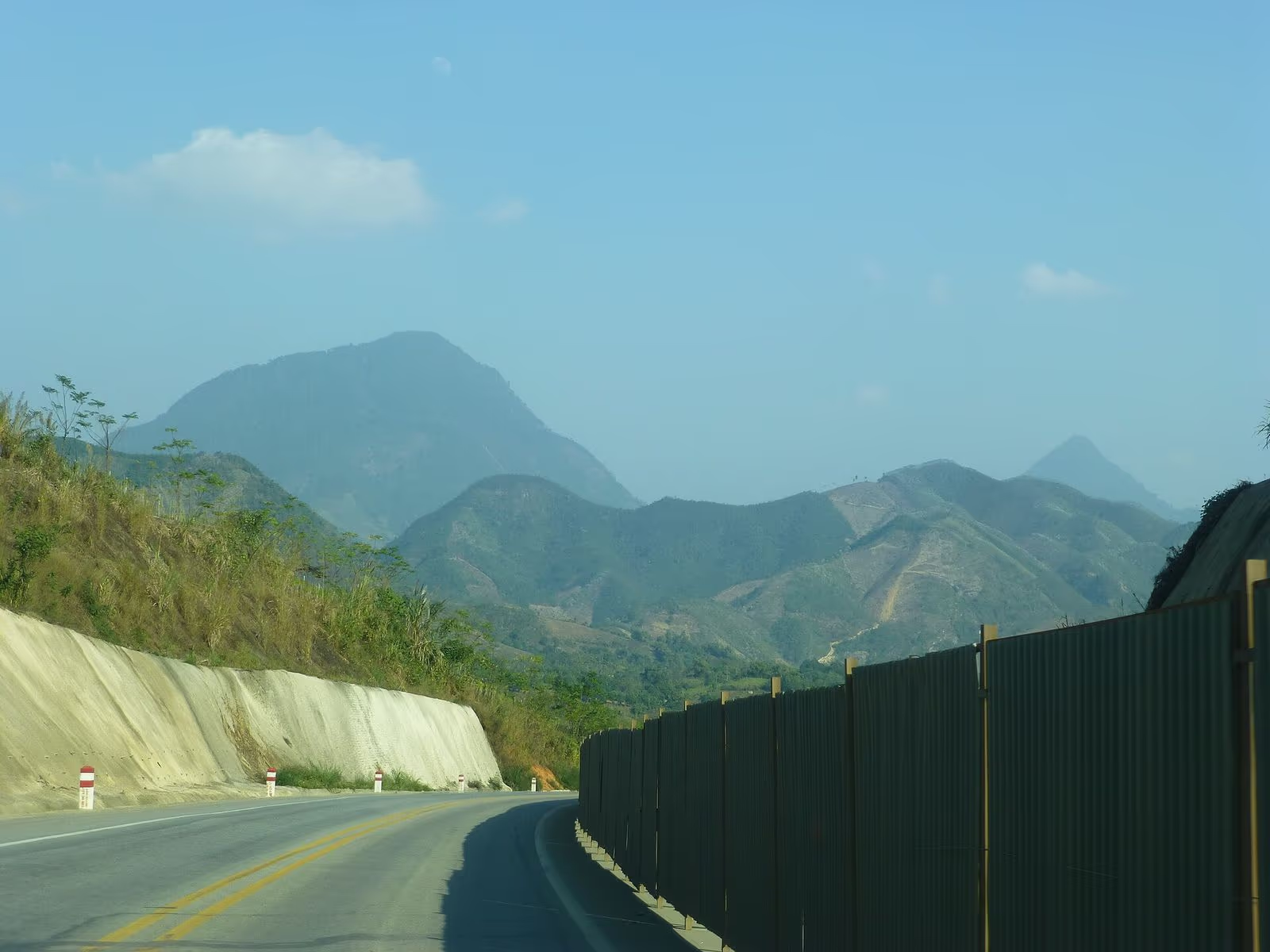
Could you stitch together a route on the finished expressways anyway? Lao Cai down CT.05 to the Phu Tho junction, across the Tuyen Quang to Phu Tho expressway to Tuyen Quang city, then the old road up to Ha Giang. By our own arithmetic that is about 320 to 340 km, well over 100 km longer than the direct road, and the last stretch is ordinary two-lane road with many trucks. We found no operator using it. We label that figure as our own calculation, not a published one. For the future: once the expressway is open for use, check whether the picture changes, because Hanoi to Ha Giang is already quoted at about 280 to 320 km.
Going Via Hanoi: When It Makes Sense
It makes sense when Hanoi is your airport anyway, or when you want to do the Loop as a round trip from the capital. Sapa to Hanoi by limousine takes about 5.5 to 6 hours, or 6 to 7 hours by sleeper bus, according to a Vietnam tourism site updated on 21 October 2026; our transport page has the prices we sell. Train numbers conflict across the 2026 pages we found, so check the current timetable on the railway's own site; what is stable is that the overnight train reaches Lao Cai in the early morning and you still need about an hour to Sapa. Our Hanoi to Sapa guide and transport page have the options we sell.
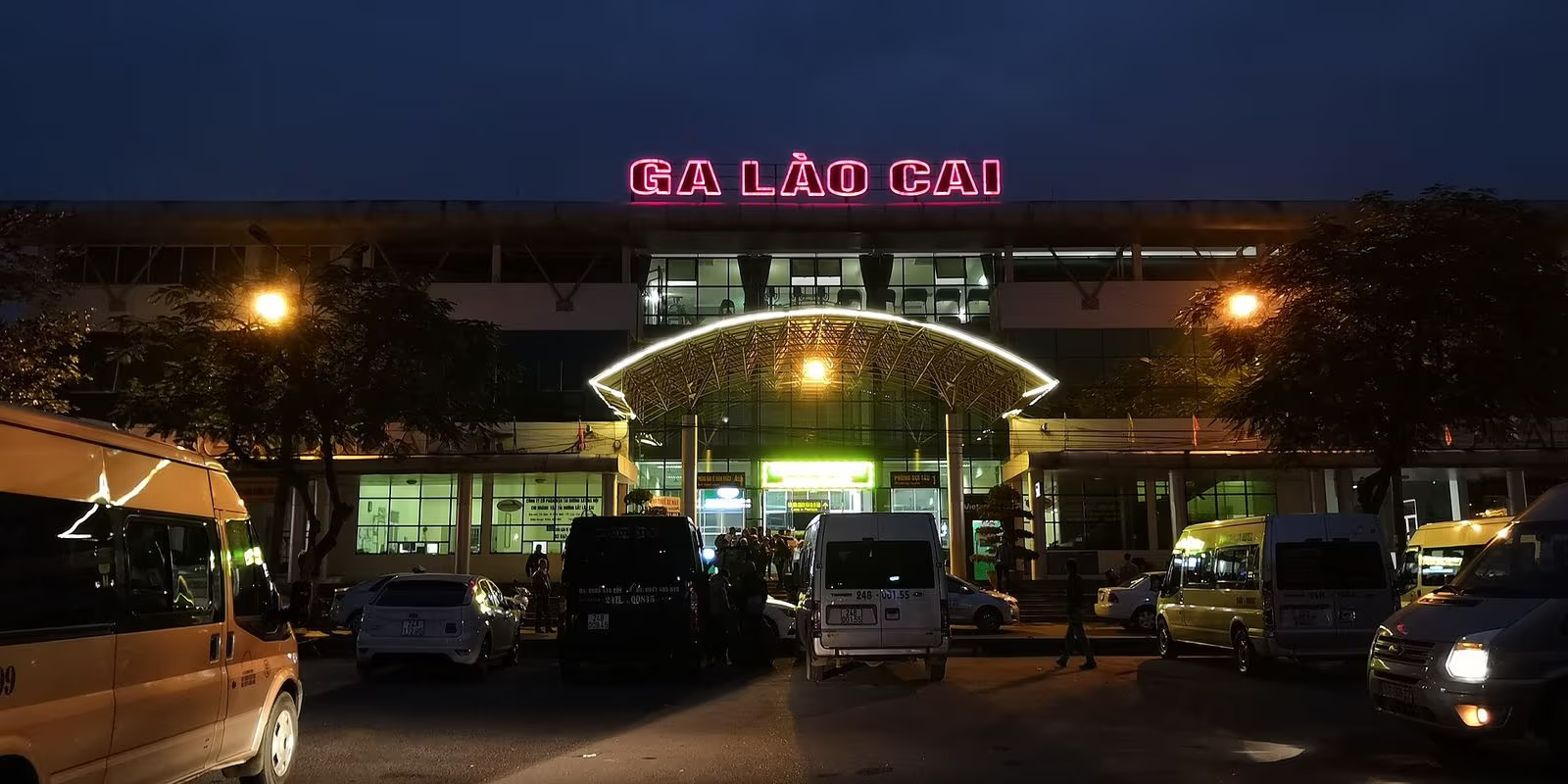
Hanoi to Ha Giang is a separate ticket: 5.5 to 6.5 hours by limousine and 5 to nearly 8 hours by sleeper bus, at about 250,000 to 480,000 VND. Sleeper buses drop at Ha Giang bus station, around 2 km from the main guesthouse area; limousines usually drop at your hotel. Add the two legs and you have 12 hours or more of vehicles and a wait in Hanoi, which is our arithmetic and the reason the direct bus exists.
The Mountain Road Through Bac Ha and Hoang Su Phi
This is the road that guides describe as the way across, and it is not a transfer. It is a two-to-five-day motorbike journey that Vietnam Coracle logged at 355 km: Sapa to Muong Khuong (85 km, over 1,000 m of climbing), to Si Ma Cai and Bac Ha (90 km), to Xin Man (40 km), then Hoang Su Phi and Ha Giang (140 km). The guide dates from October 2018; reader comments from 2023 to May 2026 describe the Hoang Su Phi sections as rough, muddy in rain and under repair for years. We found no 2026 official road report, so we cannot tell you its state this week.
If we read those numbers into days, which is our arithmetic and not the author’s plan, the first day is Sapa to Bac Ha, about 175 km, the second runs Bac Ha to Xin Man (40 km on the direct road) and on towards Hoang Su Phi, and the third reaches Ha Giang. The guide says the stages do not match riding days. The hazards it lists are landslides after heavy rain on all three of its routes, hairpins on almost every kilometre, cold near Si Ma Cai even in summer, and fuel only at Bac Ha, Xin Man and Ha Giang. Xin Man, it notes, has only three access roads, all prone to slides. Cyclists and experienced riders enjoy this country; for everyone else the direct bus is the right choice.
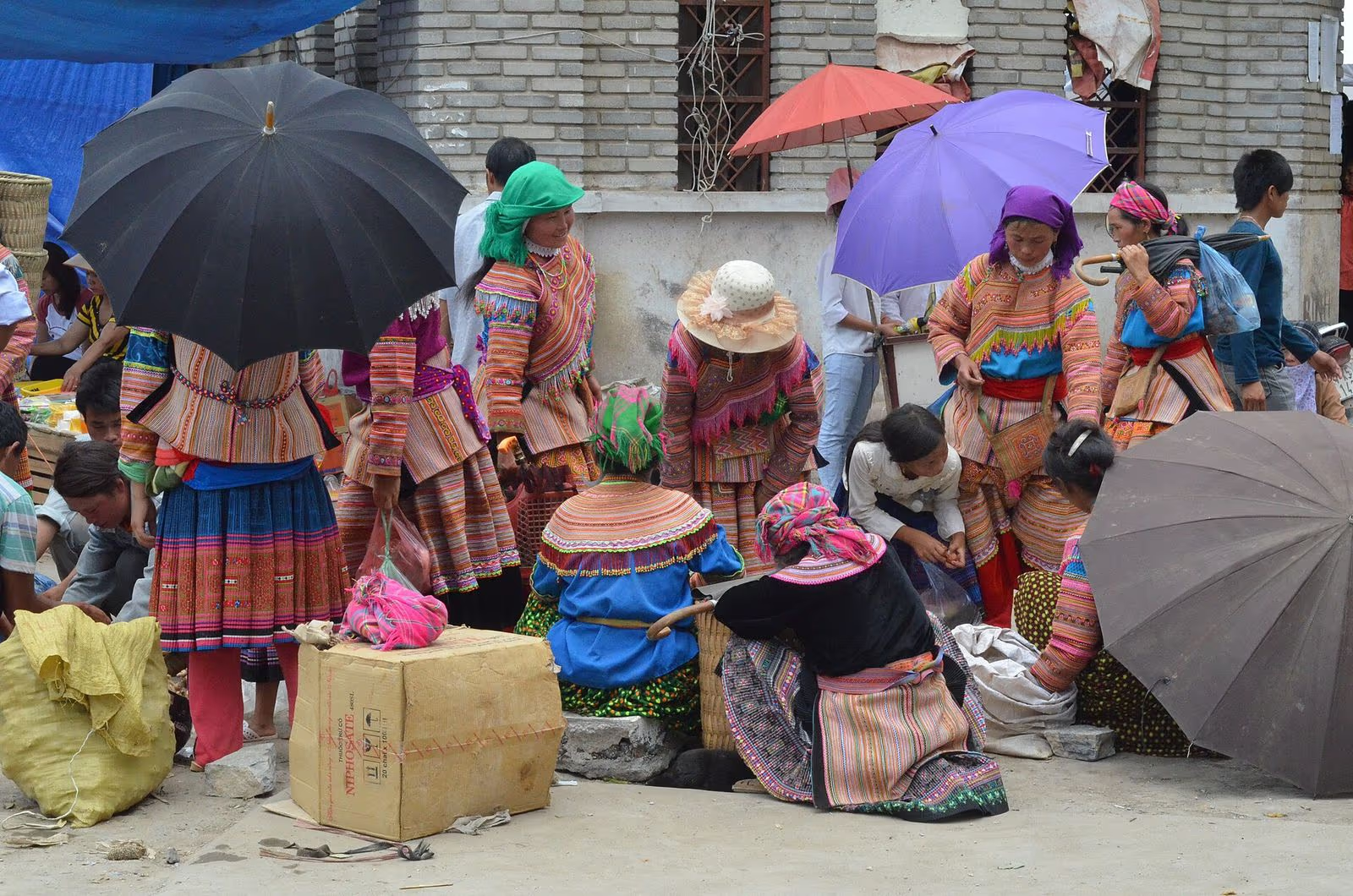
What makes the detour worth it is the stops. Bac Ha’s Sunday market runs from early morning until about 14:00 (VnExpress, 2024; Bao Lao Cai, 2022), so it decides which day you arrive; our Bac Ha market guide has the details. Can Cau market near Si Ma Cai runs on Saturday mornings. In November the grassland at Suoi Thau in Xin Man, about 35 km from Bac Ha, has buckwheat in flower, and Hoang Su Phi’s terraces are ranked as a national-level site (one source says 2012, another 2011, so we give no year); they are not a UNESCO World Heritage site, whatever some blogs imply.
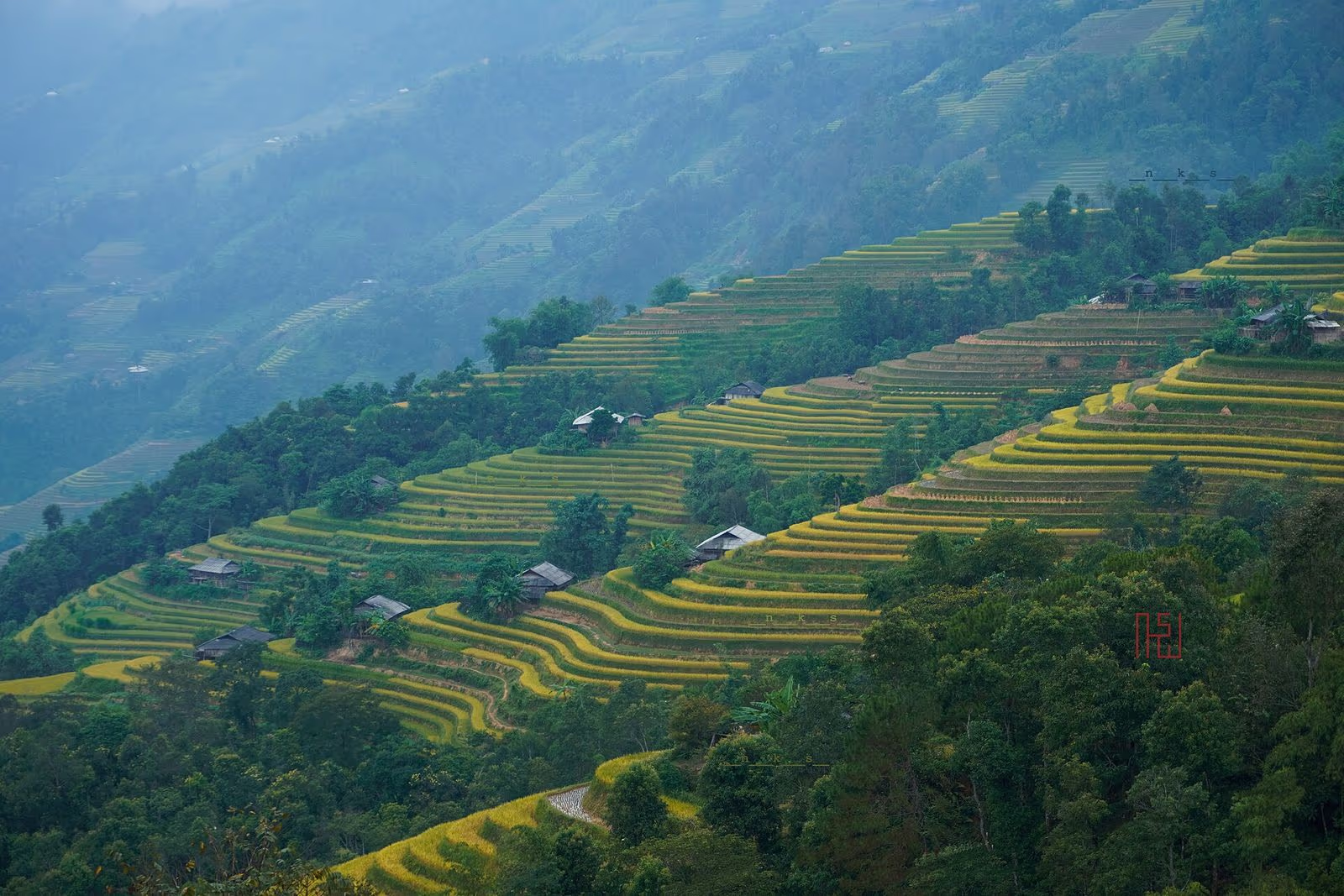
Terraces ripen here from mid-September to mid-October, later than at Mu Cang Chai (VnExpress, 2015, and two other sources); we could not confirm a month for the flooded-field season. One trap: Cong Troi, or Heaven’s Gate, is also the name of a pass on the road into Hoang Su Phi, not only the Quan Ba viewpoint on the Loop. If you want terraces and the Loop in one trip, our rice terraces guide compares the regions.
What the Transfers Cost
If you do the nine-day plan below with the bus options in this guide, the two legs that are not ours add up as follows. These are sums of the ranges we quoted, at about 26,000 VND to the dollar, so they are a budget guide and not an offer. Add your Hanoi to Sapa ticket from our transport page; meals, rooms, the Loop itself and permits come on top.
| Leg | Range |
|---|---|
| Hanoi to Sapa | See our transport page (not in the total) |
| Sapa to Ha Giang, direct bus | 290,000 to 400,000 VND |
| Ha Giang to Hanoi, bus or limousine | 250,000 to 480,000 VND |
| Total of the two legs above | About 540,000 to 880,000 VND ($21 to $34) |
Names Changed in 2025: What You Will See on Tickets and Maps
Under Resolution 202/2025/QH15, adopted on 12 June 2025 and in force from 1 July 2025, Ha Giang province merged into a new Tuyen Quang province, and Yen Bai merged into Lao Cai province. Tuoi Tre reported the new Tuyen Quang centre at the existing Tuyen Quang site, and the new Lao Cai province’s centre at the existing Yen Bai site, not at Lao Cai city. Sapa town is reported to be a ward named Sa Pa in Lao Cai province; we found that in news listings, not an official list.
For you, almost nothing changes: tickets, operators and signs still say "Ha Giang" and "Sapa", and the Dong Van buckwheat festival this year was organised by Tuyen Quang province. The change matters when you read official notices: the police office that handles border permits for the Ha Giang area is now under Tuyen Quang provincial police, and old district names such as Xin Man and Hoang Su Phi may now be communes.
Do You Need a Border Permit for Ha Giang?
The honest answer is that operators say yes, and we could not confirm the legal basis. Decree 299/2025/ND-CP, in force from 17 November 2025, amended the rule on foreigners entering land-border areas. The text we read says foreigners who reside in Vietnam need a permit from the provincial police, except in tourist, service and economic zones; it does not clearly say whether a short-stay visa tourist needs one on the Dong Van plateau. Tuyen Quang police said on 2 September 2026 that they still handle border-area permits.
Hostel and tour blogs say checkpoints ask for a permit and that tours arrange it, at about 230,000 to 260,000 VND, issued in Ha Giang city. That fee, and a claim that enforcement became consistent in June 2026, come from commercial blogs with no legal citation. Ask your Ha Giang operator or hostel, and if you plan to ride alone, ask at the immigration office in Ha Giang city before you leave for the plateau. Our parallel guide for Sapa’s border areas is Do You Need a Permit to Trek in Sapa?
Sample Itineraries: 6 to 10 Days
The numbers below come only from the transfer times above, so the days are plans, not promises. Allow a spare day if a flight leaves the day you return to Hanoi.
| Plan | Order | How the days run | On the road |
|---|---|---|---|
| 6 days | Sapa first | Hanoi to Sapa; 1 trek day; direct bus; 2-day Loop; back to Hanoi on day 6 | About 18 to 19 h; tight |
| 7 days | Sapa first | Hanoi to Sapa; 2 trek days; direct bus; 2-day Loop; back to Hanoi | About 18 to 19 h |
| 7 days | Ha Giang first | Hanoi to Ha Giang; 3-day Loop; direct bus; 1 trek day; to Hanoi | About 18 h |
| 9 days | Sapa first | 3 Sapa days with a homestay; direct bus; 3-day Loop; to Hanoi | About 18 to 19 h |
| 10 days | Sapa first | Add Bac Ha on a Sunday by car or van before Ha Giang | 24 h or more |
Here is the nine-day plan we would suggest for most visitors who do not want to ride themselves.
Hanoi to Sapa
Limousine in about 5.5 to 6 hours, or the overnight train. Check in, walk the town.
Sapa on foot
Two days in the Muong Hoa Valley with a homestay night, and a spare morning for weather.
Sapa to Ha Giang
Direct bus on a morning departure, about 6 to 6.5 hours. Sleep in Ha Giang city.
The Loop
Three days through Quan Ba, Yen Minh, Dong Van and Meo Vac with a driver or an easy rider.
Ha Giang to Hanoi
About 5.5 to 6.5 hours by limousine. Do not book an evening flight.
Which Should Come First, Sapa or Ha Giang?
There is no source for this section; it is our judgement. Start with Sapa if you want to ease in: treks are on foot, and by day five you are ready for a long bus. Start with Ha Giang if you want the Loop in the best weather of your window, then finish with a light stretch in the Sapa valleys. If you are new to motorbikes, hire a driver or an easy rider instead of riding yourself; our road-safety page says why.
Season matters more than order. The buckwheat flowers bloom from October to December and peak in November (VietnamPlus, 4 August 2026), and this year’s Dong Van festival opened on 25 October with events to the end of December (VOV, 26 October 2026). Our buckwheat season guide covers the flowers. Rain falls from June to August and the mountains are cold from November to February. For Sapa, our own guides put the golden rice in September and October (harvest season) and the flooded terraces in May and June, and the best-time guide covers the rest. Late September to October gives you both places near their best.
Walk the Valleys First, Then Take the Bus
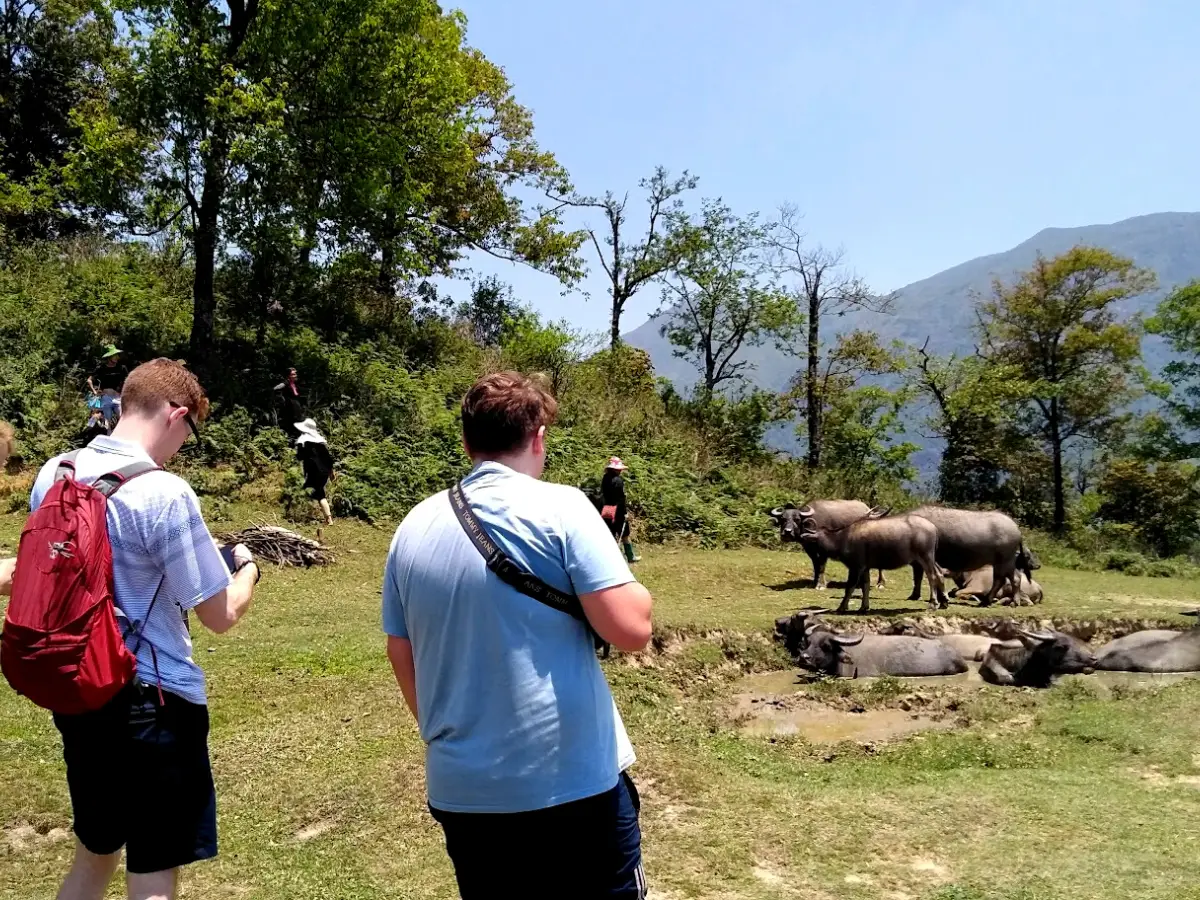 1-Day Trek
Trekking Through Rice Terraced Fields
The Lao Chai to Ta Van valley day with a local guide, ending in Sapa town.
 Homestay
Rice Terraced Fields & Homestay
A night with a local family in the valley, then a morning bus.
 Local Favourite
Mountain Views and Villages Trek
A quieter ridge and village route for a half-rested day.
Tips for the Transfer Day
These are our own, drawn from years of sending guests down the mountain. Leave your big bag in Sapa if you are coming back; the buses have limited space. Eat before you board, because stops are short. Carry cash in dong for the Ha Giang end and tickets for any permit. Tell your Ha Giang hostel your arrival time so that someone is there. If you suffer on bends, take the front seats and avoid the berths, which sway more, and keep a warm layer for Ha Giang, which is cold in winter.
One planning rule is worth more than the rest: never put a trek and the bus on the same day. A Sapa walk can finish late when the path is wet, and the morning departures that give you daylight in Ha Giang leave between 06:00 and 08:30. Finish your last trek the day before, sleep in Sapa town, and walk to the pick-up office with your bag. The same rule applies in reverse, because the first Loop morning after a six-hour bus is when tired riders make mistakes.
Rent at Our Office Before You Trek
 Gear Rental
Trekking Boots Rental
Waterproof ankle-support boots. Cleaned and checked before each rental. Available at 105 Thach Son Street.
 Gear Rental
Walking Poles Rental
Trekking poles available to rent at $2/day at our office, 105 Thach Son Street. Essential for descents.
The Part We Do Sell
- Hanoi to Sapa transport — sleeper buses, limousines and the overnight train, bookable with your trek
- Hanoi to Sapa guide — what each option costs and how long it takes
- How to get to Sapa — the first leg, in detail
What We Can and Cannot Help With
We can help with the Sapa end: the trek, the homestay and the Hanoi to Sapa transfer. We cannot sell you the Sapa to Ha Giang seat, and we do not run Ha Giang tours. If you tell us you are continuing to Ha Giang, we can say which morning departure fits your trek, and what to do with your luggage. Our northern Vietnam guide places both regions on one map.
Frequently Asked Questions
Yes. Direct buses and limousine vans from Sapa town to Ha Giang city are listed on several ticket platforms and by local operators. They cover roughly 220 to 240 km in about 6 to 6.5 hours, with operators warning of 7 to 8 hours in rain or with stops. We checked this between 24 and 31 October 2026 and could not open an operator's own live booking page, so confirm times with the operator.
About 220 to 240 km by the direct road through Lao Cai, Bao Yen and Bac Quang. Published figures range widely, from 196 to 232 km for bus-station distances and 297 km on one platform, so we do not give a single exact number. The mountain road through Bac Ha and Hoang Su Phi is much longer, 355 km on a 2018 motorbike guide.
The listings we read gave roughly 290,000 to 400,000 VND per seat, about $11 to $16, with wider ranges on some platforms because cabins and vans are mixed in. Resellers may add a fee. A private car with driver is listed between EUR 115 and USD 180 per vehicle one way.
Not a usable one. The Tuyen Quang to Ha Giang expressway had a technical opening ceremony on 19 December 2025, but on 24 September 2026 the Tuyen Quang section was about 76 per cent built and the Ha Giang section 85 per cent, and we found no report of ordinary traffic. A route on the finished expressways would be about 320 to 340 km by our own arithmetic, so the direct road is shorter.
Operators and hostels say a border-area permit of about 230,000 to 260,000 VND is needed and arranged in Ha Giang city, but we could not confirm the legal basis for short-stay tourists. Decree 299/2025 speaks of foreigners residing in Vietnam, with an exception for tourist and service zones. Ask your operator or the immigration office in Ha Giang city before you go.
This is our judgement, not a sourced fact. Start with Sapa to ease in on foot, or with Ha Giang if you want the Loop in the best weather of your dates. Season matters more than order: buckwheat flowers peak in November, Sapa and Hoang Su Phi terraces are golden around September and October, and rain falls from June to August.
Not on the direct bus, which does not go through Bac Ha. The Bac Ha Sunday market runs until about 14:00, and the road on to Hoang Su Phi and Ha Giang is a multi-day motorbike route, or a long car day whose time we could not confirm. Plan it as a separate leg and allow a night in Bac Ha.
No. We sell Sapa treks and Hanoi to Sapa transfers. We can help you plan the Sapa end around a Ha Giang trip, but you book the Sapa to Ha Giang seat with the operator or a ticket platform.