 Sinh Giang
Sapa or Ha Giang? The honest answer is that they are not really rivals — they are two very different ways to meet the mountains of northern Vietnam. Choose Sapa if you want the country's most spectacular rice terraces, close contact with Black H'mong and Red Dao culture, and the freedom to trek on foot at your own pace with a homestay in the valley. Choose Ha Giang if the appeal is the journey itself — three or four days on a motorbike or with an easy-rider around a remote loop of switchbacks, canyons, and border scenery near China.
I am a local guide, and travellers ask me this question almost every week, so I will give you the version I give them: an honest, side-by-side comparison of scenery, culture, difficulty, cost, and time, plus who each place actually suits — and why a lot of people with a week in the north stop choosing and simply do both. By the end you will know exactly which one fits the trip you want.
Sapa vs Ha Giang at a Glance
Before the detail, here are the numbers that shape the decision. Both sit in the far north of Vietnam, both are mountainous and cool, but they ask different things of you — one is built around walking, the other around riding.
Put simply: Sapa is the easier, more accessible mountain trip, and the better one if you do not ride a motorbike. Ha Giang is the bigger adventure, more remote and more raw, and it rewards you for being willing to spend days on two wheels. Neither is "better" — they answer different moods, and the rest of this guide is about matching the place to yours.
The Quick Answer: Which Should You Choose?
If you only read one section, read this. On a scale from gentle and accessible to wild and remote, Sapa and Ha Giang sit near opposite ends — and where you want to be on that line is the whole decision.
Choose Sapa if: you want the best rice terraces in Vietnam, you would rather walk than ride, you like the option of a comfortable hotel and hot shower each night, you are travelling with parents or kids, or you only have two or three days. Choose Ha Giang if: you want a road trip more than a walk, you are comfortable on a motorbike (or happy to sit behind an easy-rider), you want the most remote scenery in the country, and you have at least three full days to give it. Still unsure? Keep reading — the detail below will settle it.
Sapa vs Ha Giang: The Full Comparison
Here is the head-to-head across everything travellers actually weigh up. Think of it as the tale of the tape before we get into the detail of each.
| Sapa | Ha Giang | |
|---|---|---|
| Best for | Rice terraces, culture, trekking on foot | Motorbike loop, remote scenery, adventure |
| How you explore | Walking, guided treks, homestays | Riding (self or easy-rider), day stops |
| Scenery | Cascading rice terraces, Fansipan | Karst canyons, Ma Pi Leng, Nho Que River |
| Culture | Black H'mong, Red Dao, Giay, Tay | Flower H'mong, Lo Lo, Tay, Dao markets |
| Difficulty | Choose your own — very easy to hard | Moderate; riding skill and stamina needed |
| From Hanoi | 5–6 hrs (bus, limousine, or train) | 6–7 hrs to Ha Giang city, then ride |
| Ideal length | 2–3 days | 3–4 days |
| Comfort | Hotels to homestays, your choice | Basic guesthouses and homestays |
| Crowds | Busy town, quiet valleys | Far quieter, still developing |
| Cost | Mid — good value guided treks | Low daily cost, but multi-day |
The table tells the story at a glance, but the numbers hide the feel of each place. So let me walk you through what Sapa does best, what Ha Giang does best, and how they really differ on the things that matter.
What Sapa Does Best
Sapa's strengths are its rice terraces, its accessibility, and the sheer variety of trekking on offer. This is the place to come if you want to walk into the scenery rather than drive past it, and if you want that scenery to be the finest terraced landscape in Vietnam.
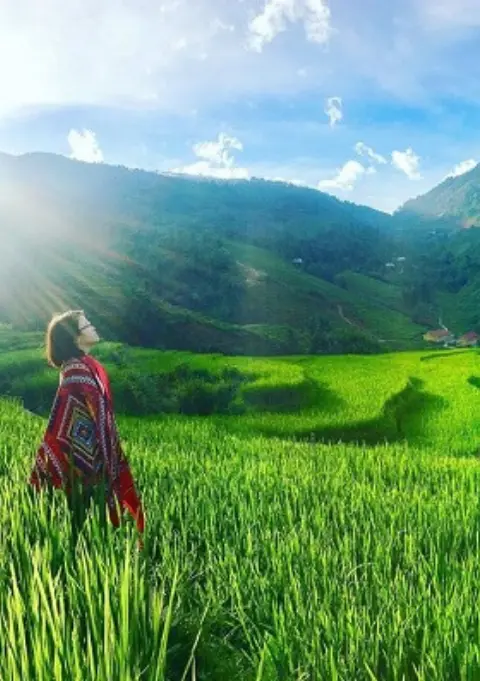
The Muong Hoa Valley terraces. The staircase terraces below Sapa town, wrapped around the villages of Lao Chai, Ta Van, and Y Linh Ho, are the most dramatic in the country — kilometre after kilometre of green or gold falling to the Muong Hoa stream. In September and October the rice turns gold; in May and June the flooded paddies become mirrors. You can walk right through them, which is something no photo delivers.
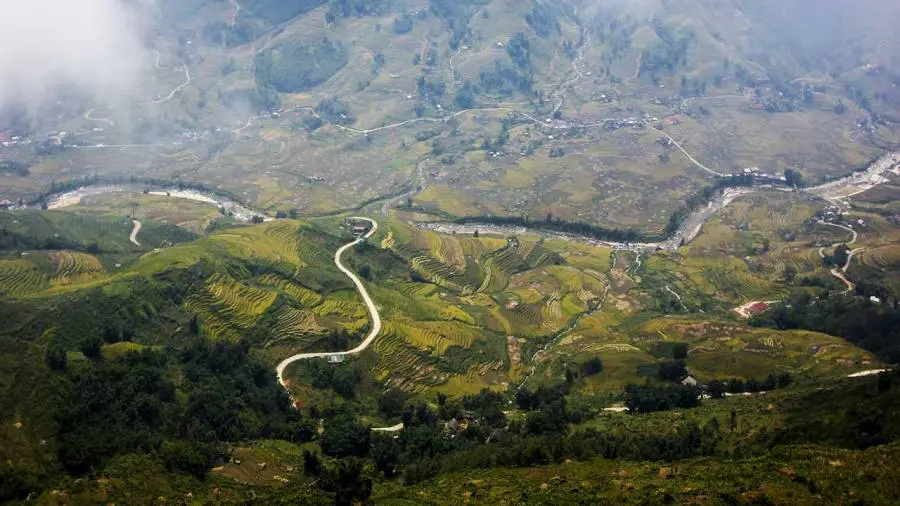
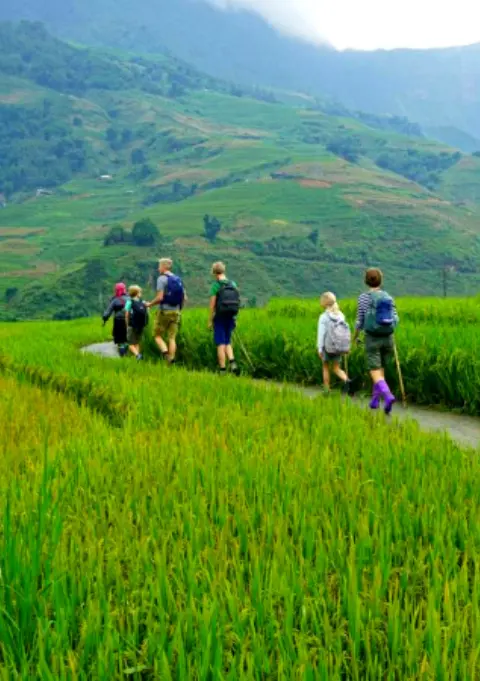
Trekking for every level. Sapa is where you choose your own difficulty. There are gentle, nearly flat valley walks for seniors and families, full-day treks through several villages, overnight routes with a homestay night on the valley floor, and the serious two-day climb of Fansipan, the 3,143-metre roof of Indochina. If you do not want to climb at all, the Fansipan cable car carries you to the summit in fifteen minutes. No other northern destination gives you that range on foot.
It is easy to reach and easy to do. Sapa has a direct expressway most of the way from Hanoi, sleeper buses and an overnight train, and everything from budget guesthouses to five-star hotels. You do not need to ride anything, plan a route, or worry about a breakdown on a mountain pass. For a first trip to the northern mountains, or for anyone who wants the scenery without the risk, that accessibility is a genuine advantage.
What Ha Giang Does Best
Ha Giang's strengths are remoteness, raw geological drama, and the journey itself. This is the most spectacular road trip in Vietnam, and the appeal is as much about the riding as the views — the two are inseparable.
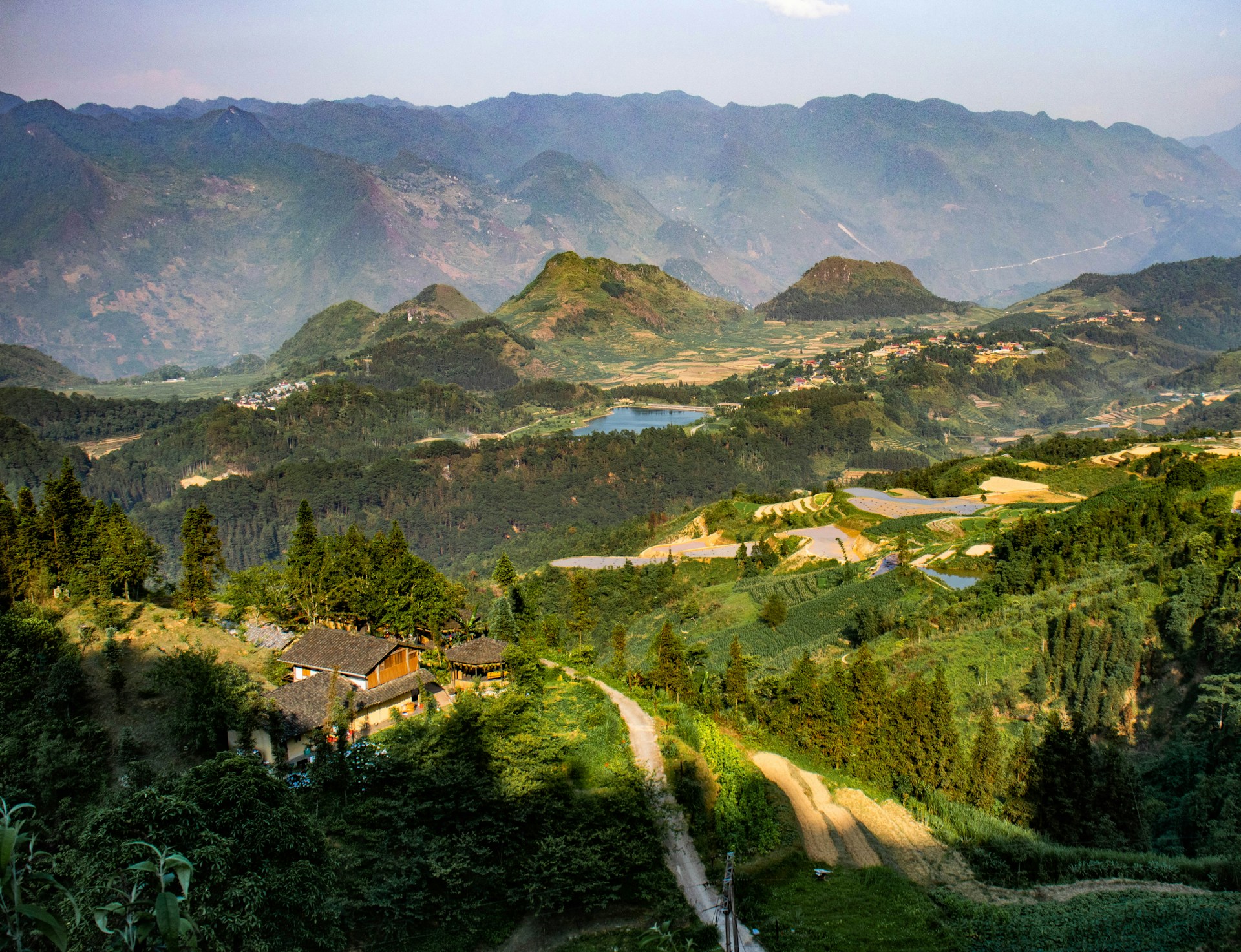
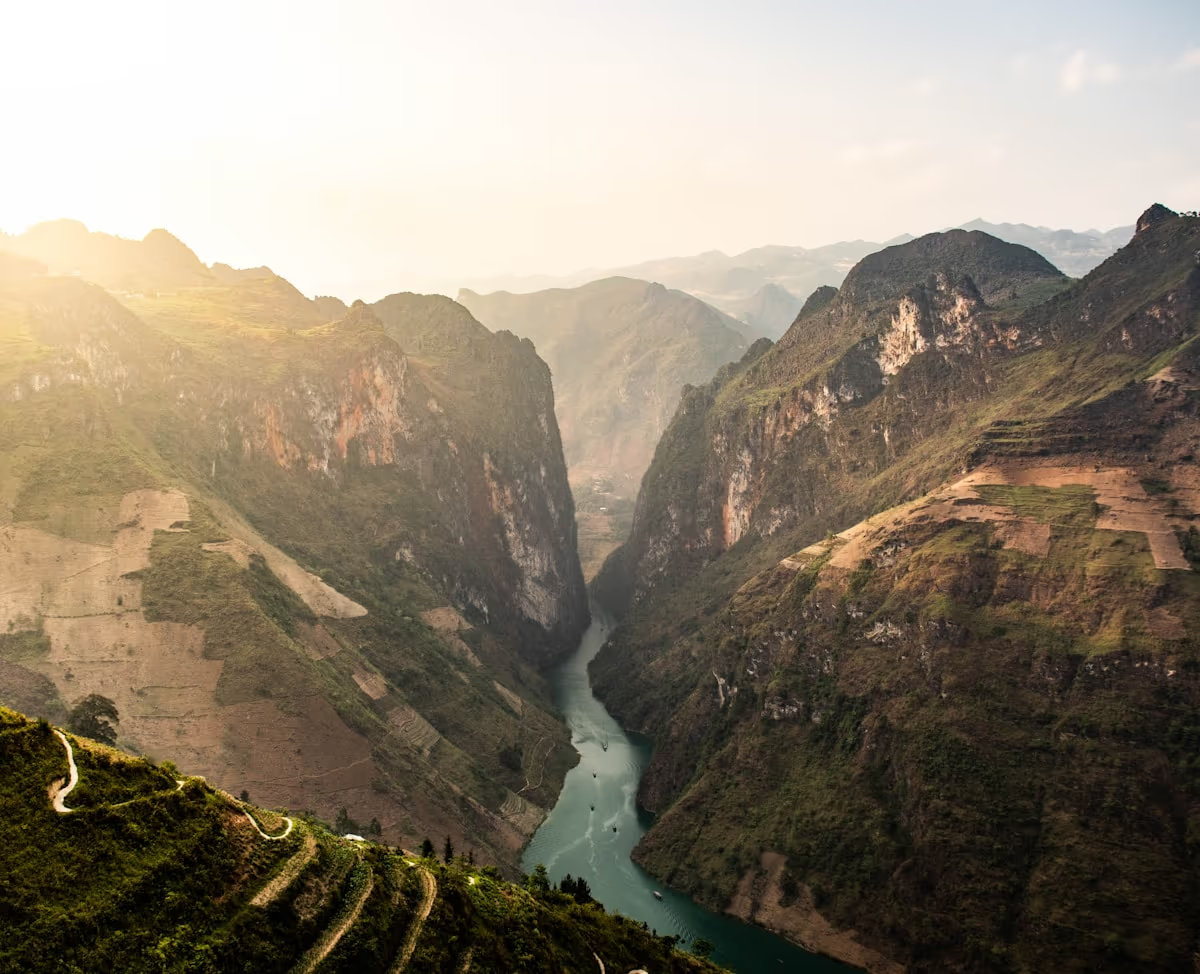
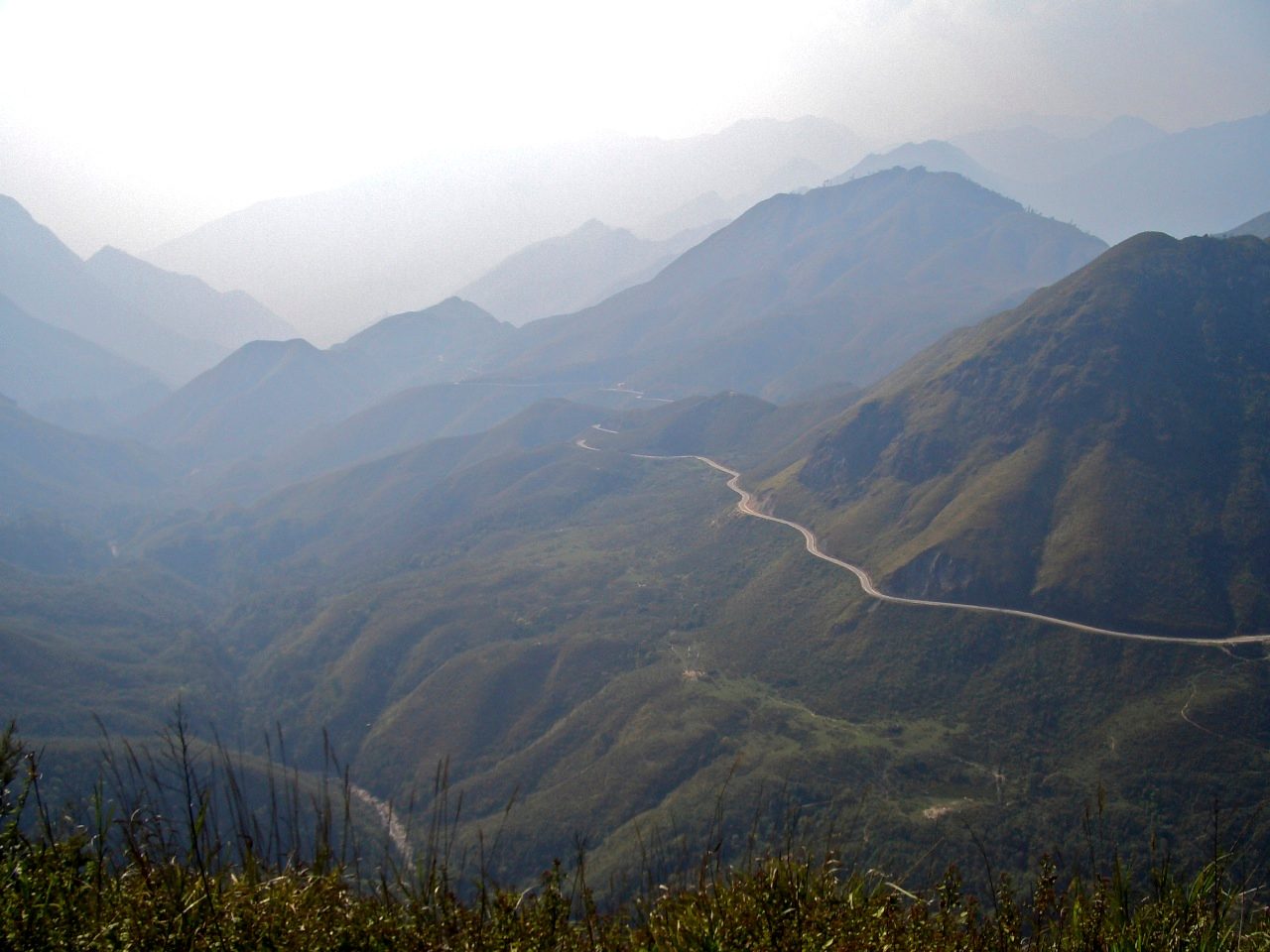
The Ha Giang Loop. The classic three-to-four-day circuit runs from Ha Giang city up through Quan Ba's Heaven Gate, on to Yen Minh, Dong Van, and Meo Vac, then back. Along the way you cross the Ma Pi Leng Pass — often called the most beautiful road in Vietnam — high above the turquoise Nho Que River. The scenery is bigger and wilder than Sapa's: limestone karst plateaus, deep canyons, and mountains that run all the way to the Chinese border at Lung Cu.
Real remoteness. Ha Giang is the least developed of Vietnam's famous mountain regions. The villages feel less touched by tourism, the markets — Dong Van and Meo Vac on their weekly days — are working markets rather than shows, and long stretches of road have almost no traffic. If Sapa's town feels too built-up for you, Ha Giang is the antidote.
The freedom of the road. On the Loop you stop where you like, ride at your own pace, and cover a lot of ground — you will see far more distinct landscapes in three days than you could walk to in a week. For travellers who love a motorbike, or who have always wanted an excuse to try one behind an experienced easy-rider, that freedom is the whole point. Our complete Ha Giang Loop guide lays out the route day by day.
Sapa vs Ha Giang: Scenery
On scenery, it comes down to terraces versus canyons — and they are genuinely different kinds of beautiful. Sapa is soft, green, and layered: rounded hills carved into rice terraces, mist rolling through the valley, villages tucked into the folds. Ha Giang is hard, grey, and vast: bare limestone spires, plunging gorges, and the Nho Que River threading the bottom of the Ma Pi Leng canyon.
If your dream photo is a golden staircase of rice at harvest, Sapa wins without argument. If it is a ribbon of road clinging to a cliff above a turquoise river, Ha Giang wins just as clearly. Both are among the best landscapes in Southeast Asia; they simply speak to different tastes. The honest tiebreaker is how you want to experience them — up close on foot, or unrolling past you from a saddle.
Sapa vs Ha Giang: Culture
Both regions are home to some of Vietnam's most distinctive ethnic-minority communities, but you meet them in different ways. In Sapa, culture comes through trekking — you walk through working Black H'mong and Red Dao villages, stop for lunch in a family home, and see indigo dyeing, hemp weaving, and hand-irrigated terraces up close. In Ha Giang, culture comes through the markets and the road — the Flower H'mong, Lo Lo, Tay, and Dao gather at weekly markets in Dong Van and Meo Vac in a blaze of colour.
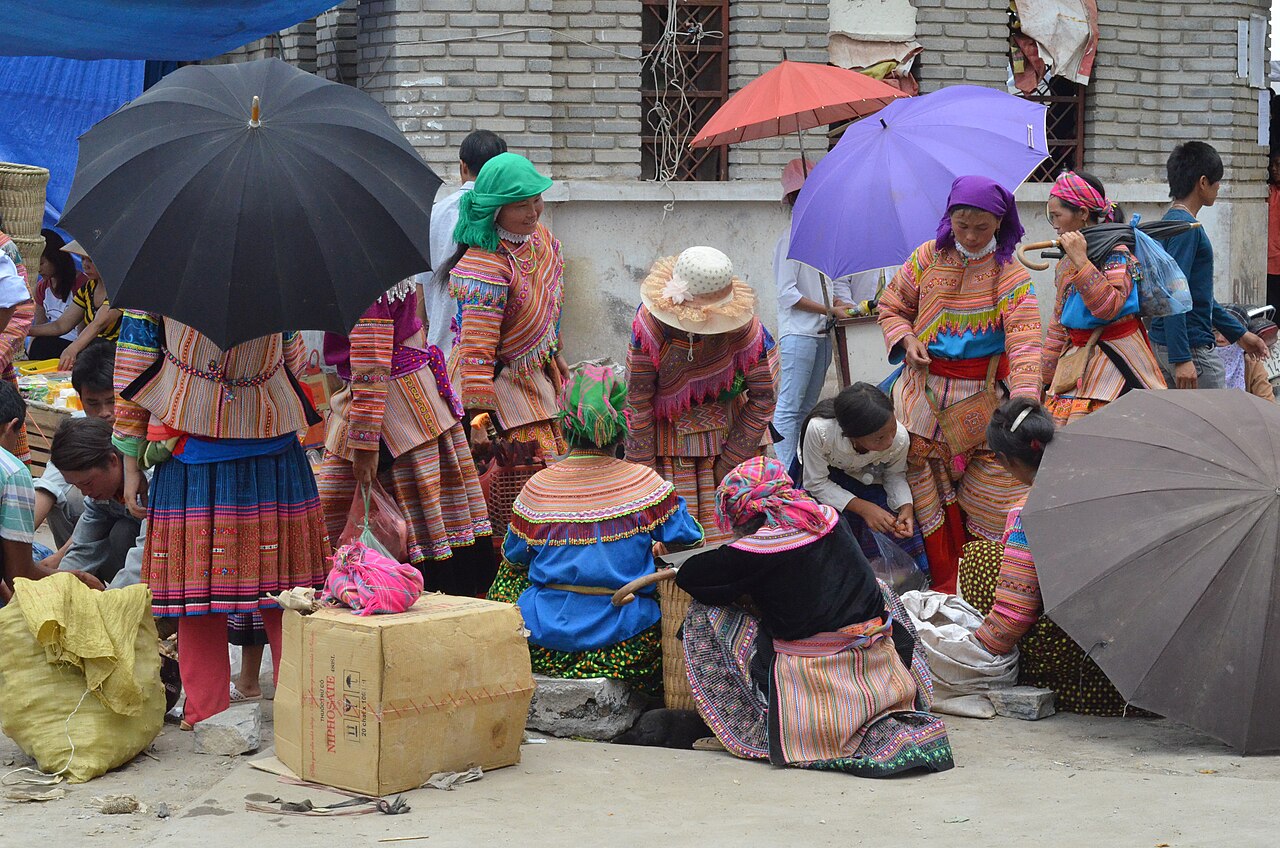
The trade-off is intimacy versus spectacle. Sapa's trekking gives you slower, closer, more personal contact — an afternoon in one family's kitchen. Ha Giang's markets give you a bigger, busier, more anonymous spectacle, but a genuinely local one, because the crowds are hill-tribe families trading livestock and textiles, not tour groups. Both are real; which you prefer depends on whether you want to sit down with people or move among them.
Food, Homestays and Comfort
Where you sleep and eat is another real difference, and it tilts toward Sapa if comfort matters to you. Sapa town has everything from backpacker dorms to genuine five-star hotels with spas and valley views, so you can trek all day and still have a hot shower and a soft bed at night. Out in the valley, homestays in Ta Van and Lao Chai offer the middle ground — simple, clean, and full of character, with a home-cooked dinner and often rice wine by the fire.
Ha Giang is more basic across the board. Accommodation on the Loop is mostly family guesthouses and homestays in Yen Minh, Dong Van, and Meo Vac — comfortable enough, warmly run, but rarely luxurious. The food, though, is a highlight in both: expect thang co and men men in Ha Giang's markets, and grilled pork, fresh greens, and sticky rice in a Sapa homestay kitchen. If you want the option of real comfort at the end of each day, Sapa gives it; if you are happy trading comfort for remoteness, Ha Giang delivers character instead.
Difficulty and Who It Suits
This is where the decision often gets made, because Sapa and Ha Giang ask very different things of your body and your nerve. Sapa's difficulty is a dial you set yourself — from a flat valley stroll to a hard mountain climb. Ha Giang's difficulty is more fixed: whether you ride yourself or sit behind a driver, it is several days of mountain roads, and that is not for everyone.
Sapa suits you if…
- You would rather walk than ride
- You want to choose your own difficulty
- You are travelling with parents, kids, or seniors
- You want a comfortable hotel and hot shower each night
- You only have 2–3 days
- It is your first trip to the northern mountains
Ha Giang suits you if…
- You want a road trip more than a trek
- You are comfortable on a motorbike, or with an easy-rider
- You want the most remote scenery in Vietnam
- You do not mind basic guesthouses
- You have at least 3 full days
- You have travelled in the region before and want more
One honest safety note: the Ha Giang Loop is beautiful but not risk-free. Most accidents happen in the first day, when riders are still adjusting to mountain roads and the weight of the bike. If you are not a confident rider, take an easy-rider — a local driver who does the riding while you enjoy the view. It costs a little more and removes almost all of the risk. Sapa, by contrast, carries no such danger; the worst you will face is a muddy trail after rain.
Sapa vs Ha Giang: Cost
On a daily basis Ha Giang is slightly cheaper, but because it needs more days, the total can land close to Sapa. Ha Giang's low costs — cheap guesthouses, cheap food, an affordable bike or easy-rider — are spread across three or four days. Sapa costs a little more per day but often needs only two, and a guided trek bundles the guide, the homestay, lunches, and transport into one clear price.
Neither is expensive by Western standards. A guided Sapa trek with a licensed local guide, a home-cooked lunch, and a valley homestay costs a fraction of a comparable trip in Europe or the Americas, and a Ha Giang Loop with an easy-rider is one of the best-value adventures in Asia. As a rough guide, a guided day trek in Sapa starts around $30–45 per person, and a 2-day homestay trek around $70; a 3-day Ha Giang Loop with an easy-rider, food, and guesthouses typically runs $150–220 for the whole circuit. Cost, honestly, should not be the deciding factor between them — the experience should.
How Long Do You Need for Each?
Sapa works well in two to three days; Ha Giang really needs three to four. That difference matters when your Vietnam itinerary is tight. For Sapa, one full day of valley trekking plus a weather buffer is enough to make the long trip worth it, and a third day adds a homestay and Fansipan. For Ha Giang, the classic Loop is a three-day, three-night circuit, and rushing it into two days means long hours in the saddle and no time to enjoy the stops.
So if you have a spare two or three days on a first Vietnam trip, Sapa is the more sensible fit — it delivers a lot of mountain scenery for a short commitment. If you have four days and a taste for adventure, Ha Giang repays them. And if you are lucky enough to have a full week in the north, the best answer is often both, in that order.
Best Time to Visit: Sapa vs Ha Giang
The best windows overlap closely, which makes combining the two easy. For both, the sweet spots are spring, roughly March to May, when the mountains are clear, cool, and green, and autumn, September to October, when Sapa's terraces turn gold and Ha Giang fills with blooming buckwheat flowers around Dong Van and Meo Vac. These are the months our guests rate most highly for either destination.
There are small differences. Sapa's flooded-terrace season peaks in May and June, when the paddies become mirrors — a Sapa-specific highlight Ha Giang cannot match. Ha Giang's famous pink buckwheat flowers appear from mid-October into November, a Ha Giang-specific reason to favour late autumn. Both places are cold and often foggy in winter, from December to February, and both see heavier rain in July and August, when Sapa is at its greenest but Ha Giang's roads can be slick for riding. If you are doing both, aim for late September to October and you catch each region close to its best.
Guided Sapa Treks Travellers Love
 Best Seller
Trekking Through Rice Terraced Fields
The full Muong Hoa Valley floor through Lao Chai & Ta Van — Sapa's terraces on foot.
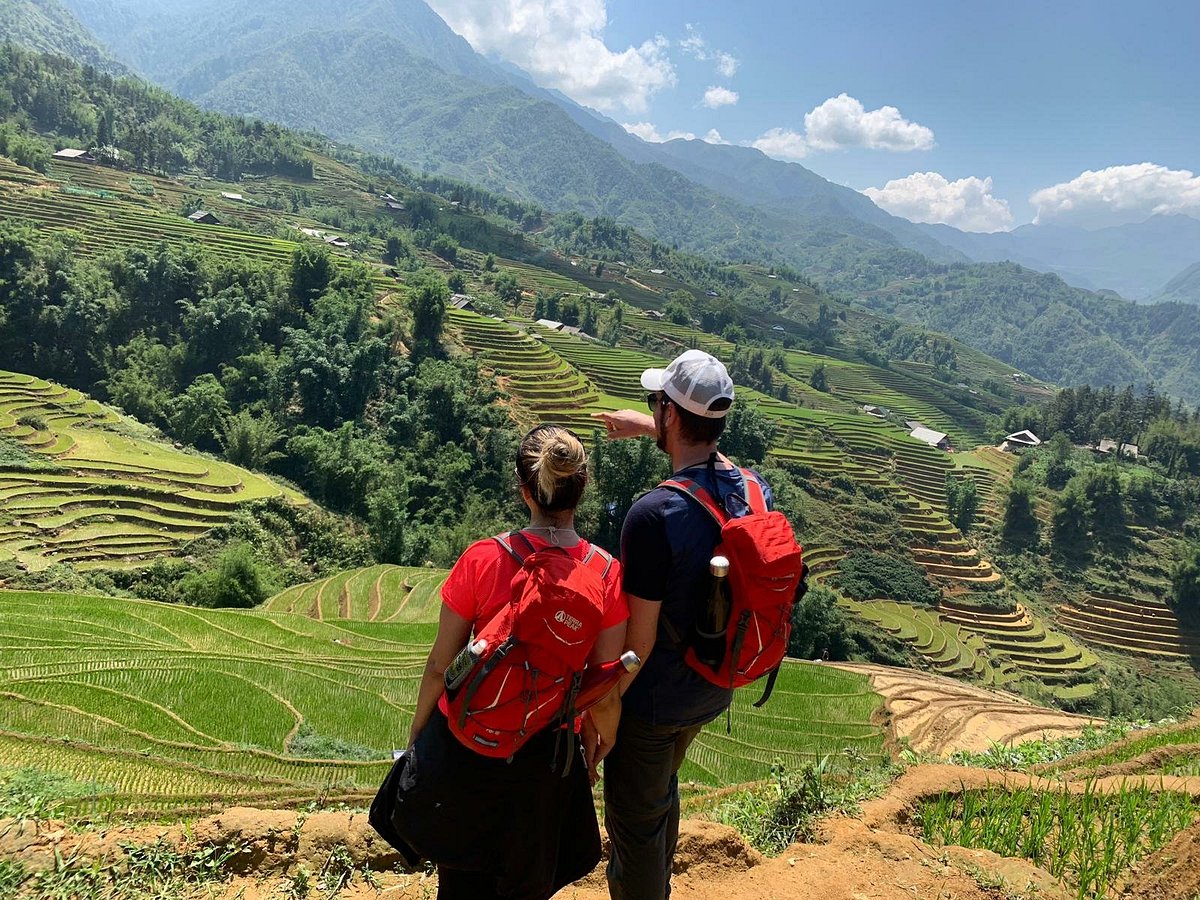
Rice Terraced Fields & Homestay
Overnight with a Black H'mong family in the valley — the deeper, quieter side of Sapa.
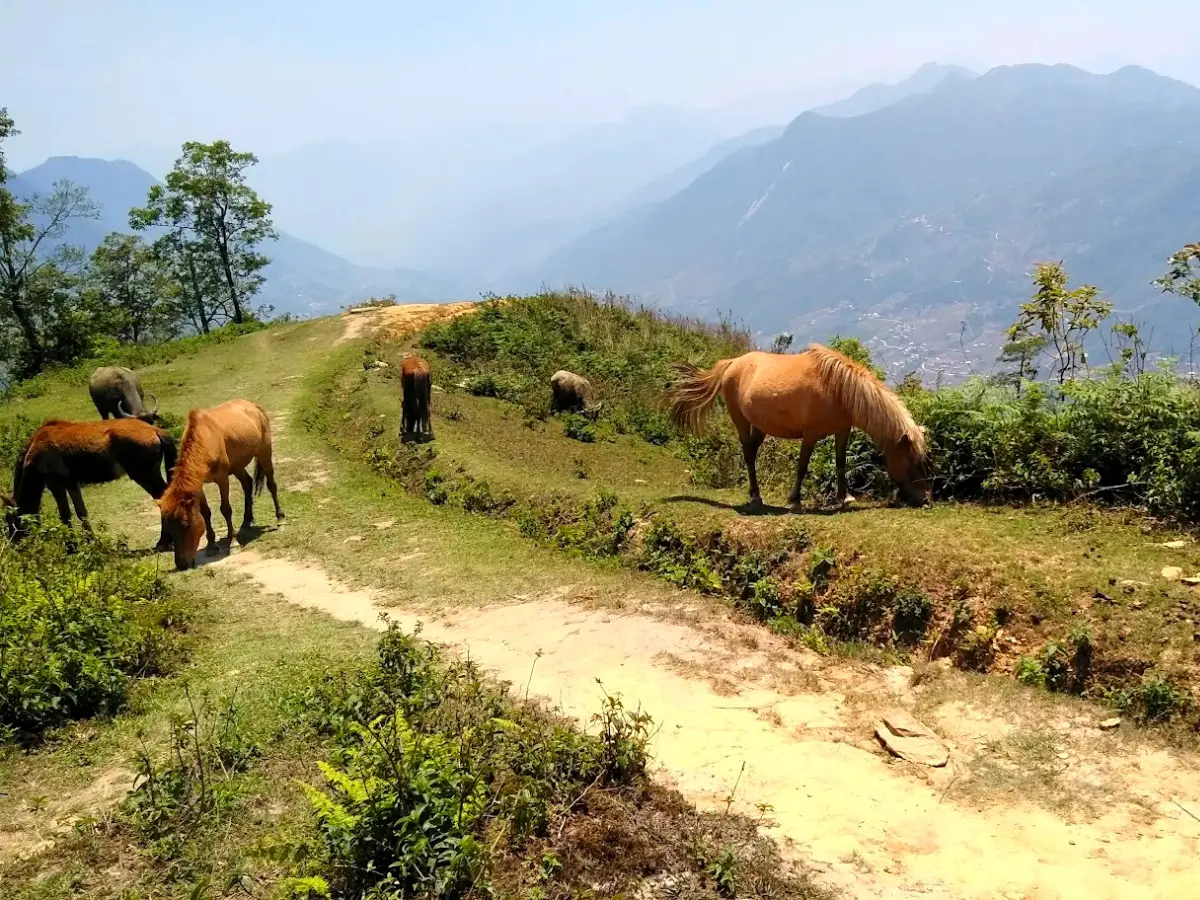 Great Value
Mountain Views and Villages Trek
Ridge views and quieter trails away from the busy valley floor — a local favourite.
Can You Do Both Sapa and Ha Giang?
Yes — and if you have the time, doing both is the answer most experienced travellers land on. The two regions are only a few hours apart by road, so combining them turns "Sapa or Ha Giang" into a single, unforgettable northern loop. Here is how a week comes together.
- Days 1–3, Sapa: Overnight from Hanoi, then two days trekking the Muong Hoa Valley with a homestay night, and time for Fansipan. This eases you into the mountains on foot.
- Day 4, transfer: Travel from Sapa across to Ha Giang city via Lao Cai and Bac Ha — worth timing for the Sunday market at Bac Ha if the days line up.
- Days 5–7, Ha Giang Loop: Ride the three-day circuit through Quan Ba, Dong Van, Ma Pi Leng, and Meo Vac with an easy-rider, then return to Hanoi by night bus.
Done this way, you get the best of both — the terraces and culture of Sapa on foot, then the canyons and freedom of Ha Giang on wheels — without ever feeling you compromised. It is more travel, but it is the trip people talk about for years.
Getting to Sapa (and On to Ha Giang)
Whichever you choose, you start from Hanoi, and how you cover the first leg shapes how fresh you arrive. Sapa is the easier connection — a direct expressway most of the way — while Ha Giang city is reached by night bus before the riding begins. All the Sapa options below are included as an add-on when you book a trek with us.
 Most Popular
Sleeper Bus
Sleeper & cabin options · 5–6 hours · From $17
 Fastest
Limousine Van
Door-to-door express · ~3.5 hours · Direct highway
 Most Reliable
Overnight Train
Hanoi–Lao Cai · ~8 hours · No mountain-road risk
Compare every departure and book your transfer on our Hanoi to Sapa transport page — and tell us if you are continuing to Ha Giang, so we can help line up the connection.
What to Bring for Either Trip
Both Sapa and Ha Giang are mountain trips where the weather turns fast, so pack for cool, changeable conditions even if you leave a warm Hanoi. The essentials overlap; Ha Giang just adds a few riding-specific items.
- A rain jacket or poncho — non-negotiable in either place; mountain weather changes by the hour.
- Warm layers — mornings are cool even in summer and genuinely cold in winter.
- Comfortable shoes with grip — trekking shoes for Sapa's trails; closed shoes for Ha Giang's stops.
- Walking poles — a real help on Sapa's descents (we provide them free at the office).
- Gloves and a buff — especially for riding the Ha Giang Loop, where wind chill bites.
- Small daypack with water — 1.5–2 litres for a full day out.
If you would rather not buy gear for one trip, we rent trekking boots and walking poles by the day at our office at 105 Thach Son Street, cleaned and checked before each rental.
Rent at Our Office Before You Trek
 Gear Rental
Trekking Boots Rental
Waterproof ankle-support boots. Cleaned and checked before each rental. Available at 105 Thach Son Street.
 Gear Rental
Walking Poles Rental
Trekking poles available to rent at $2/day at our office, 105 Thach Son Street. Essential for descents.
The Bottom Line: Sapa or Ha Giang?
If you want the finest rice terraces in Vietnam, close cultural contact on foot, and a trip you can do comfortably in two or three days without riding anything, choose Sapa. If you want the most remote, dramatic scenery in the country and a multi-day motorbike adventure, and you have three or four days and a taste for the road, choose Ha Giang. Both are extraordinary; the right choice is simply the one that matches how you like to travel.
And if you cannot decide, remember the best-kept secret of the north: you do not have to. Give it a week, start in Sapa, and finish on the Ha Giang Loop. Tell us your dates on WhatsApp and we will help you build the exact trip — Sapa, Ha Giang, or the loop that joins them.
Frequently Asked Questions
Neither is simply better — they suit different travellers. Sapa is best for rice terraces, ethnic culture, and trekking on foot, and it is easier and more accessible. Ha Giang is best for a multi-day motorbike loop through remote, dramatic scenery. Choose Sapa if you would rather walk and have 2 to 3 days; choose Ha Giang if you want a road trip and have 3 to 4 days.
Yes, and with about a week in the north it is the ideal plan. The two regions are only a few hours apart by road via Lao Cai and Bac Ha. A common route is two or three days trekking in Sapa, a transfer day across to Ha Giang city, then the three-day Ha Giang Loop before returning to Hanoi.
They are hard in different ways. Sapa's difficulty is your choice — from flat valley walks to a serious Fansipan climb. Ha Giang is several days of mountain roads on a motorbike, which needs riding confidence or an easy-rider to do the riding for you. If you are not a confident rider, Sapa is the safer, gentler option.
Sapa, clearly. The Muong Hoa Valley below Sapa has the most dramatic and extensive rice terraces in Vietnam, best seen gold in September and October or as flooded mirrors in May and June. Ha Giang has terraces too, especially around Hoang Su Phi, but its signature scenery is karst canyons and the Nho Que River, not terraces.
Effectively yes — the Ha Giang Loop is a motorbike route — but you do not have to ride it yourself. Many travellers hire an easy-rider, a local driver who rides while you sit behind and enjoy the scenery. It is safer than riding solo if you are inexperienced, and it is how a large share of visitors do the Loop.
For most first-timers, Sapa. It is easier to reach, needs fewer days, offers comfortable hotels, and lets you choose your own trekking difficulty, with no motorbike required. Ha Giang is the adventure many travellers graduate to on a second visit, or add on if they have a full week and want the wilder, more remote experience.