 Sinh Giang
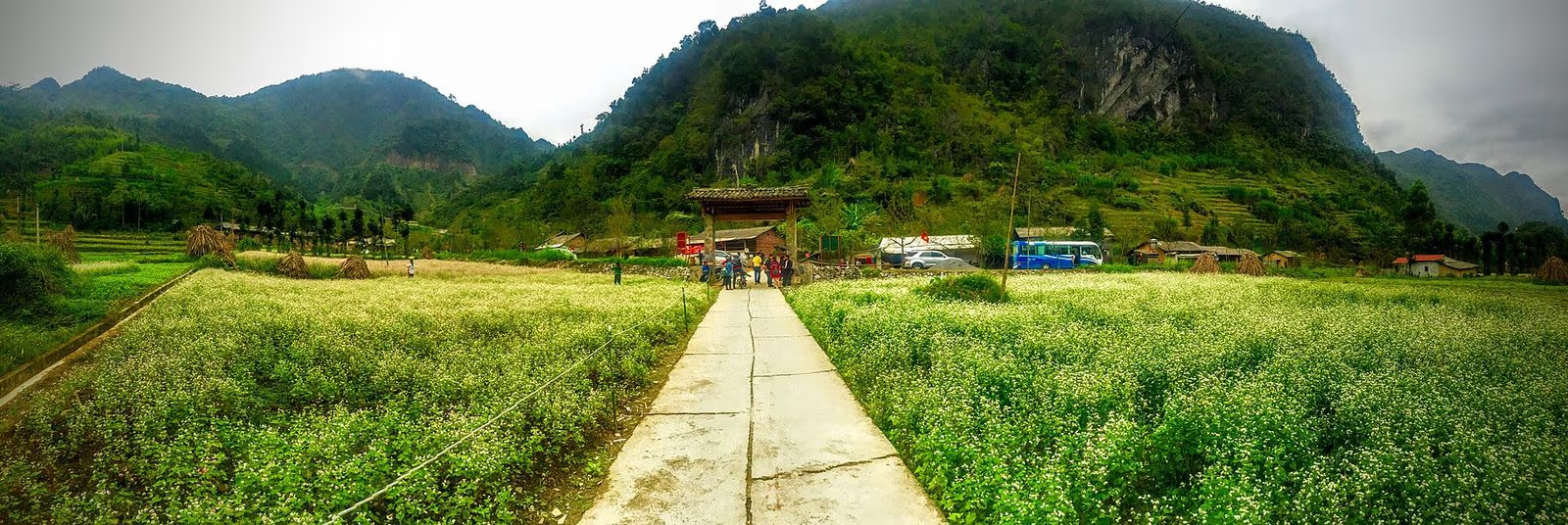
Buckwheat flowers cover the Dong Van Karst Plateau from October to December, with the main bloom in late October and November. The petals open white, turn pale pink and then purple as the weather cools, so a field looks different in the morning and the afternoon. In 2026 the festival opened on 25 October, the fields were sown in three batches on purpose, and officials plan for flowers to last until early December. No source can promise you a week, because the timing moves by two or three weeks from year to year.
That is the honest short answer, and this guide is the long one: what the flower is, how the season has actually run since 2015, where the fields are, what has changed this year on the road to Lung Cu, and what a realistic two-night plan looks like. We checked it between 29 and 31 October 2026 against Vietnamese government, press and travel sources and say plainly where we could not confirm a point. We run Sapa treks, not Ha Giang tours, so we have nothing to sell you here except advice on the Sapa side of your trip.
What You Are Actually Looking At
The plant is buckwheat, called tam giac mach in Vietnamese ("three-cornered grain", for the three-edged seed), an annual 30 to 80 cm tall. Most sources name common buckwheat, Fagopyrum esculentum, as the species on the plateau. A user on Wikimedia Commons labels one local photograph as tartary buckwheat, F. tataricum, and we could not settle it, so we do not say. We also found no source naming the species in the 400 hectares sown for this year’s festival.
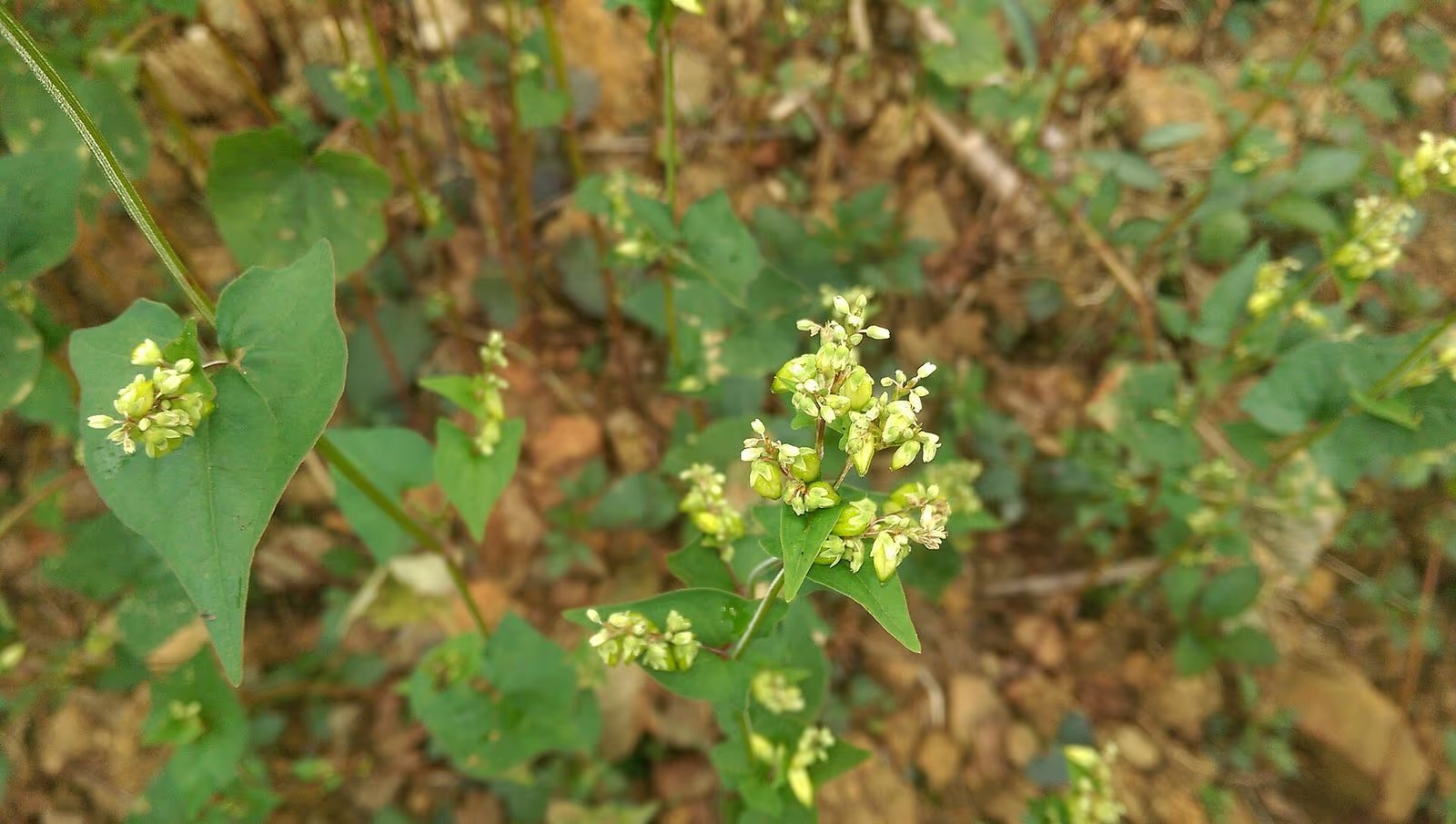
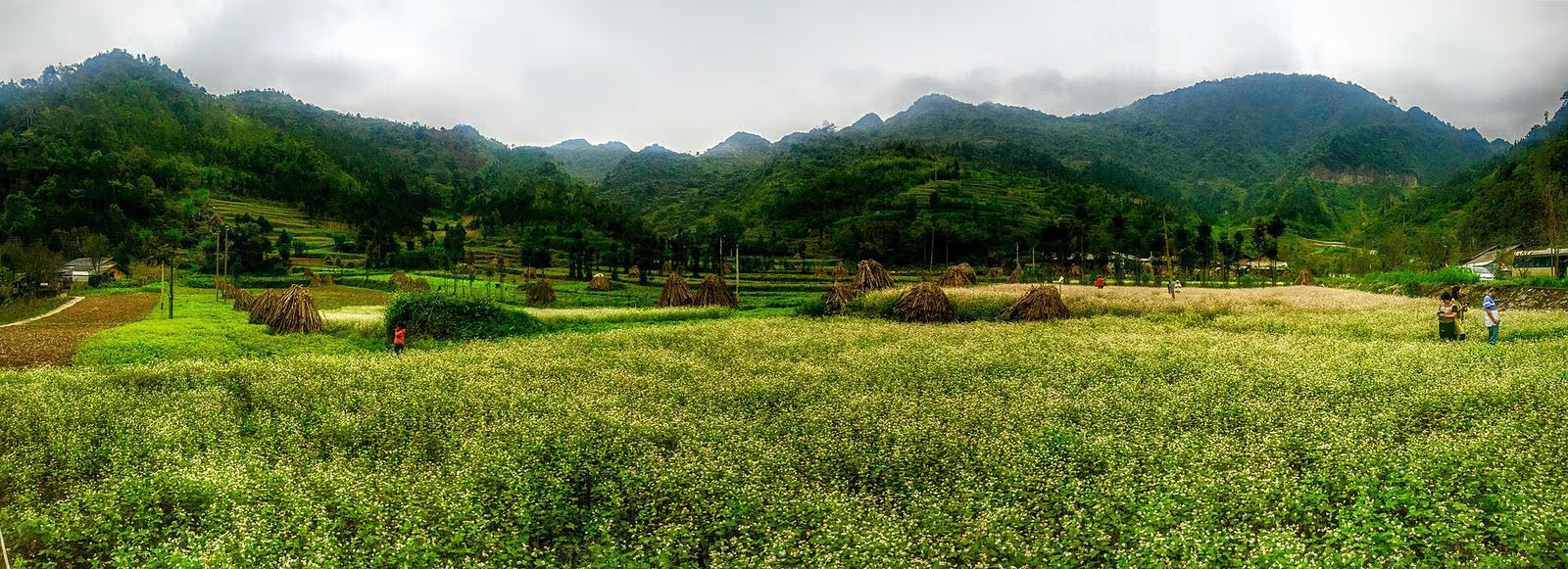
The colours are the reason for the trip. VnExpress describes white flowers first, then light pink, then purplish, and finally dark red as the season ends; the official news agency reported in 2015 that fields shift from white in the early morning to pink in the afternoon, and a 2025 visitor told VTC News the colour changes through the day. VietnamPlus said on 17 October 2026 that the blooms are white or pale pink at first and turn purple and deep pink as the weather cools.
For the Hmong families who grow it, this is a food and feed crop that tourism has turned into a landscape. VnExpress in December 2017 described the seed being made into cakes and brewed into liquor, young plants eaten as greens, and the stems fed to livestock or composted. One family in Pho Cao told the paper that they sow about 5 kg of seed a year, harvest about 30 kg, and keep it for home use because seed prices are low; the province, they said, had encouraged planting for tourism for the previous three years, so families planted more land. The Government news agency has written that the Hmong here grow two buckwheat crops a year. We found no source for "buckwheat honey from Dong Van"; the honey famous there is mint honey.
The Calendar: When Buckwheat Blooms in Ha Giang
The normal window runs from late October to early December, with the peak in October and November, and one field stays in flower for about 20 to 30 days. Sowing starts in September, according to VnExpress, and the plant flowers about a month later; botanical references give five weeks. That arithmetic is why the season is a smear and not a date: the bloom follows the day the seed went in.
Our summary of the press and VnExpress sources above; peaks shift by two or three weeks between years.
Officials now manage that smear on purpose. In 2026 they planned about 400 ha in three batches so that flowers would be at their best when the festival opened and last through December; by 1 October more than 240 ha had been sown across 12 of the 22 communes. On 17 October VietnamPlus reported the first flowers opening at Pho Bang, with Pho Cao, Sung La, Dong Van, Lung Cu and Ma Le also in bloom, and on 21 October a Vietnamese outlet wrote that blooming began in the last ten days of October. The Lung Cu commune said about 70 hectares in 16 villages were staggered to run until early December. Treat that as a forecast: we found no official forecast beyond it.
The drift between years is real. These are the festival openings, which are scheduled around the flowers:
| Year | Edition | Opened | What the reports say |
|---|---|---|---|
| 2015 | 1st | 12 November | First festival, ran to 15 November |
| 2023 | 9th | 28 October | Combined with the UNESCO recognition ceremony |
| 2024 | 10th | 9 November | More than 200 ha planned in three batches |
| 2025 | 11th | 29 November | In full bloom on 8 November across the plateau |
| 2026 | 12th | 25 October | August reports had said 6 November; the date moved |
What the table shows is that the festival date is not the flower date. In 2025 the opening came on 29 November, but VTC News described the plateau in bloom on 8 November, with crowds from morning to late afternoon, and in 2016 Tuoi Tre reported full bloom at Pho Cao in mid-October. A tourism site updated on 3 October 2026 says the timing can shift two to three weeks and that November is quieter than October overall; the site is commercial and we treat both as one source.
How to Check the Bloom Before You Commit
Because the dates drift, the safest habit is to check in the last few days. Our suggestions, which are advice and not findings: ask your hotel in Dong Van or Lung Cu to send photographs taken that morning, not a link from last year; read the local news from the previous 48 hours, since Vietnamese outlets report the first flowers and the pink peak by name of commune; and keep your Ha Giang days flexible enough to move by a week. For 2026 the evidence is that flowers began in mid-October, were widespread by the end of the month, and were planned to continue into early December, which means a trip in the first half of November should find some fields in flower.
Why the Hectares Do Not Add Up
You will read big numbers. A VnExpress photo essay in December 2020 wrote that buckwheat covered more than 5,000 hectares of hillsides at Lung Tao. The 2026 plan, from the authorities, is about 400 hectares, and the 2024 plan was more than 200. The 5,000 figure looks inflated against both, we could not verify it, and we do not repeat it. The plain fact is that the planted area is small compared with the plateau’s roughly 2,350 square kilometres, which is why the best fields are concentrated along a few roads and why the crowds are too.
What Else Is on in October and November
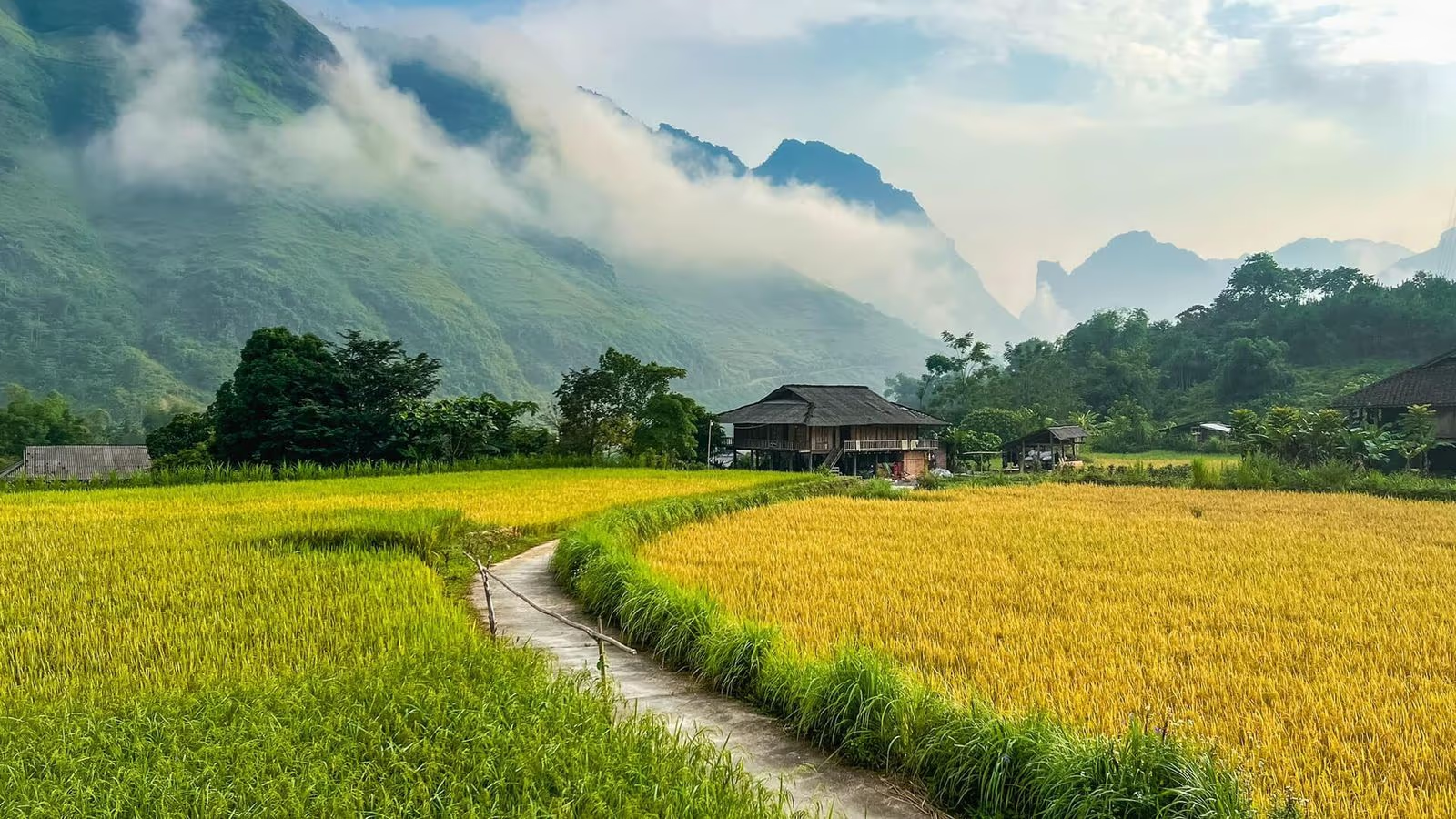
Buckwheat arrives at the end of the rice harvest. One 2026 tourism guide gives October as the peak of the rice harvest and November as the peak of the flowers, and the ripe paddies at Du Gia in Yen Minh are the kind of scene you pass on the way. Dong Van’s Sunday market is a highlight in one guide, and Pho Cao holds a market every six days. Culture events in the season include folk games and craft demonstrations of linen weaving, indigo dyeing and brocade embroidery from October to December.
Other seasons are different plateaus. Peach, plum and pear blossom come in spring, and VnExpress mentions Lao Xa hamlet in Sung La for peach blossom that visitors rarely reach; rapeseed blooms around the lunar new year at Lung Cam, Meo Vac and Sung La. Heavy rain falls from May to October, with rockslides and fog from May to September, and one guide advises avoiding June to August. December to February is the cold fog season, with frost and occasional snow. The Khau Vai love market is held on the 27th day of the third lunar month, in spring, not now.
Photographing the Fields and the People
This part is our advice. Photograph in the first two hours after sunrise and the last hour before sunset, when the colour is deepest and the day-trippers have not arrived. Use a long lens to compress the rows. A drone is a risk near the border: one guide says there are limits, though we did not verify the rule, so ask. And ask before you point a camera at a person, especially a child, a woman working a field or an elder at a market. A smile and a gesture are enough; if the answer is no, put the camera down. In a field that belongs to a family, the courtesy of buying a drink or a cake from the household matters more than your frame.
Getting to Dong Van for the Flowers
Most visitors start in Ha Giang city. From Hanoi it is about 300 km and 5.5 to 6.5 hours by limousine or bus, with fares of roughly 250,000 to 480,000 VND on a transport portal updated on 24 October 2026; that portal gives no official timetable. From Ha Giang city to Dong Van is about 150 km, 3 to 5 hours by road. If you are coming from Sapa, a direct bus reaches Ha Giang city in about six hours; our Sapa to Ha Giang guide has the timetable we found and its doubts. If you would rather not ride, a car with a driver is the usual alternative, and the geopark guide covers what to see once you are there.
The Festival: What It Is and What It Costs
The Buckwheat Flower Festival began in November 2015 under the theme "The Karst Plateau, Thousand Blooming Flowers". The twelfth edition opened at 20:00 on 25 October 2026 at the Youth Square in Dong Van commune, organised by Tuyen Quang People’s Committee, and its events run to the end of December. Until 2024 Ha Giang province organised it; in 2025 it was run at provincial level by Tuyen Quang for the first time, with a target of more than 200,000 visitors.
The programme in recent years has been cultural, not commercial: costume contests, flax weaving, brocade embroidery and instrument making, a QR-code check-in game, bonfire nights in the Lo Lo village of Lo Lo Chai and hot Shan tea corners. In 2026 a Lo Lo culture day was held on 23 October and folk games such as tung con, throwing pao, tug of war and crossbow shooting were listed. We found no article that gives a ticket price for the festival or its fields; entry appears free but this is not stated, so ask locally.
The 2026 opening itself was a staged evening: Baophapluat reported performances titled "Co hen vung hoa tren da" and "Hoi tho cua nui", singers on the bill, fireworks and "thousands" of people. An exhibition of local products ran in Dong Van old town from 21 to 25 October. A trade fair planned for 5 to 11 November was announced in August for a provincial venue away from the plateau, and its dates may have moved with the opening. If you want the festival without the crowd, the weekday mornings in Dong Van are the quietest, though that is our guess and not a count.
Where to Look: Six Places to See the Fields
The plateau has no single "best field", because the batches are scattered along the roads. These six came up in the 2025 and 2026 reports; the distances are from the single VnExpress guide updated on 23 March 2026 unless stated.
Pho Bang
Flower valley- What
- A commune pitched as a "flower valley", with 18 ha of buckwheat in 2026
- Photo spots
- Fields shaped with brocade patterns, traditional houses, people in costume
- Distance
- Not stated in the sources we opened
- Notes
- First place reported in bloom this year (17 October)
Sung La and Lung Cam
Valley- What
- Slopes below limestone cliffs; Pao's house is on the road
- Distance
- Nearly 20 km from Dong Van town
- Season
- Guides say best in October and November
- Notes
- See our geopark guide for the valley and the house
Lung Cu
Border peak- What
- About 70 ha in 16 villages around the flag tower and Lo Lo Chai
- Distance
- 24 km from Dong Van town
- Notes
- More than 1,000 rooms were all booked before the opening; see the rules below
Tham Ma slope
Road- What
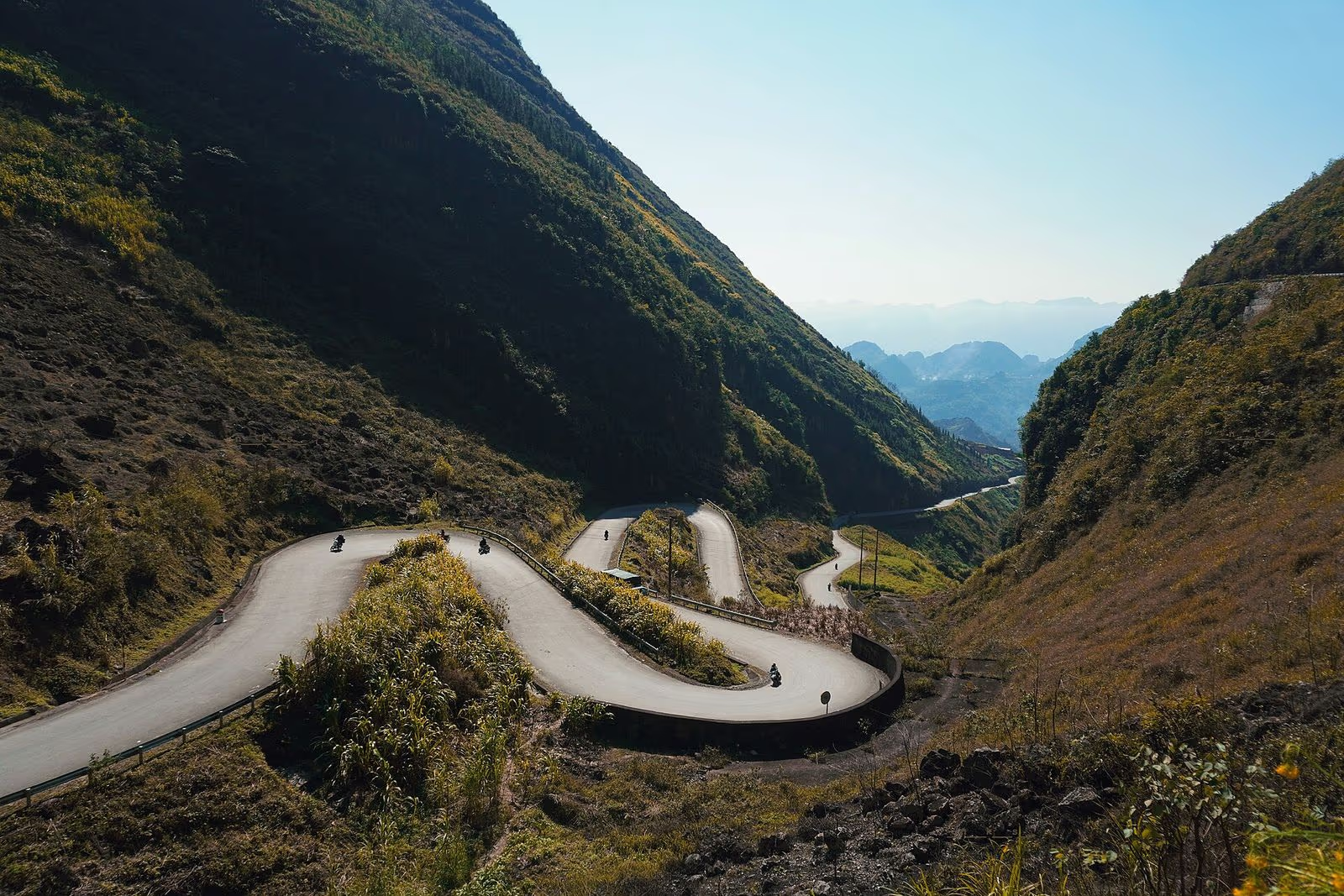
- 5 km, nine bends, on the Yen Minh and Dong Van boundary; planted in layers in 2026
- Notes
- A road with traffic; stop only at the marked pull-ins
Pho Cao
Market town- What
- Old buckwheat country; fields were in full bloom here in mid-October 2016
- Distance
- 25 km from Dong Van town
- Notes
- Market every six days
Quan Ba and Sa Phin
South and east- What
- Heaven's Gate, Thach Son Than hill and the Vuong mansion area are on the 2026 site list
- Distance
- Vuong mansion 13 km from Dong Van town
- Notes
- Lung Phin, Tam Son and Khau Vai are not confirmed as buckwheat sites
There is a second option off the plateau. VnExpress says buckwheat blooms in November on the Suoi Thau grassland in Xin Man, about 35 km from the centre of Bac Ha, which sits on the old mountain route between Sapa and Ha Giang. It is a detour for travellers coming from Sapa, and our Sapa to Ha Giang guide explains why that route is slow.
Crowds, Roads and Rules in 2026
This year the authorities have already acted. Lung Cu commune announced, as reported on 24 October 2026, that passenger vehicles are suspended in Lo Lo Chai village from 17 October 2026 to 28 February 2027, with exceptions for official and licensed tourist vehicles, local motorbike-taxi teams and residents, and that passenger transport on the road to the flagpole is suspended on Saturdays and Sundays from 15 October to the same end date. Pick-up and drop-off points have been set up. Six lodging or food businesses that did not meet requirements were ordered to stop.
Lung Cu had more than 1,000 rooms and 86 lodging and food businesses, and all the rooms were booked before the opening. In 2016 Tuoi Tre already warned that visitors to Dong Van who had not booked ahead would struggle to find a place. If you are travelling in late October or November, book first and go on a weekday. In 2025 VTC News reported cars stopping wherever the flowers were dense, slowing traffic on the mountain roads, and Nhan Dan reported bins, cleaners and toilets added at rest stops after litter appeals. One tourism site estimates 200 or more people queueing for sunset photographs at Lung Cu, Ma Pi Leng and Heaven’s Gate in peak season; it gives no method, so take it as one guide’s impression.
Authorities say they will prevent trampling, flower picking and littering, and that staff will guide visitors along the correct routes. In 2016 some fields charged 10,000 VND a person to enter and photograph; we found no 2026 price, and no 2024 to 2026 report of trampled fields. Our advice, which is not a source: stay on paths, ask before you step into any field, and pay what the family asks.
Weather, Light and What to Wear
November is in the dry season on the plateau, which runs November to April; the wet season is May to October, with rain of 1,750 to 2,000 mm a year and a mean temperature of about 20°C according to VnExpress. We found no weather-station data for Dong Van in November. Two travel guides give 14 to 23°C in Ha Giang city and 8 to 16°C on the high passes, rain of 20 to 40 mm and fog; one adds that 15 to 25°C swings between day and night are normal. These are estimates from tourism sites, not measurements.
For light, we calculated sunrise and sunset ourselves for Dong Van at 23.28°N: about 06:04 and 17:20 on 1 November, 06:22 and 17:12 on 30 November. The mountains cut that, so in valleys the sun arrives 30 to 90 minutes later and leaves earlier. That is why mornings and late afternoons are the time for photographs. Fog on the switchbacks is the common hazard on these roads in the cool months; our road-safety page has the details of the roads. Wear layers, and keep a warm jacket on the pass; our packing guide for Sapa applies here too.
A Two-Night Plan Around the Flowers
Plan at least two nights in or near Dong Van, so that you can see the fields in both morning and afternoon light; this is our inference, not a sourced figure. Ha Giang city to Dong Van is about 150 km and takes 3 to 5 hours, depending on the vehicle. The plan below uses the distances from the VnExpress guide and assumes you reach Dong Van on day one.
Ha Giang city to Dong Van
Drive about 150 km (3 to 5 hours). Stop at Heaven's Gate and Yen Minh, and check the Tham Ma slope late in the day.
Lung Cu and Lo Lo Chai
24 km north of Dong Van. Mind the weekend road rules above; go early, before the tour buses.
Sung La, Pho Bang and the Vuong mansion
Sung La is nearly 20 km, the Vuong mansion 13 km, Pho Cao 25 km. Choose two, not four.
Onward to Meo Vac or back
Meo Vac is about 30 km from Dong Van over the Ma Pi Leng pass; or return to Ha Giang city.
What to Eat in Buckwheat Season
VnExpress lists the local dishes as thang co (a stew), men men (steamed maize meal, not a wine), buckwheat cake, thang den (sweet dumplings), cha au tau, five-colour sticky rice and banh chung gu. Tuoi Tre names cha au tau, Dong Van banh cuon, thang den and buckwheat cake as specialties to try in this season. We found no recipe for the cake, so we do not describe one. Village families offered cake-making, flax weaving and terraced farming as visitor experiences in the 2025 festival.
Safety, Permits and the Province Name
Since April 2026 the Tuyen Quang tourism department has banned unlicensed companies from advertising or selling Loop tours and requires operators to maintain vehicles and gear, after a 19-year-old British tourist died in early April on an easy-rider service, as Tuoi Tre News reported on 16 April 2026. A permit for foreigners entering border areas is the other thing to settle; Decree 299/2025/ND-CP exempts tourist and service zones, we found no official text saying whether the plateau counts, and the fees quoted by tour sellers range from about 230,000 to 275,000 VND. Our Sapa to Ha Giang guide explains the permit in more detail.
One more change: Ha Giang is no longer a province. Under Resolution 202/2025/QH15 it merged into Tuyen Quang on 1 July 2025, Ha Giang city is now two wards, and the press says "Tuyen Quang stone plateau". The flowers, the roads and the tourist name "Ha Giang Loop" are unchanged.
Terraces on Foot Before You Go North
 1-Day Trek
Trekking Through Rice Terraced Fields
The Lao Chai to Ta Van valley day, with a local guide and a finish in Sapa town.
 Local Favourite
Mountain Views and Villages Trek
Quieter ridge and village trails above the valley.
 Homestay
Rice Terraced Fields & Homestay
A night with a local family in the valley.
Autumn in Sapa Is Its Own Season
The same weeks that colour the Dong Van plateau pink are when Sapa’s terraces turn gold and are harvested; our rice harvest guide covers when. Our monthly guides for October, November and the whole year say what to expect. If you plan both regions, Sapa vs Ha Giang compares them, and the Loop guide covers the riding. We can plan the Sapa end of the trip around your onward bus; we do not sell the Ha Giang side.
Rent at Our Office Before You Trek
 Gear Rental
Trekking Boots Rental
Waterproof ankle-support boots. Cleaned and checked before each rental. Available at 105 Thach Son Street.
 Gear Rental
Walking Poles Rental
Trekking poles available to rent at $2/day at our office, 105 Thach Son Street. Essential for descents.
Frequently Asked Questions
They bloom from October to December, with the main bloom in late October and November, on the Dong Van plateau. One field stays in flower for about 20 to 30 days, and the timing shifts by two or three weeks between years. In 2026 officials planned fields in three batches so that flowers would last to early December.
The 12th festival opened at 20:00 on 25 October 2026 at the Youth Square in Dong Van commune and runs to the end of December. Earlier editions opened on 28 October 2023, 9 November 2024 and 29 November 2025, so the opening date is not the flower date. We found no ticket price for it.
They open white, turn pale pink and then purple, and end dark red as the season closes, according to VnExpress. Fields can look white in the early morning and pink in the afternoon. The petals look deeper pink as the weather cools in November.
There is no single best field because the batches are scattered. The 2025 and 2026 reports name Pho Bang, Sung La and Lung Cam, Lung Cu and Lo Lo Chai, the Tham Ma slope, Pho Cao, Heaven's Gate and the Vuong mansion area. Pho Bang was the first place reported in bloom in 2026.
It is busy. Lung Cu had all of its more than 1,000 rooms booked before the 2026 opening, and traffic slowed around the flower fields in 2025. Book accommodation first and go on a weekday. Passenger vehicles are suspended in Lo Lo Chai and on the flagpole road on weekends until 28 February 2027.
November is dry season, with clear days and fog on the switchbacks. Two travel guides give 14 to 23°C in Ha Giang city and 8 to 16°C on the high passes, but we found no weather-station data. VnExpress gives a mean annual temperature of about 20°C and winter lows of 1 to 2°C.
Allow at least two nights in or near Dong Van, which is our own inference. Ha Giang city to Dong Van is about 150 km and takes 3 to 5 hours. From Dong Van, Lung Cu is 24 km, Sung La nearly 20 km, Pho Cao 25 km and Meo Vac about 30 km.
Do not assume you can. The fields belong to local families, and authorities say they will prevent trampling and flower picking. In 2016 some fields charged 10,000 VND a person to enter. We found no 2026 price, so stay on the paths and ask before you step in.