 Sinh Giang
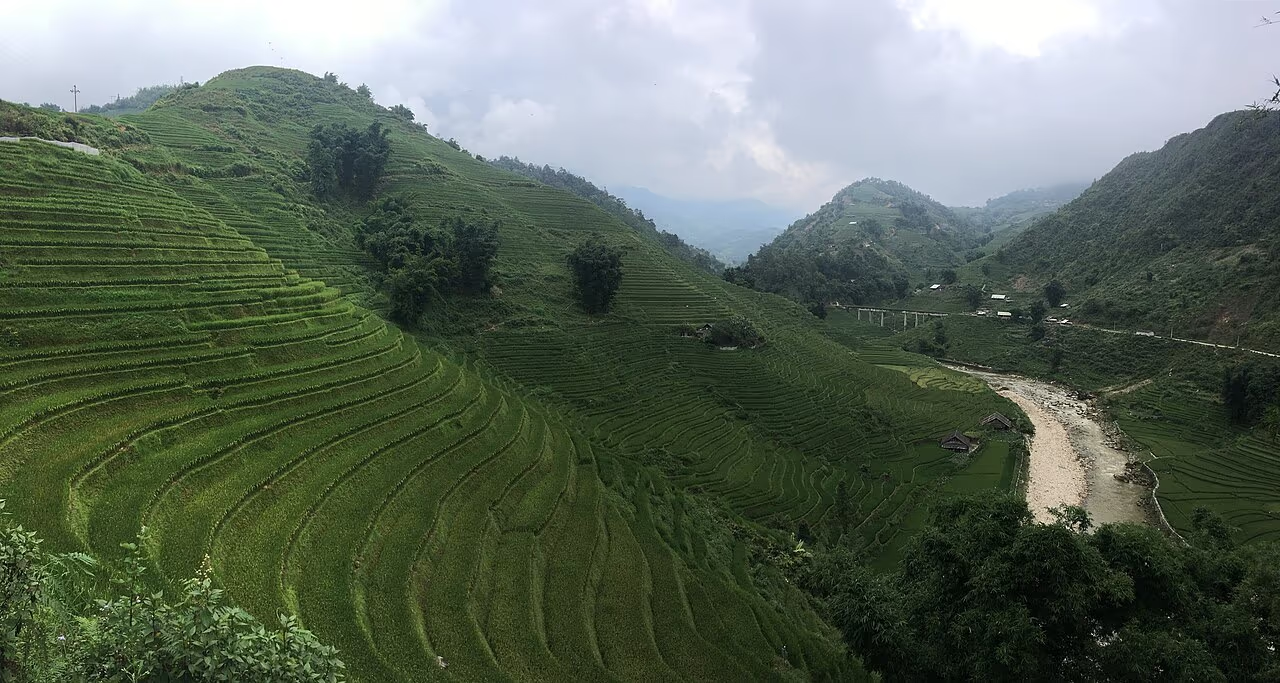
The Sapa rice terraces are the flooded, green, and gold staircases of paddy that cover the Muong Hoa Valley — a roughly 17-kilometre corridor of mountainside southeast of Sapa town, farmed by the Black H'mong and Red Dao. Nearly every famous photo labelled "Sapa" is really of this one valley: the terraces above Lao Chai, Ta Van and Y Linh Ho, cut step by step into the slopes of the Hoang Lien Son range below Fansipan.
This is a guide to seeing them well rather than a trekking route sheet. It covers where the terraces actually are, why they look the way they do and who made them, the two seasons worth timing a trip around, the best viewpoints — from a roadside stop to a full day down among the fields — and how to reach the valley from Hanoi. It's written from the trails our own guides walk every week, so the viewpoints and timing here are the ones we'd point our own guests toward.
You don't have to trek to see the terraces, and that's the first thing worth knowing: the Muong Hoa Valley road gives a wide, free panorama that many travelers are happy with. But walking down into the fields — past the water channels, the buffalo, and the families working the paddies — is a different thing entirely. Both are covered below, so you can match the effort to what you actually came for.
Where Are the Sapa Rice Terraces?
Sapa's rice terraces are concentrated in the Muong Hoa Valley, which runs southeast from Sapa town for about 17 kilometres and holds the villages of Lao Chai, Ta Van, Y Linh Ho, Hang Da and Giang Ta Chai. The Muong Hoa Stream runs along the valley floor, and the terraces climb the slopes on both sides — some within 20 minutes of town, the quieter ones an hour or more out.
That single-crop detail matters more than it sounds. In the lowland Mekong Delta, farmers grow two or three rice crops a year; in Sapa's cool mountain climate there's only one, planted after the terraces flood in late spring and harvested in autumn. The whole visual year of the terraces — bare earth, mirror water, green, then gold — turns on that one slow cycle, which is why the "when" of a Sapa rice-terrace trip is almost as important as the "where."
The valley isn't the only place terraces appear around Sapa — you'll see smaller pockets on the road out toward Ta Phin to the north, and on the approach to Silver Waterfall on the Tram Ton Pass road — but the Muong Hoa Valley is where they're widest, deepest, and most continuous. When people search for "Sapa rice terraces," this valley is what they mean, whether they know the name or not.
Why the Terraces Look the Way They Do
The terraces exist because the mountainsides are too steep to farm flat, so generations of Black H'mong and Red Dao families cut them into level steps by hand and fed water down through them from stream to stream. Each terrace is a shallow bowl that holds a few centimetres of water; the low earth walls, or bunds, keep the water from running straight downhill, so a single mountain stream can irrigate hundreds of paddies stacked below it.
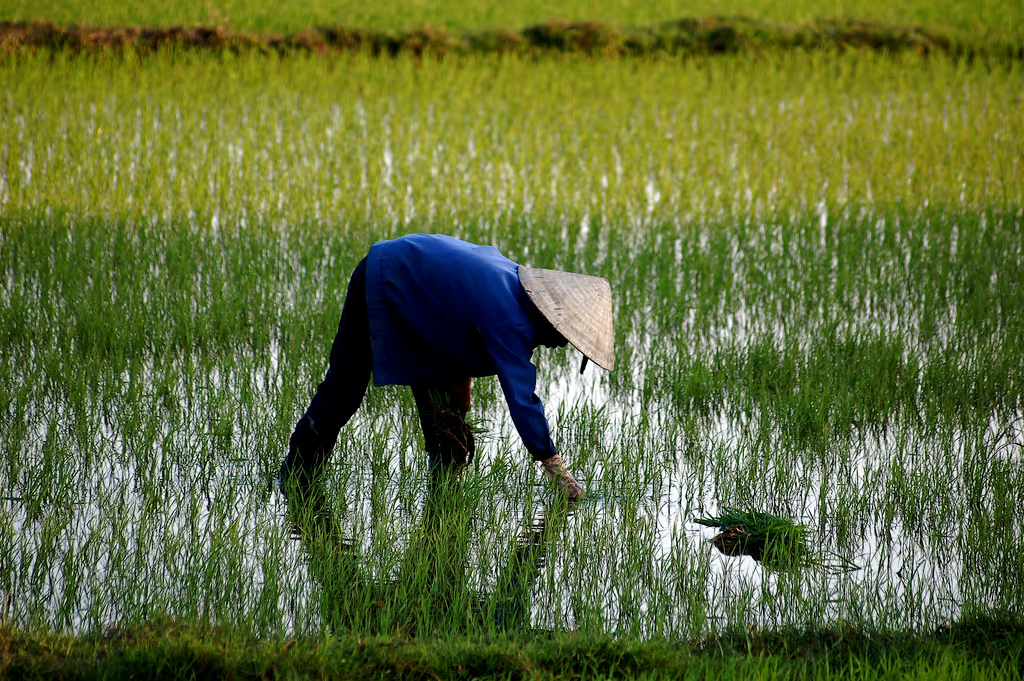
None of this was built quickly or by machines. Some of the terraces in the valley are more than a century old, and the same families still farm them, repairing the bunds each spring before the water goes in. This is why the landscape feels alive rather than staged: you're not looking at a scenic overlook that was landscaped for tourists, but at working farmland that happens to be beautiful. The people you'll pass on a trek aren't performing — they're weeding, carrying seedlings, or moving a water buffalo between paddies.
The engineering underneath is quietly clever. Water is led off the Muong Hoa Stream and its tributaries through small hand-dug channels and lengths of split bamboo, then dropped from the highest terrace down through every paddy below it, one lip at a time. Because a whole slope shares a single water source, the families along it also share the timing — who floods first, who repairs which channel — a co-operation worked out over generations rather than written down anywhere. When you notice a thin bamboo pipe carrying a trickle across a path, that's the entire system in miniature.
The farming year sets the rhythm you'll see. In late spring the buffalo plough the flooded terraces into soft mud; the seedlings are transplanted by hand through May and June; the rice grows and is weeded through the wet summer; the harvest comes in autumn, cut with sickles and threshed at the field edge. Then the terraces rest over winter as brown stubble until the cycle begins again. Almost everything travelers find beautiful about the valley — the mirror water, the green, the gold — is simply a stage in that one slow year of work.
It's worth understanding the two main communities you'll meet, because they aren't interchangeable. The Black H'mong, recognisable by their indigo-dyed hemp clothing, farm most of the central valley around Lao Chai, Y Linh Ho and Ta Van. The Red Dao, whose women often wear red headscarves and heavy silver jewellery, are more concentrated toward Ta Phin and Giang Ta Chai. Both build terraces, but their villages, languages and dress are distinct — something a short roadside stop misses entirely, and a good reason to walk if you can. Our fuller guide to Black H'mong culture in Sapa goes deeper into who farms these hills.
The Two Seasons Worth Timing a Trip Around
The Sapa rice terraces are at their most photogenic in two short windows: the flooded "water-mirror" weeks of May and June, and the golden harvest from mid-September to mid-October. Between and around those, the terraces are still worth seeing — lush green through summer, bare brown in winter — but if a particular look is what you're chasing, timing matters.
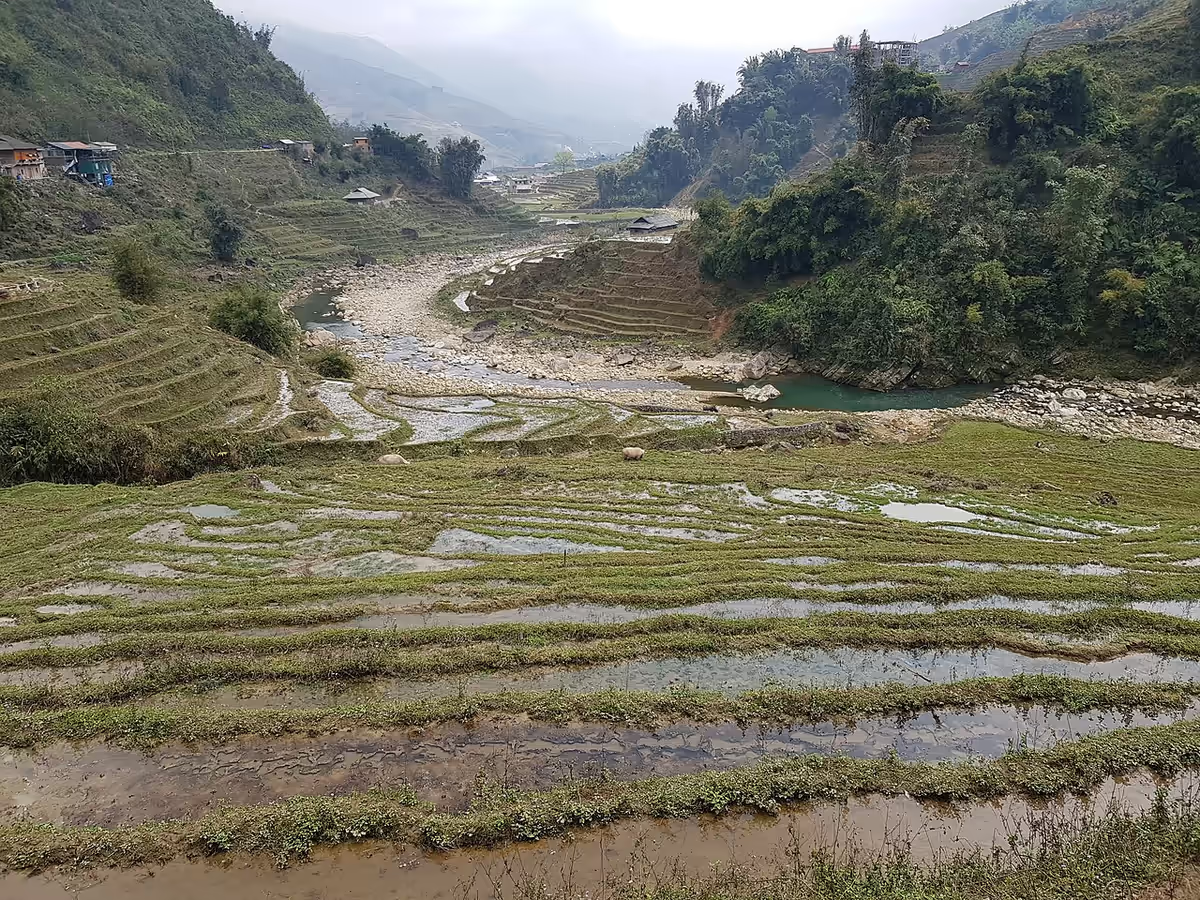
Water season (May–June). Just after the terraces are flooded and the young seedlings go in, the paddies sit like a staircase of mirrors, reflecting the sky and the surrounding peaks. This is the shortest and least predictable window — it depends on exactly when each village floods its fields — but on a clear morning it's the most striking version of the valley. It also overlaps the start of the summer rains, so pack a rain layer and accept that some mornings will be misty.
Green season (July–August). Through midsummer the rice grows tall and the whole valley turns a deep, even green. It's the least "iconic" look but arguably the most peaceful to walk through, and crowds are thinner than in the golden weeks. The trade-off is rain: July and August are the wettest months, and the steeper trail sections around Y Linh Ho get slippery.
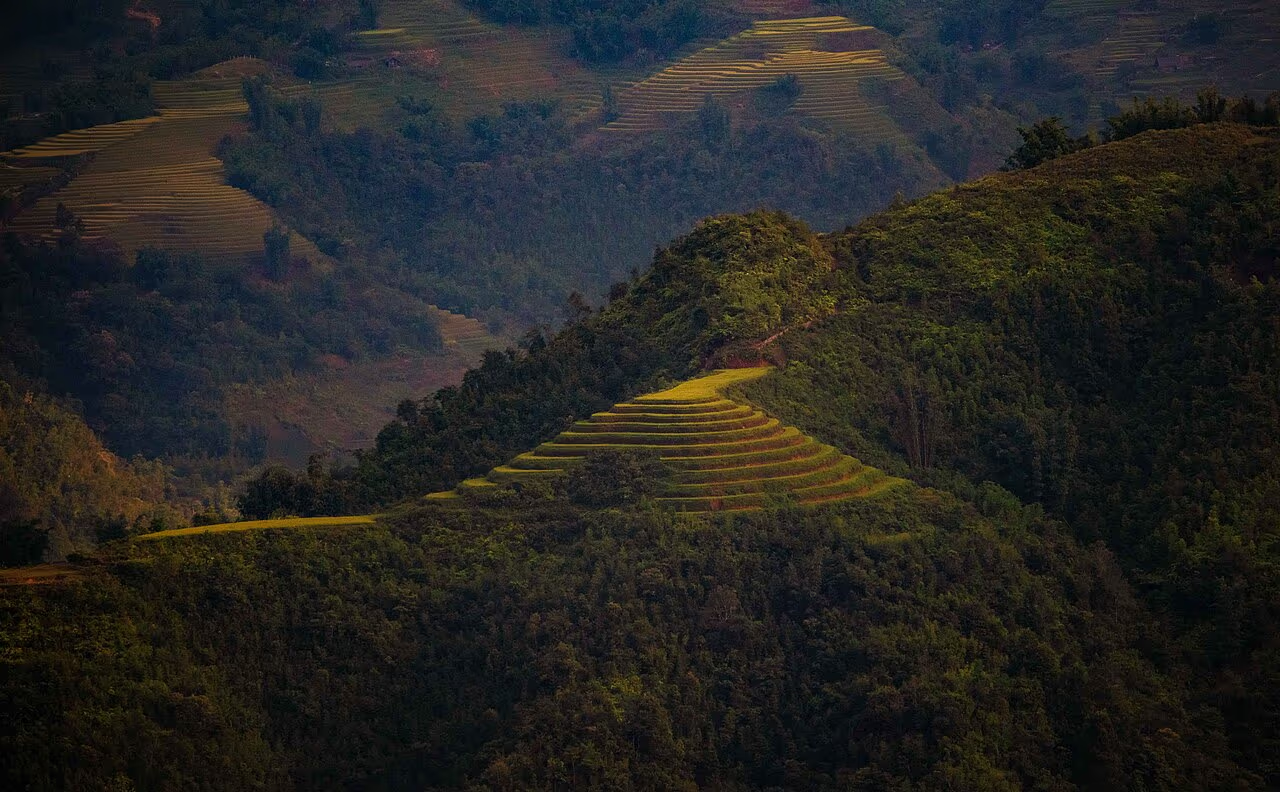
Golden season (mid-September–mid-October). This is the picture most people have in their heads: the ripe rice turns the terraces gold right before the harvest, and the valley is at its most dramatic. It's also the busiest and most heavily booked window of the year, so homestays and small-group treks fill early. If your trip is built specifically around the gold, our dedicated guide to the Sapa rice harvest season tracks the exact weeks the terraces ripen, month by month.
Outside those windows, late autumn and winter leave the terraces as bare brown earth and stubble — quieter, mistier, and better for travelers who care more about empty trails than photographs. For a full month-by-month breakdown of weather, crowds and conditions, see our guide to the best time to visit Sapa. And if you're deciding between Sapa and other terraced regions of the country, our overview of rice terraces across Vietnam compares Sapa with Mu Cang Chai, Hoang Su Phi and Y Ty.
The golden window shifts a little each year with the weather, and it's shorter than most travelers expect — often just two to three weeks. If you're travelling specifically for the harvest, message us close to your dates and we'll tell you honestly how far along the rice is in Lao Chai and Ta Van, rather than you booking blind on a calendar average.
The Best Viewpoints for Sapa's Rice Terraces
The best single viewpoint is the Muong Hoa Valley road above Lao Chai and Ta Van, which gives the widest panorama without any walking — but the valley rewards getting off the road, and the six spots below range from a five-minute stop to a full day on foot. They're listed roughly from easiest to reach to most immersive.
1. The Muong Hoa Valley Road (Lao Chai–Ta Van)
The paved road that runs southeast out of Sapa town toward Lao Chai and Ta Van is the classic panorama, and the one behind most postcard shots. There are several pull-offs where the valley opens up beneath you, terraces falling away on both sides toward the Muong Hoa Stream. You can reach it by car, motorbike or a short taxi ride in 20–40 minutes and never leave the tarmac. It's the right choice if you have limited time or mobility, or simply want the wide view before deciding whether to walk.
2. Ham Rong Mountain
Rising directly above Sapa town, Ham Rong ("Dragon Jaw") Mountain is a landscaped park with paved paths climbing to viewpoints that look out over the town, the valley and the terraces beyond. It's the easiest elevated view in the area — no trekking, just steps — and works well on an arrival afternoon before a bigger day. The gardens are touristy, but the top-level lookouts over the Muong Hoa Valley are genuinely good, especially in late afternoon light.
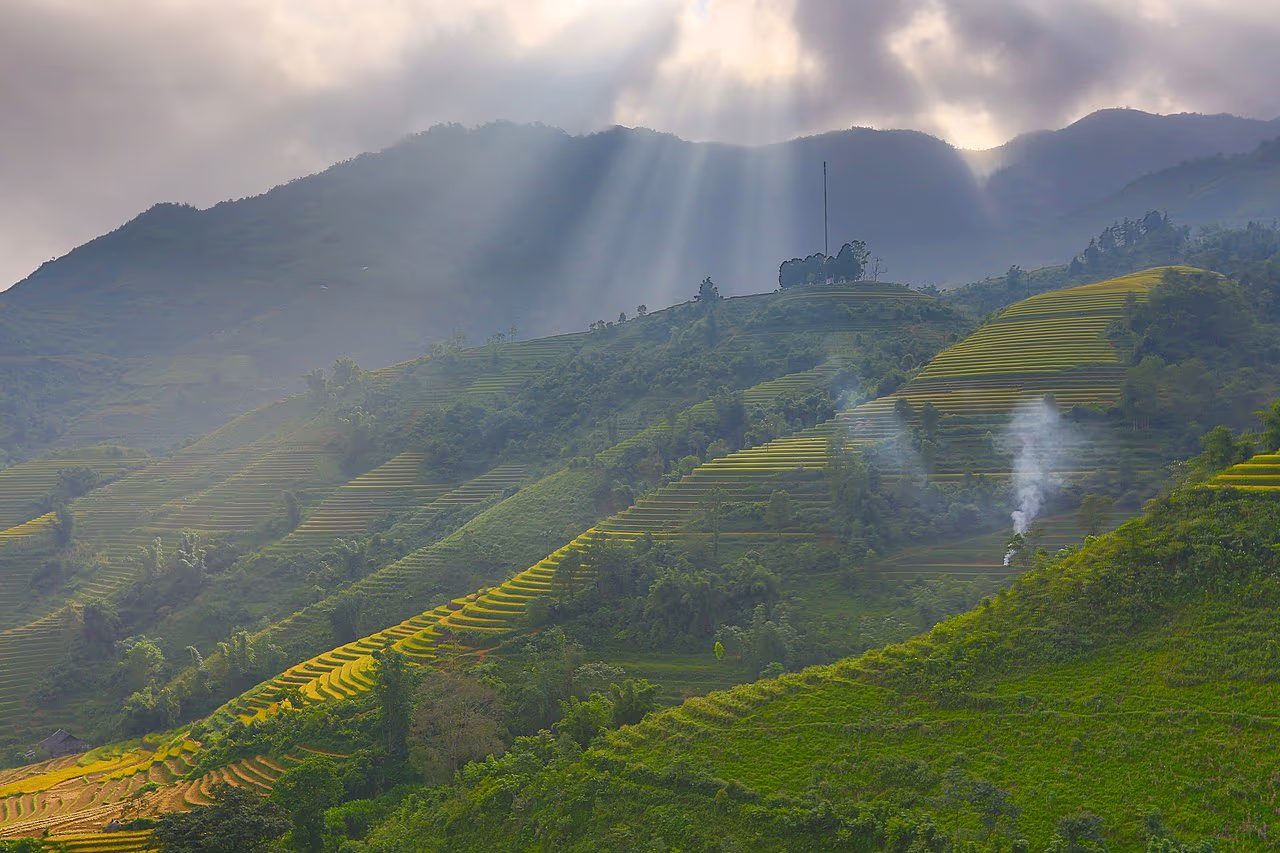
3. Heaven's Gate & the Tram Ton Pass Road
North of town, the road toward Tram Ton Pass — the highest road pass in Vietnam, on the shoulder of Fansipan — climbs to the viewpoint known as Heaven's Gate. It looks over a different side of the range than the Muong Hoa Valley, with Fansipan on clear days and Silver Waterfall on the way up. There are fewer terraces here than in the main valley, but the sense of altitude and the mountain backdrop are the draw. Combine it with the valley road for two contrasting views in one day by car or motorbike.
4. Y Linh Ho & the Upper Valley
Y Linh Ho, a scattered Black H'mong hamlet on the steeper upper slopes of the valley, sits among some of the most vertical terraces in the area. You reach it on foot, usually as the first leg of a Lao Chai–Ta Van trek, dropping down narrow paths between the paddies. This is where the terraces stop being a view and become something you're standing inside — bunds at eye level, water channels underfoot. It's steeper and muddier than the lower valley, which is exactly why it feels more remote.
5. Ta Van & Giang Ta Chai
Further down the valley, Ta Van is the usual overnight base and one of the best places to simply sit among the terraces rather than look at them from above. Across the stream, the Red Dao village of Giang Ta Chai adds a bamboo forest and a waterfall to the terraced scenery. From the Ta Van side you get long, gentle views back up the valley — softer than the dramatic upper slopes, and easier walking. Our Ta Van village guide covers this stretch in detail.
6. Cat Cat Village
Closest to town, Cat Cat is a Black H'mong village about 2 kilometres downhill from the centre, set among terraces and water wheels with a waterfall at the bottom. It's the most developed and most visited of the valley villages — busy, with an entrance fee and plenty of stalls — but it's also the easiest terrace scenery to reach on foot if you only have a spare afternoon. For a fuller picture of the crowds and what's worth your time there, see our Cat Cat Village guide. For the quieter alternatives, our roundup of the best villages near Sapa compares all of them.
One-Day Treks Through the Muong Hoa Valley Terraces
 1 Day
1 Day
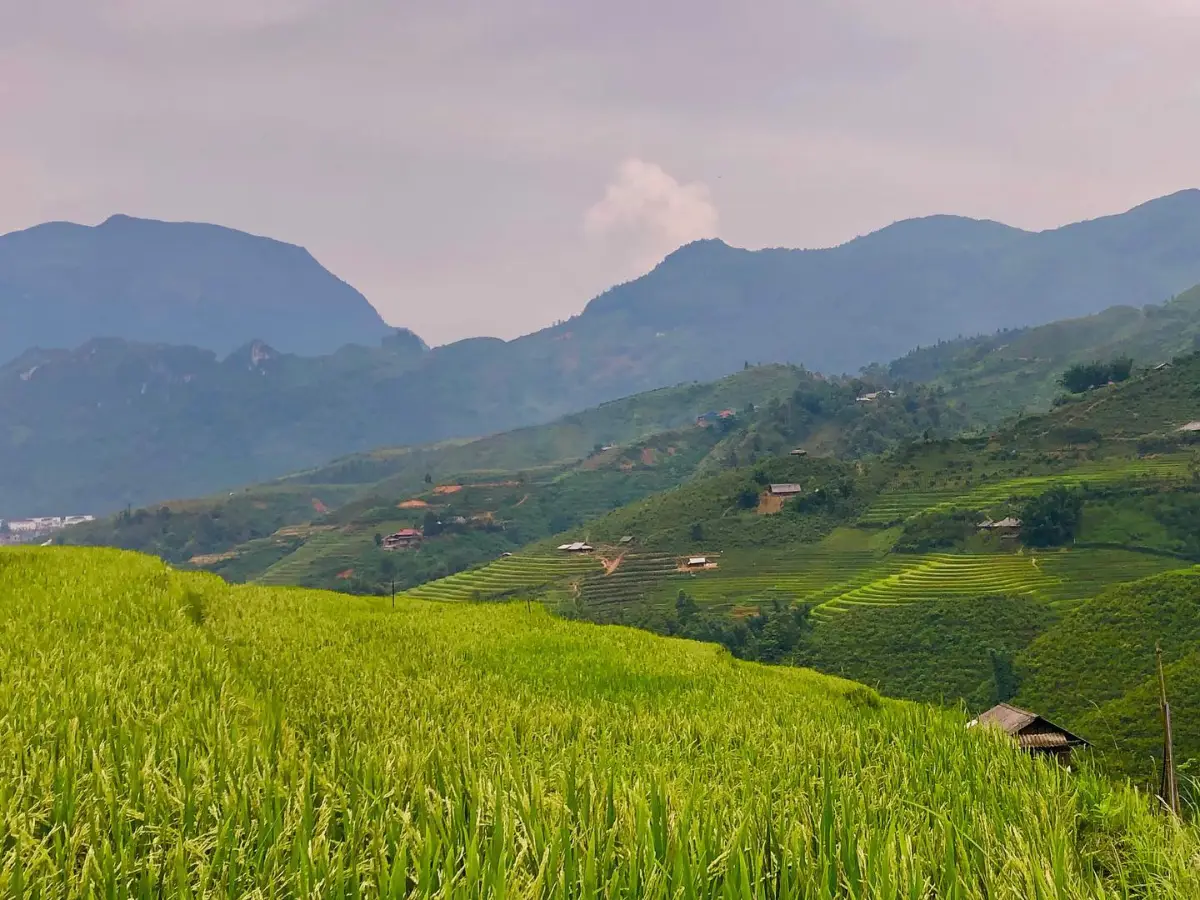
Trekking Through Rice Terraced Fields
The classic day through Lao Chai and Ta Van, right down among the terraces along the valley floor.
 1 Day
1 Day
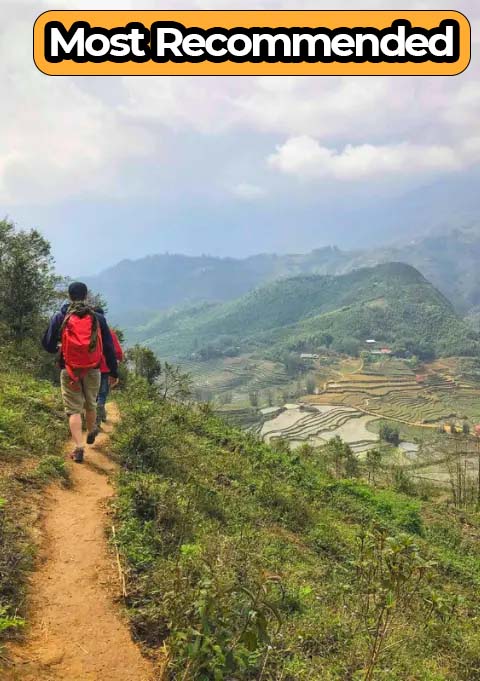
Mountain Views and Villages Trek
Higher viewpoints over the valley plus village stops, for travelers who want the panorama and the paths.
1 Day
Rice Paddies and Cultures – Easy Hiking
A gentler pace focused on the terraces and the families who farm them, with plenty of time to stop.
The Terraces Through a Day: Best Light
If photographs are the point, the terraces look completely different depending on the hour, and the best light is early — before the midday sun flattens everything out. Here's how a clear day in the valley tends to unfold, and when each look is at its best.
Dawn mist
Cloud sits in the valley floor; peaks float above it. Best from a high viewpoint like Ham Rong.
Mist lifts
The fog burns off from the top down, revealing the terraces in soft, even light.
Full morning
Clear, bright, and the best time to be walking down among the fields.
Midday flat
Overhead sun washes out contrast — a good time to stop for a family lunch.
Afternoon warmth
Light lengthens and the terraces regain their texture and colour.
Golden hour
Low sun rakes across the bunds; in autumn the gold rice glows brightest now.
The practical takeaway: if you only have a roadside stop, aim for the first two hours after sunrise or the last two before sunset, and skip the middle of the day. If you're trekking, an early start isn't just about beating the heat — it's about being down in the terraces while the light is still soft and the mist is still moving through the valley.
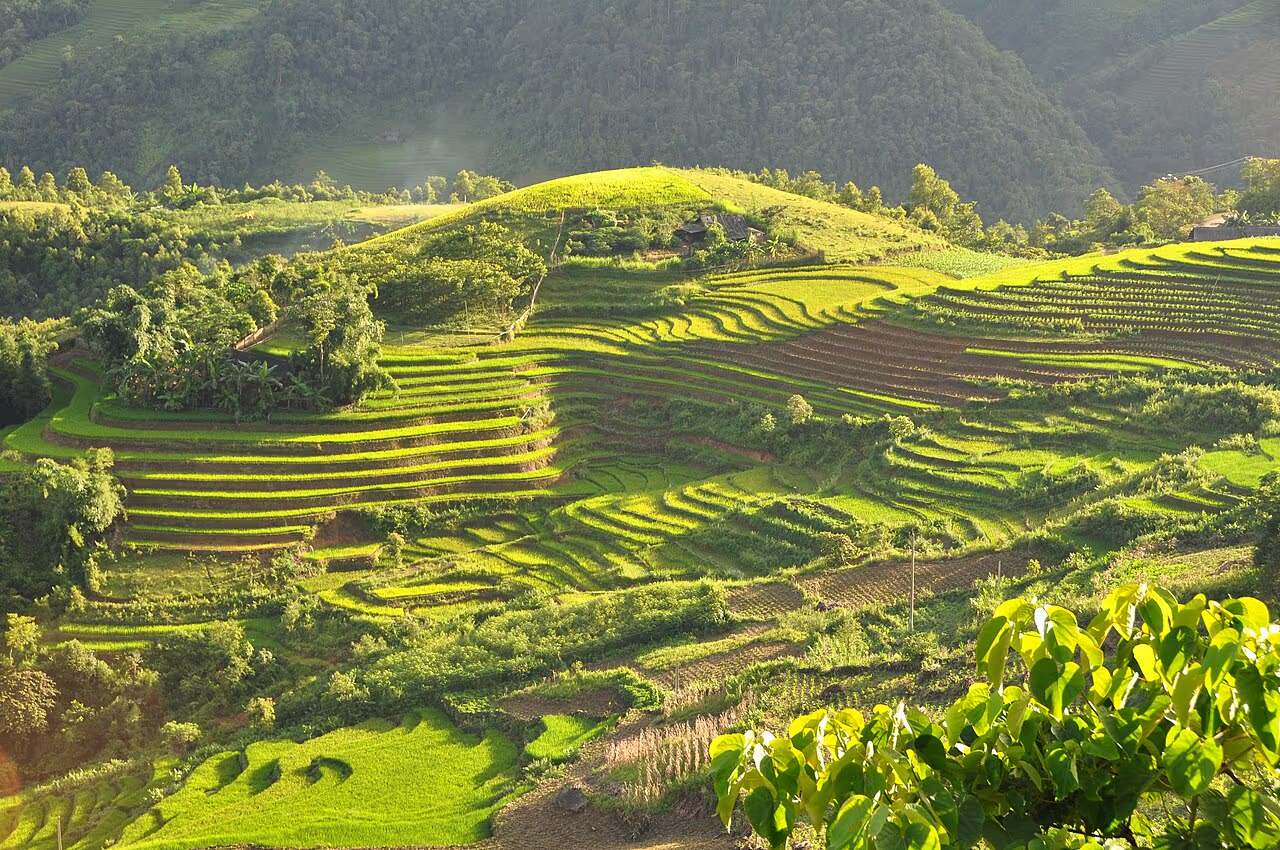
How to Actually Experience the Terraces
There's no single right way to see the Sapa rice terraces — it depends entirely on how much time and energy you want to spend. The table below lays out the four common approaches side by side, from a quick roadside view to a full homestay night among the fields, so you can match the effort to what you're after.
| Way to See Them | Time | Effort | Best For |
|---|---|---|---|
| Roadside viewpoint | 1–2 hours | None | Limited time or mobility; the panorama only |
| Half-day trek | 3–4 hours | Easy–moderate | A taste of walking among the fields without a full day |
| Full-day trek | 5–6 hours | Moderate | The classic Lao Chai–Ta Van experience, valley floor to village |
| 2-day trek + homestay | 2 days | Moderate | Sleeping among the terraces; the deepest version |
The honest broker's answer: if you have one day, do the full-day Lao Chai–Ta Van trek — it's the best balance of scenery and effort, and it's what most of our guests remember most. If you have two days, add the homestay night; the valley after the day-trippers leave is a different, quieter place. If you truly only have a couple of hours, the Muong Hoa Valley road viewpoint is genuinely worth it and nobody should feel they've "missed" Sapa for taking it. For the full trekking detail — trail forks, distances and difficulty — our Muong Hoa Valley trekking guide walks through the route step by step.
Overnight Treks With a Homestay in the Valley
2D1N
Rice Terraced Fields & Homestay
A full trekking day through the terraces and a night with a local family in Ta Van.
2D1N
Mountain Views & Muong Hoa Valley Trek
More valley ground and higher viewpoints, with a homestay night among the fields.
Getting to the Muong Hoa Valley
You reach the rice terraces by first getting to Sapa town — an overnight sleeper bus or train from Hanoi, roughly 5–6 hours — and then covering the last few kilometres into the valley by road transfer, motorbike, or on foot with a guide. The terraces begin close to town, so the final leg is short once you've made the longer Hanoi journey.
How Travelers Reach Sapa From Hanoi
The valley is a short transfer from Sapa town — but the Hanoi–Sapa leg is the part to plan. Here are the three common options.
 Budget
Sleeper Bus
Overnight or day departures, flat reclining seats.
 Popular
Limousine Van
Door-to-door hotel pickup, 9-seat comfort van.
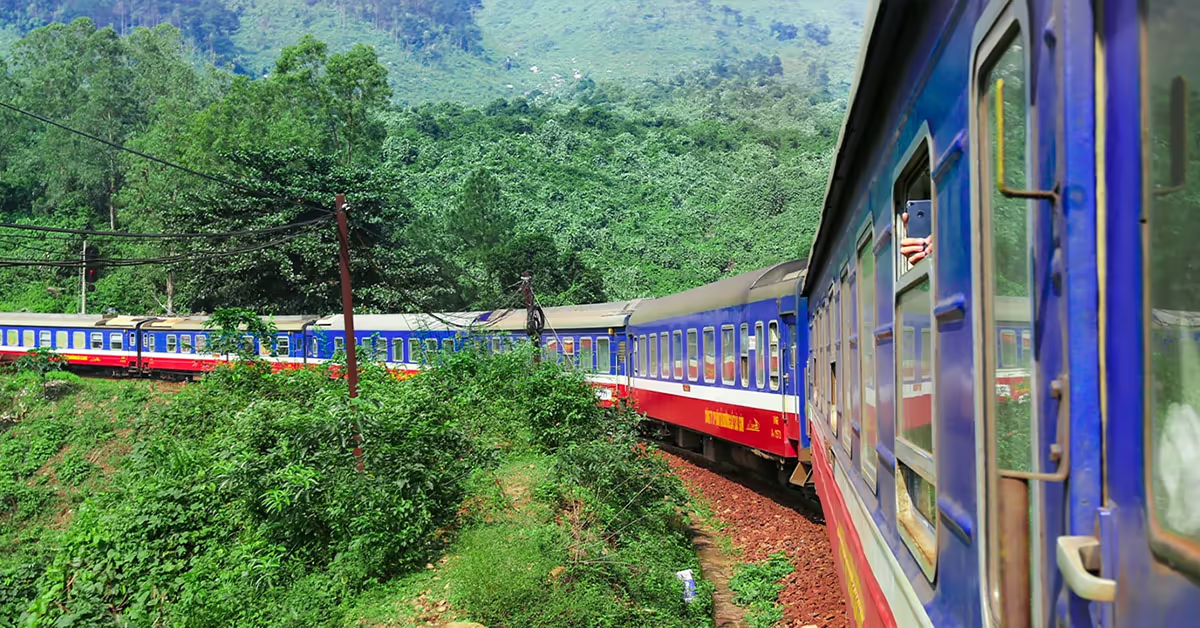 Scenic
Overnight Train
Hanoi to Lao Cai, then a 1-hour transfer to Sapa.
Once you're in Sapa town, the Muong Hoa Valley road viewpoints are 20–40 minutes away by car or motorbike, and the trailheads for Lao Chai and Ta Van are a similar distance. If you're joining a trek with us, we pick you up at your hotel anywhere in Sapa town, or you can meet us at our office at 105 Thach Son Street. For the full breakdown of times, prices and booking, see our guide on how to get to Sapa.
Visiting the Terraces Respectfully
The single most important thing to remember is that the terraces are working farmland and the villages are people's homes, not an open-air attraction — so walk on the paths and bunds that are clearly used as trails, and don't climb across planted paddies for a photo. A trampled bund can drain a terrace, and a footprint through young seedlings is real damage to someone's crop.
A few other things make you a better guest in the valley. Ask before photographing people close up — a smile and a gesture toward your camera is usually enough, and many will happily say yes. If you buy handicrafts from the H'mong and Dao women who walk the trails, a fair price supports the same families farming the terraces; if you're not buying, a friendly "no thank you" is fine, but the hard-sell reputation is overstated once you're actually walking with them. Take your rubbish out with you — there are no bins on the trails — and if you stay in a homestay, a little flexibility about simple rooms and shared bathrooms goes a long way. None of this is complicated; it mostly comes down to remembering you're walking through a living community, not a landscaped park.
What to Bring to See the Terraces
How much you need depends on whether you're stopping at a viewpoint or walking down into the fields. For a roadside view, comfortable shoes and a rain layer are enough. For any trek among the terraces, a few things matter more in Sapa than elsewhere in Vietnam:
- Walking poles — genuinely useful on the steep, muddy bunds around Y Linh Ho and Lao Chai; available to rent at our office if you'd rather not pack them.
- Shoes with grip — light hiking boots or trail shoes, not smooth-soled sneakers, since the terrace paths are uneven dirt and stone.
- A rain jacket or poncho — the valley weather shifts within an hour, and the water and green seasons both carry afternoon rain.
- Sun protection — there's little shade among open terraces; a hat and sunscreen matter even on cool days.
- Cash in small notes — for family lunch stops, handicrafts and homestays, which rarely take cards.
- A dry bag or ziplock for your phone and camera, so a passing shower doesn't end your photography for the day.
Frequently Asked Questions
Sapa's rice terraces spread across the Muong Hoa Valley, a roughly 17-kilometre corridor running southeast from Sapa town. The main terraced villages are Lao Chai, Ta Van, Y Linh Ho, Hang Da and Ta Phin, most of them within 30 to 60 minutes of town by road or on foot.
The terraces flood and turn mirror-like in May and June, grow lush green through July and August, and turn gold for the harvest from mid-September to mid-October. After the harvest and through winter the terraces are bare brown earth and stubble.
The Muong Hoa Valley road above Lao Chai and Ta Van gives the widest, most photographed panorama. Ham Rong Mountain in town offers an easy paved viewpoint, while the Heaven's Gate road at Tram Ton Pass looks over the far side of the range toward Fansipan.
No. You can see the terraces from the Muong Hoa Valley road by car or motorbike without walking far. But a half-day or full-day trek takes you down among the terraces themselves and through the villages, which is a completely different experience from a roadside viewpoint.
They were hand-carved over many generations by the Black H'mong and Red Dao, who cut level steps into the mountainsides and channel stream water down from one terrace to the next. Some terraces in the valley are more than a century old and are still farmed by the same families.
Most travelers reach Sapa by overnight sleeper bus or train from Hanoi, then cover the last few kilometres into the valley by road transfer, by motorbike, or on foot with a guide. We pick you up at your hotel in Sapa town, or you can meet us at our office at 105 Thach Son Street.
Rent at Our Office Before You Trek
 Gear Rental
Trekking Boots Rental
Waterproof ankle-support boots. Cleaned and checked before each rental. Available at 105 Thach Son Street.
 Gear Rental
Walking Poles Rental
Trekking poles available to rent at $2/day at our office, 105 Thach Son Street. Useful on any valley trek.