 Sinh Giang
Vietnam's cities don't feel like one country so much as three. Hanoi in the north is old, dense, and quietly proud; Saigon in the south is loud, fast, and built for tomorrow; and the central cities — Hue, Hoi An, Da Nang — sit between them, slower and saturated with history. Choosing which Vietnamese city to visit is really choosing which version of the country you want.
It helps to think of it as three Vietnams. The north, around Hanoi, is the oldest and most traditional — cooler, more reserved, its food subtle and its history layered. The centre, from Hue down to Hoi An and Da Nang, is the country's cultural and imperial heart, slower-paced and saturated with heritage. And the south, around Saigon, is the new Vietnam — tropical, fast-growing, business-minded, and open late. Pick the version that excites you, and the city choices mostly make themselves.
Most trips touch two or three of them by default, because the cities double as the hubs for everything around them: Hanoi for the northern mountains and Ha Long Bay, Da Nang for the central coast, Saigon for the Mekong. And here's the thing we tell travelers most often — the single best day you spend "based in a city" is frequently the day you leave it. The mountain town of Sapa, a night's bus from Hanoi, is the trip many of our guests end up rating above any city on this list. More on that under Hanoi.
Below are the eight Vietnamese cities worth your time, ranked roughly by how many travelers should build a stop around them, with honest notes on what each is for, how long it deserves, and what most visitors miss. We start with the two that define the country's poles.
Hanoi vs Saigon — Two Ends of Vietnam
If you only have time for one big city, it usually comes down to these two — and they could hardly be more different. The radar below maps how Vietnam's two giants compare on the things that actually shape a city trip. Neither "wins"; they're simply built for different travelers.
The short version: Hanoi is the better base — more walkable, richer in history, and the launchpad for Sapa, Ha Long Bay and Ninh Binh. Saigon is the better night out and the easier landing if you're flying in from elsewhere in Asia. First-timers chasing the classic Vietnam almost always start in Hanoi.
One more way to read the chart: the two cities barely overlap. Where Hanoi is strongest — walkability, day trips, layered history — Saigon is merely good; where Saigon shines — nightlife, modern dining, sheer pace — Hanoi is quieter. That's exactly why so many travelers refuse to choose and simply do both, and why the order usually runs north to south, saving Saigon's late nights for the end of the trip.
1. Hanoi — The Cultural Capital
Hanoi is the Vietnamese city to visit if you only visit one. A thousand years old, it wears its history on every corner: the tangled Old Quarter where 36 streets still carry the names of the trades once practised on them, the tree-lined French Quarter with its opera house and colonial villas, and Hoan Kiem Lake at the centre of it all, where the city slows to a crawl at dawn for tai chi before the motorbikes wake up.
What makes Hanoi special isn't a single landmark — it's the density. In one morning you can eat a bowl of pho at a stall that's served it for forty years, drink an egg coffee in the alley where it was invented, watch a thousand-year-old water-puppet show, and get lost in a market that sells everything from votive paper to live eels. Give it three days: one for the Old Quarter and the lake, one for the museums and the French Quarter, and one for a day trip.
What most visitors miss in Hanoi is the city beyond the Old Quarter's tourist core. The lakeside neighbourhood of Tay Ho (West Lake) is where Hanoians go to slow down — cafes over the water, the centuries-old Tran Quoc Pagoda, and the city's best weekend brunches. The Temple of Literature, Vietnam's first university founded in 1070, is the calmest and most beautiful corner of the centre, and the viral "Train Street", where a working railway runs within arm's reach of the cafe tables, is worth a quick look. Hanoi rewards wandering far more than it rewards ticking off a list.

And here is the most important thing to know about basing yourself in Hanoi: it's the gateway to the experiences that consistently beat the cities themselves. Ha Long Bay is three hours east. Ninh Binh's karsts are two hours south. And five to six hours northwest — an easy overnight sleeper bus — is Sapa, the mountain town whose rice terraces and hill-tribe villages are, for many of our travelers, the single best day of the entire trip. If you build your route around Hanoi, you're really building it around everything Hanoi can reach.
"We loved Hanoi — the food, the chaos, the coffee. But the day we took out of the city, trekking the Sapa terraces and having lunch with a H'mong family, was the one we talk about most. Base in Hanoi, but don't stay in it the whole time."
— Daniel & Aoife K., Dublin, Ireland (October 2025)
Trek Sapa — A Night's Bus from Hanoi
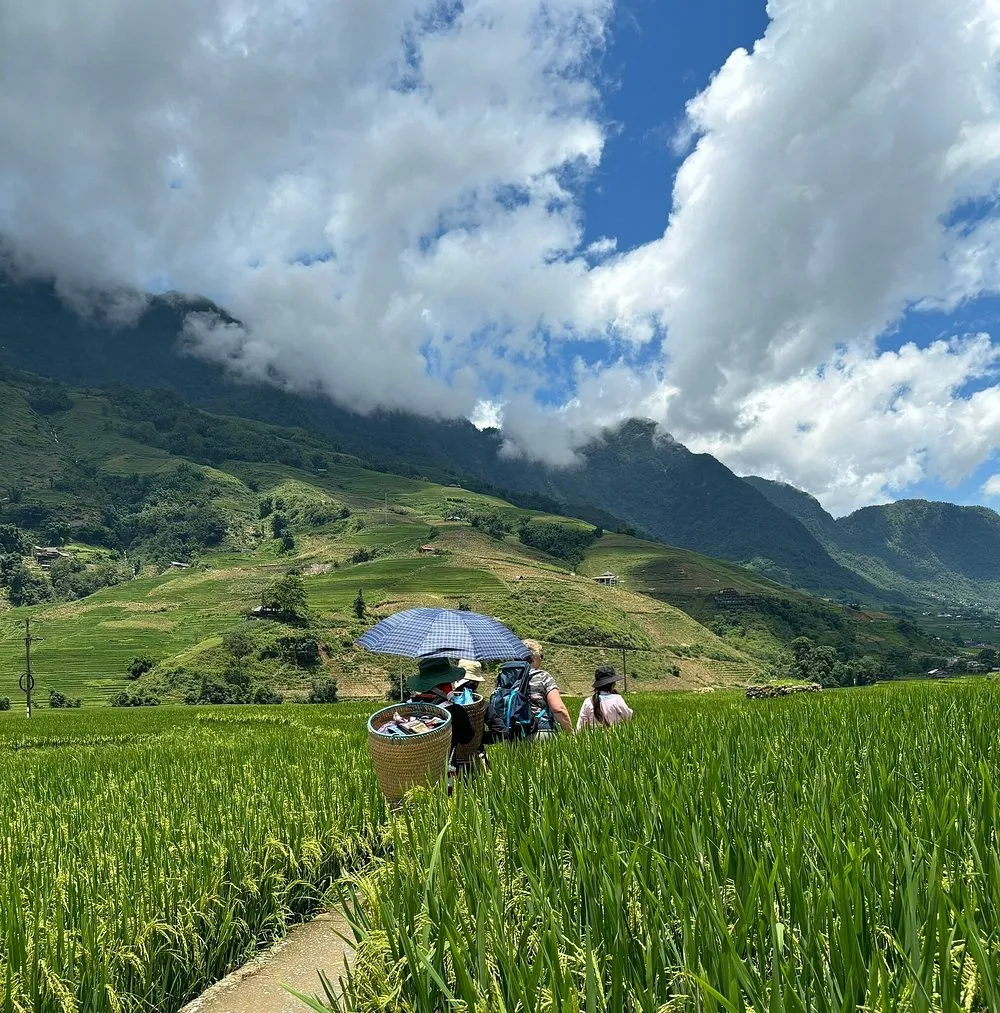
 1 Day Trek
Trekking Through Rice Terraced Fields
Muong Hoa Valley — Lao Chai, Ta Van, Y Linh Ho. Full day with a local family lunch.
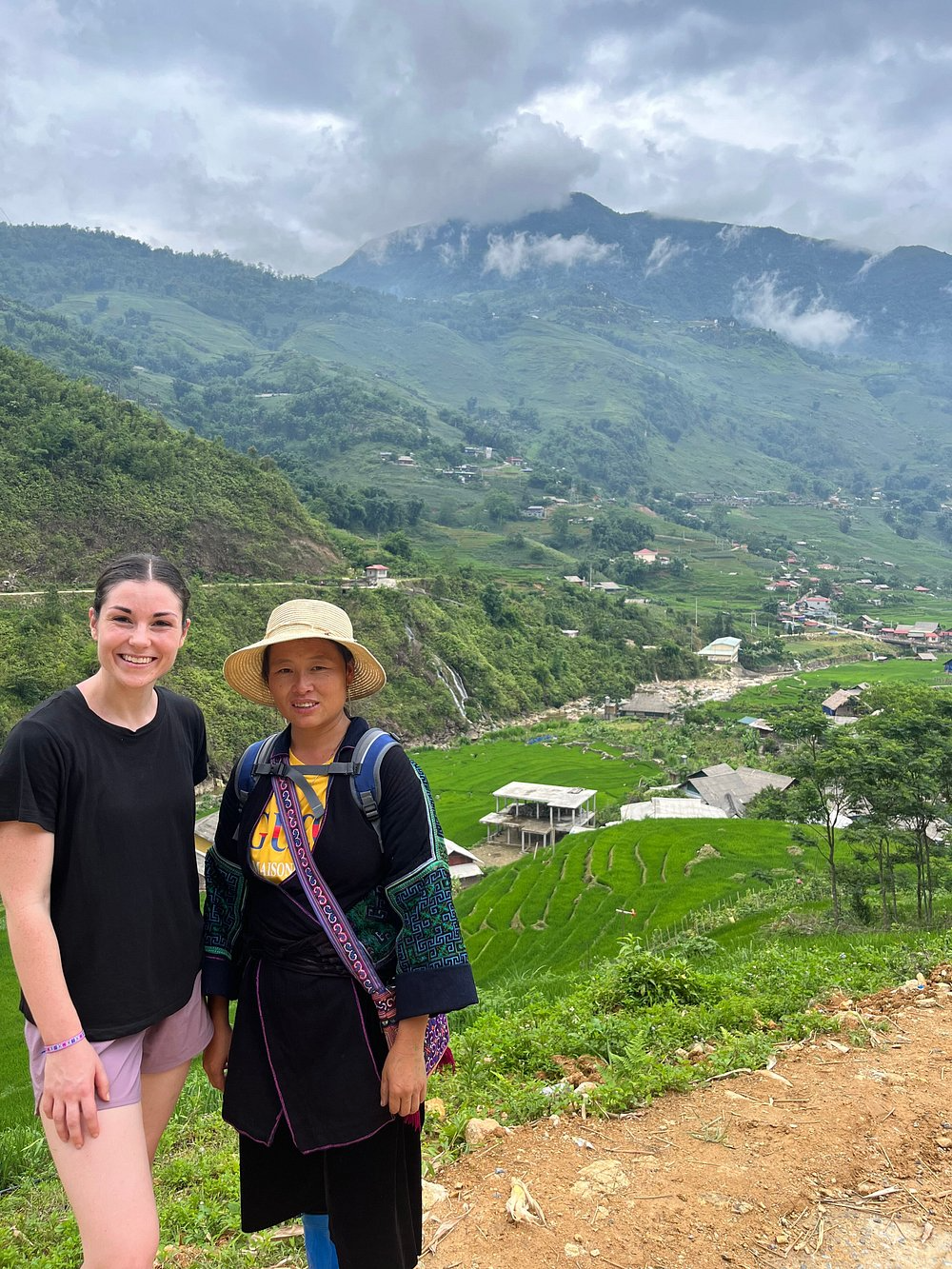 2D1N Homestay
Rice Terraced Fields & Homestay
Sleep in a valley homestay, two days on the trail, dinner with the family. The full experience.
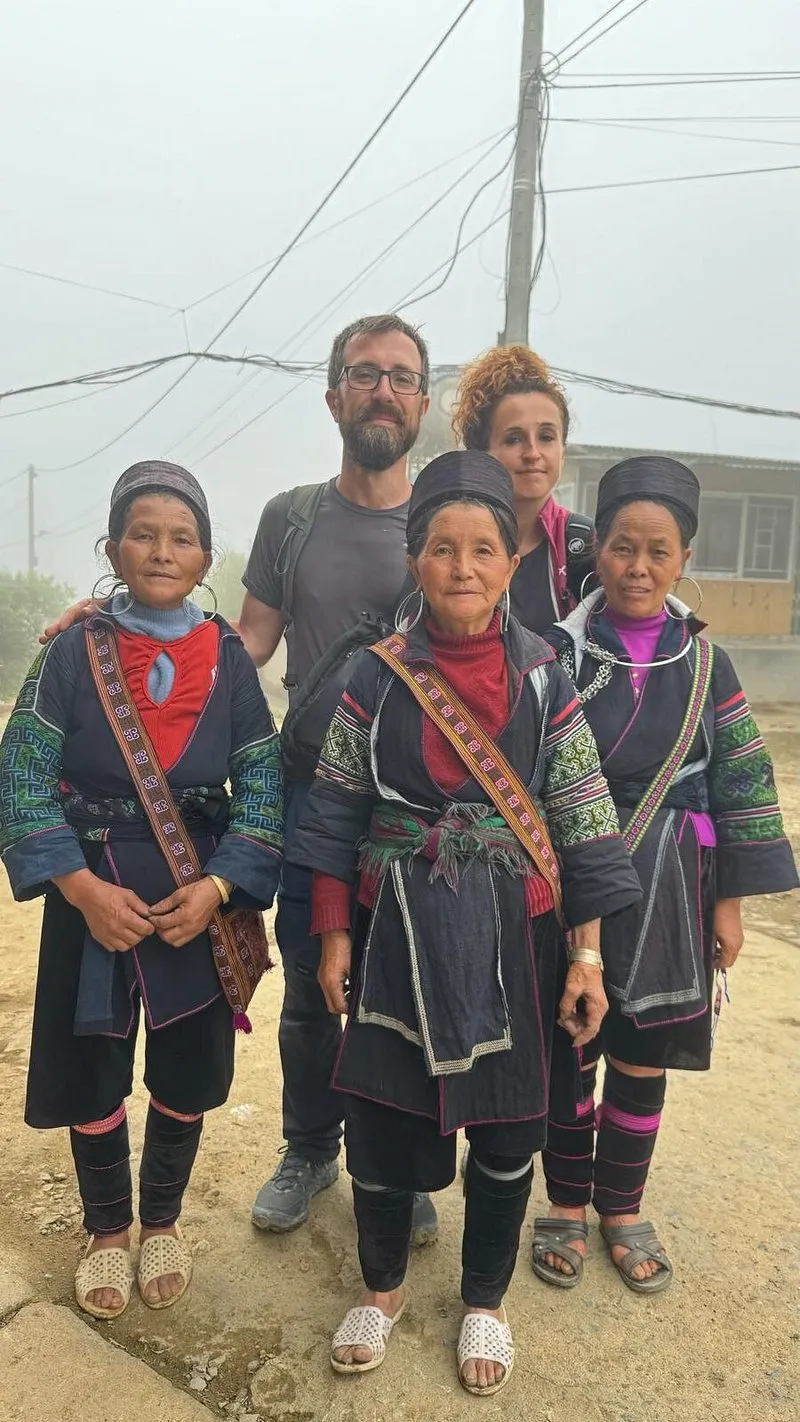 Families & Seniors
Sapa Easy Trekking For Seniors
Gentle paths, no steep sections, poles can be rented at our office. Perfect for 60+ travelers and families.
2. Ho Chi Minh City (Saigon) — The Engine Room
Ho Chi Minh City — still "Saigon" to almost everyone who lives there — is the loudest, fastest, most ambitious city in Vietnam. Nine million people, a skyline that grows every year, and a street life that genuinely never stops: pho at 5am, rooftop cocktails at midnight, and a constant river of motorbikes in between. If Hanoi is the country's memory, Saigon is its engine.
The headline experiences are the war history — the unflinching War Remnants Museum and the Cu Chi Tunnels a half-day out of town — and the food, which leans sweeter and more tropical than the north. But the real pleasure of Saigon is just being in it: the colonial spine of District 1 (Notre-Dame Cathedral, the Eiffel-influenced Central Post Office, the Opera House), the night-market sprawl of District 4's Vinh Khanh Street, and the rooftop bars that turn the chaos below into something cinematic. Two or three days is right; it's a city you feel more than you tour.
Get your bearings by district. District 1 is the polished, walkable core — colonial landmarks, the Ben Thanh Market, and the loud backpacker energy of Bui Vien street. District 3 has the leafier villas and some of the best independent coffee. District 5 is Cholon, the historic Chinatown, with its incense-filled Thien Hau temple and wholesale markets. And for the view that finally makes sense of the sprawl, take a sunset drink on one of the rooftop bars that look straight down onto the rivers of motorbikes below.
Saigon is also the springboard for two of Vietnam's most-visited day trips: the Cu Chi Tunnels, a sobering half-day in the wartime tunnel network an hour northwest, and the Mekong Delta, where a day or overnight trip drops you into a world of floating markets, fruit orchards and coconut-candy workshops. If you're flying into Vietnam from elsewhere in Asia, Saigon's larger international airport often makes it the natural place to start — then work your way north and fly home from Hanoi.

Saigon is also the gateway to the Mekong Delta and the easiest international arrival point if you're connecting from Bangkok, Singapore, or beyond. Many travelers fly into Saigon and out of Hanoi (or the reverse) to avoid backtracking — an "open-jaw" ticket that turns the whole country into one long, logical route.
3. Hoi An — The Lantern Town
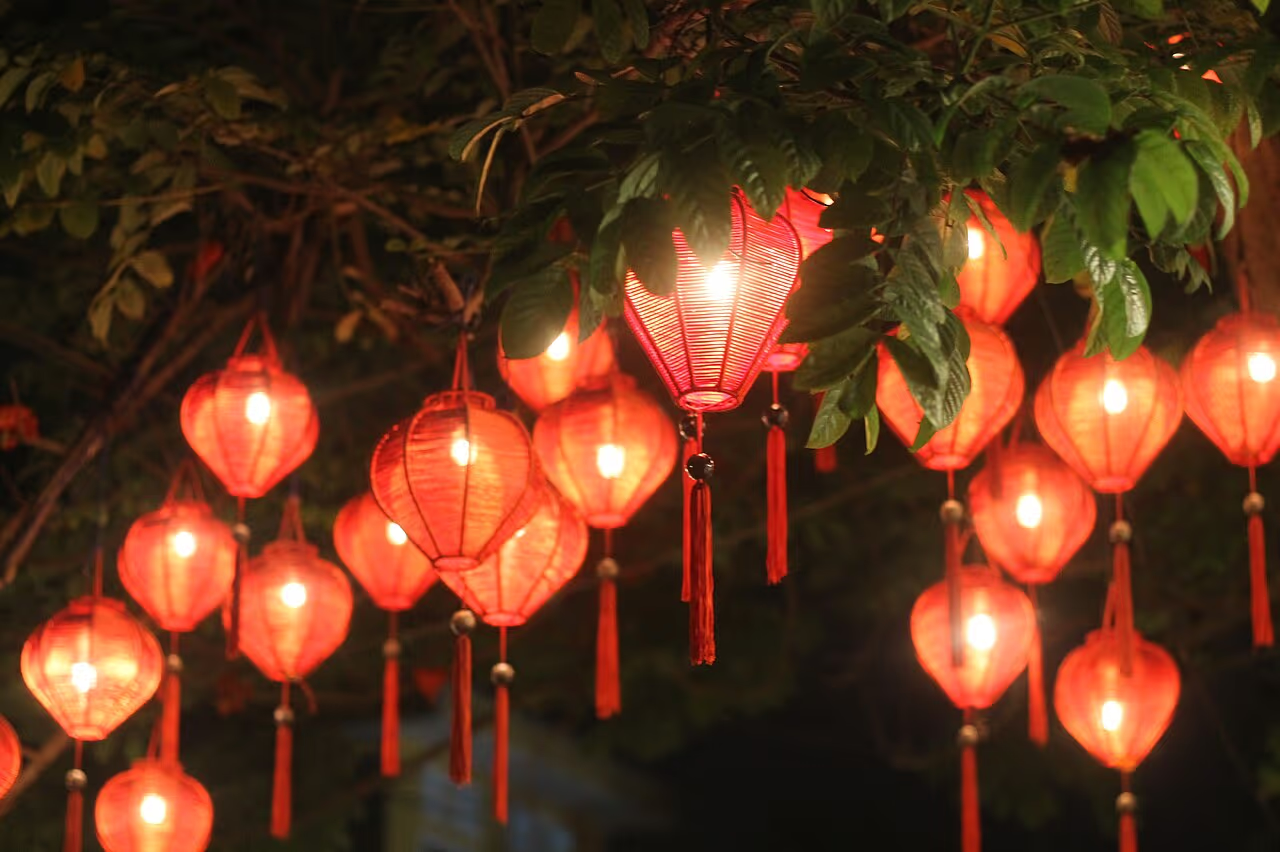
If Hanoi and Saigon are about energy, Hoi An is about atmosphere. This small, walkable UNESCO town on the central coast is the most photographed place in Vietnam, and for once the reality lives up to the feed: a riverside Ancient Town of mustard-yellow shophouses, a 15th-century Japanese covered bridge, and — after dark — thousands of silk lanterns reflected in the Thu Bon River while locals float paper-lantern candles on the water.
Hoi An is also Vietnam's tailoring capital. Hundreds of shops will make a custom suit, dress, or ao dai in 24 to 48 hours, and a market town's worth of leather and shoemakers sit alongside them. The one rule that defines a good visit: the Ancient Town belongs to day-trip groups between roughly 9am and 6pm, and to you before and after. Come at dawn for the genuinely local riverside market, and after 8pm for the lanterns. Two nights is the sweet spot, with a beach afternoon at nearby An Bang thrown in.
Hoi An rewards getting out of the Ancient Town, too. Rent a bicycle and ride fifteen flat minutes through the rice paddies to the beach at An Bang, or out to the Tra Que herb village where families have grown vegetables the same way for centuries. The Cham ruins of My Son are an easy half-day inland, and the surrounding countryside is green, calm, and made for slow cycling. Plenty of travelers arrive for the old town and leave loving the rice fields around it just as much.
A word on the famous tailoring, since it's why many people come: quality tracks price closely. The cheapest shops turn out cheap results; the ones worth using have fabric samples on display, a clear price list, and a proper two-fitting process over 24–48 hours. Bring a photo of exactly what you want, allow time for one alteration, and you'll leave with a genuinely good suit or ao dai for a fraction of what it would cost back home.
4. Hue — The Imperial City
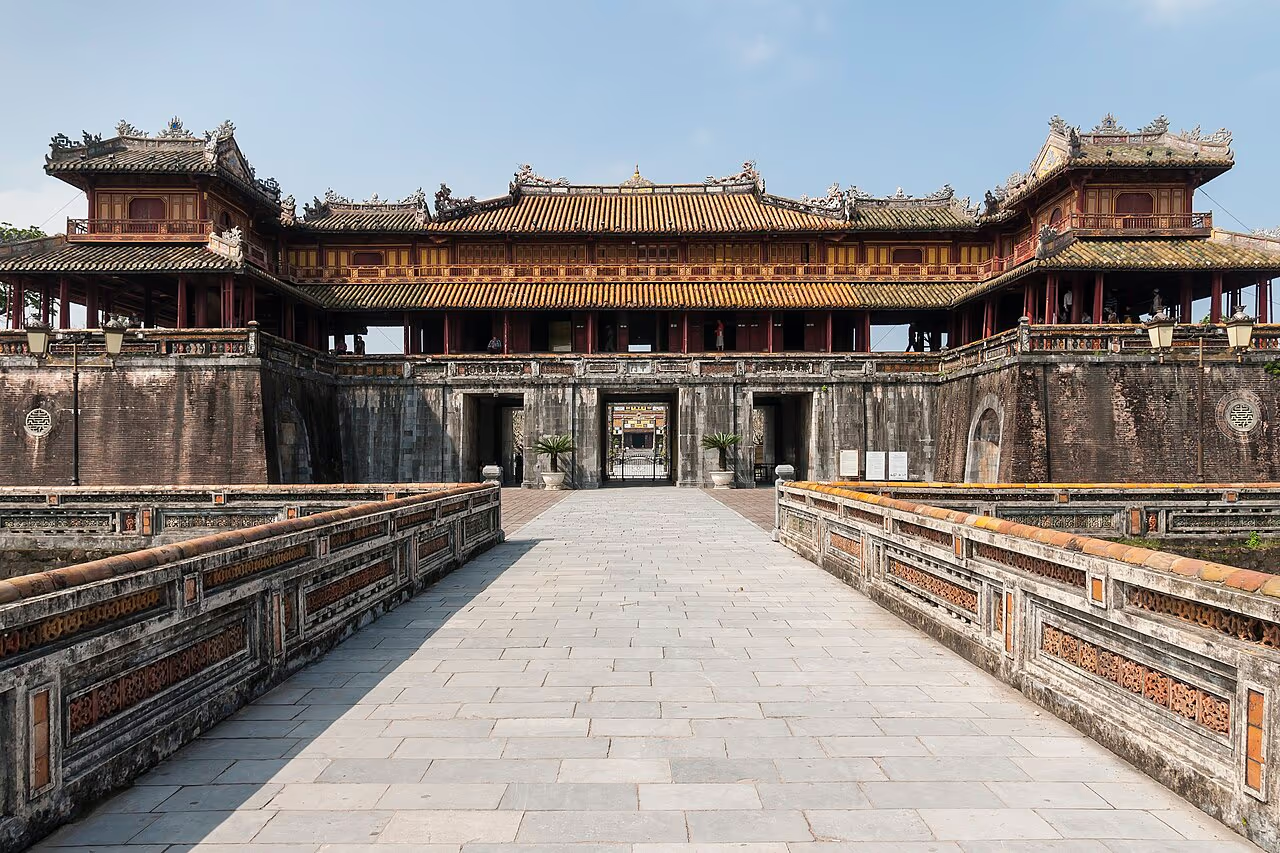
Just up the coast from Hoi An, Hue was Vietnam's imperial capital for 143 years, and it remains the country's most historically layered city. The vast walled Citadel — a moated palace complex modelled on Beijing's Forbidden City — anchors the north bank of the Perfume River, while seven royal tombs, each an emperor's vision of his own afterlife, sit scattered through the countryside to the south. The serene, pine-shaded tomb of Tu Duc and the wild ceramic mosaics of Khai Dinh are the two to prioritise if time is tight.
Hue is also the home of Vietnamese royal court cuisine, and the everyday version is glorious: bun bo Hue, the sharp, lemongrass-and-chilli beef noodle soup that bears the city's name, is best eaten for breakfast at a riverside stall. A day and a half covers the city comfortably; combine it with Hoi An and Da Nang for a tidy central-Vietnam trio.
Beyond the Citadel and tombs, Hue rewards the curious. The riverside Thien Mu Pagoda, reached by dragon boat, is the city's serene symbol; the old DMZ and the Vinh Moc tunnels to the north make a sobering half-day for war-history travellers; and the abandoned, overgrown Ho Thuy Tien water park has become a strange photographers' favourite. Hue moves slowly, and that's the point — it's the city to come to when you want history and calm rather than buzz.
5. Da Nang — The Beach City
Da Nang is the modern face of Vietnam's cities — a fast-growing coastal hub of high-rises, long beaches, and big infrastructure that serves as the practical base for the whole central region. It lacks the deep history of Hue or the charm of Hoi An, but it makes up for it with livability: the wide golden sweep of My Khe Beach, a famously good cafe and seafood scene, and the theatrical Dragon Bridge, which breathes real fire and sprays water over the crowd on weekend nights.
Most travelers use Da Nang as a launchpad: 30 minutes south to Hoi An, 100 km north to Hue, west to the viral Golden Bridge at Ba Na Hills, and a short hop to the Marble Mountains and the My Son Cham ruins. It's the city to base in if you want a beach with your culture, and the easiest place in the centre to fly in and out of.
Da Nang also rewards a little exploring. The forested Son Tra Peninsula, a short ride north, has clifftop viewpoints, a giant Lady Buddha statue, and troops of rare red-shanked douc langurs in the trees; the beachfront cafe scene rivals anywhere in the country; and the riverside nightlife has grown up fast. For travelers who want a single base that covers beach, food, culture and easy day trips in one, Da Nang is increasingly the smart central choice.
6. Da Lat — The Mountain Retreat
Da Lat is Vietnam's coolest city — literally. Sitting at 1,500 metres in the central highlands, it trades the tropical heat for pine forests, morning mist, and a permanent spring climate that made it the French colonists' hill station and, today, the honeymoon and coffee capital of Vietnam. The city itself is a slightly kitsch jumble of flower gardens, a French-era railway, art-deco villas, and a busy night market; the appeal is the air, the pace, and the surroundings.
Around Da Lat lie waterfalls, canyoning routes (the country's best adrenaline-on-water day), lakes, and — above all — coffee. This is the heart of Vietnam's robusta and increasingly its specialty-arabica scene, and a slow morning in a hillside roastery cafe is the quintessential Da Lat experience. It's a worthwhile two-day detour for anyone who wants a complete change of temperature and tempo between the coast and Saigon.
Getting there is half the appeal: the road up from the coast climbs through pine forest and tea plantations, and the small Lien Khuong airport connects directly to Hanoi and Saigon. Once there, the surreal Gaudi-esque Crazy House, the colourful old quarter, the Datanla and Elephant waterfalls, and the flower-filled valleys around Tuyen Lam Lake fill an easy two days. Pack a light jacket — the evenings genuinely turn cold, which after a week of lowland heat is exactly the point.
7 & 8. Nha Trang & Can Tho
Two more cities round out the list for specific travelers. Nha Trang is Vietnam's best-known beach-resort city — a long crescent bay, the country's easiest diving and island-hopping, mineral mud baths, and the ancient Po Nagar Cham towers on a hill above town. It's built-up and busy (and popular with package tourists), but if a straightforward sun-sea-and-snorkel city is what you want, it delivers.
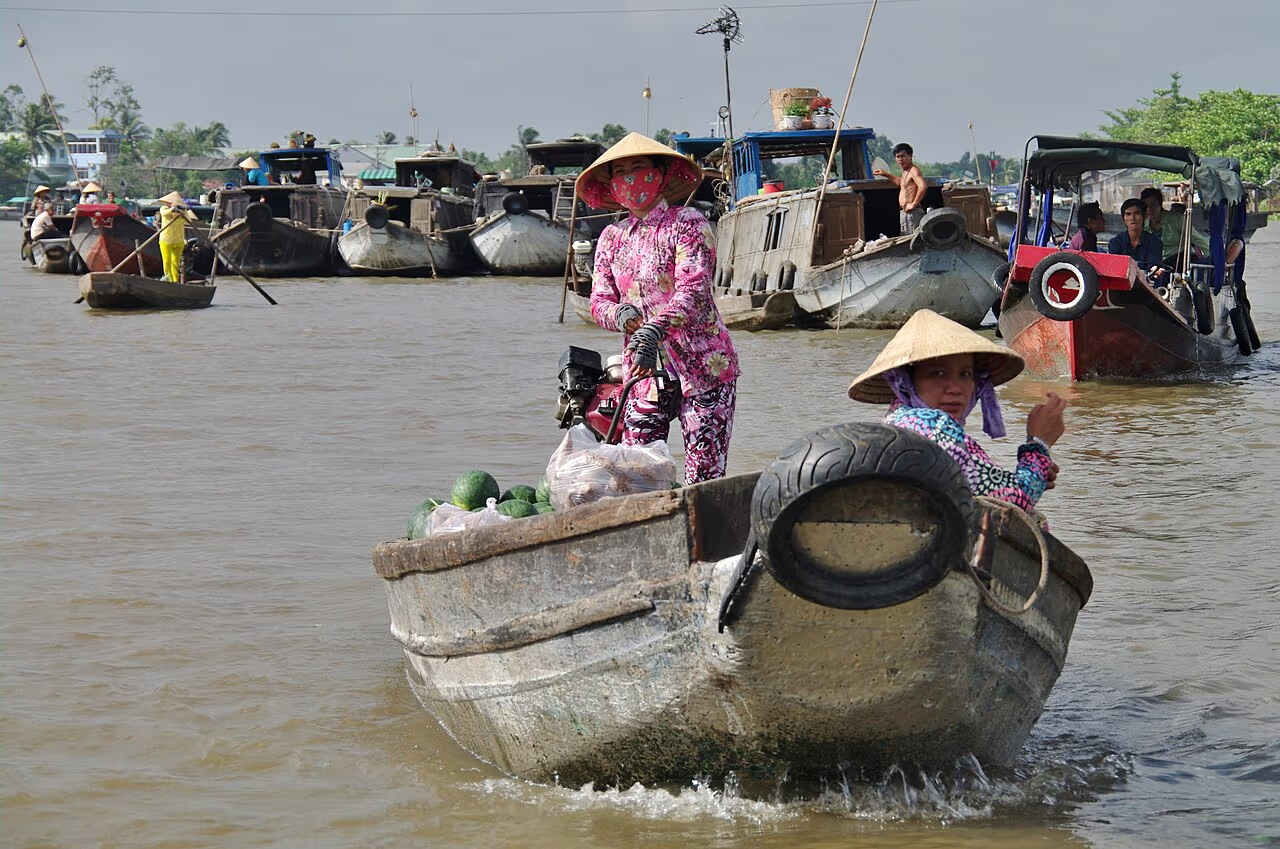
Can Tho, meanwhile, is the capital of the Mekong Delta and the south's most rewarding small city. It's a genuine working river city rather than a tourist town, and the reason to come is on the water: the Cai Rang floating market at dawn, where wholesalers trade fruit and noodles boat-to-boat as the river wakes up. Spend a night, take a sunrise boat, and you'll see a side of Vietnam the big cities can't show you. From Saigon it's a 3.5-hour drive, which makes it an easy add-on to any southern leg.
Both reward the right traveller. In Nha Trang, the boat trips out to the bay's islands — snorkelling, a floating bar, a mud-bath spa stop — are the classic day out, and the seafood along the front is excellent and cheap. In Can Tho, beyond the famous Cai Rang market, a slow boat through the smaller canals shows you stilt houses, fruit orchards, and a rhythm of river life the highways have left untouched. Neither is a must on a short trip, but each is a rewarding addition if you have a few extra days.
The Classic City Route, North to South
Most travelers string the cities into one long line down the country, flying the long gaps and travelling overland between neighbours. Here's the standard north-to-south sequence, and roughly how the stops fall:
Hanoi
3 days + day trips to Sapa, Ha Long, Ninh Binh
Hue
1.5 days — Citadel, royal tombs, bun bo Hue
Hoi An + Da Nang
2–3 days — old town, beach, Golden Bridge
Saigon
2–3 days — war history, food, nightlife
Can Tho
1 night — the Mekong floating market
Fly the long legs (Hanoi–Hue and Da Nang–Saigon are both quick, cheap hops) and travel overland between neighbours (Hue to Hoi An is a beautiful 3-hour coastal drive over the Hai Van Pass). Book an "open-jaw" flight — into one end of the country and out the other — so you never have to double back.
A realistic sense of the distances helps you plan. Hanoi to Saigon is about 1,160 km — a two-hour flight, or 30-plus hours on the scenic-but-slow Reunification Express train. Most travelers fly the two big gaps (Hanoi to the centre, and the centre to Saigon) for roughly $30–60 each, and keep the overland travel to the genuinely beautiful short hops like Hue to Hoi An. Budget half a day for each flight once you count transfers and check-in, and you'll build a route that breathes rather than sprints.
The one leg that's worth doing as a proper transfer rather than a guess is the trip from Hanoi up to Sapa for the day or two out of the city. We run it door-to-door for travelers booking a trek, so you arrive rested and ready to walk.
The Easiest Way Out of the City to Sapa


A City-Stop Itinerary (with the Sapa Detour)
Cities are the skeleton of a Vietnam trip, but the moments people remember are often the days they step out of them. Here's how the best version tends to flow — four "stops", with the one many travelers rate highest flagged.
How long does it take? Ten days is the comfortable minimum for the headline cities without rushing; two weeks lets you add the Sapa nights, Da Lat, or a beach finish without watching the clock; and three weeks covers the whole list end to end. If you have only a week, don't try to span the country — pick the north (Hanoi, plus Sapa and Ha Long) or the centre-and-south (Hoi An, Hue, Saigon) and go deep on one half.
One practical note for that Sapa stop: the valley trails turn to slick clay after rain, and you don't need to fly with hiking boots. Rent them, and a pair of poles, at our Sapa office the day before you head out.
Boots & Poles for the Sapa Detour
 Gear Rental
Trekking Boots Rental
Waterproof ankle-support boots, cleaned and checked before each rental. At 105 Thach Son Street.
 Gear Rental
Walking Poles Rental
Trekking poles at $2/day from our office at 105 Thach Son Street. Essential for the descents.
Put simply: history lovers should weight Hanoi and Hue; food obsessives can't really lose but should prioritise Hanoi and Hoi An; nightlife and modern energy point to Saigon and Da Nang; beach-seekers to Da Nang, Nha Trang or a Phu Quoc finish; and anyone craving cool air and calm to Da Lat. But whichever cities you choose, the pattern that makes a Vietnam trip sing is the same — a couple of days in the city, then a day out of it.
Tips for City-Hopping Vietnam
- Fly the long gaps, drive the short ones. Internal flights (Hanoi–Da Nang–Saigon) are cheap and quick; the Hue–Hoi An coastal drive over Hai Van Pass is worth doing by road.
- Book an open-jaw ticket. Into Hanoi, out of Saigon (or vice versa) means you never backtrack the length of the country.
- Don't sleep through the cities' best hour. Hanoi, Hoi An and the Mekong markets are all transformed at dawn — set an early alarm at least once per city.
- Mind the traffic, not the crime. Vietnam's cities are very safe; the real hazard is crossing the road. Walk slowly and predictably and the motorbikes will flow around you.
- Build in one day out of every city. Ha Long or Sapa from Hanoi, the Marble Mountains from Da Nang, the Mekong from Saigon — the day trips are often the highlight.
- Use WhatsApp to lock in the Sapa days. Small-group treks (max 12) sell out in peak season; our team confirms availability in 5–10 minutes.