 Sinh Giang
Why 2 Days Is the Sweet Spot for Sapa
One day in Sapa gets you the views and a taste of the trail. Three days gives you the full immersion. But two days and one night sits right in the middle, and for most travelers, it turns out to be exactly enough.
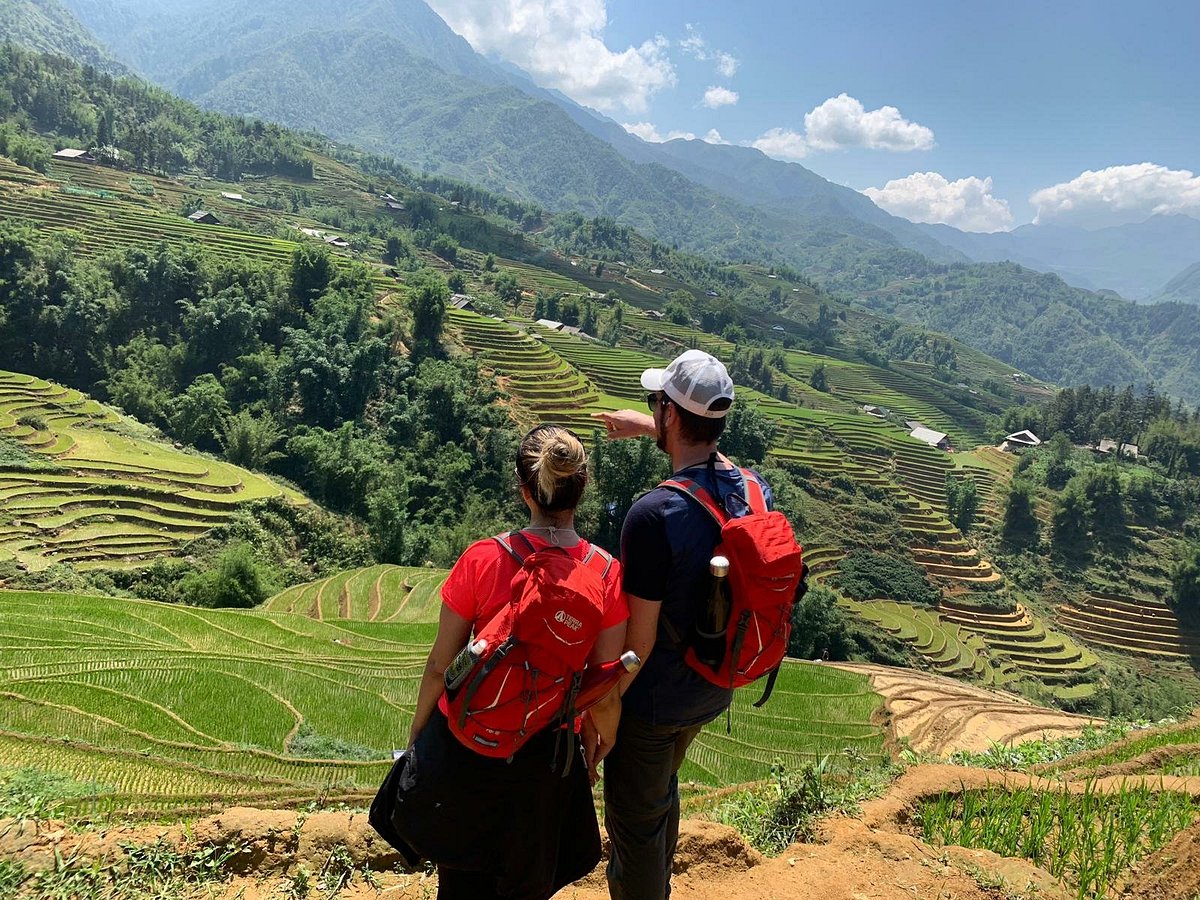
On a 2D1N Sapa tour, you have enough time to genuinely walk into a village rather than just past it. You eat with a family, sit by the fire in the evening, and wake up to rice terraces in the early morning light before anyone else in Sapa has opened their curtains. You do not feel rushed. You also do not need to carry a heavy pack or take any special leave from work.
The Muong Hoa Valley, the villages of Lao Chai, Ta Van, Y Linh Ho, and Hang Da — all of them are within two days' walking distance from Sapa town. Your guide from the Black H'mong community knows these paths the way you know your own neighborhood. You will walk trails that no tour bus can reach.
If you are wondering whether 2D1N or a 1-day trek is right for you, ask yourself this: do you want to see a village or stay in one? The overnight changes everything. The evening and early morning are when the villages feel most authentic.
Day 1 Itinerary: Trek to the Homestay
Your day starts at 8:30am. Your guide picks you up directly at your hotel in Sapa town, or you can meet at the Trekking Tour Sapa office at 105 Thach Son Street. From there, a short drive takes you to the trailhead, and the walking begins.
Your guide meets you at your hotel or at 105 Thach Son Street. A short 15-minute drive drops you at the trailhead above Y Linh Ho or Lao Chai village, depending on your chosen route.
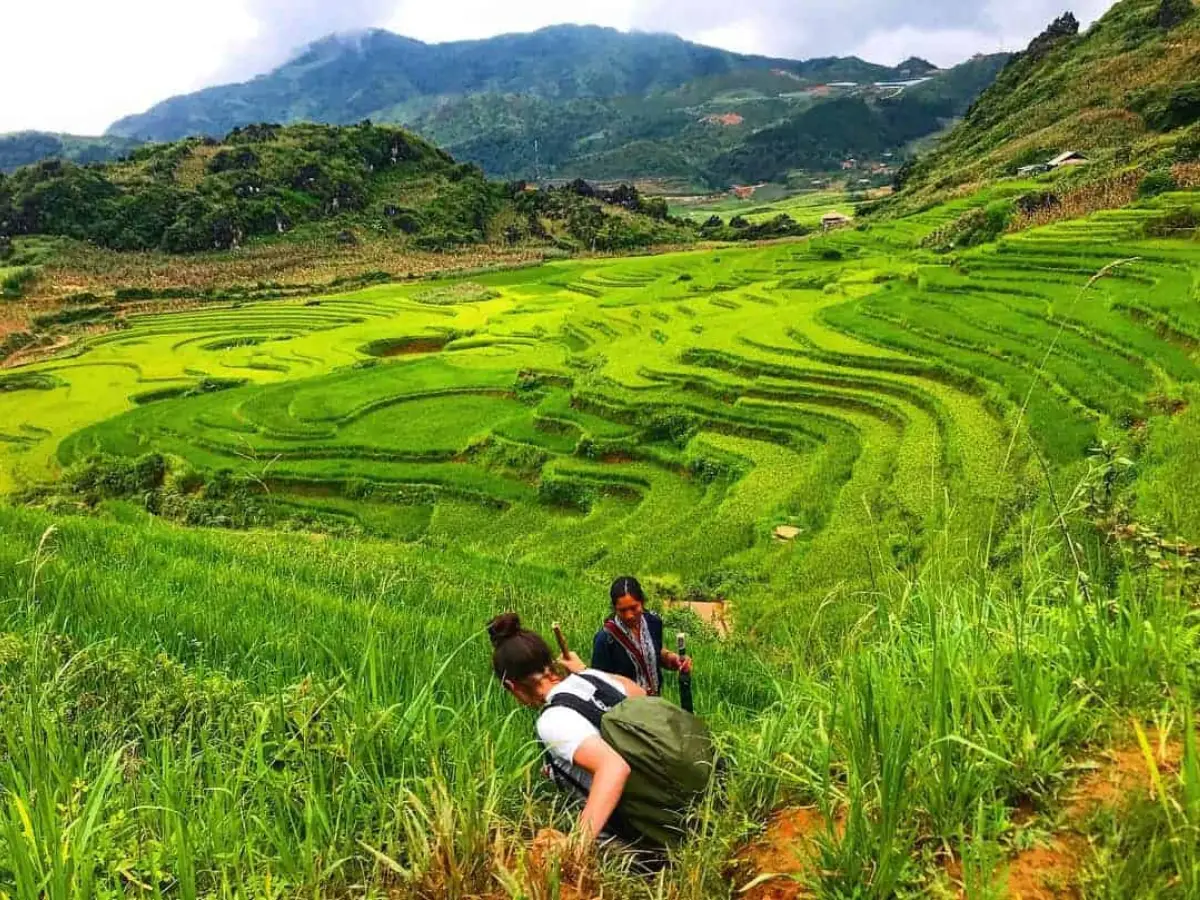
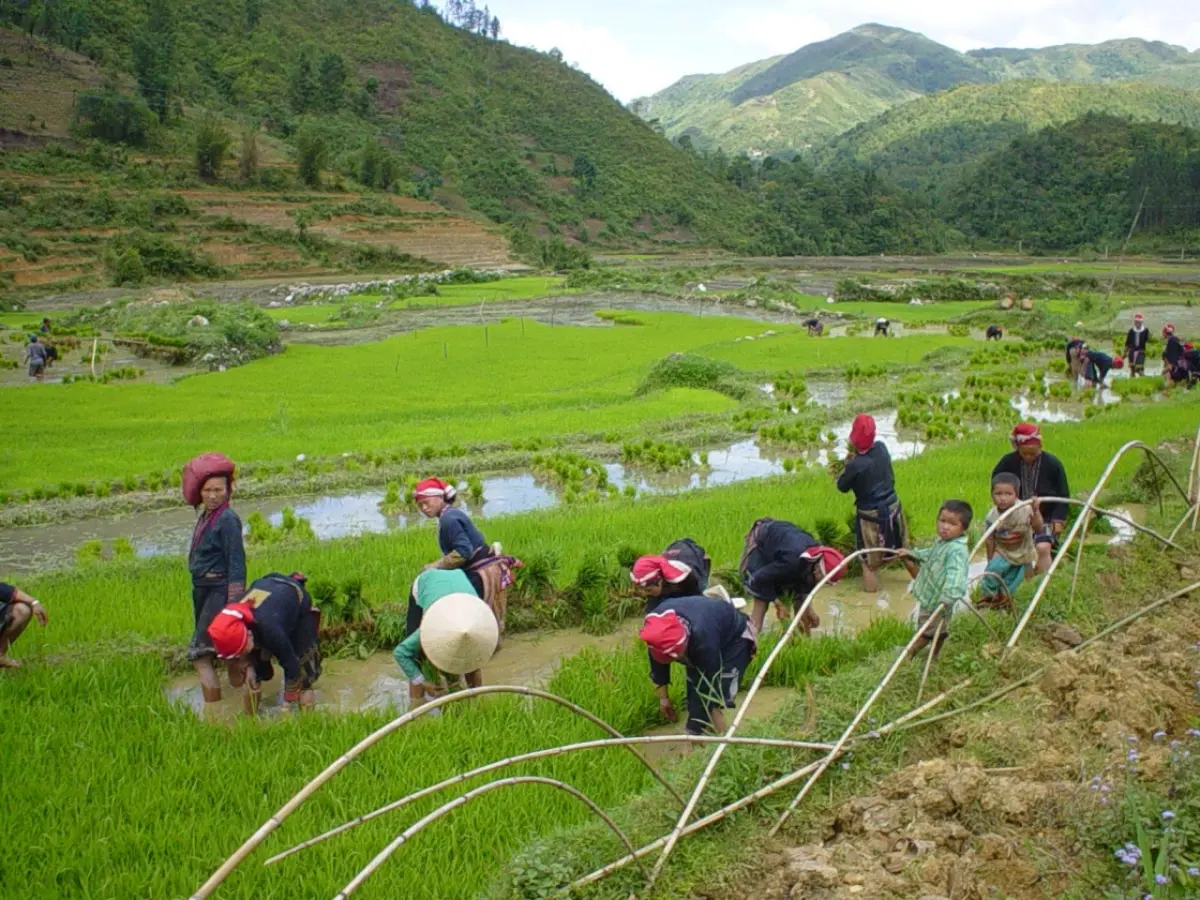
The first hour passes through terraced fields near Y Linh Ho or Lao Chai. The trail descends gradually into the Muong Hoa Valley, with Black H'mong farmers working the paddies on either side. Your guide identifies plants, explains the irrigation system carved into the hillside, and introduces you to anyone you meet on the trail. In cardamom season, the air smells faintly sweet and spiced.
Lunch is at a Black H'mong family home in the valley. You sit on low stools or on a mat, communal dishes in the center: steamed rice, stir-fried greens from the garden, pork or chicken cooked with lemongrass, and a broth. You eat with the family or just beside them. It is simple, fresh, and far better than anything you will find in a Sapa town restaurant.
After lunch you continue deeper into the valley, through Ta Van or Hang Da depending on your route. The afternoon terrain is gentler than the morning. You pass bamboo groves, small wooden bridges over irrigation streams, and terraced plots at varying stages of the growing season. Your guide points out which crops belong to which family.
You reach the homestay village in the late afternoon, when the light is starting to turn gold over the terraces. Your guide introduces you to the host family. Your bag goes in your room, and you have time to wash up, sit on the porch, and watch the valley before dinner.
Dinner is cooked by the host family: typically four or five dishes, all from ingredients grown nearby. If you want to help in the kitchen, just ask — most families are happy to show you how to cook sticky rice or fold the local spring rolls. Traditional rice wine (ruou gao) appears at dinner. One small cup is a gesture of welcome. It is strong. Your guide will translate and keep the conversation going between you and the family all evening.
Best-Rated 1-Day Treks from Sapa
 1 Day
1 Day
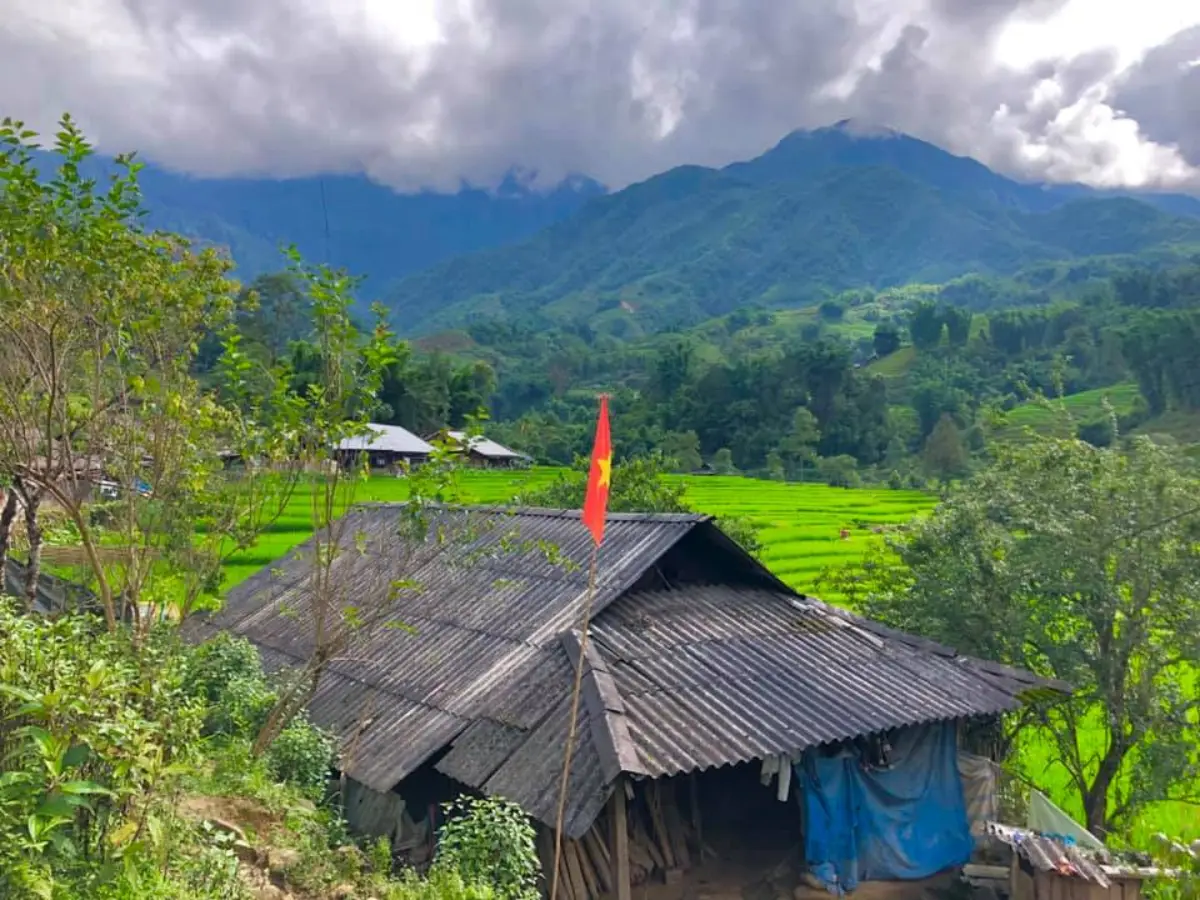
Trekking Through Rice Terraced Fields
Ta Van village, Muong Hoa Valley rice terraces, local Black H'mong family lunch.
 1 Day
1 Day
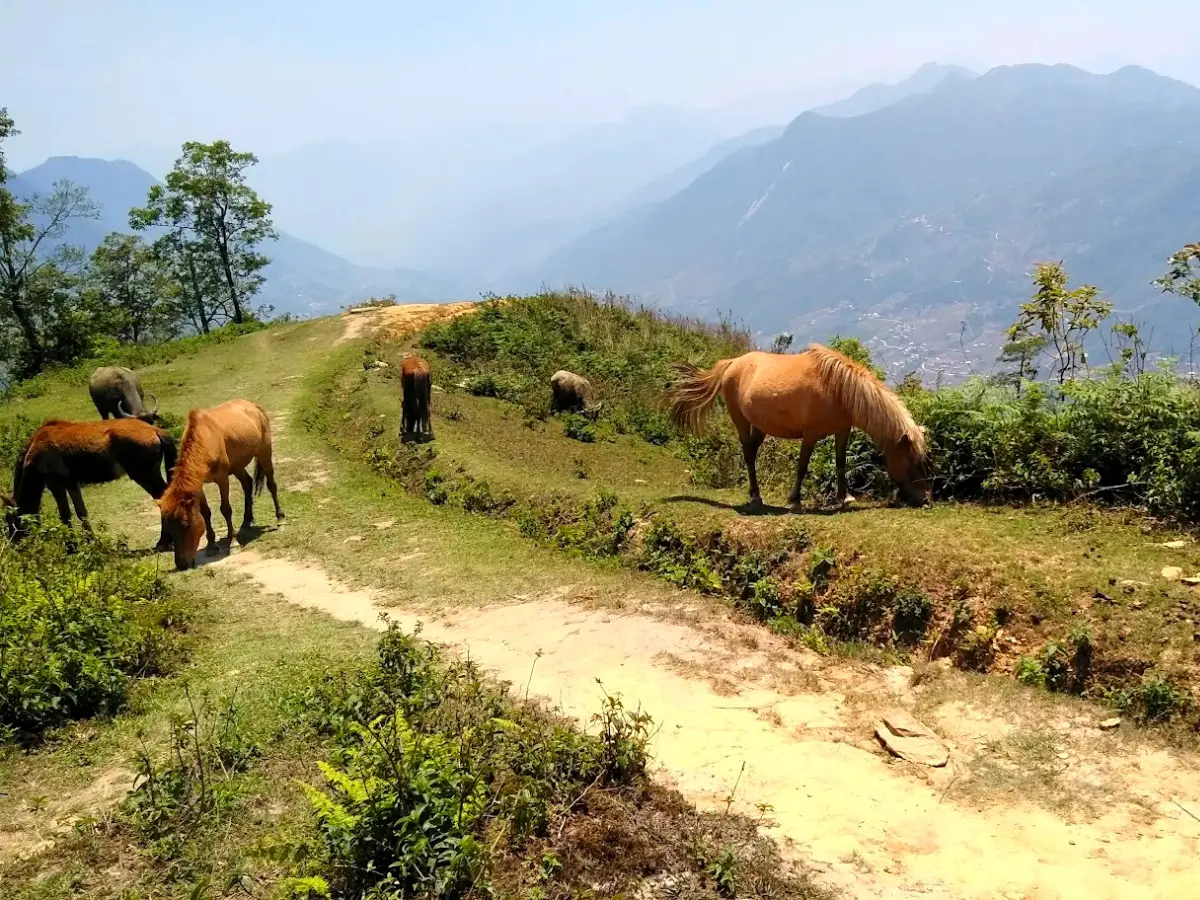
Mountain Views and Villages Trek
Ridge trail above Sapa town with panoramic valley views. Visits two H'mong villages.
 1 Day
1 Day
Rice Paddies and Cultures – Easy Hiking
Gentle trail through Hau Thao and Y Linh Ho villages. Perfect first trek.
What the Homestay Is Actually Like
This is the question most people have before they book a 2D1N Sapa tour, and it deserves a straight answer. A Black H'mong or Red Dao homestay is not a guesthouse with a "local flavor" decoration. It is the family's actual house. You are a guest in someone's home, not a customer in a business.
Black H'mong Homestays vs Red Dao Homestays
Black H'mong homes sit at lower elevations in the Muong Hoa Valley, in villages like Ta Van, Lao Chai, and Y Linh Ho. The houses are wooden, often on stilts, with a main living area that doubles as a dining room and gathering space. These families are primarily agricultural — rice, corn, vegetables, and some livestock. Their embroidery and indigo-dyed clothing are recognizable by the deep blue-black fabric they wear daily.
Red Dao homestays are found at higher elevations, particularly in the Ta Phin area north of Sapa town. Red Dao homes are known for the herbal bath tradition — a 20-minute soak in a warm tub of boiled medicinal roots and leaves that the women harvest from the forest. If your 2D1N route goes through Ta Phin, you will likely have the option of a herbal bath on arrival. It is worth it, especially after a full day's trek.
Sleep Conditions: The Honest Version
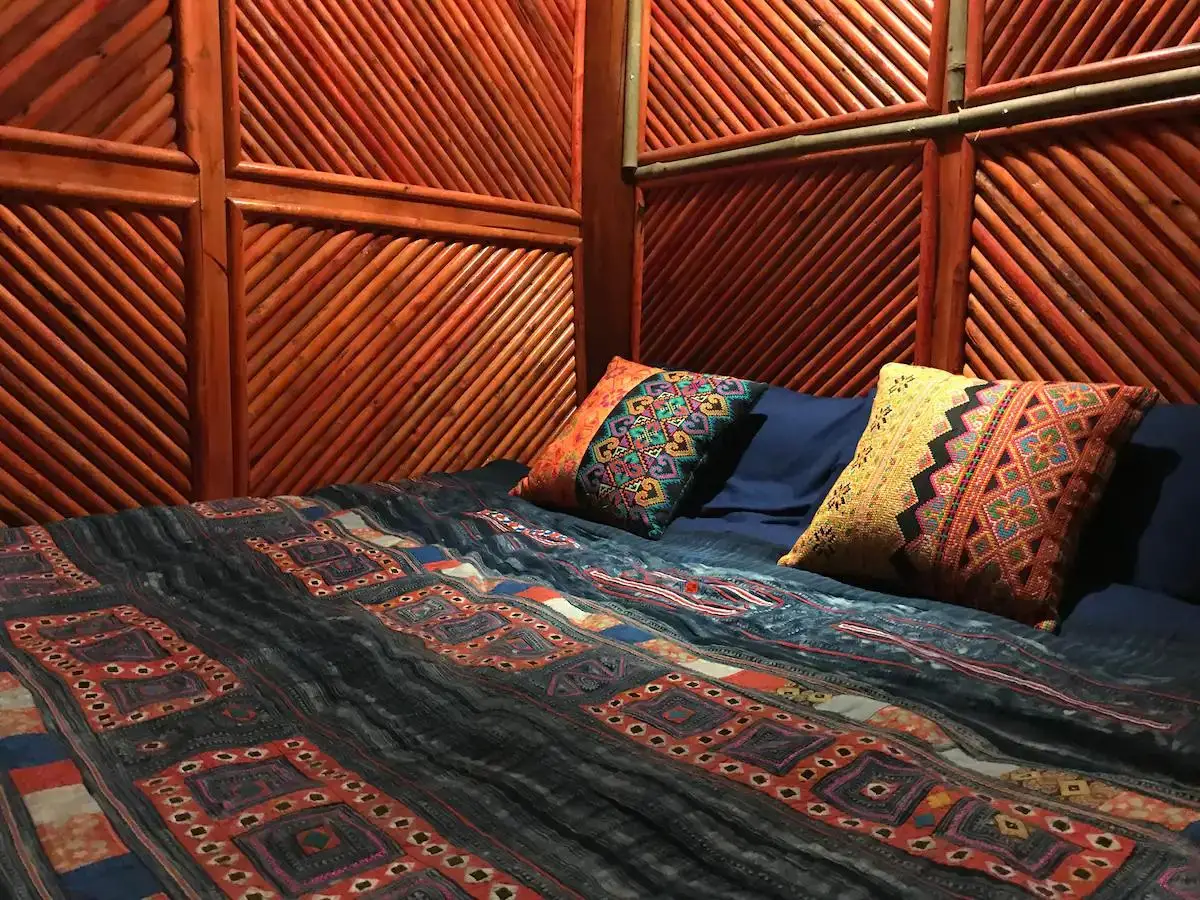
You sleep on a sleeping mat or a basic bed, depending on the homestay. The mattresses are thin. You will not have the comfort of a hotel bed. Bring a small pillow if you are particular about it — or use your folded fleece.
Even in summer, Sapa nights drop to 8-12 degrees Celsius / 46-54 degrees Fahrenheit. In January and February it can go below zero. The homestay will provide extra blankets, but you should always bring a warm base layer and a fleece or down jacket. This is the single most common complaint from underprepared trekkers.
Bathroom Facilities
Most homestays now have a proper toilet — squat style is standard in rural Vietnam. Hot water for showering is increasingly available, either via solar heating or a small gas boiler. Some homestays still use a bucket system with warm water heated separately. Your guide will brief you on the specific homestay before you arrive. It is basic but clean.
Food at the Homestay
The family cooks. Dinner is typically four or five dishes: steamed sticky rice, stir-fried vegetables harvested from the garden that afternoon, a meat dish (usually pork or free-range chicken), and a light broth. Everything is freshly cooked over a wood fire or a simple gas stove. The food is excellent — far better than most Sapa town restaurants. Breakfast in the morning is lighter: eggs, rice, and tea.
Tell your guide about any dietary requirements before the tour, not on the day. The homestay family needs time to prepare alternatives. Vegetarian options are available with advance notice on all routes.
Day 2 Itinerary: Morning Trek and Return
Day 2 is shorter but often the more memorable of the two days. The valley before 8am belongs almost entirely to you.
If you set your alarm early, step outside by 6:30am. The mist over the Muong Hoa Valley in the early morning is one of those things that photographs can barely capture. The terraces are quiet, the light is soft, and the only sounds are birdsong and the distant sound of water in the irrigation channels. This is what most people remember most clearly a year later.
A simple breakfast: eggs, sticky rice or rice porridge, fresh fruit if the season allows, and hot green tea. You eat with your guide and, usually, the family.
The second day's trail takes you through a different landscape from day one — often through cardamom fields, bamboo forest, or across a higher ridge with views of Sa Seng Mountain. Your guide chooses the direction based on the group's fitness and the weather. By late morning you reach the final village of the route.
A vehicle picks you up at the end of the trail and drives you back to Sapa town. You arrive around midday, which leaves the afternoon free for Sapa's market, a hot shower, or an afternoon rest before your evening bus or train back to Hanoi.
Trek + Homestay Packages (2 Days, 1 Night)
2D1N
Rice Terraced Fields & Homestay
Two days in Ta Van and Lao Chai villages with overnight stay at a Black H'mong family home.
2D1N
Mountain Views & Muong Hoa Valley Trek
Ridge walk above the valley, overnight in a Red Dao village, morning terraces at sunrise.
 2D1N
2D1N
Explore Nature and Homestay
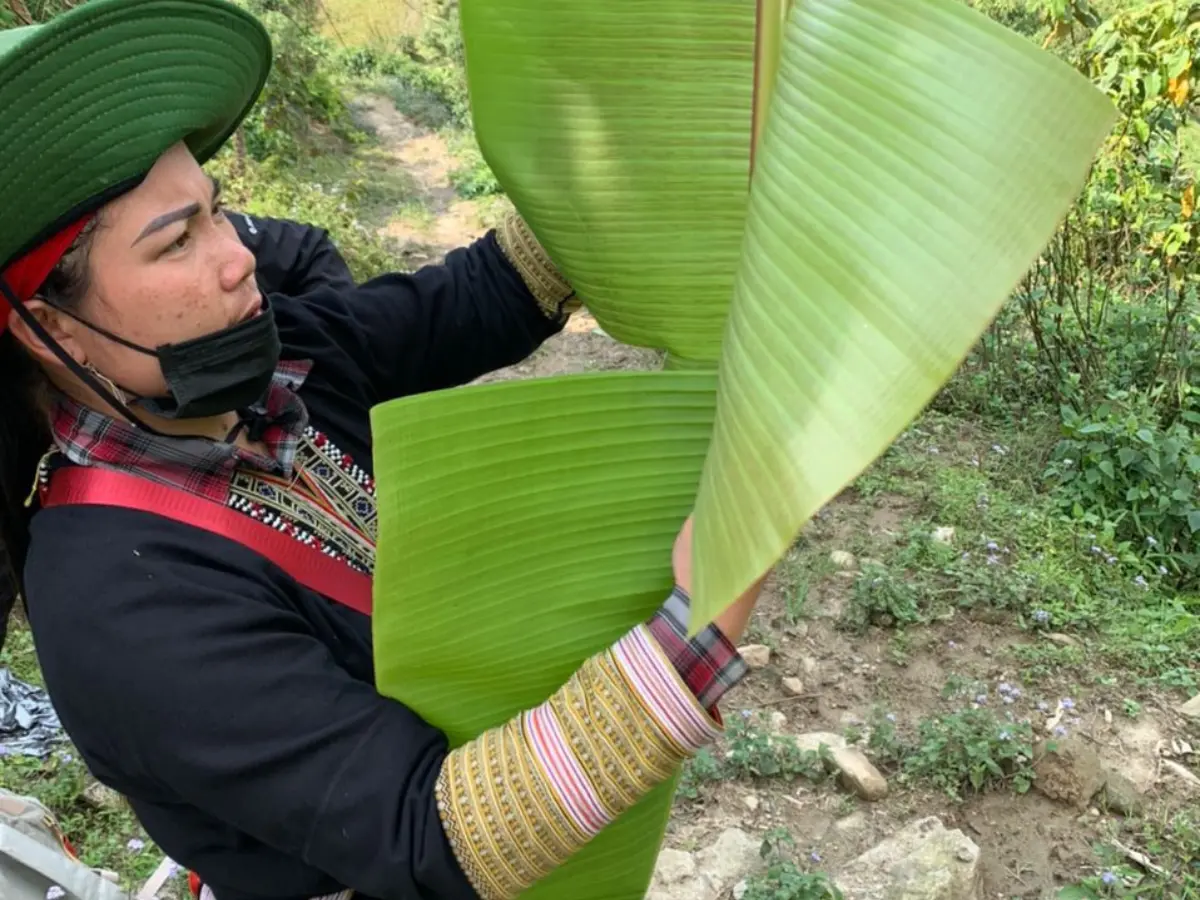
Less-touristed trails through cardamom forest, bamboo groves, and traditional farming villages.
What to Pack for an Overnight Trek
The golden rule is: pack light. You carry your own bag for two full days. Every extra kilogram matters by mid-afternoon on day one. A 15-20 litre daypack is the right size.
- Warm layers (essential): A fleece or down jacket, and a warm base layer for sleeping. The evenings and mornings are cold even in July.
- Rain jacket or poncho: Sapa weather changes quickly. A light packable rain jacket takes up almost no space and keeps you comfortable if the afternoon clouds roll in.
- Walking shoes or light hiking boots: Trail shoes with grip are better than trainers. Waterproof is a bonus if you are coming in the rainy season (June-August).
- A dry bag or waterproof pack liner: If it rains hard, a standard daypack gets wet inside. Your electronics and dry clothes go in a dry bag.
- Trekking poles: Available to rent at our office at 105 Thach Son Street for $2/day. Strongly recommended for the descents — Sapa trails are steep and can be muddy.
- 1.5-2 litres of water: Refill is available at the family home at lunch. Bring enough for the morning.
- Toiletries for one night: Toothbrush, small towel, wet wipes (useful for freshening up on the trail), toilet paper.
- Camera or fully charged phone: The 6:30-7:30am morning light in the valley is the best light you will find in Sapa. Save battery for it.
- Sleeping bag liner (January-March): Optional but strongly recommended for the coldest months. A silk or fleece liner adds several degrees of warmth.
- Small amount of cash (VND): For drinks, snacks, or small purchases from families on the trail. Card payment is not available in the villages.
Leave your main luggage at your hotel in Sapa town. Bring only what you need for the overnight. Hotels are happy to store luggage while you trek — just confirm with them the morning you leave.
Choosing the Right 2D1N Route
There are three main 2D1N routes, each covering different terrain, different villages, and suited to different fitness levels. Here is how they compare.
| Route | Price | Difficulty | Highlight | Villages |
|---|---|---|---|---|
| Rice Terraced Fields & Homestay | $60 | Easy-Mod | Classic Muong Hoa Valley rice terraces, Black H'mong culture, best for first-timers | Lao Chai, Ta Van |
| Mountain Views & Muong Hoa Valley Trek | $70 | Moderate | Ridge trail with panoramic views, overnight in a Red Dao village, option for herbal bath | Hau Thao, Ta Phin area |
| Explore Nature and Homestay | $85 | Moderate | Less-touristed trails, cardamom forest, bamboo groves, quieter villages with fewer visitors | Hang Da, Y Linh Ho |
If this is your first Sapa trek and you want the classic experience — rice terraces, Black H'mong villages, the Muong Hoa Valley — start with the Rice Terraced Fields & Homestay at $60. It is the most popular route for a reason.
If you want more elevation and a different community experience, the Mountain Views & Muong Hoa Valley Trek at $70 gives you ridge views and a Red Dao overnight with the option of a traditional herbal bath.
If you want to avoid the more-visited trails entirely and spend your two days in quieter corners of the valley, the Explore Nature and Homestay at $85 is the right choice. It takes more effort to reach, which is exactly why it is less crowded.
Group Tour vs Private Tour: Which Is Right for You?
Both options use the same routes, the same homestays, and the same local guides. The difference is who you share the experience with.
Group tours (max 12 people, typically 4-8) start from $60 per person for the Rice Terraced Fields route. You will meet other travelers — usually a mix of couples, solo travelers, and small groups from different countries. Many people find this adds to the experience. You share meals together, swap stories in the evening, and often stay in touch after the trip.
Private tours are your group only, with a dedicated guide. Pricing starts at $95 for 2 people on the $60 route. Private is worth it if you are traveling with family (including children under 10), if you have a very specific pace in mind, or if someone in your group has mobility considerations that require a customized approach. Your guide adjusts the route, pace, and stops entirely around you.
If you are a solo traveler, the group tour is almost always the better choice — both financially and experientially.
2D1N tours typically book out 3-4 days in advance, especially in September and October. If your travel dates are fixed, send a WhatsApp message as soon as you know your dates to secure your spot. Bookings take less than 5 minutes and you will receive a confirmation reply within 10 minutes.
Rent at Our Office Before You Trek
 Gear Rental
Trekking Boots Rental
Waterproof ankle-support boots. Cleaned and checked before each rental. Available at 105 Thach Son Street.
 Gear Rental
Walking Poles Rental
Trekking poles available to rent at $2/day at our office, 105 Thach Son Street. Essential for descents.
Frequently Asked Questions About 2D1N Sapa Tours
You need a reasonable base level of fitness, but you do not need to be a hiker. Most 2D1N routes cover 12-16 km / 7.5-10 miles across two days with some elevation change. If you walk regularly or spend time on your feet, you will manage fine. If you have knee issues, let us know in advance so your guide can choose a gentler descent route and ensure you have trekking poles.
All 2D1N tours include: a licensed English-speaking local guide, lunch on day 1, dinner and breakfast at the homestay, the homestay accommodation itself, and drop-off to Sapa town on day 2. Transport from your hotel in Sapa town is included. Not included: personal travel insurance, drinks, tips, and optional gear rental.
Your guide will pick you up at your hotel anywhere in Sapa town at 8:30am. Alternatively, you can meet at the Trekking Tour Sapa office at 105 Thach Son Street by 8:30am. Please share your hotel name when you book so we can confirm the meeting point.
Group tours have a maximum of 12 people. In practice most departures run with 4-8 trekkers. If you want a fully private experience with only your group and your guide, private tour options are available starting from $95 for 2 people.
September and October are the best months overall: the rice terraces are golden, the weather is drier, and trail conditions are ideal. March to May is the second-best window with clear skies and green terraces. June and July bring heavy rain and leeches on the trail, and January and February can be extremely cold at night in the homestay. You can trek year-round, but these seasonal notes will help you set expectations.
You can book by sending a WhatsApp message to +84 886 766 031. We reply within 5-10 minutes. A deposit confirms your spot. Cancel 7 or more days before the tour for a full refund; 2–6 days before, 25% refund; within 24 hours of the start, the deposit is non-refundable. We recommend booking 3-4 days in advance as 2D1N tours fill up quickly.