 Sinh Giang
Yes — for most travellers, Sapa is worth visiting, as long as you leave the town behind and walk into the valleys. The rice terraces of the Muong Hoa Valley, carved by the Black H'mong and Red Dao over generations, are among the most beautiful landscapes in Southeast Asia, and a day on the trails with a local guide is the kind of experience people remember for years. That is the honest headline: the scenery and the culture earn the trip.
But Sapa also splits opinion more than almost anywhere in Vietnam, and the travellers who come away disappointed usually made the same mistake — they stayed in the built-up, foggy town, joined a crowd to a ticketed village, and never saw the real valley. I run treks here, so I will give you the honest version below: what makes Sapa genuinely worth it, the downsides nobody puts in the brochure, exactly who it suits, how long to stay, how it compares to Ha Giang and Ninh Binh, and how to make sure your visit lands on the "absolutely worth it" side of the line.
Is Sapa Worth Visiting? The Honest Verdict
Sapa scores very high on scenery and culture, and lower on things like crowds and the town itself — so whether it is worth it depends on which of those you weight most. Here is how I would rate Sapa across the six things travellers actually care about, based on the questions we get every week.
Read those bars honestly and the verdict is clear: Sapa is absolutely worth it for the valley, the terraces, and the trekking, and only middling for the town and the crowds. The good news is that the two weak scores are the two things you can completely design around — trek away from Sapa town, come mid-week, and Sapa quietly becomes one of the best few days of a Vietnam trip.
What Makes Sapa Worth It
What makes Sapa worth the long trip north is a combination you cannot get anywhere else in Vietnam: the biggest, most dramatic rice terraces in the country, wrapped around living ethnic-minority villages, under the highest mountains in Indochina. Take those one at a time.
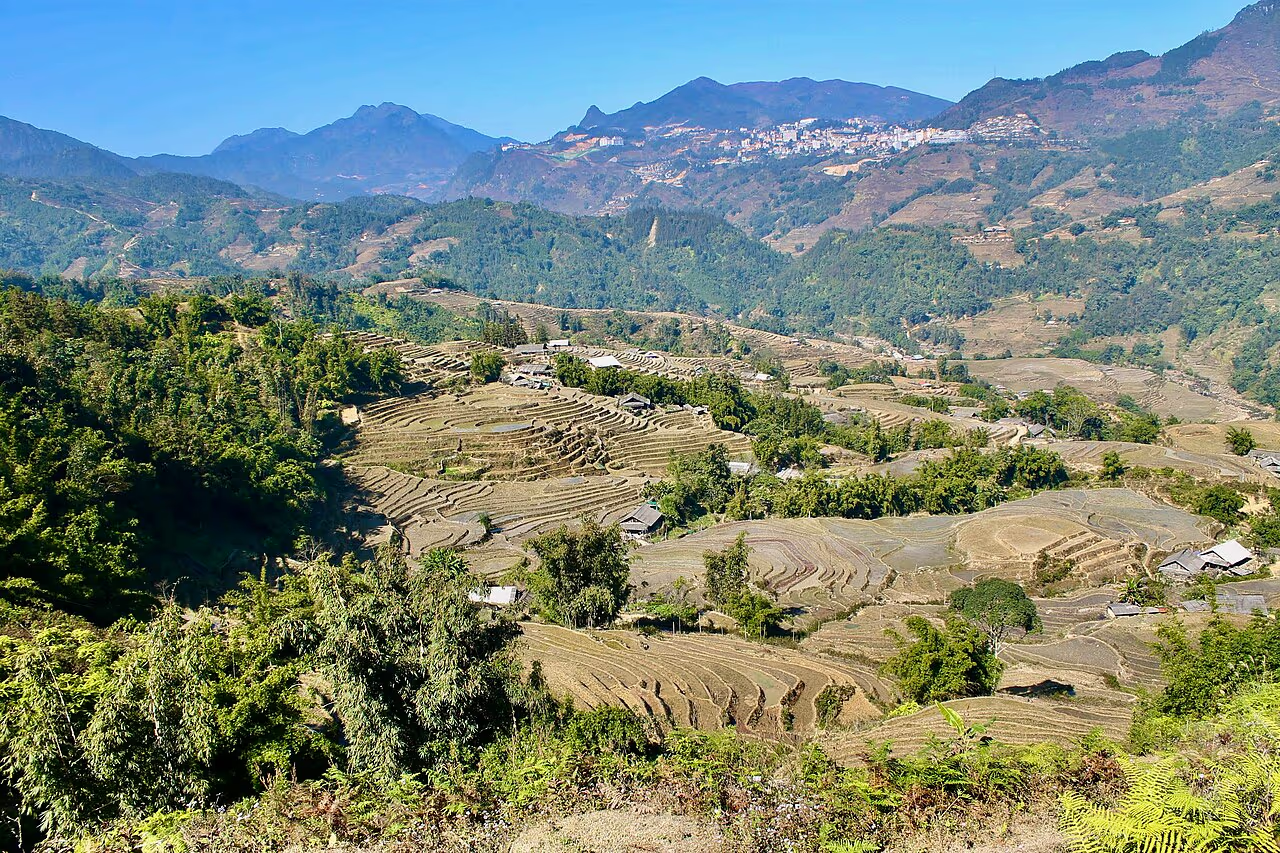
The Muong Hoa Valley terraces. This is the reason Sapa is famous. From the ridge above Lao Chai the terraces fall away in green or gold staircases for kilometre after kilometre down to the Muong Hoa stream, with the villages of Ta Van, Y Linh Ho, and Giang Ta Chai stitched into the slopes. In late September and October the rice turns gold; in May and June the flooded paddies turn to mirrors. Photos never quite do the scale justice — standing in it is the point. Scattered through the same valley are the Sapa ancient rock carvings — petroglyphs cut into boulders along the Muong Hoa stream, protected as a national heritage site — a reminder that people have found this landscape worth living in for a very long time.
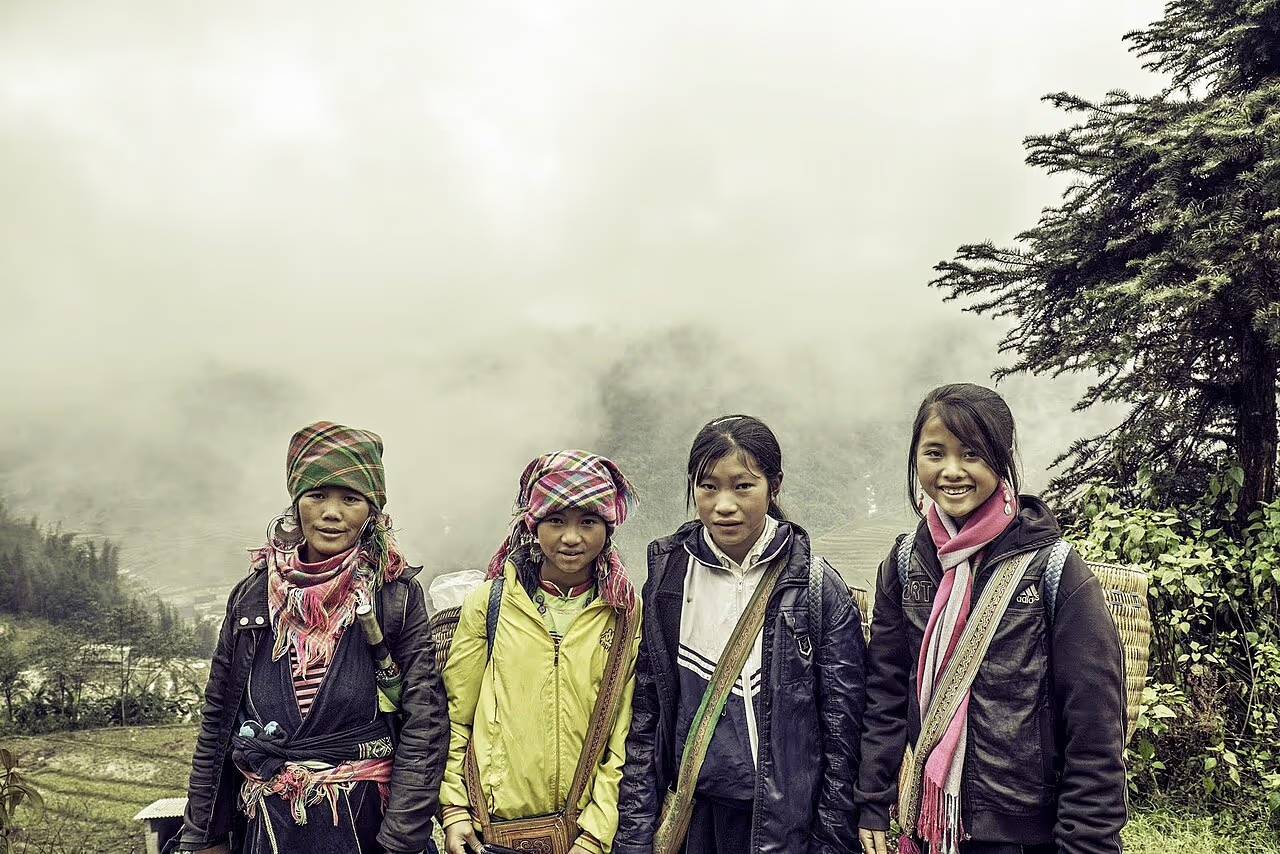
The people and culture. Sapa is home to the Black H'mong, Red Dao, Giay, and Tay, each with their own dress, language, and customs. On a guided trek you walk through working villages, stop for lunch in a family home, and hear how indigo is dyed and how the terraces are irrigated by hand — the kind of first-hand cultural contact that has all but disappeared from the more polished parts of Vietnam. This is the half of Sapa that photos miss and that visitors rate most highly afterwards. The weekly Sapa and Bac Ha markets, where hill-tribe families come to trade livestock, textiles, and herbs, are another window into a way of life that has largely vanished elsewhere in the country.
Fansipan, the roof of Indochina. At 3,143 metres, Fansipan is the highest peak in Vietnam, Laos, and Cambodia, and you can reach it two ways — a record-breaking Fansipan cable car in fifteen minutes, or a genuine two-day trek through the forest of the Hoang Lien National Park. Either way it adds a big-mountain dimension few Vietnam destinations can match.
Real trekking, not just viewpoints. Unlike places you drive to and photograph, Sapa is somewhere you walk. Half-day, full-day, and overnight-homestay treks take you down onto the valley floor and up the far side, past waterfalls, bamboo, and buffalo, at whatever pace suits you. It is the walking — and who you walk with — that turns Sapa from a photo stop into an experience. And it stays affordable: a full guided day on the trails, lunch with a local family included, costs a fraction of a comparable guided hike almost anywhere in Europe or the Americas, which is a large part of why the value rating stays high despite the busy town.
What a Day Trekking in Sapa Actually Looks Like
To picture why the valley wins people over, here is a normal day on our most popular route. We meet at the office at 105 Thach Son Street, or pick you up from your hotel, and drive twenty minutes down to the trailhead above Y Linh Ho, already below the worst of the town's cloud. From there the path drops onto the valley floor, crossing the Muong Hoa stream on a bamboo bridge and climbing gently through terraces that have been farmed the same way for over a hundred years.
By late morning you are walking through Lao Chai, a Black H'mong village where children herd ducks and women dye hemp the deep indigo you will see on their hands. Lunch is in a family home in Ta Van — usually spring rolls, a stir-fry of the vegetables growing outside the door, and rice from the very fields you walked through. In the afternoon the trail climbs to Giang Ta Chai, a Red Dao hamlet with a waterfall, before the road meets you for the ride back. It is roughly 10 to 14 kilometres, unhurried, with as many stops as you like. Nobody finishes that day wondering whether Sapa was worth it.
The Honest Downsides Nobody Puts in the Brochure
Sapa has three real downsides, and knowing them in advance is the difference between loving it and feeling let down. None of them are dealbreakers, but pretending they do not exist is how people end up disappointed.
The town has been over-built. Sapa town itself is no longer the sleepy hill station of the guidebooks — it is a busy grid of concrete hotels, karaoke bars, and construction, often wrapped in fog. If you judge Sapa by the town, you will wonder what the fuss is about. The magic is in the valleys a short drive or walk away, not on the main square.
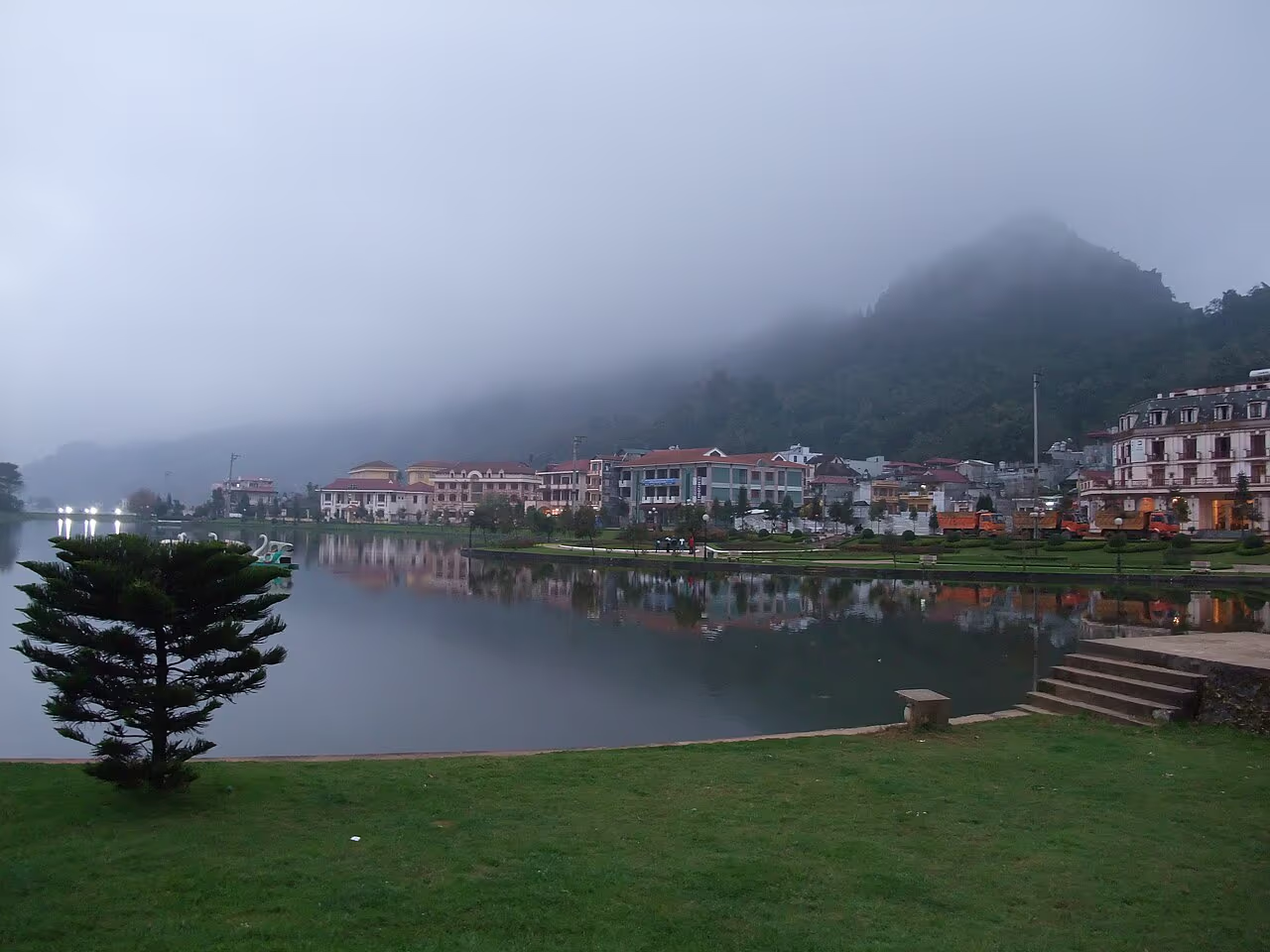
The weather is a genuine gamble. At 1,500 metres, Sapa makes its own clouds. You can arrive to thick fog that hides everything, even in the dry season, and winter mornings are genuinely cold. This is the single biggest reason people feel Sapa "wasn't worth it" — they came for two days, both were socked in, and they never saw the view. The fix is timing and a little patience, which we cover below.
Do not judge Sapa on a single foggy hour. Mist often burns off by mid-morning or rolls in and out through the day, and the valley below the cloud line is frequently clear even when the town is grey. Build in at least a full day of trekking, not a rushed half-day, so the weather has a chance to open up.
The famous spots are crowded and commercial. Cat Cat Village, the closest to town, is now a ticketed, heavily-developed walkway that many travellers find too touristy. Around the busy sites you will also meet vendors who follow you to sell handicrafts, which some find charming and others find tiring. The answer is simple: skip the honeypots, trek the quieter routes through Lao Chai, Ta Van, and Ta Phin with a local guide, and Sapa feels like a different, far more rewarding place.
Is Sapa Worth It For You?
Sapa is very much worth it for some travellers and genuinely not for others — it depends on how you like to travel. Here is the honest split.
Sapa is worth it if you…
Sapa may not be worth it if you…
If you landed mostly in the left column, Sapa will likely be a highlight of your Vietnam trip. If you are mostly on the right, be honest with yourself — you might get more from Ha Long Bay, Hoi An, or a beach, and that is a perfectly good decision.
Who Gets the Most Out of Sapa
Some travellers are almost guaranteed to love Sapa. If you recognise yourself in one of these, the "is it worth it" question is already answered.
The Trekker
The Culture Seeker
The Photographer
Families & Seniors
How Many Days in Sapa Is Worth It?
Two nights and one full day of trekking is the sweet spot, and it is the honest minimum for Sapa to be worth the journey. Here is why the length matters so much. Because Sapa is 5–6 hours from Hanoi, a single day on the ground barely repays the travel and leaves no buffer for weather. Give it more and the value climbs fast.
- 1 day (day trip): Rarely worth it. You spend more time in transit than in the valley, and one foggy morning ruins the whole thing. Only sensible if you take an overnight transfer both ways and trek the full middle day.
- 2 days / 1 night: The classic. One full valley trek, a night in Sapa or a village homestay, and enough weather buffer to catch a clear window. This is where Sapa becomes clearly worth it.
- 3 days / 2 nights: The best. Add a homestay deep in the valley, a second, quieter trekking route, and time for Fansipan. Almost nobody who gives Sapa three days regrets it.
To make the sweet spot concrete, a classic 2-day / 1-night looks like this: catch the overnight sleeper bus or train from Hanoi and arrive in Sapa around breakfast; trek the Muong Hoa Valley through Lao Chai and Ta Van all day, then spend the night in a valley homestay or back in town; on day two take a shorter morning walk to Ta Phin or up toward the ridge, ride the Fansipan cable car if the sky is clear, and travel back to Hanoi overnight. Two nights of travel, two full days on the ground, and almost no time lost — that is the itinerary that turns a long journey into a trip people talk about for years.
If you only have your dates roughly sketched, a guided tour removes the guesswork — the route, the homestay, the pace, and the pickup are all handled, and you simply walk and enjoy it. These are the routes our guests rate most highly.
Guided Sapa Treks Travellers Love
 Best Seller
Trekking Through Rice Terraced Fields
The full Muong Hoa Valley floor through Lao Chai & Ta Van — the trek that makes Sapa worth it.
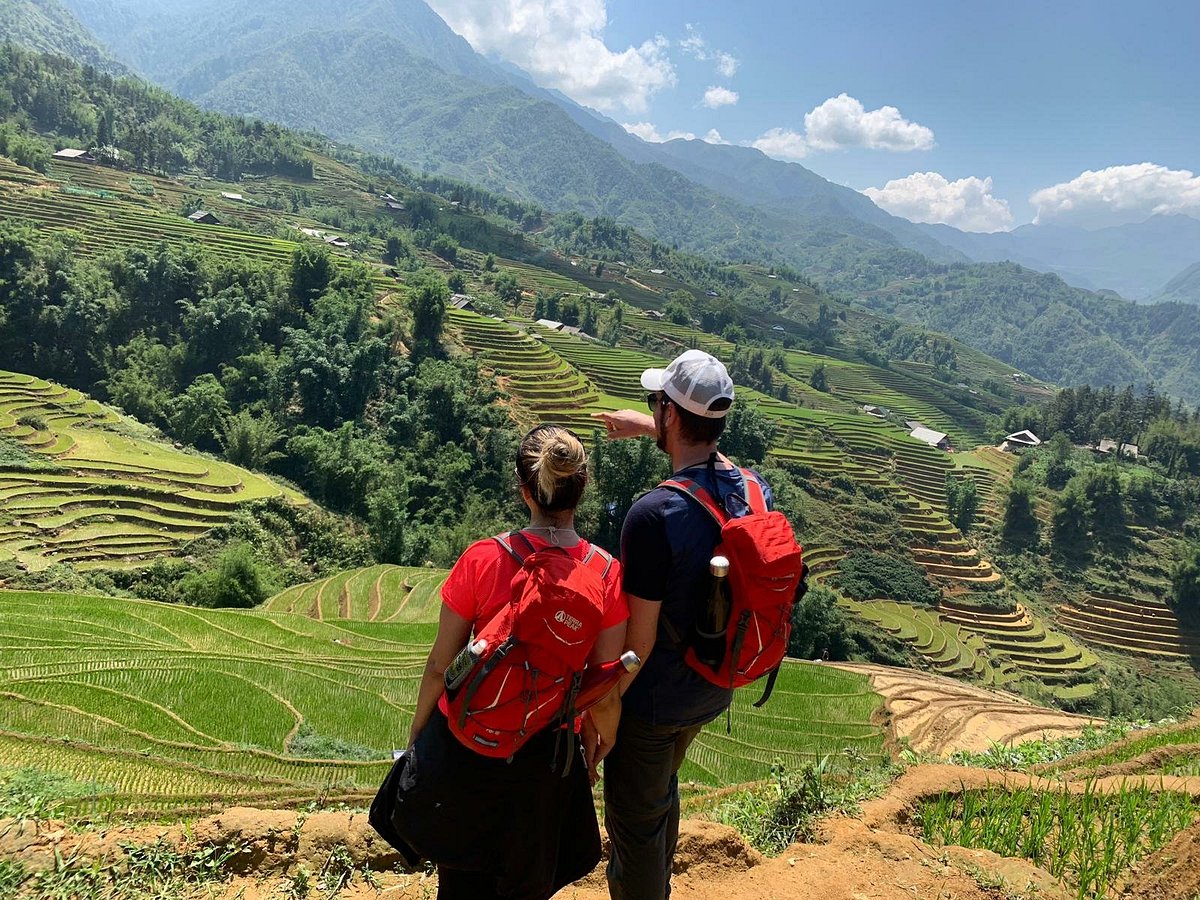
Rice Terraced Fields & Homestay
Overnight with a Black H'mong family in the valley — the version of Sapa people rave about.
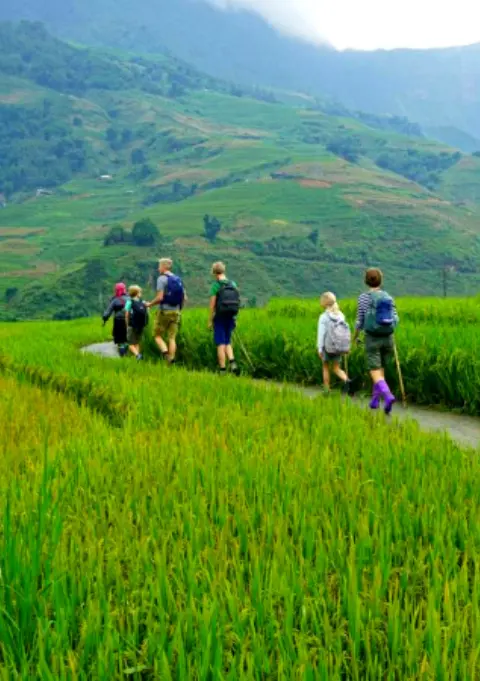 Seniors & Families
Sapa Easy Trekking For Seniors
Gentle, flat valley paths with poles provided — proof Sapa is worth it even without a hard climb.
Sapa vs the Alternatives
If you are weighing whether Sapa is worth it against northern Vietnam's other mountain and countryside options, here is the honest comparison. Each does one thing best, and the right answer depends on how you travel.
| Destination | Best for | Effort | From Hanoi | Worth it if… |
|---|---|---|---|---|
| Sapa | Rice terraces + ethnic culture on foot | Walking | 5–6 hrs | You want the best terraces & a guided trek |
| Ha Giang | Epic motorbike loop & remote scenery | Riding | 6–7 hrs | You ride or take an easy-rider, love adventure |
| Mai Chau | Gentle Thai villages & paddies | Very easy | 3–4 hrs | You want calm countryside close to Hanoi |
| Ninh Binh | Limestone karst & boat rivers | Very easy | 2 hrs | You want a quick, easy, dramatic day trip |
The short version: Sapa wins for terraces, culture, and trekking; Ha Giang wins for two-wheeled adventure and remoteness; Ninh Binh wins for ease and proximity. Many travellers with a week in the north do Sapa and one of the others rather than choosing — they answer different moods.
The Sapa versus Ha Giang question comes up almost every week, so here is the honest local take. Choose Sapa if you want the biggest rice terraces in Vietnam, close cultural contact with the Black H'mong and Red Dao, and the freedom to trek on foot at your own pace with a homestay in the valley. Choose Ha Giang if the appeal is the journey itself — three or four days on a motorbike or with an easy-rider around a remote loop of switchbacks, canyons, and border scenery near China. Sapa is the better first-timer's mountain trip and the easier one to do without riding; Ha Giang is the adventure you graduate to. If you would rather see the full case for the loop, our Ha Giang Loop guide lays it out day by day.
How to Make Sure Sapa Is Worth It
Whether Sapa delights or disappoints comes down to four decisions, and all four are in your control. Get these right and the "is it worth it" question answers itself.
1. Trek beyond the town. The single most important choice. Do not spend your time on the Sapa town square or the ticketed Cat Cat walkway — get onto the valley floor through Lao Chai, Ta Van, Y Linh Ho, or Ta Phin. The further you walk from town, the more real and beautiful Sapa becomes.

2. Go with a local guide. A Black H'mong or Red Dao guide opens doors a map cannot — the family lunch, the story behind the terraces, the quiet trail the tour buses never find. It is the difference between looking at Sapa and understanding it, and it is the biggest single upgrade to the experience.
3. Time it if you can. The most rewarding windows are March–May (clear, cool, green) and September–October (golden harvest). June brings the mirror-like flooded terraces; winter is cold and foggy but atmospheric. Whatever the month, favour dry mornings and give the weather a full day to open up.
4. Avoid the weekend crush. Sapa fills with domestic tourists on weekends and Vietnamese holidays. Come mid-week and the trails, the homestays, and the views are far quieter — the same Sapa, minus the crowds that drag its rating down.
Is Sapa Worth It in the Rain or Off-Season?
Yes — Sapa can still be worth it in the rain and the quiet months, as long as you adjust your expectations and your route. The wet season, roughly June to August, is when the terraces are at their greenest and most alive, and a passing shower on a warm afternoon is very different from a washout; the valley below the cloud line is often walkable even when the town is grey. Winter, from December to February, brings cold, fog, and the occasional dusting of frost on the summits, but also empty trails, wood-smoke evenings in the homestays, and a moody beauty that photographers love.
What genuinely does not work is a single rushed day in a bad-weather window with no flexibility. If your dates are fixed and the forecast is grim, lean into it: book a valley homestay so you are living inside the scenery rather than commuting to it, keep the Fansipan cable car as a rain-proof highlight, and treat any clear hour as a gift rather than a guarantee. Travellers who plan this way almost always come away feeling Sapa was worth it; the ones who bet everything on one sunny morning are the ones who leave disappointed.
Getting to Sapa From Hanoi
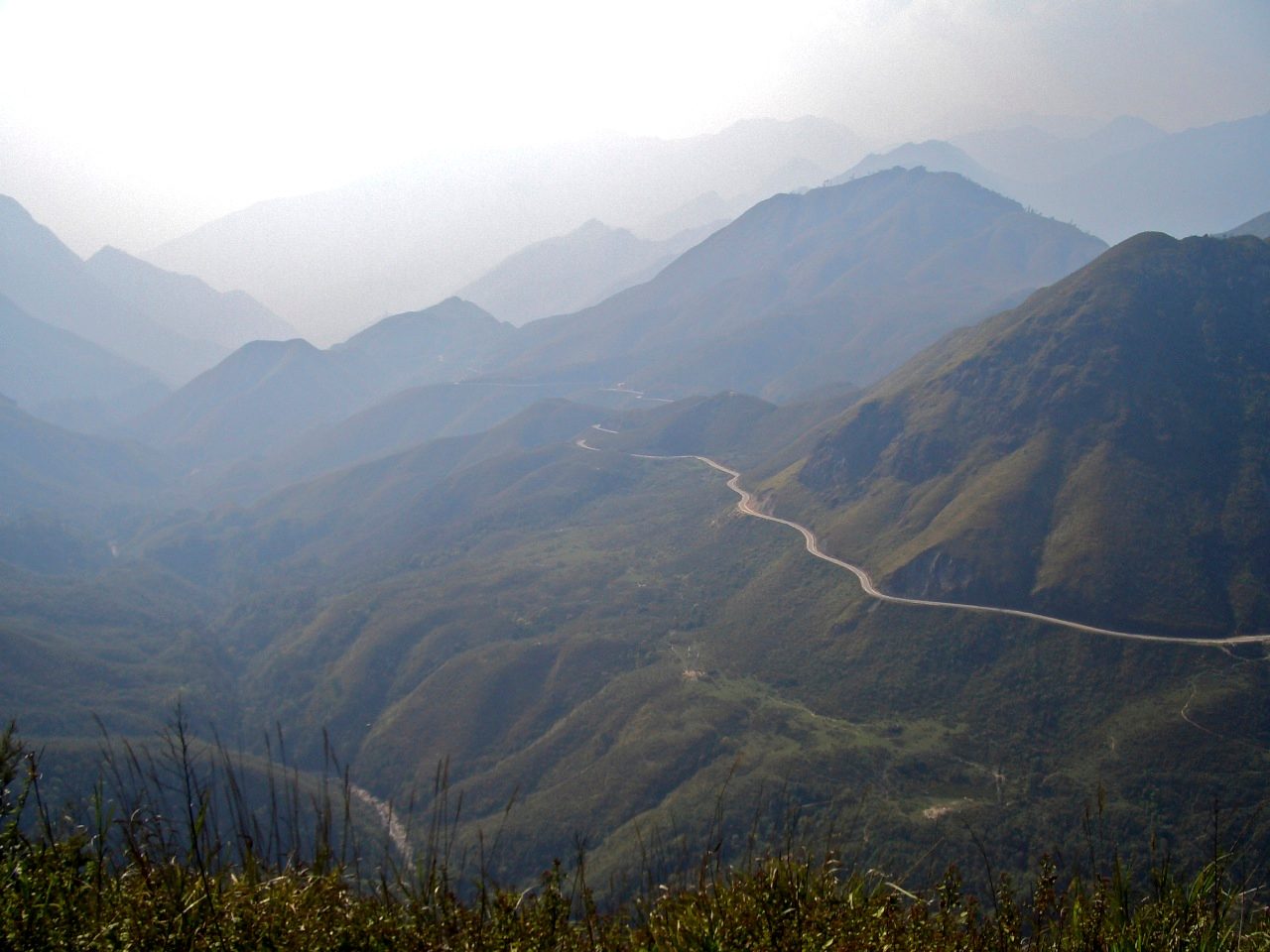
Getting to Sapa is the one real effort the trip asks of you — about 320 kilometres north-west of Hanoi through Lao Cai province — and how you cover it shapes how fresh you arrive. All three options are included as an add-on when you book a tour with us; choose by your budget and how you feel about the mountain road.
 Most Popular
Sleeper Bus
Sleeper & cabin options · 5–6 hours · From $17
 Fastest
Limousine Van
Door-to-door express · ~3.5 hours · Direct highway
 Most Reliable
Overnight Train
Hanoi–Lao Cai · ~8 hours · No mountain-road risk
Taking the overnight sleeper bus or train both ways is what makes even a short Sapa visit worth it — you travel while you sleep and arrive with a full day on the trails. Compare every departure on our Hanoi to Sapa transport page.
What to Bring So You Enjoy It
A little kit is the difference between a great day on the terraces and a cold, wet slog. Sapa weather turns fast, so pack for a mountain even if you leave a sunny Hanoi.
- A rain jacket or poncho — the weather changes quickly here, always carry one.
- Comfortable shoes with grip — the valley trails are uneven and slick after rain.
- Warm layers — mornings are cool even in summer, cold in winter.
- Walking poles — a real help on the descents (we provide them free at the office).
- Small daypack with water — 1.5–2 litres for a full-day trek.
- Sun protection — the high-altitude sun is strong when the cloud lifts.
If you would rather not buy gear for one trip, we rent trekking boots and walking poles by the day at our office at 105 Thach Son Street, cleaned and checked before each rental.
Rent at Our Office Before You Trek
 Gear Rental
Trekking Boots Rental
Waterproof ankle-support boots. Cleaned and checked before each rental. Available at 105 Thach Son Street.
 Gear Rental
Walking Poles Rental
Trekking poles available to rent at $2/day at our office, 105 Thach Son Street. Essential for descents.
The Bottom Line: Is Sapa Worth Visiting?
So, is Sapa worth visiting? For the overwhelming majority of travellers who come for the right reasons, yes — and often it becomes the part of the Vietnam trip they talk about most. The rice terraces of the Muong Hoa Valley are the finest in the country, the Black H'mong and Red Dao culture is real and welcoming, and Fansipan gives you a genuine high mountain on top of it all. Those are not marketing lines; they are the reasons our guests keep coming back and sending their friends.
Where Sapa disappoints is entirely predictable, and entirely avoidable. Judge it by the concrete, foggy town and you will shrug; give it a single rushed day and gamble on the weather and you may lose. But trek into the valleys, walk with a local guide, come mid-week, and give it two or three days, and the question stops being "was it worth it" and becomes "why didn't we stay longer." If you want us to take the guesswork out of that, tell us your dates on WhatsApp and we will plan the trek that makes Sapa worth every hour of the journey.
Frequently Asked Questions
Yes, for most travellers Sapa is worth visiting, as long as you trek into the Muong Hoa Valley rather than staying in the built-up town. The rice terraces and the Black H'mong and Red Dao culture are among the best in Vietnam. Give it two to three days and a guided trek and it is often a trip highlight.
Two days and one night is the sweet spot, with one full day of trekking and a weather buffer. Three days and two nights is even better, adding a valley homestay and time for Fansipan. A single rushed day is rarely worth the 5 to 6 hour trip from Hanoi.
Almost always because they stayed in the over-built, foggy town, visited only the ticketed Cat Cat walkway, or came for a single day that got rained out. Travellers who trek the quieter valleys with a local guide, and give the weather a chance, rarely feel that way.
March to May is clear, cool, and green, and September to October brings the golden harvest — these are the most rewarding windows. May and June give the mirror-like flooded terraces. Winter is cold and often foggy but atmospheric. Favour dry mornings whatever the month.
They suit different travellers. Sapa is best for rice terraces, ethnic culture, and trekking on foot with easy access to homestays. Ha Giang is best for a multi-day motorbike loop through remote, epic scenery. If you have a week in the north, many travellers do both rather than choose.
You do not have to trek far, but you do need to leave the town to make Sapa worth it. There are very gentle, mostly flat valley walks for seniors and families, short viewpoints reachable by car, and the Fansipan cable car for the mountain. Even an easy half-day in the valley beats staying in town.