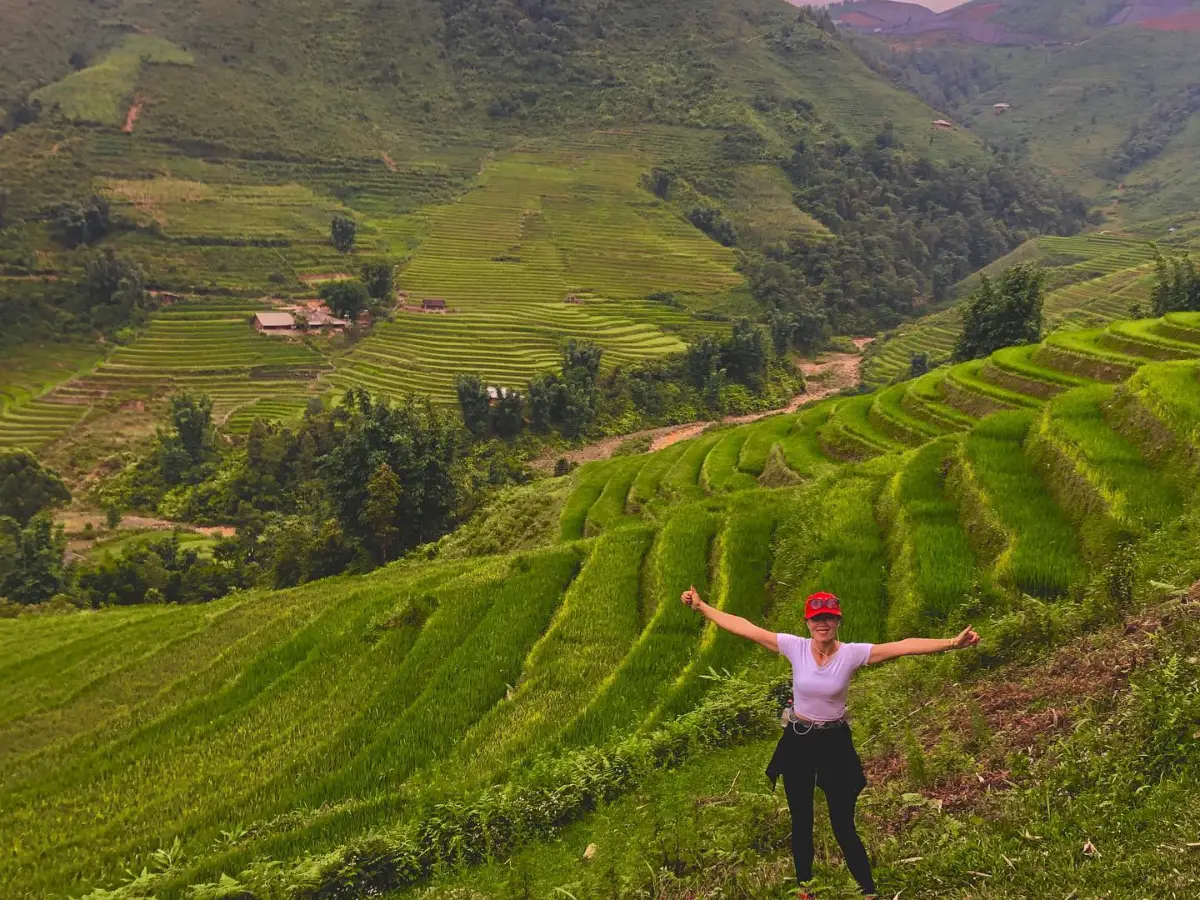
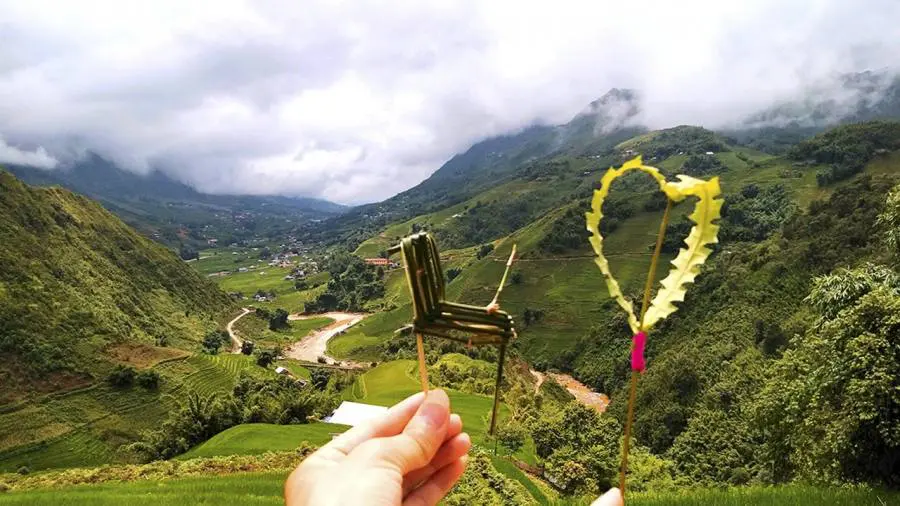
The first time I heard a Sultan Tit calling from the rhododendron forest above Ta Phin, I was leading a group up the trail at 6am and everyone stopped walking at the same time. Nobody said anything. We just stood there in the mist, listening to this bird — bigger than any tit you'd see in Europe or North America, with a deep yellow belly and a black crest that catches the light — calling from somewhere in the canopy about fifteen metres above us. That moment lasted maybe three minutes before it moved on. Nobody had come to Sapa for the birds. They came for the rice terraces. But that three minutes is what several of them mentioned when they messaged me afterward.
Most visitors to Sapa know about the Muong Hoa Valley and the Black H'mong villages along the terrace trails. Very few know that the forests above 1,800m — the ones you pass through on the way up to Ma Tra, or the dense canopy that starts just behind the Red Dao homestays above Ta Phin — are an entirely different Sapa. Hoang Lien National Park stretches from the valley floor at 300m all the way to the Fansipan summit at 3,143m, covering 29,845 hectares. The biodiversity packed into that elevation range is extraordinary, and almost none of the people walking through the lower sections have any idea what is living in the trees above them.
Hoang Lien National Park — The Core Wildlife Zone
Hoang Lien National Park holds the most concentrated biodiversity of any protected area north of the Red River in Vietnam. The park's recorded species count includes more than 2,000 plant species, 347 bird species, and over 800 vertebrate species in total — figures that rival protected areas many times its size in Southeast Asia. The reason is elevation. No other park in Vietnam spans such a dramatic vertical range within such a compact area, and that range creates dozens of distinct microhabitats within a few kilometres of each other.
The main access points are the trailhead at Ta Van Village, which brings you into the lower forest corridor above the rice terrace zone, and the Fansipan trekking route starting above Cat Cat Village, which climbs through middle forest (1,500–2,200m) before entering the high-altitude moss forest near the summit. The Ta Van trailhead is where I take most groups when the wildlife focus is birds and accessible forest. The Fansipan route is where serow sightings are most likely, though that requires a full-day commitment and proper fitness.
Key species in the park include the Tonkin snub-nosed monkey (Rhinopithecus avunculus), a critically endangered primate found almost nowhere else in Vietnam — I have been guiding in these forests for more than eight years and I have seen them exactly twice, both times above 2,400m in early morning. The serow (Capricornis milneedwardsii), a goat-antelope with dark grey-brown fur and short curved horns, is spotted on rocky ridges above 2,000m with surprising regularity by anyone who moves quietly. The red-bellied squirrel is active through most of the forest zone and is the animal you are most likely to see without trying.
Do not enter Hoang Lien National Park without a local guide for sections above 1,800m. Trails are unmarked and the terrain above 2,500m is genuinely disorienting in mist — which rolls in from the south almost every afternoon between April and October. The park is safe, but navigation without local knowledge is a real risk above that elevation.
Where to Go Without a Full Park Permit
The best wildlife access without entering the core park zone runs through the forest corridor between Ma Tra Village and Ta Phin Village, at elevations between 1,600 and 1,900m. This section is accessible on a half-day walk from Sapa town and covers some of the most bird-rich forest on any trail we run. The Red Dao community in Ta Phin has maintained traditional forest management practices in this area for generations, and it shows — the canopy here is intact in a way that trail sections nearer to the valley floor are not.
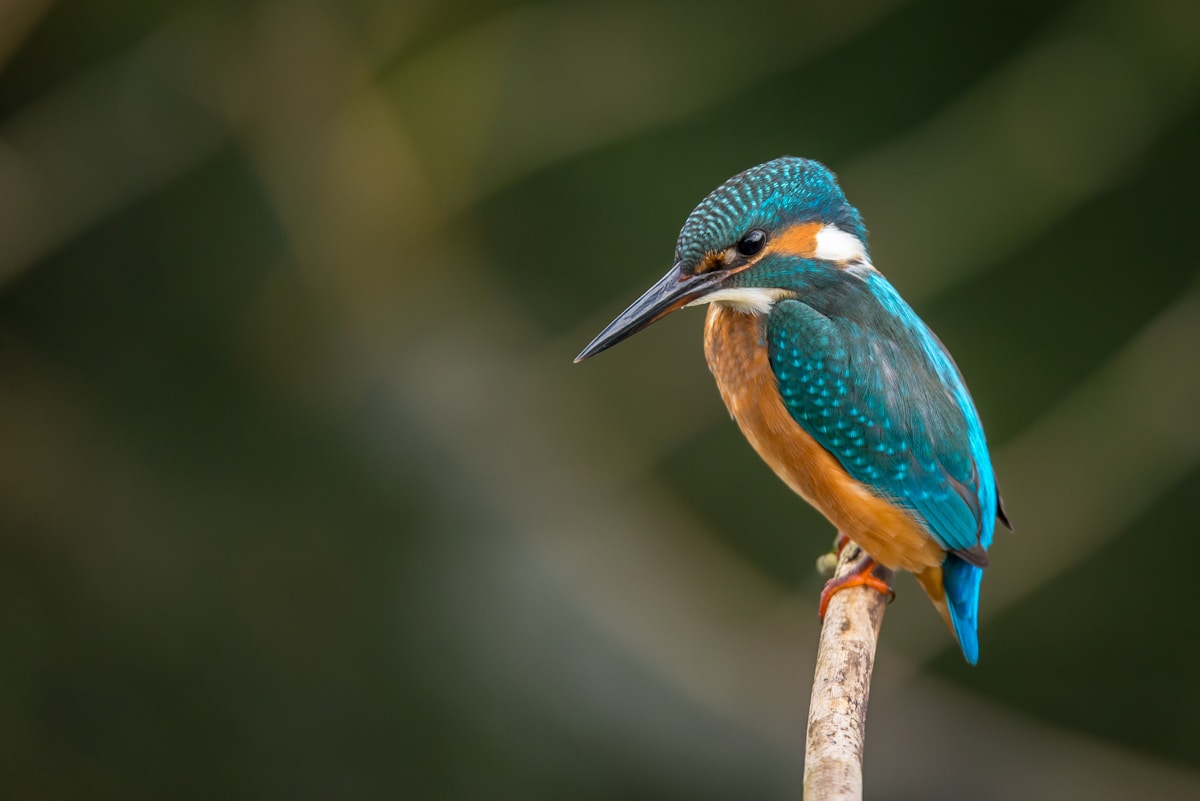
At dawn, before 7am, the stream valley below Y Linh Ho Village is the most reliably active wildlife zone on any standard route. Little egrets and grey herons feed in the shallow channels between the paddy fields, kingfishers — the common kingfisher, not a spectacular species but still arrestingly bright when it passes low over water — work the faster sections, and large-billed crows move through the tree line in small groups. The crows here are noticeably larger than what most European visitors expect from a crow. The stream corridor between Y Linh Ho and Lao Chai on a clear October morning, before 8am, is the single most reliable wildlife window on any of our 1-day routes.
The bamboo forest east of Lao Chai Village is worth stopping in if you have a guide who knows it. Bamboo rats are nocturnal and almost never seen, but their tunnel entrances and runs through the bamboo stems are obvious to anyone who knows what to look for. More reliably, the bamboo zone produces red-faced liocichla calls from the canopy — a loud, melodic bird that is often heard for ten minutes before it comes close enough to see. In April and May, the liocichla are calling constantly from before dawn until mid-morning.
The Silver Waterfall area (Thac Bac), which most visitors see crowded with tour buses by 9am, is a completely different place at 6:30am. The flowering shrubs along the stream below the falls are feeding stations for sunbirds through the cooler months, and the fast water produces exactly the conditions that Slaty-backed Forktails prefer — they perch on mid-stream rocks and bob their tails in a way that makes them very easy to identify once you know the shape.
Birds of Sapa — What You Can Actually See
Sapa's 347 recorded bird species include everything from high-altitude endemics to common lowland species that pass through on migration. For a visitor with no specialist equipment and no particular birding experience, six species stand out as both genuinely likely to be seen and distinctive enough to be memorable.
Mrs Gould's Sunbird
Forest edges · 1,200–2,000m · Year-round
Male: iridescent purple-red throat
Sultan Tit
Rhododendron zone · 1,800m+ · Oct–Apr best
Large; yellow belly, black crest
Slaty-backed Forktail
Fast streams · 800–1,800m · Year-round
Always near fast-flowing water
Green-tailed Sunbird
Any forest edge · 1,000–2,200m · Year-round
Most commonly photographed species
Mrs Gould's Sunbird — the male has an iridescent purple-red throat that catches the light like something metallic. Found feeding on flowering shrubs along any forest edge from about 1,200m up to 2,000m. Common on the trail section above Y Linh Ho and on the path approaching Ta Phin through the Red Dao zone. Year-round, but most active March to May when flowering is at its peak.
Sultan Tit — I have mentioned this bird already because it is the one that stops my groups most reliably. It is the largest tit in the world, which sounds like a low bar until you see one. They call loudly from the rhododendron zone above 1,800m, usually before 7:30am. The call is a series of descending whistles that carry clearly through the forest. October through April are the best months.
White-crested Laughingthrush — moves in small flocks of six to twelve birds through the bamboo and secondary forest above Ta Phin. Very vocal, which helps. The flocks work through the understorey rapidly and are gone in three or four minutes, but during that window they come very close. March to June is the most active period.
Slaty-backed Forktail — always associated with fast-moving streams. It perches on mid-channel rocks and bobs its long tail constantly. The stream below Y Linh Ho and the channels feeding into the Muong Hoa Valley below Ta Van both hold resident pairs. A quick-moving, confident bird that does not flush easily if you approach slowly.
Large Niltava — the male is a deep blue that looks almost artificial in good light. Found in medium-altitude forest from about 1,400m upward, often perched quietly on low branches near Lao Chai and on the trail sections between Ta Van and Giang Ta Chai. More likely March to May during the breeding season when males are most visible.
Green-tailed Sunbird — the most commonly photographed bird in Sapa by far, partly because it feeds in full view on nectar-producing shrubs at head height or lower. Present year-round on almost every trail above 1,000m. If you want one photograph of a Sapa bird, this is the most achievable target.
Mammals — What Lives Here That You Won't See in the Brochures
The mammal list for Hoang Lien National Park runs to over 90 species, but realistic sighting expectations for a daytime visitor are considerably narrower. Most species here are nocturnal, shy, and under sustained hunting pressure outside the park core. That said, several species are seen regularly enough to be worth knowing about before you go.
Serow (Capricornis milneedwardsii) — a goat-antelope built for rocky terrain, dark grey-brown with short horns and a distinctive white chin patch. The Fansipan trekking route between 2,200m and 2,800m produces serow sightings more reliably than any other trail in the area. They are most often seen on open rocky ridgelines in the early morning, standing still and watching. A single serow can hold a position for several minutes before moving, which gives you time to look properly if you spot it first.
Asian black bear — present in the deeper forest sections of the park, recorded on camera traps in several locations above 2,000m. In eight years of regular forest guiding, I have seen clear bear sign — claw marks on trees, overturned logs — on perhaps a dozen occasions. I have seen a bear itself once, briefly, above 2,300m at dusk. They are active at night and avoid human contact reliably. Not a danger, not a sighting to plan around.
Red panda (Ailurus fulgens) — recorded in Hoang Lien and one of Vietnam's rarest confirmed sightings. Habitat is the high-altitude bamboo zone above 2,000m. I am aware of fewer than five confirmed tourist sightings from this area in the past decade. I include it here because the question comes up, and because if you are in the right forest at the right time of year — October through February, above 2,000m, in bamboo-mixed forest — the possibility is not zero.
Small-toothed ferret-badger — the most reliably seen mammal if you drive or walk the road above Sapa town at dusk. They forage along road edges and embankments in the evening, moving with a waddling gait that makes them recognisable once you know it. Not a forest encounter — a roadside one. September through November seems to produce the most sightings, possibly because food availability changes as the rice harvest alters the landscape.
Black giant squirrel — active in the canopy and occasionally seen on the forest trail between Ta Van and Giang Ta Chai in the morning hours. Larger than you expect from a squirrel — cat-sized, with a long prehensile tail. Rarely stays still for long but occasionally pauses on a large horizontal branch for thirty seconds or more.
The Best Time of Day and Year
The single most important variable for wildlife in Sapa is time of day. The window from 5:30am to 8:00am is the only period when bird activity is at its peak. Most species feed intensively in the first two hours after first light, then retreat to canopy shade and become nearly impossible to locate by sound or sight. By 9am on a warm day, trails that were loud with bird calls an hour earlier can feel almost silent. If you are coming specifically for wildlife, an early morning start is not optional — it is the whole game.
| Month | Bird Activity | Mammals | Overall |
|---|---|---|---|
| Jan–Feb | Resident species + winter visitors | Ferret-badger road sightings good | Good |
| Mar–Apr | Breeding season — loudest, most active | Serow active on ridges | Peak |
| May–Jun | Good — fledgling activity adds variety | Moderate activity | Good |
| Jul–Aug | Suppressed — heavy rain, reduced calling | Low — most species inactive in rain | Avoid |
| Sep–Oct | Migratory additions + resident peak | Serow frequently spotted | Peak |
| Nov–Dec | Winter visitors arriving; clear mornings | Ferret-badger common at dusk | Good |
October and November are the months I recommend if you have a choice. Migratory species arrive from further north and add to the resident count — in October especially, the trail above Ta Phin can produce species you would not expect on any other month. The rice terraces are also at their most spectacular in late September and early October, so combining a wildlife morning start with a terrace walk later in the day works well.
March and April are the breeding season peak. Birds call constantly, loudly, and from lower in the canopy than at any other time of year. This is the easiest period for identification because species that spend most of the year in the high canopy descend to display, and the forest feels genuinely alive in a way it does not for the rest of the year. I have heard as many as fourteen species calling simultaneously above Ta Phin on a still March morning before 7am.
July and August are the months to avoid if wildlife is a priority. Heavy rainfall — often 200mm or more in a single week — suppresses activity across the board. Trails are extremely muddy, bird calling drops off sharply in wet conditions, and the mist that sits in the valley all day reduces visibility in the forest to almost nothing. Come for the green terraces if you must come in summer, but do not plan the visit around wildlife.
These Trails Go Through the Heart of Sapa's Wildlife Zones
 Best Seller
Trekking Through Rice Terraced Fields
Walk the Muong Hoa Valley from Lao Chai to Ta Van — the stream corridor here has the best kingfisher sightings.
Mountain Views and Villages Trek
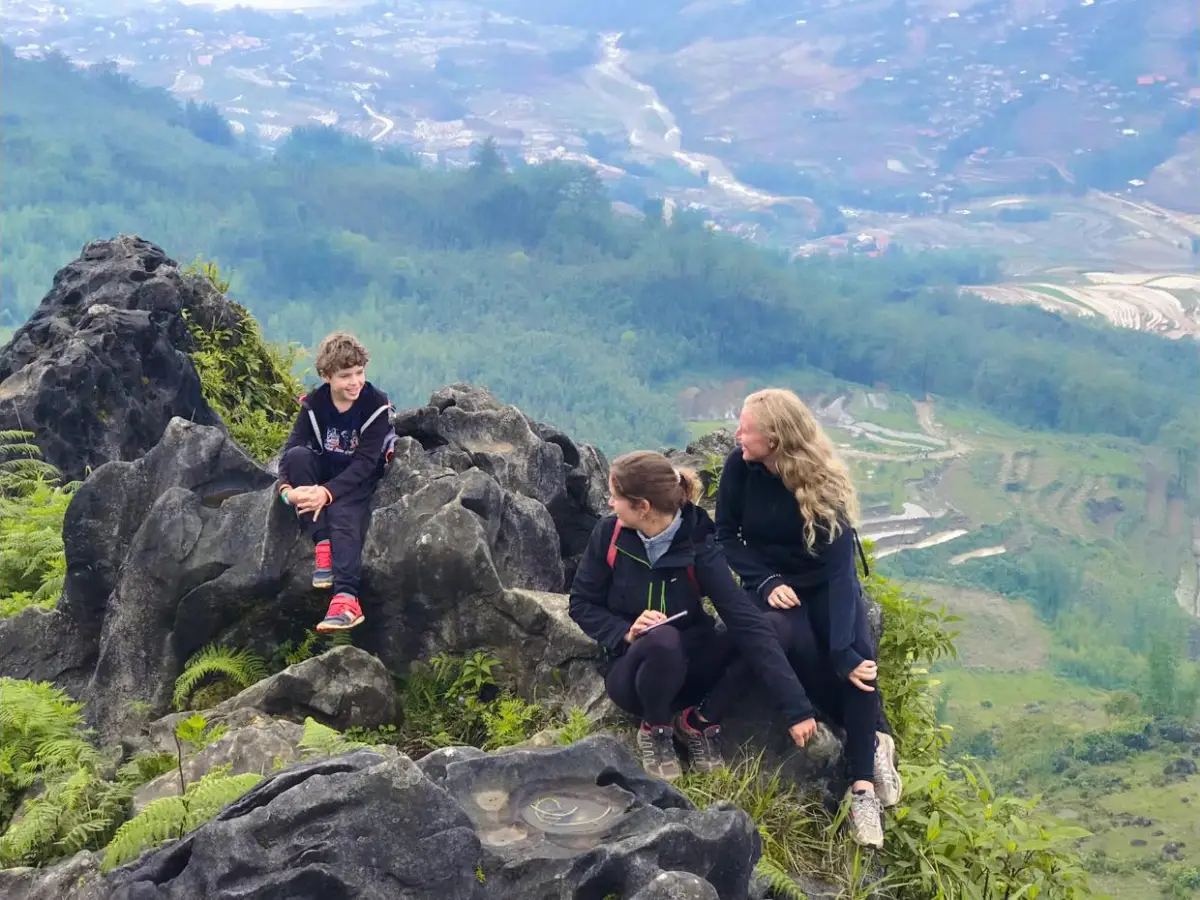
The ridge trail above Y Linh Ho passes through mid-altitude forest — good for sunbirds and laughingthrushes.
Sapa Adventure Tour – No Touristic
Off-touristic-route trails through Ta Phin forest — the quieter paths are where wildlife activity is highest.
Practical Tips Before You Go
Wildlife observation in Sapa's forest is not technically demanding, but the difference between a productive morning and a quiet one comes down almost entirely to preparation and timing. These are the details that actually matter.
Binoculars: 8x42 is the right specification for this forest — the combination of magnification and light-gathering is balanced for dark canopy conditions. Bring your own. Nothing useful is available for rent in Sapa, and borrowing from another group member means you will miss the bird by the time the binoculars reach you. If you do not own binoculars, this trip is a reason to buy a pair. The Nikon Prostaff series or similar entry-level optics are more than adequate for what you will see here.
Clothing: Neutral tones — grey, olive, khaki, dark blue. Not for camouflage in the military sense, but because bright orange or red is visible to birds at distances where you would not yet have spotted them, and they adjust their behaviour accordingly. This is particularly true for the sunbird species, which are alert to colour at long range. Avoid rustling synthetic fabrics if you can — noise matters more than colour in dense forest.
Guide: Always book with a local H'mong guide who grew up walking these trails, not a city-based guide from Hanoi who has done a training course. The difference is not theoretical. A guide from Ta Van or Y Linh Ho knows which trees are fruiting this week, which family's field the serow has been crossing at dusk, and where the forktail pair is currently nesting. That knowledge does not come from a guidebook.
Camera: The forest light above 1,600m is dark. A lens faster than f/4 is practically a requirement. A 70–200mm f/2.8 will serve you well; a 100–400mm will give you reach but struggle in low light without good image stabilisation. Phone cameras will produce blurred or grain-heavy results in most forest conditions before 8am. Accept this and focus on observation rather than documentation, or bring real glass.
Leave no trace: Plastic waste on forest trails genuinely disturbs wildlife activity — it changes animal movement patterns as species learn to associate trail debris with human presence. Carry everything out. This is not an abstract principle here; it is the reason the trails above Ma Tra still have good wildlife, and the reason some sections closer to the main tourist routes do not.
If you want a dedicated wildlife morning, message us the day before and I will check which trail sections had recent activity reports from our other guides. We share notes after every group. Some days the bamboo zone above Lao Chai is quiet and the stream below Y Linh Ho is where everything is happening. Some days it is the reverse. Real-time local information is worth more than any published guide.
Gear Up Before You Head Into the Forest
 Gear Rental
Trekking Boots Rental
Waterproof ankle-support boots. Cleaned and checked before each rental. Available at 105 Thach Son Street.
 Gear Rental
Walking Poles Rental
Trekking poles available to rent at $2/day at our office, 105 Thach Son Street. Essential for descents.
Frequently Asked Questions
No. Large cats were hunted to local extinction in the Hoang Lien range by the 1970s. The apex predators now are small and medium-sized — serow are the largest animals you might realistically encounter on a trek. Asian black bears are present in the deeper park sections but are almost never seen.
Yes, with the right guide and timing. A good H'mong guide will know which sections of any trail have had recent animal activity and will walk more slowly through those areas. Morning starts — before 7am — significantly increase your chances. The stream corridors near Lao Chai and Y Linh Ho Village are the most reliably active sections on standard tour routes.
The park is safe but requires a local guide for the forest sections above 1,800m. The lower trails near Ta Van Village are accessible independently. Above 2,000m, mist and unmarked paths make a guide essential — the terrain above 2,500m is genuinely disorienting when cloud rolls in, which it does almost every afternoon.
On the open terrace trails, expect wading birds — egrets and herons feeding in the flooded paddies — large-billed crows, and in the early morning, small mammals moving between the field edges. The forest-adjacent sections near Lao Chai and above Y Linh Ho have more species, including sunbirds, laughingthrushes, and forktails along the streams.
Yes, including pit vipers in the forest undergrowth. They are rarely encountered on established trails but are present. Stay on the path, especially at dawn when they are most active, and wear shoes that cover your ankles. In five years of guiding, I have seen maybe six or seven snakes on trail. It is not a reason to avoid the forest — it is a reason to pay attention.
October and November combine high bird activity — migratory species add to the resident count — with the most spectacular rice terrace scenery. March and April are excellent for breeding season bird calls; the forest is loudest then and birds are easiest to locate by sound. Avoid July and August if wildlife is your priority: heavy rainfall suppresses activity and the forest trails become very muddy.