 Sinh Giang
Most travelers who visit Vietnam arrive with the same list already saved on their phone. Ha Long Bay. Hoi An. Ho Chi Minh City. It's a solid plan — each one earns its place on every highlight reel.
But somewhere between day four and day seven, something shifts. The questions change. Not "which temple should I visit?" but "where does Vietnam actually feel like Vietnam?" Not the curated version — the real one. The answer, for the travelers we work with most often, nearly always leads to the same place: a mountain town in the north that most first-timers skip because they didn't know it existed.
That destination comes later in this guide — and there's a reason it's the one travelers keep coming back to. Below is a region-by-region breakdown of 25 places worth visiting in Vietnam, built from years of guiding travelers through the country and watching which destinations earn return trips. We've included honest seasonal advice, what most visitors miss in each place, and how long each one actually deserves.
Vietnam at a Glance — Quick Overview
The table below covers the 12 most visited destinations, organized by region. Use it to compare travel times, budget, and crowd levels before committing to an itinerary.
| Destination | Region | Best For | Days Needed | From Hanoi | Budget/Day (USD) |
|---|---|---|---|---|---|
| Sapa | North | Trekking & ethnic culture | 2–3 | 5h (overnight bus) | $30–50 |
| Hanoi | North | History, food, city base | 2–3 | — | $40–70 |
| Ha Long Bay | North | Scenic boat cruise | 1–2 | 3.5h transfer | $60–130 |
| Ha Giang | Far North | Motorbike adventure | 3–5 | 4.5h bus | $25–45 |
| Ninh Binh | North | Limestone karsts, temples | 1–2 | 2h bus/train | $30–55 |
| Bac Ha | North | Sunday market, H'mong culture | 1–2 | Near Sapa | $25–40 |
| Hoi An | Central | Old town, lanterns, food | 2–3 | Fly 1.5h | $40–70 |
| Hue | Central | Imperial history | 1–2 | Fly 1.5h | $35–60 |
| Da Nang | Central | Beaches, city base | 1–2 | Fly 1.5h | $45–80 |
| Ho Chi Minh City | South | Urban energy, war history | 2–3 | Fly 2h | $45–80 |
| Mekong Delta | South | River life, floating markets | 1–2 | Fly + transfer | $30–50 |
| Phu Quoc | South | Beaches, island relaxation | 3–5 | Fly 2h | $50–120 |
Northern Vietnam
The north is where Vietnam's wildest scenery lives — rice terraces stacked hundreds of meters high, limestone karsts rising from flat paddy fields, and mountain communities whose cultures have changed very little over centuries. It's also where the country is most unpredictable: the weather shifts fast, the roads are narrow, and the rewards are proportional to how far off the main track you're willing to go.
1. Sapa — Rice Terraces, H'mong Villages, Mountain Trekking
Step off the overnight bus from Hanoi on a September morning and the first thing you notice is the air. Cooler, thinner, carrying something that doesn't quite exist at lower elevations. By the time you reach your guesthouse and drop your bag, Sapa already feels like a different country.
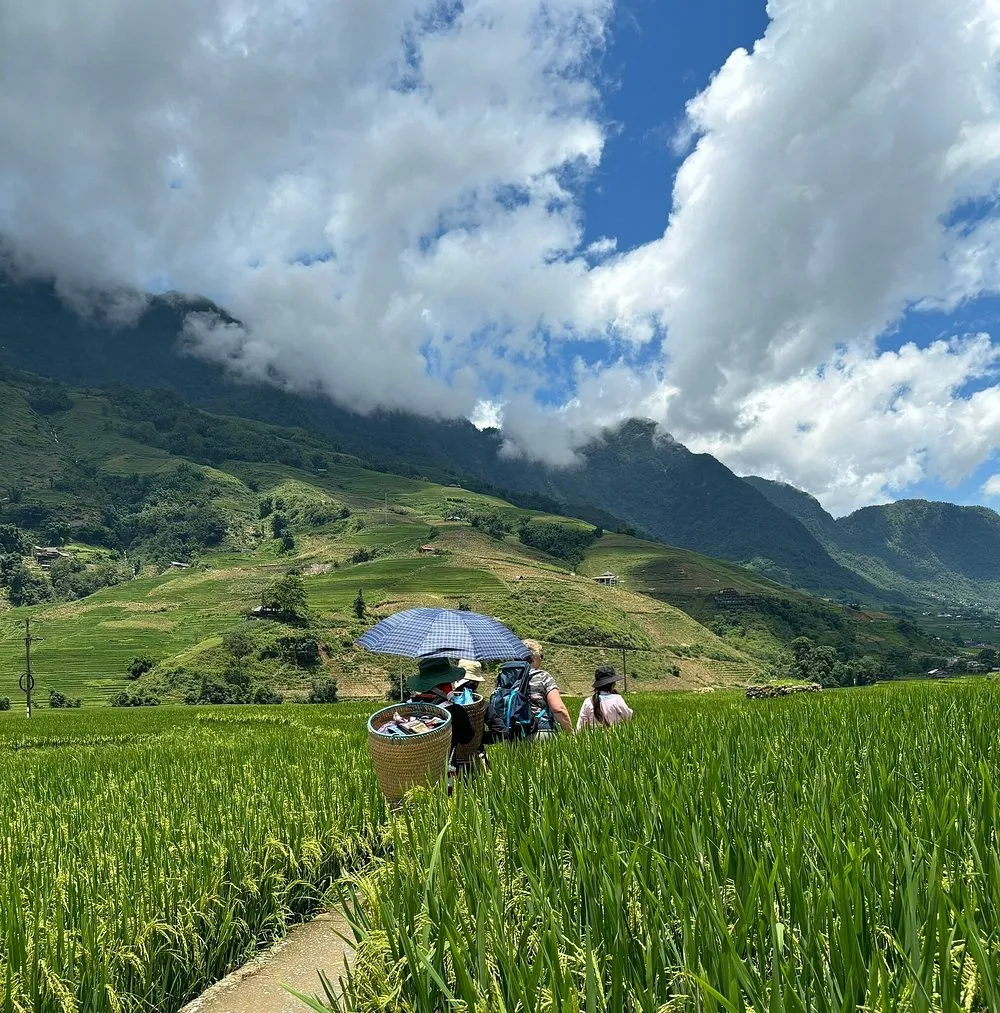
The town itself is small — a compact grid of guesthouses, local restaurants, and a daily market where Black H'mong women sell embroidered fabric alongside vegetables. Most of what makes Sapa extraordinary lies outside it. The Muong Hoa Valley stretches south of town, and along its length, the Black H'mong community has been farming these terraces for centuries. The rice fields don't look like the photographs until you're actually standing in them. The scale only makes sense from ground level — walking narrow earthen dikes between paddies that drop hundreds of meters into the valley below, with the villages of Lao Chai, Ta Van, and Y Linh Ho visible from above.
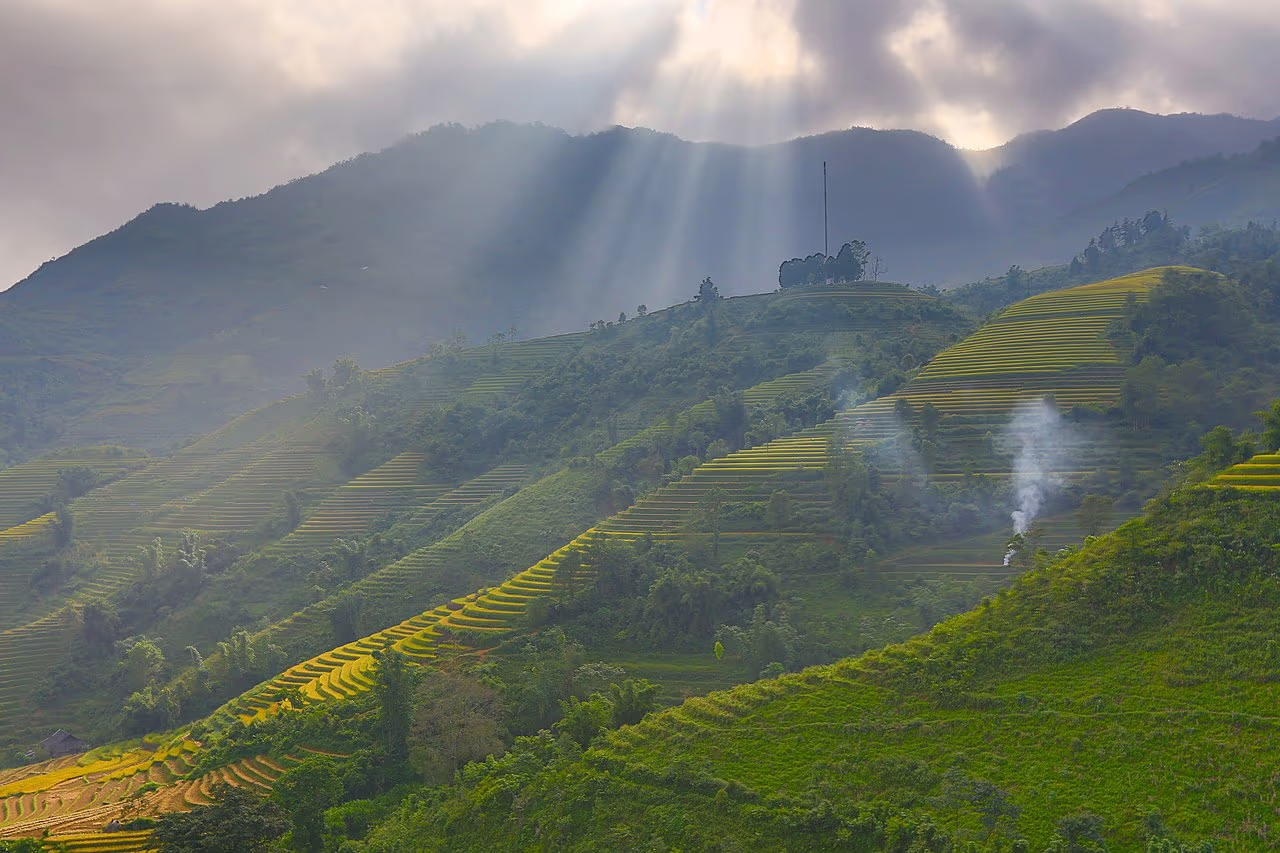
September and October are peak season for a reason: the harvest turns the terraces from bright green to deep gold, a color shift that moves across the hillside as different families harvest at different times. But Sapa is worth visiting in any month. The summer months (May–August) bring the brightest green, with terraces freshly planted and overflowing with water that reflects the sky. Winter (December–February) is cold — sometimes below 5°C at night — but the mist that rolls through the valley on still mornings is something photographers chase specifically for this light.
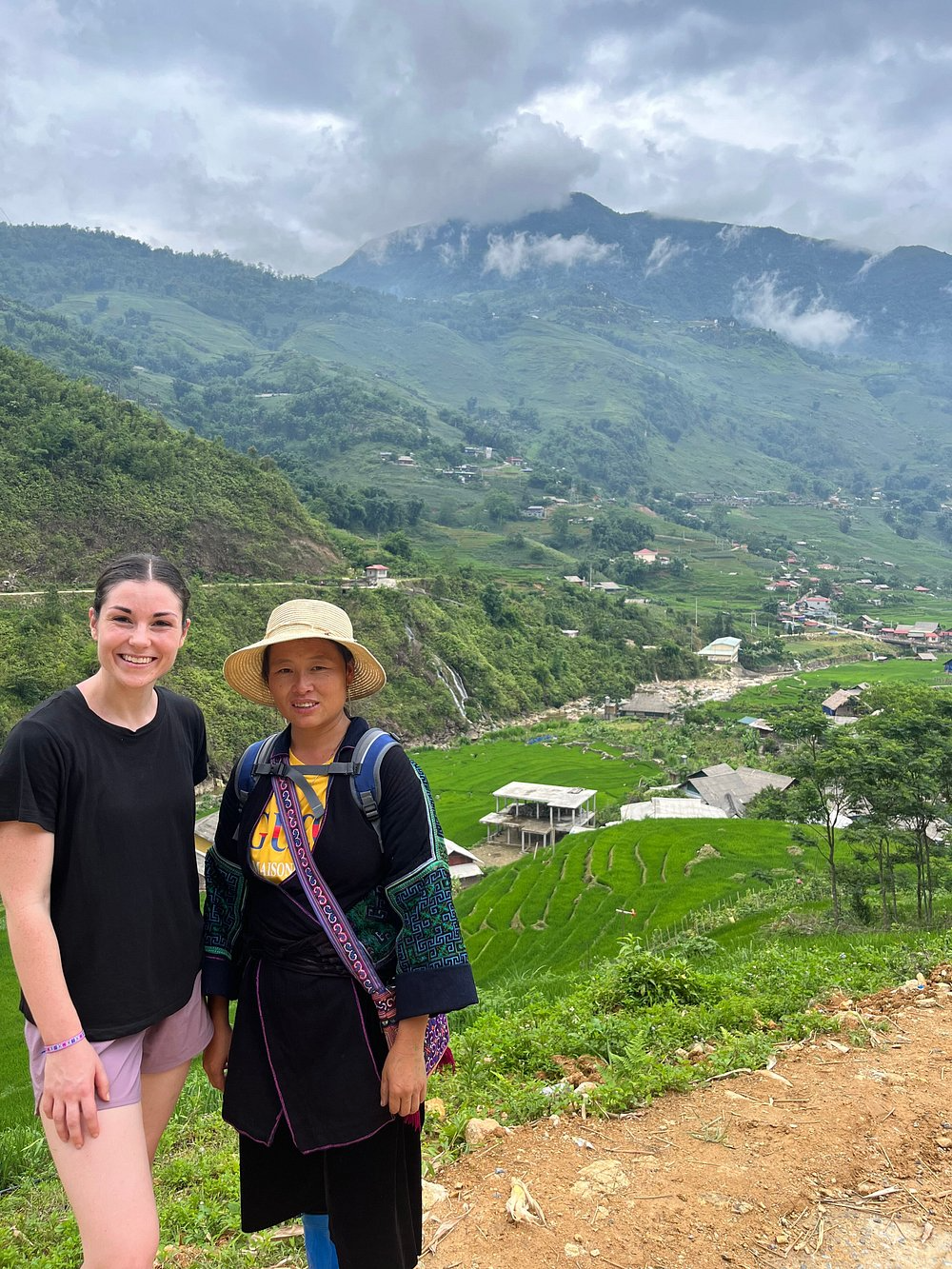
Sapa's main draw for trekkers is the combination of landscape and genuine cultural access. The villages of the Black H'mong and Red Dao communities are not tourism reconstructions — families still live, farm, and gather here in exactly the way they have for generations. Reaching the quieter villages means walking trails that don't appear on any map, to homes where the welcome runs through relationships built over years — the kind of access that comes from growing up in these valleys, not from a booking system.
"I've done trekking in Nepal and Peru. The scale in Sapa is different — smaller, more intimate. But the lunch at the family's home in Ta Van was the moment I'll remember. Nothing to do with the scenery."
— Claire M., Melbourne, Australia (October 2025)
The trail network around Sapa ranges from 2-hour gentle loops — suitable for older travelers and families with children, walking poles provided — to full-day ridge routes that gain 600+ meters of elevation and challenge experienced hikers. Fitness matters less than most people expect; what matters is choosing the right route for your group. That's worth discussing before you arrive, not after.
Don't leave without: walking at least one full day through the Muong Hoa Valley, spending an evening in town at the local market (busiest at dusk), and trying the local Black H'mong corn wine — hot, poured from bamboo cups, and deeply unapologetic.
Sapa is also the base for climbing Fansipan — at 3,143 meters, the highest peak in Indochina. The mountain can be reached by cable car in 20 minutes or by a 2-day trek through cloud forest. The trekking route is significantly harder and more rewarding.
Guided Sapa trekking day tours start from $35 USD per person, including a local guide, a home-cooked lunch with a family in the valley, and hotel pickup. Small groups only — maximum 12 people.
Book a Sapa Trek — Small Groups, Local Guides
 1 Day Trek
Trekking Through Rice Terraced Fields
Classic Muong Hoa Valley route — Lao Chai, Ta Van, Y Linh Ho. Full day with local family lunch.
 1 Day Trek
Rice Paddies & Cultures – Easy Hiking
Flat valley walking with stops at Red Dao homes. Designed for travelers who want culture without a climb.
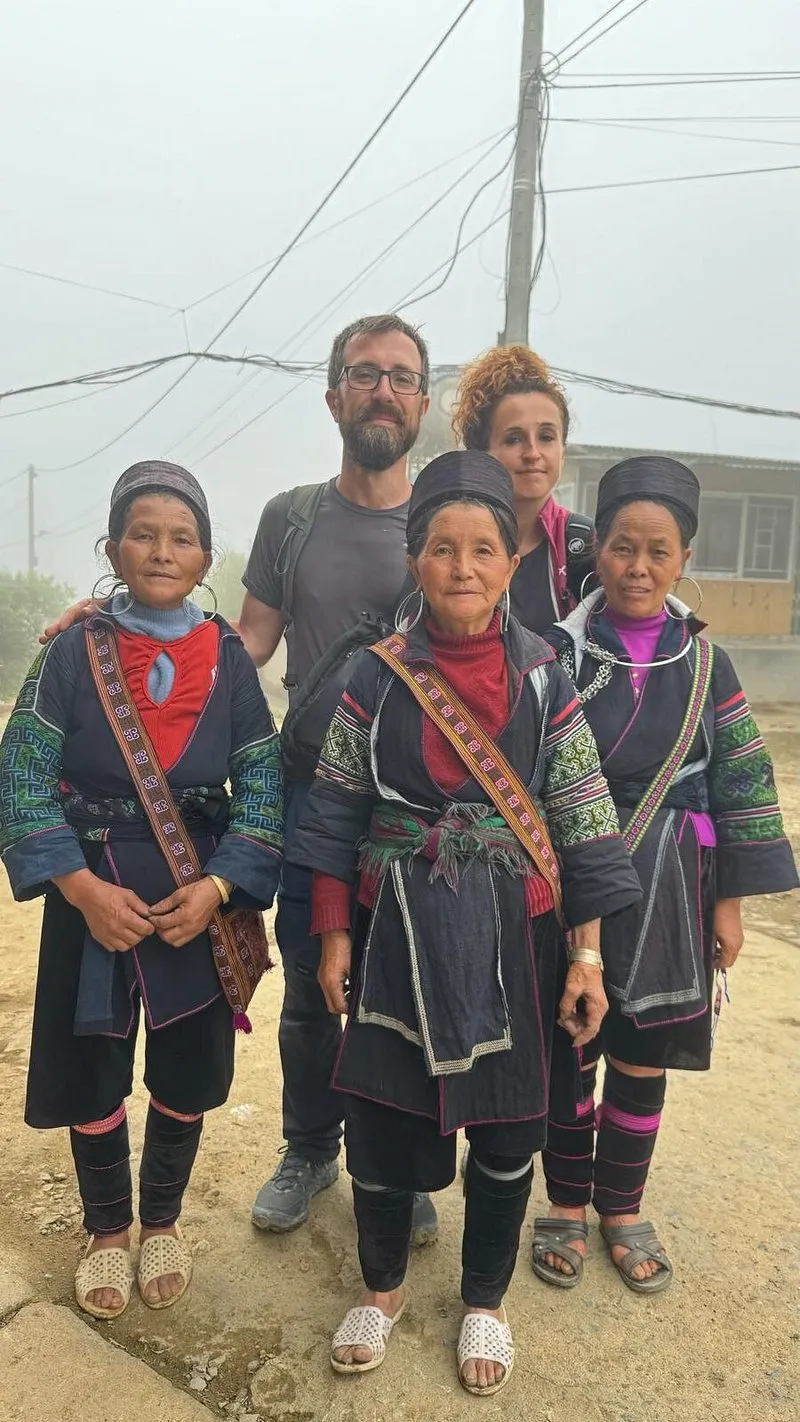 Families & Seniors
Sapa Easy Trekking For Seniors
Gentle paths, no steep sections. Walking poles provided. Perfect for 60+ travelers and families with children.
2. Hanoi — History, Street Food, and the Best Starting Point in Vietnam
Most Vietnam itineraries begin and end in Hanoi for logistical reasons, but the city earns its time independently. The Old Quarter — 36 streets originally organized by trade guild, still partly functional as a commercial district — is the densest concentration of street food, French colonial architecture, and chaotic market life in the country. Spend one morning on Hoan Kiem Lake and another walking Hoan Kiem's eastern streets at dawn, when the tai chi practitioners come out and the city is briefly quiet before the motorbikes wake up.
Hanoi is also the base for day trips to Ninh Binh (2 hours south) and the gateway to Ha Long Bay (3.5 hours east) and Sapa (5–6 hours northwest). Three days in Hanoi is ideal: one for the city itself, two for logistics and side trips.
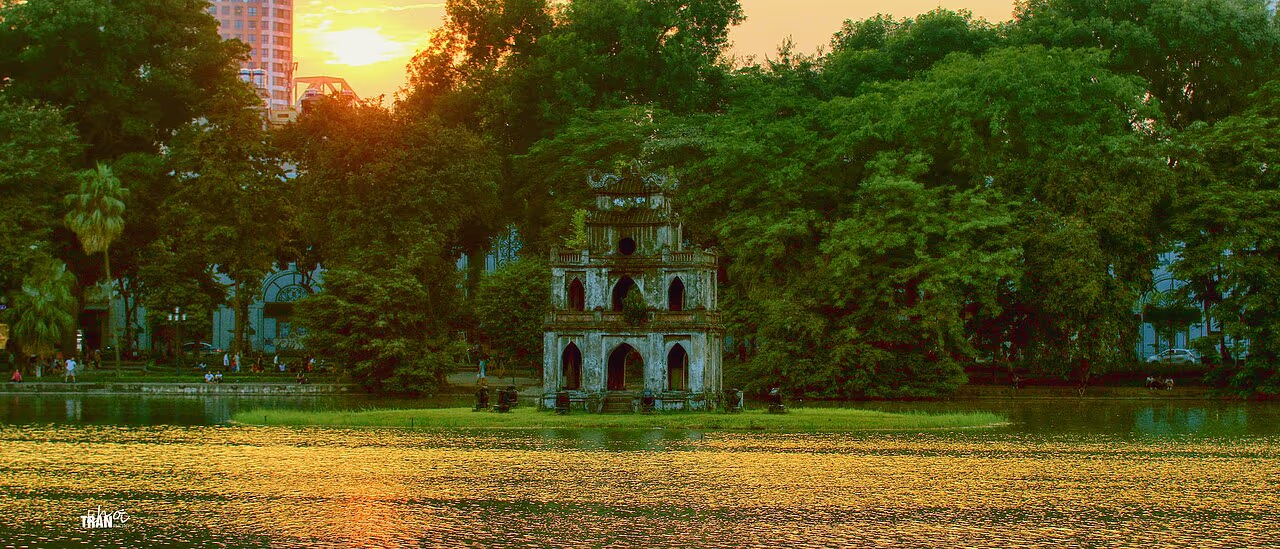
3. Ha Long Bay — Limestone Karsts and the Iconic Boat Cruise
Ha Long Bay's 1,600+ limestone islands rising from green water have made it the most photographed landscape in Vietnam, and the reality matches the photographs more than most iconic destinations do. The best way to experience it is overnight on a junk boat — two days on the water lets you escape the day-trippers and reach the bay's quieter corners, including the floating fishing villages of Cua Van and the less-visited Cat Ba Island archipelago.
The main limitation is crowd level. Ha Long Bay's most accessible areas (especially the southeast islands near the ferry port) are genuinely crowded from October through April. The workaround is booking a boat that includes Cat Ba Island or the northern Bai Tu Long Bay area — both have comparable scenery and significantly fewer vessels.
What most visitors miss: Lan Ha Bay, just south of Cat Ba Island, offers the same landscape as Ha Long with almost no crowds. Several operators now run overnight cruises that skip the main Ha Long Bay circuit entirely.
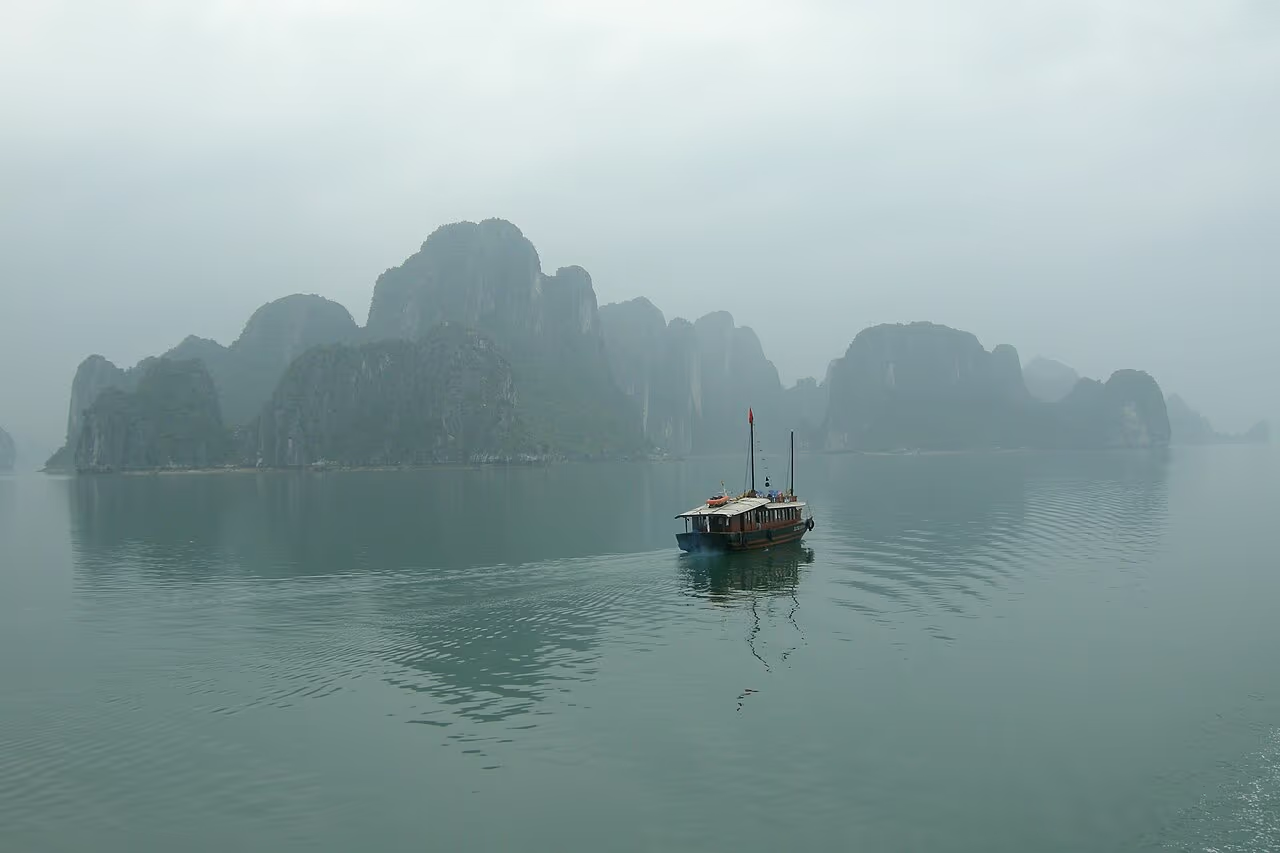
4. Ha Giang — Vietnam's Most Dramatic Landscape, Almost No Crowds
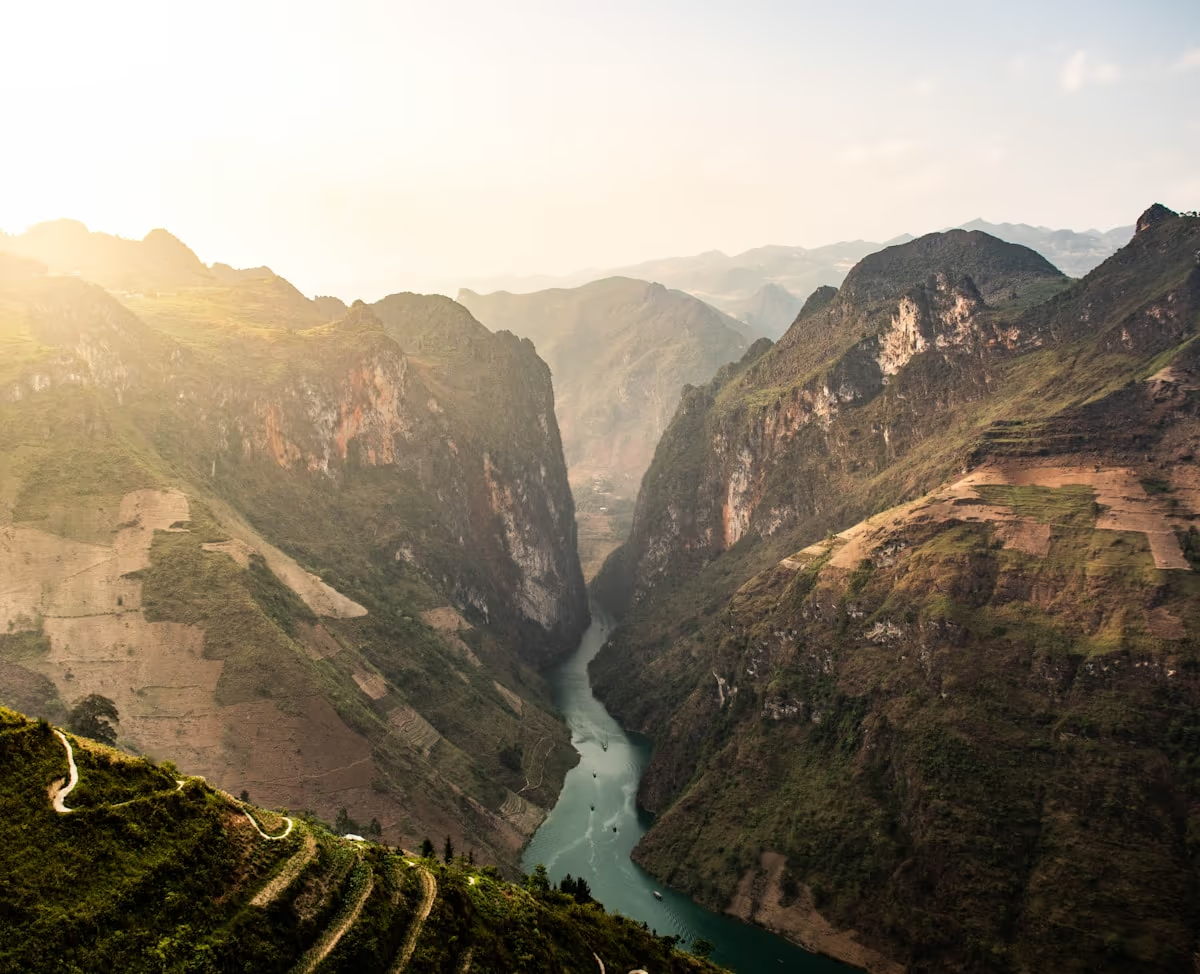
Ha Giang sits 4.5 hours north of Hanoi by bus, in the far north where Vietnam shares a border with China. The Dong Van Karst Plateau — a UNESCO-recognized geological site covering 2,356 km² — is the main draw: a high-altitude limestone plateau where the roads wind through narrow passes, past Meo Vac gorge (sometimes called the Grand Canyon of Vietnam), and through villages of the Hmong, Lo Lo, and Pu Peo ethnic minorities.
Most travelers do Ha Giang by motorbike — a 4-day loop that's become known as the Ha Giang Loop. It's physically demanding and requires experience with mountain roads, but the scenery on the Ma Pi Leng Pass — a 20 km stretch of road carved into the cliff above the Nho Que River — is the most cinematic stretch of road in Southeast Asia.
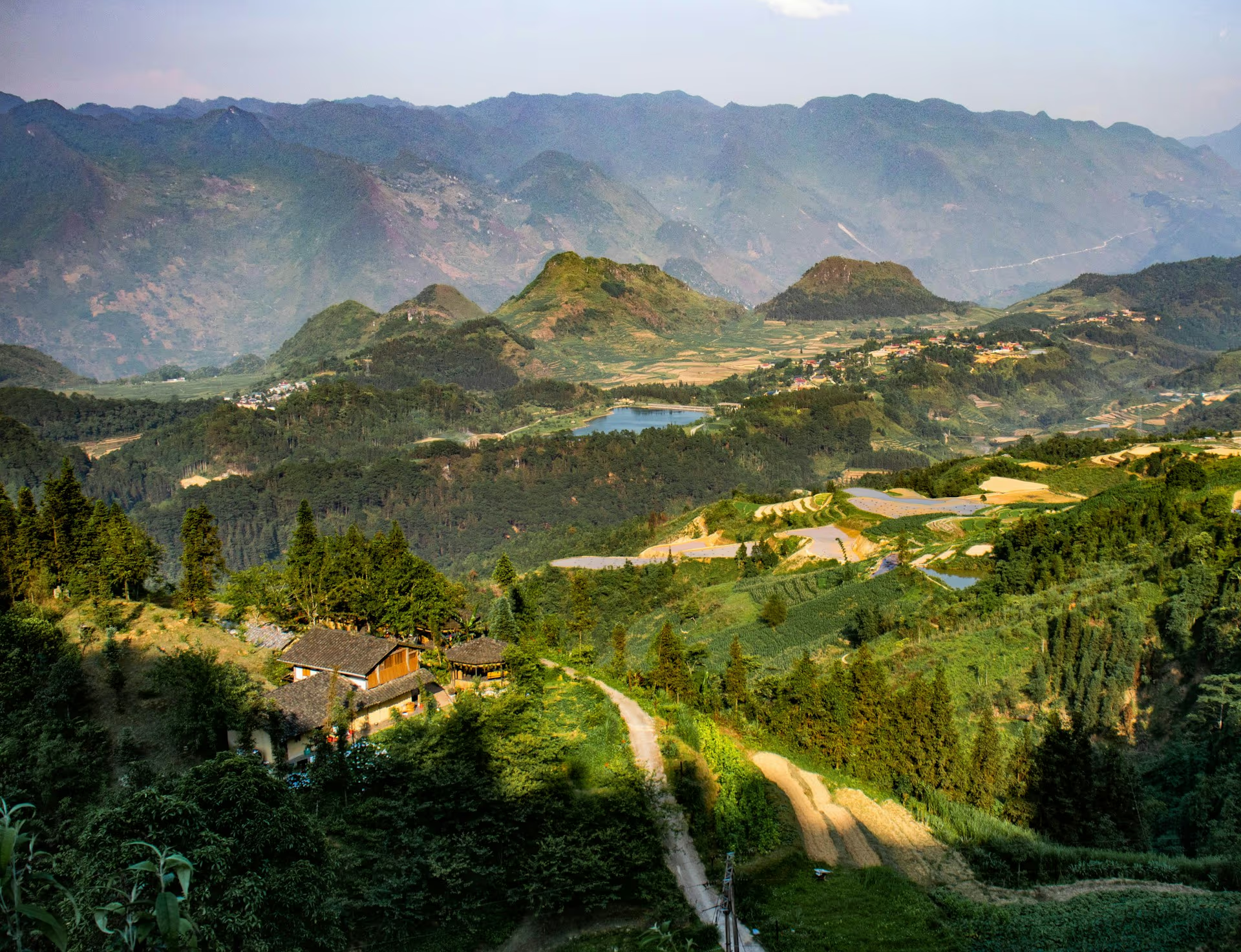
5. Ninh Binh — Ha Long Bay on Land, Two Hours from Hanoi
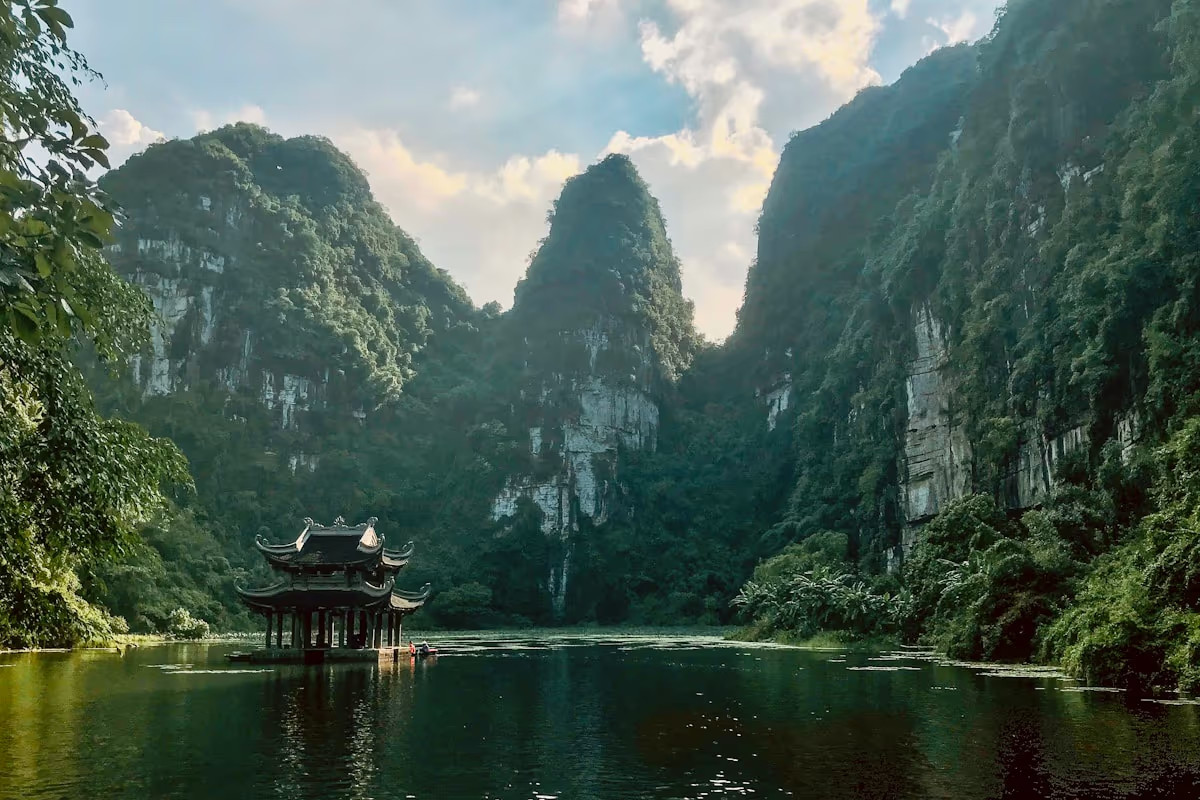
Ninh Binh is consistently the most underrated city in northern Vietnam, and after you visit, you'll wonder why it doesn't come up more often. The landscape — limestone karsts rising sharply from flat rice fields threaded with rivers — is geologically identical to Ha Long Bay, but here you navigate it by rowboat, cycling, or on foot rather than on a cruise ship. Trang An and Tam Coc are the two main areas: Trang An is quieter and wilder, Tam Coc more accessible. Both deserve a half-day each.
Ninh Binh also has Bai Dinh Pagoda — the largest Buddhist complex in Southeast Asia — and the ancient capital of Hoa Lu, where Vietnam's first independent dynasty was established in the 10th century. It's two hours from Hanoi by train or bus, which makes it a logical overnight stop rather than a rushed day trip.
6. Bac Ha — Vietnam's Most Colorful Sunday Market
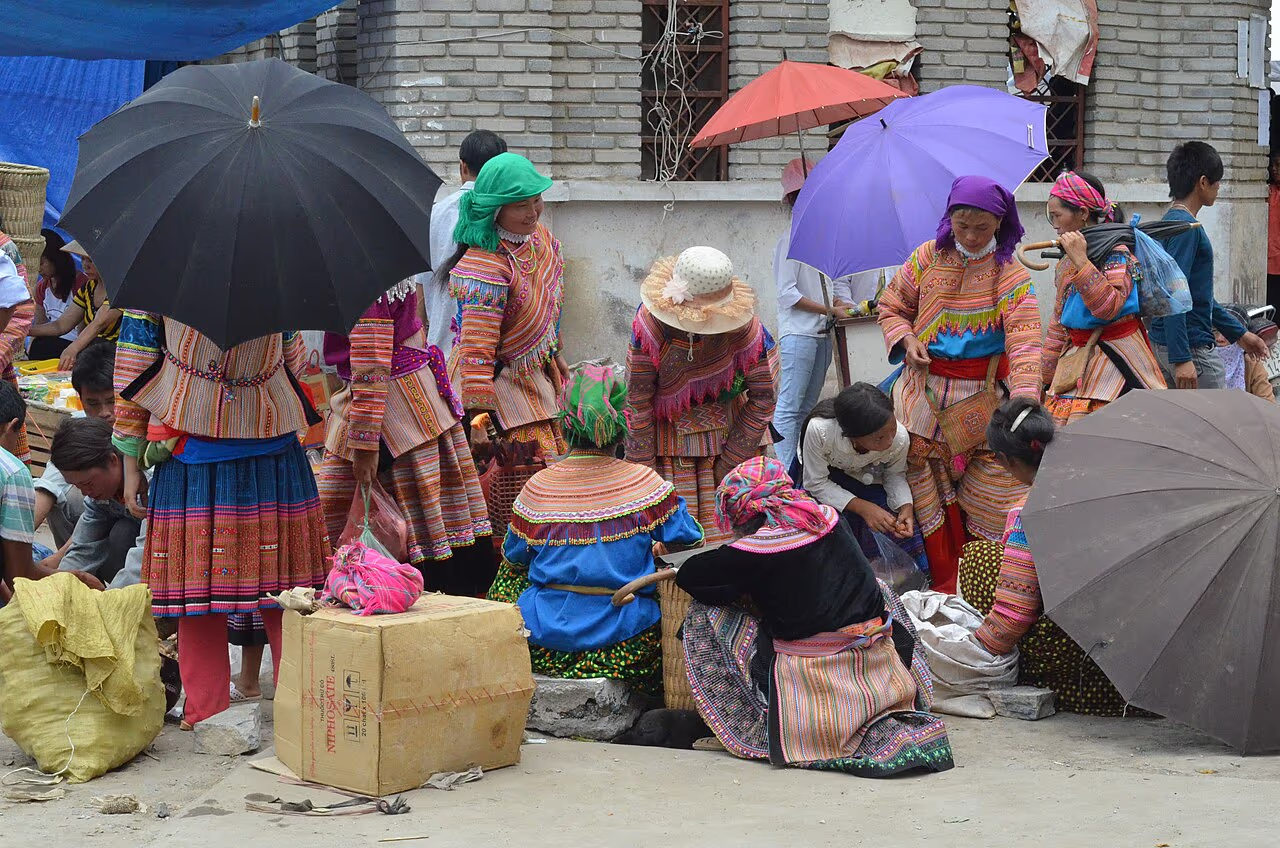
Bac Ha sits 60 km from Sapa, and its Sunday market is one of the most vivid in Vietnam: Flower H'mong women in layered embroidered skirts, local traders selling medicinal herbs and livestock, and the kind of noise and color that most tourist markets only approximate. The market runs every Sunday from dawn until midday and draws communities from across the surrounding mountains.
Getting to Bac Ha from Sapa requires either a local minibus or a guided day trip. The journey itself takes 1.5–2 hours over mountain roads with periodic views into valleys that drop 800 meters without warning. Worth combining with a night in Sapa either before or after.
Central Vietnam
Central Vietnam is a different country from the north — flatter, warmer, more agricultural, and saturated with imperial history from Vietnam's Nguyen dynasty period. Hue, Da Nang, and Hoi An sit within 130 km of each other, which makes them easy to combine. Most travelers use Da Nang as the practical base (major airport, direct flights from Hanoi and HCMC) and make day trips or overnight stops in Hue and Hoi An.
7. Hoi An — Lanterns, Old Town, and the Best Tailor Street in Asia
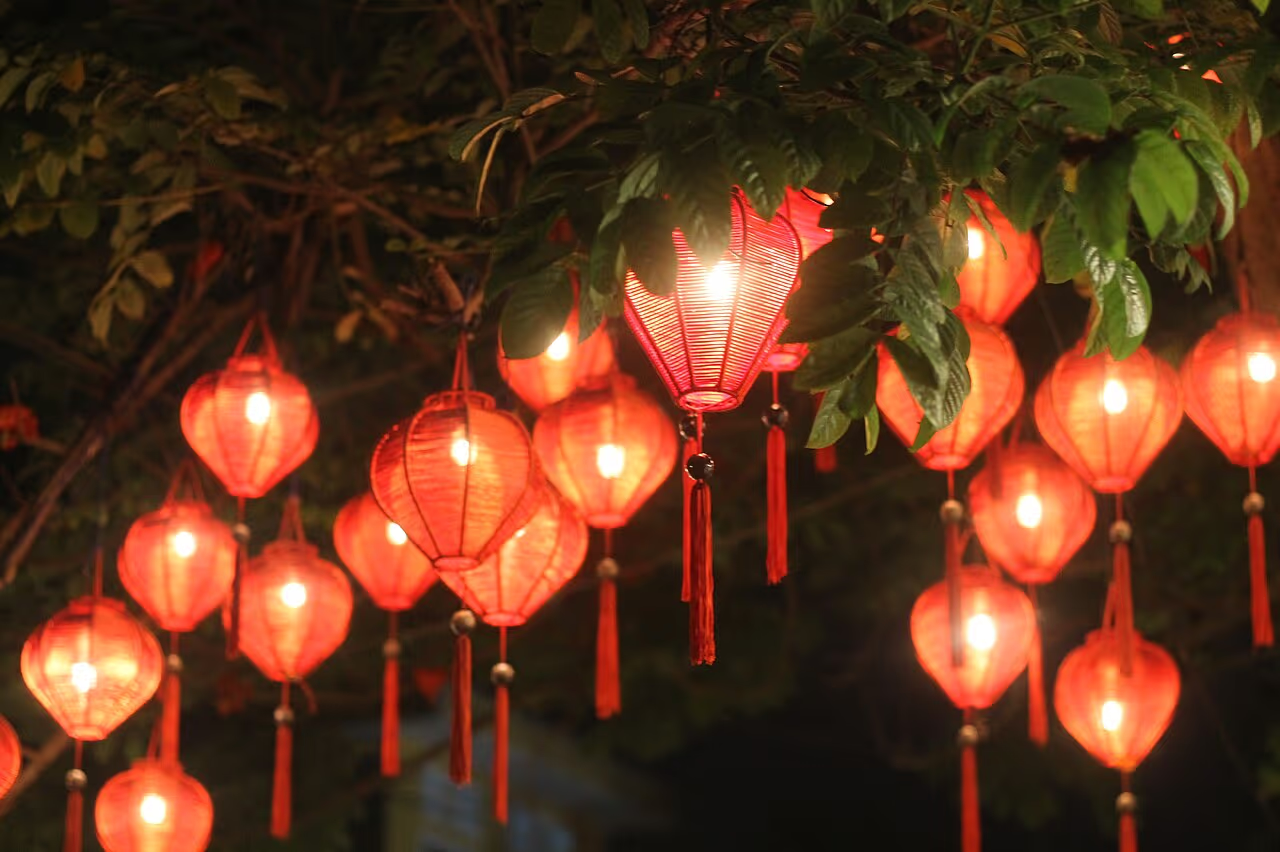
Hoi An's Ancient Town is a UNESCO World Heritage Site that genuinely deserves the designation. The 15th-century Japanese Covered Bridge, the Chinese merchant assembly halls along Tran Phu Street, the Vietnamese tube houses with their shuttered windows and courtyard gardens — the architecture has survived five centuries of trade, war, and renovation without losing its coherence. In the evening, when hundreds of silk lanterns are lit along the Thu Bon River, the old town looks almost exactly like the photographs. Almost. It's also considerably more crowded than the photographs suggest.
The most useful thing to know about Hoi An: the best version of it exists before 9am and after 8pm. In the middle of the day, the old town's narrow streets fill with tour groups. Early morning, the market on Bach Dang Street is genuinely local — fishermen selling the night's catch, women cooking banh mi over charcoal, the whole river-facing street still damp from the pre-dawn boat traffic.
Hoi An is also where most visitors to Vietnam get clothing made. The tailor street (Le Loi and Tran Phu) has 300+ tailors who can produce custom suits, ao dai, dresses, and jackets in 24–48 hours. Quality varies enormously. The practical rule: budget tailors produce budget results. Shops with samples on display, a clear price list, and a fitting process that takes more than five minutes are the ones worth using.
8. Da Nang — Beaches, the Ba Na Hills, and the Golden Bridge
Da Nang itself is less a destination than a gateway — a rapidly developing coastal city with a working airport, good food, and long beaches that serve as a base for day trips to Hoi An (30 min south) and Hue (100 km north). My Khe Beach, running north from the city, has a wide stretch of fine sand that's relatively quiet by Southeast Asian beach standards. The Marble Mountains — five limestone hills rising from the coastal plain, pocked with Buddhist shrines and cave temples — are 8 km south and worth two hours of exploration.
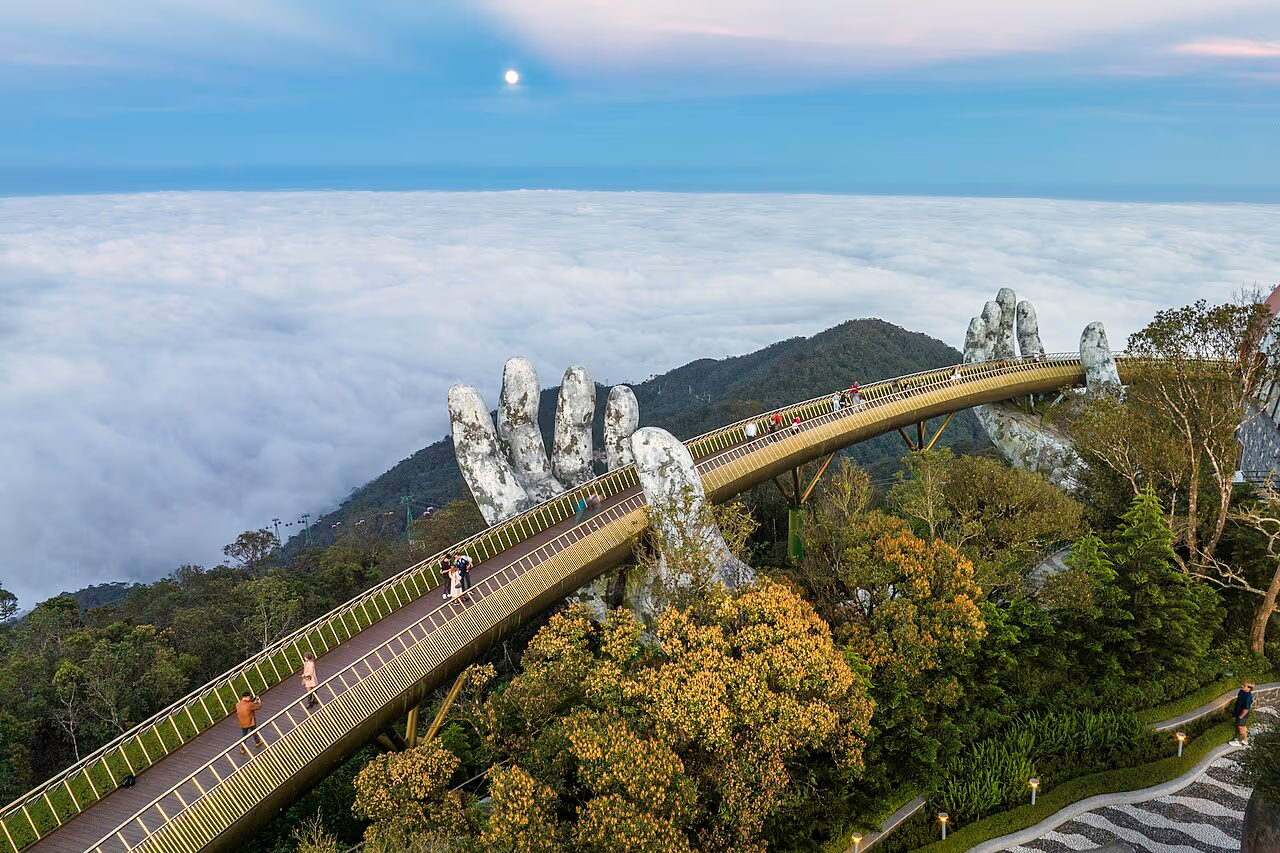
The Ba Na Hills resort and Golden Bridge (the bridge held up by giant stone hands that went viral in 2018) are 30 km west of Da Nang and genuinely theatrical — a French village constructed at 1,400 meters with a cable car that claims the longest non-stop single-track run in the world. It's openly artificial — a French village bolted onto a Vietnamese mountain — but the views from the bridge on a clear day extend across 100 km of coastal plain.
9. Hue — Imperial Vietnam and the Country's Best Royal Cuisine
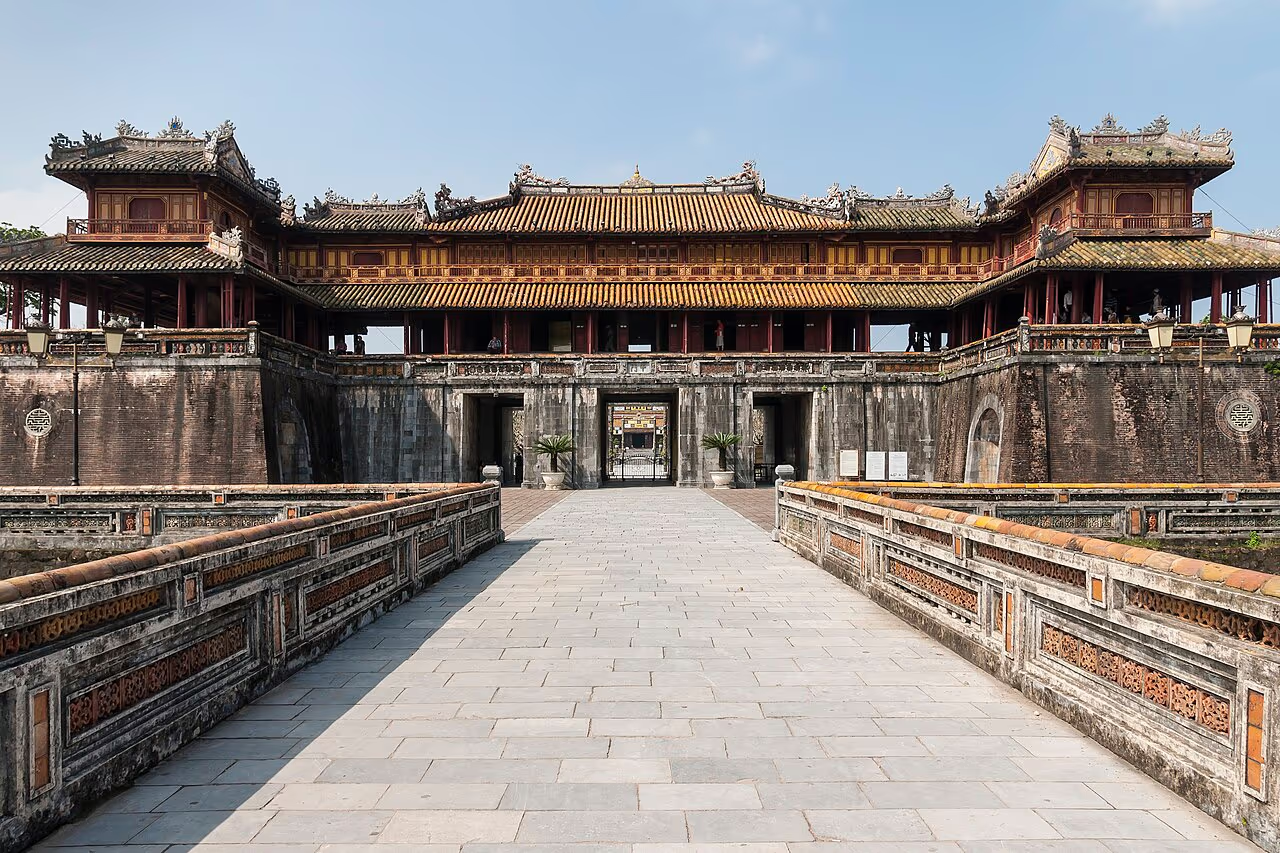
Hue was Vietnam's imperial capital for 143 years under the Nguyen dynasty, and the physical remnants of that period — the Citadel, the Imperial Enclosure, and seven royal tombs scattered across the Perfume River valley south of the city — make it the most historically layered destination in the country. The Citadel took 30 years to build and was modeled on Beijing's Forbidden City, though considerably more austere. Most of it was damaged in the 1968 Tet Offensive and partially restored; what remains is atmospheric in the way that ruins always are — you understand the scale of what existed by the space it left.
Hue is also where Vietnamese royal court cuisine was developed and is still practiced in its most elaborate form. Bun bo Hue — spicy beef noodle soup, sharper and more complex than pho — originated here and is consumed for breakfast in every local restaurant on the north bank of the Perfume River.
Southern Vietnam
Southern Vietnam runs on a different energy from the north — flatter, hotter, more urban, and economically dominant. Ho Chi Minh City drives the country's GDP and its pace. The Mekong Delta, sprawling southwest of the city, is the rice bowl and fruit garden that feeds much of Southeast Asia. Phu Quoc, off the southwestern coast in the Gulf of Thailand, is Vietnam's most developed island resort — a beach holiday unrelated to the rest of the country, which may be exactly what you want.
10. Ho Chi Minh City — Saigon's Energy, War History, and Food
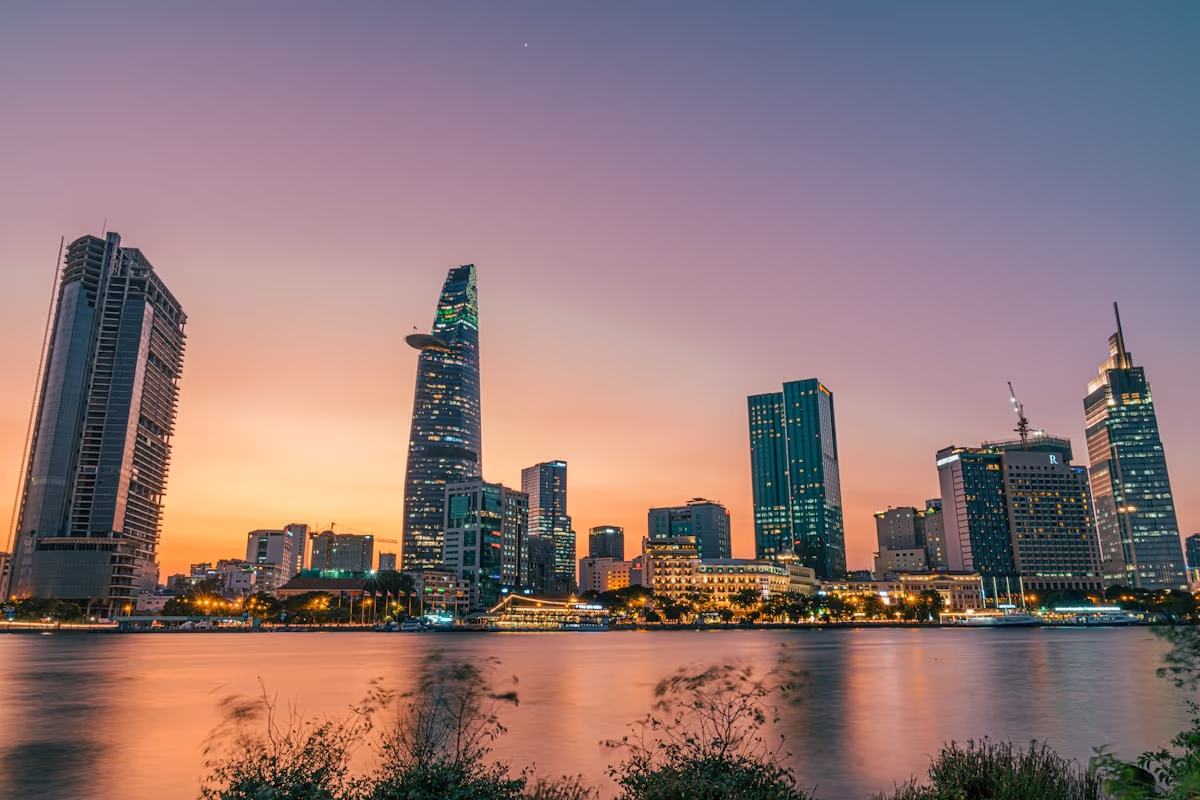
Ho Chi Minh City — still called Saigon by most of its residents — is the most intense city in Southeast Asia, which is a competitive category. Twelve million people, eight million motorbikes, and a street food scene that operates continuously from 4am to midnight. The old French quarter around Dong Khoi Street retains some colonial architecture amid the construction cranes, and the War Remnants Museum (formerly the Museum of American War Crimes) is among the most confronting historical museums in the world. Budget two hours for it and arrive prepared.
Districts 1 and 3 are the tourist center; District 4 has the best local street food market (Vinh Khanh Street, evenings only); Ben Thanh Market in District 1 is touristic but the surrounding streets are genuinely useful for fresh produce and local goods. The Cu Chi Tunnels (40 km northwest) are the most-visited day trip from HCMC and worth doing once — a 250 km network of tunnels used by Viet Cong forces during the war, partially opened for visitors to crawl through.
11. Mekong Delta — Floating Markets, River Life, and Fruit Gardens
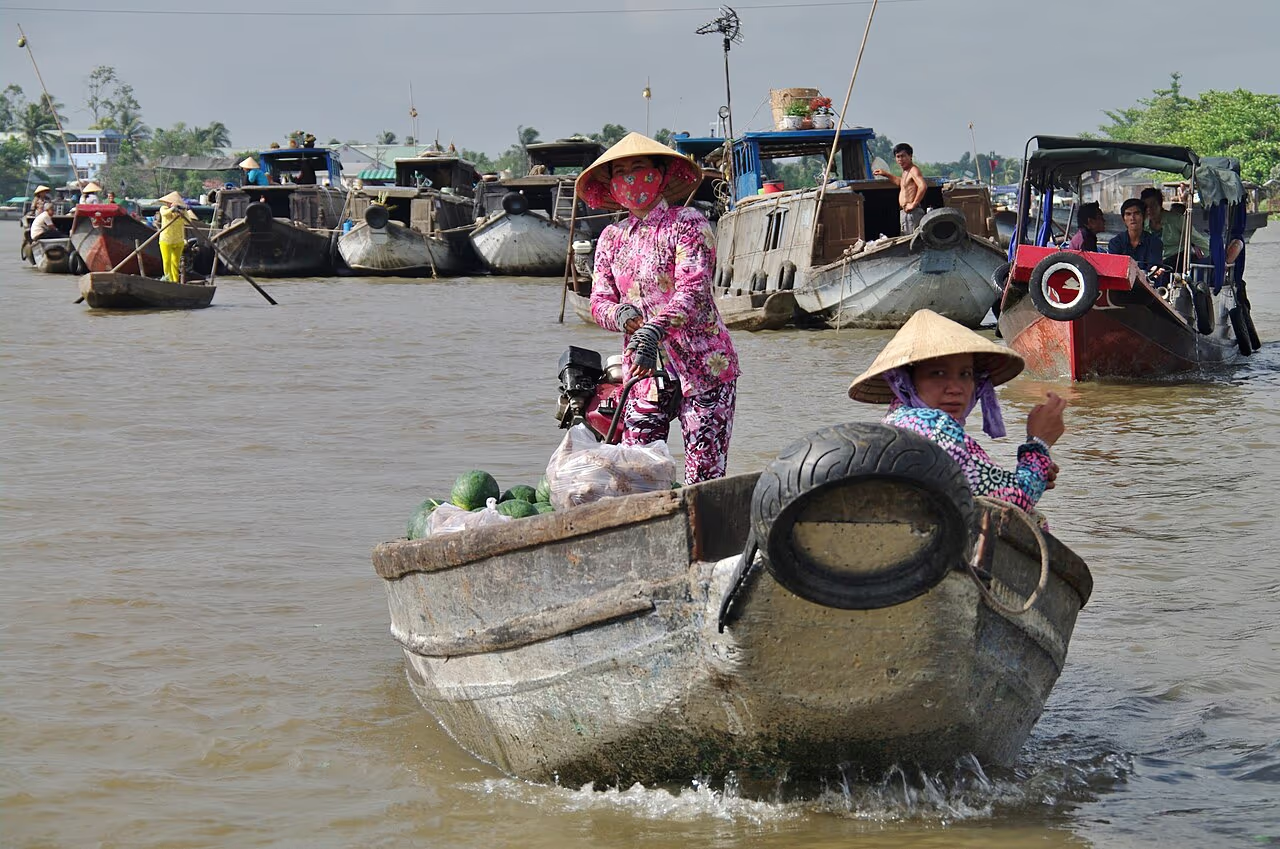
The Mekong River splits into nine tributaries as it reaches the sea, creating a delta of 40,000 km² that produces 50% of Vietnam's food. The best way to experience it is by slow boat: early morning on the water, watching the daily routine of riverside life — children being ferried to school, markets forming on pontoons, fish farms visible under every bridge. The floating markets of Cai Rang (Can Tho) and Phong Dien are busiest at dawn and functionally over by 10am, which means early starts are non-negotiable.
Can Tho is the best base for the Mekong Delta — a genuine city with good accommodation rather than a tourist town. From Can Tho, a 3.5-hour bus gets you to Ho Chi Minh City, making the delta a natural add-on to any HCMC stay rather than a detour.
12. Phu Quoc Island — Vietnam's Beach Escape
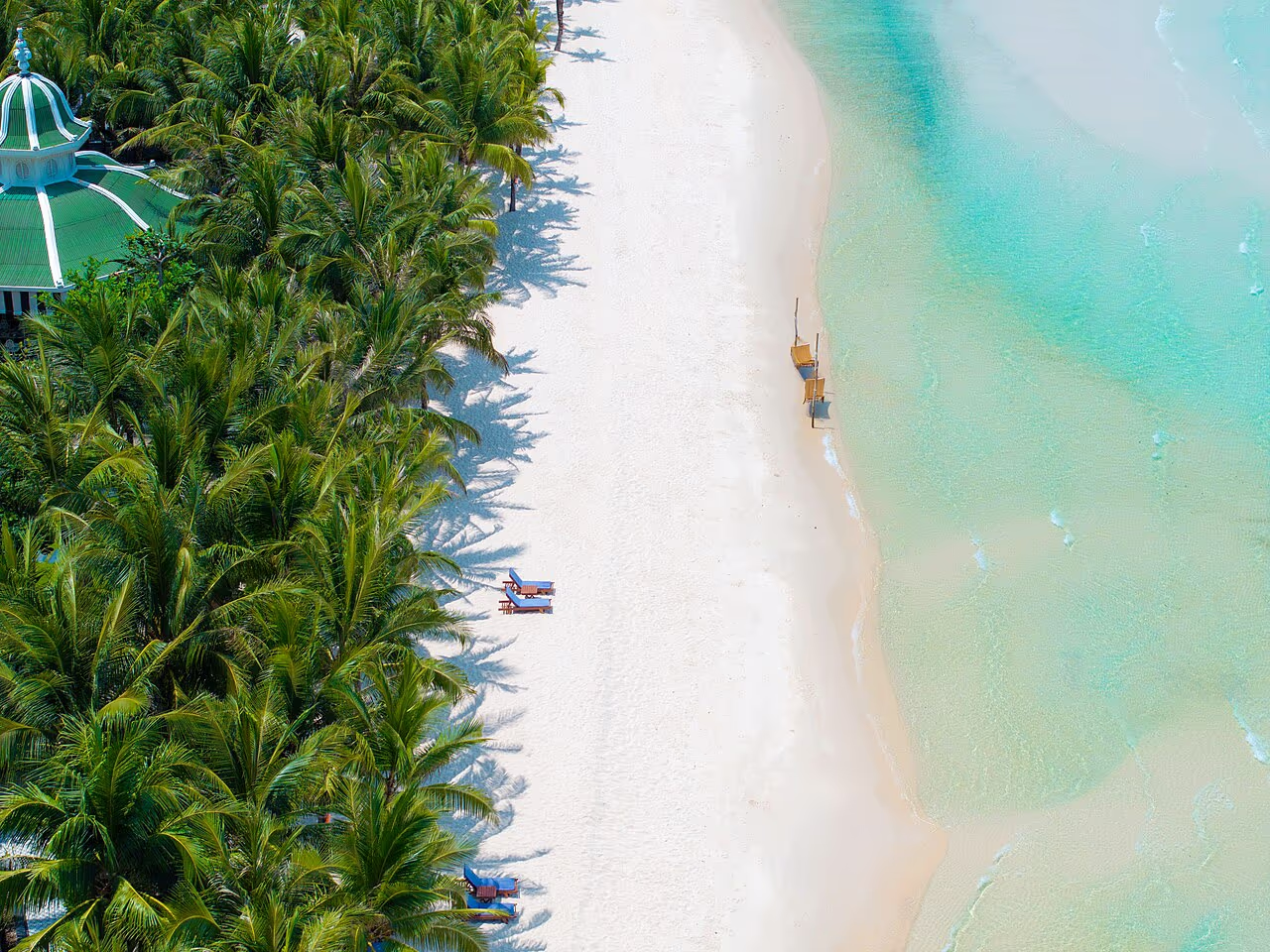
Phu Quoc is Vietnam's largest island, 56 km long and sitting 15 km off the Cambodian coast in the Gulf of Thailand. It's also Vietnam's most developed beach resort, with an international airport that receives direct flights from Hanoi, HCMC, and several international hubs. The south and west coasts are heavily developed; the north — still covered in national park forest — is quieter and where the island's original character survives. Bai Sao Beach on the southeast coast has the finest white sand on the island.
Phu Quoc produces fish sauce and black pepper that are exported across Southeast Asia — the pepper farms in the north are worth visiting even if you have no particular interest in spice agriculture. The night market on Duong Dong's main street is the best place to eat: grilled seafood, fresh spring rolls, and the island's signature coconut-based desserts, all consumed at plastic tables on a closed road that runs along the river.
13 More Places Worth Your Time
The twelve above are the destinations most travelers build a trip around. But Vietnam rewards going further, and over the years our guests have come back raving about places that never make the standard highlight reel. Here are thirteen more worth your time — honestly summarized, so you can tell which ones fit your trip.
None of these replace the core twelve, but several pair beautifully with them — Pu Luong or Mai Chau as a quieter alternative to Sapa, Cat Ba as a smarter way into Ha Long Bay, Phong Nha as a break on the long central stretch. Which brings us to the question we're asked more than any other.
Sapa vs Ha Long Bay vs Ha Giang — Which One?
These three destinations come up most often in the same planning conversation because they're all in northern Vietnam, all require at least 2 days, and all compete for the same slot in most itineraries. Here's an honest comparison:
The further right you go, the more effort it takes — and the bigger the payoff.
| Sapa | Ha Long Bay | Ha Giang | |
|---|---|---|---|
| Best for | Trekking, ethnic villages, mountain scenery | Boat cruise, limestone scenery, photography | Motorbike, epic passes, remote culture |
| Crowd level | Medium (manageable off main trail) | High in peak season | Low |
| Days needed | 2–3 | 1–2 | 3–5 |
| From Hanoi | 5–6h overnight bus | 3.5h transfer | 4.5h bus |
| Budget/day | $30–50 USD | $60–130 USD | $25–45 USD |
| Best season | Sep–Nov (harvest), May–Aug (green) | Mar–May, Sep–Nov | Sep–Nov, Mar–May |
| Trekking | ★★★★★ | ★★☆☆☆ | ★★★☆☆ (motorbike) |
| Local culture | ★★★★★ | ★★☆☆☆ | ★★★★☆ |
If you can only pick one and have never been to northern Vietnam before: go to Sapa. Ha Long Bay is visually spectacular but the experience — a cruise boat with 50 other tourists — is passive in a way that Sapa is not. Ha Giang is the more adventurous choice but requires either a motorbike license and confidence on mountain roads, or a hired motorbike driver, which adds cost and a layer of planning most first-timers don't have time for.
If you have two weeks: combine a Sapa trek (3 days) with Ha Long Bay (2 days overnight cruise). That's the pairing our team recommends most consistently, and neither one feels diluted by the other.
How Many Days Do You Need for Vietnam?
The honest answer: more than most people plan for. Vietnam is 1,650 km from top to bottom — longer than California — and internal flights, while cheap, still consume half a day each way. Below are three realistic itineraries based on trip length.
7-Day Vietnam Itinerary — North & Central Focus
- Day 1–2: Hanoi — Old Quarter, Hoan Kiem Lake, street food, day trip logistics
- Day 3–4: Sapa — overnight bus from Hanoi, full day trek in Muong Hoa Valley, second morning at local market
- Day 5: Overnight bus back to Hanoi, afternoon flight to Da Nang
- Day 6: Hoi An — old town morning, tailor visit, riverside evening
- Day 7: Da Nang — Marble Mountains or Ba Na Hills, flight home
10-Day Vietnam Itinerary — North to Central
- Day 1–2: Hanoi
- Day 3–5: Sapa — 3 days allows a 2D1N homestay trek or Fansipan day + rice terrace day
- Day 6–7: Ha Long Bay — overnight cruise (Lan Ha Bay or Bai Tu Long)
- Day 8: Hue — Citadel, royal tombs, bun bo Hue for breakfast
- Day 9–10: Hoi An — two nights, full old town exploration
14-Day Vietnam Itinerary — Full Country
- Day 1–2: Hanoi
- Day 3–5: Sapa (3 days)
- Day 6–7: Ha Long Bay overnight cruise
- Day 8–9: Hue + Hoi An
- Day 10–12: Ho Chi Minh City + Cu Chi Tunnels
- Day 13–14: Mekong Delta (Can Tho) or Phu Quoc beach
Best Time to Visit Vietnam
Vietnam's climate doesn't have a single "best time" because the country is long and narrow, with three climatically distinct regions. The short answer: October–November is the best compromise if you're planning a full-country trip.
When to visit northern Vietnam (Sapa, Hanoi, Ha Long Bay)
| Region | Best Season | What to Expect | Avoid |
|---|---|---|---|
| North (Sapa, Hanoi, Ha Long) | Sep–Nov | Rice harvest in Sapa, clear skies, mild temperatures (15–25°C in Sapa town) | Dec–Feb (cold and misty in mountains); Jul–Aug (hot, heavy rain) |
| Central (Hue, Da Nang, Hoi An) | Feb–Apr | Dry and warm, clear skies, best beach weather | Oct–Nov (typhoon season, serious flooding in Hoi An) |
| South (HCMC, Mekong, Phu Quoc) | Nov–Apr | Dry season — lower humidity, less rain, comfortable temperatures | Jun–Sep (monsoon season, heavy daily rain) |
Practical Tips Before You Go
- Visa: Many nationalities receive a free 90-day e-visa through the official Vietnam Immigration Portal. Apply at least 5 business days before travel. Citizens of France, Germany, UK, Italy, Spain, and several others receive 45-day visa-free entry as of 2023.
- Currency: Vietnamese Dong (VND). ATMs are widely available in cities. Smaller towns and markets are cash-only. Exchanging USD or EUR is easy in Hanoi and HCMC; harder in mountain areas like Sapa and Ha Giang.
- Transport: Overnight sleeper buses are the budget traveler's workhorse — cheap, reasonably comfortable, and they leave at night so you save on accommodation. Flights are affordable and fast for long stretches. Trains between Hanoi and HCMC exist but are slow (30+ hours for the full route).
- SIM card: Buy a local SIM at the airport on arrival. Viettel and Vietnamobile have the best mountain coverage. A 30-day data package costs approximately $5–8 USD and includes a local number.
- Tipping: Not customary in local restaurants but appreciated in tourist areas and guesthouses. For guided tours, $3–5 USD per person per day is standard.
- Medical: Travel insurance with medical evacuation cover is essential, especially if you're trekking in mountainous areas. Carry personal medication; pharmacies in mountain towns are limited.
- Booking Sapa tours: In peak season (September–October), book trekking tours 2–3 weeks in advance. Small-group tours of maximum 12 people fill faster than most travelers expect. WhatsApp is the fastest way to confirm availability — our team replies within 5–10 minutes.