 Sinh Giang
Every week someone messages us on WhatsApp and asks a version of the same question: "We have 7 days in northern Vietnam — should we do Sapa or Cao Bang?" I have answered this enough times that I know where the confusion comes from. Both destinations show up on every "northern Vietnam highlights" list. Both involve mountains, minority communities, and scenery that is nothing like the south. And both are roughly the same distance from Hanoi. But they are not interchangeable, and what suits one traveler does not suit another.
I am Sinh Giang, part of the team at Trekking Tour Sapa. I have spent years guiding people through the Muong Hoa Valley and the villages around Lao Chai, Ta Van, and Ma Tra. I have also had guests return from Cao Bang Province and tell me what they found there. This comparison is based on real feedback and real knowledge of both destinations — not a list pulled from another travel site.
What Is Sapa?
Sapa is a town in Lao Cai Province in the far northwest of Vietnam, sitting at around 1,600 metres above sea level in the Hoang Lien Son mountain range. It is 340 km / 211 miles northwest of Hanoi — about 8 hours by bus, or 8 hours on the overnight train followed by a 30-minute transfer. The area is home to several ethnic minority groups, predominantly the Black H'mong and Red Dao, whose villages scatter the slopes of the Muong Hoa Valley below the town.
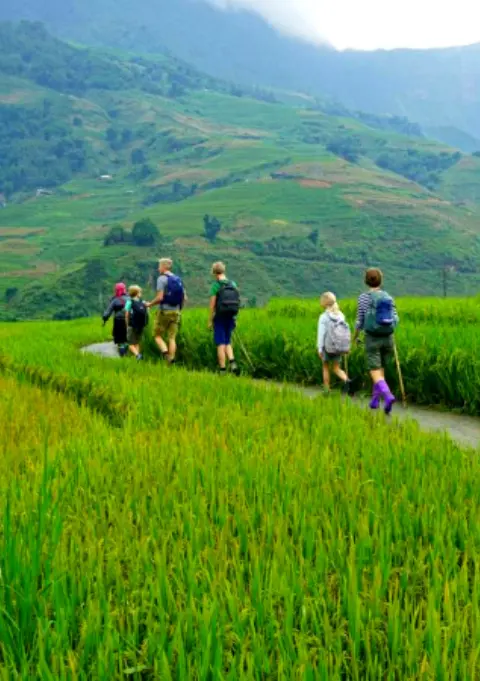
Trekking is what most people come to Sapa for. The standard day-trek routes through Lao Chai and Ta Van take you across terraced rice fields, through cardamom plantations, and into homes where families cook over wood fires on stone floors. The walking is genuinely immersive — not a walk in front of scenery, but through a landscape that people actually live and work in. Fansipan, at 3,143 metres the highest peak in Indochina, is accessible by cable car or on foot from Sapa Town, and the Muong Hoa Valley contains some of the most photographed rice terrace landscapes in all of Southeast Asia.
If you are visiting Sapa in September or early October, the rice is turning gold in the lower fields of the Muong Hoa Valley — specifically around Y Linh Ho and Lao Chai. These two to three weeks are the single most visually dramatic period of the entire year, and they go fast. Message us on WhatsApp before you book transport so we can confirm field conditions before you lock in your dates.
What Is Cao Bang?
Cao Bang Province sits in the northeast of Vietnam, sharing a long border with China's Guangxi Province. The provincial capital, Cao Bang City, is around 270 km / 168 miles northeast of Hanoi — about 7–8 hours by road. There is no direct train. The landscape here is dominated by karst limestone formations: dramatic pillars, caves, and river systems that run through the rock. The Ban Gioc Waterfall, straddling the border between Cao Bang Province and China's Detian area, is the centrepiece attraction — a multi-tiered fall that stretches nearly 300 metres wide and drops around 30 metres in the rainy season. It is genuinely one of the most impressive waterfalls in Southeast Asia.
The Cao Bang Geopark — which covers the Ban Gioc area, Nguom Ngao Cave, and Phia Oac Nature Reserve — was recognized by UNESCO in 2018. The Tay, Nung, and H'mong ethnic groups are present in the province, though the cultural infrastructure for visitors (guided cultural tours, homestays, market visits) is far less developed than in Sapa. The crowds at Ban Gioc are a fraction of Sapa's peak-season numbers, which is precisely the appeal for some travelers.
Sapa vs Cao Bang: The Direct Comparison
Rather than a general impressions list, here is what the comparison looks like across the five categories that actually determine which destination is right for you.
Trekking: Sapa Wins
Sapa has purpose-built trekking infrastructure that Cao Bang Province simply does not have yet. In Sapa, you can book a half-day, full-day, or multi-day trek with a licensed Black H'mong guide who grew up in the villages you are walking through. The trail network is extensive — routes ranging from the flat-valley walk through the paddies at Hang Da and Hau Thao, to the ridgeline climb above Y Linh Ho with views across the entire Muong Hoa Valley, to the serious summit attempt on Fansipan via the Sa Seng Mountain approach.
In Cao Bang Province, the trekking options around Ban Gioc and Phia Oac Nature Reserve exist but are harder to access independently and have fewer established operators. If your priority is walking through inhabited mountain landscapes with a knowledgeable local guide and a clear support system, Sapa is the answer. Cao Bang is better understood as a destination for waterfalls, caves, and motorbike-touring the limestone valleys — not for structured trekking.
Our Most Popular Sapa Trekking Routes
 Best Seller
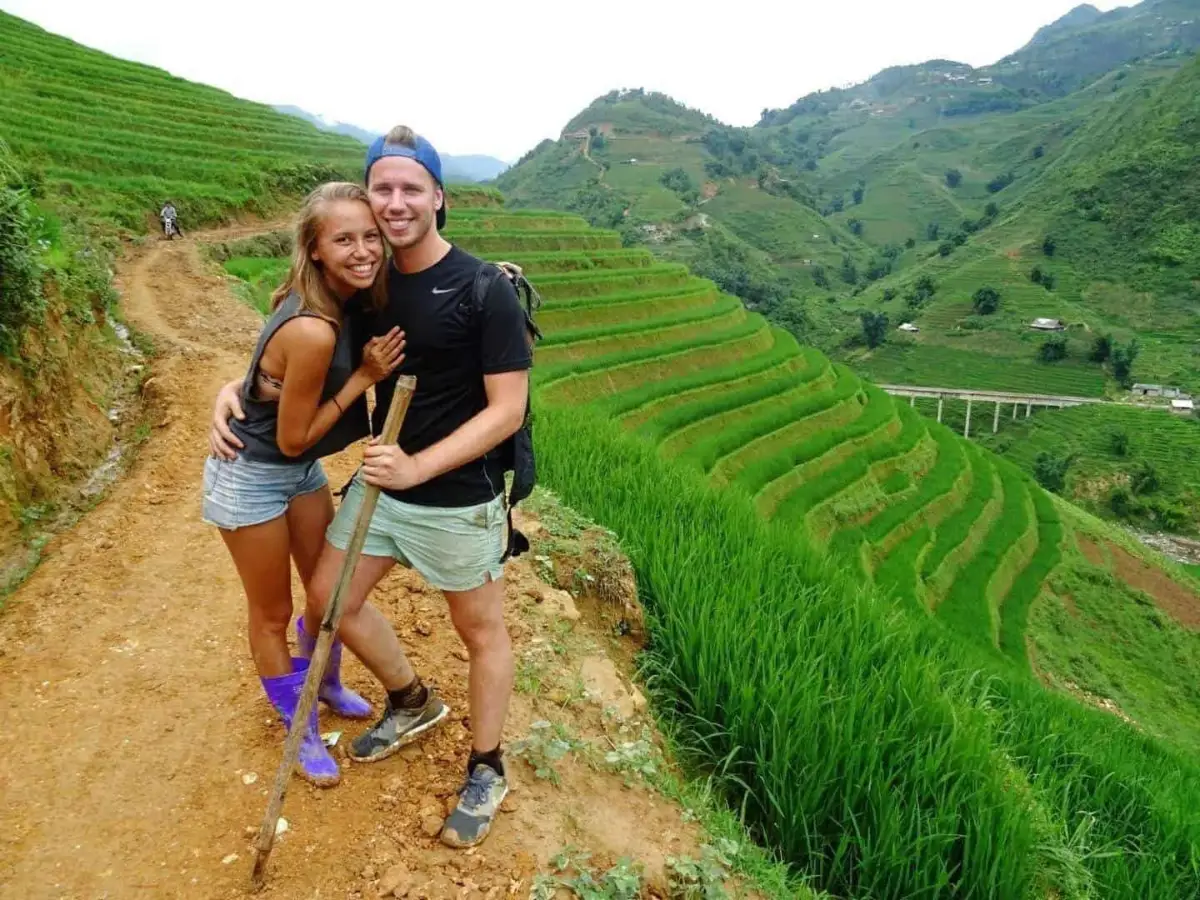
Trekking Through Rice Terraced Fields
The Muong Hoa Valley floor through Lao Chai and Ta Van — the benchmark Sapa day trek.
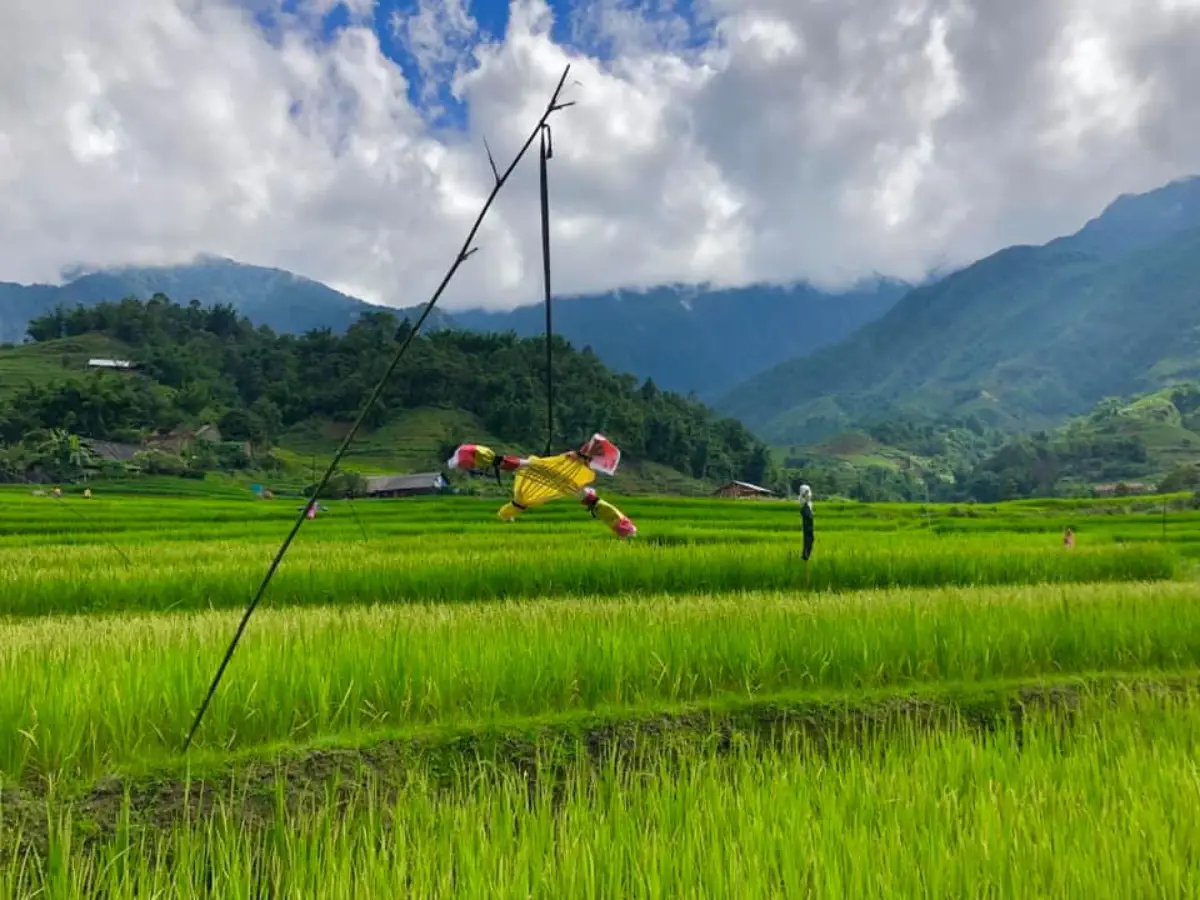
Rice Paddies and Cultures – Easy Hiking
Flat valley walking with stops at Red Dao homes in the Muong Hoa Valley.
 Seniors & Families
Sapa Easy Trekking For Seniors
Gentle paths through Y Linh Ho and Ta Van — walking poles provided, no steep climbs.
Scenery: Too Close to Call
This is the one category where Cao Bang genuinely challenges Sapa. The Ban Gioc Waterfall is not like anything you will find in Lao Cai Province — it is massive, it sits directly on the Chinese border, and in the wet season (June to October) the volume of water is extraordinary. The limestone karst formations around Cao Bang City and along the road to Ban Gioc have a geological drama that Sapa's green terraces simply do not match in the same way.
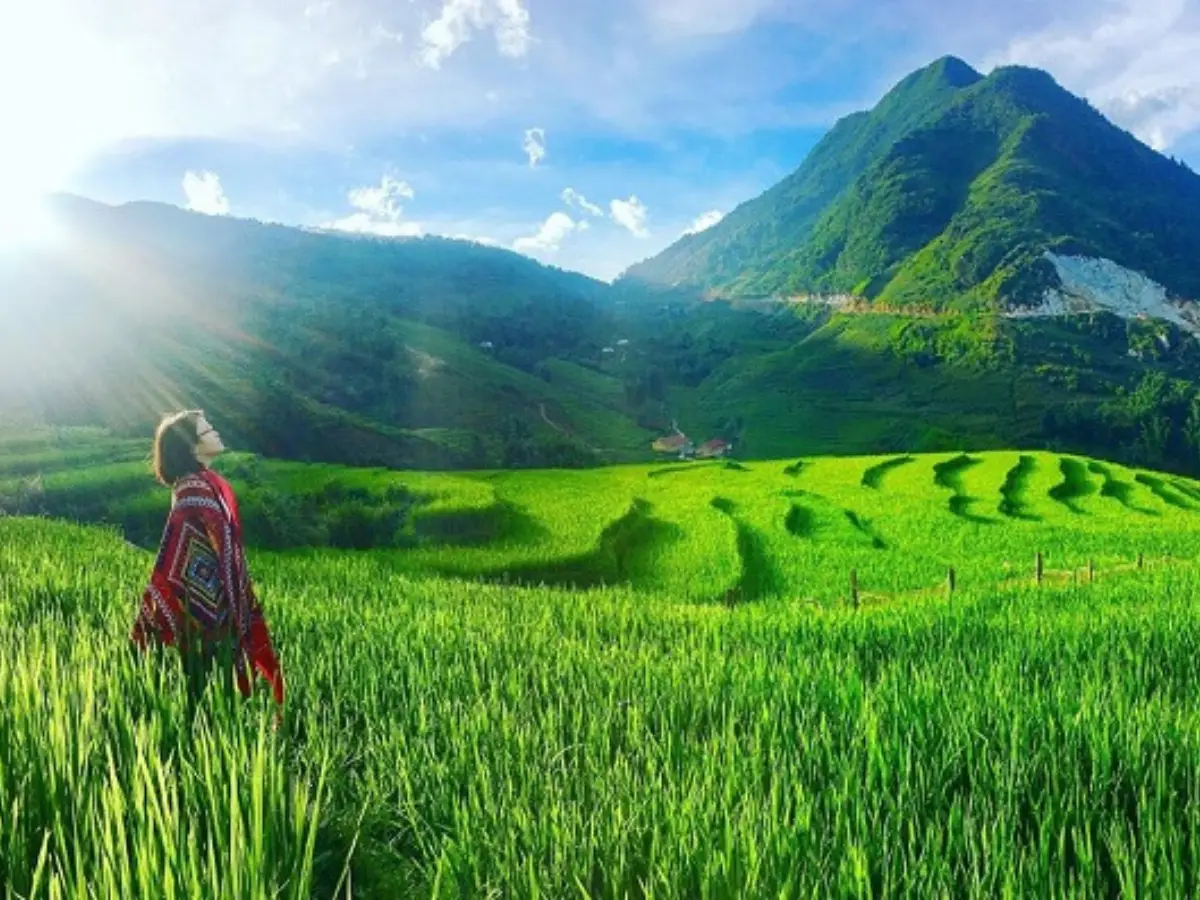
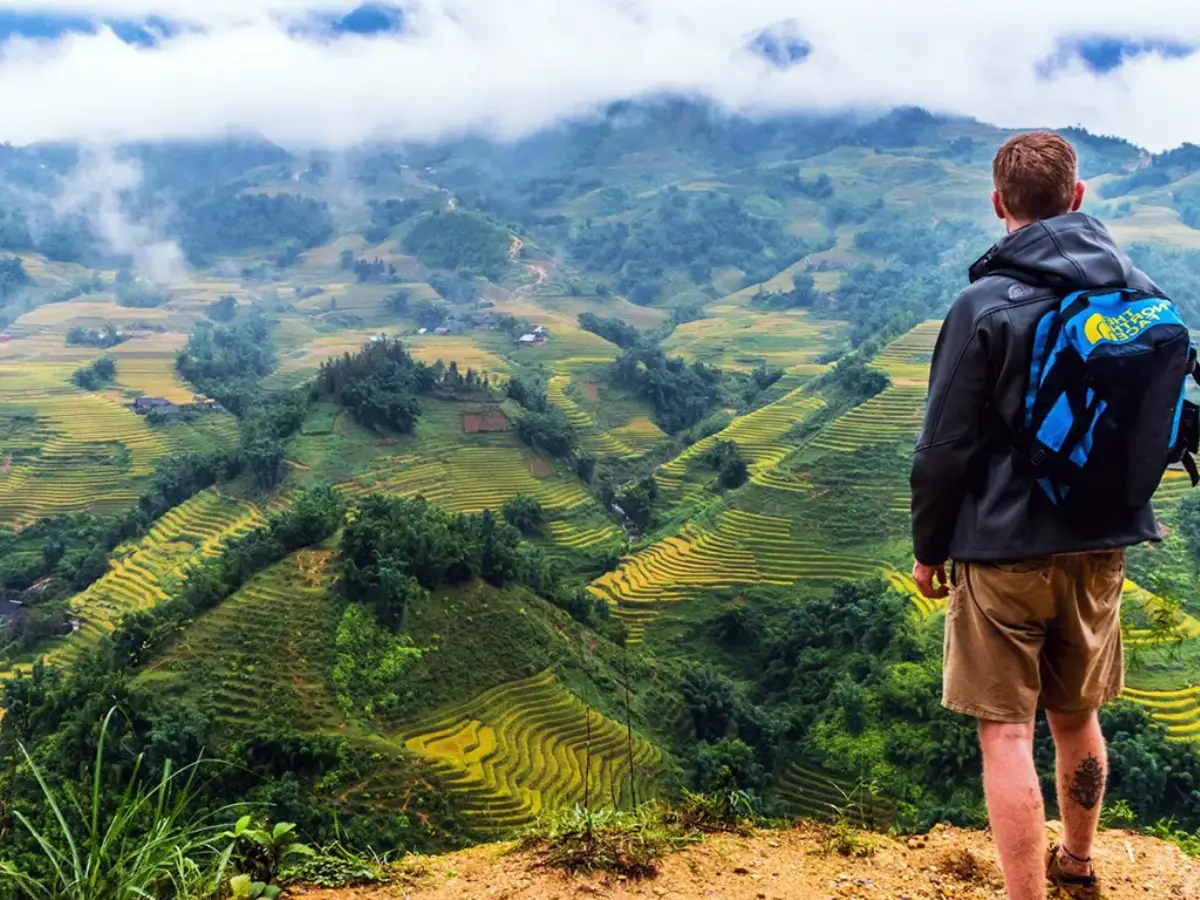
But Sapa has the Muong Hoa Valley — a landscape that genuinely stops people mid-sentence. The way the terraces tier down from the ridge villages of Ma Tra and Ta Phin to the valley floor near Lao Chai, especially in September when the rice turns from green to gold, is a scene that gets photographed from a hundred different angles and never looks the same twice. Neither destination has inferior scenery. They are just different categories of beautiful.
Culture: Sapa Has More Variety
Both destinations have ethnic minority communities present, but the depth and accessibility of cultural experience is significantly greater in Sapa. The Black H'mong of the Muong Hoa Valley and the Red Dao communities in Ta Phin have decades of experience hosting visitors with genuine exchange — you eat at their table, sleep in their homes, hear about their farming calendar and their weaving traditions. Our local guides grew up in these communities and lead treks through the same valley paths they walked as children. That kind of access is not something you book from a city hotel lobby.
In Cao Bang Province, the Tay and Nung communities live close to the Ban Gioc area, but structured cultural tours are rarer and the guide ecosystem is smaller. The Saturday market in Cao Bang City is lively and worth visiting, but it does not offer the same immersive walking-through-a-living-landscape experience that a full day in the Muong Hoa Valley does. If ethnic minority culture and the chance to spend time in a real village — not a recreated one — is important to you, Sapa delivers this more reliably.
Why choose Sapa
- Overnight train direct from Hanoi — no 8-hour road journey
- Established trekking routes with licensed Black H'mong guides
- Black H'mong and Red Dao villages you walk through, not around
- Muong Hoa Valley and Fansipan — two iconic landscapes, one base
- Much wider choice of accommodation, tours, and price points
- Terraces in September–October are among the best in all of Asia
Why choose Cao Bang
- Ban Gioc Waterfall — genuinely one of Southeast Asia's most spectacular
- Significantly fewer tourists — you can have trails to yourself
- Nguom Ngao Cave and the UNESCO Geopark landscape
- Limestone karst formations unlike anything in Lao Cai Province
- Better for a motorbike touring itinerary along the Chinese border
- Strong appeal for photographers after something less seen
Accessibility: Sapa Is Much Easier
This is the category where the gap between the two destinations is widest. Sapa has a direct overnight train from Hanoi — the SE3 and SE7 services depart Hanoi station in the evening and arrive in Lao Cai at around 6am, from where it is a 30-minute bus or taxi to Sapa Town. The train is comfortable, the sleeper cabins are affordable, and you save a hotel night. From Hanoi to the start of your first trek can be under 9 hours door-to-door.
Getting to Cao Bang requires a road journey of 7–8 hours by bus or private car. There is no train. The roads are mountain roads — winding, slow, and tiring. The buses are reliable but the journey is long enough that most people lose a full day in each direction. This matters significantly when you have a 7-day or 10-day itinerary. Sapa is simply easier to include without sacrificing time in other places.
The accessibility spectrum below shows where each destination sits relative to how easy they are to reach from Hanoi:
How accessible are these destinations from Hanoi?
Which One Should You Visit?
If you have never been to northern Vietnam and you have 4–6 days available, choose Sapa. The combination of the Muong Hoa Valley trekking, the Black H'mong and Red Dao village access, the straightforward logistics from Hanoi, and the sheer quality of the scenery makes it the better-rounded destination for a first visit. The fact that you can book a full-day trek with a local guide, sleep in a homestay in Lao Chai or Ta Van, and eat breakfast with a family who has lived in these mountains for generations — that is not replicated anywhere in Cao Bang Province yet.
If you have already visited Sapa and you are planning a longer return trip to northern Vietnam — 10–12 days or more — then Cao Bang deserves serious consideration. Do Sapa first, get your 4–5 days of trekking through the Muong Hoa Valley, then make the road journey northeast to Cao Bang Province for 3–4 days around Ban Gioc Waterfall, Nguom Ngao Cave, and the Phia Oac Nature Reserve. The two destinations complement each other well in a longer itinerary because they are genuinely different: rice terraces and ethnic culture in Sapa, karst geology and waterfall grandeur in Cao Bang.
Do not try to combine Sapa and Cao Bang in under 7 days — you will rush both and do justice to neither. The road between them goes back through Hanoi (not direct), which adds a full day of transit each way. If you have exactly one week, pick one and stay. The Muong Hoa Valley alone is worth 4–5 full days if you want to cover multiple routes through the villages of Hang Da, Hau Thao, Lao Chai, and Ta Van.
Rent at Our Office Before You Trek
 Gear Rental
Trekking Boots Rental
Waterproof ankle-support boots. Cleaned and checked before each rental. Available at 105 Thach Son Street.
 Gear Rental
Walking Poles Rental
Trekking poles available to rent at $2/day at our office, 105 Thach Son Street. Essential for descents.
Frequently Asked Questions
Cao Bang has Ban Gioc Waterfall — one of the most spectacular in Southeast Asia — and significantly fewer tourists than Sapa. But Sapa has better trekking infrastructure, more ethnic minority culture to experience, and is much easier to reach from Hanoi. Most travelers who want a proper trekking experience choose Sapa.
Cao Bang is approximately 280 km / 174 miles from Sapa by road. There is no direct route — you must travel back through Hanoi or take a very long mountain road via Bac Kan province. They are not easy to combine without at least 2–3 extra days.
The journey from Hanoi to Cao Bang takes approximately 7–8 hours by bus or private car. The road follows the Chinese border, passing through Bac Kan province. No direct train service exists.
Yes, but budget at least 10–12 days to do both properly without rushing. Most travelers choose: 4 days Sapa (with trekking), then return to Hanoi, then 3–4 days Cao Bang. Trying to do both in under a week means you will rush one or both.
Cao Bang Province is famous for Ban Gioc Waterfall (the largest waterfall on the China–Vietnam border), Nguom Ngao Cave, and Phia Oac Nature Reserve. The Ban Gioc area is a UNESCO-recognized Geopark.
Sapa is better for a first visit. It has more accommodation options, established trekking routes, a wider range of tour operators, and direct overnight train from Hanoi. Cao Bang is a worthy second trip once you have already experienced the north.