 Sinh Giang
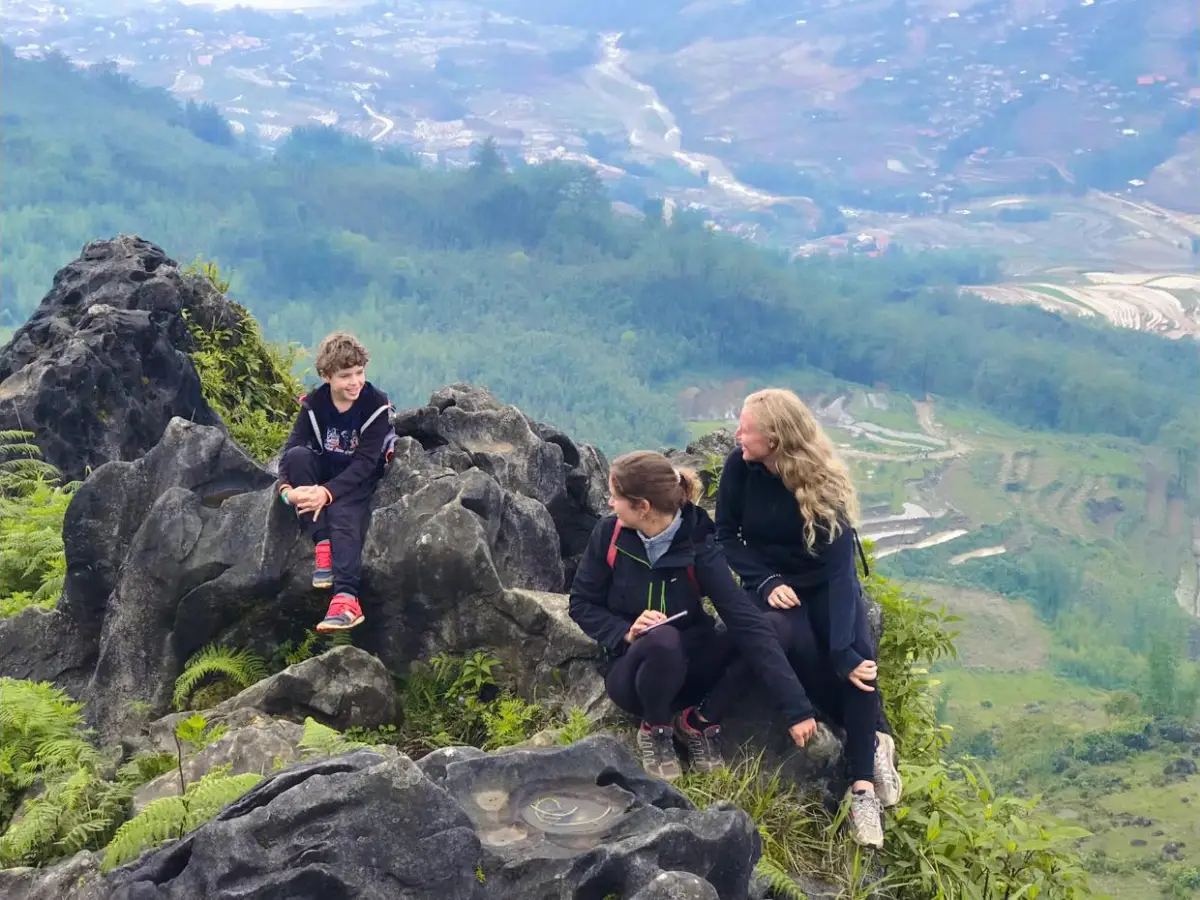
The first thing you notice at the base of Hang Mua is the line. At 9am on a Saturday in November, it stretches back forty meters from the ticket gate, a queue of tour groups from Hanoi who all had the same idea. The second thing you notice — if you came on a Tuesday at 7:15am like I recommend — is the sound of your own footsteps on the stone and the smell of incense drifting down from the shrine halfway up. That is the version of Ninh Binh that most people miss by arriving late.
Ninh Binh Province, 95 km / 59 miles south of Hanoi, contains some of the most dramatic karst limestone scenery in Southeast Asia. The Tam Coc valley, the Trang An lagoon network, and the Hoa Lu ancient capital are the main draws — but for many travelers, the most memorable moment is standing at elevation, looking down over the paddy fields and the Ngo Dong River from a ridge that took less than 30 minutes to climb. This guide covers the three main climbing experiences in the area: Hang Mua, Dragon Mountain (Nui Rong), and Bich Dong Pagoda.
Hang Mua Mountain — The Iconic Ninh Binh Climb
Hang Mua is the climb that defines Ninh Binh in most travel photographs. The 500 steps are cut directly into the limestone karst face above the Mua Cave resort on the edge of Tam Coc. The path is narrow in places, there is a rope handrail on the steepest section, and the final push to the dragon statue at the top involves a short scramble over exposed rock. At the summit, 98 meters above the valley floor, you are looking out over the Tam Coc rice paddies, the looping curves of the Ngo Dong River, and the ring of karst peaks that make this landscape one of the most photographed in Vietnam.
The practical details matter here. The entrance is on the road between Tam Coc town and the Trang An grottoes — follow signs for "Mua Caves" (not to be confused with the actual Mua Cave below the peak, which you can also walk through on the way up). The ticket costs 100,000 VND per person at the gate. There are no guided tours required and no safety equipment needed beyond decent footwear. The steps are uneven limestone — sandals are manageable but trail shoes or flat trainers are more comfortable on the descent, which is harder on the knees than going up.
By 10am on any weekend between October and February, the Hang Mua summit has queues of 20–30 minutes just to stand at the viewing platform. The steps themselves become crowded going both ways. Go before 8am or plan for Tuesday to Thursday. The ticket office opens at 7am and you can be back at your hotel before the tour bus crowds arrive.
The descent from Hang Mua takes you back down the same staircase — there is no loop trail. Take it slowly coming down; wet limestone in the morning dew is genuinely slippery, and I have seen more twisted ankles on the descent than on the climb. The stone steps near the top are the trickiest — they have a slight backward tilt from erosion. Use the rope rail and take your time.
Dragon Mountain (Nui Rong) — A Quieter Alternative
Dragon Mountain, known locally as Nui Rong, sits on the northeastern edge of Ninh Binh town itself, visible from most of the city. It is far less visited than Hang Mua — on a weekday morning you may have the entire summit path to yourself. The climb to the main pagoda at the top takes about 15–20 minutes through a forested trail with stone steps that are in better condition than Hang Mua's because fewer feet have worn them down. From the top, the view is different: you are looking over the Hoang Long River, the rooftops of Ninh Binh city, and on clear days in the dry season, the karst formations of Trang An stretching to the southwest.
Dragon Mountain is free to enter. There is a small Buddhist pagoda at the summit where monks sometimes hold morning prayers — if you arrive early and the monks are present, remove your shoes and observe quietly before walking out to the viewpoint on the adjacent rock. The trail continues past the main pagoda to a higher point with metal steps bolted into the rock face for the final 10 meters. That section is optional but worthwhile: the 360-degree view from the top takes in both the river plain and the distant Truong Yen valley where Hoa Lu ancient capital once stood.
Top-Rated Sapa Treks to Add to Your Itinerary
 Best Seller
Trekking Through Rice Terraced Fields
Walk the Muong Hoa Valley floor through Black H'mong villages of Lao Chai and Ta Van — a landscape as dramatic as Tam Coc but at altitude.
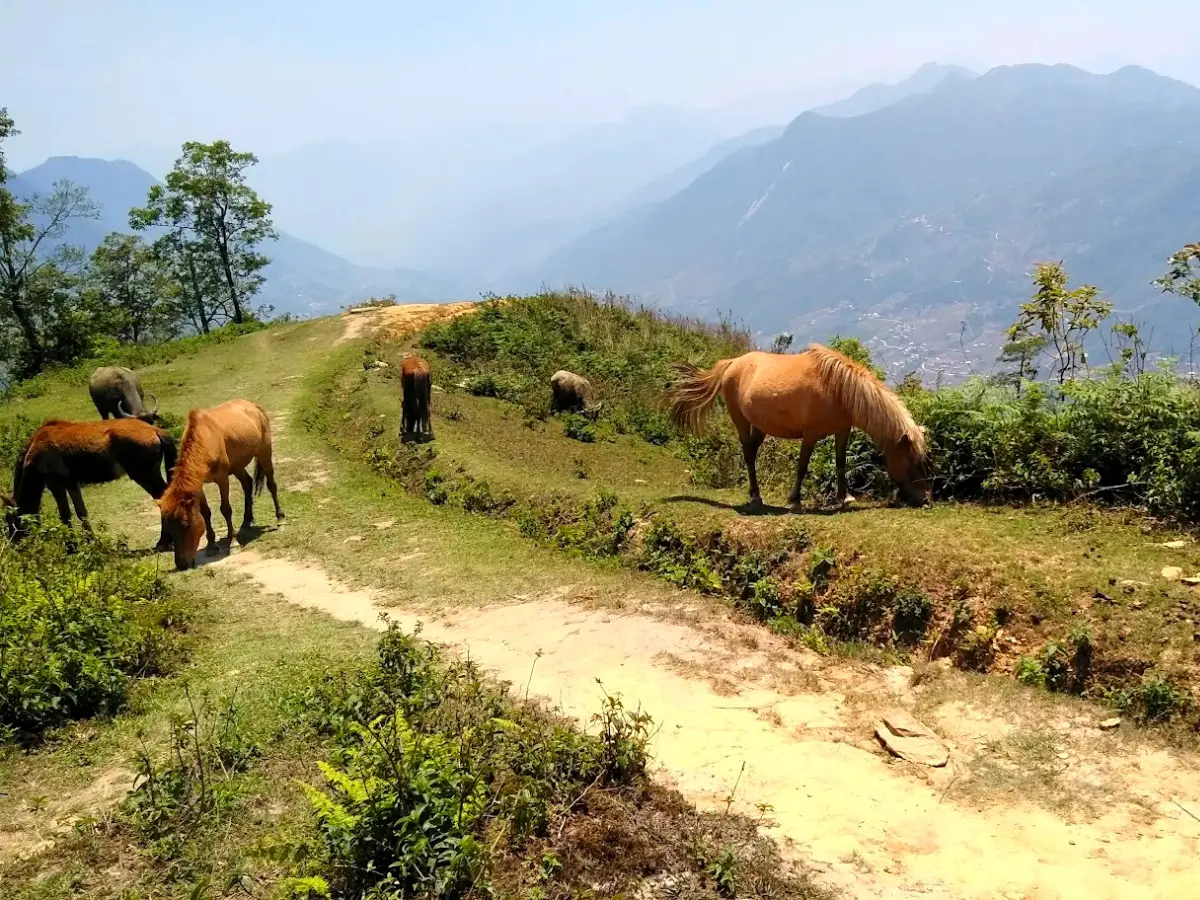
Mountain Views and Villages Trek
Ridge trails with open views across the Muong Hoa Valley — the mountain version of what Hang Mua gives you over Tam Coc, but bigger and wilder.
 Seniors & Families
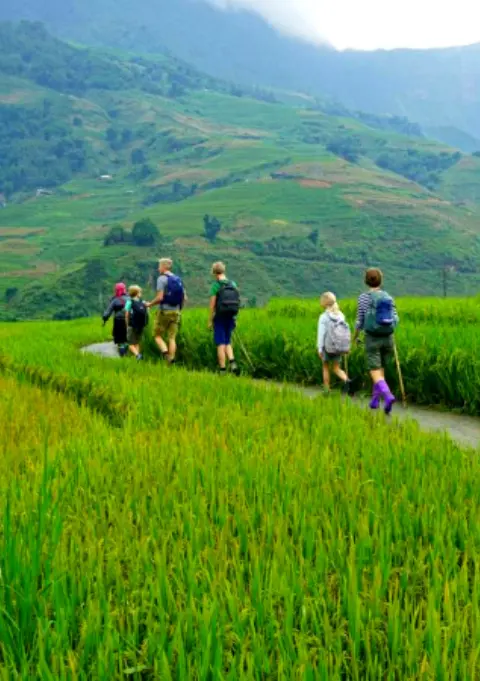
Sapa Easy Trekking For Seniors
Gentle valley paths in Y Linh Ho and Ta Van — a good Sapa option for travelers who found Hang Mua manageable but want no steep sections.
Bich Dong Pagoda — Cave Climbing and Temple Steps
Bich Dong is the most atmospheric of the three Ninh Binh climbs, and the least physically demanding. The pagoda complex, located 3 km west of Tam Coc near the village of Ngu Nhac, is built in three tiers inside and above a limestone cave. You enter through the lower pagoda at ground level, then follow stone steps through a cave passage lit with lanterns (bring a small torch if you want to see the stalactites properly) to the middle pagoda, and finally ascend an iron staircase bolted into the rock face to reach the upper pagoda perched at the cliff edge. The entire walk takes about 20 minutes up and 15 minutes down.
The view from the upper Bich Dong temple is over a different landscape than Hang Mua — here you look out across the Van Lam embroidery village, the Ngu Nhac mountain range, and the network of small rivers that feed into the Trang An wetland area to the north. On a clear November morning the mist sits in the valley below and the peaks above are sharp against a pale blue sky. Entry to Bich Dong costs 20,000 VND per person, and it is almost always less crowded than Hang Mua even during peak season.

How Hard Are the Ninh Binh Climbs?
None of the three Ninh Binh climbs require technical skill, specialist equipment, or a guide for navigation. What they do require is honest self-assessment about heat tolerance and knee condition.
500 steps, 98 meters gain, no shade. The steps are irregular limestone with some loose sections near the top. Trekking poles help significantly on the descent. Not recommended for travelers with bad knees or acute vertigo — the upper section has exposed drops to one side.
Well-maintained stone path through forest. No exposure on the main trail. The optional top section adds a 10-meter metal ladder that requires good grip. Total elevation gain is approximately 60 meters. Suitable for almost everyone who can walk a flight of stairs.
20-minute walk with some steps through cave passages. The cave section requires ducking at one point. The iron staircase to the upper pagoda is steep but has handrails. Suitable for children and older travelers without specific mobility limitations.
Best Time to Climb in Ninh Binh
October to April is the best period for Ninh Binh climbing. Dry season skies give you clear views from the summits, humidity is lower, and the Tam Coc rice paddies go through their most photogenic change: harvested and flooded in November, turning green again by March. The Ngo Dong River is calmer in the dry season, which also means better boat conditions if you add a Tam Coc river trip to your day.
September and October mark the end of the rainy season, and this is when the paddy fields around Tam Coc are gold before harvest — the most popular time for landscape photography. The light at 7am in late October, when mist is sitting in the valleys and the karst peaks are catching the first sun, is the scene you see on every Ninh Binh travel photograph. The tradeoff is wet steps on Hang Mua, which requires extra care.
| Month | Conditions | Rating |
|---|---|---|
| Oct–Nov | Late harvest gold / early dry. Best photography light. Crowds building. | Peak |
| Dec–Feb | Dry and clear. Cool mornings. Quieter weekdays. Possible light fog Jan–Feb. | Peak |
| Mar–Apr | Fields greening. Warm but not yet hot. Good light through April. | Good |
| May–Sep | Monsoon season. Hot and humid. Wet steps on Hang Mua. Green landscape. | Fair |
If you are visiting in June or July, the Hang Mua climb is best done at 7am sharp when the gate opens — temperature at ground level can hit 36°C by midday. Bring 1.5 litres of water minimum. There is no vendor on the summit and the single water seller at the base closes before many visitors arrive.
How Ninh Binh Fits Into a Northern Vietnam Itinerary
Ninh Binh is 95 km / 59 miles south of Hanoi, which makes it accessible as a day trip — but that is the wrong way to experience it. A day tripper from Hanoi arrives at Tam Coc around 10am, when the queues at Hang Mua are already at their worst and the morning light is gone. Staying one night in Ninh Binh town or in a guesthouse near Tam Coc changes the experience completely: you can climb Hang Mua before 8am, do the Trang An boat trip in the morning, and visit Bich Dong or Hoa Lu ancient capital in the afternoon.
For travelers combining Ninh Binh with Sapa, the standard routing works well. Arrive in Hanoi by flight. Spend 1–2 days in Ninh Binh. Return to Hanoi and take the overnight train or sleeper bus to Sapa — the journey is 8–9 hours, departing around 9–10pm and arriving in Lao Cai at dawn. From Lao Cai you take the shuttle up to Sapa town, 38 km / 24 miles into the mountains. This gives you 3–4 days in Sapa to trek the Muong Hoa Valley, visit Ta Van village, Lao Chai village, or push up toward the Ma Tra ridge above the town. The two destinations complement each other well: Ninh Binh gives you karst and river culture in the lowlands; Sapa gives you the terraced mountain landscape and the chance to spend time with Black H'mong and Red Dao communities that cannot be found at the same scale anywhere else in northern Vietnam.
We do not operate tours in Ninh Binh — our expertise is Sapa. But many of the travelers who contact us have just been to Tam Coc, and we are always happy to help plan the Sapa leg of that trip. If you message us on WhatsApp with your travel dates and where you are staying in Ninh Binh, we can suggest the best connection and have your Sapa tour arranged before you leave the valley.
Rent at Our Office Before You Trek
 Gear Rental
Trekking Boots Rental
Waterproof ankle-support boots. Cleaned and checked before each rental. Available at 105 Thach Son Street.
 Gear Rental
Walking Poles Rental
Trekking poles available to rent at $2/day at our office, 105 Thach Son Street. Essential for descents.
Frequently Asked Questions
The Hang Mua climb has 500 steps carved into the limestone karst. The ascent takes 20–30 minutes at a moderate pace. The steps are steep and irregular — not technically difficult, but tiring in the heat. The viewpoint at the top overlooks the Tam Coc rice paddies and the Ngo Dong River, which is the scene most people associate with Ninh Binh.
The climb is rated easy-to-moderate by Vietnamese standards. Anyone who walks regularly should be able to manage it. The main challenge is the heat and humidity — go early in the morning (before 8am) to avoid both crowds and the worst of the sun. There is no shade on the stairs.
October to April is the best period — the dry season means cleaner skies and lower humidity. June to September is the monsoon season; the karst landscape turns green and atmospheric but the heat is intense. Sunrise visits (gates open at 7am) and late afternoon light are both excellent for photography.
No — Hang Mua and Dragon Mountain are well-signed and accessible independently. You pay the entrance fee at the gate (Hang Mua: 100,000 VND / USD 4). For the caves and secondary trails, a local guide adds useful context, but it is not required for safety.
Ninh Binh is approximately 95 km / 59 miles south of Hanoi. The drive takes 1.5–2 hours by bus or private car. Regular buses depart from Giap Bat bus station every 30–45 minutes. It is a common day trip from Hanoi, though staying overnight lets you avoid the rush and catch golden hour over the paddies.
Yes — many travelers include both in a north Vietnam itinerary. A typical routing: fly into Hanoi, day trip or overnight to Ninh Binh (2 days), return to Hanoi, then take the overnight train or sleeper bus to Sapa (3–4 days). Contact us and we can help coordinate the Sapa leg of your trip.