 Sinh Giang

You finish the loop somewhere outside Dong Van, engine off, the Nho Que River still glinting thousands of metres below the Ma Pi Leng cliff edge, and you feel something shift. That is the moment most people start thinking about the tattoo. Not while planning the trip, not at the Dong Van Karst Plateau UNESCO Geopark sign — but in the silence after the last descent, when the road stops demanding your full concentration and you can finally process what you just did.
The Ha Giang Loop tattoo has become one of the most recognisable travel markers in Southeast Asia. This article covers what makes the route significant enough to mark permanently on your body, the designs travelers actually choose, the cultural context you should understand before picking one, and where to find a studio that will execute it properly.
Why Ha Giang Specifically?
Ha Giang Province sits at the northernmost tip of Vietnam, pressed against the Chinese border. The Dong Van Karst Plateau — a UNESCO Global Geopark — occupies much of the route, and the landscape there looks unlike anywhere else in the country: bare limestone karst mountains, almost no vegetation on the higher ridges, and the pale turquoise cut of the Nho Que River far below the road.
The loop itself runs roughly 350 km / 217 miles from Ha Giang city through Quan Ba, Yen Minh, Dong Van, and Meo Vac before returning south. The Ma Pi Leng Pass between Dong Van and Meo Vac is the centrepiece — a section where the road is carved directly into a near-vertical cliff, with drops of 1,000 to 2,000 metres to the river below. Solo riders on semi-automatic motorbikes navigate this on roads that narrow to a single lane, often in low cloud or after rain. There are no guardrails on significant stretches.
That combination — the genuine technical difficulty, the remoteness from any city infrastructure, the Black H'mong and H'mong ethnic minority villages that exist largely unchanged by mass tourism, the visual drama of the karst plateau — gives the Ha Giang Loop a weight that most Southeast Asia travel experiences do not carry. You cannot bus-tour it passively. The landscape requires your full attention for three to five days.
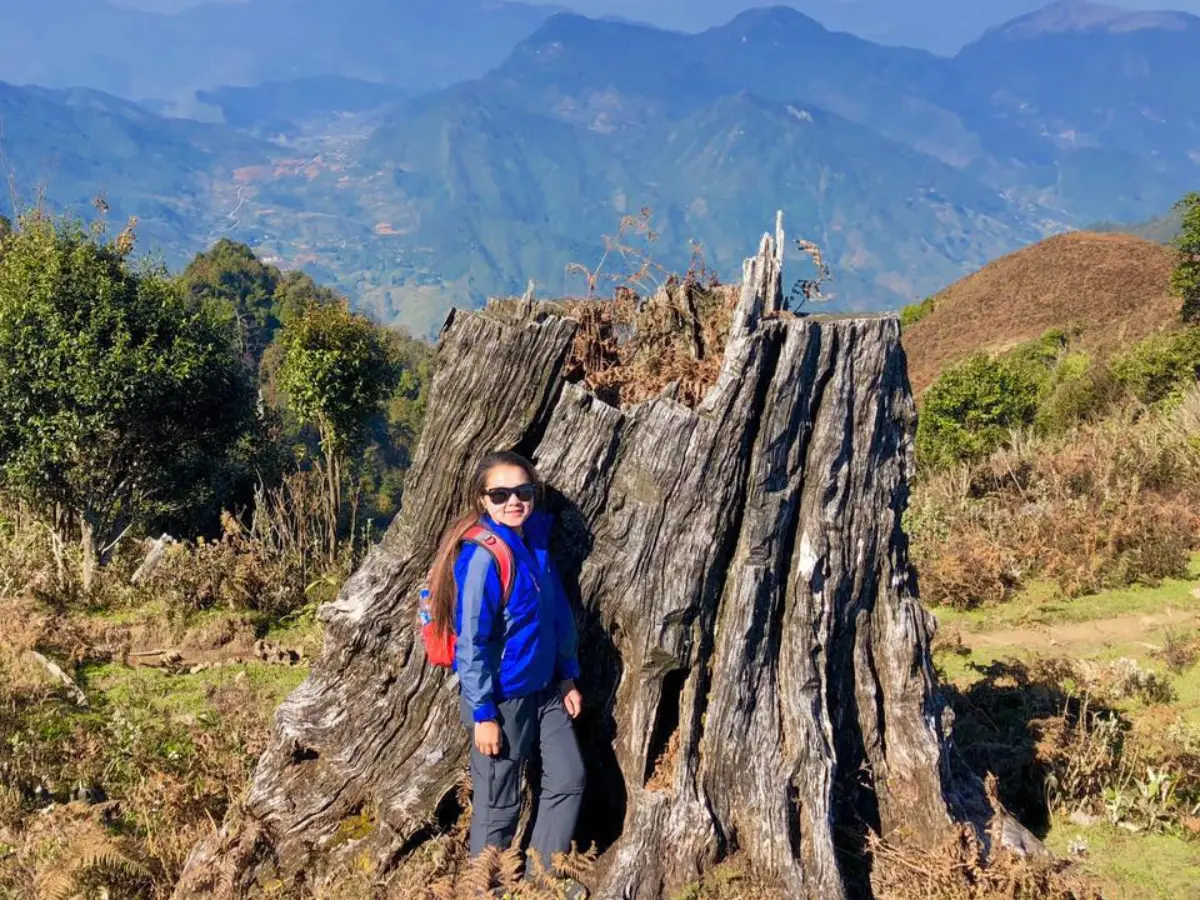
Best-Rated 1-Day Treks from Sapa
 1 Day
Easy
1 Day
Easy
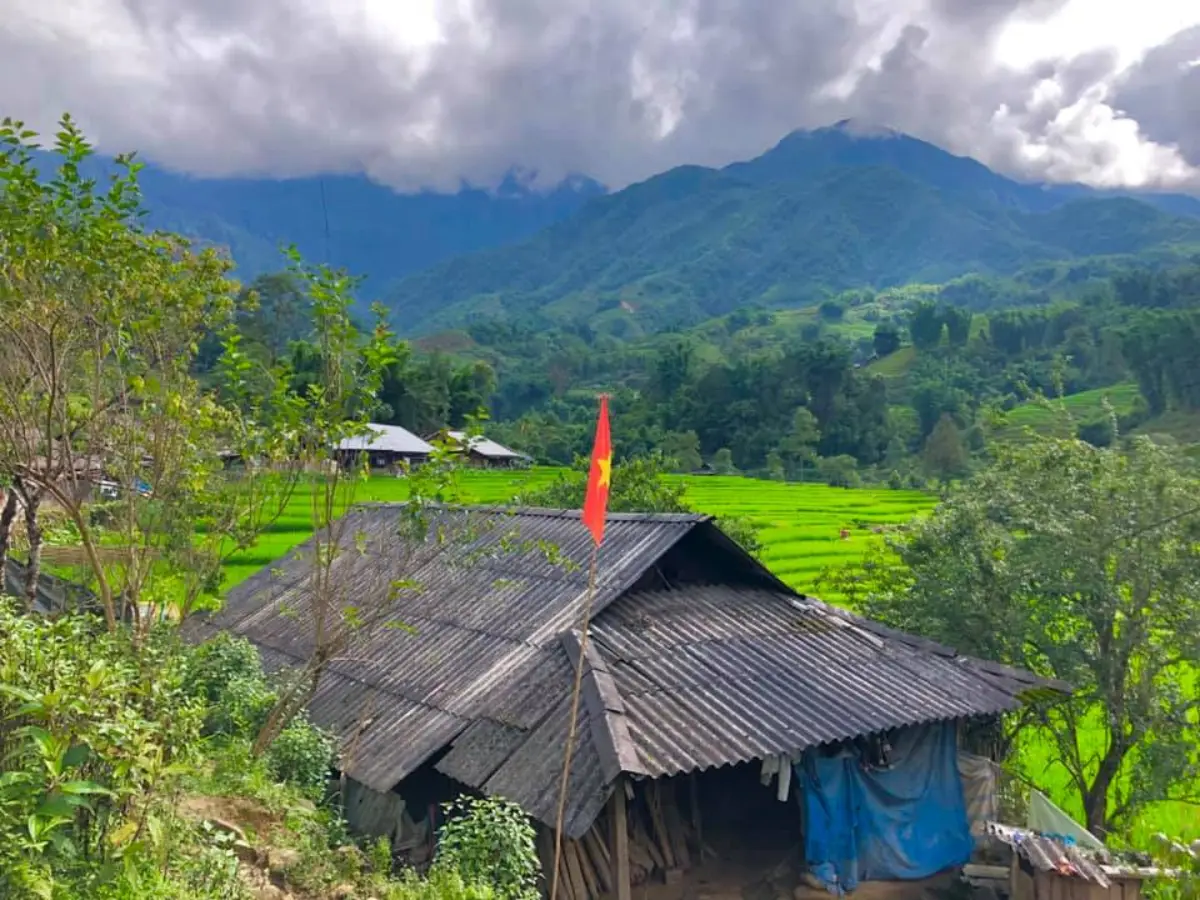
Trekking Through Rice Terraced Fields
Ta Van village, Muong Hoa Valley rice terraces, local Black H'mong family lunch.
 1 Day
Easy
1 Day
Easy
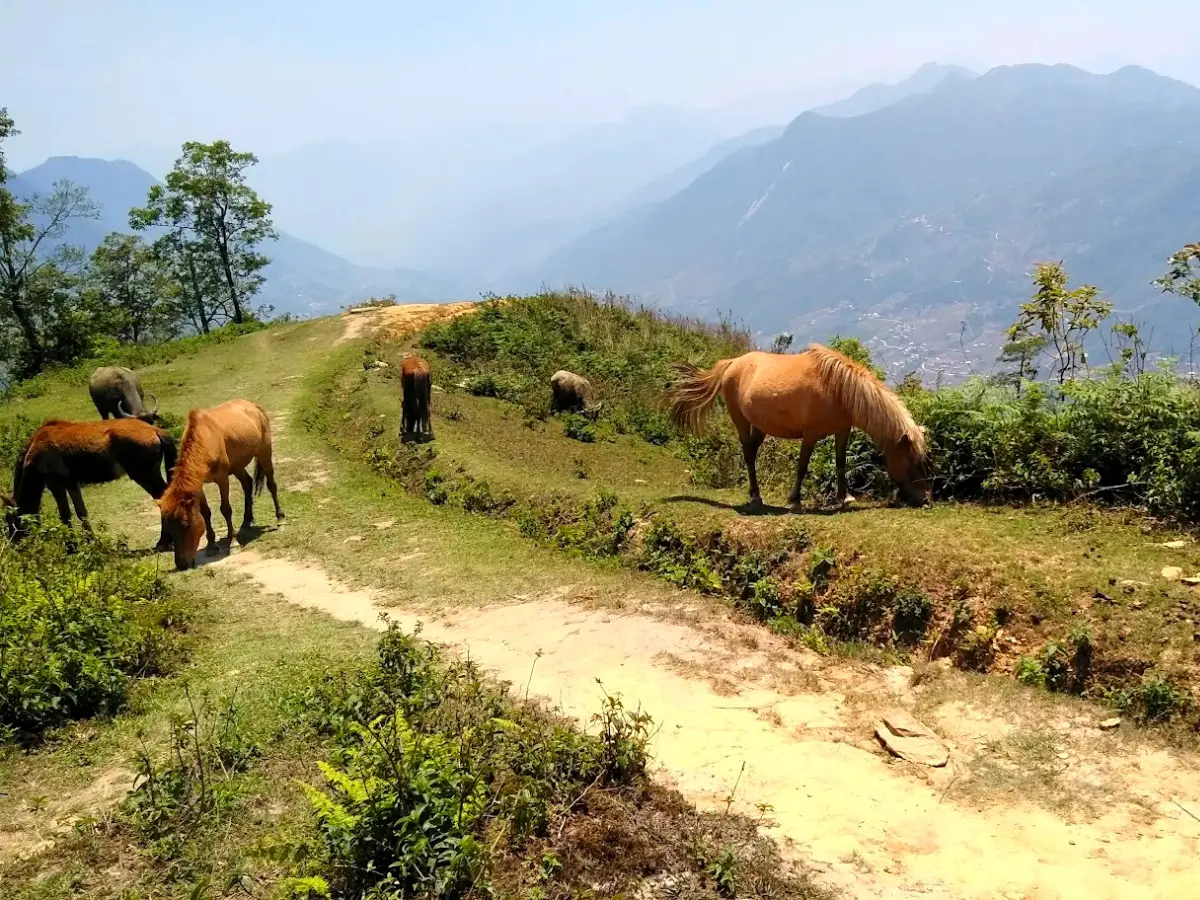
Mountain Views and Villages Trek
Ridge trail above Sapa town with panoramic valley views. Visits two H'mong villages.
 1 Day
Easy
1 Day
Easy
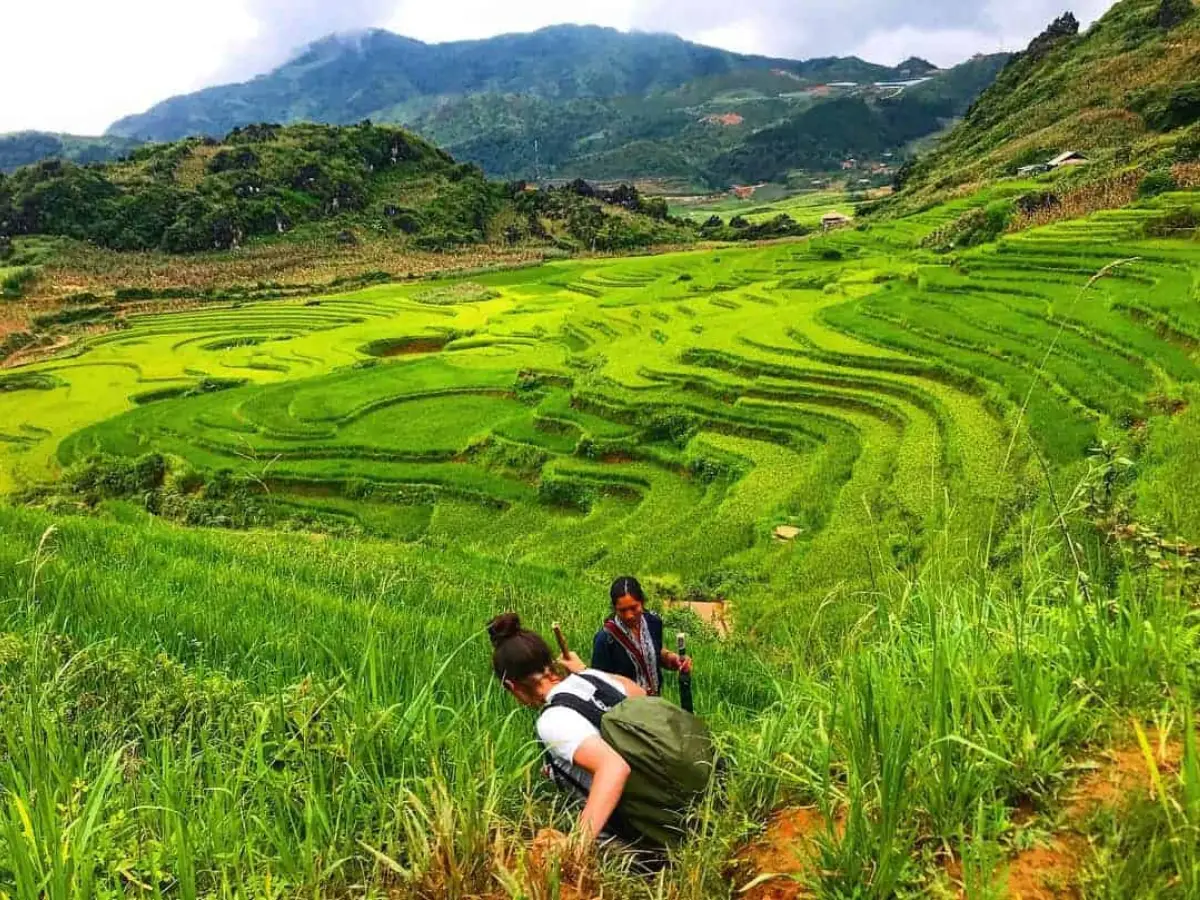
Rice Paddies and Cultures – Easy Hiking
Gentle trail through Hau Thao and Y Linh Ho villages. Perfect first trek.
What Makes It a Rite of Passage Tattoo
Travel tattoos exist across every culture — a date, a compass, a place name. Most function as decorative mementos of somewhere you enjoyed. The Ha Giang Loop tattoo operates differently because the trip it marks is not simply enjoyable. It is genuinely difficult, sometimes frightening, and often the kind of experience that reorganises your sense of what you are capable of.
The road conditions on the Ma Pi Leng Pass do not forgive inattention. You are managing your own vehicle, your own navigation, and your own risk assessment for 3 to 5 full days with no support vehicle behind you. Many riders report sections where a mistake would result in a fall into the gorge, and that is not exaggerated. Several foreign travelers have died on the loop over the years, which is part of why completing it carries weight in backpacker communities across Southeast Asia.
The tattoo, in this context, is not decorative. It marks a specific thing that happened to you, on a specific landscape, that changed something. That is why the timing matters — most people who have done the loop will tell you that the design choice becomes obvious only after the trip, not before. You need to know what you are marking.
Wait until after the loop before finalising your design. Most people who get inked before the trip end up wanting something different once they have actually ridden Ma Pi Leng. The image that sticks — the specific bend in the road, the exact colour of the Nho Que at midday — only becomes clear once you have seen it yourself.
Popular Design Motifs and What They Reference
Several recurring design categories have emerged from the Ha Giang Loop tattoo tradition, each tied to a specific visual or geographic element of the route.
The Ma Pi Leng Pass Road Silhouette
This is the most requested design. The road cut into the cliff face above the Nho Que River gorge, viewed from the lookout point at the Meo Vac end of the pass, has a distinctive switchback shape — a narrow line traversing near-vertical stone, with the pale turquoise river hundreds of metres below. Fine-line black work renders this well as a forearm or bicep piece. Many artists use the actual photograph as reference and simplify the detail level to suit placement size.
The Nho Que River Turquoise Bend
The aerial view of the Nho Que River as it cuts through the karst gorge is the defining image of Ha Giang photography. The water colour — a milky turquoise caused by mineral content — is unlike anything else in northern Vietnam. This works as a standalone watercolour-style piece or as a background element in a larger composition. If you want colour in your tattoo, this is the design that justifies it.
H'mong Textile Geometric Patterns
The Black H'mong communities along the loop — concentrated around Dong Van and the villages south of Ma Pi Leng — produce indigo-dyed batik textiles with distinctive geometric patterns: repeated diamond grids, zigzag borders, interlocking triangles. These appear on clothing, bags, and wall hangings throughout the route. The patterns work well as border elements or sleeve components in line-work tattoos, and several Ha Giang-specialist artists in Hanoi have developed their own interpretations.
Dong Van Karst Plateau Mountain Silhouettes
The bare limestone peaks of the Dong Van Karst Plateau have a profile unlike the forested ranges further south — angular, layered, with no soft vegetation edge. A ridge silhouette in minimalist black captures this specific geography without requiring complex shading. This design pairs well with a coordinate line below it.
Coordinates
23.1 N, 105.3 E places you in the Dong Van district. The coordinate approach has become standard in the travel tattoo world and works well when you want something that reads as personal rather than decorative — it marks the exact place rather than a stylised version of it. Clean serif or sans-serif lettering on the inner forearm or behind the ear are the most common placements.
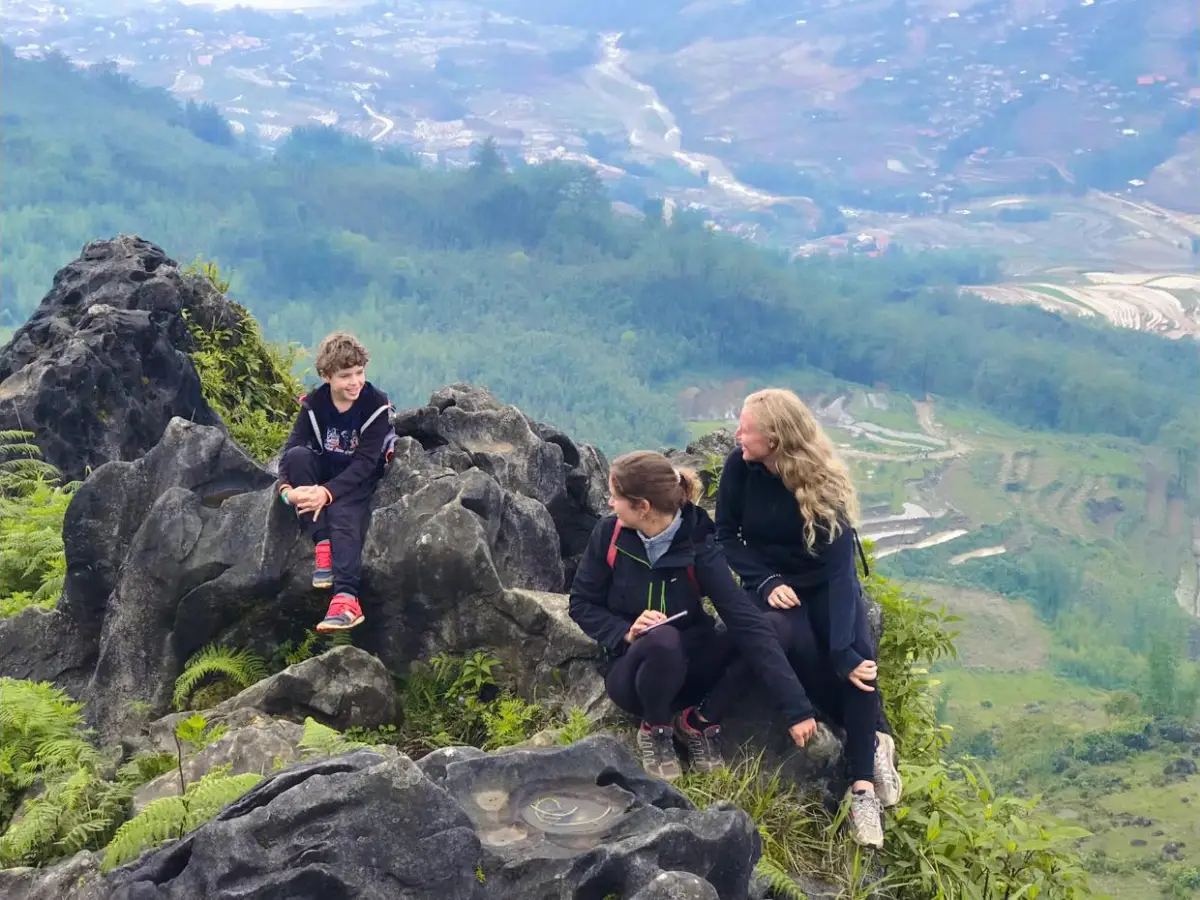
Trek + Homestay Packages (2 Days, 1 Night)
 2D1N
Moderate
2D1N
Moderate
Rice Terraced Fields & Homestay
Two days in Ta Van and Lao Chai villages with overnight stay at a Black H'mong family home.
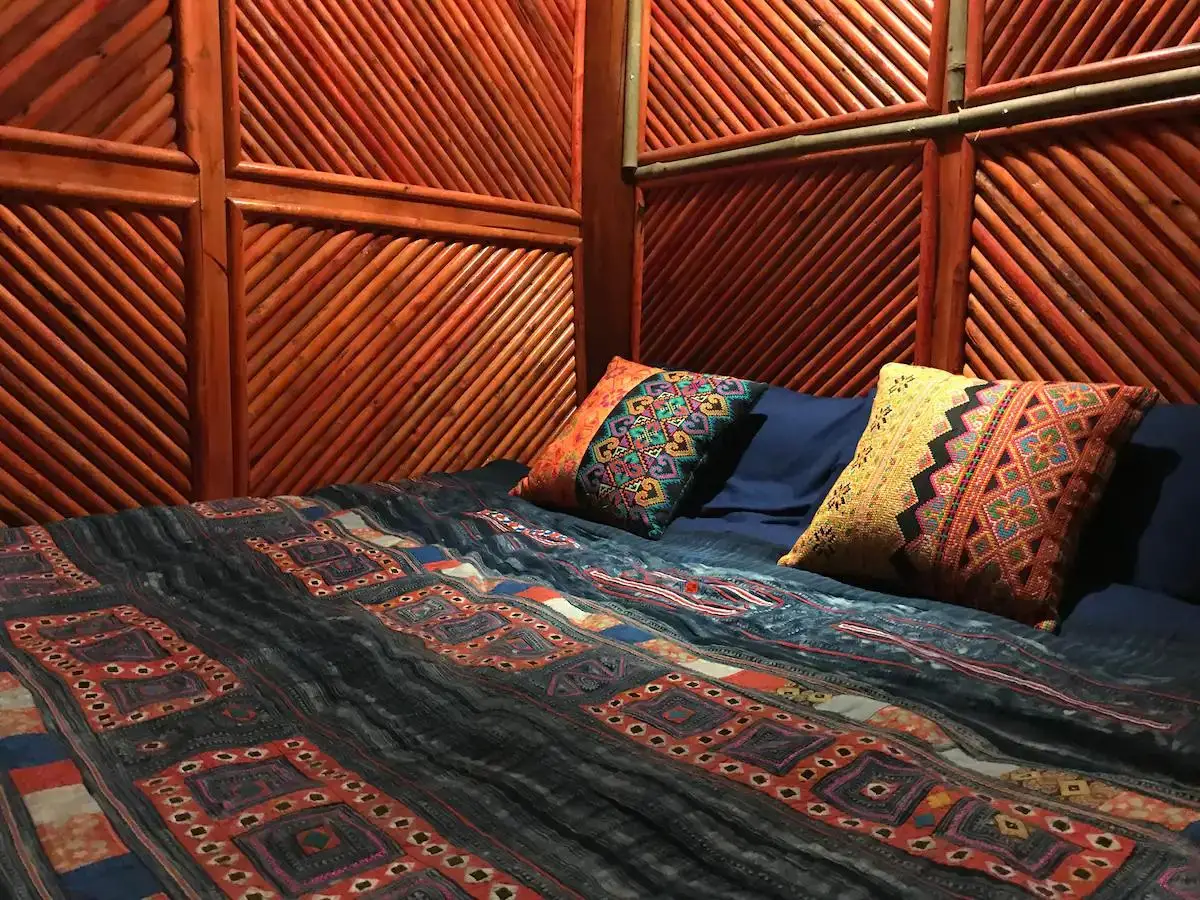 2D1N
Moderate
2D1N
Moderate
Mountain Views & Muong Hoa Valley Trek
Ridge walk above the valley, overnight in a Red Dao village, morning terraces at sunrise.
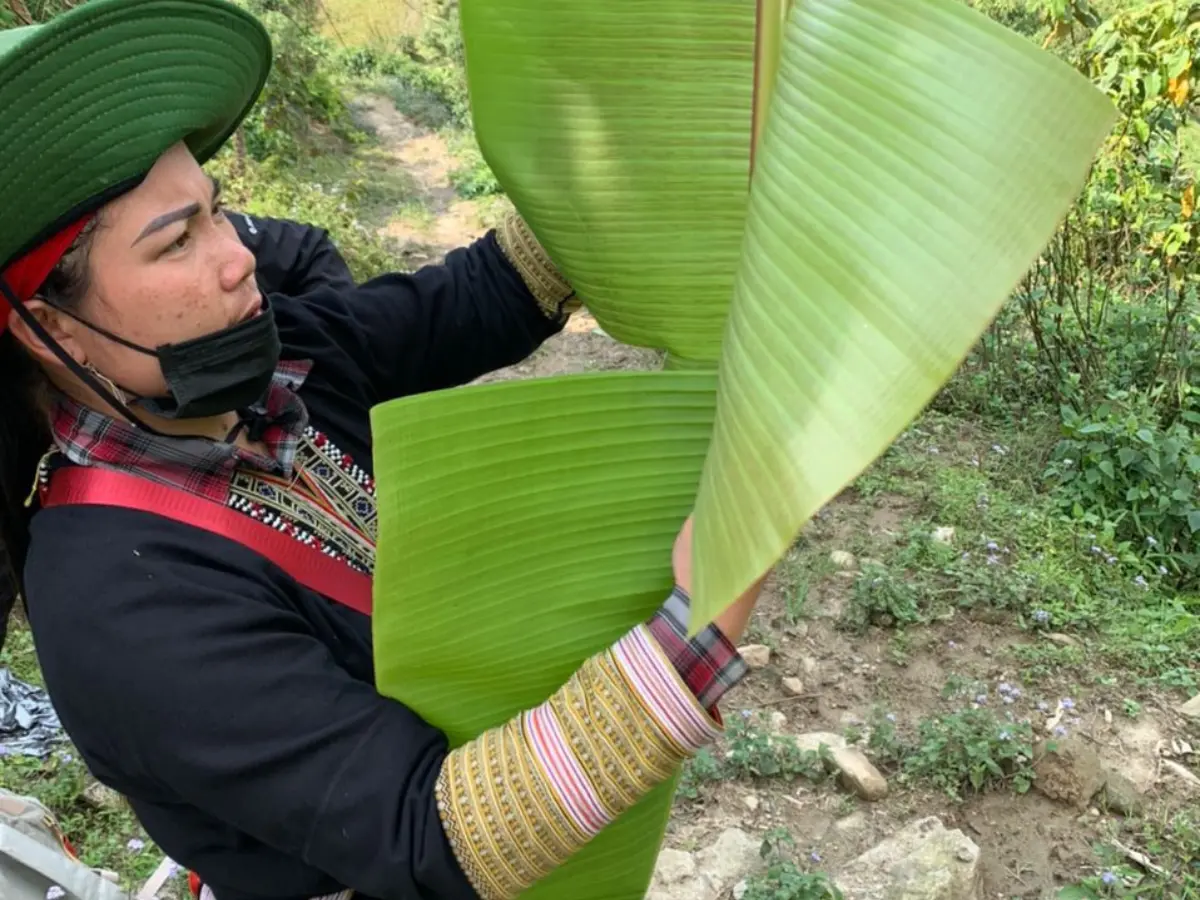 2D1N
Moderate
2D1N
Moderate
Explore Nature and Homestay
Less-touristed trails through cardamom forest, bamboo groves, and traditional farming villages.
The H'mong Tattooing Tradition — Context You Should Know
The Black H'mong and H'mong ethnic groups in Ha Giang Province — and further west into Sapa and Lao Cai — have their own tattooing practices that predate tourist travel to the region by generations. Traditional H'mong tattooing is performed primarily on women, typically on the hands and forearms, using a technique involving soot, bamboo needles, and a pattern language specific to the community. The motifs carry meaning within that cultural system — they are not purely decorative.
The tourist tattoo culture that has grown around the Ha Giang Loop is entirely separate from this. Visitors are getting inked at commercial studios, by artists who are mostly Vietnamese or international, using the visual vocabulary of the landscape rather than the ceremonial vocabulary of local ethnic minority communities. These are not the same thing, and it is worth being clear about the distinction before you choose what to put on your body.
If your design incorporates elements inspired by H'mong batik textiles — the geometric diamond and zigzag motifs — you are borrowing from a visual tradition that carries meaning for the people who made it. That does not make it categorically off-limits, but it is worth approaching with some thought rather than treating it as a decorative pattern. The safest path is to discuss the specific elements with your artist, look at reference images alongside the cultural context, and choose deliberately rather than by default.
Where to Get a Ha Giang Loop Tattoo
Your location options are Ha Giang city itself, Hanoi, or — less commonly — Sapa if you extend your north Vietnam trip into the mountains.
Ha Giang City
You will find several tattoo shops in Ha Giang city, concentrated near the guesthouse and hostel district on Tran Hung Dao and surrounding streets. The quality is variable. Simple line work — coordinates, a single-element road silhouette — is achievable at these shops and the price will be lower than Hanoi. For anything requiring precision shading, complex composition, or custom design, the equipment and experience levels are inconsistent enough that you should not rely on what you find here. Check portfolios carefully; ask to see recent work specifically in the style you want.
Hanoi (Old Quarter)
Your best option for custom work is Hanoi, specifically the Old Quarter and Ba Dinh district where several established studios have operated for years. Two names come up consistently in traveler communities: Hanoi Ink (near Hoan Kiem Lake) and Black Lotus Tattoo Studio (Ba Dinh). Both have English-speaking artists, verifiable portfolios, and the equipment standards you should expect from a serious studio anywhere in the world.
Custom work at these studios starts around $50 to $80 USD for a palm-sized piece and goes up with complexity and placement. Book in advance if you have a specific artist in mind — the studios that are worth using fill up, particularly in the high tourist months of October to April.
Sapa
If your north Vietnam itinerary includes Sapa after Ha Giang — which many travelers do, since the two areas share an aesthetic of mountain landscape and ethnic minority culture — several studios in Sapa town centre work with H'mong-inspired geometric motifs. The Muong Hoa Valley and the Black H'mong villages around Ta Van and Ma Tra are visually close to what you saw in Ha Giang, and some artists here have developed design vocabularies that bridge both landscapes. Quality in Sapa varies as much as Ha Giang city, so the same advice applies: see portfolios and ask specifically about the style you want before committing.
Vietnam's tattooing industry has no nationally standardised inspection system. At any studio, ask to see the autoclave before sitting. Reputable shops will show it without hesitation and will open a sealed needle packet in front of you. If the response is evasive, leave. This applies equally to Ha Giang, Hanoi, and Sapa — do not assume price or location guarantees standard practice.
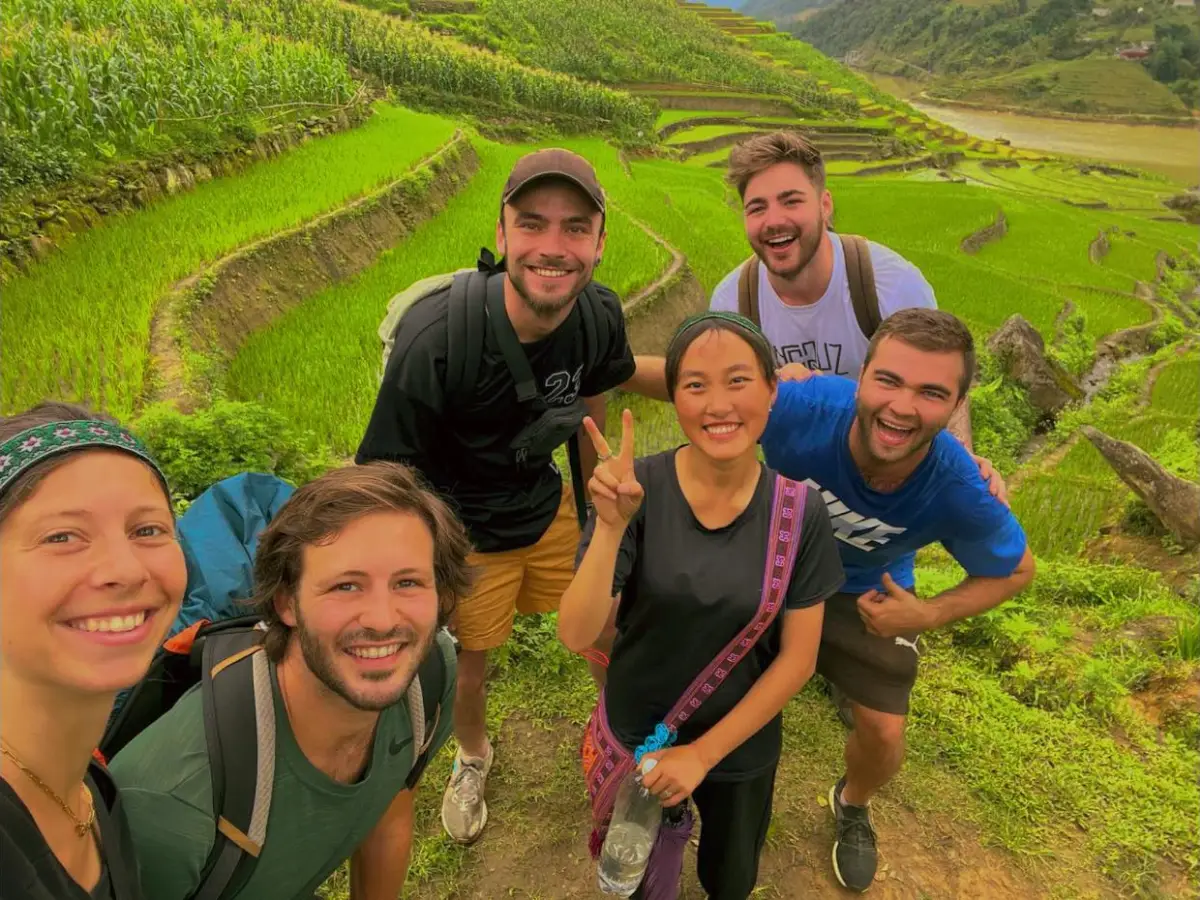
The Sapa Connection — Northern Vietnam Mountain Travel
Many travelers who complete the Ha Giang Loop continue to Sapa, either because they are already in the north or because the landscape logic pulls them there. The two areas are geographically close — Ha Giang Province and Lao Cai Province share a border — and the visual language overlaps: terraced rice fields at altitude, Black H'mong communities, limestone and granite peaks above 2,000 metres, fog that moves in fast in the afternoons.
The difference is that Sapa is accessible, managed, and easy to trek with a guide on well-established routes through Ta Van, Lao Chai, Ma Tra, Ta Phin, and Y Linh Ho. Ha Giang is remote, self-guided by motorbike, and offers almost no managed tourism infrastructure outside the town centres. Both are worth your time, and they complement each other as consecutive experiences in a northern Vietnam itinerary.
If you are in Sapa after Ha Giang and want to continue exploring the mountain culture that the loop introduced you to — the Black H'mong villages, the high-altitude farming landscape, the ethnic minority textile traditions — trekking with a local guide here gives you access to parts of that culture that are harder to reach on a motorbike.
Rent at Our Office Before You Trek
 Gear Rental
$2/Day
Gear Rental
$2/Day
Trekking Boots Rental
Waterproof ankle-support boots. Cleaned and checked before each rental. Available at 105 Thach Son Street.
 Gear Rental
$2/Day
Gear Rental
$2/Day
Walking Poles Rental
Trekking poles available to rent at $2/day at our office, 105 Thach Son Street. Essential for descents.
Frequently Asked Questions
The most requested design is the Ma Pi Leng Pass silhouette — the hairpin road cut into the cliff above the turquoise Nho Que River gorge. Many people use the aerial photograph of the river bend as direct reference. Coordinates (23.1N 105.3E) are also popular as a clean, minimal alternative that still marks the specific place.
In Ha Giang city, small line-work tattoos typically cost 300,000 to 700,000 VND (roughly $12 to $28 USD). In Hanoi's Old Quarter at established shops like Hanoi Ink or Black Lotus Tattoo Studio, custom work starts around $50 to $80 USD for a palm-sized piece, and goes up depending on detail and placement. Always agree on the price and see a sketch before sitting.
Hanoi is the better choice for custom or detailed work. Established studios in the Old Quarter have consistent equipment standards, English-speaking artists, and portfolios you can review. Ha Giang city has a handful of shops near the guesthouse district, and they are fine for simple line work, but quality varies significantly between shops. If the design matters to you, wait until you reach Hanoi.
Surface healing takes 10 to 14 days. During this period you should avoid direct sun, swimming, and anything that causes heavy sweating over the tattoo site. If you plan to continue trekking immediately after getting inked, choose placement carefully — forearms or upper back are usually easier to protect than calves or ankles. Most travelers get the tattoo in Hanoi at the end of the trip rather than mid-journey.
This question comes up often and there is no single answer. H'mong geometric motifs from indigo batik are distinct visual symbols that carry meaning within the community. Using them decoratively as a tourist souvenir is different from that context. Many travelers choose to use the motifs as a compositional element alongside a landscape reference — the mountain or river — rather than replicating a specific ceremonial design. If you want to use H'mong-inspired patterns, discussing the specific elements with the tattoo artist, who may have more context, is a reasonable step.
Your best starting point is Hanoi's Old Quarter, where several artists have developed portfolios around northern Vietnam's ethnic minority visual culture. Search Instagram for artists based in Hanoi who tag work with Ha Giang or H'mong references. In Sapa, some artists in the town centre also work with these motifs. Ask to see previous work specifically in this style before booking — geometric line work requires a clean hand and most artists will be honest about what they do best.